Mark 16:8
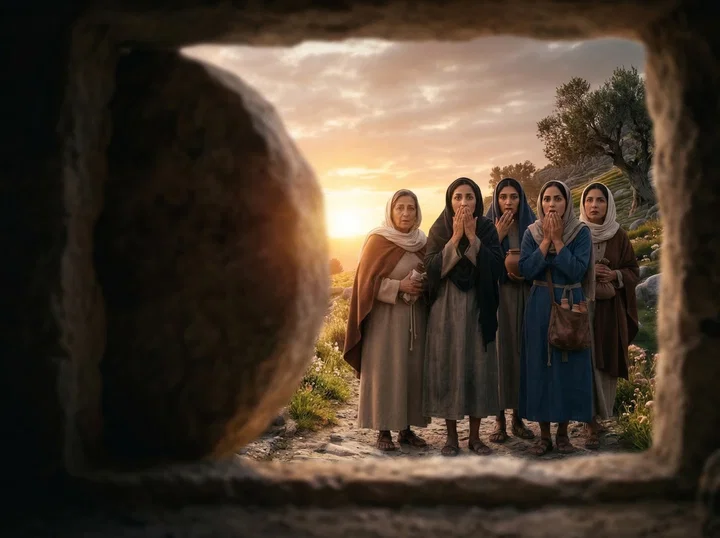
And they went out quickly, and fled from the sepulchre; for they trembled and were amazed: neither said they any thing to any man; for they were afraid.
Translations
And they went out quickly, and fled from the sepulcher; for they trembled and were amazed: neither said they any thing to any man; for they were afraid.
King James Version, KJV Cambridge Paragraph Bible
And they went out quickly, and fled from the sepulchre; for they trembled and were amazed: neither said they any thing to any man; for they were afraid.
And they went out quickly, and fled from the sepulcher; for they trembled, and were amazed: neither said they any thing to any man; for they were afraid.
Revised Version, American Standard Version
And they went out, and fled from the tomb; for trembling and astonishment had come upon them: and they said nothing to any one; for they were afraid.
And, having come forth quickly, they fled from the sepulchre, and trembling and amazement had seized them, and to no one said they anything, for they were afraid.
And they went out, and fled from the sepulchre. And trembling and excessive amazement possessed them, and they said nothing to any one, for they were afraid.
And, going out, they fled from the tomb, for, trembling and transport, were holding them; and, unto no one, said they, anything, for they were afraid.
Berean Standard Bible, Majority Standard Bible
So the women left the tomb and ran away, trembling and bewildered. And in their fear they did not say a word to anyone.
They went out, and fled from the tomb, for trembling and astonishment had come on them. They said nothing to anyone; for they were afraid.
And they went out quickly from the place, because fear and great wonder had come on them: and they said nothing to anyone, because they were full of fear that...
And they went out quickly, and fled from the sepulchre: for they trembled, and were amased: neither said they any thing to any man: for they were afraide.
Douay-Rheims (Challoner revision)
But they going out, fled from the sepulchre. For a trembling and fear had seized them: and they said nothing to any man; for they were afraid.
Pictures
Cross-references 20 of 21
- Matthew 28:1-10
In the end of the sabbath, as it began to dawn toward the first day of the week, came Mary Magdalene and the other Mary to see the sepulchre.
The women find the tomb empty and meet the risen Jesus.
- Luke 24:1-10
Now upon the first day of the week, very early in the morning, they came unto the sepulchre, bringing the spices which they had prepared, and certain others with them.
Women find the empty tomb and report the news of Jesus’ resurrection.
- John 20:1-18
The first day of the week cometh Mary Magdalene early, when it was yet dark, unto the sepulchre, and seeth the stone taken away from the sepulchre.
Both accounts describe the empty tomb on the first day and Mary Magdalene’s encounter with the risen Jesus.
- Matthew 28:8
And they departed quickly from the sepulchre with fear and great joy; and did run to bring his disciples word.
Women leave the tomb and run to tell the disciples.
- Matthew 28:9-10
And as they went to tell his disciples, behold, Jesus met them, saying, All hail. And they came and held him by the feet, and worshipped him.
Jesus meets the women after his resurrection.
- John 20:11-18
But Mary stood without at the sepulchre weeping: and as she wept, she stooped down, and looked into the sepulchre,
Mary Magdalene meets the risen Jesus and carries his message to the disciples.
- John 20:19
Then the same day at evening, being the first day of the week, when the doors were shut where the disciples were assembled for fear of the Jews, came Jesus and stood in the midst, and saith unto them, Peace be unto you.
Both describe events on the evening of the resurrection day.
- John 20:26
And after eight days again his disciples were within, and Thomas with them: then came Jesus, the doors being shut, and stood in the midst, and said, Peace be unto you.
Jesus appears again to the disciples, with Thomas present.
- 1 Corinthians 15:20
But now is Christ risen from the dead, and become the firstfruits of them that slept.
Christ is risen as the firstfruits of those who have died.
- Mark 16:14
Afterward he appeared unto the eleven as they sat at meat, and upbraided them with their unbelief and hardness of heart, because they believed not them which had seen him after he was risen.
Christ reproved the disciples for not believing he had risen.
- Luke 23:54-56
And that day was the preparation, and the sabbath drew on.
The Sabbath follows Jesus’ burial before the women visit the tomb.
- Mark 15:47
And Mary Magdalene and Mary the mother of Joses beheld where he was laid.
Mary saw where Jesus was laid.
- Luke 24:12
Then arose Peter, and ran unto the sepulchre; and stooping down, he beheld the linen clothes laid by themselves, and departed, wondering in himself at that which was come to pass.
Records Peter’s later visit to the sepulchre.
- Mark 16:2
And very early in the morning the first day of the week, they came unto the sepulchre at the rising of the sun.
Both describe events on the first day of the week without giving it a sacred title.
- Matthew 27:59-61
And when Joseph had taken the body, he wrapped it in a clean linen cloth,
Mary watched where Jesus was laid.
- Matthew 27:66
So they went, and made the sepulchre sure, sealing the stone, and setting a watch.
Describes the tomb being secured late on the Sabbath.
- Luke 24:37
But they were terrified and affrighted, and supposed that they had seen a spirit.
shows disciples did not believe He had risen
- 1 Corinthians 15:4
And that he was buried, and that he rose again the third day according to the scriptures:
Christ rose again the third day according to Scripture.
- John 21
After these things Jesus shewed himself again to the disciples at the sea of Tiberias; and on this wise shewed he himself.
A further account of the risen Jesus appearing to his disciples.
- 1 Corinthians 15:7
After that, he was seen of James; then of all the apostles.
Records Jesus appearing to James and then to all the apostles.
Commentary
Each commentary is drawn from primary sources: the writings of Ellen G. White and Adventist pioneers and periodicals. Each commentary is separate. Its own words are not a quotation; follow the references to read the source passages.
Ellen G. White
1 source
Mark 16:8 belongs to the account of the women finding Jesus' tomb empty after His resurrection.SG1 71.2 Their trembling, amazement, and fear came from the angels' announcement to them that Jesus had risen.SG1 71.2 They fled quickly from the sepulchre and hurried to tell the disciples what they had seen and heard.SG1 71.2
Sources
Pioneers and periodicals
20 sources
The women left the tomb quickly and fled after seeing it empty and hearing the angel announce that Jesus is risen and goes before them into Galilee where they would see him.ST Mar 27, 1907 They left trembling and amazed and afraid, overwhelmed at seeing the angel and hearing that Jesus had risen.RH Sep 11, 1860 They said nothing to anyone as they went, yet with fear and great joy they ran to carry the word to the disciples, and afterward reported what they had seen after meeting Jesus who told them not to be afraid.RH Sep 11, 1860 The flight took place early at dawn on the first day of the week, the day after the Sabbath and the third day from his death, when the stone was found rolled away and angels in dazzling apparel declared that he is risen.ST Jun 18, 1894ST Jul 29, 1880ST Apr 3, 1901ST Apr 10, 1901ST Feb 7, 1911 That first day is given no title of Sabbath and no sacredness, and nothing here appoints it as a commemoration of the resurrection or as a change of the Sabbath to Sunday, while the resurrection itself stands as credible witness that believers too will live through Christ.ST Jun 17, 1889ST Jun 18, 1894ST Mar 18, 1889ST Jan 2, 1879RH Jan 1, 1914
Resurrection Morning Flight
The women departed quickly and fled from the tomb after viewing it and hearing the angel's announcement that Jesus is risen and goes before them into Galilee, where they would see him.ST Mar 27, 1907 They left trembling and amazed and afraid, overwhelmed with fear at seeing the angel and hearing that Jesus had risen.RH Sep 11, 1860ST Aug 26, 1880 Their visit to the tomb and the news they carried became a story that later women could tell as they served Christ.ST Aug 26, 1880
Mary and Salome said nothing to anyone as they left, and their terror and silence explain why they did not immediately report what they had seen.RH Sep 11, 1860 Despite their fear, with fear and great joy they ran to bring the disciples word, later reporting what they had seen. Their flight precedes their meeting with Jesus, who tells them not to be afraid and to carry his message to the disciples.RH Sep 11, 1860
On the first day of the week at early dawn the women, including Mary Magdalene, Joanna, and Mary the mother of James, came bringing spices they had prepared to anoint Jesus.ST Apr 3, 1901ST Apr 10, 1901ST Feb 7, 1911 This timing at dawn is consistent in Mark and Luke.ST Apr 3, 1901ST Nov 24, 1914 They found the stone rolled away and the body of the Lord Jesus gone, were met by angels in dazzling apparel who announced that he is risen and reminded them of his words in Galilee that the Son of man must be delivered up, crucified, and rise the third day.ST Apr 3, 1901 They spoke with an angel and saw the risen Lord, and reports of these events began circulating widely.ST Apr 3, 1901ST Feb 7, 1911
Mark's account differs from Matthew, Luke, and John because each writer was led to tell particular details the others did not tell, with no effort to harmonize statements.ST Mar 5, 1912 Mark was a young man at the time and did not witness all the events, while Matthew and John were eyewitnesses among the twelve and Luke received the events through Peter.ST Mar 5, 1912 Each wrote as the Spirit dictated what would touch hearts, stating what was true while including some things the others left out and leaving out some things the others stated.ST Mar 5, 1912 The differences are therefore omissions of true events, not contradictions.ST Mar 5, 1912
Witness, Joy and Assurance
God sent a messenger to meet those who came to the empty tomb mourning and discouraged, having forgotten the promise to rise again.ST Mar 27, 1907 They had thought their hope had failed, and were weeping at home because of it.ST Apr 10, 1901 Although they had heard that he had risen, they still came doubting.ST Mar 27, 1907
The messenger announced that Jesus was risen and would go before them into Galilee, where they would see him.ST Mar 27, 1907 The women were entrusted with that message to carry to the grieving disciples at home.ST Nov 11, 1908 Their visit and commission were an early blessing that prepared the disciples for the later outpouring of the Holy Spirit.ST Nov 11, 1908
They returned to tell all these things to the eleven and to the rest.ST Apr 3, 1901 Their words seemed as idle talk, and the apostles disbelieved.ST Apr 3, 1901 Then Peter ran to the tomb, saw the linen cloths by themselves, and departed wondering.ST Apr 3, 1901 Reports of these events, of women who went to anoint Jesus and found the tomb empty, spoke with an angel, and saw the risen Lord, began circulating widely.ST Feb 7, 1911
The resurrection account brings joy in contrast with grief at his death.ST Jun 17, 1889 The women's visit to the tomb and the news they carried became a story that later women could tell as they served Christ.ST Aug 26, 1880 They had left overwhelmed with fear and amazement at finding that he had risen.ST Aug 26, 1880
The record in Mark 16:1-8 stands with the other Gospels as credible historical witness to the bodily resurrection of Jesus.RH Jan 1, 1914 That resurrection assures believers that they too will live, because resurrection and future life come through Christ.ST Jun 17, 1889
First Day Not Sabbath
The verse belongs to the account showing that Jesus rose early on the first day of the week, the day after the Sabbath, the third day reckoned from his death, fulfilling his prediction that he would rise again the third day.ST Jul 29, 1880RH Sep 16, 1902ST Mar 18, 1889ST Jun 10, 1875ST Aug 6, 1912 It places the women's departure from the tomb on the day of Christ's resurrection, the first day of the week, and belongs to the account cited as describing the only first-day occasion on which Christ met with his disciples.ST Jun 18, 1894ST Aug 6, 1912 That day's connection with the resurrection gives it no other distinction and does not establish that the apostles consecrated it as a day of worship.ST Jul 29, 1880ST Jan 2, 1879 The same first day on which Jesus rose is given no title of Sabbath or holy day, while the day before it was still called the Sabbath decades afterward.ST Mar 18, 1889
The resurrection is fixed to the day after the Sabbath paired with the crucifixion on the day before the Sabbath, so no three full nights lie between death and resurrection.ST Jun 10, 1875 The first day is given no title of Sabbath or holy day and no sacredness, and the day before it was still called the Sabbath decades afterward.ST Mar 18, 1889ST Jan 2, 1879 The record of Christ's resurrection assigns no sacredness to the resurrection day, appoints it as no commemoration of the resurrection, and teaches no change of the Sabbath to Sunday.ST Jan 2, 1879 Nothing in the account appoints the resurrection day as a commemoration of the resurrection, teaches any change of the Sabbath to Sunday, or sets the first day apart as holy.ST Jan 2, 1879ST Aug 6, 1912 Jesus appeared to his disciples several times on that day only to show them that he was alive and had risen from the dead, and in no case told them that day was a holy day.ST Jun 18, 1894ST Aug 6, 1912
There is but one Bible Sabbath, instituted and commanded by God and observed by Jesus Christ, and there is absolutely nothing in God's Word to set the first day apart as holy.ST Aug 6, 1912 The disciples did not yet believe that Christ had risen and therefore were not meeting to commemorate his resurrection or keeping the first day as a Sabbath.RH May 10, 1860ST Mar 18, 1889 Two of them went seven miles to Emmaus on business that day, and Mark 16:14 describes them as eating a common meal.RH May 10, 1860ST Mar 18, 1889 The Lord's resurrection took place on the day following the Sabbath, a day that came to be honored as the day of the resurrection and in that setting was becoming a rival to the true Sabbath.ST Oct 24, 1911
Sources