John 19:10
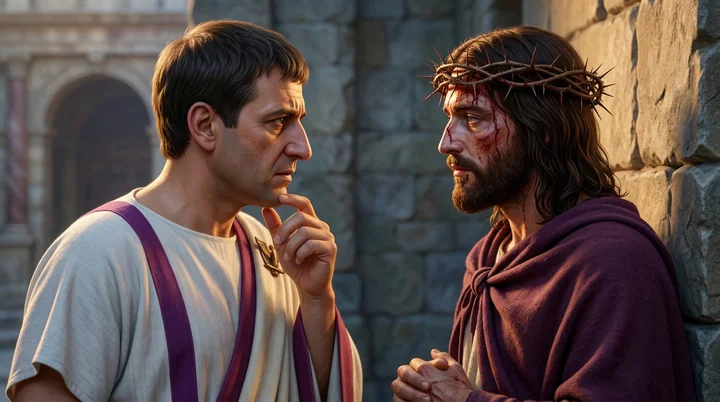
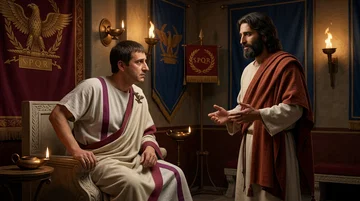
Then saith Pilate unto him, Speakest thou not unto me? knowest thou not that I have power to crucify thee, and have power to release thee?
Translations
Then says Pilate to him, Speak you not to me? know you not that I have power to crucify you, and have power to release you?
King James Version, KJV Cambridge Paragraph Bible
Then saith Pilate unto him, Speakest thou not unto me? knowest thou not that I have power to crucify thee, and have power to release thee?
Then saith Pilate to him, Speakest thou not to me? knowest thou not, that I have power to crucify thee, and have power to release thee?
Revised Version, American Standard Version
Pilate therefore saith unto him, Speakest thou not unto me? knowest thou not that I have power to release thee, and have power to crucify thee?
Pilate, therefore, saith to him, 'To me dost thou not speak? hast thou not known that I have authority to crucify thee, and I have authority to release thee?'
Pilate therefore says to him, Speakest thou not to me? Dost thou not know that I have authority to release thee and have authority to crucify thee?
Pilate, therefore, saith unto him—Unto me, dost thou not speak? Knowest thou not, that, authority, have I to release thee, and, authority, have I to crucify thee?
So Pilate said to Him, “ Do You refuse to speak to me? Do You not know that I have authority to release You and authority to crucify You?”
So Pilate said to Him, “ Do You refuse to speak to me? Do You not know that I have authority to crucify You and authority to release You?”
Pilate therefore said to him, “Aren’ t you speaking to me? Don’ t you know that I have power to release you and have power to crucify you?”
Then Pilate said to him, You say nothing to me? is it not clear to you that I have power to let you go free and power to put you to death on the cross?
Then saide Pilate vnto him, Speakest thou not vnto me? Knowest thou not that I haue power to crucifie thee, and haue power to loose thee?
Douay-Rheims (Challoner revision)
Pilate therefore saith to him: Speakest thou not to me? knowest thou not that I have power to crucify thee, and I have power to release thee?
Pictures
Cross-references
- Matthew 27:24
When Pilate saw that he could prevail nothing, but that rather a tumult was made, he took water, and washed his hands before the multitude, saying, I am innocent of the blood of this just person: see ye to it.
Pilate acknowledges Jesus’ innocence yet yields him to be crucified.
- John 18:36
Jesus answered, My kingdom is not of this world: if my kingdom were of this world, then would my servants fight, that I should not be delivered to the Jews: but now is my kingdom not from hence.
Jesus tells Pilate that his kingdom is not of this world.
- Luke 23:1-25
And the whole multitude of them arose, and led him unto Pilate.
A parallel account of Jesus’ trial before Pilate and the events leading to his crucifixion.
- Mark 15:1-15
And straightway in the morning the chief priests held a consultation with the elders and scribes and the whole council, and bound Jesus, and carried him away, and delivered him to Pilate.
Pilate questions Jesus and delivers him to be crucified.
- John 18:38-40
Pilate saith unto him, What is truth? And when he had said this, he went out again unto the Jews, and saith unto them, I find in him no fault at all.
The passage groups this account with Jesus’ earlier appearance before Pilate.
- John 19:15-18
But they cried out, Away with him, away with him, crucify him. Pilate saith unto them, Shall I crucify your King? The chief priests answered, We have no king but Cæsar.
The passage connects Pilate’s questioning with the crowd’s demand and Jesus’ crucifixion.
- Luke 23:20
Pilate therefore, willing to release Jesus, spake again to them.
Shows Pilate’s willingness to release Jesus.
- John 19:6
When the chief priests therefore and officers saw him, they cried out, saying, Crucify him, crucify him. Pilate saith unto them, Take ye him, and crucify him: for I find no fault in him.
Pilate finds no fault in Jesus yet yields to the demand to crucify him.
- Acts 4:27
For of a truth against thy holy child Jesus, whom thou hast anointed, both Herod, and Pontius Pilate, with the Gentiles, and the people of Israel, were gathered together,
Names Herod and Pilate among those gathered against Jesus.
- Matthew 27:2
And when they had bound him, they led him away, and delivered him to Pontius Pilate the governor.
Both texts describe Jesus before Pilate.
- Luke 23:4
Then said Pilate to the chief priests and to the people, I find no fault in this man.
Pilate declares Jesus innocent.
- Matthew 27:11-14
And Jesus stood before the governor: and the governor asked him, saying, Art thou the King of the Jews? And Jesus said unto him, Thou sayest.
both show Jesus answering or refusing
- John 18:37
Pilate therefore said unto him, Art thou a king then? Jesus answered, Thou sayest that I am a king. To this end was I born, and for this cause came I into the world, that I should bear witness unto the truth. Every one that is of the truth heareth my voice.
Jesus had explained his mission to Pilate before Pilate claimed authority over him.
- Matthew 27:26
Then released he Barabbas unto them: and when he had scourged Jesus, he delivered him to be crucified.
Pilate scourges Jesus and delivers him to be crucified.
- John 18:19-28
The high priest then asked Jesus of his disciples, and of his doctrine.
Jesus’ trial and crucifixion fulfill the Passover type.
- Romans 13:1
Let every soul be subject unto the higher powers. For there is no power but of God: the powers that be are ordained of God.
Earthly rulers exercise authority that is subject to God.
Commentary
Each commentary is drawn from primary sources: the writings of Ellen G. White and Adventist pioneers and periodicals. Each commentary is separate. Its own words are not a quotation; follow the references to read the source passages.
Ellen G. White
20 sources
Bound as a prisoner before the Roman governor in the judgment hall, Jesus is pressed for an answer by Pilate's boast that his office gives him authority to have Him executed or set Him free.3SP 145.1–2DA 736.1–737.1ST Jun 3, 1889DA 723.1–724.1 That claim is answered by the truth that Pilate holds no independent or unlimited power over Him, but only what has been granted from above.3SP 145.1–2DA 736.1–737.1ST Jun 3, 1889 Guilt is measured by light received, so those who handed Him over bear the greater sin for condemning Him against unmistakable evidence and sacred trust, yet Pilate made himself responsible by condemning, scourging, and delivering a man he knew to be innocent and delivered for envy.3SP 145.1–2DA 736.1–737.1ST Jun 3, 1889RH Jan 23, 1900Ms 40, 1897, par. 7–10 Though at first unwilling to condemn Him, Pilate sacrificed an innocent life to preserve his position, honor, and office rather than act on conviction and duty, and no washing of his hands could make him guiltless.ST Jul 11, 1878RH Jan 23, 1900Ms 40, 1897, par. 7–10ST Nov 2, 1882Ms 74, 1911, par. 17 Jesus met the boast with calm submission not from inability but from forbearance, restraining divine power and refusing retaliation or self-release lest one stain or failure to endure make the offering imperfect and the redemption of man fail.3SP 145.1–2ST Jun 3, 1889DA 722.3Lt 12, 1911, par. 8–11
Setting and Claim
The words were spoken to Jesus as He stood bound as a prisoner before Pilate, the Roman governor.DA 723.1–724.1 The place was Pilate's judgment hall, where the Jewish leaders were seeking to have their sentence against Him confirmed and executed.DA 723.1–724.1
In that setting Pilate asserted that he had authority to crucify Jesus and authority to release Him, even boasting of that power.3SP 145.1–2DA 736.1–737.1ST Jul 11, 1878ST Nov 2, 1882RH Jan 23, 1900 He relied on his office to demand an answer from Jesus.ST Jun 3, 1889 Jesus answered in the next verse that Pilate had no power over Him except what had been given from above.3SP 145.1–2DA 736.1–737.1ST Jun 3, 1889ST Nov 2, 1882Ms 95, 1897, par. 1–2 That meant Pilate's authority was not his own, not independent, and not unlimited.3SP 145.1–2DA 736.1–737.1ST Jun 3, 1889ST Jul 11, 1878ST Nov 2, 1882
Guilt and Responsibility
Guilt is measured by the light received, so the one who delivered Jesus to Pilate bears the greater sin.3SP 145.1–2DA 736.1–737.1ST Jul 11, 1878ST Nov 2, 1882Ms 95, 1897, par. 1–2 Caiaphas and the Jewish judges bear greater guilt than Pilate because they condemned Jesus despite unmistakable evidence of his divinity in prophecy, teaching, and miracles and betrayed their sacred trust, while Pilate, Herod, and the Roman soldiers were comparatively ignorant.3SP 145.1–2DA 736.1–737.1ST Jul 11, 1878ST Nov 2, 18825RED 65.2 Pilate's authority to crucify or release was not his own, independent, or unlimited, but existed only because it had been given from above.3SP 145.1–2DA 736.1–737.1ST Jun 3, 1889ST Jul 11, 1878ST Nov 2, 1882 Even while suffering, Jesus sought to lessen Pilate's guilt and excused Pilate's part as far as possible, showing pity.3SP 145.1–2ST Jun 3, 1889ST Jul 11, 1878ST Nov 2, 18825RED 65.2
By boasting that he had power to crucify and power to release, Pilate made himself responsible for condemning Christ, for the cruel scourging, and for the insults heaped on him before any wrong was proved against him.RH Jan 23, 1900Ms 40, 1897, par. 7–10 As one chosen and appointed to administer justice, he had the power and position to protect an innocent man he knew had been delivered for envy, yet he failed to use his claimed power to protect him.RH Jan 23, 1900Ms 40, 1897, par. 7–10 If he had exercised that power to protect an innocent man, he would not have been held guilty or accountable for Christ's death, though Christ would still have been crucified.RH Jan 23, 1900Ms 40, 1897, par. 7–10 Washing his hands and declaring himself innocent of the blood of this just person did not cleanse him or make him guiltless, because his own reason told him Jesus was innocent yet he delivered him to his murderers.RH Jan 23, 1900
After Jesus' answer Pilate sought to release him.Ms 95, 1897, par. 1–2 Yet Pilate gave Jesus up for crucifixion despite declaring that he found no fault in him, choosing to protect his office at the cost of the Son of God.Ms 74, 1911, par. 17Lt 12, 1911, par. 8–11 He declared to the maddened throng that he found no fault in Christ, yet delivered him into their hands to be crucified while the crowd demanded his death and called for the release of Barabbas, a robber and murderer.Lt 12, 1911, par. 8–11
Compromise and Submission
Pilate was convinced from the first that Jesus was the victim of the priests' envy and had no intention of condemning Him, yet he feared the people's ill will and shrank from deciding the case.ST Jul 11, 18783SP 134.1ST Jul 4, 18785RED 54.1–2 When the crisis came he concluded that he could not save Jesus without endangering his own position, honor, and office, and he chose to sacrifice an innocent life to preserve his worldly power rather than act on conviction and duty.ST Jul 11, 1878ST Nov 2, 1882ST Jul 11, 18785RED 67.13SP 147.1 Even after declaring that he found no fault in Him, he gave Jesus up for crucifixion to protect his office at the cost of the Son of God.ST Nov 2, 1882Ms 74, 1911, par. 17ST Jul 11, 1878
To avoid responsibility he seized upon the fact that Jesus was a Galilean under Herod's jurisdiction and sent Him to Herod, hoping both to escape deciding the case himself and to mend his quarrel with Herod.3SP 134.1ST Jul 4, 18785RED 54.1–2 His wavering, indecision, and failure to act firmly on what he knew to be right allowed the mob to overrule him.ST Nov 2, 1882ST Jul 11, 18785RED 67.13SP 147.1 That yielding ruined him, showing how sacrificing justice to protect self-interest and compromising conscience and duty to avoid consequences sweeps a person into guilt and ruin.ST Nov 2, 1882ST Jul 11, 18785RED 67.13SP 147.1
Against Pilate's boast of power to crucify and to release, Christ made no retaliation, and His restraint came from forbearance rather than inability.DA 722.3Lt 12, 1911, par. 8–11 By a command He could have brought the heavenly hosts to His aid, and by flashing forth His divine majesty He could have driven that mob in terror from His sight.Lt 12, 1911, par. 8–11 He submitted with perfect calmness to the coarsest insults and outrage because Satan was leading the mob to provoke Him to retaliation or to drive Him to perform a miracle to release Himself and thus break up the plan of salvation.Lt 12, 1911, par. 8–11 One stain upon His human life, one failure to endure the terrible test, would have made the Lamb of God an imperfect offering and the redemption of man a failure.Lt 12, 1911, par. 8–11
Sources
Pioneers and periodicals
28 sources
Pilate demanded an answer from Jesus by boasting that he held authority to put him to death or to set him free.ST Jun 3, 1889ST Jul 14, 1881ST Oct 7, 1886 That power was not his own but was given him from above, so it was limited and entrusted to him, and he misused God-given authority in condemning Jesus.ST Jun 3, 1889ST Jul 11, 1878ST Oct 7, 1886 Though he knew and repeatedly declared Jesus innocent, he let fear for his standing with Caesar and concern for his own position and honor overcome conscience and duty, and sacrificed an innocent life to worldly power.ST Jul 11, 1878ST Jul 14, 1881 Whoever like him compromises with evil when conscience and self-interest pull opposite ways is swept by a strong current in the wrong direction into thick darkness of guilt.ST Nov 2, 1882ST Jul 11, 1878ST Oct 7, 1886 Yet no power can act against God's cause or people except as the Lord permits, which he permits for the good of those who love him.ST Nov 14, 1895ST May 13, 1897ST May 13, 1897
Pilate's Claim and Trial
Pilate asserted, demanded and boasted that he possessed power and authority to crucify Jesus or to release him.ST Jun 3, 1889ST Jul 11, 1878ST Jul 14, 1881ST Oct 7, 1886RH Dec 9, 1858 He pressed that claim upon Jesus to demand an answer from him even while Jesus stood innocent before him.ST Jun 3, 1889ST Jul 14, 1881 His boast made him responsible for the condemnation, the cruel scourging, and the insults heaped upon Jesus before any wrong was proved against him.RH Jan 23, 1900
The saying belongs to the trial before Pilate in which Jesus answered some questions and refused to answer others.ST May 6, 1897 Pilate knew Jesus was innocent, repeatedly declared him innocent, hoped and considered letting him go and releasing him, yet tried to avoid deciding the case by sending him as a Galilean to Herod's jurisdiction.ST Jul 4, 1878RH Dec 9, 1858RH Jun 15, 1911 Instead of using his authority to protect Jesus he persistently appealed to the people to do his plain duty, until wavering before the mob he allowed Jesus to be led away and crucified.RH Jun 15, 1911ST Mar 13, 1901
Although he had declared Jesus innocent, concern for his own interests led him to hand Jesus over to be scourged and mocked when faced with the crowd's demand for crucifixion. He offered to cruelly scourge an innocent man to appease unreasoning wrath, so Jesus suffered double punishment after being declared innocent.ST Mar 13, 1901 That punishment was unmerited torture and mockery by the soldiers of Herod and Pilate with the compromise scourging, before being handed over to his persecutors to be crucified, and in that cruel manner his life was sacrificed that lives might be saved.ST Mar 13, 1901 While this was done the rulers cried for the release of Barabbas, who was convicted of practically the same crime they charged against Jesus.ST Mar 13, 1901
The crucifixion was ordered under Pilate's Roman authority, the power that executed the death penalty at the time, with Jesus as Prince of the host crucified under pagan Rome.RH Oct 30, 1855ST Feb 10, 1898 That death was Christ's Passover sacrifice fulfilling the Passover type by the sacrifice of Christ as the Passover lamb on the fourteenth day of the first month.RH Oct 30, 1855ST Aug 13, 1874
Authority From Above
Pilate had no power over Jesus except what had been given him from above, so the authority to crucify or to release was not his own but limited, entrusted power held only by heaven's permission.ST Jun 3, 1889ST Jul 11, 1878ST Nov 2, 1882ST Oct 7, 1886ST Dec 20, 1905 To condemn Jesus by that authority was to misuse God-given authority entrusted for justice, for every use of thought and power is a use of what God has entrusted.ST Jun 3, 1889ST Jul 11, 1878RH Dec 30, 1915 Even that misuse could not go beyond what God permitted, and the powers of evil could not defeat God's eternal purpose by this injustice.ST Nov 14, 1895ST May 13, 1897ST May 13, 1897 No power can act against God's cause or people except as the Lord permits, and what he permits is for the good of those who love him.ST May 13, 1897ST May 13, 1897
Jesus recognized that earthly rulers hold authority only by God's permission, and he did not resist the government's judgment against his personal rights even when his life was at stake.ST Dec 20, 1905 Even amid intense suffering and grief he as pitying Saviour excused Pilate's act as far as possible, though Pilate might have released him from the power of his enemies.ST Jun 3, 1889ST Jul 11, 1878ST Nov 2, 1882ST Oct 7, 1886ST May 13, 1897 At the same time he laid the heaviest burden of guilt on the Jewish judges who delivered him to Pilate.ST Jun 3, 1889ST Jul 11, 1878ST Nov 2, 1882ST Oct 7, 1886ST May 13, 1897 They bore the greater guilt because they had received unmistakable and clear evidence of his divinity through prophecies and through his own teachings and miracles.ST Jul 11, 1878ST Nov 2, 1882ST Oct 7, 1886ST May 13, 1897ST May 13, 1897
Pilate's boast that he had power to crucify and power to release made him responsible for the condemnation of Christ, for the cruel scourging, and for the insults heaped on him before any wrong was proved against him.RH Jan 23, 1900 As one chosen and appointed to administer justice he had the power, position, and duty to protect an innocent man whom his own reason told him was delivered for envy.RH Jan 23, 1900 Washing his hands and declaring himself innocent of the blood of this just person did not cleanse him or make him guiltless, because he delivered Jesus to his murderers while knowing him innocent.RH Jan 23, 1900 Christ would still have been crucified, but if Pilate had exercised the power he claimed to protect him, Pilate would not have been held guilty for his death nor accountable for it.RH Jan 23, 1900
Cowardice Warning and Comfort
Pilate repeatedly declared Jesus innocent yet let fear for his standing with Caesar, fear of being accused of disloyalty, fear of the people's ill will, and concern for his own interests, position, and honor overcome his conscience.ST Jul 11, 1878ST Nov 2, 1882ST Jul 14, 1881RH Dec 9, 1858 He concluded he could not save Jesus and still keep his office, position, and honor, and he chose worldly power over conviction and duty by sacrificing an innocent life and ordering the execution.ST Jul 11, 1878ST Nov 2, 1882ST Jul 14, 1881RH Dec 9, 1858ST Oct 7, 1886 Though he hoped to release Jesus, he had compromised with Christ's enemies until he was powerless before them.ST Nov 2, 1882ST May 10, 1905 Instead of using his claimed power to do his plain duty, he persistently appealed to the people for consent to do it and even offered to scourge an innocent man to appease their unreasoning wrath.ST May 10, 1905ST Mar 13, 1901
His wavering, indecision, and failure to act promptly and firmly at first on his convictions of right let the mob overrule him, dictate to him, and presume upon him.ST Nov 2, 1882ST Jul 11, 1878ST Oct 7, 1886ST Mar 13, 1901 Had he acted promptly and firmly, his will would not have been overborne, but his yielding brought his irredeemable ruin.ST Nov 2, 1882ST Jul 11, 1878ST Oct 7, 1886 Many are like Pilate, sacrificing principle and integrity to shun disagreeable consequences when conscience and duty point one way and self-interest points another.ST Nov 2, 1882ST Jul 11, 1878ST Oct 7, 1886 Whoever compromises with evil is swept by a strong current in the wrong direction into the thick darkness of guilt.ST Oct 7, 1886
The trial shows religious persecution carried out when religious leaders who hated Jesus' teachings called for his death and appealed to civil power.ST May 19, 1914ST Oct 2, 1893 They brought charges against him for claiming to be the Son of God and for not following their Sabbath customs, the State enforced their demands, and he became a victim of religious legislation executed under the civil power to release or crucify.ST May 19, 1914ST Oct 2, 1893 Against Rome's threat Christ remained free in spirit and cautioned that every soul is responsible to God.ST May 28, 1912 No power can act against God's cause or people except as the Lord permits, and what he permits is for the good of those who love him.ST May 13, 1897ST May 13, 1897 This comforts believers facing temptation, persecution, and the powers of darkness.ST May 13, 1897ST May 13, 1897
Reading the chapter of Christ's sufferings can subdue pride and cast out discontent in a fretful, gloomy, or discontented Christian.ST Apr 17, 1879 His going to die amid a hostile crowd, carrying the cross and suffering crucifixion for others, calls for belonging wholly to him and following his will.RH Apr 8, 1902
Sources