1 Corinthians 5:8
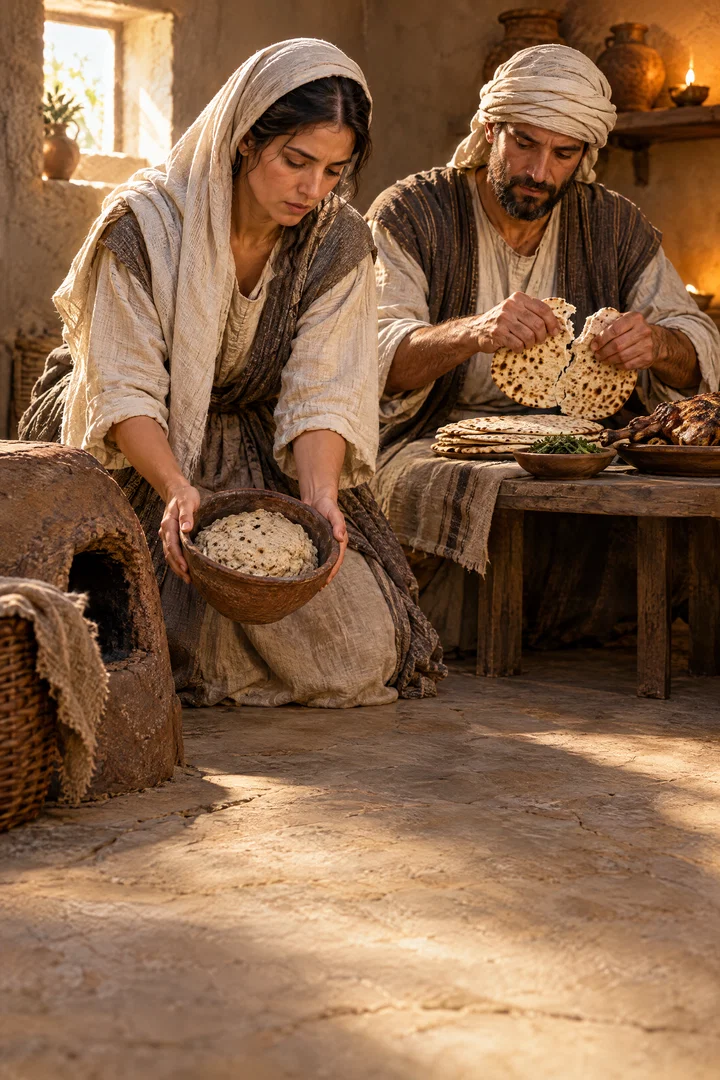
Therefore let us keep the feast, not with old leaven, neither with the leaven of malice and wickedness; but with the unleavened bread of sincerity and truth.
Translations
American King James Version, King James Version, Webster Bible
Therefore let us keep the feast, not with old leaven, neither with the leaven of malice and wickedness; but with the unleavened bread of sincerity and truth.
therefore let us keep the feast, not with old leaven, neither with the leaven of malice and wickedness; but with the unleavened bread of sincerity and truth.
Revised Version, American Standard Version
wherefore let us keep the feast, not with old leaven, neither with the leaven of malice and wickedness, but with the unleavened bread of sincerity and truth.
so that we may keep the feast, not with old leaven, nor with the leaven of evil and wickedness, but with unleavened food of sincerity and truth.
so that let us celebrate the feast, not with old leaven, nor with leaven of malice and wickedness, but with unleavened [bread] of sincerity and truth.
So then, let us be keeping the feast, not with old leaven, nor with leaven of baseness and wickedness,—but with the unleavened bread of sincerity and truth.
Berean Standard Bible, Majority Standard Bible
Therefore let us keep the feast, not with the old bread, leavened with malice and wickedness, but with the unleavened bread of sincerity and of truth.
Therefore let’s keep the feast, not with old yeast, neither with the yeast of malice and wickedness, but with the unleavened bread of sincerity and truth.
Let us then keep the feast, not with old leaven, and not with the leaven of evil thoughts and acts, but with the unleavened bread of true thoughts and right feelings.
Therefore let vs keepe the feast, not with olde leauen, neither in the leauen of maliciousnes and wickednesse: but with the vnleauened bread of synceritie and trueth.
Douay-Rheims (Challoner revision)
Therefore let us feast, not with the old leaven, nor with the leaven of malice and wickedness; but with the unleavened bread of sincerity and truth.
Pictures
Cross-references 20 of 22
- Exodus 12:8
And they shall eat the flesh in that night, roast with fire, and unleavened bread; and with bitter herbs they shall eat it.
The Passover lamb was eaten with unleavened bread.
- Matthew 16:6
Then Jesus said unto them, Take heed and beware of the leaven of the Pharisees and of the Sadducees.
Leaven pictures corrupt teaching and a harmful influence spreading.
- Exodus 12:15-20
Seven days shall ye eat unleavened bread; even the first day ye shall put away leaven out of your houses: for whosoever eateth leavened bread from the first day until the seventh day, that soul shall be cut off from Israel.
Removing leaven from the feast illustrates putting away sin and worshiping in sincerity and truth.
- Galatians 5:9
A little leaven leaveneth the whole lump.
A little leaven permeates and corrupts the whole community.
- Luke 12:1
In the mean time, when there were gathered together an innumerable multitude of people, insomuch that they trode one upon another, he began to say unto his disciples first of all, Beware ye of the leaven of the Pharisees, which is hypocrisy.
Both identify leaven with hypocrisy and wickedness.
- Exodus 12:19-20
Seven days shall there be no leaven found in your houses: for whosoever eateth that which is leavened, even that soul shall be cut off from the congregation of Israel, whether he be a stranger, or born in the land.
Both require leaven to be removed and unleavened bread eaten.
- John 1:29
The next day John seeth Jesus coming unto him, and saith, Behold the Lamb of God, which taketh away the sin of the world.
Christ is the Lamb who fulfills the Passover.
- Leviticus 7:12
If he offer it for a thanksgiving, then he shall offer with the sacrifice of thanksgiving unleavened cakes mingled with oil, and unleavened wafers anointed with oil, and cakes mingled with oil, of fine flour, fried.
The unleavened cakes in the thanksgiving offering represent sincerity and truth.
- John 17:17
Sanctify them through thy truth: thy word is truth.
God’s people are sanctified by truth, living in the world without its leaven of wickedness.
- Leviticus 23:6
And on the fifteenth day of the same month is the feast of unleavened bread unto the LORD: seven days ye must eat unleavened bread.
The feast of unleavened bread prefigures keeping the feast with sincerity and truth.
- Exodus 34:25
Thou shalt not offer the blood of my sacrifice with leaven; neither shall the sacrifice of the feast of the passover be left unto the morning.
Both connect unleavened bread with the Passover offering.
- Leviticus 2:11
No meat offering, which ye shall bring unto the LORD, shall be made with leaven: for ye shall burn no leaven, nor any honey, in any offering of the LORD made by fire.
Leaven is forbidden in offerings, as Paul calls for a feast without the leaven of malice and wickedness.
- Leviticus 6:17
It shall not be baken with leaven. I have given it unto them for their portion of my offerings made by fire; it is most holy, as is the sin offering, and as the trespass offering.
Leaven is forbidden, corresponding to the call to keep the feast without malice and wickedness.
- 1 Corinthians 5:1-2
It is reported commonly that there is fornication among you, and such fornication as is not so much as named among the Gentiles, that one should have his father’s wife.
The incestuous Corinthians exemplify the vile church members described.
- Matthew 16:12
Then understood they how that he bade them not beware of the leaven of bread, but of the doctrine of the Pharisees and of the Sadducees.
The leaven of the Pharisees and Sadducees means their teaching.
- John 18:28
Then led they Jesus from Caiaphas unto the hall of judgment: and it was early; and they themselves went not into the judgment hall, lest they should be defiled; but that they might eat the passover.
Jesus’ trial occurred as the Passover was being eaten, linking his death with the feast.
- Leviticus 23:10-21
Speak unto the children of Israel, and say unto them, When ye be come into the land which I give unto you, and shall reap the harvest thereof, then ye shall bring a sheaf of the firstfruits of your harvest unto the priest:
The firstfruits feast is fulfilled in Christ’s resurrection and Pentecost.
- John 7:37
In the last day, that great day of the feast, Jesus stood and cried, saying, If any man thirst, let him come unto me, and drink.
Jesus offers living water at the feast and becomes its meaning.
- John 19:14
And it was the preparation of the passover, and about the sixth hour: and he saith unto the Jews, Behold your King!
Christ’s death occurred at Passover, the feast Paul invokes.
- Ephesians 4:22
That ye put off concerning the former conversation the old man, which is corrupt according to the deceitful lusts;
leaven illustrates its growing corruption
Commentary
Each commentary is drawn from primary sources: the writings of Ellen G. White and Adventist pioneers and periodicals. Each commentary is separate. Its own words are not a quotation; follow the references to read the source passages.
Ellen G. White
45 sources
Because Christ as the Passover has been sacrificed, those who receive life from Him are already made unleavened and must purge out the old leaven to become a new lump.Lt 301, 1905, par. 2–5PP 278.1Lt 182, 1903, par. 5–7 In this verse leaven is an emblem of sin to be put away from the heart, as leaven was removed from Jewish homes during Passover, with contrition for sin while feeding on Christ.PP 278.1COL 95.3–96.2 The old leaven is malice and wickedness in the form of evil speaking, hypocrisy, jealousy, divisions, evil thinking, criticism, strife, and dissension within the church.Lt 386, 1906, par. 10Lt 60, 1898, par. 20–22Ms 105, 1906, par. 21–22Lt 159, 1895, par. 1–2Ms 107, 1903, par. 22–24 A little of such leaven leavens the whole lump, for cherished evil spreads secretly through a person, church, and community until the whole is corrupted.5MR 419.1–3LJAHS 10.1Lt 310, 1906, par. 3 Keeping the feast means living without that leaven, with the soul purified and with sincerity and truth shaping words, spirit, mind, heart, will, and every act.Lt 182, 1903, par. 5–7Lt 386, 1906, par. 10YGBCOEP 36.3STB 315.3
Passover Imagery and Context
Because the Passover sacrifice has been offered in Christ, those who believe are already counted as unleavened and are therefore required to purge out the old leaven in order to become a new lump.Lt 301, 1905, par. 2–5Lt 182, 1903, par. 5–75MR 419.1–3 Keeping the feast means living as a sincere and truthful people, putting away corrupt conduct in the form of malice and wickedness, and turning from faultfinding and accusation toward a pure, Christlike life.Lt 301, 1905, par. 2–5PP 278.15MR 419.1–3 That purging includes removing self interwoven with the work, unfaithfulness with entrusted talents, and refusal to make restitution for past robbery.Lt 182, 1903, par. 5–7 Keeping the feast in sincerity and truth means self hidden with Christ in God, faithfulness in doing good, redeeming the time, and repentance and conversion of heart and mind that meets the perfect will, without which work is not acceptable.Lt 182, 1903, par. 5–7 Since a little leaven leavens the whole lump and boasting is not good, the first duty of Christians drawn into contention with brethren is to put away malice, wickedness, wrongdoing and fraud instead of going to law before unbelievers.5MR 419.1–3
As unleavened bread was required during Passover, those who receive life and nourishment from Christ must put sin away.PP 278.1 Just as leaven was removed from Jewish homes at Passover, feeding on Christ is to be accompanied by contrition for sin.PP 278.1COL 95.3–96.2 In this verse leaven is an emblem of sin to be put away from the heart.COL 95.3–96.2 This use stands in contrast to the use of leaven to represent the transforming power of God's grace.COL 95.3–96.2
The verse belongs to Paul's first letter to Corinth, which exposed the sexual immorality in the church and called its members to repent and to act against those disgracing the church.SLP 179.3–180.1 Being purged from the old leaven is done by the priceless blood of the Son of God.1MR 205.2 That purging must produce new affections and new moral tastes through the power of Christ in the citadel of the heart, while forgetting it leaves the heart without an indwelling Saviour, occupied by a deceptive spirit and idols, with carnal lusts and the mind of the deceiver revealed in the life even under profession of Christianity.1MR 205.2 It is shown in thinking much of remuneration for service, proving the foundation is not laid on the sure Rock or the spirit of truth is lost, in lack of unselfish love that seeks and saves the lost, in loss of spiritual discernment that places the sacred and the common on the same level, in a heart where the Lord is not honored and the principles of Christ are not woven into the character, and in a cold formal service called religion where Christ is not formed within as the hope of glory.1MR 205.2
What Old Leaven Is
The old leaven is malice and wickedness taking form inside the church as evil speaking, hypocrisy, jealousy, and malice, to be purged so that life is lived in sincerity and truth with words, spirit, and every act showing Christian refinement.Lt 386, 1906, par. 10Ms 105, 1906, par. 21–22 It includes divisions, evil thinking, confusion, jealousy, and criticism among God's people.Lt 159, 1895, par. 1–2 The old leaven is criticism that creates suspicion and leads men to charge one another with deception and dishonesty when the criticisms and charges rest on a perversion of facts.Lt 212, 1902, par. 4 Satan brings in this leaven place after place to shake confidence in those entrusted with important parts of the Lord's work, entangling things until painstaking, searching work is required to set them in order, for false representations are cruel and the Lord endorses no such work.Lt 212, 1902, par. 4
Strife, dissension, alienation, and disputes that produce evil results are evil leaven in the church, spreading like leaven and corrupting the community through evil and self-serving motives rather than sincerity and truth in living and speaking.Lt 60, 1898, par. 20–22Ms 107, 1903, par. 22–24 Those who create disputes and introduce this leaven must answer to Christ for the evil results of their course.Ms 107, 1903, par. 22–24 The leaven is also dissatisfaction, suspicion, jealousy, doubt, unbelief, and opposition to God's work, leadings, counsel, opening providence, and plain reproof, including doubts, suggestions, and jealousy thrown in by Satan and feelings opposed to God's movings to the right or left.LJAHS 10.1 If left unconfessed it keeps working in secret, spreading darkness and uniting those who cherish it with evil angels against the advancement of God's work.LJAHS 10.1
Cherished self-seeking defiles and ruins the soul as leaven spreads through dough, and the call to reject malice and wickedness is the call to reject self-exaltation and pretense and to seek God's glory rather than one's own through God's power, which shows faith is of the right order. Self interwoven with work is old leaven, with the leaven of malice and wickedness shown in unfaithfulness with entrusted talents and refusal to make restitution for past robbery.Lt 182, 1903, par. 5–7 Keeping the feast in sincerity and truth means self hid with Christ in God, faithfulness in doing good, redeeming the time, and repentance and conversion of heart and mind meeting God's perfect will with evidence of a new heart, without which work is not acceptable to God.Lt 182, 1903, par. 5–7 Thinking much of remuneration for service proves the foundation is not laid on the sure Rock and the spirit of truth is lost, with idols in the heart, lack of unselfish love that seeks and saves the lost, loss of spiritual discernment placing sacred and common on the same level, a heart where the Lord is not honored and Christ's principles are not woven into character, and cold formal service called religion where Christ is not formed within as the hope of glory.1MR 205.2 Being purged from the old leaven is done by the priceless blood of the Son of God and must produce new affections and new moral tastes through Christ's power in the citadel of the heart, while forgetting the purging leaves the heart without an indwelling Saviour, occupied by a deceptive spirit with carnal lusts and the mind of the deceiver revealed in life even under Christian profession.1MR 205.2
Selfishness and covetousness are evil leaven, seen in covetousness and the pursuit of ever-higher wages that spread doubt and unbelief, weaken spirituality, and dishonor God.SSP 10.1Ms 97, 1899, par. 21–23 Those governed by them cannot give the work the right influence and should be separated from positions of responsibility.Ms 97, 1899, par. 21–23 Among workers the old leaven is thinking self worthy of great favor, becoming dissatisfied, selling self to the highest bidder, fixing the value of one's own labor, measuring self by self and comparing self among selves over wages, and becoming wise above what is written.Ms 142, 1903, par. 109–110 Such comparison leads to double-dealing, surrounds the soul with an atmosphere of unbelief, makes men harsh, discourteous, loveless and oppressive, and robs God and the treasury by appropriating means for own use and taking money that should supply brethren laboring in hard fields, which God regards as He regarded the sin of Achan.Ms 142, 1903, par. 109–110 For the safety of the principles that must control all who labor, such men, even editors or managers, must be disconnected without delay and cannot be safely retained, for God is not with them, and if after testing they will not repent God removes them and gives their places to men looked upon as not qualified, working through them remarkably if they remain true and loyal, with judgment passing on every such case since they cannot give the right mold to the work nor supply fellow workers' necessities.Ms 142, 1903, par. 109–110
The perversion of the canvassing work and the increase of wages in the Review and Herald office are evil leaven that leavened the whole lump, spreading selfishness, loss of spiritual perception, wickedness and unfair dealing through the whole work with no reform.Lt 182, 1903, par. 11–13 Standing stiffly for truth means refusing to receive this evil leaven, since receiving it puffs up and leavens with malice and causes loss of spirituality.Lt 182, 1903, par. 11–13 The old leaven is Pharisaism and bigotry leavening the camp at Battle Creek and affecting the churches, and it must be expelled by labor with pen and voice until removed and a new leaven introduced, which is the grace of Christ.11MR 228.3–229.316MR 215.2–216.3Ms 30, 1889, par. 10–14 This calls for reformation to go through the churches because of spiritual weakness and blindness under great light and precious privileges, keeping the unity of the Spirit in the bonds of peace while never ceasing to protest against bigotry, with the unleavened bread of sincerity and truth set against that corrupting influence.11MR 228.3–229.316MR 215.2–216.3Ms 30, 1889, par. 10–14
Idolatry brought in under Christian profession works like foul leaven, corrupting the church's purity and power by introducing unsound doctrines, superstitious rites, and idolatrous ceremonies into faith and worship.GC 42.2–43.1GC88 43.1 When professed idol worshipers join the church while still clinging to idolatry, only changing the objects of worship to images of Jesus and even of Mary and the saints, that leaven continues its baleful work and corrupts the Christian religion, whereas keeping the feast with unleavened sincerity and truth means maintaining fidelity to the Author of truth and worshiping God alone.GC 42.2–43.1GC88 43.1 Worldliness caught by contact with the worldly element is leaven, with falsehood and worldly practices perverting the faith, so God's people must not be corrupted by the world's falsehood or assimilate with worldlings but must spread God's truth, take a decisive stand for truth and righteousness, and bring the sanctifying influence of truth and right principles into the world with lives showing God's discipline and righteous character distinct from the world.7T 168.4RH Nov 5, 1903Ms 47, 1898, par. 20Ms 27a, 1900, par. 17–18 Young men and young women cannot be called into work where they are leavened by worldliness instead of exerting an influence that wins souls to Christ, and soul-saving is to be made first, so work supplying temporal food such as restaurant and food work bears God's approval only when workers do all they possibly can to reach with the truth those they feed.Ms 45, 1903, par. 7
Philosophy, false science, and spiritualism are leaven, in erroneous sentiments, sophistry, deceptive theories, and dangerous writings and sayings that youth should not hear, which destroy faith, lead off the platform of truth, misinterpret inspired messages, and use them to testify to falsehood.10MR 47.2–48.2 This spiritualistic leaven has already been placed in the meal to leaven many minds and works secretly until the whole mass is leavened, making the messages God sends of no effect, so there can be no harmonizing or unifying with advocates of these wrong sentiments, whose leaven must be resolutely discarded, guarded against, and met with the decided warning, Beware.10MR 47.2–48.2 Skepticism that leavens young minds and leads to infidelity is warned against by the same image, calling for truth to be deeply impressed on the soul so it can withstand surrounding error.FE 541.4–542.1 Human malice and evil surmising are the leaven of malice and wickedness, and those who consult human agencies and allow themselves to be leavened with it will surely be separated from God's work.Lt 67, 1903, par. 14–15
Continuing to cherish traits of character God's Word forbids, especially envy and evil-surmising, after light has come while on test and trial, makes men evil leaven in God's work who must be separated from it, with freedom coming only by union with Christ and reliance on His strength since working for Christ in one's own strength ends in utter failure.Lt 187, 1902, par. 1 Those who have allowed a wrong spirit to control them must come to God in repentance and confess, and He will hear and pardon, but the stubborn and hardhearted will be separated unless they repent, for Christ cannot accept labor without His love burning in the heart and work done without the love of Christ misrepresents Christ and leaves the first love.Lt 67, 1903, par. 14–15 Wicked works, unbelief, darkness, refusal to humble the heart and accept given light, and a wrong course injuring God's cause are leaven with strengthening, absorbing power spreading from person to person until the whole mass is leavened.Ms 174, 1903, par. 20–24 The Lord bears long with such wicked works, but if light is not accepted and wrong not corrected the leavening influence brings greater darkness, loss of discernment, greater blindness unable to recognize greater light, and following one's own course to ruin, a power at work in Battle Creek where great light has shone and many precious souls remain, to be met by humbling the heart before God.Ms 174, 1903, par. 20–24 Mischievous gossip sows seeds of evil and makes a family's influence displeasing to God, reflecting the contrast between sinful leaven and unleavened goodness and the call to turn from harmful conduct.Ms 29, 1897, par. 25 Accounts of crime and cruelty act like leaven by spreading wickedness through the mind and leading readers to imitate it, so those who believe truth should not help keep such evil alive.7T 165.1 Commercial interests that distract God's servants from bringing souls to the truth are a leavening influence that has entered the work and must be rejected so that God's purposes are fulfilled instead.Ms 41, 1906, par. 30–31
How Leaven Spreads
A little leaven leavens the whole lump, for as leaven spreads through dough so cherished evil spreads through a person, church, and community.5MR 419.1–3Lt 310, 1906, par. 3Ms 41, 1906, par. 30–31Ms 61a, 1906, par. 39 That spreading includes self-seeking, self-exaltation and pretense defiling and ruining the soul, a spirit of disaffection influencing others and imperiling them, and commercial interests distracting servants from bringing souls to the truth.Lt 310, 1906, par. 3Ms 41, 1906, par. 30–31 It also includes wicked works, unbelief, darkness, refusal to humble the heart and accept given light, and a wrong course injuring the cause, working with strengthening, absorbing power from one person to another until the whole mass is leavened.Ms 174, 1903, par. 20–24
If left unconfessed, the leaven of doubts, suggestions and jealousy thrown in to oppose the work keeps working in secret, spreading darkness and uniting those who cherish it with evil angels against the advancement of the work.LJAHS 10.1 The Lord bears long with such wicked works, but if light is not accepted and wrong is not corrected, the leavening influence brings greater darkness, loss of discernment, blindness that cannot recognize greater light, and ruin by following one's own course.Ms 174, 1903, par. 20–24 Those who have received great light and privileges but do not respond with faith and obedience can become infected by prevailing apostasy and controlled by another spirit, and their greater opportunities make their condition worse than that of zealous advocates of error.Lt 25b, 1892, par. 37
Spiritualistic leaven of philosophy, false science, erroneous sentiments, sophistry and deceptive theories that destroy faith has already been placed in the meal, and it works secretly until the whole mass is leavened, making the messages sent of no effect.10MR 47.2–48.2 A spirit of disaffection can influence others and imperil them, and evil cherished within the church spreads like leaven to produce dissension, alienation, and strife.Lt 310, 1906, par. 3Lt 60, 1898, par. 20–22
Living Unleavened in Sincerity
To keep the feast is to live without the leaven of sin, with the soul purified from every unholy influence and with sincerity and truth shaping words, spirit, mind, heart, will, purposes, and every act.Lt 386, 1906, par. 10YGBCOEP 36.3STB 315.3Lt 310, 1906, par. 3Ms 61a, 1906, par. 39 Truth so received expresses itself in both word and spirit with Christian refinement, sanctifies those who hold it pure, and makes conduct honor God.Lt 386, 1906, par. 10YGBCOEP 36.3STB 315.3 It purifies the mind, heart, will, and purposes against malice and wickedness and against a spirit of disaffection that would influence and imperil others.Lt 386, 1906, par. 10Lt 310, 1906, par. 3Ms 61a, 1906, par. 39 Keeping the feast in sincerity and truth means self hid with Christ in God, faithfulness in doing good, redeeming the time, and repentance and conversion of heart and mind that meets God's perfect will, with self interwoven with work, unfaithfulness with entrusted talents, and refusal to make restitution put away as the old leaven.Lt 182, 1903, par. 5–7 Keeping the feast unleavened is keeping the commandments of God, loving God supremely and the neighbor as oneself, seeking the present and future good of others instead of exalting self, and laboring in a Christlike manner united with one another in dependence on God, meek and teachable, with an eye single to His glory.Ms 105, 1902, par. 1–4 It requires putting away all chafing and dissatisfaction, giving preference to the brother, being melted over and purified from dross mingled with words and actions, crucifying self, loving one another and respecting Christ, and humbling the self under God, lest workers become separated from Him.Ms 105, 1902, par. 1–4
Purging produces new affections and new moral tastes through Christ's power in the citadel of the heart, while forgetting the purging leaves the heart without an indwelling Saviour, occupied by a deceptive spirit and idols, with carnal lusts and the mind of the deceiver revealed in the life even under profession of Christianity.1MR 205.2 That loss is shown in thinking much of remuneration for service, in lack of unselfish love that seeks and saves the lost, in loss of spiritual discernment that places the sacred and the common on the same level, in a heart where the Lord is not honored and the principles of Christ are not woven into character, and in cold formal service called religion where Christ is not formed within as the hope of glory.1MR 205.2 The new leaven to be introduced in place of the expelled evil is the grace of Christ, whose working is plainly seen when evil is cast out of the nature.11MR 228.3–229.3Ms 105, 1902, par. 1–416MR 215.2–216.3Ms 30, 1889, par. 10–14 Truth must therefore sanctify those who receive it, be deeply impressed on the soul so it can withstand surrounding error, and be carried as a sanctifying influence into the world rather than letting the world's falsehood corrupt God's people.7T 168.4YGBCOEP 36.3STB 315.3Ms 47, 1898, par. 20FE 541.4–542.1 Lives so sanctified show that they are under God's discipline and have a righteous character, spreading God's truth instead of malice and wickedness.7T 168.4STB 315.3Ms 47, 1898, par. 20
God's people must preserve the sacredness of their consecration by keeping heart, mind, soul, and body free from contamination and from polluted thoughts or sights.Ms 7, 1900, par. 10–11 The call to sincerity and truth is reflected in rejecting self-seeking, self-exaltation, and pretense that defile and ruin the soul, and in seeking God's glory rather than one's own, which comes through God's power and shows faith is of the right order. It calls for turning from faultfinding and accusations toward a pure, Christlike life as a sincere and truthful people because Christ the Passover is sacrificed.Lt 301, 1905, par. 2–5 Keeping the feast with unleavened sincerity and truth means maintaining fidelity to the Author of truth and worshiping God alone, refusing to change only the objects of worship while clinging to idolatry with its unsound doctrines, superstitious rites, and idolatrous ceremonies.GC88 43.1
Purging Leaven from Church
The first duty of those drawn into contention with brethren is to purge out the old leaven to become a new lump, for glorying is not good and a little leaven leavens the whole lump.5MR 419.1–3 Because the Passover has been sacrificed, believers are already unleavened, and keeping the feast means living not with the leaven of malice and wickedness but with sincerity and truth.5MR 419.1–3 That requires putting away malice, wickedness, wrongdoing and fraud instead of going to law before unbelievers.5MR 419.1–3 The leaven of evil is to be put out of the heart, the home, and the church, with consecration to God.Ms 99, 1900, par. 5Lt 141, 1900, par. 5–7
Purging demands thorough work in the past, frankly acknowledging with decision every step of divine work and providence.LJAHS 10.1 The leaven to be purged is dissatisfaction, suspicion, jealousy, doubt, unbelief and opposition to the work, leadings, counsel, opening providence and plain reproof.LJAHS 10.1 It includes doubts, suggestions and jealousy thrown in by Satan and feelings opposed to divine guidance, which if left unconfessed keep working in secret, spreading darkness and uniting those who cherish them with evil angels against the advancement of the work.LJAHS 10.1 The remedy is to take firm position that God has led when His hand moves His people to the right or to the left, even if it tears self and self-dignity to pieces.LJAHS 10.1
The old leaven of Pharisaism and bigotry, leavening the camp at Battle Creek and affecting the churches, must be expelled by labor with pen and voice until it is removed.11MR 228.3–229.316MR 215.2–216.3Ms 30, 1889, par. 10–14 In its place a new leaven is to be introduced, which is the grace of Christ, set against the corrupt influence as the unleavened bread of sincerity and truth.11MR 228.3–229.316MR 215.2–216.3Ms 30, 1889, par. 10–14 This calls for reformation under great light and precious privileges, keeping the unity of the Spirit in the bonds of peace while never ceasing to protest against bigotry, because of spiritual weakness and blindness.11MR 228.3–229.3 Those who after light has come continue while on test and trial to cherish traits forbidden by the Word, especially envy and evil-surmising, act as evil leaven and must be separated from the work.Lt 187, 1902, par. 1 Freedom comes only by union with Christ and reliance on His strength, for working in one's own strength ends in utter failure.Lt 187, 1902, par. 1
Standing stiffly for the truth means refusing to receive the evil leaven, since receiving it puffs up, leavens with malice, and causes loss of spirituality.Lt 182, 1903, par. 11–13 That leaven was seen in perversion of the canvassing work and increase of wages spreading selfishness, loss of spiritual perception, wickedness and unfair dealing through the whole work with no reform.Lt 182, 1903, par. 11–13 Those who consult human agencies and allow themselves to be leavened with human malice and evil surmising will surely be separated from the work unless they repent.Lt 67, 1903, par. 14–15 Those controlled by a wrong spirit must come to God in repentance and confess, and then He will hear and pardon, but the stubborn and hardhearted will be separated, for labor without the love of Christ burning in the heart misrepresents Christ and cannot be accepted by Him who cannot accept work from one who has left first love.Lt 67, 1903, par. 14–15
Men governed by selfishness and covetousness corrupt the work, cannot give it the right mold and influence, and must be disconnected without delay from positions of responsibility even as editors or managers, for they cannot be safely retained.Ms 97, 1899, par. 21–23Ms 142, 1903, par. 109–110 That old leaven includes thinking self worthy of great favor, becoming dissatisfied, selling self to the highest bidder, fixing the value of one's own labor, measuring self by self and comparing self among selves over wages, and becoming wise above what is written.Ms 142, 1903, par. 109–110 Such comparison leads to double-dealing, surrounds the soul with unbelief, makes men harsh, discourteous, loveless and oppressive, and robs God and the treasury by appropriating means and taking money that should supply brethren laboring in hard fields, which is regarded as the sin of Achan and will meet judgment in every case.Ms 142, 1903, par. 109–110 If after testing they will not repent, they are removed and their places given to men looked upon as not qualified, through whom remarkable work is done if they remain true and loyal, for God is not with the unrepentant.Ms 142, 1903, par. 109–110
There can be no harmonizing or unifying with advocates of wrong sentiments, for their spiritualistic leaven of philosophy, false science, erroneous sentiments, sophistry, deceptive theories, dangerous writings and sayings destroys faith, leads off the platform of truth, misinterprets inspired messages to testify to falsehood, works secretly until the whole mass is leavened, and makes sent messages of no effect.10MR 47.2–48.2 That leaven must be resolutely discarded, guarded against, and met with the decided warning, Beware, especially keeping it from youth.10MR 47.2–48.2 Those who believe truth must not help keep evil alive, for evil works like leaven spreading wickedness through the mind and leading to imitation, as with accounts of crime and cruelty influencing readers toward similar deeds.7T 165.1 Soul-saving is to be made first, and worldliness caught by contact with the worldly element must not leaven God's people instead of their winning souls, so work supplying temporal food such as restaurant and food work bears approval only when workers do all they possibly can to reach with truth those they feed.7T 165.1Ms 45, 1903, par. 7
False representations based on perversion of facts are cruel and endorsed by no divine authority, and the evil leaven of criticism that creates suspicion and leads men to charge one another with deception and dishonesty is brought place after place to shake confidence in those entrusted with important work, entangling things so that painstaking searching work is required to set them in order.Lt 212, 1902, par. 4 Strife and dissension are evil leaven in the church, and those who create disputes and introduce it must answer for the evil results of their course.Lt 212, 1902, par. 4Ms 107, 1903, par. 22–24 Evil works like leaven with strengthening, absorbing power spreading until the whole mass is leavened, namely wicked works, unbelief, darkness, refusal to humble the heart and accept given light, and a wrong course injuring the cause.Ms 174, 1903, par. 20–24 Long forbearance is shown, but if light is not accepted and wrong not corrected, the leavening influence brings greater darkness, loss of discernment, blindness unable to recognize greater light, and ruin by following one's own course.Ms 174, 1903, par. 20–24 Where great light has shone and many precious souls remain, as in Battle Creek, this leavening power at work must be met by humbling the heart before God.Ms 174, 1903, par. 20–24
When corrupting influences of divisions, evil thinking, confusion, jealousy and criticism are purged, abiding love binds hearts together in unity.Lt 159, 1895, par. 1–2 Casting the leaven of evil out of the nature and receiving the grace of Christ makes the working of the new leaven plainly seen.Ms 105, 1902, par. 1–4 Keeping the feast unleavened is keeping the commandments, loving God supremely and neighbor as self, seeking others' present and future good instead of exalting self, laboring united in dependence on God, meek and teachable with eye single to His glory, giving preference to the brother, being melted over and purified from dross in words and actions, crucifying self, and humbling self under God.Ms 105, 1902, par. 1–4 Commercial interests that distract servants from bringing souls to truth have entered the work as leavening influence and must be rejected so that divine purposes are fulfilled.Ms 41, 1906, par. 30–31 Workers who retain chafing and dissatisfaction become separated and can never gain entrance into the holy city.Ms 41, 1906, par. 30–31Ms 105, 1902, par. 1–4
Sources
Pioneers and periodicals
68 sources
Christ our Passover has been sacrificed, so keeping the feast means living continually in sincerity and truth free from malice and wickedness, not merely observing a calendar day.RH Jul 10, 1856RH Oct 12, 1916RH Feb 26, 1857RH Jul 9, 1901RH Oct 30, 1855 The old leaven is malice and wickedness, corruption, hypocrisy and deceit and every known transgression, while the unleavened bread is sincerity and truth.ST Sep 22, 1914ST Dec 11, 1901 Leaven means ferment and typifies decomposition and death, so it had no part in the Passover service and cannot represent purity and eternal things.RH Jun 25, 1914ST Nov 28, 1892 Sin spreads like leaven through the whole lump, so the old leaven must be purged out and persistent unrepentant wrongdoing put away from fellowship, that the church may remain a new unleavened lump and the sinner may be brought to repentance and restored.RH Jul 10, 1856RH Oct 13, 1874CO 25.2ST Dec 20, 1899ST Apr 21, 1898 Keeping the feast is also intelligently accepting the new covenant sealed by Christ's blood, with God's law written in the heart, putting away all known transgression by repentance and confession and partaking of the Lord's Supper with unleavened bread fittingly symbolizing His sinless body and perfect offering.ST May 13, 1889ST Apr 15, 1889ST Jun 20, 1900
Words and Passover Background
Leaven means ferment and typifies decomposition and death, as the result of decay with death in it, so it had no part in the Passover service and was not even to be found in the dwellings, and it is forbidden in holy service because it cannot represent purity and eternal things.RH Jun 25, 1914ST Nov 28, 1892 It is a symbol of spiritual uncleanness, generated by decomposition.ST Nov 28, 1892 The old leaven is malice and wickedness, corruption, hypocrisy and deceit and every known transgression, while the unleavened bread is sincerity and truth.ST Feb 23, 1915ST Sep 22, 1914ST Dec 11, 1901ST Jan 23, 1893 Keeping the feast means living without the corrupting influence of sin and without hypocrisy, putting away sin and worshiping with sincerity and truth.ST Oct 29, 1912ST Sep 22, 1914ST Dec 11, 1901 Unleavened bread symbolizes sincerity and truth in contrast to leaven as corruption, and leaven represents hypocrisy and deceit while keeping without leaven signifies worship marked by truth and sincerity.ST Mar 25, 1880ST Jan 23, 1893
The Passover takes its name from the angel passing over the houses of the Hebrews on the night the firstborn in every Egyptian family was slain, was ordained in commemoration of deliverance from Egyptian bondage, and began with slaying the lamb on the fourteenth day of the first month followed by seven days in which nothing but unleavened bread was eaten.RH Jan 14, 1862 It reaches its great antitype when Christ the Passover is sacrificed.RH Jan 14, 1862 Israel's removal of leaven at the Passover represented cutting loose from the sins of Egypt and the flesh and coming clean before God, picturing putting sin out of the heart and worshiping with sincerity and truth after Christ the Passover sacrifice.ST Feb 23, 1915ST Oct 29, 1912 The practice of removing leaven from every dwelling illustrates that all who receive life from Christ must put away the leaven of sin.ST Dec 11, 1901
Entering upon the great Passover service on the cross as high priest and true antitype of the priesthood system, Christ refused the fermented wine mingled with myrrh because his ministry for humanity was to put an end to death and displace death with life.RH Jun 25, 1914 The bitter herbs recalled Israel's bitter bondage in Egypt and also represented bondage to sin.ST Mar 25, 1880 Eating the lamb rather than merely killing it and marking the doorposts represented the close union that must exist between Christ and his followers.ST Mar 25, 1880
Corinthian Problem and History
The chapter deals with a particular shameful case in the midst of the church, and its principles apply to similar cases in every age.RH May 7, 1872 It belongs to the rebuke of the most shameful practices that had entered the church and were practiced openly and without shame.ST Jul 8, 1889 There were wide divisions, so that part was worthy of high commendation while another part had fallen into great depravity and carried on the greatest abuses under the Christian name.ST Jul 8, 1889 The wrong was not confined to a few but involved no small part of the church, showing that serious sin was found within the early church as in the person discussed.ST Jul 8, 1889RH Sep 2, 1873
The church at Corinth was founded in A.D. 52-53 and was about five years old when the epistle was written.ST Jul 29, 1897 The epistle was written in Greek, the language of Corinth, and was penned at Ephesus in Asia Minor.ST Jul 29, 1897 It settles many practical questions which troubled the early Christians and can also be applied to questions which might trouble those who would follow Christ now.ST Jul 29, 1897 Chapter five is the reproof for tolerating gross sins, with judgment on the person who committed it and a call for that person to be put away.ST May 30, 1911 It was reproof for horrible and detestable sins cherished among members without sorrow of heart, and the church was stirred by the reproof and the sinners repented.ST May 30, 1911ST Aug 18, 1909
Vile people had been brought into the church while professing to accept Christ, like worthless material placed on a good foundation.ST Mar 24, 1881 Their presence illustrates lack of thorough consecration and the kind of material that will be exposed and lost when God tests each person's work.ST Mar 24, 1881 Therefore nothing concerning duty or what is permissible in the church can be drawn from the practice of the Corinthian church, but all must be learned from the sacred word.ST Jul 8, 1889 The church must not tolerate sin among its members, even when it is concealed by a religious appearance. It is to love sinners and work for their salvation, but not welcome those who love and foster sin, since Jesus saves people from sin and not in sin.
Keeping the Feast in Christ
The Passover connected with Israel's theocracy was a type and shadow, and the lamb was a type of Christ whose death the feast typified while the offering of first fruits typified his resurrection as the first fruits of those who sleep.ST Nov 18, 1897ST Jun 1, 1882 The feast and the eating of the lamb represent feasting upon Christ and feeding upon him throughout all time, which calls for a sincere and truthful life with the unleavened bread of sincerity and truth rather than leaven.ST Nov 18, 1897RH Feb 19, 1901
Christ is the antitype of the Passover whose sacrifice began a continuing fulfillment, so believers still keep the feast of unleavened bread by living in sincerity and truth free from malice and wickedness.RH Oct 30, 1855RH Dec 15, 1868 As the Holy Spirit who came at Pentecost continues to abide with the church, so believers are still feeding on Christ as their Passover, since the antitype begins on the day of its type though its effects continue long afterward.RH Oct 30, 1855 Keeping the feast now means living in Christ the true Passover rather than observing a calendar day, for the feasts are fulfilled in the risen Saviour as joyful experiences in him, putting away malice and wickedness to live with sincerity and truth.RH Jul 9, 1901
Gentile Christians observed the Passover in remembrance of the final events of Jesus' life and with reference to the last scenes of his life without adopting Jewish superstition, and they also observed the Sabbath.ST Sep 17, 1896 Because Christ is sacrificed as the Passover, keeping the feast means living in purity without the old leaven of malice and wickedness and with the unleavened bread of sincerity and truth as the present antitype while awaiting his coming.RH Jul 10, 1856RH Oct 12, 1916RH Feb 26, 1857 It means keeping high festival on the blessed day of his resurrection with rejoicing because mercy has been shown and dark hearts rejoice as sin and night flee, and coming gladly to the supper of the Lord where the word of peace is restored, the old leaven is put away, and Christ alone is food with faith owning no life but his.
The passage is an example of apostolic teaching and church discipline, not evidence of authority to change the Sabbath or God's moral law.RH Nov 14, 1871 The first ten chapters belong to a temperance lesson on abstaining for the sake of others, settling many practical questions that troubled early Christians and that can also be applied now.ST Jul 29, 1897 The church at Corinth was founded in A.D. 52-53 and was about five years old when the epistle was written in Greek, the language of Corinth, at Ephesus in Asia Minor.ST Jul 29, 1897
Cleansing Sin from Church
Evil must not be tolerated in the Christian church, since it harms the church and the cause of God.RH Jul 6, 1868 To purge out the old leaven is to withdraw fellowship from persistently sinful, unrepentant wrongdoers who are called brethren, to deliver such a one to Satan, to have no company with him and with such a one no not to eat, and to put away that wicked person.RH Oct 13, 1874RH Jan 9, 1855 Those to be so removed include fornicators, the covetous, idolaters, railers, drunkards, and extortioners, and at Corinth the evil included a false doctrine excusing taking another man's wife, which accompanied sexual wrongdoing and pride.RH Oct 13, 1874ST May 29, 1901 With such a one no not to eat means not to eat the Lord's supper with them, because that meal is a token of fellowship showing they are regarded as worthy members of Christ's body.RH Oct 13, 1874
Sinning members are old leaven that must be removed because sin spreads like leaven through the whole lump and corrupts all if left unchecked.RH Jul 10, 1856RH Oct 13, 1874CO 25.2RH Apr 27, 1911 Even the least seed grows more and more corrupt, and the least cherished lust bears baleful fruit and opens the heart to a legion more, so all sin must be put away and renounced forever.ST Nov 22, 1883ST Jan 16, 1893 The church must not be puffed up and glory while grievous sin remains in its midst, but must feel humbled, disgraced, and stained by it and act to remain a new unleavened lump.RH Oct 13, 1874 Members who tolerate sin share responsibility for it, and the church becomes responsible for iniquity when it tolerates it without adequate effort to reform.ST Nov 22, 1883RH Aug 4, 1874
Removal shows the church does not approve the conduct and is meant to recover the person from Satan's snare so that he repents, turns to the Lord, and returns to Christ's kingdom.ST Dec 20, 1899ST Apr 21, 1898 Expulsion removes the watchcare of the church and the guarding influence of holy angels that preserves from Satan, and leaves the person to Satan's buffetings to bring the fleshly principles of the heart under subjection and bring him to himself and to his senses.RH Oct 13, 1874 When dealt with justly and then treated kindly, one with any good principles and love for the cause left will think soberly, recognize his state, humbly confess sin, and turn to the Lord.ST Dec 20, 1899RH Oct 13, 1874 When repentant and humbly confessing, the person may be forgiven and profitably received again into fellowship.CO 25.2RH Oct 13, 1874
Discipline must seek God's glory and the salvation of souls rather than express personal spite, and must use no physical force or persecution.ST Sep 24, 1896 It is distinct from condemning others and must be guided by the Spirit and carried out in Christ's name and Spirit.ST Jun 13, 1900 It must seek a course that may win the sinning person, including for disorderly conduct.ST Oct 12, 1904 Keeping fellowship pure and setting holiness before the world requires welcoming those who may be helped, watching over one another, laboring with love to reform the unworthy, and cutting off from fellowship those who are incorrigible and will not submit to right principles.RH Aug 4, 1874 Without this watchcare unworthy members remain a load on the faithful, disgust honest observers, hinder God's Spirit, drag the church down to the worldly level, and leave souls to go to ruin, and God will not approve assemblies where iniquity is tolerated, while faithful watchcare maintains a high moral standard and avoids disorder.RH Aug 4, 1874RH Mar 10, 1868RH Sep 29, 1874 The sad experience of the Battle Creek church is a lesson to do this cleansing work of purging out the old leaven of malice and wickedness to become a lump holy unto the Lord, and never to take that church for an example except as it follows Christ.RH Dec 3, 1867
A little leaven leavens the whole lump, so a person is always held responsible for the actions of any society, company, firm, or association joined unless protesting against their actions and withdrawing from them, as society, law, and God regard it.RH Apr 13, 1876 Joining the Grange therefore makes one guilty for its festivals, dances, and gambling even when absent and lending only money and influence, because that money and influence help build, buy or hire the hall, buy provision, hire musicians, and carry on the festival and dance.RH Apr 13, 1876
Holy Life and Worship
Keeping the feast is partaking of the Lord's Supper free from malice and wickedness because Christ has been sacrificed as the Passover.ST May 13, 1889 The old leaven is all known transgression and every violation of God's will, to be put away by repentance, confession and prayer, becoming new in Christ with humble faith and trust.ST May 13, 1889 Keeping the feast with honesty and truth is intelligently accepting the conditions of the new covenant sealed by Christ's blood, in which God's law is written in the heart, so that its blessings can be claimed and enjoyed.ST May 13, 1889
Leaven represents corruption, while unleavened bread fittingly symbolizes Christ's sinless body and perfect offering.ST Apr 15, 1889 The bread used at the Lord's Supper is therefore unleavened, recalling the Passover bread and representing the purity of Christ's sacrifice.ST Apr 15, 1889 The unleavened bread of sincerity and truth is the bread of the Lord's table, in contrast with the bread of wickedness, deceit, idleness and sorrow at the table of devils.ST Jun 20, 1900
Unleavened cakes anointed with oil eaten in the peace-offering signify sincerity and truth, with oil representing the Holy Spirit who brings peace to the heart.RH Jun 13, 1912 Leavened bread was also eaten with peace-offerings of thanksgiving.RH Jun 13, 1912 The unleavened bread placed in the priests' hands at consecration represented sincerity and truth.ST Dec 10, 1912 The Christian offering must be free of the old leaven of corrupt doctrine and practice and consist of sincerity and truth, for false teaching excusing sexual wrongdoing with pride shows how false doctrine permeates and corrupts the whole community until purged out so the people become an acceptable unleavened body.ST May 29, 1901
An acceptable testimony to God's goodness gives Him praise for deliverance and acceptance while honestly acknowledging that left to itself the heart would be filled with malice and wickedness, rejecting prideful claims of personal sinlessness.ST Sep 22, 1914 Purging the old leaven of malice and wickedness is the death of unholy tempers and the carnal mind, a work done by God.RH Feb 7, 1854 What divides Christ's true family and disturbs the peace of the church and destroys purity and spiritual prosperity is remaining corruption of nature, darkness of mind and the enemy of the soul.RH Oct 1, 1872 The Holy Spirit revives and purges away malice and wickedness and fills the heart with love, sincerity and truth, bringing death to self and life to Jesus.RH Oct 1, 1872 That cleansing makes principles new with pure holy disinterested motives, with faith working by love as the moving principle, with self no longer the pivot but Jesus as all in all, no longer living by sinful customs of the world or solicitations of the flesh but by God's holy precepts, delighting in God's law as meat and drink, dedicating self and all to the Lord who loved and gave Himself, and becoming bright shining lights fitted to advance truth.RH Oct 1, 1872
Sin is like leaven in growing more and more corrupt from the least seed, so it must all be put away and renounced forever, for the least cherished lust bears baleful fruit and opens the heart to a legion more.ST Jan 16, 1893 The old leaven of wickedness must be cast out with no tolerance or quarter, aiming at complete victory, and through Christ's Spirit, power and grace believers are pardoned and purified with the devil's works destroyed and Christ enthroned as Lord, pointing to a life purified from sin necessary for heaven.ST Jan 6, 1888ST Apr 22, 1903 The leaven of malice and wickedness in the natural carnal heart must be purged and replaced by sincerity and truth, for even a little leaven spreads through the whole person, so no feeling contrary to God's Spirit is safe to cherish.RH Jun 12, 1879 The old leaven is corruption generated and nourished by eighteen centuries of contact with evil, compromise and moral darkness, and it must be eradicated by a daily new advancing experience going onward and upward, leaving what is behind and pressing forward with deeper and broader power that eclipses the old, not by going back to the fathers for a pattern or repeating past imperfect first works.RH Sep 4, 1860
Sincerity is coupled with truth in God's service, yet sincerity alone does not make a belief or course right, for one can sincerely take the wrong way and still need to be shown the right way.ST Oct 7, 1897 Christian life is to be marked by sincerity and truth rather than malice, wickedness or deceit, and sincerity and truth defeat craftiness and cunning, with an honest heart free of hidden motives giving speech power to disarm deceit.RH Apr 10, 1913 The leaven to be purged includes cherished self-seeking, self-exaltation and pretense that defile and ruin the soul like leaven spreading through dough, with sincerity and truth reflected in seeking God's glory rather than one's own through God's power as proof faith is of the right order. Malice, envy and hatred must be purged from the heart and replaced by love so disputes among believers can be resolved in love.RH Oct 31, 1871 The old leaven is passion and pride fleeing the heart, and the battle is won not with swords, pistols and artillery but with a good sweet kind pure holy loving heart that casts out fear.RH Apr 22, 1862 Jealousy is corrupting leaven that spreads into oppression, fault-finding and weakened confidence and cooperation.RH Mar 14, 1854 Selfishness is leaven of malice and wickedness that can spoil character and gifts unless removed in cooperation with God to form pure character. Inward malice, wickedness and resistance to God's law must be purged with truth present within the heart in their place.RH May 7, 1857
Those who labor house to house in talking, reading and praying must be purged of malice and wickedness and possess sincerity and truth, so their work becomes a leaven of righteousness with power attending, hearts breaking and large fruitage in salvation of souls.RH May 27, 1915 Evil works like leaven among those who know truth without cherishing its principles, calling for separation from unrighteousness and worldly practices that pervert faith with a decisive stand for truth and righteousness.RH Nov 5, 1903 The leaven is put out of heart, home and church when every family and church consecrates itself in self-denial and sacrifice to be sanctified vessels of honor for the Holy Spirit, doing the utmost with the Lord's opportunity.RH Nov 26, 1903 Purging out the old leaven is preparation for every good word and work and for Christ's second advent.RH Jun 3, 1862
Sources