2 Kings 23:10
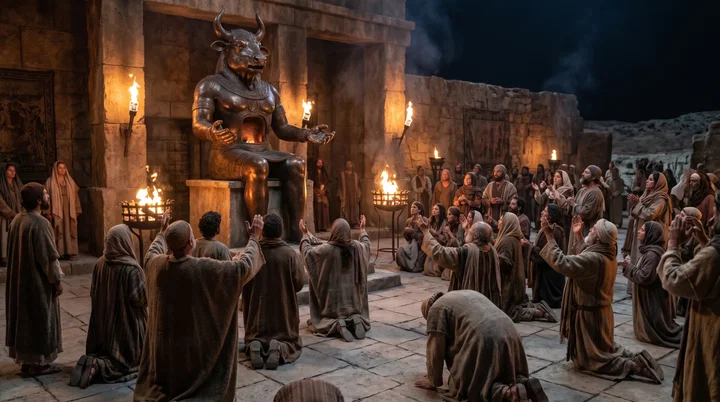
And he defiled Topheth, which is in the valley of the children of Hinnom, that no man might make his son or his daughter to pass through the fire to Molech.
Translations
American King James Version, King James Version, KJV Cambridge Paragraph Bible, Webster Bible, Revised Version, American Standard Version
And he defiled Topheth, which is in the valley of the children of Hinnom, that no man might make his son or his daughter to pass through the fire to Molech.
And he hath defiled Topheth, that [is] in the valley of the son of Hinnom, so that no man doth cause his son and his daughter to pass over through fire to Molech.
And he defiled Topheth, which is in the valley of the sons of Hinnom, that no man might cause his son or his daughter to pass through the fire to Molech.
and he defiled Topheth, which was in the valley of the son of Hinnom,—so that no man might cause his son or his daughter to pass through the fire unto Molech;
Berean Standard Bible, Majority Standard Bible
He also desecrated Topheth in the Valley of Ben-hinnom so that no one could sacrifice his son or daughter in the fire to Molech.
He defiled Topheth, which is in the valley of the children of Hinnom, that no man might make his son or his daughter to pass through the fire to Molech.
And Topheth, in the valley of the sons of Hinnom, he made unclean, so that no man might make his son or his daughter go through the fire to Molech.
He defiled also Topheth, which was in the valley of the children of Hinnom, that no man shoulde make his sonne or his daughter passe through the fire to Molech.
Douay-Rheims (Challoner revision)
And he defiled Topheth, which is in the valley of the son of Ennom: that no man should consecrate there his son or his daughter through fire to Moloch.
Pictures
Cross-references 20 of 24
- Jeremiah 7:31
And they have built the high places of Tophet, which is in the valley of the son of Hinnom, to burn their sons and their daughters in the fire; which I commanded them not, neither came it into my heart.
Both name Topheth in the valley of Hinnom and describe children burned there.
- Jeremiah 19:4-6
Because they have forsaken me, and have estranged this place, and have burned incense in it unto other gods, whom neither they nor their fathers have known, nor the kings of Judah, and have filled this place with the blood of innocents;
Names Topheth and the valley of Hinnom as the site of child sacrifice and judgment.
- Mark 9:43-48
And if thy hand offend thee, cut it off: it is better for thee to enter into life maimed, than having two hands to go into hell, into the fire that never shall be quenched:
Gehenna’s unquenchable fire and undying worm portray the wicked’s final punishment.
- Jeremiah 32:35
And they built the high places of Baal, which are in the valley of the son of Hinnom, to cause their sons and their daughters to pass through the fire unto Molech; which I commanded them not, neither came it into my mind, that they should do this abomination, to cause Judah to sin.
Describes children being made to pass through fire to Molech in the valley.
- 2 Chronicles 28:3
Moreover he burnt incense in the valley of the son of Hinnom, and burnt his children in the fire, after the abominations of the heathen whom the LORD had cast out before the children of Israel.
Both describe children burned in the valley of Hinnom.
- 2 Chronicles 33:6
And he caused his children to pass through the fire in the valley of the son of Hinnom: also he observed times, and used enchantments, and used witchcraft, and dealt with a familiar spirit, and with wizards: he wrought much evil in the sight of the LORD, to provoke him to anger.
Manasseh made his children pass through fire in the valley of Hinnom.
- Joshua 18:16
And the border came down to the end of the mountain that lieth before the valley of the son of Hinnom, and which is in the valley of the giants on the north, and descended to the valley of Hinnom, to the side of Jebusi on the south, and descended to En-rogel,
Both texts name the valley of Hinnom.
- 1 Kings 11:7
Then did Solomon build an high place for Chemosh, the abomination of Moab, in the hill that is before Jerusalem, and for Molech, the abomination of the children of Ammon.
Solomon built a high place for Molech near Jerusalem.
- Jeremiah 19:2
And go forth unto the valley of the son of Hinnom, which is by the entry of the east gate, and proclaim there the words that I shall tell thee,
Identifies the valley associated with Topheth and abominable rites.
- Joshua 15:8
And the border went up by the valley of the son of Hinnom unto the south side of the Jebusite; the same is Jerusalem: and the border went up to the top of the mountain that lieth before the valley of Hinnom westward, which is at the end of the valley of the giants northward:
Locates the valley of Hinnom near Jerusalem.
- Matthew 10:28
And fear not them which kill the body, but are not able to kill the soul: but rather fear him which is able to destroy both soul and body in hell.
Jesus uses Gehenna as an image of the destruction of body and soul.
- 1 Kings 13:2
And he cried against the altar in the word of the LORD, and said, O altar, altar, thus saith the LORD; Behold, a child shall be born unto the house of David, Josiah by name; and upon thee shall he offer the priests of the high places that burn incense upon thee, and men’s bones shall be burnt upon thee.
Josiah fulfills the prophecy by defiling the altar during his reforms.
- Matthew 5:22
But I say unto you, That whosoever is angry with his brother without a cause shall be in danger of the judgment: and whosoever shall say to his brother, Raca, shall be in danger of the council: but whosoever shall say, Thou fool, shall be in danger of hell fire.
Jesus uses Gehenna as an image of punishment.
- Jeremiah 7:32
Therefore, behold, the days come, saith the LORD, that it shall no more be called Tophet, nor the valley of the son of Hinnom, but the valley of slaughter: for they shall bury in Tophet, till there be no place.
Topheth is named in the prophecy of its coming judgment.
- Isaiah 30:33
For Tophet is ordained of old; yea, for the king it is prepared; he hath made it deep and large: the pile thereof is fire and much wood; the breath of the LORD, like a stream of brimstone, doth kindle it.
Topheth is prepared for the king and kindled with divine fire.
- Isaiah 66:24
And they shall go forth, and look upon the carcases of the men that have transgressed against me: for their worm shall not die, neither shall their fire be quenched; and they shall be an abhorring unto all flesh.
Its picture of worms and fire draws on the Valley of Hinnom.
- 2 Chronicles 34
Josiah was eight years old when he began to reign, and he reigned in Jerusalem one and thirty years.
same account of Josiah presented as lesson
- 2 Kings 21:6
And he made his son pass through the fire, and observed times, and used enchantments, and dealt with familiar spirits and wizards: he wrought much wickedness in the sight of the LORD, to provoke him to anger.
Manasseh made his son pass through the fire as part of his idolatry.
- Jeremiah 2:23
How canst thou say, I am not polluted, I have not gone after Baalim? see thy way in the valley, know what thou hast done: thou art a swift dromedary traversing her ways;
Both texts connect the Valley of Hinnom with idolatrous practice.
- 2 Kings 22:1-7
Josiah was eight years old when he began to reign, and he reigned thirty and one years in Jerusalem. And his mother’s name was Jedidah, the daughter of Adaiah of Boscath.
quoted together as Josiah's lesson
Commentary
Each commentary is drawn from primary sources: the writings of Ellen G. White and Adventist pioneers and periodicals. Each commentary is separate. Its own words are not a quotation; follow the references to read the source passages.
Pioneers and periodicals
32 sources
Josiah defiled Topheth in the Valley of the children of Hinnom to stop any man from making his son or daughter pass through the fire to Molech, as part of his resolute purge of Judah's idolatry and restoration of the worship of God.RH Jun 15, 1869ST Jul 2, 1885 The defiling was uncompromising, making the place unfit for use and turning its pride into disgrace, plucking up idolatry root and fibre and allowing no beauty to justify rivalry with God.RH Jun 12, 1860ST Jul 2, 1885RH Nov 12, 1872 Because of that corruption the valley became Jerusalem's dumping place for filth, refuse, carcasses and bodies of criminals, where constant fires burned and worms fed to consume the mass.ST Jan 6, 1904 For that reason the Valley of Hinnom, in Greek Gehenna, became the symbol and type of hell and the absolute destruction and annihilation of the incorrigibly wicked, never a place where things cast in are preserved to burn in eternal torment.RH Aug 4, 1868ST Jan 6, 1904 Jesus used Gehenna, the name of that valley, to illustrate the final destruction of the wicked, and Josiah's removal of heathen worship and restoration of true worship is a pattern for eliminating heathen elements so the people would learn righteousness and turn to the true refuge in God.RH Jun 12, 1860ST May 22, 1879RH Nov 7, 1912ST Feb 3, 1898
Josiah's Reform at Topheth
Josiah defiled Topheth in the Valley of the children of Hinnom so that no man might make his son or his daughter pass through the fire to Molech, also called Moloch.RH Jun 15, 1869RH Aug 23, 1864 This was part of his resolute purge of Judah's idolatry and restoration of the worship of God, making the site unfit for use so it could no longer serve for offerings to Molech.ST Jul 2, 1885ST Jul 2, 1885 Topheth was a fine, pleasant, well-watered place adorned with gardens and fountains.RH Aug 4, 1868 It was the choice suburb of Jerusalem, with the king's gardens, graveled walks, shady lanes, sweet-scented bowers, sparkling fountains, luxurious villas and kiosks, and amid them all the shrine of a cruel god, so that all its luxury was identified in the public mind with idolatry.RH Nov 12, 1872
The Valley of the son of Hinnom, or Gehenna, lay in or formed part of Topheth just south of Jerusalem, where the sacred rites of Molech were performed.RH Aug 4, 1868RH Jun 15, 1869ST Jan 6, 1904 The defiling was an uncompromising act that made Topheth a place of desecration and turned all its pride into disgrace.RH Jun 12, 1860ST Jul 2, 1885RH Nov 12, 1872 It plucked up idolatry root and fibre, guarded against incipient evils, and allowed no beauty to justify rivalry with God.RH Nov 12, 1872 The act belonged to the greatest reformation recorded in Hebrew history.ST Jan 20, 1904 It was undertaken after the found law and Huldah's prophetic counsel, when Josiah broke up and burned idols and idolatrous shrines, destroyed all existing relics of idolatry, defiled idol altars and sites, and degraded priests who had corrupted Jehovah's worship.ST Jan 20, 1904RH Jun 29, 1911
That cleansing removed objects and places for Baal and Astarte, Asherah abominations, sodomites, Chemosh of Moab, Milcom of Ammon, Bethel calf worship, familiar spirits, and incense offered in high places.ST Jan 20, 1904 It also removed objects and priests connected with worship of the sun, moon, and constellations, ending practices established by earlier kings.RH Jun 29, 1911ST Oct 22, 1894 The verse falls within the history of the remaining kingdom of Judah after the ten tribes had been carried away.ST May 5, 1909ST Dec 9, 1897 It is a record of rulers turning from God to gross idolatry and bringing calamity on themselves and their people.ST May 5, 1909
This chapter is the one bright chapter closing wicked and weak reigns, conducted under the good king Josiah, one of Judah's two decisive reformers, supported by godly priests and counselors.ST May 10, 1910ST Jun 3, 1913 Josiah's work in this chapter fulfilled the prophecy of the man of God to Jeroboam recorded in 1 Kings 13, coming just as declared after hundreds of years of waiting.ST May 10, 1910ST Jun 3, 1913 One reading connects the child sacrifice in the valley of the son of Hinnom with Manasseh sacrificing his children to Molech, following the wicked course of his grandfather Ahaz rather than the better course of his father Hezekiah.ST Jul 19, 1905
Gehenna Symbol of Destruction
Because of that corruption the valley became Jerusalem's dumping place for city filth, offal, refuse and combustible waste, with the carcasses of animals and the bodies of criminals, malefactors and executed persons cast there.ST Jan 6, 1904ST Feb 4, 1897ST Nov 2, 1915 Constant fires were kept burning to consume the mass of corruption and worms constantly fed and preyed upon what was cast there, in order to stop the pestilence it would cause.ST Jan 6, 1904ST Feb 4, 1897ST Nov 2, 1915 Having been defiled and polluted with every species of filth after once being celebrated for the worship of Molech, the valley was regarded as accursed.RH Aug 7, 1916RH Aug 29, 1871ST Nov 2, 1915
For that reason the Hebrew Valley of Hinnom, in Greek Gehenna, became the symbol, figure and type of hell, judgment, and the destruction and annihilation of all corrupt and vile things cast in to be destroyed.RH Aug 4, 1868ST Jan 6, 1904RH Aug 7, 1916ST Nov 16, 1876 It is never a place where things cast in are preserved to burn in eternal torment or kept alive in perpetual torment, and it means not the abode or condition of all the dead like Sheol and Hades but the absolute destruction of the incorrigibly wicked.ST Jan 6, 1904RH Jun 12, 1860 Perpetual fires were kept up there to consume all the filth of the city carried there, and the New Testament uses Gehenna in that sense of utter destruction.RH Aug 4, 1868RH Jun 12, 1860RH Aug 7, 1916ST Nov 16, 1876
Its later use for refuse and bodies consumed by fires and worms is the historical origin of the imagery of unquenchable fire and the undying worm.RH Jun 12, 1860ST Feb 17, 1914ST Feb 20, 1907 The worm and fire do not fail to consume what is cast into them, destroying what was cast there and making the valley a fitting image and symbol of utter and complete destruction of the wicked.RH Jun 12, 1860ST Feb 17, 1914ST Feb 20, 1907 The place made vile was to be a symbol for all that is abominable and its name a synonym for hell, and the account also places there the slaying of Sennacherib's army of 185,000 men.ST Jan 6, 1904RH Aug 7, 1916RH Nov 12, 1872 Jesus used Gehenna, the name of that valley, to illustrate future punishment and the final destruction of the wicked.RH Jun 12, 1860ST May 22, 1879
Lessons for Worship Today
Josiah's destruction of idolatrous worship on the high places is a pattern for removing heathen elements and sun-worship customs and establishing the true worship of God.RH Nov 7, 1912ST Feb 3, 1898 Under wicked, sensual kings the people copied the heathen religious use of hills and mountains as protectors and deliverers and followed Baal and Ashtoreth, whose polluting symbols and altars stood there.RH Nov 7, 1912 Under a faithful king those hill groves were cut down and the mountain altars overthrown to stop false worship and child sacrifice, so that the people would learn righteousness and turn from false refuge in the mountains to the true refuge in God.RH Nov 7, 1912
The reform was carried out with uncompromising zeal after finding the Bible, having nothing to do with compromises, plucking up idolatry root and fibre, guarding against incipient evils, crushing the eggs of the serpent, seeing danger where the blinded soul feels secure, and allowing no beauty to justify rivalry with God.RH Nov 12, 1872 Topheth was the choice suburb of Jerusalem, with the king's gardens, graveled walks, shady lanes, sweet-scented bowers, sparkling fountains, luxurious villas and kiosks, and amid them all the shrine of a cruel god, so that all that luxury was identified in the public mind with idolatry.RH Nov 12, 1872 These ancestral treasures were not spared but defiled, and all their pride was turned into disgrace and desecration, with the place made vile to be a symbol for all that is abominable and its name a synonym for hell.RH Nov 12, 1872 By throwing down the idolatrous temples God Himself was recognized, showing that when God's people are nearest to Him there is the least outward expression in mere stone and wood, because what God desires is beauty of character in souls and not architectural beauty.ST Jun 12, 1907
The history illustrates both the need for reform and the persistence of fallen human nature, for the reform sought to end idolatrous worship and to break down its worship and defile its high places, yet the people remained attached to low, sensual religions including sun and Baal worship.RH May 18, 1869 Josiah could not stop Judah's downward course, and the people could quickly return to such practices under another king.RH May 18, 1869 The account is that of Josiah's reformation against idolatrous worship that had supplanted the worship and honor of Jehovah.ST Dec 24, 1885
The worship of Molech or Moloch involved making children pass through fire by casting them into the fire, and this practice was condemned.ST Jul 8, 1886ST Oct 21, 1889 Its worshipers nevertheless treated it as a religious virtue, and those who took part could have consciences that approved their actions.ST Jul 8, 1886ST Oct 21, 1889
Sources