Exodus 30:8
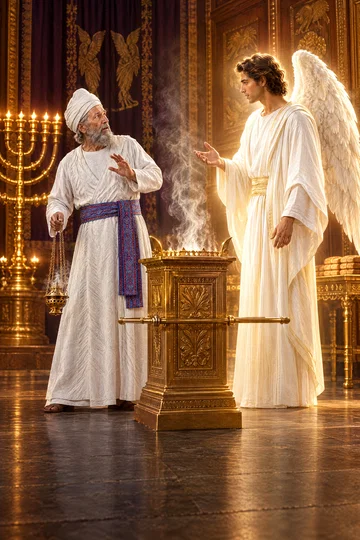
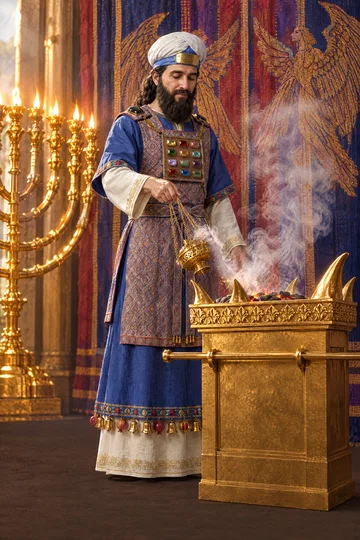
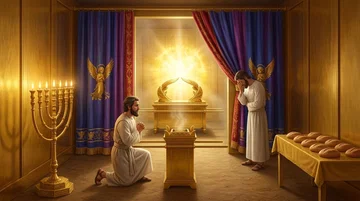
And when Aaron lighteth the lamps at even, he shall burn incense upon it, a perpetual incense before the LORD throughout your generations.
Translations
And when Aaron lights the lamps at even, he shall burn incense on it, a perpetual incense before the LORD throughout your generations.
And when Aaron lighteth the lamps at even, he shall burn incense upon it, a perpetual incense before the LORD throughout your generations.
And when Aaron lighteth the lamps at even, he shall burn incense upon it, a perpetual incense before the Lord throughout your generations.
And when Aaron lighteth the lamps at evening, he shall burn incense upon it; a perpetual incense before the LORD, throughout your generations.
And when Aaron lighteth the lamps at even, he shall burn it, a perpetual incense before the LORD throughout your generations.
And when Aaron lighteth the lamps at even, he shall burn it, a perpetual incense before Jehovah throughout your generations.
and in Aaron's causing the lamps to go up between the evenings, he doth perfume it; a continual perfume before Jehovah to your generations.
And when Aaron lighteth the lamps between the two evenings, he shall burn the incense — a continual incense before Jehovah throughout your generations.
and, when Aaron lighteth the lamps, between the evenings, shall he burn it,—a continual incense before Yahweh, to your generations.
Berean Standard Bible, Majority Standard Bible
When Aaron sets up the lamps at twilight, he must burn the incense perpetually before the LORD for the generations to come.
When Aaron lights the lamps at evening, he shall burn it, a perpetual incense before the LORD throughout your generations.
And every evening, when he puts the lights up in their places, the spices are to be burned, a sweet-smelling smoke going up before the Lord from generation to generation for ever.
Likewise at eue, when Aaron setteth vp the lampes thereof, he shall burne incense: this perfume shalbe perpetually before ye Lord, throughout your generations.
Douay-Rheims (Challoner revision)
And when he shall place them in the evening, he shall burn an everlasting incense before the Lord throughout your generations.
Pictures
Cross-references 20 of 56
- Revelation 8:3-4
And another angel came and stood at the altar, having a golden censer; and there was given unto him much incense, that he should offer it with the prayers of all saints upon the golden altar which was before the throne.
Incense at the altar rises before God with the prayers of the saints.
- Exodus 29:38-42
Now this is that which thou shalt offer upon the altar; two lambs of the first year day by day continually.
The evening incense accompanied the continual morning and evening offerings.
- Luke 1:9-10
According to the custom of the priest’s office, his lot was to burn incense when he went into the temple of the Lord.
The people pray while the priest offers incense.
- Hebrews 8:5
Who serve unto the example and shadow of heavenly things, as Moses was admonished of God when he was about to make the tabernacle: for, See, saith he, that thou make all things according to the pattern shewed to thee in the mount.
Earthly sanctuary service is a copy and shadow of heavenly things.
- Hebrews 9:6-7
Now when these things were thus ordained, the priests went always into the first tabernacle, accomplishing the service of God.
Contrasts the priests’ continual first-room service with the high priest’s yearly service.
- Psalms 141:2
Let my prayer be set forth before thee as incense; and the lifting up of my hands as the evening sacrifice.
Prayer is compared to incense offered before God and linked with the evening sacrifice.
- Hebrews 8:1-2
Now of the things which we have spoken this is the sum: We have such an high priest, who is set on the right hand of the throne of the Majesty in the heavens;
Christ ministers as High Priest in heaven’s true sanctuary, typified by the earthly sanctuary.
- Exodus 30:34-36
And the LORD said unto Moses, Take unto thee sweet spices, stacte, and onycha, and galbanum; these sweet spices with pure frankincense: of each shall there be a like weight:
Specifies the sacred incense mixture and its use before the testimony.
- Exodus 40:26-27
And he put the golden altar in the tent of the congregation before the vail:
The golden altar is set before the veil, and sweet incense is burned on it.
- Hebrews 7:25
Wherefore he is able also to save them to the uttermost that come unto God by him, seeing he ever liveth to make intercession for them.
The perpetual incense service represents Christ’s continual intercession.
- Exodus 25:31-37
And thou shalt make a candlestick of pure gold: of beaten work shall the candlestick be made: his shaft, and his branches, his bowls, his knops, and his flowers, shall be of the same.
Describes the golden candlestick and its seven lamps.
- Hebrews 9:24
For Christ is not entered into the holy places made with hands, which are the figures of the true; but into heaven itself, now to appear in the presence of God for us:
Christ appears before God on behalf of his people, fulfilling the earthly sanctuary service.
- Hebrews 9:2-4
For there was a tabernacle made; the first, where in was the candlestick, and the table, and the shewbread; which is called the sanctuary.
Lists the sanctuary furnishings, including the incense altar.
- Numbers 28:3-8
And thou shalt say unto them, This is the offering made by fire which ye shall offer unto the LORD; two lambs of the first year without spot day by day, for a continual burnt offering.
The morning and evening offerings accompanied the daily incense service.
- Leviticus 24:2-4
Command the children of Israel, that they bring unto thee pure oil olive beaten for the light, to cause the lamps to burn continually.
Both texts command the sanctuary lamps to burn continually.
- Exodus 27:20-21
And thou shalt command the children of Israel, that they bring thee pure oil olive beaten for the light, to cause the lamp to burn always.
Both texts describe the regular tending of the sanctuary lamps from evening to morning.
- Exodus 40:25
And he lighted the lamps before the LORD; as the LORD commanded Moses.
The lamps are lit before the Lord as part of sanctuary service.
- Leviticus 10:1-2
And Nadab and Abihu, the sons of Aaron, took either of them his censer, and put fire therein, and put incense thereon, and offered strange fire before the LORD, which he commanded them not.
Unauthorized fire in worship brings judgment.
- Hebrews 10:19-22
Having therefore, brethren, boldness to enter into the holiest by the blood of Jesus,
Christ’s mediation opens the way for sinners to approach God.
- Exodus 30:1-3
And thou shalt make an altar to burn incense upon: of shittim wood shalt thou make it.
Describes the golden altar where incense was burned.
Commentary
Each commentary is drawn from primary sources: the writings of Ellen G. White and Adventist pioneers and periodicals. Each commentary is separate. Its own words are not a quotation; follow the references to read the source passages.
Ellen G. White
13 sources
The verse commands a continual daily service in which fragrant incense is burned on the golden altar in the evening when the lamps are lit, as it is in the morning.PP 348.1RH Mar 25, 1875RH Apr 8, 1915 The fire for it was kindled by God Himself and was to be kept burning perpetually as holy fire, for only that sacred fire was to be used.2RED 82.1–2ST Mar 4, 1903RH Mar 25, 1875 The incense rising with the prayers of the people is an emblem of Christ's mediation and perpetual intercession, and of His perfect righteousness which alone makes the worship of sinful people acceptable to God.2RED 82.1–2PP 353.2RH Nov 8, 1915RH Mar 25, 1875 The prayers, praise, confession and thanksgiving of believers are defiled by sin and unacceptable on their own, but Christ as intercessor presents them with His spotless righteousness and cleansing blood, and thus purified they rise before God who returns gracious answers.Ms 50, 1900, par. 17–18 In heaven there is an altar of purest gold where the prayers of the saints in faith come up to Jesus as He stands by the ark, and He offers them with the smoke of the incense to His Father as a sweet fragrance, while glory and light come from the Father's throne to Jesus and from Jesus are shed upon those who prayed.LSEGW 100.1–3SG1 158.1
Evening Service in Sanctuary
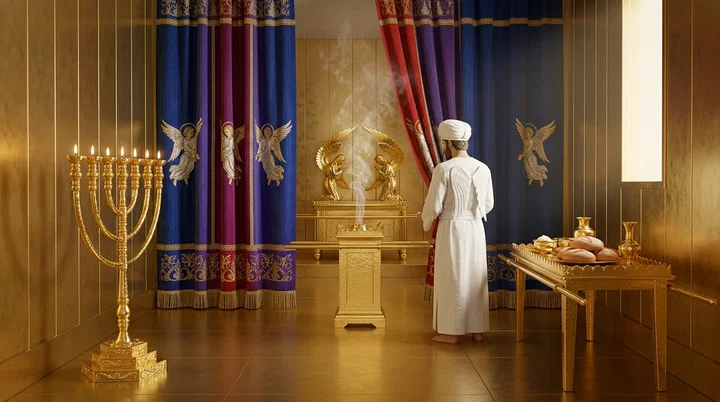
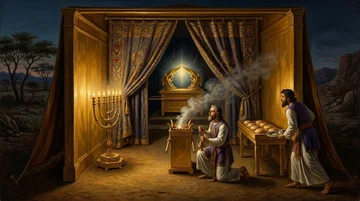
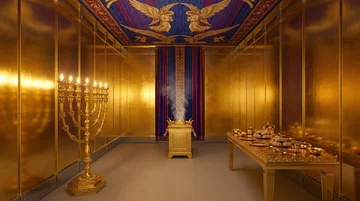
The verse commands a continual daily service in which sweet incense is burned on the golden altar in the evening when the lamps are lit, as it is in the morning.PP 348.1RH Mar 25, 1875RH Apr 8, 1915PP 352.2 That golden altar stood in the holy place of the wilderness tabernacle before the veil separating the holy from the most holy place, with the seven-lamped candlestick on the south side giving light by day and by night and the table of showbread on the north.RH Nov 8, 1915 The sanctuary lamps burned continually day and night alongside the altar of incense, the seven lamps lighting both apartments and reflecting from the gold-covered walls upon the sacred furnishings.ST Mar 4, 1903
The fire for the incense was kindled by God Himself and was to be carefully kept burning perpetually as holy fire, never extinguished, kept burning day and night on the censer.2RED 82.1–2ST Mar 4, 1903RH Mar 25, 1875 Only that sacred fire provided by God was to be used to kindle the continually offered incense before the Lord.2RED 82.1–2ST Mar 4, 1903RH Mar 25, 1875 Offering with common fire instead violated His express directions for this holy service, insulted the infinite God, and was punishable with death.2RED 82.1–2RH Mar 25, 1875
The fragrant cloud of the continually offered holy incense filled the sacred apartments and spread beyond the tabernacle.PP 348.1ST Mar 4, 1903 As the priest looked toward the hidden mercy-seat while offering, the rising cloud accompanied the manifestation of God's glory there.ST Mar 4, 1903 Under Ahaz the temple doors were closed and this regular evening service ceased, so the evening incense no longer ascended.RH Apr 8, 1915
Symbol of Christ's Mediation
The evening incense with the morning incense was to rise before God mingled with the earnest prayers of His people praying without, and is an emblem of the mediation of Christ.2RED 82.1–2RH Nov 8, 1915RH Mar 25, 1875 The incense burned daily on the golden altar sent up its cloud of fragrance together with the prayers of Israel, representing Christ's mediation and the access to God opened through Him alone.2RED 82.1–2RH Nov 8, 1915RH Mar 25, 1875 The fire that kindled it was to be only fire of God's own kindling, burning day and night and never extinguished, kept burning perpetually on the censer.2RED 82.1–2 That divine fire represents the communication between God and man opened through Jesus Christ alone, and no sacrifice is acceptable to God unless salted and seasoned with it.2RED 82.1–2
The continual incense is a symbol of perpetual intercession and of Christ's perfect righteousness, which is credited to His people through faith and alone makes the worship of sinful people acceptable to God.PP 353.2 The prayers, praise, confession, obedience, penitence, and thanksgiving of believers ascend as that continual incense, yet they are defiled by human sin and cannot be acceptable on their own.Ms 50, 1900, par. 17–18 Christ as intercessor at God's right hand presents them with His spotless righteousness and the cleansing power of His blood.Ms 50, 1900, par. 17–18 Thus purified and made acceptable through His merits they rise before God, and all obedience, penitence, praise, and thanksgiving must rest on His righteousness while God returns gracious answers.Ms 50, 1900, par. 17–18
The altar and its services point through blood and incense to Christ as the great Mediator through whom repentant believers may approach God and receive mercy and salvation.ST Mar 4, 1903PP 353.2 The altar fire was kindled by God and carefully kept burning with holy incense, whose fragrant cloud filled the sanctuary, and as the priest looked toward the hidden mercy-seat while offering, the rising cloud accompanied the manifestation of God's glory there.ST Mar 4, 1903 This service illustrates how God's people by faith direct their prayers to Christ, their unseen Mediator before the mercy-seat in the heavenly sanctuary, and claim the benefits of His mediation.ST Mar 4, 1903
Heavenly Altar and Antitype
In the temple in heaven there is an altar of incense of purest gold in the holy place, in the first apartment, together with the candlestick with seven lamps and the table of showbread, and a golden censer between the cherubim before the ark in the most holy place, in the second apartment.LSEGW 100.1–3SG1 158.1 The burning incense is the prayers of the saints in faith coming up to Jesus as He stands by the ark, and as the prayers come up to Him the incense smokes.LSEGW 100.1–3SG1 158.1 He offers up their prayers with the smoke of the incense to His Father as a sweet fragrance rising like smoke of most beautiful colors.LSEGW 100.1–3SG1 158.1 As the incense ascends to the Father, excellent glory and light come from the Father's throne to Jesus, and from Jesus are shed upon those whose prayers ascended like sweet incense, overshadowing the mercy-seat until the train of glory fills the temple.SG1 158.1
The altar named here is the altar of perpetual incense, and in its antitypical application the High Priest's coming to this altar after leaving the Most Holy marks a special time of prayer and confession of sins and the great cry, before the antitypical atonement is finished.RH Feb 14, 1856
Sources
Pioneers and periodicals
82 sources
Aaron alone as high priest was to enter the first apartment twice each day through the year, burning sweet incense on the golden altar before the veil when he dressed the lamps in the morning and when he lighted them at evening, as a regular continual offering before the Lord throughout Israel's generations.RH Dec 1, 1910RH Feb 19, 1901ST Apr 22, 1889RH Jul 2, 1914ST Nov 19, 1912 The altar stood in the holy place with the candlestick on the south and the table of showbread on the north, overlaid with gold and kindled only with sacred fire kindled by God, its fragrance filling the holy place and spreading far beyond while the seven lamps gave perpetual light.ST May 20, 1880STST Nov 26, 1912ST Apr 1, 1913RH Aug 3, 1916 The rising incense is Christ's merits, intercession and perfect righteousness, with His sufferings and atoning sacrifice presented morning and evening, which alone makes the worship and prayers of sinful people acceptable to God.RH Dec 1, 1910RH Nov 28, 1912ST Nov 26, 1912ST May 15, 1901RH Nov 28, 1912 The lamps are the Spirit of the Lord, and Christ as High Priest among the candlesticks removes what hinders His people's shining and gives more of the Holy Spirit, covering the surrendered with the fragrance of His righteousness in perpetual union, light and service.RH Dec 1, 1910ST Nov 19, 1912RH Sep 26, 1912ST May 8, 1901 The earthly service was a copy of the heavenly sanctuary where Jesus now continually intercedes with the prayers of the saints, and its morning and evening offering with the worship of the people is the foundation of morning and evening worship in families.ST Oct 29, 1894ST Jun 26, 1901ST Dec 10, 1912ST May 15, 1901
Giving of the Instruction
Exodus 30:8 was given to Moses during his forty days and forty nights in the presence of God on Mount Sinai, after the covenant with Israel was made and ratified, together with the tables of stone as legal ordinances binding the ransomed people to Jehovah by solemn covenant.ST Mar 25, 1889RH Dec 31, 1861ST Dec 10, 1896 It belongs to the instructions concerning the sanctuary in Exodus 25 to 31, showing how particular God is in that which pertains to His worship.ST Mar 25, 1889RH Dec 31, 1861ST Dec 10, 1896 Like all worship, all services, and all remedies, its object is to bring men into harmony with the holy law of God given at the close of that holy interview, written on two tables of stone and graven there by the finger of God.ST Mar 25, 1889
It is part of the minute description in Exodus 25 to 40 of the sanctuary built in the days of Moses exactly according to the pattern shown in the mount.ST Oct 29, 1894ST Feb 13, 1912 It belongs to the completion of the Lord's directions concerning the building of the sanctuary given in Exodus 29 through 34, which were explicitly carried out as recorded in Exodus 35 through 39 and part of Exodus 40, when the sanctuary was then dedicated and filled with God's glory.ST Oct 29, 1894ST Feb 13, 1912 Moses placed the altar and burned sweet incense upon it in that fulfillment.ST Feb 13, 1912 That sanctuary was composed of two apartments separated by a veil, the first called the holy place twenty cubits long, ten cubits wide and ten cubits high, and the second called the most holy place ten cubits in each of its dimensions, with sides and rear made of acacia boards overlaid with gold set by tenons into silver sockets weighing a talent and held at the top by bars through rings.ST Oct 29, 1894
It belongs not to what God spoke directly to the people from Sinai, to which He added no more and which He alone wrote on stone, but to what was commanded by the hand of Moses and recorded chiefly in Exodus 25 to 30 and Leviticus.ST Apr 15, 1886ST May 6, 1875ST Jul 8, 1886 It falls within the portion of Exodus that includes statutes and judgments, including ceremonial laws concerning offerings, sacrifices, and types, called God's law in Malachi.ST Apr 15, 1886ST May 6, 1875 It is distinguished from the moral law as among the burdensome ceremonies and carnal ordinances imposed until the time of reformation, a yoke which neither the fathers nor the apostles were able to bear, identified as part of the description of the worldly sanctuary connected with the first covenant and its ordinances of divine service.ST Apr 15, 1886ST May 6, 1875ST Aug 5, 1889
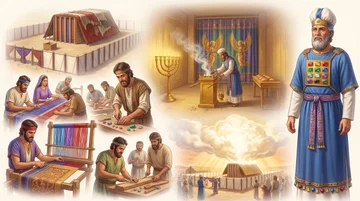
Its margin is used as evidence that the Hebrews reckoned two evenings in a day, distinguishing the interval between sunset and complete darkness from the later evening. The instructions to which it belongs set forth God's plan for salvation from sin and His way of dealing with sinners. They were given as a great multiple object-lesson comprehending the great plan of salvation for a people unfitted by hundreds of years of slavery to comprehend God's salvation and the character He required, to be built from free-will offerings of the children of Israel so God might dwell among them, by workmen specially endowed by God with God's Spirit so they could carry out the work as directed according to the divine pattern.ST Jan 27, 1909
Place and Furnishings
The golden altar of incense stands in the tent of meeting in the holy place, the first apartment, before the veil that separates it from the most holy place and the immediate presence of God, at the western extremity opposite the entrance, and not in the most holy place.ST May 20, 1880STRH Jan 6, 1853STST Mar 11, 1886 It is the place where sweet incense was burned before God night and morning in connection with the lamps, as a regular continual perpetual incense before the Lord throughout Israel's generations.ST Mar 11, 1886ST Aug 19, 1913 The sanctuary itself was an oblong building ten cubits wide and thirty cubits long, composed of two apartments separated by a veil.ST Oct 29, 1894RH Feb 18, 1858RH Oct 2, 1856 The first, called the holy place, was twenty cubits long, ten cubits wide and ten cubits high, and the second, called the most holy place, was ten cubits in each of its dimensions, with sides and rear made of acacia boards overlaid with gold set by tenons into talent-weight silver sockets and held at the top by bars through rings.ST Oct 29, 1894 The altar for the evening burning is the one whose construction is directed in the preceding verses, overlaid with gold, about three and a half feet high and nearly two feet square, set before the veil in the holy place, and it was to be anointed with holy anointing oil made by special direction from fragrant herbs.RH Jul 2, 1914RH Mar 1, 1870
Alongside the altar stood the candlestick on the south side and the table of showbread on the north.RH Nov 8, 1915RH Aug 3, 1916 The candlestick beaten out of one solid piece of gold with its seven lamps gave light to both apartments because the sacred apartments had no windows to admit natural light, and it was kept burning day and night.ST Mar 21, 1911RH Nov 8, 1915ST Mar 4, 1903 The gold-plated walls reflected that light upon the richly embroidered blue and purple and scarlet curtains with shining cherubim, upon the table of showbread, and upon the altar of incense glittering like burnished gold, presenting a scene of magnificence and glory.ST Mar 21, 1911 The lamps were trimmed and filled with pure olive oil every morning and evening when incense was offered, to give continuous perpetual light day and night, and once lighted they were never to go out.ST Apr 29, 1897ST Mar 11, 1886 They were not all extinguished at once and relighted each evening to shed light by day and night, and snuffers were used to remove what hindered a lamp from shining while oil was supplied at the same time.ST Apr 29, 1897ST May 8, 1901
The fire upon the altar of incense was kindled by God himself and was sacredly cherished and carefully kept burning, never allowed to go out.ST Mar 4, 1903ST Apr 1, 1913RH Feb 2, 1911ST Nov 5, 1894 The incense was to be kindled only with that sacred fire which God had provided and which was to remain burning, and using common fire instead violated explicit directions for worship.RH Mar 25, 1875 The holy fire was kept continually burning with holy incense renewed every morning and evening as a continual service before the Lord.ST Nov 26, 1912ST Apr 1, 1913RH Feb 2, 1911 Its fragrance lasted through the interval between the morning and evening services, filling the holy place and extending into the most holy place, diffusing day and night through the sacred apartment and far around the tabernacle, spreading through the sanctuary and far beyond its court.ST Mar 4, 1903ST Apr 22, 1897RH Feb 2, 1911ST Nov 5, 1894 As the priest looked toward the hidden mercy-seat while offering, the rising fragrant cloud filled the sanctuary and accompanied the manifestation of God's glory there.ST Mar 4, 1903
Daily Evening Service
Aaron as high priest alone performed this service, and not the common priests who served by course part of the time in the temple and part in the villages.RH Dec 1, 1910RH Dec 1, 1910 He entered the first apartment twice every day throughout the year to burn sweet incense on the golden altar and to dress, trim, and light the lamps morning and evening, so at least two daily services belonged to him.RH Dec 1, 1910ST Nov 19, 1912ST Nov 26, 1912RH Dec 1, 1910 This daily year-round ministry of caring for the lamps and burning the incense was a regular service of the high priest, picturing Christ the High Priest among the candlesticks giving needed help through His Spirit.ST Nov 19, 1912ST Nov 19, 1912ST Nov 26, 1912 In the morning He directs the day, and in the evening He enlightens the mind to review the day and detect faults and neglected duties.ST Nov 19, 1912
When Aaron lighted the lamps at evening he burned incense upon the altar, just as he burned incense each morning when he dressed and tended the lamps.RH Feb 19, 1901ST Apr 22, 1889RH Jul 2, 1914ST Jan 7, 1886ST Jan 14, 1886 It was a continual, regular, perpetual incense before the Lord throughout Israel's generations, with an evening offering paired with a morning offering.ST Apr 22, 1889ST Jan 7, 1886RH Nov 28, 1912ST Jun 26, 1901ST Jan 14, 1886 The altar for this service is the one whose construction is directed in the preceding verses, to be anointed with holy anointing oil made by special direction from fragrant herbs.RH Jul 2, 1914 The evening incense accompanied the daily lamb offering and the people's prayers, as part of the daily service of the earthly sanctuary whose priestly rites were a copy and shadow of service in the heavenly sanctuary.RH Feb 19, 1901RH Nov 28, 1912ST Jun 26, 1901 There the smoke of the incense ascends with the prayers of the saints before God, for the incense is a symbol of the sufferings and sacrifice of the Son of God in man's behalf, presented afresh morning and evening before the throne of God.RH Nov 28, 1912 This service was God's plan to be remembered and observed by His people in all time, remaining even under the new dispensation after most of the old forms and ceremonies passed away.RH Jul 2, 1914 The account of Aaron's incense in the crisis described in Numbers 16 shows that incense offered with prayer made atonement for the people and stood between the living and the dead.RH Feb 19, 1901
The evening incense with lamp-tending belongs to the daily ministration in the holy place, the first apartment, performed by the Levitical priesthood.RH Mar 8, 1870ST Jun 26, 1901RH Feb 2, 1911 Together the offering of incense, the trimming of the lamps, the morning and evening burnt offering with its lamb offerings, and the morning and evening worship of the people belong together.ST Nov 19, 1912ST Jun 26, 1901RH Feb 2, 1911 It stood alongside the other daily work for Sabbaths, feasts, and individual offerings, distinct from the yearly work in the most holy place, and that whole earthly ministration was the example and shadow of Christ's more excellent ministry in the true tabernacle in heaven.RH Mar 8, 1870 While the incense was offered the whole multitude of the people prayed without, with all the families of Israel engaged in prayer both morning and evening.RH Nov 28, 1912ST Mar 14, 1911 At that hour the angel Gabriel appeared to Zacharias to announce the birth of John. The high priest placed the finely compounded spices on coals, making a fragrant cloud that separated him from God as he addressed and blessed Him, representing prayers offered to God, and after Israel's return from Babylon the people joined their prayers with the rising incense, whose continual rising with Israel's prayers represents the people's prayers before God's throne.ST Mar 14, 1911ST May 15, 1901ST Sep 6, 1910
The golden altar received blood from individual atonements during the daily ministry, and its accumulated uncleanness was cleansed once a year when the high priest applied the sin-offering blood to its horns.RH Sep 16, 1852 The prescription of perpetual observance applied for the duration of its appointed purpose as part of the Jewish religious system of types and shadows pointing to Christ, not without end.ST Jan 24, 1911ST Jun 26, 1907RH Jun 28, 1864RH Jun 10, 1862 That sanctuary service with its sacrifices and offerings, built by explicit directions in Exodus 25 to 31 for a movable dwelling-place in the wilderness after Israel was brought out from under Pharaoh and across the Red Sea that God might dwell among men, first pitched in the wilderness and afterward succeeded by Solomon's temple in Jerusalem where true worship centered until Christ's sacrifice, passed away entirely and forever when Christ came and died once for all and the veil of the temple was rent in twain.ST Jan 24, 1911ST Jun 26, 1907RH Jun 28, 1864 Under Ahaz the temple doors were closed and this evening temple service ceased, so the evening incense no longer ascended.RH Apr 8, 1915
Meaning of Incense and Lamps
The evening incense burned when the lamps were lighted represents the righteousness of Christ, His merits and intercession and perfect righteousness, including the righteousness of the coming Messiah imputed to His people by faith.ST Nov 19, 1902ST Nov 26, 1912ST May 15, 1901ST Nov 19, 1902ST Apr 1, 1913 That righteousness alone makes the worship of sinful people acceptable to God, so that prayers joined with it may be offered and heard at any time, and sinners approach God through Christ the Mediator at a place of perpetual intercession to receive mercy and salvation.ST Nov 19, 1902ST Nov 26, 1912ST Nov 19, 1902 The incense is also a symbol of the sufferings and sacrifice of the Son of God in man's behalf, even His atoning blood and sacrifice, presented afresh morning and evening before the throne of God.RH Nov 28, 1912RH Nov 28, 1912 In heaven the antitype is seen where the smoke of the incense ascends with the prayers of the saints before God, presenting the prayers of praying saints with the merits of the crucified and risen Saviour.RH Nov 28, 1912RH Nov 28, 1912
The incense further represents God's grace, love, and favor, even the grace of supplication that makes imperfect prayers effectual.ST Mar 14, 1911STST Aug 19, 1913ST Dec 29, 1909 The Spirit clothes and shapes and refines the prayers of supplicating mortals so they rise as sweet incense, and thus the prayers of even the humblest become acceptable.ST Mar 14, 1911 The rising fragrant cloud represents prayers offered to God, ascending together with Israel's prayers and with the prayers of saints.ST Mar 4, 1903RH Feb 19, 1901ST May 15, 1901ST Sep 6, 1910 Its rising fragrance represented the people's desire to please the One they served, and it was a reminder that the penitent prayer of a reconciled sinner is pleasing to God.RH Feb 10, 1910ST Mar 10, 1898
The high priest placed the finely compounded spices on coals, making a fragrant cloud that separated him from God as he addressed and blessed Him, while looking toward the hidden mercy-seat where God's glory was manifested.ST Mar 4, 1903ST May 15, 1901 After Israel's return from Babylon the people joined their prayers with the rising incense, and the evening incense accompanied the daily lamb offering and the people's prayers.RH Feb 19, 1901ST May 15, 1901 The lamps tended at the same evening hour represent the Spirit of the Lord.RH Dec 1, 1910 Their care illustrates Christ's work among His people, for as snuffers removed what hindered a lamp from shining while oil was supplied at the same time, so He removes what hinders their light and gives them more of the Holy Spirit, that they may shine more brightly.RH Dec 1, 1910ST May 8, 1901 In this type the light also represents Christ, the light of life that illumines the hearts of those who accept the Gospel.
The trimming and lighting of the lamps points to Christ, our High Priest, among the candlesticks in the heavenly sanctuary.ST Nov 19, 1912ST Nov 19, 1912RH Sep 26, 1912 Through His Spirit He gives needed help, in the morning to direct the day, and in the evening to enlighten the mind to review the day and detect faults and neglected duties.ST Nov 19, 1912 One who wholly surrenders to God is covered with the fragrant incense of Christ's righteousness and shines as a bearer of God's Spirit.ST Nov 19, 1912 The ever-fragrant incense with constantly burning lamps symbolizes the perpetual life union, light, power, and service between God and His people.ST Mar 12, 1912
Heavenly Sanctuary and Christ
The wilderness tabernacle was built exactly according to the pattern shown in the mount, minutely described in Exodus 25 to 40 with its dimensions, materials and furnishings exactly obeyed so that God might dwell among men.ST Oct 29, 1894ST Jun 26, 1907ST Jun 19, 1907 It was a movable dwelling first pitched in the wilderness after Israel was brought out from under Pharaoh and across the Red Sea, afterward succeeded by Solomon's temple in Jerusalem where until Christ's sacrifice the true worship of God centered.ST Jan 24, 1911ST Jun 26, 1907 It comprised two apartments separated by a veil, the first called the holy place twenty cubits long, ten cubits wide and ten cubits high, and the second called the most holy place ten cubits in each dimension, with sides and rear of acacia boards overlaid with gold set by tenons into talent-weight silver sockets and held at the top by bars through rings.ST Oct 29, 1894 The evening burning of incense at the lighting of the lamps belonged to the daily service in the holy place, the first apartment, performed by the Levitical priesthood alongside the regular morning and evening burnt offering and the other daily work for Sabbaths, feasts and individual offerings, distinct from the yearly work in the most holy place.ST Jun 26, 1901RH Mar 8, 1870 That whole earthly ministration with its sacrifices and offerings was the example and shadow and copy of service in the heavenly sanctuary, a pattern and object lesson of Christ's more excellent priestly ministry in the true tabernacle in heaven which the Lord pitched and not man, pointing to the coming Messiah, the Lamb of God that takes away sin, and His power to forgive sin, transform character and deliver from burdens.ST Jun 26, 1901ST Jun 26, 1907ST Jun 19, 1907RH Mar 8, 1870 That worldly sanctuary passed away entirely and forever when Christ came and died once for all and the veil of the temple was rent in twain.ST Jan 24, 1911ST Jun 26, 1907
The earthly altar of incense and its service correspond to an altar of incense in the heavenly sanctuary, the earthly arrangement and services being a shadow of the true heavenly sanctuary and its work.ST Nov 11, 1897ST Mar 17, 1898ST Jul 2, 1896 At the hour the officiating priest offered the incense morning and evening, all the families of Israel were engaged in prayer, and after the return from Babylon the people joined their prayers with the rising incense, for the high priest placed the finely compounded spices on coals making a fragrant cloud that separated him from God as he addressed and blessed Him.RH Nov 28, 1912ST May 15, 1901 That service represented prayers offered to God, and in the antitype in heaven the smoke of the incense ascends with the prayers of the saints before God, where incense is offered with the prayers of God's people and where Christ ministers.RH Nov 28, 1912ST May 15, 1901ST Jul 2, 1896 The incense is a symbol of the sufferings and sacrifice of the Son of God in man's behalf, presented afresh morning and evening before the throne of God.RH Nov 28, 1912
The high priest alone performed the daily service at the golden altar and lampstand in the first apartment, each morning and evening throughout the year burning incense and trimming and lighting the lamps, and this priestly work was a type of Christ's work.ST Dec 10, 1912ST Nov 26, 1912 The continual incense kept burning on the golden altar and renewed every morning and evening was a shadow of Christ's work as heavenly High Priest and continual intercession, the altar being a place of perpetual intercession by which sinners approach God through Christ the Mediator and receive mercy and salvation.ST Nov 19, 1902ST Nov 26, 1912RH Jan 6, 1916 The incense represents Christ's merits, intercession and perfect righteousness imputed to His people through faith, which alone makes the worship of sinful people acceptable to God, so that the continually ascending incense signifies that prayers may be offered and heard at any time.ST Nov 19, 1902ST Nov 26, 1912 The altar fire was kindled by God himself and sacredly kept burning with holy incense whose fragrant cloud filled the sanctuary, and as the priest looked toward the hidden mercy-seat while offering incense the rising cloud accompanied the manifestation of God's glory there, illustrating how God's people direct their prayers by faith to Christ their unseen Mediator before the mercy-seat in the heavenly sanctuary and claim the benefits of His mediation.ST Mar 4, 1903RH Mar 25, 1875 The incense rising with the people's prayers represented Christ's mediation and the access to God opened through Him, and kindling it with common fire instead of the sacred fire God had provided violated His explicit directions for worship.RH Mar 25, 1875 The lighting of the lamps and burning of incense shadowed Christ passing within the first veil when He began His service in the first apartment to work for humanity, where God's visible presence at times prevented entry.ST Nov 19, 1902ST Dec 10, 1912ST Nov 26, 1912
The altar of incense with its evening burning of perpetual incense belonged to an oblong earthly building ten cubits wide and thirty cubits long erected by Moses according to the pattern, standing with its two apartments, golden candlestick, ark of the covenant, table of showbread and continual priestly service as part of that type, so that each as a type or figure must have something answering to it in the antitypical sanctuary of the better covenant.RH Feb 18, 1858RH Oct 2, 1856 Nothing on earth answers to it, with volcanoes such as Vesuvius or Hecla alleged only to expose the absurdity, just as nothing on earth answers to the golden candlestick or table of showbread.RH Feb 18, 1858 The absence of any such answering realities in the land of Canaan, in the whole earth, in the church, or in heaven and earth together proves none of those is the sanctuary of the new covenant, and the earth therefore is not the sanctuary, since sanctuary means a holy sacred dwelling place for the Most High, a name never given to the earth in Scripture.RH Feb 18, 1858RH Oct 2, 1856
In antitypical application the High Priest's coming to this altar of perpetual incense after leaving the Most Holy marks a special time of prayer, confession of sins and the great cry before the antitypical atonement is finished.RH Feb 14, 1856 The tabernacle's worship centered on the holy of holies, where the law of God rested beneath the mercy seat with glory over it, and together with the continual burnt offering, showbread, priesthood and glory over the mercy seat the continual evening incense taught the gospel realities of forgiveness of sin and the revelation of God's glory.ST Jun 19, 1907RH Aug 27, 1908 Its builders were blessed with God's Spirit so they could carry out the building and service as directed, and its continual character shows that those who become temples of the living God are to serve Him continually and Him alone.ST Jan 27, 1909RH Aug 27, 1908
Prayer Worship and Life
The united service of burning sweet incense on the golden altar when dressing and lighting the lamps, together with the morning and evening burnt offering and the morning and evening worship of the people praying without, is the foundation of morning and evening worship in families, carrying a promise of special blessing.RH Jul 2, 1914 Families are to pray morning and evening with petition, thanksgiving and praise, and this plan remains even under the new dispensation after most of the old forms and ceremonies passed away, while families that do not call upon God's name are classed among the heathen.RH Jul 2, 1914RH Nov 28, 1912 At that hour of prayer the angel Gabriel appeared to Zacharias to announce the birth of John, and the altar for this continual offering before the Lord throughout the generations is the one whose construction is directed in the preceding verses, to be anointed with holy anointing oil made by special direction from fragrant herbs.RH Jul 2, 1914
The morning offering is an example of seeking God early, and the perpetual evening burning when the lamps are lighted teaches that service to God is continual.ST Sep 2, 1880RH Nov 25, 1902 Continual means constant or ongoing, a word used for several things connected with Israel's worship including incense, and together with the continual burnt offering, showbread, priesthood and glory over the mercy seat it taught forgiveness of sin and the revelation of God's glory.RH Aug 27, 1908 Those who become temples of the living God are to serve Him continually and Him alone.RH Nov 25, 1902RH Aug 27, 1908
The fragrance of that continual morning and evening offering belongs to the prayers and worship of the family gathered at the home altar.ST May 21, 1912 As the high priest ministered at the altar of incense and emerged suffused with its fragrance, so communion with God leaves a person marked by a heavenly fragrance.ST May 6, 1880
Aaron's lighting of the lamps supplies the pattern for the evening service, in which a deacon lights a sevenfold lamp before the altar after the introduction.ST Apr 24, 1879RH Apr 17, 1879 That evening ministry is antitypical to Aaron's act of lighting the lamps and burning incense before the Lord.ST Apr 24, 1879RH Apr 17, 1879
The altar stood in the holy place just before the veil to the most holy place, where perpetual incense was burned morning and evening while the people stood without praying.ST Mar 14, 1911 The incense is the grace of supplication, the favor of God that makes the imperfect prayers of mortals acceptable, with the Spirit clothing and shaping and refining them so they rise as sweet incense.ST Mar 14, 1911 This service assures God's people that their prayers are heard, recorded, remembered and made effectual before war and calamity come, and will be answered in time even if nations must be overthrown to answer them.ST Mar 14, 1911
The evening incense accompanied the daily lamb offering and the people's prayers, and incense offered with prayer made atonement for the people and stood between the living and the dead in the crisis described in Numbers 16.RH Feb 19, 1901 The high priest placed finely compounded spices on coals, making a fragrant cloud that separated him from God as he addressed and blessed Him.ST May 15, 1901 After the return from Babylon the people joined their prayers with the rising incense, and in the heavenly temple incense is offered with the prayers of God's people.RH Feb 19, 1901ST May 15, 1901
Sources