Genesis 27:22
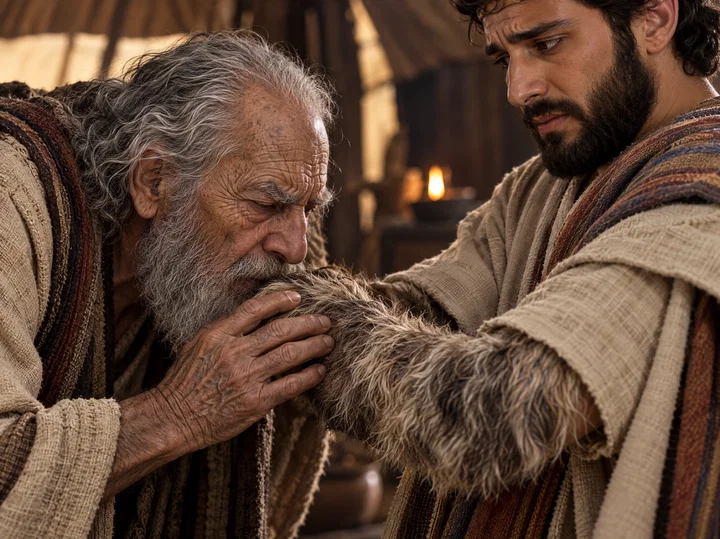
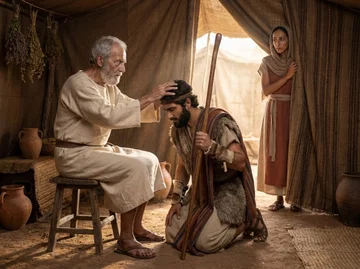
And Jacob went near unto Isaac his father; and he felt him, and said, The voice is Jacob’s voice, but the hands are the hands of Esau.
Translations
And Jacob went near to Isaac his father; and he felt him, and said, The voice is Jacob’s voice, but the hands are the hands of Esau.
King James Version, KJV Cambridge Paragraph Bible, Revised Version, American Standard Version
And Jacob went near unto Isaac his father; and he felt him, and said, The voice is Jacob’s voice, but the hands are the hands of Esau.
And Jacob went near to Isaac his father; and he felt him, and said, The voice is Jacob's voice, but the hands are the hands of Esau.
And Jacob cometh nigh unto Isaac his father, and he feeleth him, and saith, 'The voice [is] the voice of Jacob, and the hands hands of Esau.'
And Jacob drew near to Isaac his father; and he felt him, and said, The voice is Jacob's voice, but the hands are the hands of Esau.
So Jacob came near unto Isaac his father, and he felt him; then said he the voice is the voice of Jacob; But, the hands, are the hands of Esau.
Berean Standard Bible, Majority Standard Bible
So Jacob came close to his father Isaac, who touched him and said, “ The voice is the voice of Jacob, but the hands are the hands of Esau.”
Jacob went near to Isaac his father. He felt him, and said, “ The voice is Jacob’s voice, but the hands are the hands of Esau.”
And Jacob went near his father Isaac: and he put his hands on him; and he said, The voice is Jacob's voice, but the hands are the hands of Esau.
Then Iaakob came neere to Izhak his father, and he felt him and sayd, The voyce is Iaakobs voyce, but the hands are the hands of Esau.
Douay-Rheims (Challoner revision)
He came near to his father, and when he had felt him, Isaac said: The voice indeed is the voice of Jacob; but the hands are the hands of Esau.
Pictures
Cross-references
- Genesis 25:33
And Jacob said, Swear to me this day; and he sware unto him: and he sold his birthright unto Jacob.
Jacob had earlier acquired Esau’s birthright before taking Isaac’s blessing.
- Genesis 32:24-30
And Jacob was left alone; and there wrestled a man with him until the breaking of the day.
Jacob wrestles for a blessing, confronting his earlier deception and receiving a changed identity.
- Genesis 25:23
And the LORD said unto her, Two nations are in thy womb, and two manner of people shall be separated from thy bowels; and the one people shall be stronger than the other people; and the elder shall serve the younger.
God foretold that the elder would serve the younger, the reversal Jacob tried to secure by deception.
- Genesis 27:41-45
And Esau hated Jacob because of the blessing wherewith his father blessed him: and Esau said in his heart, The days of mourning for my father are at hand; then will I slay my brother Jacob.
Esau’s anger over the stolen blessing drives Jacob to flee.
- Hebrews 12:16-17
Lest there be any fornicator, or profane person, as Esau, who for one morsel of meat sold his birthright.
Esau sold his birthright and was later rejected when he sought the blessing.
- Genesis 29:25
And it came to pass, that in the morning, behold, it was Leah: and he said to Laban, What is this thou hast done unto me? did not I serve with thee for Rachel? wherefore then hast thou beguiled me?
Laban deceives Jacob as Jacob had deceived Isaac.
- Genesis 27:3-4
Now therefore take, I pray thee, thy weapons, thy quiver and thy bow, and go out to the field, and take me some venison;
Isaac plans to bless Esau after receiving savory venison.
- Genesis 32:9-12
And Jacob said, O God of my father Abraham, and God of my father Isaac, the LORD which saidst unto me, Return unto thy country, and to thy kindred, and I will deal well with thee:
Jacob prayed for deliverance as he faced Esau after deceiving Isaac.
- Genesis 37:31-33
And they took Joseph’s coat, and killed a kid of the goats, and dipped the coat in the blood;
Jacob’s sons deceive him as he had deceived Isaac.
- Genesis 27:35-36
And he said, Thy brother came with subtilty, and hath taken away thy blessing.
Isaac says Jacob took the blessing by deceit; Esau calls him a supplanter.
- Genesis 27:28-29
Therefore God give thee of the dew of heaven, and the fatness of the earth, and plenty of corn and wine:
Jacob obtains Isaac’s blessing by deceit.
- Malachi 1:2-3
I have loved you, saith the LORD. Yet ye say, Wherein hast thou loved us? Was not Esau Jacob’s brother? saith the LORD: yet I loved Jacob,
Contrasts God’s treatment of Jacob and Esau.
- Hebrews 11:20
By faith Isaac blessed Jacob and Esau concerning things to come.
Isaac’s blessing of his sons concerned things to come.
- Genesis 25:28
And Isaac loved Esau, because he did eat of his venison: but Rebekah loved Jacob.
Isaac’s preference for Esau helps explain the conflict over the blessing.
- Romans 9:13
As it is written, Jacob have I loved, but Esau have I hated.
Contrasts Jacob and Esau, expressing divine choice.
- Genesis 28:10-22
And Jacob went out from Beer-sheba, and went toward Haran.
This recounts Jacob’s journey and encounter at Bethel.
- Genesis 48:14-20
And Israel stretched out his right hand, and laid it upon Ephraim’s head, who was the younger, and his left hand upon Manasseh’s head, guiding his hands wittingly; for Manasseh was the firstborn.
Jacob crosses his hands to bless the younger son first, despite human expectations.
- Hosea 12:3-4
He took his brother by the heel in the womb, and by his strength he had power with God:
Hosea recounts Jacob wrestling and making supplication.
Commentary
Each commentary is drawn from primary sources: the writings of Ellen G. White and Adventist pioneers and periodicals. Each commentary is separate. Its own words are not a quotation; follow the references to read the source passages.
Ellen G. White
19 sources
Blind Isaac could not see who stood before him, so he tested him by touch and caught the mismatch of Jacob's voice with Esau's hands, because Jacob had covered his hands with goatskins to pose as Esau and take the blessing by fraud.ST Apr 17, 1879SG3 133.24SP 437.217MR 196.2–197.1 The fraud was a joint plan in which Rebekah remembered God's word that the older would serve the younger, yet instead of trusting God to fulfill what was already Jacob's by promise, she pressed Jacob into deception until he agreed.ED 147.1–2SG3 114.1Ms 139, 1899, par. 17–21ST Jan 29, 1880 That attempt to gain by human scheming what God would have given in His own time and way showed lack of faith and was never prompted or approved by God.1SP 107.1SG3 115.1Ms 139, 1899, par. 17–21 The deception was guilt before God that left Jacob as supplanter until it was set before him and repented of, and though Satan used it to accuse him and demand his destruction, upon repentance it was pardoned and replaced with peace.ST Apr 17, 1879SG3 133.2GC88 616.1–2PP 197.2–198.1PP 201.3–202.2 Every deed reacts upon the doer, so the fraud reaped Esau's hatred, flight, and twenty years of exile in which Jacob was himself defrauded, and it teaches that God will not connive at such devising and that sins must be confessed and forgiven beforehand or they will destroy confidence in the time of trouble.ED 147.1–24SP 432.3GC88 616.1–24SP 437.2GC 619.2–620.1
Jacob Deceives Blind Isaac
Isaac could not see who stood before him because his sight was failing, so he tested the visitor by touch to determine his identity.ST Apr 17, 18794SP 437.217MR 196.2–197.1ST Feb 13, 1901 The voice sounded like Jacob's while the hands felt like Esau's, and he noticed that mismatch between voice and hands.ST Apr 17, 18794SP 437.217MR 196.2–197.1ST Feb 13, 1901 The hands felt like Esau's because Jacob wore a disguise, with goatskins on his hands, to pose as Esau.ST Apr 17, 1879SG3 133.24SP 437.2Lt 7, 1896, par. 1–4ST Feb 13, 1901 By that disguise he obtained by fraud the blessing intended for Esau, and the deception succeeded.ST Apr 17, 1879SG3 133.24SP 437.2ST Feb 13, 1901
The fraud was a joint plan in which Rebekah recalled God's word that the older son would serve the younger.SG3 114.1Ms 139, 1899, par. 17–21 Instead of trusting God to fulfill His purpose in His own time and way, she persuaded Jacob to use deception until he agreed.SG3 114.1Ms 139, 1899, par. 17–21 God did not prompt or approve that devising, though He was fully able to provide for Jacob after His own methods.Ms 139, 1899, par. 17–21
The birthright and blessing Jacob seized by fraud were already his by God's promise.ED 147.1–2ST Jan 29, 1880 God was fully able to fulfill that promise despite discouraging circumstances, and Jacob could have received it by trusting God rather than by a wrong course.ST Apr 17, 1879ED 147.1–2ST Jan 29, 1880 His lack of faith that God could fulfill His purpose led him to resort to fraud to gain what was already promised to him.ED 147.1–2ST Jan 29, 1880
Guilt, Exile, and Pardon
The attempt to secure what God had promised by deceit showed lack of faith in His promises and was neither prompted nor approved by Him, for by human scheming was sought what He would have accomplished in His own time and way.1SP 107.1SG3 115.1Ms 139, 1899, par. 17–21PP 197.2–198.1 God was fully able to provide for Jacob after His own methods despite discouraging circumstances.Ms 139, 1899, par. 17–21 The lasting good of the blessing did not hang on the trick nor on the privileges commonly belonging to the firstborn, but on God and on conduct, for He would bless and prosper Jacob if he loved and feared Him, and would bless Esau on the same terms, while rejecting either son for wickedness and disregard of Him and His commandments.1SP 107.1SG3 115.1
The fraud was sin and guilt before God requiring sorrow and repentance, and the name Jacob, meaning supplanter, stood as a reminder of that deception until the error was clearly set before him in his crisis of wrestling.SG3 133.2GC88 616.1–2PP 197.2–198.1 That guilt became Satan's ground to accuse him, to claim the right to destroy him, and to discourage him by forcing a sense of guilt upon him.PP 201.3–202.2 Jacob learned that God is merciful, and casting himself upon mercy he pointed back to his repentance and pleaded for deliverance, and his sin as supplanter and deceiver was pardoned, ending doubt, perplexity, remorse and self-condemnation with the sweet peace of reconciliation.ST Apr 17, 1879PP 197.2–198.1PP 201.3–202.2
What a person does results from what he is, the experiences of life are the fruition of thoughts and deeds, and every deed reacts upon the doer.ED 147.1–2 So the deception reaped its harvest in his brother's hatred and deadly threats, in flight for his life as a fugitive and twenty years of exile in which Jacob himself was wronged and defrauded and at last forced to find safety in flight, and in a second harvest when the evils of his own character cropped out in his sons.ED 147.1–24SP 432.3GC88 616.1–2GC 616.2–3PP 195.1
Knowledge that the long exile was the direct result of his sin, with the reproaches of an accusing conscience day and night, made the return from Padan-aram in obedience to God's direction very sad and full of misgivings as the hills of his native land appeared.PP 195.1 The memory of the deception brought crushing self-reproach and terror when Esau approached with warriors for revenge, leaving mercy from God through prayer as his only hope while he still did everything on his part to atone for the wrong to his brother and avert the danger, and troubling him with fear that he had forfeited God's protection.4SP 432.3GC88 616.1–2GC 616.2–3ST Jan 29, 1880 Only because Jacob had previously repented did God hear his later prayer in his night of wrestling and mercifully preserve his life from Esau, and without that repentance He could not have heard him and preserved him, for the God who forgave him could also move Esau's heart to accept his humiliation and repentance.SG3 133.24SP 437.2GC 619.2–620.1PP 197.2–198.1PP 201.3–202.2
Faithfulness and Final Lessons
God has not changed, and He will not connive at selfishness to carry out His plans nor work with any devising or planning after the example of Jacob and Rebekah deceiving Isaac to gain the advantage, for God did not prompt that deception and was fully able to provide for Jacob after His own methods, and the spirit of rivalry behind it should never have lived.Ms 139, 1899, par. 17–21 Commandment-keeping people must therefore cleanse mind and heart from conniving at evil and underhand dealing to obtain the advantage of brethren, because that unholy work hurts and finally ruins every soul who engages in it.Ms 139, 1899, par. 17–21 Yet even thus there is hope, because God heals, leads, and restores comfort and peace.ED 147.1–2
The same kind of deception seen when the voice revealed who truly stood before Isaac while the hands pretended otherwise is practiced when men in high places of trust use deceptive reasoning to bind the freedom of others.Lt 7, 1896, par. 1–4 They handle men as machinery to be harnessed and driven, show partiality and hypocrisy, and pervert right principles by selfishness and covetousness.Lt 7, 1896, par. 1–4 They grasp all they can regardless of their own agreements and the disappointment and wrong to others, seek to rule as lords over God's heritage, and present the decisions of their councils as the voice of God while turning away from obeying God's word.Lt 7, 1896, par. 1–4
The story proves that sins must be repented of and confessed beforehand, because unconfessed sin would destroy confidence in God during a time of trouble, while sins already confessed and forgiven are blotted out and cannot be brought against the faithful.4SP 437.2GC 619.2–620.1 Had Jacob not repented of his fraud in coming to Isaac pretending to be Esau, God would not have heard his prayer afterward or mercifully preserved his life, but because he had repented God heard him and preserved him.4SP 437.2GC 619.2–620.1 In the time of trouble, if unconfessed sins were to rise before God's people while they are tortured with fear and anguish, they would be overwhelmed, despair would cut off their faith, and they could have no confidence to plead with God for deliverance.4SP 437.2GC 619.2–620.1
Sources
Pioneers and periodicals
53 sources
Isaac was old and blind and tested which son stood before him by hearing and touch, finding Jacob's voice joined to Esau's hairy hands because Jacob's hands and neck were covered with kid skins and he wore Esau's garments, and though the mismatch puzzled him he was misled and gave Jacob the blessing meant for the firstborn.ST Sep 22, 1898ST Jan 3, 1911ST Mar 30, 1888ST May 17, 1910ST Sep 22, 1898 God had promised that the elder should serve the younger and that Jacob should inherit the blessing of Abraham and Isaac, yet Rebekah and Jacob did not believe God could fulfill it without them and in impatience took the matter into their own hands to secure by scheming and fraud what God had ordained.ST Jul 31, 1901STSTRH Nov 16, 1916ST Mar 31, 1881 They should have waited quietly in faith for the Lord to fulfill His purpose in His own way and time, for Jacob received the blessing not because of his deception but in spite of it, God approving his consecration while abhorring his falsehood.ST Jul 31, 1901ST Mar 31, 1881ST Feb 26, 1894 The immediate fruit was Esau's murderous wrath forcing Jacob to flee to Padan-aram as a lonely wanderer, with mother and son separated never to meet again on earth, and God's providence returned the overreaching in kind when Laban deceived Jacob over Rachel and his own sons deceived him over Joseph.ST Jul 31, 1901STST Jan 3, 1911ST Jan 9, 1912ST Jan 9, 1912 Though Jacob repented and was forgiven and God revealed a Saviour to him, temporal chastisement and sorrow remained until through trials culminating in wrestling with the angel he yielded fully to God and became Israel, showing that the sin of God's favored ones is punished to warn against sin and that outward disguise cannot change underlying reality yet can mislead.ST Jul 31, 1884ST Jan 6, 1909ST Jun 9, 1881RH Mar 30, 1869RH Oct 4, 1864
The Deception Described
Isaac was aged, with failing eyesight and blindness, so he could not tell by sight which son stood before him and tested him by touch and hearing.ST Apr 17, 1879ST Sep 22, 1898ST Oct 1, 1902 The voice sounded like Jacob's voice, while the hands felt like Esau's hairy hands.ST Mar 30, 1888ST May 17, 1910ST Jan 6, 1909 This was because Rebekah had covered Jacob's hands and neck with kid or goat skins to imitate Esau's hairy skin and had put Esau's garments on him.ST Apr 17, 1879ST Sep 22, 1898ST Oct 1, 1902 The disguise misled Isaac as he sought to give Esau the birthright blessing.ST Mar 30, 1888ST Sep 22, 1898
The mismatch between voice and touch puzzled Isaac and left him pausing in confusion, for he detected that the voice and the hands did not match.ST Sep 22, 1898STST Oct 1, 1902 Yet the mixed clues did not expose the deception, and the feel of the hands prevailed over what the voice revealed.ST Mar 30, 1888ST Sep 22, 1898 He proceeded to give Jacob the coveted blessing he had intended for Esau the first-born, putting Esau in second place.ST Jan 3, 1911ST In this way Jacob obtained his father's blessing by fraud.ST Apr 17, 1879ST Jan 3, 1911
The household was divided by favoritism, with Isaac favoring Esau and Rebekah favoring Jacob.ST Jan 14, 1913ST Isaac favored Esau because he was a cunning hunter whose savory venison and savory dishes appealed to his aged father's appetite.STST Oct 1, 1902 Rebekah especially favored Jacob because he was handsome and constantly by her side, her darling and favorite son.STST Oct 1, 1902 When Rebekah overheard Isaac call Esau to bring venison and receive the blessing, she plotted with deceit and double-dealing to send her favorite son instead.STRH Oct 3, 1907ST Oct 1, 1902
Jacob had scruples and was reluctant to deceive his father, but he followed his mother's counsel and carried out the deception she planned under her influence.ST Feb 24, 1887RH Nov 16, 1916ST Feb 17, 1914 Abandoning trust that God could resolve the circumstances, she helped arrange for him to approach disguised as Esau and personate him.ST Feb 24, 1887ST Feb 17, 1914ST Oct 1, 1902 The episode fits the name Jacob, meaning supplanter, which he lived out by material overreaching and taking advantage of Esau.ST Jan 14, 1913ST Apr 1, 1897 His character in this is overreaching, mercenary and covetous, first in purchasing the birthright and then in obtaining by fraud the father's blessing designed for his brother, proving that names given of God are indicative of character.ST Jan 14, 1913ST Apr 1, 1897
Promise and Unbelief
God had promised that the elder should serve the younger and that Jacob should inherit the blessing decreed upon Abraham and Isaac, yet Isaac was arranging to pronounce that blessing upon Esau.ST Jul 31, 1901ST Feb 26, 1894ST Oct 1, 1902 Jacob valued spiritual things and had already purchased the birthright, and his rightful claim to the blessing went with that birthright.ST Mar 31, 1881ST Feb 26, 1894RH Dec 30, 1915 He is set forth as having superior character, morality, integrity and faith, while Esau had foolishly sold his birthright without appreciating it and lacked faith.STST Feb 26, 1894 The birthright blessing that Jacob sought with ambition included spiritual blessings and manifold temporal blessings, even a home in the kingdom of God.RH Dec 30, 1915
Rebekah and Jacob did not believe God could fulfill His promises without them and abandoned trust that God could resolve the circumstances and fulfill His purpose in His own way and time.ST Feb 24, 1887STRH Nov 16, 1916ST Feb 17, 1914 In impatience and ambition they took the case into their own hands instead of waiting for God's own time.ST Jul 31, 1901ST Nov 21, 1906RH Apr 8, 1875 They tried by human ingenuity, wisdom, scheming and craft to secure by fraud what God had ordained, with Rebekah longing for the promised divine favor yet planning the deception and Jacob following his mother's counsel despite his scruples and reluctance.ST Feb 24, 1887ST Jul 31, 1901RH Nov 16, 1916ST Nov 21, 1906 Motherly love did not excuse this loss of faith.ST Feb 17, 1914
They should have quietly waited in faith and submissively left the matter in the Lord's hands, for when the Lord promises a thing He will perform it and when men get ready to receive His blessings He will promptly bestow them.ST Jul 31, 1884ST Jul 31, 1901 Left to Him, He would have fulfilled His purpose in His own way and good time in a more honorable manner.ST Feb 24, 1887ST Jul 31, 1884RH Apr 8, 1875 Jacob obtained the blessing not because of his deception but in spite of it.ST Feb 26, 1894 God approved and sanctified the consecration but abhorred the falsehood, since an honest presentation of Jacob's rightful claim would have been enough.ST Mar 31, 1881
The voice and hands by which Jacob deceived Isaac show human interference in God's plans for the Promised Seed and the channels through which that Seed should come.ST The act was an attempt to supplement God's promise with human works and craft, first by buying the birthright for a mess of pottage and then by deceit.ST Oct 1, 1902 This lack of faith was first seen in Abraham and crossed the providential shaping of events and the destinies of the sons.STRH Oct 3, 1907 That same unbelieving intermeddling is found at the basis of nearly all union of church and state.ST
Consequences and Restoration
The immediate fruit was Esau's hatred and wrath and resolve to kill Jacob, forcing the tenderly reared, home-loving Jacob to flee for his life to a distant country, to Padan-aram to his uncle's house, becoming a lonely wanderer lying on bare ground under strange skies.ST Feb 24, 1887ST Jul 31, 1901ST Jan 3, 1911RH Apr 26, 1870 Mother and son were wholly separated, and Rebekah never again saw her darling son on earth, while Jacob passed through many long years of bitter experiences, hardships and distresses.ST Feb 24, 1887ST Jul 31, 1901STRH Apr 26, 1870 His selfish effort to secure by his own means what God had promised brought Esau's rage and his own flight as its direct consequence.ST Feb 24, 1887ST Jan 3, 1911 If human impatience and ingenuity had not interfered, the blessing would have come to Jacob just as God had promised at the proper time, for when the Lord promises a thing He will perform it and men should quietly wait on the Lord until ready to receive His blessings.ST Feb 24, 1887ST Jul 31, 1901
God's providence brought retribution in kind, even when slow, for as Jacob overreached he later met overreaching.ST Jan 9, 1912ST Jan 9, 1912RH Apr 26, 1870 Laban dealt deceitfully and cruelly with him in the matter of Rachel, and his own sons deceived him with Joseph's bloodied coat about Joseph, causing years of grief, loss and lasting misery in his family.ST Jan 9, 1912ST Jun 9, 1881RH Mar 30, 1869RH Apr 26, 1870ST Apr 20, 1888 Harm done to others may return through consequences set in motion even after repentance, and the account illustrates that God's providence brings retribution even when it seems slow.ST Jan 9, 1912ST Jan 9, 1912ST Apr 20, 1888 This deceitful act against his father and wrong toward Esau brought Jacob calamity and sorrow, beginning a pattern of sorrowful consequences.RH Apr 26, 1870ST Apr 20, 1888
The disaster extended beyond the family, for more than twenty years passed before even formal reconciliation.ST Oct 1, 1902 Centuries of animosity followed from Esau's descendants, who refused Israel passage from Egypt to Canaan, and later subjection of Edom by warfare under David and Amaziah came without Israel ever gaining moral influence over them.ST Oct 1, 1902 The act was an attempt to supplement God's promise with human works and craft, first by buying the birthright for a mess of pottage and then by deceit, and it brought disaster on the whole family.ST Oct 1, 1902
The sin also brought inward affliction in self-reproach and condemnation, with guilt staining the soul, deep remorse and penitence, loss of self-confidence, cowardice, care and anxiety.ST Apr 17, 1879ST Nov 20, 1879RH Nov 16, 1916ST Jul 27, 1904ST Feb 26, 1894 Jacob feared that the promised blessing was lost forever and that the God of his fathers had cast him off, leaving him feeling utterly forsaken of God and man and separated from Heaven like a great gulf.ST Jul 31, 1884ST Nov 20, 1879ST Jul 27, 1904ST Feb 26, 1894 His exile followed his departure from integrity, and though better in principle than Esau he was still selfish and sinful in first taking advantage of Esau's hunger and then committing this deception.ST Nov 20, 1879ST Jul 27, 1904ST Feb 26, 1894 Their apparent success was brief, and both he and Rebekah suffered self-condemnation, with Rebekah deprived of her son's companionship in her old age.ST Apr 17, 1879RH Nov 16, 1916
Though Jacob repented and was forgiven, and God did not utterly forsake His erring, distrustful servant but still extended mercy and graciously revealed a Saviour by whom he could be restored to God's favor, God abhors deception and permitted temporal affliction, chastisement and sorrowful consequences to remain in this life while granting mercy and eternal life.ST Jul 31, 1884ST Jun 9, 1881RH Mar 30, 1869ST Jul 21, 1881ST Apr 20, 1888 That sin brought long-continued afflictions upon Jacob as God's chastisement, and the affliction remained until Jacob learned patient submission.ST Jul 31, 1884ST Jul 21, 1881 His sojourn in Egypt was the period assigned by Providence for his ripening for the kingdom of God, when his captivity was closed forever and the rod of God was withdrawn, and his life ended in heavenly brightness.ST Jul 21, 1881 Even when sin is forgiven its consequences may remain, and the sinner may suffer when the same kind of wrong is done to him, for deception does not escape God's notice.RH Mar 30, 1869ST Apr 20, 1888RH Mar 30, 1869
Thorough repentance and perfect trust had to be developed in Jacob and his shameful error remitted, so he was subjected to a number of perplexing trials, the greatest of which was wrestling with the angel, where he prevailed with God through faith and prayer, yielded himself to God, and became Israel, prevailer with God, placing him among the heroes of faith.ST Jan 6, 1909RH Dec 30, 1915ST Oct 6, 1914RH Apr 8, 1875 His sinful scheming and supplanting in taking the birthright blessing, which included spiritual blessings and manifold temporal blessings including a home in the kingdom of God, needed humble confession and seeking pardon until really forgiven by God.RH Oct 4, 1864RH Dec 30, 1915 His later plea for deliverance depended on having no unconfessed wrong, and the sin could not be put away without his prior repentance.RH Oct 4, 1864RH Nov 14, 1912 His crude but real faith allowed God to work toward complete moral reform to be shown at Christ's appearing to praise, honor and glory, though the deception was a heinous sin whose effects reached his posterity.RH Oct 4, 1864ST Oct 6, 1914
Moral Teaching and Warning
Jacob's act at the moment when the voice was recognized as his own while the hands felt as Esau's was heinous sin, wicked and selfish wrongdoing against his father and against his brother Esau, against his own soul and against God.ST Jul 31, 1884RH Oct 4, 1864RH Apr 26, 1870ST Mar 31, 1881 It was covetous, mercenary, overreaching plotting to cheat Esau out of the blessing intended for the firstborn, after Jacob had already selfishly purchased the birthright, and it was driven by ambition to secure its spiritual blessings together with manifold temporal blessings including a home in the kingdom of God.ST Jul 31, 1884ST Jan 9, 1912RH Dec 30, 1915 The deceit brought calamity and sorrow, forcing Jacob to flee for his life from Esau's wrath and rage, and it was afterward repaid when Laban dealt deceitfully and cruelly with him, contributing to lasting misery, grief and loss in Jacob's family.RH Oct 4, 1864RH Apr 26, 1870ST Mar 31, 1881 The sinful scheming and supplanting needed humble confession and seeking of pardon until forgiven, which was really received later when Jacob prevailed with God through faith and prayer in wrestling and became Israel.RH Oct 4, 1864RH Dec 30, 1915
The account illustrates that God's providence brings retribution for such overreaching, even when retribution seems slow.ST Jan 9, 1912 Harm done to others may return through the consequences set in motion, even after repentance, for Jacob's deception began a pattern of sorrowful consequences in which he was later deceived by Laban and then by his own sons with the loss of his beloved son.ST Apr 20, 1888ST Jul 27, 1915 Evil, like good, returns in a divine circle of recompense.ST Apr 20, 1888ST Jul 27, 1915
The fault is faithfully recorded, and the faults of good men distinguished by God's favor are more fully transcribed than their virtues, to show that God sees sin in His most favored ones and punishes them even more decidedly than those with less light and responsibility.ST Jul 31, 1884 This is given to warn against sin and to give courage to men compassed with infirmity and assaulted by temptation that they can still fight the good fight of faith.ST Jul 31, 1884 Jacob's guile and dissimulation in obtaining his father's blessing is an example of a good man's sin, not permission for others to imitate it, for deception does not escape God's notice and sin can bring bitter consequences even when repentance is accepted.RH Aug 17, 1869RH Mar 30, 1869
The fruit of favoritism in the home is bitter.ST Isaac favored Esau because he was a cunning hunter whose savory dishes appealed to his aged father's appetite, while Rebekah especially favored Jacob because he was handsome and constantly by her side, and when Isaac called Esau to bring venison and receive the blessing, Rebekah overheard and plotted with deceit and double-dealing to send her favorite son instead, so that Isaac detected that voice and hands did not match yet still gave the coveted blessing under sad circumstances and at great cost.STRH Oct 3, 1907 Her motherly love did not excuse loss of faith in abandoning trust that God could resolve the circumstances, and her intervention crossed the providential shaping of events and the destinies of her sons.ST Feb 17, 1914RH Oct 3, 1907 That siding in sympathy with the wrong side under a mistaken mother's suggestion was a wrong act whose influence did not end with the act but lives on, forcing Jacob to flee for his life to a stranger's land and in after years nearly proving his ruin and the ruin of his family and his substance, leaving mother separated from her darling son whom she never again saw on earth.STRH Jan 7, 1873
The disguised hands with unchanged voice show that outward appearance cannot alter underlying reality, for disguising Jacob's hands as Esau's did not change the voice that revealed who he was.ST Jul 3, 1884 Yet outward appearance can mislead, and Jacob's disguise joined Esau-like hands with Jacob's craftiness and persuaded his father.ST Sep 1, 1909RH Mar 24, 1910 A loving gesture used for selfish ends is exemplified here as in Judas using a sign of affection while betraying Jesus.RH Sep 27, 1870
Jacob as supplanter, exposed by the contrast between his own voice and the hands that felt like Esau's when Isaac tested him by touch, represents religious people who seek the Lord's blessing by fraud, deceit or expediency and compromise.ST Nov 18, 1897ST Sep 1, 1909 They value worldly position and gain and temporal place and advantage over spiritual things, sacrificing principle to obtain them.ST Nov 18, 1897ST Sep 1, 1909 Such a course of wrong action by Rebekah and Jacob raises the question whether Jacob's conduct could lead Esau to righteousness.ST Sep 22, 1898
Prophecy and Gospel Illustrations
Jacob in his elder brother's garments, with a voice recognized as his own but hands that felt as Esau's, is a picture of coming to the Father clothed in Christ's righteousness to receive a blessing.ST Dec 13, 1883 The fraud by which the blessing designed for Esau was obtained was sin against father, brother, his own soul, and against God, for God had promised Jacob the birthright and would have fulfilled the promise in good time if Jacob had waited in faith, but in lack of faith he tried to do something himself instead of submissively leaving the matter in the Lord's hands.ST Jul 31, 1884 The fault is faithfully recorded, as the faults of good men distinguished by God's favor are more fully transcribed than their virtues, to show that God sees sin in His most favored ones and punishes them even more decidedly than those with less light and responsibility, to warn against sin and to give courage that men compassed with infirmity and assaulted by temptation can still fight the good fight of faith.ST Jul 31, 1884 The result was affliction and exile, with Jacob becoming a fugitive from his father's house hurrying for his life from Esau's rage and fearing the promised blessing was lost forever, yet God did not utterly forsake His erring, distrustful servant but still extended mercy while permitting affliction until Jacob learned patient submission, graciously revealing a Saviour by whom he could be restored to God's favor, in contrast to whose perfect, pure, sinless and undefiled character all human sin and error stands exposed.ST Jul 31, 1884
The joining of Jacob's voice to Esau's hands means a power that speaks as Christian while acting with force and persecution.ST Sep 5, 1895 It is the Christian Endeavor movement for good citizenship, professing Christian endeavor yet destined to use the civil power and the sword to enforce Sunday as the sabbath and to punish and exterminate those who refuse to keep the day set aside by civil power and who instead obey God by keeping the seventh day of the week as the Sabbath of the Lord, as Daniel was given to the lions by the king of Persia.ST Sep 5, 1895
Isaac's blessing of Jacob and passing by of Esau, because dimness of sight kept him from telling them apart, is an example of ignorance in the creature causing love and knowledge to be estranged.RH Nov 4, 1858 Unlike that blindness, the Lord knows who are His, and His eye and ear cannot be obscured by time, place, speech, or apparel.RH Nov 4, 1858
The fraud was the deed of a mother's best loved son, humored and petted and loving his home and his fond mother, committing selfishness and fraud against his father at the suggestion and urging of that mistaken and misguided mother.ST Feb 11, 1913 As its logical outcome the tenderly reared and home-loving young man became a lonely wanderer in a strange and barren land, lying down weary and homesick under strange skies with his staff by his side and a cold rock for his bolster instead of his accustomed soft pillow.ST Feb 11, 1913 The pitying eye of God was upon him with aching heart for his homeland and mother, and God sent angels to him that night in his dream for relief and comfort and encouragement, proving that the lonesome stranger in a strange land needs heavenly help and ought to receive wonderful human kindness and tenderness.ST Feb 11, 1913 That sin in the case of Esau brought long-continued afflictions upon Jacob as God's chastisement, and the chastisement worked in him repentance so deep and thorough that when he went down into Egypt his captivity was closed forever and the rod of God was withdrawn, for his sojourn in Egypt was the period assigned by Providence for his ripening for the kingdom of God, and his life ended in heavenly brightness.ST Jul 21, 1881
Sources