John 13:21
When Jesus had thus said, he was troubled in spirit, and testified, and said, Verily, verily, I say unto you, that one of you shall betray me.
Translations
When Jesus had thus said, he was troubled in spirit, and testified, and said, Truly, truly, I say to you, that one of you shall betray me.
King James Version, KJV Cambridge Paragraph Bible
When Jesus had thus said, he was troubled in spirit, and testified, and said, Verily, verily, I say unto you, that one of you shall betray me.
When Jesus had thus said, he was troubled in spirit, and testified, and said, Verily, verily, I say to you, that one of you will betray me.
Revised Version, American Standard Version
When Jesus had thus said, he was troubled in the spirit, and testified, and said, Verily, verily, I say unto you, that one of you shall betray me.
These things having said, Jesus was troubled in the spirit, and did testify, and said, 'Verily, verily, I say to you, that one of you will deliver me up;'
Having said these things, Jesus was troubled in spirit, and testified and said, Verily, verily, I say to you, that one of you shall deliver me up.
These things, having said, Jesus, was troubled in spirit, and bare witness, and said—Verily, verily, I say unto you—One from among you, will deliver me up.
Berean Standard Bible, Majority Standard Bible
After Jesus had said this, He became troubled in spirit and testified, “Truly, truly, I tell you, one of you will betray Me.”
When Jesus had said this, he was troubled in spirit, and testified, “ Most certainly I tell you that one of you will betray me.”
When Jesus had said this he was troubled in spirit, and gave witness, saying, Truly I say to you, that one of you will be false to me.
When Iesus had sayd these things, he was troubled in the Spirit, and testified, and said, Verely, verely I say vnto you, that one of you shall betray me.
Douay-Rheims (Challoner revision)
When Jesus had said these things, he was troubled in spirit; and he testified, and said: Amen, amen I say to you, one of you shall betray me.
Pictures
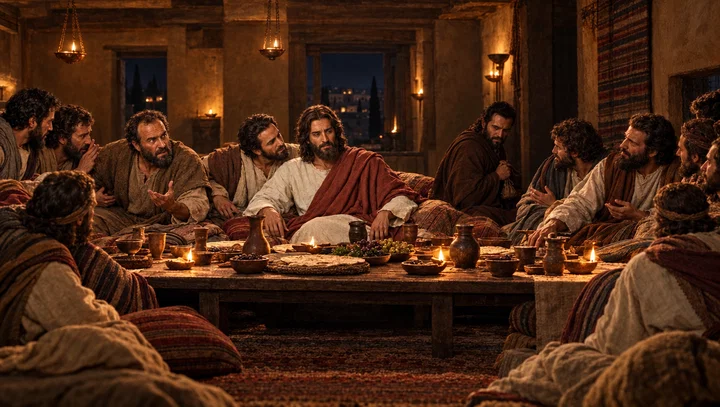
Cross-references
- Matthew 26:21
And as they did eat, he said, Verily I say unto you, that one of you shall betray me.
Jesus announces at the supper that one of the disciples will betray him.
- Mark 14:18-21
And as they sat and did eat, Jesus said, Verily I say unto you, One of you which eateth with me shall betray me.
Parallel account of the prediction and the disciples’ reaction.
- Luke 22:21-23
But, behold, the hand of him that betrayeth me is with me on the table.
Parallel account of Jesus identifying a betrayer among the gathered disciples.
- John 13:26
Jesus answered, He it is, to whom I shall give a sop, when I have dipped it. And when he had dipped the sop, he gave it to Judas Iscariot, the son of Simon.
Jesus identifies Judas as the betrayer by giving him the dipped sop.
- John 13:10-11
Jesus saith to him, He that is washed needeth not save to wash his feet, but is clean every whit: and ye are clean, but not all.
Jesus says the disciples are not all clean, referring to Judas.
- Psalms 41:9
Yea, mine own familiar friend, in whom I trusted, which did eat of my bread, hath lifted up his heel against me.
Jesus identifies Judas’s betrayal as fulfilling Scripture about a trusted companion.
- 1 Corinthians 11:23
For I have received of the Lord that which also I delivered unto you, That the Lord Jesus the same night in which he was betrayed took bread:
Paul places the supper on the night Jesus was betrayed.
- John 13:27
And after the sop Satan entered into him. Then said Jesus unto him, That thou doest, do quickly.
Satan enters Judas after Jesus announces the betrayal.
- John 13:30
He then having received the sop went immediately out: and it was night.
Judas leaves the supper immediately, and it is night.
- Matthew 26:22-24
And they were exceeding sorrowful, and began every one of them to say unto him, Lord, is it I?
Jesus announces the betrayal and warns the betrayer.
- John 6:70
Jesus answered them, Have not I chosen you twelve, and one of you is a devil?
Jesus had already identified one of the Twelve as a devil.
- Luke 22:15
And he said unto them, With desire I have desired to eat this passover with you before I suffer:
Jesus speaks at the Passover meal before his suffering.
- Matthew 26:14-16
Then one of the twelve, called Judas Iscariot, went unto the chief priests,
Judas agrees to betray Jesus.
- John 13:2
And supper being ended, the devil having now put into the heart of Judas Iscariot, Simon’s son, to betray him;
Satan had already prompted Judas to betray Jesus.
- Luke 22:48
But Jesus said unto him, Judas, betrayest thou the Son of man with a kiss?
Jesus confronts Judas with foreknowledge given at supper
- Matthew 26:50
And Jesus said unto him, Friend, wherefore art thou come? Then came they, and laid hands on Jesus, and took him.
Jesus confronts Judas with foreknowledge given at supper
- John 12:27
Now is my soul troubled; and what shall I say? Father, save me from this hour: but for this cause came I unto this hour.
Jesus’s soul is described as troubled.
Commentary
Each commentary is drawn from primary sources: the writings of Ellen G. White and Adventist pioneers and periodicals. Each commentary is separate. Its own words are not a quotation; follow the references to read the source passages.
Ellen G. White
23 sources
At the Passover supper in His last week before crucifixion, Jesus was deeply troubled in spirit as He solemnly testified that one of His own twelve disciples who shared His table and friendship would betray Him.Ms 102, 1904, par. 4–7ST Dec 23, 1908Ms 106, 1903, par. 31–35Lt 336, 1906, par. 5–9Lt 131, 1900, par. 1–3 The announcement astonished the disciples, who could not imagine treachery among themselves and each examined his own heart in doubt, while the betrayer meant was Judas Iscariot the son of Simon.ST Dec 23, 1908Ms 106, 1903, par. 31–35Lt 336, 1906, par. 5–9RH Nov 4, 1902ST May 23, 1878 He disclosed it beforehand to give evidence of His divine foreknowledge so their faith would be strengthened, and though He perfectly knew Judas's secret purpose He did not expose or exclude him but kept him at the table, washed his feet, and shared the sop with him as a final appeal of love to move him to repentance.Ms 102, 1904, par. 4–7ST Dec 23, 1908Ms 19, 1897, par. 11–13ST May 23, 1878DA 720.2 Judas was alarmed but would not repent, and after rejecting that last appeal and twice pledging the betrayal, Satan took control of his heart and he went out immediately into the night to do his work quickly.DA 654.1–23SP 86.1DA 720.2Ms 120, 1897, par. 9Ms 149, 1904, par. 13–15 The betrayal warns every follower that none is exempt from that danger and calls all to humble repentance and dependence on Christ, while forbidding exclusion of anyone from footwashing and the supper since none can read the heart, and calling for long patience and restoring love toward the erring instead of driving them away.Lt 117, 1897, par. 8–10Ms 19, 1897, par. 11–13Ms 35, 1897, par. 11–1220MR 149.2–4Ms 102, 1904, par. 39
Troubled Announcement at Supper
Jesus was deeply troubled in spirit as He solemnly and sorrowfully testified that one of His own disciples would betray Him.Ms 102, 1904, par. 4–7ST Dec 23, 1908Ms 106, 1903, par. 31–3521MR 346.1–3RH Nov 4, 1902 He spoke this at the Passover supper shared with His disciples during their last week together, just before His betrayal and crucifixion when He would suffer rejection.Lt 336, 1906, par. 5–9Lt 131, 1900, par. 1–3ST May 23, 18783SP 85.1–25RED 6.1 It came right after His teaching that receiving the one He sends is receiving Him and the Father who sent Him.RH Nov 4, 1902
The one He meant was one of the twelve who had shared His table, heard His teaching, and been treated as a beloved friend in close fellowship and love.Ms 106, 1903, par. 31–35ST May 23, 18785RED 6.1 That word was fulfilled in Judas Iscariot the son of Simon, who would betray Him into the hands of wicked men.Lt 336, 1906, par. 5–9RH Nov 4, 1902Ms 102, 1904, par. 39
The announcement astonished the disciples, who could not imagine treachery from among themselves or that any of the twelve could act so toward their Teacher.ST Dec 23, 1908Ms 106, 1903, par. 31–35DA 654.1–25RED 6.1 They looked on one another in doubt, not knowing whom He meant, and each was led to examine his own heart and ask whether he himself was the one.Ms 106, 1903, par. 31–35RH Nov 4, 1902ST May 23, 1878DA 654.1–23SP 85.1–2 Judas alone remained silent at first.ST May 23, 1878DA 654.1–2
When the disciple leaning on His breast asked who it was, He answered it was the one sharing the dish with Him to whom He would give a dipped sop.RH Nov 4, 1902DA 654.1–2 He gave it to Judas, warned of woe and grave consequence upon betraying the Son of man, and answered Judas with Thou hast said.RH Nov 4, 1902DA 654.1–2Ms 149, 1904, par. 13–15 After the sop Satan entered into Judas, Jesus told him to do quickly what he was doing, and Judas left immediately, and it was night.RH Nov 4, 1902
Foreknowledge and Final Appeal
Jesus spoke of the betrayal beforehand so that when it came to pass the disciples would believe in Him, giving them evidence of His divine knowledge, foreknowledge, and Messiahship to strengthen their faith through His coming humiliation.Ms 102, 1904, par. 4–7ST Dec 23, 1908ST May 23, 18783SP 86.1Ms 120, 1897, par. 9 He perfectly knew Judas's secret purpose, hidden thoughts, and character, yet He did not expose him with rebuke or withhold His ministry from one He knew was working to betray Him.ST Dec 23, 1908Ms 19, 1897, par. 11–133SP 86.1Ms 120, 1897, par. 9Ms 19, 1897, par. 56–57 He tenderly included Judas, kept him a place at the table and did not refuse him or send him away, washed his feet and even made him first, and allowed him to share in the sacrament.Ms 19, 1897, par. 11–13DA 720.2Ms 35, 1897, par. 11–12Ms 19, 1897, par. 56–5720MR 149.2–4 Judas remained among the chosen apostles though Jesus knew he would betray Him, and Jesus bore patiently with him.DA 720.2MH 493.3–4Ms 35, 1897, par. 11–12
That announcement and that humbling service to the worst sinner were the last act of love He could show, a final, convincing appeal of love to break his heart, move him to shame and conviction and willingness to confess, bring him to repentance, and save him from taking that fatal step and from the snare of Satan.ST Dec 23, 1908Ms 19, 1897, par. 11–13ST May 23, 18783SP 86.1Ms 19, 1897, par. 56–57 The warning revealed that He knew Judas's hidden plan and gave convincing proof of His divinity, while the tender service to the disciples still offered Judas one more chance to turn from his plan.ST May 23, 18783SP 86.1DA 720.2Ms 120, 1897, par. 9 Judas still had opportunity to repent even after twice pledging to betray Jesus, but when he rejected this final appeal his case was decided.ST May 23, 1878DA 720.2Ms 120, 1897, par. 9
The other disciples knew nothing and still esteemed Judas as a man of great capabilities, breadth of knowledge, and valuable qualifications, with nothing villainous in appearance or deportment.Ms 19, 1897, par. 56–57 He had often been deeply impressed under the working of the Holy Spirit and knew better, and his heart thrilled with an impulse to then and there confess and cast out Satan.Ms 19, 1897, par. 56–57 He was alarmed by the discovery of his guilt but did not repent, and the discovery only made him more determined to carry out the betrayal.ST Dec 23, 1908ST May 23, 18783SP 86.1 Having given up hope of temporal preferment and seeking to obliterate all he had heard, he turned the wrong way and braced his soul against light, letting the enemy persuade him the greater the love expressed that Christ was a pretense and not the Son of God, until he fought away from Jesus and became a traitor and betrayer.Ms 19, 1897, par. 56–57 After that rejection his course was decided and Satan took control of his heart and mind, and he went out to carry out the betrayal.3SP 86.1DA 720.2Ms 120, 1897, par. 9
Infinite love granted him every opportunity and left nothing undone that could be done to save him from the snare of Satan.Ms 19, 1897, par. 11–13 Yet infinite love could not compel him to repent, confess his sin, and be saved.Ms 19, 1897, par. 11–13 That announcement at the supper table, with its warning and pathos and meaning of woe upon the betrayer, still left hope open.Ms 149, 1904, par. 13–15 Even at the kiss in Gethsemane Judas could still have been saved by yielding and confessing his traitor work, and Jesus would have freely forgiven him just as He afterward saved the thief on the cross.Ms 149, 1904, par. 13–15
Warning and Example Today
The chapter warns against following the course of Judas in betraying the Lord, calling for turning from ambition and sin through humble repentance and contrition and complete dependence on God through Christ.Lt 117, 1897, par. 8–10 No follower is exempt from the danger of betraying the Master as Judas did, for the declaration that one of His own disciples would betray Him was fulfilled in Judas.Ms 102, 1904, par. 39 Not betraying Him requires working out personal salvation with fear and trembling, with genuine religious influence and unwavering faith in Christ as a personal Saviour, and youth are to live by this principle, with the loyal experience it demands needed by all.Ms 102, 1904, par. 39
Foreknowledge of betrayal does not justify excluding anyone from footwashing and the supper, and the service is not to be deferred because some present are not cleansed.Ms 19, 1897, par. 11–13Ms 35, 1897, par. 11–12 Even knowing beforehand that Judas would betray Him and leave the table to do it, Jesus washed his feet and kept him a place at the table and did not refuse him or send him away, and allowed him to share in the sacrament.Ms 19, 1897, par. 11–13Ms 35, 1897, par. 11–1220MR 149.2–4 Human beings cannot read the secrets of the soul and cannot tell who is worthy and who is not, and cannot reliably distinguish the sincere from the insincere, and participation does not prove the heart united with truth, so no one is to stay away from the ordinance because an unworthy person is present and no one is to decide who may take part, and none who claim to be Christians should be excluded.Ms 35, 1897, par. 11–1220MR 149.2–4 Supposed error and sin in another is no reason to divorce from him, refuse association, or drive him onto the devil's battleground, but to hold out every inducement to receive Christ, repent, and be cleansed, seeking to restore and not to destroy.Ms 19, 1897, par. 11–13
That Judas was counted among the chosen apostles teaches that false-hearted people may be found among those who serve Christ.MH 493.3–4ST Feb 9, 1915 Their presence should prompt long patience with perverse human nature rather than surprise or discouragement, as Jesus bore patiently with him though He knew he would betray Him.MH 493.3–4ST Feb 9, 1915 Outward faults do not prove someone is like Judas, since Peter often appeared worse, yet grace made his life one of service and sacrifice.MH 493.3–4
The betrayal marks the setting of Christ's prayer for unity before His crucifixion, when troubled in spirit He solemnly told the disciples that one of them would betray Him just before His betrayal and crucifixion.21MR 346.1–3Lt 131, 1900, par. 1–3 In that prayer unity and love are represented, and living out that prayer brings love and unity that withstand Satan's attacks.21MR 346.1–3Lt 131, 1900, par. 1–3
Sources
Pioneers and periodicals
35 sources
In the upper room at the Passover meal on the night before the crucifixion, after sharing supper with the disciples and washing their feet, Jesus declares that one of them will betray him.ST Aug 12, 1886RH Aug 19, 1858ST Nov 4, 1897 To be troubled in spirit is deep inner anguish as he clearly foresees the betrayal, the ingratitude of those he came to save, and his coming suffering, yet he bears it with calm dignity and self-forgetful love.ST Aug 12, 1886ST Aug 28, 1879RH Sep 20, 1864 He knows Judas's hidden purpose and declares it as evidence of divine foreknowledge to strengthen the faith of the others, while in touching forbearance giving Judas one last chance to turn back and be forgiven.ST Dec 23, 1908ST May 23, 1878RH Aug 2, 1906 He treats even the betrayer with tenderness, washing his feet and giving him the dipped bread, but Judas is not moved to repentance and goes out immediately into the night before the bread and wine are blessed, though those who held otherwise placed him through the Lord's Supper.RH Jun 23, 1910ST Aug 28, 1879ST Oct 5, 1882ST Jul 12, 1905ST Nov 29, 1883 The announcement shocks the loyal disciples to self-examination without suspecting Judas, and teaches to meet betrayal and suffering without resentment, to bear patiently with the false, and to leave men to conviction rather than exposing their faults.ST Dec 23, 1908RH Nov 4, 1902ST Aug 28, 1879RH May 18, 1869RH Sep 17, 1914
Setting and Wording
The saying was spoken in the upper room in Jerusalem at the Passover meal on the evening before the crucifixion.ST Aug 12, 1886ST Nov 4, 1897ST May 21, 1896 It belongs to the night Jesus shared supper with his disciples, washed their feet, and instituted the Lord's Supper.RH Aug 19, 1858STST May 21, 1896 John's account of the supper agrees with Matthew, Mark, and Luke that he ate the Passover with his disciples on the appointed day.ST Apr 2, 1912 It came after the triumphal entry into Jerusalem and before leaving the chamber and suffering.ST Aug 12, 1886STST Mar 18, 1897
It stands just before the farewell discourse and words of comfort.ST Aug 18, 1881ST May 26, 1909RH Apr 30, 1867 There Jesus says where he goes they cannot now come, that Peter cannot follow now but shall follow afterwards, that he goes to prepare a place and will come again to receive them to himself that where he is they may be also.ST Aug 18, 1881RH Apr 30, 1867 It follows the institution of the ordinance of humility and comes before the first two chapters of the farewell discourse, marking the setting for the instruction in John 14 before he and the disciples left the upper chamber.ST May 26, 1909ST Mar 18, 1897 In that same setting he identifies the betrayer and foretells Peter's denial before beginning the farewell address.RH Apr 30, 1867
To be troubled in spirit is to be weighed down in mind with deep inner anguish, touching sadness and wrung grief.ST Aug 12, 1886ST Aug 28, 1879RH Sep 20, 1864 He clearly foresaw the events of the near future, the ingratitude and cruelty of those he came to save, the terrible fate awaiting them in consequence, and his own nearing full baptism of suffering.ST Aug 12, 1886ST Aug 12, 1886 The word spirit denotes the inner experience of anguish, comparable to other passages that describe the soul as troubled.RH Sep 20, 1864 Yet he bore that anguish with calm dignity and steadfast love, remaining tender and self-forgetful even as he served them by washing their feet.ST Aug 28, 1879
The announcement shocked, troubled, astonished and distressed the disciples.ST Dec 23, 1908ST May 23, 1878 It brought amazement and self-examination, as each asked if he were the one, and they looked on one another in doubt without suspecting Judas.ST Dec 23, 1908RH Nov 4, 1902RH May 18, 1869 They could not imagine that any of the twelve, who had received his teaching and love and shared close fellowship with him, would act treacherously.ST Dec 23, 1908 Judas alone remained silent, though in one account he also asks with the rest.ST May 23, 1878ST Jan 10, 1911
The saying was spoken amid rivalry for the highest place, alienation, dissension and disunion.RH Jun 23, 1910ST Oct 5, 1882ST Jan 10, 1911 Judas was a source of that disunion, and the disciples were not all clean in the inner person.ST Jul 26, 1883ST Oct 5, 1882 Their hearts were unfit for communion, and Christ could not have full and free communion with the loyal disciples while the traitor remained.RH Jun 23, 1910ST Oct 5, 1882
Foreknowledge and Mercy
Jesus knew Judas's secret thoughts, hidden purpose and planned treachery, and by declaring that one of them would betray him he showed that treachery was known to him.ST Dec 23, 1908ST May 23, 1878ST Aug 12, 1886 That disclosure was a final convincing proof of divinity, evidence of divine knowledge, foreknowledge and Messiahship, given to strengthen the faith of the other disciples through his coming humiliation.ST Dec 23, 1908ST May 23, 1878ST Aug 12, 1886 The warning was an act of touching forbearance, infinite mercy and long patience, giving Judas one more chance to repent while turning back was still possible before the treachery was finished.ST Dec 23, 1908ST May 23, 1878ST Aug 12, 1886 He longed for Judas to repent and would have forgiven him if he had confessed, addressing the warning to all rather than openly exposing him so that it might move him.ST May 23, 1878ST Feb 9, 1915RH Aug 2, 1906 His experience with Judas shows long patience with perverse human nature.ST Feb 9, 1915
Judas was surprised and alarmed by the discovery of his guilt but was not moved to repentance.ST May 23, 1878ST Aug 12, 1886 Instead he grew more determined to betray him, rebelled and gave himself over to Satan, and after the sop Satan entered into him.ST Dec 23, 1908RH Nov 4, 1902RH Jun 23, 1910 The discovery only settled him more firmly in the plan he had engaged to do, though his betrayal had already been arranged.RH Aug 2, 1906ST Aug 12, 1886 Even knowing all the time that Judas was a thief who would betray him, Jesus treated him with tenderness, pity and no harsh reproach, doing everything in his power to help him.RH Jun 23, 1910ST Nov 29, 1883RH Sep 17, 1914 He humbly washed his feet, indeed washed them first, in an act of humility and love that nearly softened him, and remained tender and self-forgetful in service even while deeply troubled by the coming betrayal.RH Jun 23, 1910ST Aug 28, 1879ST Nov 29, 1883RH Sep 17, 1914
Jesus identified the betrayer as the one to whom he would give a dipped sop, and gave the dipped piece of bread to Judas Iscariot the son of Simon.RH Nov 4, 1902ST Oct 5, 1882ST Nov 22, 1883 By giving the sop he showed Judas his treachery was known, and he urged him to act promptly so his presence would not disturb the coming scene of harmony and love.ST Oct 5, 1882ST Nov 29, 1883 After receiving it Judas went out immediately, and it was night.RH Nov 4, 1902ST Oct 5, 1882ST Nov 22, 1883 The others remained, and afterward sang a solemn hymn with Jesus which the betrayer did not join.ST
Ordinances Prophecy and Application
John 13:21 stands in a chapter that gives plain instruction to wash one another's feet, and foot-washing is an ordinance and memorial of the humility of the Lord and Master, the Prince of glory, just as bread and wine memorialize his death and baptism memorializes his resurrection.RH Jun 16, 1868ST May 21, 1896 It was practiced in the earlier and purer ages of this dispensation until Rome laid polluting hands on the ordinances and either abolished or perverted them, and at the close of this age the perverted or neglected ordinances must be restored so the gospel is as pure as at the beginning, with this link occupying its appropriate place in the golden chain.RH Jun 16, 1868 The setting is the upper room in Jerusalem where Jesus and the disciples gathered for the Passover on the evening before his crucifixion, where also the Lord's Supper and the washing-of-feet rite were instituted as reminders of his humility and saving work.ST May 21, 1896
The announcement that one would betray him was made after Jesus washed the disciples' feet and before he blessed and gave the bread and wine, while they were still at supper during the meal and before the first two chapters of the farewell discourse.CO 45.1–2RH Jul 21, 1868ST May 26, 1909ST Jul 30, 1885 The Passover supper was already ended when the feet were washed, and the reclining meal eaten afterward was the Lord's Supper, so this timing shows that feet-washing, the ordinance of humility, preceded the Lord's Supper.CO 45.1–2RH Jul 21, 1868ST May 26, 1909 The plain statement was made because the disciples were dull in perceiving his sufferings and death, and by speaking of betrayal Jesus alluded to his death and in connection with that avowal gave fitting memorials of his broken body and shed blood.RH Jul 21, 1868
By giving Judas the sop Jesus showed him his treachery was known, and after receiving it Judas went out immediately, so he was not present for the Lord's Supper and was not permitted to commune with the other followers.ST Oct 5, 1882ST Nov 22, 1883ST Nov 29, 1883 Judas was a source of disunion among the disciples, and Christ could not have full and free communion with his loyal disciples while the traitor remained, so Jesus urged him to act promptly that his presence would not disturb the coming scene of harmony and love.ST Oct 5, 1882ST Nov 29, 1883 Though Judas was not permitted to commune, Jesus humbly washed his feet, treating him with tenderness and no harsh reproach.ST Nov 29, 1883 Oppositely, it is also held that Judas remained with Jesus and the others through the Passover supper, the dispute over who would be greatest, the feet-washing, and the Lord's Supper, and did not leave before these events.ST Jul 12, 1905 The claim that Judas received a portion and went out before the memorial was instituted is disputed as unproved, with the question turning on the timing of the Passover meal and the memorial.RH Jul 29, 1873
This was virtually the last Passover, as the Passover type was soon to meet its fulfillment in the death of the Lamb of God for the sins of the world, and the Gospel accounts agree in recording the betrayal on the night of the Last Supper.RH Jan 28, 1862ST Aug 12, 1886 Jesus was troubled in spirit and nearing his full baptism of suffering, and his disciples shared his grief without knowing its cause, being astonished and asking who the betrayer is, with Judas also asking though he is the one, while they were disputing which of them would be greatest.ST Jan 10, 1911ST Aug 12, 1886 Jesus answered that the Son of Man goes as it is written, but warned of the terrible guilt and fate awaiting the betrayer.ST Jan 10, 1911
Jesus was deeply troubled by the coming betrayal yet bore that anguish with calm dignity and steadfast love, remaining tender and self-forgetful even as he served them by washing their feet, which teaches that suffering and betrayal need not produce resentment or self-pity but can be met with courage, humility, and consideration for others.ST Aug 28, 1879 Though he knew all the time that Judas was a thief and would betray him, at the supper he washed the feet of Judas and passed him the sop, pitying the poor man and doing everything in his power to help him.RH Sep 17, 1914 His long patience with one counted among the apostles shows his patience with perverse human nature and teaches his followers to bear patiently with false believers as he did.ST Feb 9, 1915 The verse teaches not to tell the faults of others but to leave men to be convinced of their sins by the Spirit of Jesus so he can take sins away and hide them before anyone else finds them out, and Judas's betrayal is no reason to condemn the faithful eleven or their Master.RH Sep 17, 1914
Sources