John 20:2
Then she runneth, and cometh to Simon Peter, and to the other disciple, whom Jesus loved, and saith unto them, They have taken away the Lord out of the sepulchre, and we know not where they have laid him.
Translations
Then she runs, and comes to Simon Peter, and to the other disciple, whom Jesus loved, and says to them, They have taken away the LORD out of the sepulcher, and we know not where they have laid him.
King James Version, KJV Cambridge Paragraph Bible
Then she runneth, and cometh to Simon Peter, and to the other disciple, whom Jesus loved, and saith unto them, They have taken away the Lord out of the sepulchre, and we know not where they have laid him.
Then she runneth, and cometh to Simon Peter, and to the other disciple whom Jesus loved, and saith to them, They have taken away the Lord out of the sepulcher, and we know not where they have laid him.
She runneth therefore, and cometh to Simon Peter, and to the other disciple, whom Jesus loved, and saith unto them, They have taken away the Lord out of the tomb, and we know not where they have laid him.
She runneth therefore, and cometh to Simon Peter, and to the other disciple whom Jesus loved, and saith unto them, They have taken away the Lord out of the tomb, and we know not where they have laid him.
she runneth, therefore, and cometh unto Simon Peter, and unto the other disciple whom Jesus was loving, and saith to them, 'They took away the Lord out of the tomb, and we have not known where they laid him.'
She runs therefore and comes to Simon Peter, and to the other disciple, to whom Jesus was attached, and says to them, They have taken away the Lord out of the tomb, and we know not where they have laid him.
She runneth, therefore, and cometh unto Simon Peter, and unto the other disciple whom Jesus dearly loved, and saith unto them—They have taken away the Lord out of the tomb, and we know not where they have laid him.
Berean Standard Bible, Majority Standard Bible
So she came running to Simon Peter and the other disciple, the one whom Jesus loved. “ They have taken the Lord out of the tomb,” she said, “ and we do not know where they have put Him!”
Therefore she ran and came to Simon Peter and to the other disciple whom Jesus loved, and said to them, “ They have taken away the Lord out of the tomb, and we don’ t know where they have laid him!”
Then she went running to Simon Peter, and to the other disciple who was loved by Jesus, and said to them, They have taken away the Lord out of the place of the dead and we have no knowledge where they have put him.
Then she ranne, and came to Simon Peter, and to the other disciple whom Iesus loued, and saide vnto them, They haue taken away the Lord out of the sepulchre, and we knowe not where they haue laid him.
Douay-Rheims (Challoner revision)
She ran, therefore, and cometh to Simon Peter, and to the other disciple whom Jesus loved, and saith to them: They have taken away the Lord out of the sepulchre, and we know not where they have laid him.
Pictures
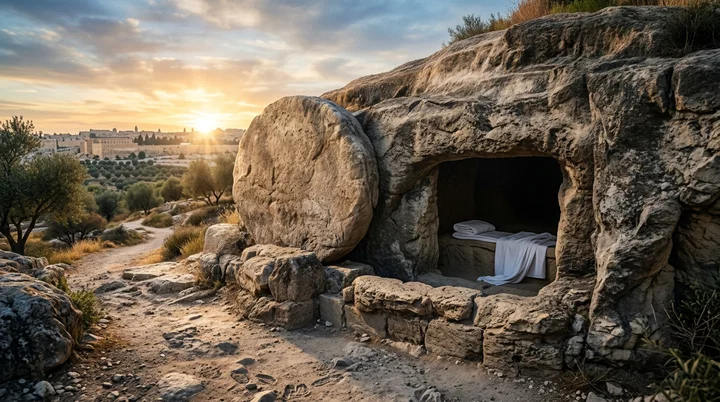
Cross-references 20 of 35
- Matthew 28:1-6
In the end of the sabbath, as it began to dawn toward the first day of the week, came Mary Magdalene and the other Mary to see the sepulchre.
Women find the tomb empty and hear that Jesus has risen.
- Mark 16:1-2
And when the sabbath was past, Mary Magdalene, and Mary the mother of James, and Salome, had bought sweet spices, that they might come and anoint him.
Both describe the women coming to Jesus’ tomb early on the first day of the week.
- Luke 24:1-3
Now upon the first day of the week, very early in the morning, they came unto the sepulchre, bringing the spices which they had prepared, and certain others with them.
The women find the tomb empty on the first day of the week.
- Mark 16:9
Now when Jesus was risen early the first day of the week, he appeared first to Mary Magdalene, out of whom he had cast seven devils.
Connects Mary Magdalene with the events at the tomb.
- John 20:11-18
But Mary stood without at the sepulchre weeping: and as she wept, she stooped down, and looked into the sepulchre,
Mary meets the risen Jesus, recognizes him, and reports seeing him to the disciples.
- Matthew 28:5-7
And the angel answered and said unto the women, Fear not ye: for I know that ye seek Jesus, which was crucified.
The angel announces Jesus’ resurrection and sends the women to tell the disciples.
- Luke 23:56
And they returned, and prepared spices and ointments; and rested the sabbath day according to the commandment.
The women rested on the Sabbath before going to the tomb.
- Mark 16:6-7
And he saith unto them, Be not affrighted: Ye seek Jesus of Nazareth, which was crucified: he is risen; he is not here: behold the place where they laid him.
The women find Jesus’ tomb empty and are told he is risen and to tell the disciples and Peter.
- Luke 24:10
It was Mary Magdalene, and Joanna, and Mary the mother of James, and other women that were with them, which told these things unto the apostles.
Names the women who reported what had happened to the disciples.
- Luke 24:22-24
Yea, and certain women also of our company made us astonished, which were early at the sepulchre;
Women report the empty tomb, and others find the tomb empty but do not see Jesus.
- John 20:8-9
Then went in also that other disciple, which came first to the sepulchre, and he saw, and believed.
John believes Jesus has risen, though the disciples do not yet understand the Scripture.
- John 20:24-29
But Thomas, one of the twelve, called Didymus, was not with them when Jesus came.
The risen Jesus appears to the disciples, and Thomas recognizes him as Lord and God.
- 1 Corinthians 15:20
But now is Christ risen from the dead, and become the firstfruits of them that slept.
Christ is risen from the dead, assuring the resurrection of those who belong to him.
- Luke 24:12
Then arose Peter, and ran unto the sepulchre; and stooping down, he beheld the linen clothes laid by themselves, and departed, wondering in himself at that which was come to pass.
Peter runs to the tomb and sees the burial cloths.
- Luke 24:2-3
And they found the stone rolled away from the sepulchre.
other women also found stone rolled and body gone
- John 20:14-16
And when she had thus said, she turned herself back, and saw Jesus standing, and knew not that it was Jesus.
Jesus reveals himself to Mary after she fails to recognize him.
- John 19:38-42
And after this Joseph of Arimathaea, being a disciple of Jesus, but secretly for fear of the Jews, besought Pilate that he might take away the body of Jesus: and Pilate gave him leave. He came therefore, and took the body of Jesus.
It recounts Jesus’ burial in the tomb before the women found it empty.
- John 13:23
Now there was leaning on Jesus’ bosom one of his disciples, whom Jesus loved.
Uses the same appellation for John.
- Mark 16:1
And when the sabbath was past, Mary Magdalene, and Mary the mother of James, and Salome, had bought sweet spices, that they might come and anoint him.
Names Salome among those who went to the tomb.
- Matthew 28:3-4
His countenance was like lightning, and his raiment white as snow:
Describes the angel and guards at the empty tomb.
Commentary
Each commentary is drawn from primary sources: the writings of Ellen G. White and Adventist pioneers and periodicals. Each commentary is separate. Its own words are not a quotation; follow the references to read the source passages.
Ellen G. White
11 sources
Finding the stone removed and the body gone, Mary Magdalene at once ran to Simon Peter and to John, the disciple Jesus loved, and told them the Lord had been taken out of the sepulchre and she did not know where he had been laid.Ms 155, 1904, par. 1–2Ms 115, 1897, par. 4–612MR 420.4–421.1ST Dec 14, 1882ST Aug 22, 1878 Her report meant she assumed the body had been removed, fearing enemies had taken it, before she had heard or understood that Jesus had risen.Ms 115, 1897, par. 4–612MR 420.4–421.16RED 18.3SG1 71.2DA 788.4–789.1 While she hastened to Peter and John, other women came to the tomb from another direction and likewise found the stone rolled away and the body of their Lord not there.12MR 420.4–421.1
Her report prompted the disciples to hurry to the tomb, and its empty state confirmed what she had told them.ST Dec 14, 1882ST Aug 22, 18783SP 200.26RED 18.3 Their confusion reflected grief and distress after the crucifixion; although Jesus had told them he would rise from the dead, sorrow kept them from taking in his words and expecting fulfillment, and they had not yet understood the Old Testament scriptures foretelling Christ's resurrection.Ms 155, 1904, par. 1–2ST Dec 14, 1882ST Aug 22, 1878 On seeing the empty tomb, John believed Jesus had risen, basing his belief on Jesus' own earlier words.ST Dec 14, 1882ST Aug 22, 18786RED 18.3
Although angels told Mary and the other women that Jesus had risen and sent them to tell the disciples, the disciples could not believe the report, and Mary remained at the tomb grieving and still distressed by the thought that the body had been taken.SG1 71.2 The empty tomb, the burial cloths, and the later encounters with the risen Jesus showed he had truly risen and that the claim his body had been stolen was false.Ms 94, 1897, par. 28–30 The verse voices the mistaken thought that Jesus was still dead and taken away, but he did not remain buried in Joseph's new tomb with a great stone rolled before the door; he has risen as a living Saviour, the Head of the church and the Good Shepherd.Ms 3, 1890, par. 29–30 To act as if he is still buried is unbelief that loses heart and courage and faith when things become entangled and spreads discouragement as a deadly malady; his resurrection calls for proclaiming with voice and pen that he lives and for trusting him with holy faith and hope.Ms 3, 1890, par. 29–30
Sources
Pioneers and periodicals
53 sources
Mary found the stone taken away from the tomb and ran to Simon Peter and to John, the other disciple whom Jesus loved, to say the Lord had been taken out of the tomb and they knew not where he had been laid.ST Jun 18, 1894ST Mar 8, 1905ST Apr 3, 1901RH May 12, 1874 Her use of we shows others were with her, and she came early on the first day of the week while it was yet dark, after the Sabbath on which the women had rested according to the commandment.RH May 12, 1874ST Aug 26, 1880RH Sep 11, 1860ST May 24, 1899RH Oct 21, 1862 She and the disciples did not then understand or expect the resurrection, but supposed the body had been removed for burial elsewhere and were in grief, distress and unbelief.ST Dec 14, 1882ST Aug 22, 1878ST Apr 18, 1911ST Mar 23, 1915 The empty tomb with its orderly linen clothes and folded napkin shows no work of grave robbers, but that Christ conquered death and the grave, discharged the price for sin, and assures that those who rest in him will also rise.ST Feb 8, 1899RH Dec 5, 1865RH Aug 8, 1907RH Mar 30, 1916ST Aug 23, 1899 The account names the first day as the day of the resurrection and the day after the Sabbath, yet says nothing of holiness or sacredness for it, gives no command to observe it and appoints it as no Christian Sabbath, and its silence at the very point where the first day would have become sacred witnesses against Sunday sacredness.RH Apr 1, 1873RH May 12, 1874RH May 12, 1874RH May 3, 1864RH May 12, 1874
Words and Setting
Mary Magdalene found the stone taken away from the sepulchre and ran to Simon Peter and to the other disciple and told them the Lord had been taken out of the sepulchre and they knew not where he had been laid.ST Jun 18, 1894ST Apr 3, 1901RH May 12, 1874ST Feb 8, 1899 She hurried with the belief that someone had removed the body for burial elsewhere, and her urgent report told of a missing body whose place was unknown.ST Feb 8, 1899ST May 24, 1899 The other disciple whom Jesus loved, to whom she came with Peter, is John, so called also in John 13:23 and John 21:20 and identified as the other disciple whom Peter saw following Jesus.ST Mar 8, 1905
Her saying we know not shows she was not alone at the tomb but was with other women, and with them she believed the body had been taken and did not yet understand the resurrection.ST Aug 26, 1880RH Sep 11, 1860RH Oct 21, 1862 The visit and report happened early on the first day of the week while it was yet dark, after the Sabbath on which the women had rested according to the commandment.RH May 12, 1874RH Sep 11, 1860ST May 24, 1899RH Mar 18, 1862 The record gives the first day no sacred title, no sacredness, no requirement of abstinence from labor, no appointment as a Christian Sabbath, no appointment of Sunday for public worship, and no example of Sunday observance by the church.RH May 12, 1874RH Mar 18, 1862
Her report brought Peter and the other disciple to the tomb, and Peter arose and ran with the other disciple, John reaching the tomb first and Peter arriving after him to see the grave clothes and the missing body.ST Dec 14, 1882ST Aug 22, 1878ST Apr 3, 1901RH Sep 11, 1860RH Mar 30, 1916 John came to believe Jesus had risen on the basis of Jesus' own earlier words, although the disciples had not yet understood the Old Testament Scriptures that taught Christ would rise.ST Dec 14, 1882ST Aug 22, 1878
Mary set out with the other Mary while it was still dark at daybreak, met or called for Salome on the way, and reached the tomb about sunrise, which joins the dark and the sunrise notices.RH Sep 11, 1860 On coming near and seeing the stone rolled away she at once concluded the body had been taken for removal, and without waiting she ran to tell Peter and John while Mary and Salome went on into the tomb and told Joanna and the other women where she had gone.RH Sep 11, 1860 Differences between John and the other Gospels, including details and events omitted or separately reported, do not by themselves prove contradiction.ST Mar 5, 1912ST Jun 14, 1877 They reflect separate firsthand memoirs not shaped into one uniform history.ST Mar 5, 1912ST Jun 14, 1877
Empty Tomb Discovery
John 20:2 belongs to John's account of the resurrection, the early-morning discovery of the empty tomb on the first day of the week.ST Jun 2, 1909RH Apr 14, 1874RH May 13, 1873 It records the empty tomb and the risen Jesus as what happened, not merely as a belief that death has been vanquished, with women finding the tomb empty and reporting that he had risen.ST Jan 25, 1905ST Feb 7, 1911 The joyful morning proclaimed that Jesus had risen, and even if he had risen earlier, the day of discovery would be the fitting day to mark the event if a day were appointed for that purpose.RH Oct 4, 1864 The report of the empty tomb and the women's encounter with the risen Lord spread widely.ST Feb 7, 1911
Mary and the disciples at first did not understand or expect the resurrection.ST Apr 18, 1911RH Oct 21, 1862 Mary going to the empty tomb at dawn reported in grief that his body had been taken away, believing someone had removed the body from the tomb for burial elsewhere and that they did not know where it had been placed.ST Apr 18, 1911RH Oct 21, 1862 She did not expect to find him alive, but sought only to find his body and anoint it, to honor the remains of a Friend she thought dead, without faith or hope in his resurrection.ST Mar 23, 1915ST Apr 10, 1901 Her grief and search and hurrying to tell Peter and the other disciple reflect the disciples' distress, grief, and initial lack of understanding that Jesus had risen.ST Mar 23, 1915
The disciples had not yet understood the Old Testament Scriptures that taught Christ would rise.ST Dec 14, 1882ST Aug 22, 1878 The empty tomb was confirmed when the disciples hurried there on Mary's report that the Lord's body was gone and she did not know where it had been laid.ST Dec 14, 1882ST Aug 22, 1878 John came to believe Jesus had risen, basing his belief on Jesus' own earlier words.ST Dec 14, 1882ST Aug 22, 1878
The orderly arrangement of the burial clothes later seen when Peter and John investigated the tomb shows the tomb was not disturbed by grave robbers or by a hurried removal.ST Feb 8, 1899 The empty tomb, the folded napkin, and the linen clothes laid by themselves are tokens that the price for sin has been accepted, the prisoner has been discharged, and the pains of death have been loosed forever for all who died in Christ.ST Aug 23, 1899 Peter arrived after John, saw the burial cloths, and wondered, while John believed, with Peter's shame and fear after denying Jesus marking the beginning of his encounter with the news of the resurrection.RH Mar 30, 1916
The empty tomb shows Christ as the conqueror, not the conquered: he overcame death and the grave.RH Aug 8, 1907 His resurrection defeated death, discharged the price for sin, and displayed God's power over death and the grave.ST Apr 18, 1911ST Aug 23, 1899RH Aug 5, 1873 It revived the hopes of his disciples, which had been cast down by his unexpected crucifixion, and the call to tell John and Peter that Jesus lives again points to the resurrection announced through this discovery.RH Dec 5, 1865ST Feb 9, 1882 His victory assures that those who rest in him will also rise.RH Aug 8, 1907
Mary's devotion is shown in following and serving Jesus in Galilee, remaining with him at the cross, and hastening early to the tomb where his lifeless body had been laid.RH Mar 26, 1861ST Jul 7, 1898 Coming early on the first day of the week and finding only solitude and gloom and wondering at the absence of his body, she lingered weeping when he was not found.RH Mar 26, 1861ST Jul 7, 1898 Love and reverence lingering at the tomb witnessed a scene unlike any before it, the tomb filled with angelic forms and bright with the presence of the one who brought life and immortality to light.RH Sep 4, 1855 She met the risen Christ face to face, the risen Jesus first revealing himself to her and calling her by name, so that she recognized him as the living Lord, and she became the first to meet him and to carry the news to the disciples, who did not believe it.ST Apr 18, 1911ST Jul 7, 1898 Her perseverance and earnest effort to do what she could brought her to the living Savior, which teaches his followers to rise even as he rose.RH Mar 26, 1861ST Apr 10, 1901
In his resurrection state Christ appeared beyond natural sight, coming and going like the wind that blows where it will and cannot be traced.RH Sep 15, 1874 This proves what it means to be born of the Spirit, for the immortalized Christ could come and go beyond natural sight.RH Sep 15, 1874 Every immortalized saint will share that same spirit nature, the immortal resurrection state in which the just will be perfected at the resurrection.RH Sep 15, 1874 The verse belongs to the account of Jesus rising and going into the garden after being laid in a guarded tomb, as the beginning of a story that spread through the world and endured through the ages.
First Day and Sabbath
The first day of the week is named in connection with the resurrection, for Mary came to the tomb and reported that the body was gone on that day.RH Apr 1, 1873RH May 3, 1864 It is the day after the Sabbath on which the empty tomb was discovered and reported, and it is prominently identified as the day of Christ's rising.RH Apr 1, 1873RH May 3, 1864 The evangelist's dating of the event to the first day stands distinct from the recorded speakers' references to rising on the third day.RH Apr 1, 1873
The account says nothing about holiness or sacredness for that day at the very point where the first day would have become sacred if it ever did, and that silence witnesses against Sunday sacredness.RH May 12, 1874RH May 12, 1874RH May 12, 1874 It calls the first day by no sacred title, attaches no sacredness to it, requires no abstinence from labor, appoints it as no Christian Sabbath, and gives no declaration that the rest-day is superseded or implies anything of the kind.RH May 12, 1874RH May 12, 1874 All four resurrection histories mention the first day at the very point where Sunday would have become sacred if at all, yet none intimates any such sanctification, commemoration of the resurrection, or requirement of rest.RH May 12, 1874
What happened on that first day is reported without any command to observe it, any appointment of Sunday for public worship, or any example of Sunday observance by the church at Jerusalem.ST Sep 9, 1880ST Oct 21, 1897RH Mar 18, 1862 The record offered as evidence that Jesus rose as promised gives no indication that the day was to be observed as a Sabbath or to replace the seventh-day Sabbath.ST Sep 9, 1880RH Jun 20, 1871ST Feb 8, 1883 His resurrection on that day does not make it a Sabbath or establish a command to observe it, the disciples continued to keep the Sabbath as before, and reading the accounts in all four Gospels gives no suggestion that the Sabbath was changed at the resurrection but leaves it as the seventh day.RH Jun 20, 1871ST Feb 8, 1883ST Jan 27, 1904 Far from proving a first-day Sabbath, the record disproves it.ST Oct 21, 1897
Jesus' meeting with the assembled disciples that first day occurred after they had not believed that he had risen, and his showing them his hands and side was to convince them of the resurrection.ST Dec 15, 1881ST Jun 18, 1894RH Apr 14, 1874 That one recorded meeting is not an example establishing the first day as a day of worship, and it does not show that the apostles changed the Sabbath that day.ST Dec 15, 1881ST Jun 18, 1894RH Apr 14, 1874 If they had changed the Sabbath then, they would have acted in unbelief.RH Apr 14, 1874 In those resurrection histories the honorable title of Sabbath belongs to the preceding day, never to the first day of the week.RH May 12, 1874 Baptism is the divine institution for commemorating the resurrection, not Sunday observance, and even if he had risen earlier the day of discovery would be the fitting day to mark the event if a day were appointed for that purpose.RH Oct 4, 1864RH May 12, 1874
Those who hold Sunday observance cite Christ's resurrection on the first day as the reason Christians observe that day.ST Mar 22, 1883ST Jul 24, 1884RH May 13, 1873 They identify the first day as the day after the Sabbath on which the disciples came to the tomb and found him risen, and say it was thereafter observed weekly to commemorate the resurrection and substituted for the Sabbath.RH May 3, 1864ST Jul 24, 1884RH May 13, 1873
Doctrine and Prophecy
The uncertainty when the tomb was found empty, believing he had been taken away with no knowledge of where he had been laid, portrays how believers felt when spiritualism had caused them to lose sight of a literal Jesus.RH Feb 17, 1852 The literal view of the heavenly sanctuary restores him to that place of loss, showing him in heaven standing before the mercy seat over the Ark of the Ten Commandments and pleading his blood for his people.RH Feb 17, 1852 Mary's grief and confusion in saying she did not know where he had been laid parallels the bitter disappointment of those who expected to see the Lord at the close of the 2300 days.LDT 193.4 That expected appearing was looked for on October 22, 1844.LDT 193.4
The early-morning discovery belongs to the tidings that Jesus had risen, first told to the women by angels who entrusted them with that message to carry.ST Nov 11, 1908 Mary Magdalene carried the news to the disciples, and she afterward met Jesus himself, who gave her the same message.ST Nov 11, 1908 These encounters were showers of blessing that prepared the disciples for the baptism of Pentecost.ST Nov 11, 1908
Example and Application
Mary Magdalene is honored as the first witness of the resurrection, reporting that the body was missing from the tomb.ST Mar 7, 1878 She spoke together with the others who did not know where it had been laid, for the women who carried spices to the tomb became tellers of the news of the risen Christ.ST Aug 26, 1880 Those women belonged to the company of the disciples, having sometimes traveled with them and ministered to them, and they went to the tomb and reported that the body was gone.ST Apr 3, 1901 Their loving service is a joy that women continue to share by carrying the story of Jesus to others.ST Aug 26, 1880
She came in early hastening to the tomb where the lifeless body had been laid, finding only solitude and gloom and wondering at the absence of the body.RH Mar 26, 1861 She did not know He was alive but believed the body had been taken and she did not know where it had been laid.ST Apr 10, 1901 She sought only to honor the remains of a Friend she thought dead, without faith or hope in His resurrection.ST Apr 10, 1901 Yet her perseverance and earnest effort to do what she could brought her to the living Savior, meeting the risen Christ face to face.RH Mar 26, 1861ST Apr 10, 1901 That meeting teaches His followers to rise even as He rose.RH Mar 26, 1861
Her words at the empty sepulcher, that the Lord had been taken away and she did not know where He was, supply an image for pulpits where preachers have taken away the Lord and His word.ST Mar 10, 1887 Applied in that way, the lament describes people left without them.ST Mar 10, 1887
Sources