Translations
American King James Version, Webster Bible
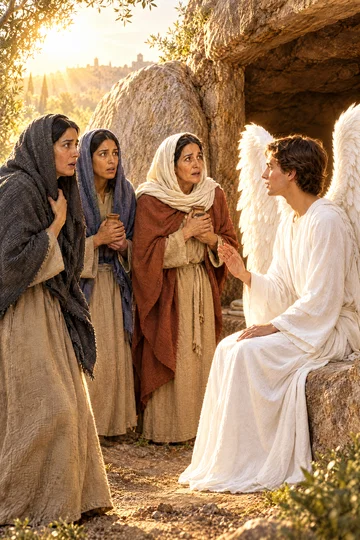
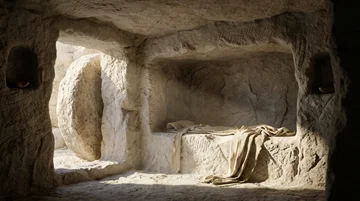
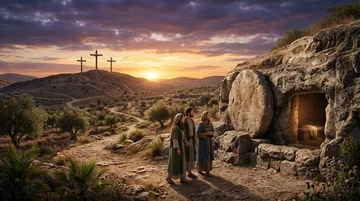
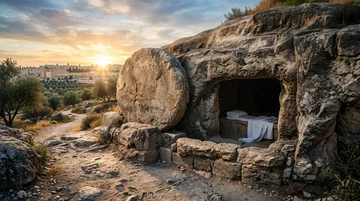
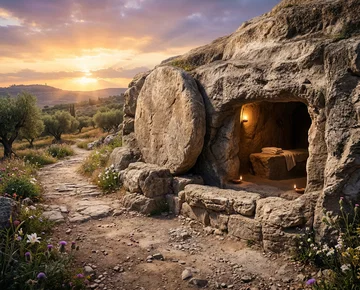
And they found the stone rolled away from the sepulcher.
King James Version, KJV Cambridge Paragraph Bible, Darby Translation
And they found the stone rolled away from the sepulchre.
Revised Version, American Standard Version
And they found the stone rolled away from the tomb.
and they found the stone having been rolled away from the tomb,
And they found the stone, rolled away from the tomb;
Berean Standard Bible, Majority Standard Bible
They found the stone rolled away from the tomb,
They found the stone rolled away from the tomb.
And they saw that the stone had been rolled away.
And they found the stone rolled away from the sepulchre,
Douay-Rheims (Challoner revision)
And they found the stone rolled back from the sepulchre.
Pictures
Cross-references 20 of 47
- Matthew 28:1-6
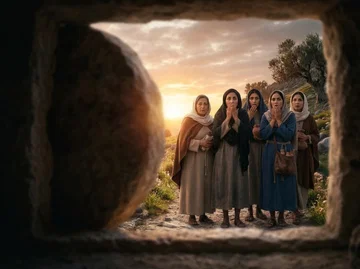
In the end of the sabbath, as it began to dawn toward the first day of the week, came Mary Magdalene and the other Mary to see the sepulchre.
The women find the tomb empty, and the angel announces that Jesus has risen.
- Mark 16:1-2
And when the sabbath was past, Mary Magdalene, and Mary the mother of James, and Salome, had bought sweet spices, that they might come and anoint him.
Also says the women came after the Sabbath and found the tomb open.
- John 20:1
The first day of the week cometh Mary Magdalene early, when it was yet dark, unto the sepulchre, and seeth the stone taken away from the sepulchre.
Mary finds the stone removed from the tomb.
- Luke 23:56
And they returned, and prepared spices and ointments; and rested the sabbath day according to the commandment.
The women rested on the Sabbath before going to the tomb.
- Mark 16:9
Now when Jesus was risen early the first day of the week, he appeared first to Mary Magdalene, out of whom he had cast seven devils.
Dates Jesus’ resurrection and appearance to Mary Magdalene to the first day of the week.
- Matthew 28:2
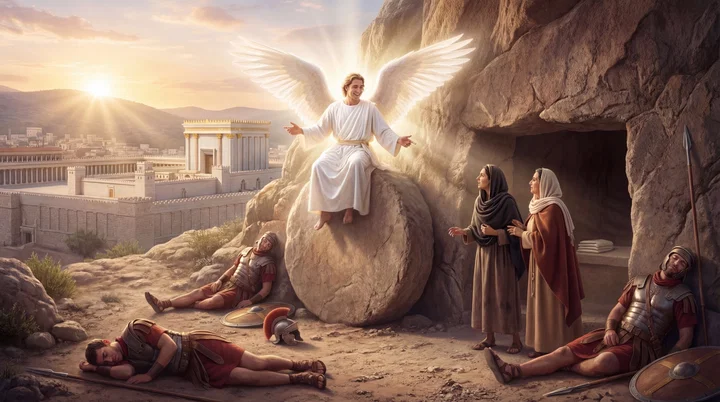
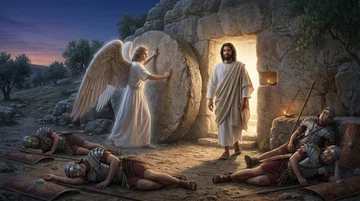
And, behold, there was a great earthquake: for the angel of the Lord descended from heaven, and came and rolled back the stone from the door, and sat upon it.
An angel rolls away the tomb stone, leaving the tomb open.
- Luke 24:21-24
But we trusted that it had been he which should have redeemed Israel: and beside all this, to day is the third day since these things were done.
The Emmaus disciples discuss the empty tomb report and say it is the third day.
- Luke 24:6-7
He is not here, but is risen: remember how he spake unto you when he was yet in Galilee,
Continues the resurrection account linked to the verse.
- Matthew 28:11-15
Now when they were going, behold, some of the watch came into the city, and shewed unto the chief priests all the things that were done.
The guards report the empty tomb, and the priests bribe them to spread a false account.
- Matthew 12:40
For as Jonas was three days and three nights in the whale’s belly; so shall the Son of man be three days and three nights in the heart of the earth.
The question asks how this time prophecy fits the resurrection accounts.
- Romans 6:4
Therefore we are buried with him by baptism into death: that like as Christ was raised up from the dead by the glory of the Father, even so we also should walk in newness of life.
Baptism portrays burial with Christ and rising with him to new life.
- Mark 16:4
And when they looked, they saw that the stone was rolled away: for it was very great.
The women find the tomb stone already rolled away.
- John 20:11-18
But Mary stood without at the sepulchre weeping: and as she wept, she stooped down, and looked into the sepulchre,
Mary finds the tomb empty and encounters the risen Jesus.
- Colossians 2:12
Buried with him in baptism, where in also ye are risen with him through the faith of the operation of God, who hath raised him from the dead.
Baptism is linked to being buried and raised with Christ.
- John 20:19
Then the same day at evening, being the first day of the week, when the doors were shut where the disciples were assembled for fear of the Jews, came Jesus and stood in the midst, and saith unto them, Peace be unto you.
The risen Jesus appears to the disciples that evening on the resurrection day.
- Luke 23:53
And he took it down, and wrapped it in linen, and laid it in a sepulchre that was hewn in stone, wherein never man before was laid.
Joseph laid Jesus’ body in a tomb that was later found empty.
- Luke 24:9-12
And returned from the sepulchre, and told all these things unto the eleven, and to all the rest.
The women report the empty tomb, the apostles disbelieve, and Peter visits the sepulchre.
- Luke 24:39
Behold my hands and my feet, that it is I myself: handle me, and see; for a spirit hath not flesh and bones, as ye see me have.
Jesus shows his flesh and bones to establish that the risen one is the same person.
- Matthew 16:21
From that time forth began Jesus to shew unto his disciples, how that he must go unto Jerusalem, and suffer many things of the elders and chief priests and scribes, and be killed, and be raised again the third day.
Jesus foretold His death and resurrection on the third day.
- Mark 16:7
But go your way, tell his disciples and Peter that he goeth before you into Galilee: there shall ye see him, as he said unto you.
Jesus tells the disciples and Peter they will see him after he has risen.
Commentary
Each commentary is drawn from primary sources: the writings of Ellen G. White and Adventist pioneers and periodicals. Each commentary is separate. Its own words are not a quotation; follow the references to read the source passages.
Ellen G. White
12 sources
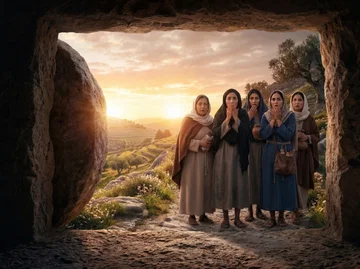
Early on the first day of the week, before it was yet light, the holy women came to the sepulchre bringing sweet spices to anoint the body of Jesus.SG1 71.23SP 198.2Ms 83, 1910, par. 33–34 They knew they could not move the great stone and worried about how it would be removed.DA 788.2–3 When they arrived they found the heavy, great stone rolled away from the door and entrance, leaving the tomb open.ST Dec 14, 1882SG1 71.23SP 198.2ST Aug 15, 1878ST Nov 8, 1883 The entrance stone had been removed and the tomb left open for them to see inside.COS 173.5–174.1
The stone had been rolled back by an angel from heaven, a mighty angel who moved the great stone with ease.ST Aug 15, 1878ST Nov 8, 1883COS 173.5–174.1Ms 83, 1910, par. 33–34 The discovery was accompanied by trembling of the earth and earthquake, with light and heavenly glory shining around the tomb.ST Dec 14, 18823SP 198.2DA 788.2–3 The Roman guard was gone when the women arrived.ST Dec 14, 18823SP 198.2 The tomb was empty and the body of Jesus was gone and not there.ST Dec 14, 1882SG1 71.23SP 198.2ST Aug 15, 1878ST Nov 8, 1883
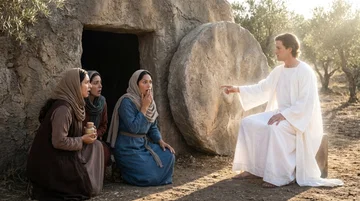
At first their hearts sank and they feared their enemies had taken the body.SG1 71.2 Two angels in white apparel with bright shining faces assured them that Jesus had risen, showed them the place where He lay, and told them to go tell His disciples He would go before them into Galilee.SG1 71.2 The women also reported angels affirming He had risen and that they had seen Him alive in the garden.Ms 113, 1897, par. 1DA 795.1Ms 83, 1910, par. 33–34 The frightened, astonished women carried the report to the mourning disciples, whose faith in the resurrection had grown weak and whose hopes had died with Christ.SG1 71.2Ms 113a, 1897, par. 1 So they doubted the women's testimony and could not believe He had risen.SG1 71.2Ms 113a, 1897, par. 1Ms 113, 1897, par. 1 Yet they ran to the sepulchre and found only His linen clothes and returned home marveling, and the news of the removed body with the report of angels and of meeting Jesus became part of what the disciples later discussed.SG1 71.2DA 795.1
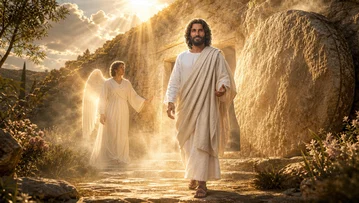
Jesus had risen and walked forth from the sepulchre as a mighty conqueror of death and the grave, His life coming from heaven, proclaiming I am the resurrection and the life.ST Nov 8, 1883COS 173.5–174.1Ms 83, 1910, par. 33–34 The empty tomb with the stone rolled away is evidence that establishes the truth of the resurrection and refutes the priests' false report.Ms 203, 1898, par. 9 His coming forth proves He is a living Saviour with the same power still.Ms 83, 1910, par. 33–34
Sources
Pioneers and periodicals
83 sources
Very early on the first day of the week, Sunday morning after the Sabbath according to the commandment had fully passed, the women bringing prepared spices to anoint Jesus found the exceeding great stone already rolled back from the door and the entrance open.ST Oct 21, 1886RH Jun 6, 1865RH Nov 21, 1854RH Jan 17, 1856
A mighty angel of the Lord had descended from heaven amid a great earthquake, rolled away the stone by authority of the Most High and sat upon it, and for fear of him the Roman watchers became as dead men and were gone when the women arrived.ST Dec 14, 1882ST Oct 21, 1886RH Feb 13, 1872RH Dec 5, 1865ST Apr 8, 1903
Entering, the women found the body of the Lord Jesus gone, and were told by two men in shining garments that He is not here but is risen as He spoke in Galilee that the Son of man must be crucified and rise the third day.ST Apr 3, 1901RH Jun 6, 1865RH Nov 21, 1854RH Jan 17, 1856
The open tomb and missing body prove the literal bodily resurrection of the identical Jesus who died on the cross, whom the grave could not hold, risen to die no more as Conqueror over sin and death.RH Jun 6, 1865RH Nov 21, 1854RH Jul 1, 1873
Together with the burial before the Sabbath and the rest according to the commandment, the first-day discovery fixes the sequence of days and identifies the seventh day before the first day as the Sabbath of the Decalogue, while giving no command or intimation to regard the first day as Sabbath, Lord's day, or holy in any manner.RH Jan 17, 1856RH Oct 14, 1915RH Feb 13, 1872ST May 25, 1904ST Sep 10, 1896
Visit Time and Witnesses
The visit took place very early in the morning on the first day of the week, Sunday morning, after the Sabbath according to the commandment had fully passed.RH Jun 6, 1865ST Dec 8, 1898ST Dec 15, 1881RH Jun 24, 1873 Those who came to the sepulchre then found the stone rolled away and the body of Jesus gone because He had risen.RH Jun 6, 1865ST Dec 15, 1881RH Jun 24, 1873 Two men in shining garments told them He had risen and reminded them that the Son of man must be delivered into sinful hands and be crucified and rise the third day, and the women remembered and told these things to the eleven, to whom their words seemed as idle tales.RH Jun 6, 1865 That same day the reckoning on the way to Emmaus that it was the third day since He was condemned and crucified confirmed the timing as the morning of the first day of the week.RH Jun 6, 1865 The verse fixes only the time of the visit and the discovery that He was already gone, without saying when He rose or how long He had been gone.
The morning is further fixed as Sunday morning April 9, A.D. 30, while it was yet dark as it began to dawn and the sun was risen.ST Oct 21, 1886 The visitors were the women, including Mary Magdalene, the other Mary, Mary the mother of James, Joanna, Salome and others, who came bringing the spices and ointments they had prepared to anoint the body of Jesus.ST Oct 21, 1886RH Jun 6, 1865RH Jan 17, 1856 They came to see the sepulchre with the prepared spices after resting the Sabbath day according to the commandment.RH Jan 17, 1856 Their report was carried to the eleven and the rest by Mary Magdalene, Joanna, Mary the mother of James, and others, but was dismissed as idle tales and not believed.RH Jan 17, 1856
Coming still expecting a closed tomb, they said among themselves who would roll away the stone from the door, which shows they had not been there the evening before and had not already learned He was risen.ST Oct 21, 1886ST Feb 3, 1881RH Aug 12, 1875RH Feb 7, 1871 They still expected the tomb to be closed and wondered who would move the stone for them, then found it already moved from the entrance.ST Feb 3, 1881 They would not have come to anoint a body they knew was gone nor worried about a stone they knew was moved.ST Feb 3, 1881 This visit is distinct from any alleged earlier Sabbath visit, for if the women had already found the tomb open and been told He had risen, their return with spices to anoint Him would make little sense.RH Feb 7, 1871 Their devotion moved them to go despite the stone and the guarded tomb, and they were the first to see the One who had died for them.
They had waited until then because after preparing spices and ointments to anoint His body they rested on the seventh-day Sabbath in respect and obedience to God's commandment, and waited until the first day to come to the tomb.RH Jan 17, 1856RH Feb 11, 1858RH May 12, 1874RH May 20, 1909 They came to anoint His body on the morning after the Sabbath, an act they had not performed on the preceding day because they rested according to the commandment.RH Feb 11, 1858RH May 20, 1909 The preceding account says they had rested on the Sabbath according to the commandment, while the stone's removal belongs to the resurrection narrative on the first day.RH May 12, 1874RH May 12, 1874
Stone Angel and Discovery
The stone that closed the rock-hewn tomb where Joseph had laid Jesus was exceeding great and sealed with the government seal, yet when the women came after the Sabbath they found it already rolled back from the door and the entrance left open.ST Nov 8, 1883ST Oct 21, 1886RH Nov 21, 1854ST Apr 8, 1903 The obstacle about which they had wondered who would remove was gone before they arrived, and the resurrection itself had already taken place before they reached the place.ST Apr 8, 1903ST Feb 7, 1911 A great earthquake had occurred, for a mighty angel of the Lord descended from heaven, cleft the sky and lit the gloom with glory, and by authority of the Most High rolled away the stone and sat upon it.ST Oct 21, 1886RH Feb 13, 1872RH Dec 5, 1865ST Apr 8, 1903RH Sep 16, 1915 His appearance was as lightning and his raiment white as snow, and he moved the great stone with ease.ST Aug 15, 1878ST Nov 8, 1883ST Oct 21, 1886
For fear of him the strong Roman guard quaked, were struck down by the holiness of his presence and became as dead men.ST Oct 21, 1886ST Apr 8, 1903RH Sep 16, 1915 They were then scattered and gone when the women arrived, so that the women found light around the tomb, no guard barring the way, and afterward the guards themselves found the tomb empty and the body gone.ST Dec 14, 1882ST Aug 15, 1878ST Apr 8, 1903ST Feb 7, 1911 Entering, the women found the body of the Lord Jesus gone and the tomb empty.RH Jun 6, 1865RH Nov 21, 1854RH Jan 17, 1856ST Apr 4, 1900RH Sep 11, 1860 The removal of the stone and the empty tomb first brought perplexity and surprise, because they had not believed His words that He would rise again.ST Apr 3, 1901RH Jan 17, 1856
Then two men in shining garments stood by them and told them He is not here but is risen.RH Jun 6, 1865RH Jan 17, 1856ST Nov 11, 1908 They reminded them that the Son of man must be delivered into the hands of sinful men and be crucified and rise again the third day, as He had spoken in Galilee, and the women remembered His words.RH Jun 6, 1865RH Jan 17, 1856 They were entrusted with that risen message to carry as a blessing to the sorrowing disciples, with Mary Magdalene taking word to Peter and John that the body had been removed, and Mary and Salome and others seeing the angel and entering to find no body.ST Nov 11, 1908RH Sep 11, 1860ST Dec 3, 1874 The women carried the evidence of the rolled-away stone and the report of the missing body and the angels' word to the eleven and to the rest, naming Mary Magdalene, Joanna, Mary the mother of James, and the others with them.RH Jun 6, 1865RH Jan 17, 1856ST Apr 4, 1900 Those who heard confirmed that the tomb was empty but did not see Jesus, and dismissed the women's words as idle tales and did not believe, being astonished instead of filled with joyous hope.RH Jun 6, 1865RH Jan 17, 1856RH Oct 23, 1856ST Dec 3, 1874ST Mar 8, 1905
Bodily Resurrection Proclaimed
The rolled-away stone and the absent body show that the identical Jesus of Nazareth who died on the cross came to life again, for those who came very early on the first day of the week found the sepulcher where Joseph had laid Him opened and empty.RH Jun 6, 1865RH Jun 24, 1873RH Nov 21, 1854 The grave could not hold Him because He was the Son of God, and He came forth a mighty Conqueror over sin and death to die no more, leaving the rock-hewn tomb closed with its exceeding great stone and government seal broken open by heaven's power.RH Jul 1, 1873RH Dec 5, 1865ST Apr 8, 1903 An angel descended, cleft the sky with glory, rolled the stone away and called the Sleeper to come forth, and Jesus broke through the rock-bound tomb and afterward went to Heaven in a cloud, taking away the tomb's dread.RH Jul 1, 1873RH Dec 5, 1865ST Apr 8, 1903 The Marys of old found this and held it joy to proclaim His resurrection, and that same work of going forth as myrrh-bearers with gifts bruised for Christ still belongs to women at home and abroad.RH Dec 5, 1865ST Aug 26, 1880
His death was the literal death of the whole man, with no soul or spirit or intelligent part surviving apart from the body, and His resurrection was the bodily rising of the living One no longer to be sought among the dead.RH Nov 21, 1854 The verse itself fixes only the time of the visit and the discovery that He was already gone, without saying when He rose or how long He had been gone.RH May 12, 1874ST Feb 8, 1883ST Feb 7, 1911 The women came then because after preparing spices and ointments they rested the seventh-day Sabbath in respect and obedience to God's commandment and waited until the first day, finding the entrance open, the guards scattered, and the body no longer there.RH Jan 17, 1856ST Feb 7, 1911 It does not record as fact that Jesus rose at that hour, only that visitors came early that day and He was already absent, and it contains no intimation that the day was thenceforth to be regarded as Sabbath or kept by divine obligation.RH Jan 17, 1856RH May 12, 1874ST Feb 8, 1883 Even if the rising itself took place the day before, it was first known on the first day, and if the event were to be commemorated by keeping a day only the first day could with propriety be used, yet the Heaven-appointed celebration is not day-keeping but baptism.ST Feb 8, 1883RH Oct 4, 1864
The resurrection itself is placed on the first day of the week, Sunday, the day after the Sabbath, the third day since the condemnation and crucifixion.RH Jun 6, 1865RH Apr 1, 1873RH Jun 24, 1873RH Feb 13, 1866 Two men in shining garments declared He is not here but is risen and reminded the women that the Son of man must be delivered into sinful hands and be crucified and rise the third day as He spoke in Galilee, and that same day on the way to Emmaus it was confirmed that day was the third day since those things.RH Jun 6, 1865RH Jan 17, 1856 Luke points out the first day in prominent and formal phrase as the day Christ rose, and with Matthew, Mark and John gives four independent accounts concurrently and uniformly naming the first day, showing it had become a noted day when the Gospels were written from nearly twenty to over sixty years afterward.RH Apr 1, 1873RH Feb 13, 1866 There was a great earthquake when the angel rolled away the stone and Christ arose, and many saints also came out of their graves, and He showed Himself to the Marys, to those on the way to Emmaus, and then to the eleven, Thomas excepted.RH Jun 6, 1865RH Feb 13, 1872 That first day was one of ordinary activity and not a Sabbath or holy day, for two disciples traveled seven miles to Emmaus on ordinary business, not celebrating it and not yet believing He had risen.RH Jan 17, 1856ST Mar 18, 1889
Christ had finished His work on the cross and rested in the grave on the seventh day, then rose on the morning of the first day, a day of activity rather than rest.RH Aug 13, 1857ST Dec 19, 1900 The rolled-away stone marks that resurrection following His Sabbath rest in death, revealing His first-day rising after lying in the tomb during the seventh day.RH Aug 13, 1857ST Dec 19, 1900 That resurrection is the assurance of the Gospel hope that the dead will rise and takes away the tomb's dread.ST Jun 26, 1901RH Jul 1, 1873 The true report that He had risen and had been seen led the disciples from doubt and fear to faith and hope after their hopes had been cast down by His unexpected crucifixion.ST Jun 26, 1901ST Mar 8, 1905ST Feb 9, 1882 At dawn the stone was rolled away and the cold waste of death was opened with bright sunlight of faith, bringing hope to mourners in anguish that the mourned and the mourner shall stand together again.RH Jul 1, 1873RH Jun 4, 1914
Reckoning Days and Harmony
Near the close of the first day the two going to Emmaus reckoned that it was the third day since those things had happened, counting from the sufferings and betrayal as well as the crucifixion, and third day does not require three full periods of twenty-four hours. The women’s discovery of the rolled-away stone belongs on the first day of the week after Jesus had rested in the tomb on the Sabbath, with Jesus rising during the third day, so the account fits three days and three nights as parts of three days and nights, not necessarily seventy-two hours.ST Jul 25, 1911 That resurrection chronology exposes the inconsistency of placing the crucifixion on Wednesday and the Jewish Sabbath on Thursday, for on that reckoning Christ would rise on the third day after Thursday and remain in the tomb for part of five days, while supposedly abolishing two weekly Sabbaths.RH Mar 23, 1869
In the phrase first day of the week the Greek word sabbaton means a period of seven days, or a week, not the seventh-day Sabbath. Christ, the chief priests and Pharisees, the angels at the tomb, the two disciples on the way to Emmaus, and the risen Lord himself all speak of the resurrection as on the third day counting from the crucifixion and burial, while Luke writing from nearly twenty to over sixty years afterward changes the language to name the first day of the week in a prominent and formal phrase as the day Christ rose from the dead.RH Apr 1, 1873 Matthew, Mark and John do the same, giving with Luke four independent accounts that concurrently and uniformly name the first day of the week, and this concurrent, uniform, undesigned mention shows the first day had become an honored and noted day among Christians when the Gospel histories were written.RH Apr 1, 1873
The women found the stone already rolled away when they reached the tomb, and Mary Magdalene took this to mean that the body had been removed and ran to tell Peter and John, while Mary and Salome went into the tomb, saw an angel, and fled in fear, and later other women entered and found the body gone.RH Sep 11, 1860 Such an account may include events or particulars omitted by the other Gospel writers, including the order of women entering and seeing angels, and such differences do not necessarily contradict one another.RH Sep 11, 1860ST Mar 5, 1912 The story of the empty tomb is not the primary evidence for the resurrection, for the existence and spiritual vitality of the Christian church and the New Testament would be left without adequate explanation if Jesus did not rise.RH May 11, 1916 The claim that guardian spirits rolled away the stone, restored His spirit to His body so He walked out bodily, and that He later died naturally with His body returning to dust, is false testimony about the rolled-away stone.RH Sep 8, 1853
Sabbath Confirmed Sunday Refuted
Together with the burial before the Sabbath and the rest according to the commandment, the finding of the stone rolled away on the first day of the week establishes the sequence of days and identifies the seventh day before that first day as the Sabbath of the Decalogue.RH Oct 14, 1915ST May 25, 1904RH Feb 5, 1867 That first day came just after the Sabbath according to the commandment, and since all agree which day that first day is, with no doubt when the resurrection day comes, the seventh day is known for it is the day just before it, proving Saturday is the true seventh day and that time has not been lost.ST Sep 10, 1896 The resurrection day therefore does not coincide with the seventh-day Sabbath God commanded to be remembered and kept holy and which He sanctified and blessed, for Christ rose on the day following the Sabbath of the Decalogue after that Sabbath had fully passed very early in the morning.ST Dec 8, 1898RH Feb 5, 1867 Keeping the first day as resurrection day is not keeping the Sabbath, and observance of one day each week cannot commemorate both God's rest and Christ's resurrection.ST Dec 8, 1898
The Sunday observance claimed from that morning came three days too late to be part of the new covenant, which Christ sealed with His blood late Friday afternoon when He said It is finished and died, since no man can disannul or add to a covenant after it is confirmed and sealed, so the first day of the week cannot be the Sabbath of the new covenant.ST Sep 23, 1913 The verse and its context give no command, intimation or divine obligation to regard the first day as Sabbath, Lord's day, day of the resurrection, holy, or to be kept in any manner.RH Jan 17, 1856RH May 12, 1874RH May 12, 1874ST Feb 8, 1883 Luke calls the day only the plain first day of the week and gives it no sacred name or title implying sacredness, and its mention alongside the resurrection does not declare the day sacred, appoint it for worship, say the first day was made holy, or say the Sabbath was changed.RH Feb 13, 1872RH May 12, 1874ST Sep 10, 1896RH May 12, 1874 The verse does not record as fact that Jesus rose on the first day, only that the women came very early that day with prepared spices after resting the Sabbath day according to the commandment and found Him already absent with the body of the Lord Jesus gone.RH Jan 17, 1856ST Feb 8, 1883
Their perplexity was met by two men in shining garments who declared He is not here but is risen and reminded them that the Son of man must be delivered into sinful hands, be crucified, and rise the third day as He spoke in Galilee, and the report was carried to the eleven and the rest by Mary Magdalene, Joanna, Mary the mother of James, and others, but was dismissed as idle tales and not believed.RH Jan 17, 1856RH Oct 23, 1856 The combined record with Matthew 28, Mark 16, and John 20 and 21 of what happened on that first first day after the crucifixion shows the character of how that day was spent as secular activity, anxiety, unrest and unbelief, proving it was not kept as a Sabbath and giving no support for a first-day sabbath in place of the seventh-day Sabbath of Jehovah.ST Jul 2, 1894ST Mar 18, 1889ST Sep 10, 1896 Two disciples traveled seven miles to Emmaus that first day on ordinary business and Jesus Himself traveled seven and a half miles to Emmaus instead of resting, so they were not celebrating it and the day cannot be called the Lord's day on the ground that the Lord rested on that day.ST Mar 18, 1889RH Dec 16, 1858 The meetings of Jesus with His disciples on that day do not establish a first-day Sabbath, for the account does not show that the disciples believed He had risen or gathered to celebrate His resurrection, and Christ's rising on the first day does not make that day the Sabbath or establish its sacred observance.ST Dec 15, 1881RH Oct 23, 1856ST Oct 21, 1897ST Feb 8, 1883
The disciples did not yet believe the resurrection when Christ appeared to them later that day, did not gather to celebrate it, and continued to keep the Sabbath as before, so the account is not proof that the apostles changed the Sabbath.ST Dec 15, 1881RH Oct 23, 1856ST Feb 8, 1883 If the event were to be commemorated by keeping a day, only the first day could with propriety be used for that purpose, for the joyful morning proclaimed a risen Saviour when it was first known that He was risen, and even if the rising itself took place the day before the fact was not known until the first day and could not be celebrated on the day before it was known.RH Oct 4, 1864 A memorial honors an event by observing the day on which it happened, and likewise God's Sabbath is the seventh day because that is the day on which He rested, and changing it does not honor Him.RH Mar 26, 1872 The Heaven-appointed way of celebrating the resurrection is not day-keeping but baptism, which was appointed for this very purpose.RH Oct 4, 1864 The passage proves Christians must keep the seventh-day Sabbath, so that to refuse the Sabbath while claiming to be a servant of God is to give up all claim to Christianity, and obedience in keeping it must stand firm against opposition from relatives and friends.ST Dec 10, 1902
Sunday Claims and Rebuttals
It is claimed that from that Sunday afternoon and evening when Jesus preached at Emmaus and in Jerusalem until the present the apostles and a large majority of Christians of all denominations have been content to observe public worship on the first day, making Sunday the Christian Sabbath, since the stone found rolled away shows He rose that Sunday.ST Jul 2, 1894 It is claimed that that resurrection morning started a weekly observance of the first day to commemorate the resurrection from that day to the present, when the disciples came the day after the Sabbath and found Him risen.RH May 3, 1864 It is further claimed that the first day is set apart to be observed in commemoration of the resurrection recorded on the first day of the week.RH May 3, 1864 It is claimed that because Christ arose on the first day, distinguished as the Lord's day, the glory of the Jewish Sabbath is transferred to the Lord's day, which is to be kept as the ancients were commanded to keep the Sabbath.ST Sep 24, 1894
It is claimed that the first day is the Lord's day, the eighth day on which Christians assembled for worship and weekly commemorated the resurrection, with the rolled-away stone marking the discovery as part of that resurrection account.RH May 13, 1873 The rising on that day is given as a reason Christians assembled for worship on the first day.RH May 13, 1873 That weekly commemoration on the first day, called the Lord's day, is distinguished from the annual celebration of the resurrection, whose date was disputed.RH May 20, 1873 It is claimed that redemption was completed on resurrection day and that observing that day as Sabbath keeps the work of redemption before the mind, directs thought to heavenly things, points to the remaining heavenly rest and gives a foretaste of joy forever with the Lord, the rolled-away stone being connected with the resurrection as reason for a divinely authorized change.RH Jun 17, 1873RH Jun 17, 1873 The verse itself supplies no plain command making the first day holy, that conclusion being only an inference from theological claims and not a duty plainly stated in Scripture.RH Aug 19, 1852 The stated reason for substituting Sunday for the seventh-day Sabbath is that Jesus rose on Sunday and completed the work of redemption.RH Jun 19, 1860
It is claimed that this resurrection day was the seventh day when counted from creation but the first day when counted from the new era begun in Israel's first month, and by that reckoning the Sabbath was changed.RH Aug 14, 1860 It is claimed that the resurrection and appearances show Jesus alive and therefore establish Sunday sacredness, reverence and religious observance, the rising and rolled-away stone being treated as great events associated with Sunday and reasons given for observing it in commemoration.ST May 19, 1914ST Mar 22, 1883 That day is treated as the Lord's day because people were redeemed from the devil's slavery, and the resurrection is given as the reason for reverencing Sunday.RH Feb 9, 1905 The saying we observe the eighth day with gladness in which Jesus arose appeals to His rising on the eighth day, the first day of the week, as positive proof of Sunday sacredness with tradition ascending to the apostles through Barnabas, companion of Paul.ST Aug 16, 1883 That eighth-day saying comes from an epistle bearing Barnabas's name that was never written by him but is a wicked fraud, shown by its false claim that the hyena every year changes its kind and is sometimes male and sometimes female, so it gives no apostolic witness for the first day.ST Aug 16, 1883 The practice of keeping Sunday as a Christian festival originated among Gentile Christians who as pagans had regarded that day as holy to the sun and upon becoming Christians retained some of that reverence and sought to join first-day observance to their new religion, using the resurrection on that day as a pretext.ST Jul 1, 1886
In answer, Christ gave no example of resting on or honoring the first day as holy, though He appeared that morning when the tomb was found open.ST Jul 22, 1908 He did nothing to set the day apart, did not speak of it, and performed no act establishing it as holy, though He rose, explained the Scriptures concerning Himself, showed He was the one slain, and gave the commission and authority.RH Nov 21, 1871 On resurrection day He was not resting but traveling seven and a half miles to Emmaus, so the first day cannot be called the Lord's day on the ground that the Lord rested on that day.RH Dec 16, 1858 In answer, the resurrection was necessary to Christ's glorification, but that glorification came at His ascension, and His great act for man was not His resurrection but His death, when amid earthquake the angel rolled away the stone and Christ arose and many saints came out and He showed Himself to the Marys, to Emmaus travelers, and to the eleven without Thomas.RH Feb 13, 1872 Scripture gives that day after the Sabbath no sacred title and sets it apart for no sacred purpose, so it is not to be observed, and its appropriate memorial is baptism, not Sunday-keeping.RH Feb 13, 1872 In answer, the verse is cited in support of the resurrection-day claim for observing Sunday, not as evidence that the Sabbath commandment was changed.RH Apr 14, 1874 Its mention alongside burial and resurrection contrasts the day He lay in the tomb with the day He rose but does not establish divine authority for changing the day of rest, nor church authority to transfer the Sabbath to Sunday.ST Aug 8, 1900ST Apr 9, 1896 The women found the stone rolled away on the first day after resting on the Sabbath according to the commandment, placing resurrection events on the first day but saying nothing that the day was made sacred or became a day of rest.RH May 12, 1874
Hope Devotion and Exhortation
The women came with spices to the tomb after the resurrection and found the stone already rolled away, and their devotion moved them to go despite the stone and the guarded tomb, making them the first to see the One who had died for them. Their hurrying eagerness to the sepulchre is an example of devoted zeal, set in contrast to the sad and despondent disciples on the way to Emmaus. The Marys who found the rolled-away stone from Joseph's tomb held it joy to proclaim His resurrection, and that same work still belongs to women at home and abroad who as myrrh-bearers go forth by twos and threes, unmindful of morning ease, ministering through tragic darkness wherever they see the faintest rim of promise, all for His sake, burdened with votive gifts for God whose chief worth is that their spices have been bruised for Christ.ST Aug 26, 1880 Their coming early in the morning to anoint His body was one of the first showers of blessing that prepared the early church for the pentecostal baptism of the early rain, for a few sad-hearted sisters met two shining angels who told them Jesus was risen and entrusted them with that message to carry to the sorrowing disciples as a shower of blessing to them.ST Nov 11, 1908
The stone rolled away at dawn of day means the cold, dull waste of death is opened, with firm, bright sunlight of holy faith shining over it.RH Jun 4, 1914 It brings hope to the mourner left in anguish and despair, that the mourned and the mourner shall stand together again on the boundary land and walk by rivers of shining sand.RH Jun 4, 1914 The tomb stood open and empty because Jesus had risen and was no longer there, and the empty sepulchre was not a place to linger or worship but showed that Christ was alive and that people should seek Him as He goes before them, not in places where He once was but is no longer.ST Feb 17, 1898 The women on the third day found no body and reported a vision of angels saying Jesus was alive, yet that report astonished the disciples instead of filling them with joyous hope of seeing again Him whom their souls loved, and left two of them sad and disappointed as they walked to Emmaus.ST Dec 3, 1874 Their mourning proves they had no faith in the resurrection and did not understand God's plan for the salvation of lost men through Christ's death and intercession, for their trust that He would redeem Israel meant they expected Him to free them from under the hand of the Romans by whose tetrarchs they were ruled by then establishing His kingdom, which is why Jesus had to begin at Moses and all the prophets and expound in all the Scriptures the things concerning Himself.ST Dec 3, 1874 They were sorely disappointed when Jesus, whom they expected to crown as king, was crucified, but Jesus afterward showed them that all this was only fulfillment of prophecy, so disappointment does not prove the doctrine false.RH Dec 8, 1874ST Dec 3, 1874
Sources