John 20:3
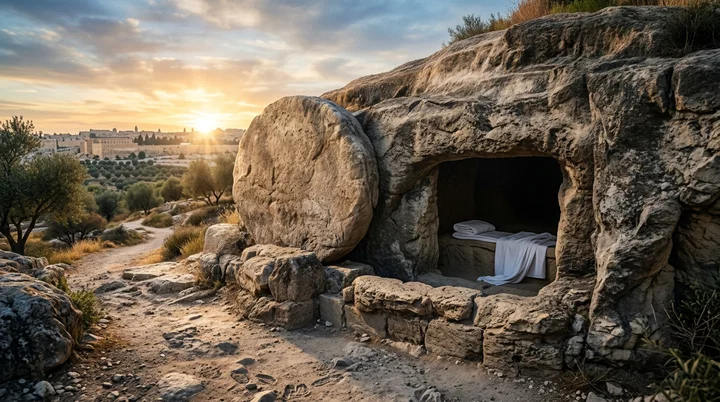
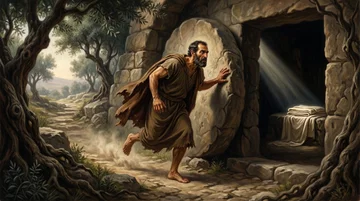
Peter therefore went forth, and that other disciple, and came to the sepulchre.
Translations
American King James Version, Webster Bible
Peter therefore went forth, and that other disciple, and came to the sepulcher.
King James Version, KJV Cambridge Paragraph Bible
Peter therefore went forth, and that other disciple, and came to the sepulchre.
Revised Version, American Standard Version
Peter therefore went forth, and the other disciple, and they went toward the tomb.
Peter, therefore, went forth, and the other disciple, and they were coming to the tomb,
Peter therefore went forth, and the other disciple, and came to the tomb.
Peter, therefore, went out, and the other disciple,—and they were going unto the tomb;
Berean Standard Bible, Majority Standard Bible
Then Peter and the other disciple set out for the tomb.
Therefore Peter and the other disciple went out, and they went toward the tomb.
So Peter and the other disciple went out to the place of the dead.
Peter therefore went forth, and the other disciple, and they came vnto the sepulchre.
Douay-Rheims (Challoner revision)
Peter therefore went out, and that other disciple, and they came to the sepulchre.
Pictures
Cross-references 20 of 26
- Luke 24:12
Then arose Peter, and ran unto the sepulchre; and stooping down, he beheld the linen clothes laid by themselves, and departed, wondering in himself at that which was come to pass.
Peter runs to the tomb after hearing the report and finds the linen clothes.
- Mark 16:1-8
And when the sabbath was past, Mary Magdalene, and Mary the mother of James, and Salome, had bought sweet spices, that they might come and anoint him.
Women come to the tomb after the Sabbath and find it empty; Jesus has risen.
- Matthew 28:1-6
In the end of the sabbath, as it began to dawn toward the first day of the week, came Mary Magdalene and the other Mary to see the sepulchre.
Both accounts describe the women finding the tomb empty after the Sabbath and learning Jesus had risen.
- John 20:11-18
But Mary stood without at the sepulchre weeping: and as she wept, she stooped down, and looked into the sepulchre,
Mary remains at the tomb, meets the risen Jesus, and is sent to tell the disciples.
- Luke 24:1
Now upon the first day of the week, very early in the morning, they came unto the sepulchre, bringing the spices which they had prepared, and certain others with them.
Women discover the empty tomb, prompting the disciples to go there.
- Mark 16:9
Now when Jesus was risen early the first day of the week, he appeared first to Mary Magdalene, out of whom he had cast seven devils.
Jesus rose on the first day, when Mary Magdalene came to the tomb.
- John 20:9
For as yet they knew not the scripture, that he must rise again from the dead.
The disciples had not yet understood Scripture about Christ’s resurrection.
- Luke 24:10
It was Mary Magdalene, and Joanna, and Mary the mother of James, and other women that were with them, which told these things unto the apostles.
The women report the empty tomb to the disciples, prompting Peter to go to the sepulchre.
- Matthew 28:6-8
He is not here: for he is risen, as he said. Come, see the place where the Lord lay.
The women find the empty tomb and are told Jesus has risen and to tell the disciples.
- Psalms 16:10
For thou wilt not leave my soul in hell; neither wilt thou suffer thine Holy One to see corruption.
The verse promises that God’s Holy One would not see corruption, pointing to Christ’s resurrection.
- Luke 23:55-56
And the women also, which came with him from Galilee, followed after, and beheld the sepulchre, and how his body was laid.
The women observe the Sabbath after Jesus’ burial and before the resurrection day.
- Luke 24:6-8
He is not here, but is risen: remember how he spake unto you when he was yet in Galilee,
The women remember Jesus’ prediction that he would rise on the third day.
- John 20:26
And after eight days again his disciples were within, and Thomas with them: then came Jesus, the doors being shut, and stood in the midst, and said, Peace be unto you.
Jesus appears to the disciples after his resurrection.
- Mark 16:7
But go your way, tell his disciples and Peter that he goeth before you into Galilee: there shall ye see him, as he said unto you.
The angel’s message specifically includes Peter.
- Matthew 28:12-13
And when they were assembled with the elders, and had taken counsel, they gave large money unto the soldiers,
The disciples’ arrival at the tomb contrasts with the claim that they stole Jesus’ body.
- 1 Corinthians 15:20
But now is Christ risen from the dead, and become the firstfruits of them that slept.
The visit confirms that Christ is risen from the dead.
- Mark 16:2
And very early in the morning the first day of the week, they came unto the sepulchre at the rising of the sun.
Another account records the disciples’ visit to the tomb.
- Luke 24:22
Yea, and certain women also of our company made us astonished, which were early at the sepulchre;
identifies women whose report sent them
- John 19:30-42
When Jesus therefore had received the vinegar, he said, It is finished: and he bowed his head, and gave up the ghost.
Jesus’ death and burial precede the disciples’ visit to the tomb.
- John 20:7
And the napkin, that was about his head, not lying with the linen clothes, but wrapped together in a place by itself.
The grave clothes and folded napkin bear on the claim that Jesus’ body was stolen.
Commentary
Each commentary is drawn from primary sources: the writings of Ellen G. White and Adventist pioneers and periodicals. Each commentary is separate. Its own words are not a quotation; follow the references to read the source passages.
Ellen G. White
12 sources
Peter therefore went forth with that other disciple — John, the disciple Jesus loved, the beloved disciple — leaving for Jesus' tomb after Mary reported that His body was gone.Ms 155, 1904, par. 1–2ST Dec 14, 18823SP 200.2ST Aug 22, 18786RED 18.3 In another telling, the disciples hurried to the tomb after the women reported and they heard that Jesus had risen.SG1 71.2AA 539.2EW 153.2–154.1BS 45.1–3 Although Jesus had told them He would rise from the dead, grief and confusion over His crucifixion kept them from taking His words in and expecting their fulfillment.Ms 155, 1904, par. 1–2
John's ardent devotion and zeal made him hurry with such eagerness that he ran ahead of the impetuous Peter and arrived at the tomb first.AA 539.2BS 45.1–3ST Nov 23, 1915 They found the tomb as she had said: it was empty, Jesus' body was absent and gone, and the linen clothes lay by themselves and remained.ST Dec 14, 18823SP 200.2ST Aug 22, 1878SG1 71.26RED 18.3 Peter was perplexed, while John believed Jesus had risen because Jesus had told them He would, trusting Jesus' earlier words.ST Dec 14, 18823SP 200.2ST Aug 22, 18786RED 18.3
They did not yet believe the report that He had risen, but returned home marveling at what they had seen and heard.SG1 71.2EW 153.2–154.1 Even so, they did not yet understand the Old Testament teaching, prophecies and scriptures that Christ would rise from the dead.ST Dec 14, 18823SP 200.2ST Aug 22, 18786RED 18.3 Their going early on the first day of the week was part of the disciples' firsthand evidence that the tomb was empty and Jesus had risen.Ms 94, 1897, par. 28–30 John's place at the tomb, arriving first, contrasts with Peter's being named personally in the first message Christ sent to the disciples after His resurrection.ST Nov 23, 1915 The account points to the risen Jesus as a living Saviour and Head of the church, not as one still buried in the tomb, and draws from His resurrection a call to keep faith and hope when difficulties arise.Ms 3, 1890, par. 29–30
Sources
Pioneers and periodicals
60 sources
After Mary Magdalene reported that His body was gone, Peter and John immediately set out together for the tomb in sorrow and disbelief to seek their dead Friend.ST Oct 21, 1886RH Jan 17, 1856ST Apr 3, 1901ST Apr 18, 1911 This was early on Sunday morning on the first day of the week after the Sabbath had passed, when Mary had gone out in darkness toward daybreak.ST Oct 21, 1886RH Sep 11, 1860ST May 24, 1899 They ran together in haste over the momentous news, and John from zeal outran Peter and reached the tomb first.ST Dec 14, 1882ST Aug 22, 1878 They found it as Mary had said, the body absent and the linen burial clothes lying by themselves with the head cloth left in order, not as if hastily stripped by robbers.ST Dec 14, 1882ST Aug 22, 1878ST Feb 8, 1899 At the sight John believed that Jesus had risen, while Peter wondered in perplexity, for they did not yet understand the Scriptures that Christ must rise from the dead, and their first-day visit gives no command or example for a Sunday sabbath.ST Dec 14, 1882ST Aug 22, 1878ST Sep 9, 1880RH Jan 17, 1856
Setting and Participants
After Mary Magdalene reported that the Lord had been taken out of the tomb and she did not know where He had been laid, Peter and the other disciple immediately went forth toward the sepulchre to see for themselves.ST Oct 21, 1886RH Jan 17, 1856ST May 27, 1897 They set out together as soon as they heard that the body was gone and missing, with haste reflecting the importance of the news.ST Apr 3, 1901ST Feb 28, 1911 The women had reported what they had seen at the tomb and the disciples had disbelieved them, so Peter arose and ran to investigate the report.RH Jan 17, 1856ST Apr 3, 1901
The departure took place on Sunday morning, early on the first day of the week after the Sabbath had ended and passed.ST Oct 21, 1886RH Sep 11, 1860ST May 24, 1899RH May 3, 1864 Mary Magdalene had set out in darkness and at daybreak with the other Mary and met Salome so that they arrived about sunrise.RH Sep 11, 1860 She ran to tell Peter and John that the stone was rolled away, leaving Mary and Salome to go on into the tomb, see an angel, and flee in fright, and after the women went to tell the disciples what had happened Mary Magdalene returned to the tomb.RH Sep 11, 1860ST May 24, 1899 The day after the Sabbath is the day whose weekly observance is claimed to commemorate the resurrection.RH May 3, 1864
The other disciple who went forth with Peter was John himself, the disciple whom Jesus loved.ST Apr 3, 1901ST Feb 8, 1899RH Mar 30, 1916ST Feb 22, 1899 They went in sorrow and disbelief, seeking the body of a dead Friend.ST Apr 3, 1901ST Apr 18, 1911ST Mar 23, 1915ST Apr 10, 1901 Mary came there in sorrow seeking His body and believing that someone had taken her Lord away, not knowing where He had been laid.ST Apr 18, 1911ST May 27, 1897ST Mar 23, 1915 She did not know that Jesus was alive but went looking for the body with the earnest purpose of honoring Him, and her perseverance and sacrifice were sincere despite her lack of faith and hope.ST Apr 10, 1901 In doing what she could to honor the One she had believed was the Son of God she found the living Saviour, for although she thought she had lost Jesus He was near her and made Himself known to her when He called her by name, so that the empty tomb leads from grief to the assurance that death is defeated.ST Apr 18, 1911ST Mar 23, 1915ST Apr 10, 1901
The timing of this account does not establish that the evening began at sunset.RH Jan 17, 1856 The evening mentioned later in John 20:19 may be the first Jewish evening from about the ninth hour until sunset.RH Jan 17, 1856
Arrival and Discovery
Peter and the other disciple ran together to the tomb to investigate the report that the body was gone, and their haste showed how weighty the news was to them.ST Dec 14, 1882ST Aug 22, 1878ST Feb 28, 1911ST Feb 22, 1899 John ran with greater speed than Peter from zeal for his Master, and his earnest hastening confirmed what Mary had said by adding his testimony that Jesus was not there.ST Oct 16, 1884ST Feb 22, 1899 The going was an immediate setting out after Mary told that the tomb had been found unsealed and empty, and that the Lord had either risen or been stolen away, leaving the disciples confused until further light came.ST Feb 28, 1911ST Feb 22, 1899
John outran Peter and came first to the sepulchre, yet he only looked in and did not go inside until after Peter had entered.ST Apr 3, 1901ST Feb 8, 1899RH Oct 21, 1862RH Nov 7, 1907 Peter then entered first and examined what lay within, after which John also went in.ST Feb 8, 1899RH Sep 11, 1860RH Oct 21, 1862 What they found was exactly as Mary had said, for the body of Jesus was absent and the linen burial clothes lay by themselves.ST Dec 14, 1882ST Aug 22, 1878RH Sep 11, 1860RH Oct 21, 1862 The grave clothes, including the head napkin, lay in an orderly way, not scattered as by grave robbers or a hasty removal.ST Feb 8, 1899RH Jun 5, 1913RH Oct 21, 1862
Though angels and the risen Jesus were present, Peter and John did not see them at that time, whereas Mary afterward saw both the angels and Jesus himself.RH Jun 5, 1913 Their surprise at the opened, empty tomb, and Peter's coming without knowledge of any plan to remove the body, show that they had not arranged to steal it.ST Aug 12, 1880 Unable to explain what had happened, they went away to their own houses, with Peter lagging behind because he felt untrue and cowardly.ST Feb 8, 1899RH Mar 30, 1916RH Sep 11, 1860
Faith and Understanding
After Mary reported the tomb unsealed and the body gone, Peter and the other disciple immediately set out toward the tomb and ran together to investigate.ST Dec 14, 1882ST Aug 22, 1878 John showed greater speed and arrived first but only looked in, while Peter entered and saw the linen cloths lying by themselves, after which John entered as well.ST Dec 14, 1882RH Mar 30, 1916 At the sight of the burial cloths John believed Jesus had risen, trusting what Jesus himself had told them he would do.ST Dec 14, 1882ST Aug 22, 1878RH Mar 30, 1916 Peter, who lagged behind because he felt untrue and cowardly, was perplexed at what he saw, and wondered and was afraid.ST Dec 14, 1882ST Aug 22, 1878RH Mar 30, 1916
Even with this belief, they did not yet understand the Old Testament teaching and prophecies that Christ would rise from the dead.ST Dec 14, 1882ST Aug 22, 1878 John arrived first and saw the linen clothes but not Jesus, and Peter entered and examined the clothes and became convinced that Jesus' body was not there.RH Oct 21, 1862ST Feb 22, 1899 They confirmed that Jesus was not there but did not believe in the resurrection until Peter saw the risen Jesus.RH Oct 21, 1862 Their testimony was added to the women's report that Jesus had risen, leaving the disciples confused about whether He had risen or His body had been stolen.RH Oct 21, 1862ST Feb 22, 1899
John gives some details about the resurrection that Matthew and the other Gospel writers omit, while leaving out details they include.ST Mar 5, 1912 The accounts are left side by side with their differences, presented without an editorial explanation to reconcile them.ST Mar 5, 1912ST Jun 14, 1877 These differences do not make the accounts contradictory.ST Mar 5, 1912
This joint visit of Peter and John, in which they went in and saw the grave clothes lying there and the body gone and then went away to their houses, is distinct from Peter's later second visit alone.RH Sep 11, 1860 It took place early on the first day of the week after the Sabbath was ended, when Mary Magdalene had set out in the dark or at daybreak with the other Mary and met Salome so that they arrived about sunrise.RH Sep 11, 1860 Mary Magdalene ran to tell Peter and John that the stone was rolled away, leaving Mary and Salome to go on into the tomb, see an angel, and flee in fright.RH Sep 11, 1860 After Peter and John left, Mary Magdalene lingered weeping, saw two angels and then Jesus himself in the first appearance after the resurrection, while Peter's later second visit alone after Joanna's report was one in which he only stooped down to see the linen clothes and did not go in as before.RH Sep 11, 1860
Sunday and Sabbath
Peter therefore went forth, and that other disciple, and came to the sepulchre as part of the account of the first day of the week on which Christ rose from the dead.ST Sep 9, 1880ST Jun 2, 1909RH Sep 26, 1854ST Mar 22, 1883RH May 13, 1873 The going to the tomb belongs with the disciples' assembling on that resurrection day, with Christ's appearances to them, and with His commission and gift of the Holy Ghost.RH Sep 26, 1854 It is evidence of the resurrection, identifying the resurrection day, but it does not call the day the Lord's day nor regard it as holy or observed as a Sabbath.ST Sep 9, 1880RH May 13, 1873
The day before was the seventh-day Sabbath, and the resurrection was first known on the joyful morning of the first day of the week that announced the risen Saviour.ST Jun 18, 1894RH Oct 4, 1864 The visit was part of that one first day on which Christ met with His disciples, and it does not show that He regularly met with them on the first day of the week.ST Jun 18, 1894 The record of the first-day meetings with the disciples after the resurrection, together with Matthew 28, Mark 16, Luke 24 and John 21, gives no command for a Sunday sabbath and no divine example of Sunday keeping.ST Oct 21, 1897 Its first-day meeting disproves rather than proves a first-day sabbath.ST Oct 21, 1897
The going to the tomb after learning it was empty, and the running there and what was found, belong to the first-day account, not to evidence that the day was to be observed as a Sabbath or resurrection holy day.ST Sep 9, 1880RH Jan 17, 1856 Christ's rising on the first day does not make that day a Sabbath, for no commandment or hint establishes it as sacred, and the disciples continued to observe the Sabbath as before.ST Feb 8, 1883RH May 13, 1873ST Jan 27, 1904 The account of that day records the disciples' evening gathering and Jesus' appearance to them, when until then they had not believed in His resurrection.ST Dec 15, 1881 Their actions that day therefore do not show that they or the apostles changed the Sabbath, for if they had done so they would have acted while still in unbelief.ST Dec 15, 1881RH Apr 14, 1874
Their going to the tomb on the first day shows what Sabbath-keeping looked like on that first day.ST Jul 2, 1894 The resurrection on the first day is given as a reason Christians observed the first day, and is claimed as the most important reason for substituting the first day for the seventh day as the Sabbath, but it is no real proof for the change.ST Jul 24, 1884RH May 13, 1873 The first day may be used to celebrate the resurrection if God appointed a day for that purpose, but this does not establish the first day as the Sabbath, since baptism is given as the divine institution for commemorating the resurrection.RH Oct 4, 1864 The Pentecost chronology instead includes seven Sabbaths between Christ the firstfruits and Pentecost, with the day before Pentecost being a Sabbath, so the resurrection account does not establish an intended change of the Sabbath.RH Jun 20, 1871
Resurrection Witness and Doctrine
The tomb where the breathless body of Jesus was laid in Joseph's tomb with sealed entrance and guard became empty because He rose at dawn as conqueror over sin and death.ST Apr 8, 1903RH Aug 8, 1907RH Aug 5, 1873 That sealed entrance opened by resurrection shows God's power to raise Him from the dead.RH Aug 5, 1873 The rising revived the disciples' hopes after His unexpected crucifixion, turning their mourning into victory.ST Apr 8, 1903ST Feb 9, 1882
In the account of the empty tomb and the burial cloths left behind, the resurrection is the sign that the price for sin was accepted, the prisoner was discharged, and death's pains were loosed forever.ST Aug 23, 1899 Those who die in Him will also live and rise with Him, because Christ rose as victor over death.RH Aug 8, 1907ST Aug 23, 1899 The risen Christ appeared in the immortal, Spirit-born condition, free as the wind to come and go unseen.RH Sep 15, 1874 That state is the example and perfection of the new birth begun at conversion for every immortalized saint at the resurrection, when the just become immortal.RH Sep 15, 1874
The resurrection belongs to the history of the same divine Word who was with God in the beginning, became flesh, humbled Himself and died on the cross, and returned to the Father.RH Apr 14, 1874 The appearances to the disciples during the forty days before the ascension were only at intervals.RH Aug 31, 1869 The visit to the sepulcher comes after the cross in the order of saving facts, together with the appearance on the way to Emmaus, the evening proof by yet open wounds, the comforting and instructing in Galilee, and the majestic ascension with ransomed captives to return visibly only as conqueror.RH Aug 13, 1872
Mary Magdalene, from Magdala, freed from seven demons, who followed and served Jesus and witnessed His death, was the first witness of the resurrection.ST Jul 7, 1898ST Mar 7, 1878 She came to the tomb in sorrow seeking His body, believing someone had taken her Lord away, and lingered weeping there when she found it open and empty.ST Apr 18, 1911ST Jul 7, 1898ST Mar 23, 1915 Though she thought she had lost Jesus, He was near her and she first recognized the living Lord when He called her by name, so the empty tomb leads from grief to the assurance that death is defeated.ST Apr 18, 1911ST Jul 7, 1898ST Mar 23, 1915 She then carried the news to the disciples, as the events spread through Jerusalem and reports of the risen Jesus came even to Pilate and Herod, while Peter who went to the tomb is also remembered as the disciple who denied Jesus and was received by mercy.ST Jul 7, 1898ST Feb 7, 1911ST Mar 7, 1878 The passage belongs with Matthew 28, Mark 16, Luke 24 and John 21 and with John 20:1-9 and 20:1-18, and its mention connects the tomb scene with the women's loving service and witness to the risen Christ.ST Oct 21, 1897ST Aug 26, 1880
Life and Application
The hastening early to the tomb where the breathless body was laid found only solitude and gloom and the question of who had taken Him away, and then meeting the risen Christ face to face teaches followers to rise even as He rose.RH Mar 26, 1861 Peter and the other disciple went to the sepulcher after hearing it was empty, and their haste reflects the importance of the news.ST Feb 28, 1911 The empty tomb is a blessed fact that makes life endurable and its burdens bearable.ST Feb 28, 1911
The cross and then the sepulcher come in the order of saving facts and are gazed upon with rapt devotion and wonder and joy.RH Aug 13, 1872 The visit to the sepulcher belongs with the appearance on the way to Emmaus, the evening proof by yet open wounds, the comforting and instructing and establishing in Galilee, and the majestic ascension with ransomed captives to return visibly only as conqueror.RH Aug 13, 1872 These facts are to be indelibly fixed upon the mind, not as mere opinions but as living realities, to be much thought of and realized.RH Aug 13, 1872 So received they leaven the whole character and life, renewing and strengthening all that is holy and pure and uprooting all that is wicked.RH Aug 13, 1872
Peter and John going to the tomb and seeing the burial clothes and head napkin while the tomb appeared otherwise empty illustrates that people may fail to recognize God's presence and work even when it is there, for though angels and the risen Jesus were present they did not see them, while Mary later saw the angels and Jesus.RH Jun 5, 1913 The tomb of death of stone wherein the Lord of life rested is now an empty sepulcher, and that empty sepulcher is not to be the quest of Christians.ST Oct 24, 1895
The scene at the tomb is one where love and reverence lingered and the tomb was found radiant with angelic presence and the presence of Christ, who brought life and immortality to light.RH Sep 4, 1855 That scene points forward to the end of time, when the tomb itself will be bright with Christ's life-giving presence.RH Sep 4, 1855
The sorrow and grief of the followers around the empty tomb was part of the spiritual refreshment that prepared the early church for Pentecost.ST Nov 11, 1908 Broken-hearted Peter received a personal blessing that same day in the account of the disciples responding to the news of the resurrection.ST Nov 11, 1908 John's place in arriving first at the tomb stands in contrast with Peter's being named personally in the first message sent to the disciples after the resurrection.ST Nov 23, 1915
John hastened to the tomb when he heard Jesus had risen, with greater speed than Peter because of his zeal for his Master.ST Oct 16, 1884 Mary did not know Jesus was alive but went looking for the body of a Friend she believed dead, with the earnest purpose of honoring Him.ST Apr 10, 1901 Her perseverance and sacrifice were sincere despite her lack of faith and hope, and in doing what she could to honor the One she had believed was the Son of God, she found the living Saviour.ST Apr 10, 1901
Sources