Judges 11:31
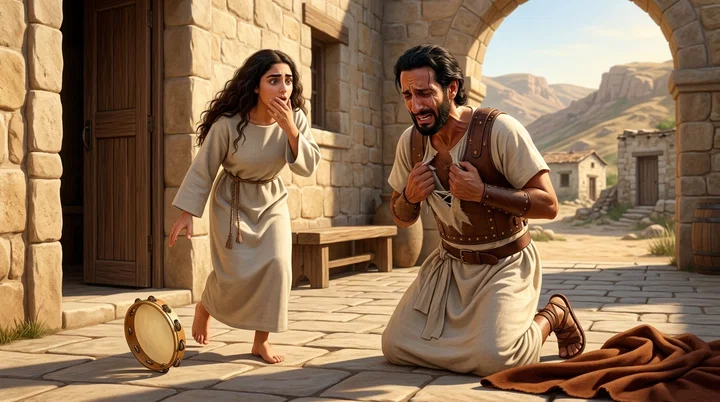
Then it shall be, that whatsoever cometh forth of the doors of my house to meet me, when I return in peace from the children of Ammon, shall surely be the LORD’s, and I will offer it up for a burnt offering.
Translations
Then it shall be, that whatever comes forth of the doors of my house to meet me, when I return in peace from the children of Ammon, shall surely be the LORD’s, and I will offer it up for a burnt offering.
Then it shall be, that whatsoever cometh forth of the doors of my house to meet me, when I return in peace from the children of Ammon, shall surely be the LORD’s, and I will offer it up for a burnt offering.
then it shall be, that whatsoever cometh forth of the doors of my house to meet me, when I return in peace from the children of Ammon, shall surely be the Lord’s, and I will offer it up for a burnt offering.
Then it shall be, that whatever cometh out of the doors of my house to meet me, when I return in peace from the children of Ammon, shall surely be the LORD'S, and I will offer it for a burnt-offering.
then it shall be, that whatsoever cometh forth of the doors of my house to meet me, when I return in peace from the children of Ammon, it shall be the LORD’S, and I will offer it up for a burnt offering.
then it shall be, that whatsoever cometh forth from the doors of my house to meet me, when I return in peace from the children of Ammon, it shall be Jehovah’s, and I will offer it up for a burnt-offering.
then it hath been, that which at all cometh out from the doors of my house to meet me in my turning back in peace from the Bene-Ammon — it hath been to Jehovah, or I have offered up for it — a burnt-offering.'
then shall that which cometh forth from the door of my house to meet me, when I return in peace from the children of Ammon, be Jehovah's, and I will offer it up for a burnt-offering.
then shall it be, that, whosoever cometh forth out of the doors of my house, to meet me, when I return successful, from the sons of Ammon, shall belong unto Yahweh, and I will offer him up, as an ascending-sacrifice.
Berean Standard Bible, Majority Standard Bible
then whatever comes out the door of my house to greet me on my triumphant return from the Ammonites will belong to the LORD, and I will offer it up as a burnt offering.”
then it shall be, that whatever comes out of the doors of my house to meet me when I return in peace from the children of Ammon, it shall be the LORD’s, and I will offer it up for a burnt offering.”
Then whoever comes out from the door of my house, meeting me when I come back in peace from the children of Ammon, will be the Lord's and I will give him as a burned offering.
Then that thing that commeth out of the doores of mine house to meete me, when I come home in peace from the children of Ammon, shall be the Lordes, and I will offer it for a burnt offering.
Douay-Rheims (Challoner revision)
Whosoever shall first come forth out of the doors of my house, and shall meet me when I return in peace from the children of Ammon, the same will I offer a holocaust to the Lord.
Pictures
Cross-references
- Judges 11:37-40
And she said unto her father, Let this thing be done for me: let me alone two months, that I may go up and down upon the mountains, and bewail my virginity, I and my fellows.
Her mourning and yearly remembrance show the vow’s outcome and lifelong virginity.
- Leviticus 27:1-8
And the LORD spake unto Moses, saying,
Sets out the valuation and redemption of persons dedicated by vow.
- Judges 11:39
And it came to pass at the end of two months, that she returned unto her father, who did with her according to his vow which he had vowed: and she knew no man. And it was a custom in Israel,
She remained unmarried, fulfilling the vow through lifelong virginity.
- Judges 11:37-38
And she said unto her father, Let this thing be done for me: let me alone two months, that I may go up and down upon the mountains, and bewail my virginity, I and my fellows.
She mourns her lifelong virginity, not her death as a sacrifice.
- Judges 11:35
And it came to pass, when he saw her, that he rent his clothes, and said, Alas, my daughter! thou hast brought me very low, and thou art one of them that trouble me: for I have opened my mouth unto the LORD, and I cannot go back.
His grief follows the vow’s cost to his family line.
- Leviticus 27:11-12
And if it be any unclean beast, of which they do not offer a sacrifice unto the LORD, then he shall present the beast before the priest:
Explains how an unfit vowed offering could be valued.
- Deuteronomy 12:31
Thou shalt not do so unto the LORD thy God: for every abomination to the LORD, which he hateth, have they done unto their gods; for even their sons and their daughters they have burnt in the fire to their gods.
Human sacrifice was forbidden by law.
- 1 Samuel 1:11
And she vowed a vow, and said, O LORD of hosts, if thou wilt indeed look on the affliction of thine handmaid, and remember me, and not forget thine handmaid, but wilt give unto thine handmaid a man child, then I will give him unto the LORD all the days of his life, and there shall no razor come upon his head.
Hannah dedicated Samuel to lifelong service.
- 1 Samuel 15:22
And Samuel said, Hath the LORD as great delight in burnt offerings and sacrifices, as in obeying the voice of the LORD? Behold, to obey is better than sacrifice, and to hearken than the fat of rams.
Obedience to the LORD matters more than offering a sacrifice.
- Leviticus 18:21
And thou shalt not let any of thy seed pass through the fire to Molech, neither shalt thou profane the name of thy God: I am the LORD.
Human sacrifice was contrary to the law.
- Matthew 5:37
But let your communication be, Yea, yea; Nay, nay: for whatsoever is more than these cometh of evil.
Jesus forbids the kind of oath-taking this example illustrates.
- Hebrews 11:32
And what shall I more say? for the time would fail me to tell of Gedeon, and of Barak, and of Samson, and of Jephthae; of David also, and Samuel, and of the prophets:
Cited in connection with Jephthah’s moral character.
- Deuteronomy 12:30
Take heed to thyself that thou be not snared by following them, after that they be destroyed from before thee; and that thou enquire not after their gods, saying, How did these nations serve their gods? even so will I do likewise.
The law prohibited human sacrifices.
- Matthew 14:7-10
Whereupon he promised with an oath to give her whatsoever she would ask.
Herod’s oath led to John the Baptist’s execution.
- 1 Samuel 14:24
And the men of Israel were distressed that day: for Saul had adjured the people, saying, Cursed be the man that eateth any food until evening, that I may be avenged on mine enemies. So none of the people tasted any food.
Saul’s oath is given as another example of a rash oath.
Commentary
Each commentary is drawn from primary sources: the writings of Ellen G. White and Adventist pioneers and periodicals. Each commentary is separate. Its own words are not a quotation; follow the references to read the source passages.
Ellen G. White
1 source
The vow in the verse was made by Jephthah when God raised him up to deliver Israel from the Ammonites.PP 558.2–3 That deliverance came after Israel had suffered under Ammonite oppression for eighteen years.PP 558.2–3 The account containing the verse shows that Israel soon forgot the lesson taught by that suffering.PP 558.2–3
Sources
Pioneers and periodicals
24 sources
Jephthah vowed that if he returned in peace from victory over the children of Ammon, whatever first came out of the doors of his house to meet him would belong to the Lord.ST Jun 1, 1904RH Sep 11, 1860ST Mar 3, 1898 His daughter was not killed, but was devoted to lifelong virginity, celibacy, seclusion and service to the Lord, since human sacrifice was unlawful and offensive to God and only clean beasts could be offered as a burnt offering.STST Jun 1, 1904RH Nov 27, 1913RH Jun 17, 1873ST Mar 24, 1909 She was his only child, so her perpetual unmarried and childless state ended his family line and his hope of descendants.STST Nov 8, 1910ST May 6, 1886 The vow stands as a warning against the folly and danger of a rash oath that binds oneself to an outcome beyond one's control.RH Oct 7, 1858ST Mar 3, 1898 Such a rash and wrongful vow must not be kept by sin, yet Jephthah's faithful keeping of his lawful devotion at the cost of his only child is an example of costly self-denial.ST Nov 8, 1910RH Sep 11, 1860ST Jul 13, 1904ST
Vow's Wording and Fulfillment
Jephthah's vow was conditional on his returning in peace from victory over the children of Ammon, promising what first came out of the doors of his house to meet him.ST Jun 1, 1904RH Sep 11, 1860ST Mar 3, 1898ST Mar 24, 1909 The final clause is to be read as an alternative, that what comes out shall be the Lord's, or it shall be offered as a burnt offering, with the burnt offering applying only if what comes is suitable and lawful for sacrifice.ST Jun 1, 1904ST Nov 8, 1910RH Nov 27, 1913RH Sep 11, 1860ST May 6, 1886 On that reading the offering would be made only if the thing was suitable, while something fit for God's service could instead be consecrated to Him, and the connecting word is or, not and.RH Sep 11, 1860RH Apr 17, 1879RH Jun 17, 1873ST Jul 13, 1904 On another reading the verse promises two distinct things, that the person who comes out will belong to the Lord and be permanently devoted to His service, as Samuel was, and that Jephthah himself will separately make a burnt offering to the Lord.STSTST Feb 27, 1893
The verse does not vow human sacrifice in advance, since only certain clean beasts are accepted for burnt offering while human beings and unclean beasts must be redeemed.RH Nov 27, 1913RH Jun 17, 1873 Human sacrifice was unlawful and utterly offensive to God, and priests would not perform it, and after two months for reflection and inquiry Jephthah would not have carried it out.ST Mar 1, 1877RH Jan 13, 1863ST May 6, 1886ST Feb 27, 1893 Vows were not commanded, though the law regulated them, and a rash and wrongful vow need not and must not be kept by sin.ST Nov 8, 1910RH Sep 11, 1860ST Jul 13, 1904 Jephthah's daughter was therefore not killed but dedicated to lifelong virginity, celibacy, seclusion, and religious service at the tabernacle.STST Jun 1, 1904ST Nov 8, 1910RH Nov 27, 1913ST May 6, 1886 That lawful fulfillment is supported by redemption by the priest's estimation for a person devoted by a singular vow and by provisions for release from vows.RH Jun 17, 1873ST Mar 24, 1909
She was his only child, so her perpetual unmarried and childless state ended his family line and his hope of descendants and of perpetuating his family.STST May 6, 1886STST Jul 13, 1904ST Mar 24, 1909 This included the hope of becoming a mother in Israel and of being among the ancestors and foremothers of the promised Messiah, and of establishing a household and ranking among the mothers of Israel.ST Nov 8, 1910RH Apr 17, 1879ST Apr 4, 1911ST Mar 1, 1877RH Jan 13, 1863 The loss of marriage and children by lifelong virginity and service explains his grief and lament.ST Nov 8, 1910ST May 6, 1886ST Jul 13, 1904 She mourned her virginity, not her impending death, during two months with her companions before her devotion.ST Nov 8, 1910ST Jul 13, 1904ST Feb 27, 1893 Afterward the daughters of Israel visited her yearly to comfort her, show sympathy for her seclusion, and honor her obedience and filial obedience and sacrifice, described as four days each year or four times each year.ST Nov 8, 1910ST Jul 13, 1904ST Mar 1, 1877RH Jan 13, 1863ST Feb 27, 1893
Lessons and Wider Connections
The vow stands as a lasting warning against rash oaths made before knowing what will happen, binding oneself to an outcome beyond one's control.RH Oct 7, 1858ST Mar 3, 1898 It records a promise to offer as a burnt offering whatever first came out of the house to meet the victor on return, and its folly is set alongside Herod's oath to give the daughter of Herodias whatever she asked, which led to the beheading of John the Baptist.ST Mar 3, 1898 The danger lies in swearing beforehand to what will meet one on return.RH Oct 7, 1858
A rash and wrongful vow of that kind need not and must not be kept by sin.ST Nov 8, 1910RH Sep 11, 1860ST Jul 13, 1904 The wording allows what meets him to belong to the Lord or, alternatively, to be offered as a burnt offering, so that a person or thing fit for divine service could be consecrated rather than burned, and only what was suitable and lawful would be sacrificed.ST Nov 8, 1910RH Sep 11, 1860ST Jul 13, 1904 Human sacrifice was unlawful, and to burn his daughter, his only child, would have been sin; God does not require rash wrong vows to be carried out by wrongdoing.ST Nov 8, 1910ST Jul 13, 1904 Prior obligation to God precludes the right to make an unlawful vow or oath, so the sin is in making it, not in breaking it, and God accepts no fulfillment charged with murder and the destruction of other duties.RH Jan 13, 1863 Vows were not commanded though the law regulated them, and if a literal killing took place it came from grave misunderstanding of duty.RH Sep 11, 1860
The fulfillment was costly self-denial and faithfulness despite heartbreak, in giving up an only child to lifelong celibacy and virginity, never marrying and knowing no man, and thereby yielding all hope of descendants and of motherhood in Israel.ST Nov 8, 1910ST Jul 13, 1904ST That loss explains the grief at meeting her and her two months of mourning her virginity with her companions, not mourning impending death, followed by yearly visits of the daughters of Israel to meet with and comfort her, kept four days each year.ST Nov 8, 1910ST Jul 13, 1904 The surrender is compared to the giving of God's only Son at Calvary.ST On one contrasting telling the same promise is described as a godless vow offering up his child, staking the child on one uncertain outcome like one cast of dice.ST Sep 4, 1901
The setting shows Jephthah alone when commissioned to deliver Israel, an example of secret and personal prayer in which one prevails alone with God, draws nearest to Him, and receives the richest blessings from on high for self and others, openly rewarded by the Father who sees in secret.ST Nov 24, 1887 He stands with Gideon, David, Joshua, Barzillai, and other mighty men of war raised up from time to time to deliver God's Israel, showing God's valiant people fighting in God's strength, always helped when they kept His statutes, a pattern for striking against treason, slavery, and oppression that hinders God's work.RH Sep 23, 1862 The account of devoting his daughter is identified as the source of the Greek story of Agamemnon sacrificing Iphigenia.RH Mar 26, 1861
Sources