Leviticus 16:9
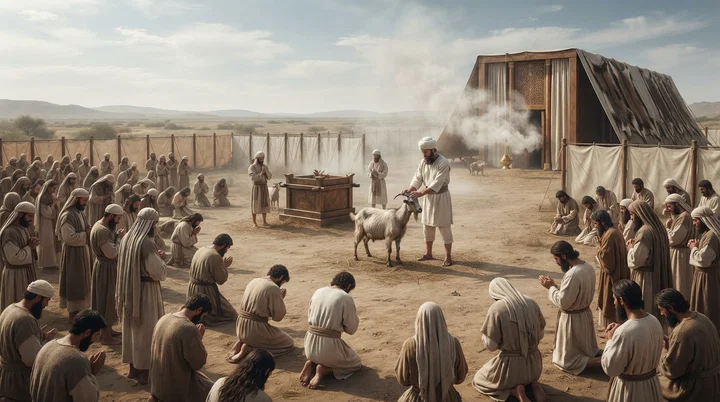
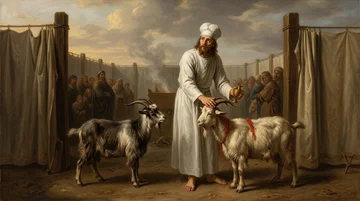
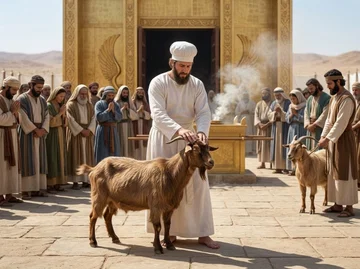
And Aaron shall bring the goat upon which the LORD’s lot fell, and offer him for a sin offering.
Translations
And Aaron shall bring the goat on which the LORD’s lot fell, and offer him for a sin offering.
And Aaron shall bring the goat upon which the LORD’s lot fell, and offer him for a sin offering.
And Aaron shall bring the goat upon which the Lord’s lot fell, and offer him for a sin offering.
And Aaron shall bring the goat upon which the LORD'S lot fell, and offer him for a sin-offering.
And Aaron shall present the goat upon which the lot fell for the LORD, and offer him for a sin offering.
And Aaron shall present the goat upon which the lot fell for Jehovah, and offer him for a sin-offering.
and Aaron hath brought near the goat on which the lot for Jehovah hath gone up, and hath made it a sin-offering.
And Aaron shall present the goat upon which the lot fell for Jehovah, and offer it [ as] a sin-offering.
Then shall Aaron bring near the goat over which came up the lot for Yahweh,—and shall make of him a sin-bearer;
Berean Standard Bible, Majority Standard Bible
he shall present the goat chosen by lot for the LORD and sacrifice it as a sin offering.
Aaron shall present the goat on which the lot fell for the LORD, and offer him for a sin offering.
And the goat which is marked out for the Lord, let Aaron give for a sin-offering.
And Aaron shall offer the goat, vpon which the Lords lot shall fal, and make him a sinne offring.
Douay-Rheims (Challoner revision)
That whose lot fell to be offered to the Lord, he shall offer for sin:
Pictures
Cross-references 20 of 82
- Hebrews 9:23-24
It was therefore necessary that the patterns of things in the heavens should be purified with these; but the heavenly things themselves with better sacrifices than these.
Christ’s ministry in heaven fulfills the sanctuary cleansing typified by the atonement service.
- Hebrews 9:7
But into the second went the high priest alone once every year, not without blood, which he offered for himself, and for the errors of the people:
The high priest’s yearly entry into the most holy place required blood offered for the people’s errors.
- Leviticus 16:15-19
Then shall he kill the goat of the sin offering, that is for the people, and bring his blood within the vail, and do with that blood as he did with the blood of the bullock, and sprinkle it upon the mercy seat, and before the mercy seat:
Describes the Lord’s goat offered to atone for the people and cleanse the sanctuary.
- Hebrews 8:5
Who serve unto the example and shadow of heavenly things, as Moses was admonished of God when he was about to make the tabernacle: for, See, saith he, that thou make all things according to the pattern shewed to thee in the mount.
The earthly priestly service is a pattern and shadow of Christ’s heavenly ministry.
- Leviticus 16:20-22
And when he hath made an end of reconciling the holy place, and the tabernacle of the congregation, and the altar, he shall bring the live goat:
Contrasts the Lord’s goat with the goat sent into the wilderness.
- Hebrews 9:12
Neither by the blood of goats and calves, but by his own blood he entered in once into the holy place, having obtained eternal redemption for us.
Christ enters the heavenly sanctuary by his own blood, fulfilling the sin offering.
- Leviticus 16:30
For on that day shall the priest make an atonement for you, to cleanse you, that ye may be clean from all your sins before the LORD.
The annual atonement cleanses the people from all their sins.
- Leviticus 23:26-32
And the LORD spake unto Moses, saying,
commands rest, fasting, cleansing
- John 1:29
The next day John seeth Jesus coming unto him, and saith, Behold the Lamb of God, which taketh away the sin of the world.
Jesus is the Lamb who takes away the world’s sin, like the sacrificial goat.
- Hebrews 10:4
For it is not possible that the blood of bulls and of goats should take away sins.
Animal blood cannot take away sins.
- Hebrews 9:24-26
For Christ is not entered into the holy places made with hands, which are the figures of the true; but into heaven itself, now to appear in the presence of God for us:
Christ’s once-for-all sacrifice and heavenly ministry fulfill the earthly sanctuary pattern.
- 1 Peter 2:24
Who his own self bare our sins in his own body on the tree, that we, being dead to sins, should live unto righteousness: by whose stripes ye were healed.
Christ bore our sins in his body on the tree, unlike the scapegoat’s later removal.
- Hebrews 8:1-2
Now of the things which we have spoken this is the sum: We have such an high priest, who is set on the right hand of the throne of the Majesty in the heavens;
Christ serves as High Priest in the true heavenly sanctuary, the counterpart to the earthly priestly service.
- Leviticus 16:33
And he shall make an atonement for the holy sanctuary, and he shall make an atonement for the tabernacle of the congregation, and for the altar, and he shall make an atonement for the priests, and for all the people of the congregation.
Names the sanctuary and its people as receiving atonement.
- Hebrews 10:1
For the law having a shadow of good things to come, and not the very image of the things, can never with those sacrifices which they offered year by year continually make the comers thereunto perfect.
The yearly sin offering was a shadow of the good things to come.
- Hebrews 9:28
So Christ was once offered to bear the sins of many; and unto them that look for him shall he appear the second time without sin unto salvation.
The Lord’s goat symbolizes Christ’s sin-bearing offering, after which he appears without sin.
- Hebrews 9:22
And almost all things are by the law purged with blood; and without shedding of blood is no remission.
Remission requires the shedding of blood.
- Leviticus 17:11
For the life of the flesh is in the blood: and I have given it to you upon the altar to make an atonement for your souls: for it is the blood that maketh an atonement for the soul.
Blood represents the victim’s life and makes atonement for the soul.
- Leviticus 16:5
And he shall take of the congregation of the children of Israel two kids of the goats for a sin offering, and one ram for a burnt offering.
The congregation provides the two goats used for the sin offering.
- Leviticus 16:22
And the goat shall bear upon him all their iniquities unto a land not inhabited: and he shall let go the goat in the wilderness.
defines other goat's office to carry iniquities away
Commentary
Each commentary is drawn from primary sources: the writings of Ellen G. White and Adventist pioneers and periodicals. Each commentary is separate. Its own words are not a quotation; follow the references to read the source passages.
Ellen G. White
20 sources
On the yearly day for cleansing God's earthly dwelling among Israel, the goat marked by the Lord's lot was killed as the people's sin offering.Ms 81, 1886, par. 9RH Nov 8, 1915GC 419.1–3 Its blood was carried inside the veil to be placed upon and before the mercy seat and upon the altar of incense.GC88 420.1RH Nov 8, 1915GC 419.1–3 That goat stands for Christ alone as Sin-bearer and Substitute for the repentant believer, to whom all the types point.Ms 112, 1897, par. 47Ms 124, 1901, par. 18–1917MR 242.1–2 It does not stand for Satan, who cannot bear even his own sins, nor for Pilate's washing his hands; the other goat sent away stands for Satan.Ms 112, 1897, par. 47Ms 194, 1901, par. 1 The earthly rite was a shadow of Christ's entry within the second veil of the heavenly sanctuary in 1844 to finish atonement by His own blood and blot out the sins of His faithful ones, which calls the church now to afflict the soul, confess, and be cleansed.Ms 81, 1886, par. 94SP 499.3–500.1GC88 433.1Ms 6, 1876, par. 5–6Lt 55, 1886, par. 9–10
The Day's Sanctuary Service
The chapter describes the cleansing of the sanctuary, which was God's earthly dwelling-place of glory among Israel.GC88 683.4–684.54SP 498.6 It was first the movable tabernacle made in the desert of Sinai, and afterward was housed in Solomon's temple with its holy and most holy place and sacred vessels.GC88 683.4–684.54SP 498.6 It was not the earth itself or the land of Canaan.GC88 683.4–684.5
The service was the great Day of Atonement held once a year to complete the yearly round of ministration.GC 419.1–3GC88 433.1 On that day the most holy apartment was opened and the priest entered the most holy place for the cleansing of the sanctuary.GC 419.1–3GC88 433.1 The goat upon which the Lord's lot fell was slain and offered as a sin offering for the people.Ms 81, 1886, par. 9RH Nov 8, 1915GC 419.1–3GC88 433.1Ms 6, 1876, par. 5–6
Its blood was brought within the veil and sprinkled upon the mercy seat over the law and before the mercy seat.GC88 420.1RH Nov 8, 1915GC 419.1–3 It was also sprinkled upon the altar of incense before the veil.RH Nov 8, 1915GC 419.1–3 As substitute for the sinner, its blood provided a means for sin to be transferred to the sanctuary, but did not itself cancel sin or fully release the sinner from the law's condemnation.GC88 420.1 The offering acknowledged the law's authority, confessed guilt, and expressed desire for pardon through faith in the coming Redeemer.GC88 420.1
The high priest ministered after careful, solemn preparation and entered God's presence with trembling while incense veiled the glory and solemn silence prevailed.8T 284.3–285.1GC 419.1–3ST Mar 4, 1903 The people waited in prayer while he stood before God at the mercy seat.8T 284.3–285.1GC 419.1–3ST Mar 4, 1903 The sound of the bells on his garments reassured them that he had come through safely, and he then blessed them.ST Mar 4, 1903 The ceremony was designed to impress Israel with God's holiness and abhorrence of sin and to show that contact with sin brings pollution.GC 419.1–3
Christ's Antitypical Atonement Work
The earthly sanctuary service was an example and shadow of heavenly things, and its Day of Atonement opening of the most holy apartment for the cleansing of the sanctuary pointed to the opening of the most holy place of the heavenly sanctuary in 1844.GC88 433.1Ms 6, 1876, par. 5–6 Then Christ entered within the second veil to perform the closing work of atonement, to cleanse the sanctuary from the people's sins by virtue of His own blood while pleading His blood for sinners.GC88 433.1Ms 6, 1876, par. 5–6
He is now ministering there as great High Priest in the present dress and work of the final atonement, attired as the high priest was on the Day of Atonement while offering the sin offering.WLF 9.14SP 499.3–500.1 That entrance is the open door which no man can shut until the work therein is fully done.4SP 499.3–500.1 When that work of atonement is finished He will lay off the priestly attire and put on kingly robes and crowns to reign as King of kings.WLF 9.1
There He blots out the sins of all His faithful ones from Abel to the present time.4SP 499.3–500.1 Sins confessed go beforehand to judgment so a person's case can be considered, and the soul is cleansed from defilement by the blood of Jesus.Ms 81, 1886, par. 9Lt 53, 1886, par. 4 In this way Christ cleanses the sinner and secures pardon, which calls for humility, putting away sin, and trusting Him to wash away every stain.Ms 81, 1886, par. 9
The goat upon which the Lord's lot fell represents Christ alone as the sin offering, Sin-bearer, and Substitute for the offender, to whom all the types point.Ms 112, 1897, par. 47Ms 124, 1901, par. 18–1917MR 242.1–2 He takes away the sin of the repentant, believing transgressor.Ms 124, 1901, par. 18–1917MR 242.1–2 While Satan points to the defilement of God's people and accuses them as sinners and transgressors of the law, Christ cannot be so accused.Ms 124, 1901, par. 18–19
That goat does not represent Satan, for Satan cannot bear even his own sins.Ms 112, 1897, par. 47 Nor does it represent Pilate washing his hands at the choosing of Barabbas, because death had no power over Christ and He alone was able to bear human sins.Ms 112, 1897, par. 47 The other goat, the scapegoat chosen to bear the sins of the people, represents Satan himself.Ms 194, 1901, par. 1 Satan must bear the sins of all who come to Jesus, while those who continue in transgression must bear their own sins.Ms 194, 1901, par. 1
Solemn Call to Repentance
The great Day of Atonement and its solemn work is to be kept before people as a reminder of the judgment and of the heavenly sanctuary work that concerns every person.5T 420.3 That work calls for earnest attention, and daily business must not be allowed to make it seem unimportant.5T 420.3 On that day the whole congregation laid aside business and spent the day in solemn humiliation.GC 419.1–3
Sinners are to seek entrance by faith to Christ in the most holy place, and they are to be invited to come to that open door until He declares probation closed and the ministry of the gospel ended.4SP 499.3–500.1 The church is now living in that solemn antitypical time of atonement.Lt 55, 1886, par. 9–10 It calls for purification before God through repentance, humility, putting away sin, and deep searching of heart, with prayer, fasting, afflicting the soul, and trusting Christ to cleanse the sinner, wash away every stain, and secure pardon as sins confessed go beforehand to judgment.Ms 81, 1886, par. 9GC 419.1–3Lt 55, 1886, par. 9–10 The ritual applies to a final day of confession and judgment before the books are opened, when people must face their sins honestly rather than cover their wrongs or assume they have nothing more to do.Ms 52, 1905, par. 10
Sources
Pioneers and periodicals
129 sources
On the most solemn yearly Sabbath, the tenth day of the seventh month, two exactly alike kids of the goats were presented alive before the Lord and lots cast by Providence, one marked for the Lord and one for Azazel, and Aaron brought the goat on which the Lord's lot fell to offer him for a sin offering for the people.RH Sep 16, 1852RH Dec 29, 1904ST May 27, 1897ST Nov 20, 1879 Its blood was carried by the high priest alone within the second veil and sprinkled upon and before the mercy-seat and upon the altar and tabernacle, thereby atoning for Israel in all their sins and cleansing, hallowing and reconciling the sanctuary that through the year had become the receptacle of confessed sins transferred by blood.RH Sep 16, 1852ST May 27, 1897RH Dec 24, 1908 The slain Lord's goat typifies Christ the innocent substitute whose death on Calvary was only the offering of the sacrifice, while the atonement itself is afterward made in the sanctuary by the Priest presenting His own blood in heaven to satisfy the violated law, plead for His people and blot out their sins.RH May 9, 1871ST Sep 26, 1911ST Sep 6, 1910RH Nov 24, 1874ST Mar 29, 1883 The other goat is not sacrificed and does not represent Christ but Azazel, the proper name of Satan the originator of sin, and only when the reconciling of the sanctuary is ended are the cleansed sins confessed upon its live head and borne by it into an uninhabited wilderness, showing that nothing is offered to the evil power.RH May 9, 1871ST Mar 11, 1875RH Mar 24, 1863RH Mar 22, 1870 That service is the type of Christ's closing work in the second apartment of the heavenly sanctuary, the investigative judgment and final blotting out of sin that began at the end of the 2300 days in 1844, to be finished before He lays off priestly robes and appears without sin unto salvation, and therefore the day demands affliction of soul with fasting, confession, heart-examination and putting away of sin, that the penitent may be cleansed and blessed while those who do not afflict their souls are cut off.ST Nov 20, 1879ST Jun 6, 1878RH Jan 11, 1870RH Nov 8, 1906RH Dec 23, 1852
Words and Ritual Setting
The word lot means a decision determined by Providence, not mere chance and not a portion of inherited land.ST Jul 22, 1880RH Jan 29, 1857RH May 26, 1859 The Hebrew word is goh-ral, cast to determine an outcome, and in this verse it identifies which goat is assigned to the Lord.ST Jul 22, 1880RH Mar 25, 1858RH Jan 29, 1857RH May 26, 1859 The casting sets apart one goat to be the Lord's and the other to be the scapegoat, and Israel standing in its lot on that day illustrates the determination of Providence and the decision of the case.RH Jan 29, 1857RH Aug 24, 1869GSAM 83.2–84.1
Two kids of the goats are taken from Israel and presented alive before the Lord at the door of the tabernacle.ST Nov 20, 1879RH Feb 3, 1853ST Oct 25, 1905 They are exactly alike as counterparts in value, size, age and color.ST Oct 25, 1905 Lots are cast upon them, one lot for the Lord, marked La-Yehovah, and the other lot for Azazel, marked La-Azazel, one representing God and the other Azazel.ST May 27, 1897ST Nov 20, 1879RH Feb 3, 1853 The identical preposition La on both lots shows two persons are intended.ST May 27, 1897
The service belongs to the Day of Atonement on the tenth day of the seventh month Tishri.ST May 27, 1897ST Sep 6, 1910ST Nov 20, 1879 It is the most solemn and sacred annual Sabbath and the final day of the yearly ministration, closing the daily service and moving ministration from the first apartment to the most holy place.ST May 27, 1897ST Sep 6, 1910ST Nov 20, 1879 All labor ceases, no work of any kind is done, and souls are afflicted with fasting, prayer, confession, heart-examination and gathering for holy worship.RH Dec 29, 1904ST May 27, 1897 The high priest alone enters within the second veil into the Most Holy Place, where no other eye may look, to perform the work while Israel stands outside afflicting themselves.ST Sep 6, 1910GSAM 83.2–84.1
The goat on which the Lord's lot falls is brought by Aaron and offered for a sin offering for the people.RH Sep 16, 1852RH Nov 17, 1863 It is distinct from the bullock first offered for the priest himself and his house, with special offerings for himself and his household preceding it.ST Sep 6, 1910ST Nov 29, 1905ST Jan 17, 1884 That first atonement for himself enables him to stand sinless before God when he stands for the people, but it has no counterpart in Christ, who was separate from sinners and needed no offering for himself.ST Sep 6, 1910ST Jan 17, 1884
Its blood is carried by the high priest within the veil with a cloud of incense over the mercy-seat.RH Sep 16, 1852ST May 27, 1897RH Dec 24, 1908 It is sprinkled with the finger upon the mercy-seat eastward and before the mercy-seat seven times, indicating complete satisfaction for every transgression of every repentant sinner.ST May 27, 1897ST Sep 6, 1910ST Jul 4, 1911 It is also applied to the altar, tabernacle and holy place, making atonement for the priest, for all the congregation of Israel, and for the sanctuary and all things in it above the transgressed law in the ark.ST May 27, 1897ST Sep 6, 1910ST Jul 4, 1911
Cleansing Work Accomplished
Through the year guilt is transferred from the sinner to the victim by laying on of hands and is carried by its blood sprinkled in the sanctuary, so guilt is removed from the sinner to the sanctuary and the sanctuary becomes the receptacle of confessed sins.RH Jan 1851ST Oct 25, 1883RH Apr 6, 1869 The holy of holies itself, where glory is manifested and which no one but the high priest may enter, is thus made unclean in that sense only, because the sins of the people borne in through blood are present there and must be removed.RH Feb 3, 1853ST May 1, 1879RH Mar 22, 1870 The goat for the Lord offered for a sin offering supplies the blood by which sin is borne into the sanctuary and then borne out, for on the tenth day of the seventh month its blood removes that accumulated sin and cleanses the sanctuary.RH Feb 3, 1853ST Oct 25, 1883RH Apr 6, 1869 The priest as representative bears the sins of Israel into God's dwelling place, defiling it by their uncleanness, and then hallows it from that uncleanness by applying the blood upon and before the mercy-seat and upon the altar.RH Jan 1851ST May 1, 1879ST Oct 25, 1883
That one offering is made for two purposes at once, to make atonement for the children of Israel in all their sins and uncleanness and to cleanse, hallow, reconcile and make atonement for the holy sanctuary, tabernacle and altar from those sins.RH Dec 24, 1908ST Jul 4, 1911ST Jun 19, 1907 The yearly cleansing reverses the daily ministration by bearing out the sins that had been borne in through the year in figure, the high priest carrying the blood within the veil into the most holy place into God's immediate presence and sprinkling it with the finger upon the mercy-seat eastward and before the mercy-seat seven times.ST Jul 4, 1911RH Mar 8, 1870 After atonement for himself and his house the goat marked by the Lord's lot is slain as a sin offering for the people, and its blood is used in the most holy place to atone for the transgressions and to cleanse the sanctuary and altar from the sins brought there through the sin offerings.RH Dec 24, 1908RH Mar 8, 1870ST Jun 19, 1907 The high priest then transfers the people's confessed sins to the other goat, which carries them away from the sanctuary.RH Mar 8, 1870RH Jan 1851
The cleansing is accomplished by blood, not by fire and not by the destruction of wicked, cruel powers or governments that have oppressed the sanctuary and its rightful heirs.RH Feb 3, 1853RH Jan 24, 1856RH Dec 15, 1868RH Dec 5, 1854 The first-covenant sanctuary is cleansed with blood at the conclusion of the year's round of services because the people's sins have been borne there, and this blood-cleansing is the high priest's concluding work before leaving the tabernacle.RH Dec 15, 1868RH Oct 30, 1855 What is removed is sin from the sanctuary, not sinners from it, for sinners are never permitted to inhabit God's sanctuary.RH Feb 3, 1853RH Jan 24, 1856 In that cleansing the sins of the church are transferred from the sanctuary to the antitypical scapegoat, a priestly work completed before the second advent.RH Feb 3, 1853RH Dec 5, 1854
The order is fixed and the offices are entirely distinct, for the Lord's goat is slain and its blood ministers to atone for and cleanse the sanctuary, and this cleansing is finished before the scapegoat is sent away.ST Mar 11, 1875ST Jun 4, 1885 When that reconciling of the holy place and tabernacle and altar is ended the high priest comes out of the door of the sanctuary building and has the live goat brought, lays both hands upon its head and confesses over it all the iniquities, transgressions and sins of Israel, putting them upon the head of the goat.RH Jan 11, 1870ST Jun 4, 1885 He then sends it away by the hand of a fit man into the wilderness, and the goat bears away all iniquities alive into a land not inhabited, leaving sanctuary, priest and people behind and free.RH Jan 11, 1870ST Mar 11, 1875ST Jul 9, 1894RH Mar 22, 1870 The confessed sins represented as carried into the sanctuary and placed on the slain goat are thus transferred to the goat for Azazel and sent out of the camp, completing the yearly round of service.ST Jul 9, 1894ST Jun 4, 1885RH Apr 6, 1869
The blood of bulls and goats in itself could not take away sin, perfect those who offered them, meet the just demand of the holy law, or truly cleanse, because those animals are inferior to man and no goat is an equivalent for a human life.ST May 1, 1879ST Jan 21, 1886ST Feb 7, 1884ST Apr 15, 1886 The earthly sanctuary was therefore never truly cleansed but only in figure, and could never have been truly cleansed even if its service had continued to the end of the 2300 days, for the cleansing means taking sin away from the presence of God and from the throne of judgment, not washing impurity from use out of the building itself.ST Jan 21, 1886RH Dec 1, 1863ST Feb 7, 1884 Those repeated offerings continually reminded the people of sin and its death-penalty and helped worshipers grasp sin's seriousness, while pardon came through the promised offering of Christ and the innocent substitute bearing the people's sins pointed to Him.ST May 1, 1879ST Mar 25, 1889ST Jan 21, 1886ST Apr 15, 1886
Christ as Sin Offering
The goat on which the Lord's lot falls, slain as a sin offering for the people, typifies Christ and His precious blood.RH May 9, 1871ST Sep 26, 1911ST Apr 20, 1904ST Feb 8, 1899 Its death and sacrificial office symbolize Christ, who died as an offering for human sin and suffered death for guilty people.ST Sep 26, 1911ST Apr 20, 1904ST Nov 23, 1904 He is the innocent substitute who voluntarily bore the world's sin, remained sinless, rose victorious, and lives eternally as priest, while His blood is what is used to minister in the sanctuary and cleanse it from sins borne there.RH May 9, 1871ST Feb 7, 1906 That Lord's goat is entirely distinct from the scapegoat, and when the sanctuary work is finished the sins are not rolled back upon Christ to be borne into a land not inhabited.RH May 9, 1871ST Feb 8, 1899
Its slaying typifies Christ's death on Calvary, which was only the offering of the sacrifice and not the making of the atonement.RH Nov 24, 1874ST Jan 28, 1875ST Feb 21, 1878ST Jun 4, 1874 The bringing and slaying of the goat for a sin offering did not make atonement but was preparatory to making atonement.ST Mar 29, 1883RH Jul 6, 1869 Atonement was always made afterward in the sanctuary, and the offering was never slain in the sanctuary, but after the slaying the priest took the blood inside and made atonement.ST Mar 29, 1883RH Jul 6, 1869 It is the priest presenting that blood before the Shekinah who makes the atonement, so Christ is both sacrifice and priest but not at the same time, and He was not acting as priest when He died on the cross.RH Nov 24, 1874ST Mar 29, 1883 His death reconciles and makes salvation possible to the applicant, while His life and priesthood in heaven makes the atonement by which salvation is positive, fixed, and certain.RH Nov 24, 1874ST Mar 29, 1883 For this reason not all for whom Christ died will be saved, but all for whom atonement is made with sins blotted out will be saved, and that atonement is the very last portion of His work as priest carried on in heaven as the only mediator with His own blood.RH Nov 24, 1874ST Mar 29, 1883ST Jan 28, 1875ST Feb 21, 1878
Its blood-ministry typifies Christ as High Priest entering heaven itself with His own blood to appear in God's presence for His people and plead for them.ST Feb 7, 1906RH Sep 6, 1870RH Nov 24, 1874 Its blood, carried alone by the high priest into the most holy place before the ark and the transgressed Ten Commandments and sprinkled seven times upon and before the mercy-seat, indicates complete satisfaction for every transgression of every repentant sinner.ST Sep 6, 1910ST Feb 7, 1906ST Apr 23, 1902 The presentation of the blood before the ark prefigured the satisfaction of the law by the death of Christ so that sinners whose faith was shown might be purged, with both sanctuary and people cleansed, the one from the record of sin and the other from sin itself.ST Sep 6, 1910ST Apr 23, 1902RH Sep 6, 1870 The animal offering atones in figure while Christ's offering atones in fact, forgiving sins, cleansing the soul temple, and sealing the sinner for eternity, not by any act of righteousness of their own but only by the atonement of Christ's blood.ST Sep 6, 1910RH Sep 6, 1870 This yearly rite formed part of the judgment-day service in which the Lord's goat's blood provided for the sanctuary's cleansing, while the sins of the repentant were later confessed over the goat for Azazel.ST Feb 7, 1906ST Apr 23, 1902
The victim's life taken for blood answers the violated law's demand, for blood represents life forfeited through sin.RH Oct 31, 1854RH Sep 6, 1870RH Sep 6, 1870 The goat's life was accepted in place of the people's forfeited lives, so the sacrifice was vicarious, and because the people's sins rested upon it the goat received the penalty of God's broken law.RH Mar 24, 1863RH Oct 31, 1854ST Jan 21, 1886 Its blood makes atonement and propitiation for the sins of the people, redeeming the congregation so that, with evil put away, they live a righteous and godly life in obedience and holiness.RH Mar 24, 1863RH Oct 31, 1854 Salvation is a legal transaction requiring the vindication of justice by the judicial blood of an atoning sacrifice, for God cannot come short of nor go beyond blood to save because He cannot come short of nor go beyond His law to help the sinner, and without shedding of blood is no remission.RH Sep 6, 1870RH Sep 6, 1870RH Sep 25, 1900 Apart from Calvary and its consummation the two goats remain incomprehensible enigmas without significance, but under the light of the gospel and their fulfillment in Jesus they become clear and glorious and give strong confirmation of Scripture.RH Sep 25, 1900
The earthly sanctuary's two apartments and its cleansing rites, including the offering of goats, were patterns of heavenly things, and such animal offerings were types that ceased to serve when Christ's offering for the world was made at Calvary.ST Jun 10, 1880RH Nov 25, 1909 The earthly service could not actually remove sin but was a shadow meant to teach about Christ's work in heaven, which completes each part of the work once for all and is not repeated.RH Mar 10, 1874ST Oct 22, 1874 His heavenly ministry fulfills the earthly sanctuary services, not only the services of the Day of Atonement, for He is in His own person the antitype of the offerings made because of sin.ST Jun 10, 1880RH Mar 10, 1874RH Nov 25, 1909
Scapegoat Contrast and Satan
The two goats stand under separate lots with separate offices and do not represent the same person.RH May 9, 1871ST Mar 11, 1875RH Mar 22, 1870RH Feb 3, 1853RH Oct 14, 1852 Only the goat on which the Lord's lot falls is called the Lord's, is brought by Aaron, is slain, and is offered for a sin offering for those represented in the priest's work, while the other goat is not called the Lord's, is not offered as a sacrifice, is kept alive, and is reserved for a different purpose.RH May 9, 1871ST Mar 11, 1875RH Mar 22, 1870RH Feb 3, 1853ST Jan 27, 1904 Its blood is what the priest uses to perform the ministration in the sanctuary and to cleanse the sanctuary from the sins borne there, and that cleansing is finished before the scapegoat is sent away.RH May 9, 1871ST Mar 11, 1875RH Oct 14, 1852 The Lord's goat is offered before the sanctuary-cleansing work is completed, and the scapegoat's removal follows that cleansing, with the two set apart for different purposes in the ceremony for Israel.RH Feb 3, 1853RH Oct 14, 1852ST Jan 27, 1904
The live goat is for Azazel, which is the Hebrew name of the scapegoat and a proper name for Satan, the devil, the strong angel who revolted, the originator and instigator of sin, the accuser, adversary and enemy.ST Nov 29, 1905ST Feb 8, 1899RH Mar 22, 1870 Of the two goats taken for a sin offering only the goat on which the Lord's lot fell was offered for a sin offering, and that Lord's goat represents Christ and His final work of atonement for those who have made peace with Him, while Azazel represents Satan who will receive just punishment.ST Feb 8, 1899 The Lord's goat is offered as a sin offering whose blood makes atonement and propitiation for the sins of the people, redeeming the congregation so that with evil put away they live righteously in obedience and holiness, distinct from the scapegoat which is the type of evil and of the Evil One.RH Mar 24, 1863 The teaching that the scapegoat represented Christ is error.ST Nov 29, 1905
Because sacrifice requires the taking of life, letting the second goat go alive is a studied denial that anything is offered to the evil power.RH Mar 13, 1866 Selecting both goats by lot is an appeal to God that declares the sacrifice is to God alone and contradicts the Egyptian and Gentile practice of sacrificing to demons, which is why the law then forbids offering sacrifices to demons.RH Mar 13, 1866 There is a relation to Satan in the rite, but not a sacrificial one, for only the goat on which the lot for Jehovah falls is slain as a sin offering to God.RH Mar 13, 1866 Satan is prominent at the center of the sacrificial system because to destroy him was the very object of Christ's death as God's chosen champion to avenge God's cause against the enemy of God and the seducer of man, and his shadow belongs on the great Day of Atonement.RH Mar 13, 1866
The high priest, who is Christ in type, uses the scapegoat only after finishing the sanctuary work and has no part with it in making atonement.ST Mar 11, 1875RH Mar 22, 1870RH Aug 30, 1864 He first slays the sin offering and carries its blood into the sanctuary to blot out sins from the book of judgment, and only after he has made an end of reconciling the holy place and tabernacle and altar does he come out, confess all iniquities and transgressions over the live goat, and send it away.ST Mar 11, 1875RH Mar 22, 1870RH Oct 14, 1852 The live goat then receives the iniquities from the hand of the priest, bears them alive into a separated, uninhabited wilderness, a land not inhabited, and remains there, leaving sanctuary, priest, and people behind and free.ST Mar 11, 1875RH Mar 22, 1870RH Oct 14, 1852 Because Christ is the priest who sends the goat away, the goat must be something else besides Himself.RH Mar 22, 1870 This fixed order proves the live goat cannot typify the risen Christ for justification, and shows pardon during probation is relative and conditional by transfer of still-existing sin from penitent to priest to sanctuary to scapegoat, not by destruction of sin.RH Aug 30, 1864
In antitype, when the cleansing of the heavenly sanctuary is accomplished, the sins of the righteous after blotting out are received by the antitypical scapegoat and carried into an uninhabited land, which is the desolated earth during the thousand years.STRH Apr 6, 1869ST Oct 17, 1878RH Mar 15, 1870ST Nov 18, 1880 The earth turned upside down by the convulsions of the great day and made utterly desolate is that land not inhabited where he remains confined with that terrible load of guilt upon him, bound at the time of his binding before the resurrection of the just, while the saints sit in judgment upon fallen angels and upon wicked men who continued in sin.ST Oct 17, 1878ST Nov 18, 1880 When this cleansing work is completed Christ comes out of the sanctuary bearing the sins of His people to the door and lays them upon the head of Satan the great originator of sin, leaving the people of God free from sin to be remembered no more forever, and then comes the second time without sin unto salvation.RH Apr 6, 1869ST Nov 18, 1880 After God's people have been cleansed and their confessed sins blotted out, Satan and the wicked bear the penalty for their own sins in the final destruction pictured by the lake of fire, which figures both the closing of the heavenly sanctuary's work and the final removal of sin and sinners from the universe.ST Dec 12, 1916
Heavenly Cleansing and Judgment
The slaying of the goat marked by the Lord's lot belongs to the Day of Atonement on the tenth day of the seventh month, when ministration moved from the first apartment to the most holy place.ST Nov 20, 1879ST Jun 6, 1878RH Jan 11, 1870 The high priest slew that goat as a sin offering and carried its blood within the veil to sprinkle it upon the mercy-seat and before it, making atonement for the people and cleansing the sanctuary by removing the sins transferred there through the year.ST Nov 20, 1879ST Jun 6, 1878RH Feb 3, 1853 That yearly cleansing completed the round begun in the first apartment and blotted out the sins of God's people in figure, providing the example and shadow of the cleansing of the heavenly sanctuary.ST Nov 20, 1879RH Aug 22, 1912ST Sep 9, 1875 In antitype it is Christ's closing priestly work in the second apartment of the heavenly sanctuary before the ark and law, finishing the work with the better sacrifice of His own blood and cleansing the heavenly things.RH Feb 3, 1853RH Aug 22, 1912ST Sep 9, 1875
That cleansing is the judgment of the Lord's people and the final disposition of sin.RH Dec 29, 1904ST Sep 9, 1875ST Jun 5, 1879 On that judgment day each life is compared with the law in the ark, cases are examined before the Father's tribunal from the book of remembrance, and character is investigated.RH Apr 2, 1861ST Jun 27, 1878 Those who afflict their souls, confess and put away sin, have their sins blotted out and forever removed and borne away, their names retained in the book of life, and stand acquitted and clear before God.ST Sep 9, 1875ST Jun 5, 1879RH Apr 2, 1861 That acquittal determines worthiness for translation, part in the first resurrection and the marriage supper, and exemption from the second death, while the sins of the unpardoned stand against them, their names are blotted out, and those who do not afflict their souls are cut off and destroyed from among the people.RH Apr 2, 1861 Its decisions vindicate the justice of God toward the righteous and the wicked.ST Sep 9, 1875
It does not typify the events of the whole gospel dispensation but only that part embraced in the hour of God's judgment, in the days of the voice of the seventh angel when he begins to sound.ST Jun 6, 1878RH Jan 11, 1870RH Jan 11, 1870 It is the finishing of the mystery of God, taking up the unfinished work begun when daily sin offerings transferred sins into the sanctuary through blood, and completing it by removing sins from the sanctuary.RH Jan 11, 1870ST Dec 17, 1894 When the temple of God in heaven is opened the ark of His covenant is seen, marking the period when the High Priest enters the most holy place.RH Apr 15, 1873ST Dec 17, 1894 His work in each apartment is performed once for all, beginning in the holy place at ascension and ending in the most holy.ST Jun 27, 1878ST Dec 17, 1894
That priestly work of cleansing by blood is completed before Christ's second coming.RH Apr 30, 1857RH Dec 5, 1854RH Apr 28, 1853 It is the closing act before He lays off His priestly robe for His kingly vesture, before the marriage of the Lamb, ending mediation and appearing without sin unto salvation to bless the waiting congregation.ST Sep 9, 1875ST Jun 5, 1879RH Apr 2, 1861 This judgment takes place while Jesus is Priest in the sanctuary above, before He is revealed from heaven in flaming fire taking vengeance and descends as King of kings and Lord of lords.ST Sep 9, 1875 When intercession ends, wrath is poured out.RH Apr 28, 1853
The weight of passages holds that the antitypical cleansing closes human probation and priestly service once for all, with no further mediation afterward.ST Jun 27, 1878ST Jul 17, 1901RH Aug 3, 1916ST Sep 16, 1880 That yearly cleansing marked the conclusion of the earthly round, and its antitype comes only once at the close of Christ's priesthood, finishing His priesthood preparatory to His coronation and bringing human probation to its end.ST Jun 27, 1878 That closing work has been underway since 1844, and when it ends Christ's mediation closes and those not spiritually prepared are cut off.ST Jul 17, 1901RH Aug 3, 1916 Those who held the other position taught that the chapter does not show probation ending on the Day of Atonement, since the high priest continued the ordinary daily service and officiated in both holy places that day, and the cleansed people still had a probationary work to do.ST Jun 19, 1879
Prophetic Timing Foretold
The earthly cleansing foreshadowed its antitype at the end of the twenty-three hundred days in 1844, when Christ entered the holiest of all to cleanse the heavenly sanctuary.RH Nov 8, 1906RH Feb 3, 1853RH Sep 27, 1906RH Sep 1, 1904 The sanctuary had been identified as the earth or the land of Palestine and its cleansing as the burning of the earth or the purification of Palestine at the coming of Christ, so the great High Priest was expected to leave the tabernacle of God in heaven and descend in flaming fire in the autumn of 1844.RH Dec 23, 1852 The disappointment proved those conceptions of the sanctuary and its cleansing incorrect, while the chronology ending the 2300 days at that time remained unoverthrown.RH Dec 23, 1852 The earthly sanctuary pitched by Moses with its two apartments was type, shadow and likeness of the true sanctuary in heaven, where the priest ministered every day of the year in the first apartment and entered the most holy place only on the day of atonement, the typical day of judgment for all the congregation. The sanctuary to be cleansed is not this earth, for sanctuary means a holy place, a sacred place, a place consecrated to God, while this earth is a world in rebellion against its Creator.
That date is fixed as October 22, 1844, the tenth day of the seventh month, when judgment commenced and Christ as High Priest began cleansing the heavenly sanctuary, the true tabernacle, from the iniquities and uncleanness of the people of God.RH Apr 4, 1907RH Jan 10, 1854ST Dec 21, 1915 The 2300 days commenced with the 70 weeks in the seventh year of Artaxerxes in B.C. 457 with the decree for the restoration and building of Jerusalem by the commandment to restore and build Jerusalem.RH Mar 20, 1856ST Nov 18, 1880 After the 70 weeks or 490 years ended in the autumn of A.D. 34, the remaining 1810 years of the 2300 reached to the autumn of 1844, when Christ as great High Priest passed into the holy of holies before the ark of God's commandments to perform the closing work for His people.ST Jul 17, 1901 That last work for man's salvation is now being accomplished there, cleansing and hallowing it from all the sins of His people from righteous Abel to the end of the world by offering Himself for a sin offering, which is the final adjustment of their cases and the closing of their probation preparatory to His coming to receive them unto Himself.RH Mar 20, 1856ST Nov 18, 1880ST Jul 17, 1901
The casting of the lot on the two goats prefigured that cleansing on October 22, 1844, for lot means an outcome determined by Providence, not mere chance.RH Apr 4, 1907RH Jan 29, 1857 Daniel standing in his lot means that the Lord's people enter the real investigative judgment at the end of the prophetic days.RH Apr 4, 1907 Israel was thereby placed in its lot, for on the yearly Day of Atonement the goat selected by lot was offered as a sin offering and its blood was carried by the high priest into the Most Holy Place to atone for Israel's transgressions, and this ceremony typified the antitypical Day of Atonement when Christ's blood cleanses all God's people, dead and living, from sin.RH Jun 4, 1857RH Aug 24, 1869 While this work was being done Israel stood outside afflicting themselves and confessing their sins so they could stand clear and receive the high priest's blessing, and Israel's standing in its lot on that decisive tenth day of the seventh month, the last day of the yearly service, illustrates Daniel standing in his lot when the final cleansing of the sanctuary brings the cases of the righteous dead before God.RH Aug 24, 1869GSAM 83.2–84.1
The heavenly cleansing began when the 2300 days expired and the temple of God was opened in heaven with the ark of His testament seen, showing the hour of His judgment is come and the time to proclaim the commandments of God and the faith of Jesus.ST May 1, 1879LDT 149.1 That cleansing is the work of the high priest with the blood of the sin offering, effected by applying the blood in the most holy place over the ark of the testament, removing the sins conveyed into the sanctuary during the year through the priests' service at the people's confessions and sacrifices.ST May 1, 1879ST Sep 16, 1886 The blood of bulls and goats could not take away sin because those animals were inferior to man and could not meet the just demand of God's holy law, while the sanctuary in heaven is cleansed by the blood of the perfect sacrifice of Christ which cleanses from all unrighteousness, so Daniel 8:14 must refer to the heavenly antitypical sanctuary.ST May 1, 1879 This earthly cleansing on the tenth day of the seventh month teaches the nature of the cleansing of the heavenly sanctuary, meaning that at the end of the 2300 days Christ entered into the Most Holy Place and there commenced the final work, accomplished at the close of the twenty-three hundred days when the temple is opened and the ark is seen at the sounding of the seventh trumpet when the time comes for the dead to be judged, which is the time of the third angel's message.ST Sep 16, 1886RH Mar 28, 1854LDT 149.1
By analogy the one-day yearly service in the most holy after 364 days of ministry in the first apartment shows the heavenly closing work is short, and its beginning means the close of the work of salvation for the world is near.RH Sep 17, 1861 That Day of Atonement service was the only service to be performed in the second apartment, a short and closing work distinct from the service performed throughout the entire year except upon that day in the holy place, and Christ's ministry follows the same order, beginning in the first apartment and not spending eighteen hundred years upon the closing work.RH Oct 2, 1856 The antitype is a short period beginning in 1844, when the 1335 days and the 2300 days end, in which judgment sits in the heavenly courts on the cases of the righteous ending with the first resurrection and the coming of the Lord, so that God's work in the earth is soon to close and coming to that time is blessing with hope of seeing the latter end of these wonders.ST Sep 21, 1915
Call to Repentance and Life
The day requires affliction of soul with fasting and prayer, examination of heart, ceasing from all work, gathering for holy worship, confessing sin, making every wrong right and putting away every sin.RH Dec 29, 1904ST Mar 23, 1904ST Feb 17, 1890RH Feb 2, 1911 It falls on the tenth day of the seventh month as the closing of the yearly service, performed by the high priest alone within the veil in the most holy place, while ordinary offerings at the door cease and attention rests by faith on his hidden work of atonement.ST Feb 17, 1890RH Feb 2, 1911RH Dec 1, 1904RH Aug 5, 1851 The blood of the goat chosen by the Lord's lot is carried with incense into the second apartment and sprinkled upon the mercy-seat and before it, while the people humble themselves and confess, and only when reconciling of holy place, tabernacle and altar is finished are their iniquities confessed over the live goat and borne into a land not inhabited.ST Mar 23, 1904ST Feb 17, 1890RH Feb 2, 1911ST Aug 15, 1878 That typical final disposition of sin is the type of the day of judgment, whose present antitype in Christ's concluding ministry calls the living, still in probation while cases of the dead are judged, to affliction of soul and confession of sin.RH Dec 29, 1904RH Feb 2, 1911ST Aug 15, 1878
Those who afflict their souls have their sins blotted out and forever removed, are cleansed from all sins before the Lord both from sin itself and from its record, and are justified before God.ST May 27, 1897ST Sep 9, 1875 The blood makes atonement and propitiation redeeming the congregation, so that with evil put away they live a righteous and godly life in obedience and holiness, stand clear before God, and receive freedom and rejoicing when separated from sin.ST May 27, 1897ST Mar 23, 1904RH Mar 24, 1863 The cleansing of the sanctuary is the judgment of the Lord's people, and the final disposal and blotting out of their sins by the great High Priest is their acquittal for the first resurrection and exemption from the second death, taking place while He is Priest above before He is revealed in flaming fire as King of kings.RH May 18, 1869ST Sep 9, 1875 Those who do not afflict their souls and cease from work are cut off and destroyed from among God's people, as the type of the final condition of those who die in sin after propitiation has been made.RH Mar 24, 1863ST Sep 9, 1875
Pardon in this service is relative and conditional, not absolute annihilation, for God does not disregard His law or lightly pass over crime but forgives by transferring sin to another who bears it instead.ST Oct 12, 1876RH Jun 30, 1874 The order is fixed: first the Lord's goat is slain as a sin offering typifying Christ's death on Calvary, then its blood is carried into the sanctuary to blot out sins from the book of judgment, cleanse and hallow the sanctuary from Israel's uncleanness, remove sins from before the throne and set the people free from condemnation.ST Oct 12, 1876RH Jun 30, 1874 Even when cleansed the sin still exists as an offense against Heaven, removed from God's presence to another object, and nothing is done with the live goat until after atonement is fully made and reconciling is ended.ST Oct 12, 1876RH Jun 30, 1874 This distinguishes forgiveness received at confession from later final blotting out, when confessed sins removed from the sanctuary are placed on the scapegoat and ultimately destroyed, proving the live goat cannot typify the risen Christ for justification.RH Sep 28, 1916
The offering does not save apart from faithful cooperation, for confessing sin and offering sacrifice did not replace the need for the atonement work to be completed by blood brought within and the sanctuary cleansed.RH Mar 3, 1904RH Dec 1, 1904RH Aug 5, 1851 Every Israelite had an interest and a personal part to work out from beginning to end of that day, though decision was not reached until its close.RH Mar 3, 1904RH Dec 10, 1901 So every believer living since the fall of 1844 has a living, active part in the open court the Judge is conducting, weighing evidences for and against applicants for eternal life, whether overcoming or being overcome, whether every sin is confessed with pardon written against the last one, demanding solemn service and best energies as standing before the throne of the Eternal.RH Dec 10, 1901 Only those who receive this judgment reality, confess every sin, overcome, and walk with God as Enoch did will meet the Lord at His coming without tasting death.RH Mar 3, 1904RH Dec 10, 1901
The chapter belongs to the central laws governing worship and approach to a holy God by a sinful people, dealing with confessed sins through victim and blood and cleansing the sanctuary once a year, with origin, command and rites plainly set forth as a new institution from Abraham's time onward.RH Feb 3, 1916RH Mar 9, 1905 That work of atonement and sin offerings relates to God's law of which the Sabbath is one of the ten precepts.RH Apr 28, 1874 The bringing and offering of the Lord's goat belongs to one grand orderly yearly series in which departure in the least particular was worthy of blame, like the order in the six days of creation, in saving Noah with family and animals while confusion and destruction reigned outside, and in leading Israel out of Egyptian confusion, proving God is not author of confusion but of harmony and order and has not changed.ST Aug 18, 1881 The whole teaching of the sanctuary must be made plain anew to this generation in time and work, once familiar to young and old but set aside by perversion of the gospel introducing a new temple, leader, sacrifice, service and priesthood with no salvation, now to be restored as salvation through faith in Christ our sacrifice, substitute, surety and great high priest.RH Oct 29, 1903 The scapegoat image likewise exposes selfish religion that assigns threatenings and judgments to others while keeping promises and mercies, as when Jerusalem is made a convenient scapegoat to deny the Lord's coming vengeance on His foes.ST May 13, 1880
The record of the Day of Atonement is the day of final cleansing and remission for sanctuary and people, in which the goat assigned to the Lord supplies blood for atonement and cleansing from yearly uncleanness, after which sins are confessed over the scapegoat and borne away from the camp into the wilderness.ST Dec 12, 1916ST Apr 8, 1913RH May 14, 1867ST May 7, 1912RH Jan 6, 1916 The earthly priests ministering through the year and the high priest making atonement on the last day, finishing the work for Israel when he comes out with no judgment afterward, is the type of Christ's ministry and real judgment in the heavenly sanctuary.RH May 18, 1869RH May 14, 1867 These types of tabernacle, priesthood and sacrifices must be understood as prophetic background fulfilled in Christ, Moses and the prophets, among the greater essentials of Leviticus.ST Dec 12, 1916ST Apr 8, 1913RH May 18, 1869RH May 14, 1867ST May 7, 1912
Sources