Translations
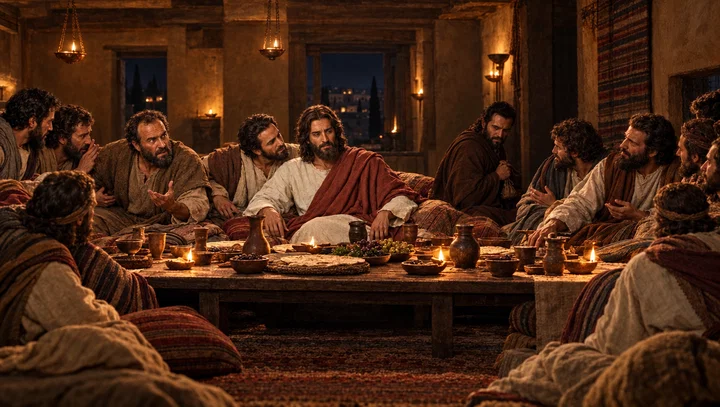
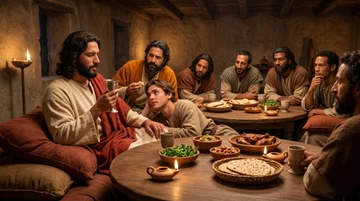
And in the evening he comes with the twelve.
King James Version, KJV Cambridge Paragraph Bible, Webster Bible
And in the evening he cometh with the twelve.
Revised Version, American Standard Version
And when it was evening he cometh with the twelve.
And evening having come, he cometh with the twelve,
And when evening was come, he comes with the twelve.
And, when evening arrived, he cometh, with the twelve.
Berean Standard Bible, Majority Standard Bible
When evening came, Jesus arrived with the Twelve.
When it was evening he came with the twelve.
And when it was evening he came with the twelve.
And at euen he came with the twelue.
Douay-Rheims (Challoner revision)
And when evening was come, he cometh with the twelve.
Pictures
Cross-references
- Matthew 26:20-29
Now when the even was come, he sat down with the twelve.
The parallel account of the evening meal and its institution.
- Luke 22:14-23
And when the hour was come, he sat down, and the twelve apostles with him.
The parallel account of Jesus’ meal with the disciples.
- John 13:21-30
When Jesus had thus said, he was troubled in spirit, and testified, and said, Verily, verily, I say unto you, that one of you shall betray me.
Jesus announces the betrayer during the meal and gives Judas the sop.
- Exodus 12:6
And ye shall keep it up until the fourteenth day of the same month: and the whole assembly of the congregation of Israel shall kill it in the evening.
gives appointed time to slay lamb
- 1 Corinthians 11:23
For I have received of the Lord that which also I delivered unto you, That the Lord Jesus the same night in which he was betrayed took bread:
Refers to the supper Jesus instituted on the night he was betrayed.
- Luke 22:7
Then came the day of unleavened bread, when the passover must be killed.
Identifies the day the Passover had to be killed, when Jesus ate with the twelve.
- Matthew 26:17
Now the first day of the feast of unleavened bread the disciples came to Jesus, saying unto him, Where wilt thou that we prepare for thee to eat the passover?
Matthew likewise places Jesus’ meal with the twelve in the evening.
- Mark 14:12
And the first day of unleavened bread, when they killed the passover, his disciples said unto him, Where wilt thou that we go and prepare that thou mayest eat the passover?
Mark identifies the day the Passover was prepared and says they ate.
- John 13:1-2
Now before the feast of the passover, when Jesus knew that his hour was come that he should depart out of this world unto the Father, having loved his own which were in the world, he loved them unto the end.
Places Jesus’ final meal with his disciples before Judas’s betrayal.
- Exodus 12:18
In the first month, on the fourteenth day of the month at even, ye shall eat unleavened bread, until the one and twentieth day of the month at even.
gives timing compared with Gospels
- Mark 14:30
And Jesus saith unto him, Verily I say unto thee, That this day, even in this night, before the cock crow twice, thou shalt deny me thrice.
Jesus fixes Peter’s predicted denial to that day.
- John 13:30
He then having received the sop went immediately out: and it was night.
Places the supper events at night, after Judas leaves.
Commentary
Each commentary is drawn from primary sources: the writings of Ellen G. White and Adventist pioneers and periodicals. Each commentary is separate. Its own words are not a quotation; follow the references to read the source passages.
Ellen G. White
1 source
In the evening Jesus arrived with the twelve disciples for the Passover meal.DA 652.1–2 At that meal He instituted the Lord's Supper as a memorial of His own sacrifice.DA 652.1–2 The occasion marked the transition from the Passover and its ceremonies, which pointed forward to Christ's death, to a service His followers were to observe in all lands and through all ages.DA 652.1–2
Sources
Pioneers and periodicals
18 sources
In the evening Jesus came quietly with the twelve disciples to the prepared upper room to eat the Passover.ST Apr 2, 1912ST Jul 14, 1914 This was the final Passover before His death, eaten at its appointed day and time in fulfillment of all righteousness, giving the deliverance from Egypt its fuller meaning as deliverance from sin through the Messiah, the Lamb of God.ST May 13, 1889ST Apr 2, 1912RH Jun 24, 1873 That night He instituted the Lord's Supper as the memorial of His death to show forth His death until He comes again, beginning the work that will restore sinful humanity to God and ultimately remove sin from the universe.ST May 13, 1889ST Jul 14, 1914RH Aug 19, 1858 The meal was the setting for the announcement of a betrayer, the disciples' questioning and dispute about greatness, and the departure of Judas after receiving the sop before the solemn hymn.ST May 12, 1898ST Jan 10, 1911ST His coming after sunset was in the first part of the night, which is the first part of the day, proving the day begins at sunset and runs from evening through morning rather than ending at midnight.RH Mar 20, 1879
Evening Arrival at Passover
In the evening he came with the twelve to the room prepared for them, the upper room or guest chamber, to eat the Passover.ST Apr 2, 1912ST Jul 14, 1914ST Dec 20, 1899ST May 12, 1898 He arrived after the preparation was complete and the lambs had been killed that afternoon, and they then sat down together to the meal.ST Apr 2, 1912ST Dec 20, 1899ST May 12, 1898ST Jan 10, 1911 His coming was quiet and without display.ST Jul 14, 1914
The meal was the setting for the announcement that one would betray him and for the disciples' questioning, for their dispute about who would be greatest, and for the institution of the Lord's Supper.ST May 12, 1898ST Jan 10, 1911ST At that scene Judas left after receiving the sop and did not remain for the solemn hymn sung with Jesus.ST Mark's account, like Matthew's, gives the meal, the identification of the betrayer, and the Lord's Supper in their proper order, though it omits details recorded by John, including the foot washing.ST Nov 15, 1883
Passover Fulfilled and Memorialized
This was the final Passover before his death, preparing the disciples for his approaching death.ST May 13, 1889 The gathering belongs to the closing events of Jesus' life on earth, which culminate in his triumph over death. Among all the recorded events of his ministry those immediately connected with his death are of the greatest interest, because everything centers on his death and all hope depends on it.ST Nov 15, 1883 The Passover's deliverance from Egypt is given its fuller meaning as pointing to deliverance from sin through the Messiah, the Lamb of God.ST May 13, 1889
Jesus ate the Passover with his disciples on its appointed day and time and at its appointed legal season.ST Apr 2, 1912RH Jun 24, 1873 He did so because as born under the law He learned obedience, knew no sin, was without sin, and fulfilled all righteousness.RH Jun 24, 1873 That night He was taken and later crucified, fulfilling the Passover type in both event and timing.ST Apr 2, 1912
At this feast, that night, Jesus instituted the Lord's Supper, the memorial of his death that shows forth his death until he comes again.ST May 13, 1889 The evening is thus the time associated with the Lord's Supper.ST May 13, 1889RH Aug 19, 1858 There a work begins that will restore sinful humanity to God and ultimately remove sin from the universe.ST Jul 14, 1914
Day Reckoning and Open Questions
The coming in the evening was after the setting of the sun, in the first part of the night, which is the first part of the day.RH Mar 20, 1879 The talk with Peter about denying him that day happened then, before the denial and the cock-crowing that took place just before Jesus was taken to the judgment hall at daylight in the morning, proving that the day begins at sunset and includes evening through morning and does not end at midnight.RH Mar 20, 1879 The surrounding account places this on the day the Passover lamb was killed and the first day of unleavened bread, identified as Thursday, the fourteenth day of Abib.RH Feb 5, 1914 The evening arrival marks the start of the fifteenth day of the first month, after the lamb required to be slain on the fourteenth between the two evenings had been slain.RH Jun 24, 1873 He did this because as born under the law as a minister of the circumcision He learned obedience, knew no sin, was without sin, and fulfilled all righteousness.RH Jun 24, 1873
He ate the Passover supper with the twelve on the same day as the regular Passover but a few hours earlier, while his death on the cross met the exact Passover time.ST Jun 20, 1911 The day was divided into hours with the first lasting until nine o'clock, the third until noon, the sixth until three in the afternoon, and the twelfth until six, and Jesus died after the ninth hour, when the darkness had ended, between the two evenings.ST Jun 20, 1911 The weight of the testimony holds that he ate the Passover with them at its regular time, on the night after the lamb was slain in the afternoon of the fourteenth day, with his arrival with the twelve in the evening coming after the Passover lambs had been killed that afternoon.RH Feb 5, 1914
The verse belongs to the question whether Judas was present and partook when the Lord's Supper, the divine memorial of his death, was instituted.RH Jul 29, 1873RH Jul 29, 1873RH Nov 4, 1873 Its casual reading with Matthew and Luke presents Judas as present and partaking of the memorial, but the passage alone does not establish his presence or absence.RH Jul 29, 1873RH Nov 4, 1873 Deciding whether Judas had part in the divine memorial turns on the relative time when the Passover was eaten and the memorial was instituted, requiring careful examination of the united testimony of the four evangelists.RH Jul 29, 1873 The claim that the institution occurred some time after Judas received the portion from Christ's hand and went out immediately is unsubstantiated by testimony from the word.RH Jul 29, 1873 This coming with the twelve in the evening for the last supper deserves most careful and reverent study, including careful study of its order among the events connected with the last supper, which is necessary to realize the full import of what He did.ST Nov 15, 1883
Sources