Luke 22:14
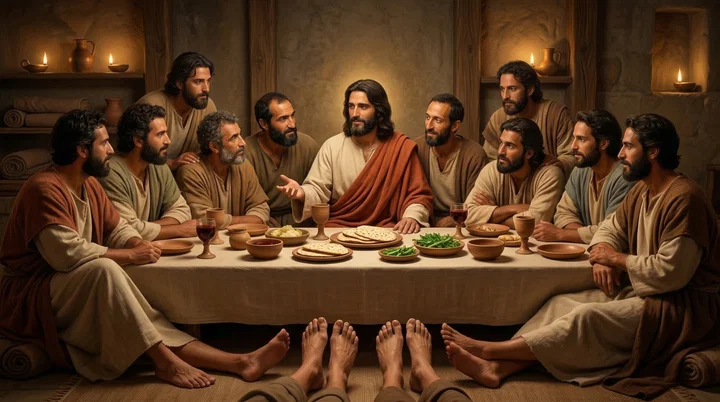
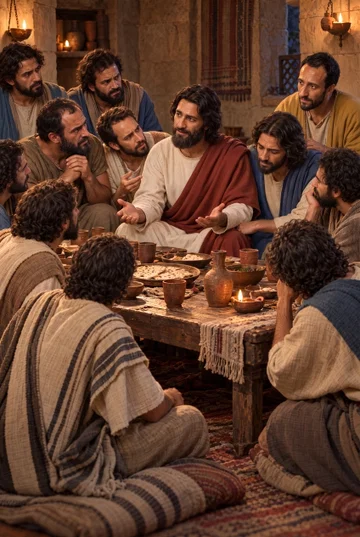
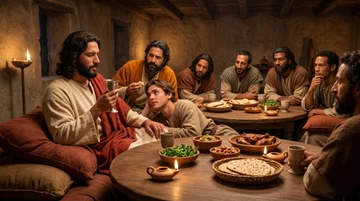
And when the hour was come, he sat down, and the twelve apostles with him.
Translations
American King James Version, King James Version, KJV Cambridge Paragraph Bible, Webster Bible, Douay-Rheims (Challoner revision)
And when the hour was come, he sat down, and the twelve apostles with him.
Revised Version, American Standard Version
And when the hour was come, he sat down, and the apostles with him.
And when the hour come, he reclined (at meat), and the twelve apostles with him,
And when the hour was come, he placed himself at table, and the [twelve] apostles with him.
And, when the hour arrived, he reclined, and the apostles with him.
When the hour had come, Jesus reclined at the table with His apostles.
When the hour had come, Jesus reclined at the table with His twelve apostles.
When the hour had come, he sat down with the twelve apostles.
And when the time had come, he took his seat, and the Apostles with him.
And when the houre was come, hee sate downe, and the twelue Apostles with him.
Pictures
Cross-references 20 of 31
- 1 Corinthians 11:23-26
For I have received of the Lord that which also I delivered unto you, That the Lord Jesus the same night in which he was betrayed took bread:
Institutes the Lord’s Supper as remembrance of Jesus and proclamation of his death until he comes.
- Exodus 12:6
And ye shall keep it up until the fourteenth day of the same month: and the whole assembly of the congregation of Israel shall kill it in the evening.
Sets the appointed day for slaughtering the lamb.
- Mark 14:17
And in the evening he cometh with the twelve.
Jesus comes in the evening to eat the Passover with the twelve.
- Matthew 26:17-21
Now the first day of the feast of unleavened bread the disciples came to Jesus, saying unto him, Where wilt thou that we prepare for thee to eat the passover?
Parallel account says Jesus ate with the twelve at the appointed time.
- John 13:1-30
Now before the feast of the passover, when Jesus knew that his hour was come that he should depart out of this world unto the Father, having loved his own which were in the world, he loved them unto the end.
Describes the supper and events that night, including Judas receiving the sop.
- 1 Corinthians 5:7
Purge out therefore the old leaven, that ye may be a new lump, as ye are unleavened. For even Christ our passover is sacrificed for us:
Christ is identified as the Passover sacrifice, fulfilled in his death.
- Exodus 12:18
In the first month, on the fourteenth day of the month at even, ye shall eat unleavened bread, until the one and twentieth day of the month at even.
The fourteenth day marks the beginning of the Passover observance.
- Matthew 26:17-19
Now the first day of the feast of unleavened bread the disciples came to Jesus, saying unto him, Where wilt thou that we prepare for thee to eat the passover?
Describes preparations for Jesus’ Passover meal with his disciples.
- Mark 14:12-16
And the first day of unleavened bread, when they killed the passover, his disciples said unto him, Where wilt thou that we go and prepare that thou mayest eat the passover?
The disciples prepare the Passover meal for Jesus and his disciples.
- Luke 22:19
And he took bread, and gave thanks, and brake it, and gave unto them, saying, This is my body which is given for you: this do in remembrance of me.
Christ establishes the memorial service at this meal.
- Luke 22:7
Then came the day of unleavened bread, when the passover must be killed.
The Passover lamb was to be killed before the meal began.
- 1 Corinthians 11:23
For I have received of the Lord that which also I delivered unto you, That the Lord Jesus the same night in which he was betrayed took bread:
Connects the night of Jesus’ betrayal with the supper he instituted.
- Leviticus 23:5
In the fourteenth day of the first month at even is the LORD’s passover.
Dates the Passover to the fourteenth day at evening.
- Mark 14:22-25
And as they did eat, Jesus took bread, and blessed, and brake it, and gave to them, and said, Take, eat: this is my body.
Records the meal and Jesus’ command.
- Matthew 26:26-29
And as they were eating, Jesus took bread, and blessed it, and brake it, and gave it to the disciples, and said, Take, eat; this is my body.
Jesus institutes the ordinance during the meal.
- Luke 22:8
And he sent Peter and John, saying, Go and prepare us the passover, that we may eat.
Jesus sends Peter and John to prepare the Passover meal.
- Exodus 12:13
And the blood shall be to you for a token upon the houses where ye are: and when I see the blood, I will pass over you, and the plague shall not be upon you to destroy you, when I smite the land of Egypt.
Passover deliverance typified the salvation Christ brought.
- John 13:23
Now there was leaning on Jesus’ bosom one of his disciples, whom Jesus loved.
John asks from Jesus' breast
- Exodus 12:15
Seven days shall ye eat unleavened bread; even the first day ye shall put away leaven out of your houses: for whosoever eateth leavened bread from the first day until the seventh day, that soul shall be cut off from Israel.
The Lord’s Supper followed Passover, when leaven was excluded.
- Mark 14:26-32
And when they had sung an hymn, they went out into the mount of Olives.
The account continues from the supper to the journey to Gethsemane.
Commentary
Each commentary is drawn from primary sources: the writings of Ellen G. White and Adventist pioneers and periodicals. Each commentary is separate. Its own words are not a quotation; follow the references to read the source passages.
Ellen G. White
9 sources
When the appointed hour arrived, Jesus sat down with the twelve apostles to eat the Passover, His final meal with them before His suffering.Ms 54, 1897, par. 1–2Ms 19, 1897, par. 30–33Ms 35, 1897, par. 1–2DA 652.1–2 They ate it in a prepared, furnished upper room, the upper chamber of a dwelling at Jerusalem where they had gathered to celebrate the Passover.Ms 19, 1897, par. 30–33Ms 106, 1903, par. 1–5Ms 55, 1911, par. 29 The hour that was come was the hour of His own death, which He knew had come.Ms 106, 1903, par. 6–7 It was the last Passover He would keep with His disciples.Ms 106, 1903, par. 6–7 He Himself was the true Paschal Lamb, to be sacrificed on the day the Passover was eaten.Ms 106, 1903, par. 6–7
The meal marks the transition from the Passover to the sacramental service, which He instituted as the Lord's Supper, the enduring memorial of His sacrifice replacing the Passover festival.Ms 35, 1897, par. 1–2DA 652.1–2 In keeping the Passover in obedience to the Jewish law and all its divinely appointed ordinances, and in connecting the Lord's Supper with it at that meal, He identified Himself as the great antitype of the paschal lamb.5RED 48.1 As the sinless Lamb of God whose merits alone avert the judgment and condemnation of fallen man, He fulfilled the great salvation typified by the deliverance of Israel from Egypt.5RED 48.1 He knew the circumstances of the occasion would never be forgotten by His disciples but would be recalled to memory and handed down from generation to generation in the history of the church.Ms 106, 1903, par. 6–7
The supper came before the walk to Gethsemane, when He walked with the disciples, spoke and taught them on the way, and became silent as they neared the garden where He often went to pray.COS 113.2 The upper room where He met with the twelve for the last supper was the same room where the disciples later met after the crucifixion and where He appeared to them after His resurrection.Ms 55, 1911, par. 29
Sources
Pioneers and periodicals
40 sources
When the appointed hour came he sat at the table with the twelve apostles to eat the Passover.ST Oct 22, 1894ST Sep 27, 1910ST May 12, 1898 It was the regular Passover at its proper time on the fourteenth day of Abib or Nisan, when the lamb had to be killed and leaven put out of the houses.RH Feb 5, 1914ST Mar 11, 1886RH Jun 24, 1873 It was his last Passover with his disciples before he suffered, the final Passover supper of his ministry.ST Sep 27, 1910ST Nov 19, 1912RH Mar 7, 1912 At the close of that supper the type met the antitype and the Passover ordinance came to an end, for he presented himself as the final offering for sin.ST Mar 3, 1909RH Mar 7, 1912 After the Passover he instituted the Lord's Supper in its place as a memorial of his death to be observed in remembrance of him till he comes again.ST Nov 19, 1912RH Dec 19, 1907ST Dec 30, 1889ST Mar 3, 1909ST Feb 7, 1878
Hour, Day and Place
When the appointed hour came Jesus sat at table with the twelve apostles to eat the Passover, and that sitting marks his last Passover with his disciples at its regular time on the fourteenth day when the Passover lamb was to be slain.ST Oct 22, 1894ST Sep 27, 1910ST May 12, 1898 That day was the regular Passover time on the fourteenth day of Abib or Nisan, reckoned as the first day of the feast of unleavened bread when the Passover had to be killed and leaven was put out of the houses.RH Feb 5, 1914RH Jun 24, 1873 In this reckoning the day fell on Thursday of Passion Week, on the evening of Thursday the fourteenth before his crucifixion on Friday, and in keeping it at its appointed season on the fourteenth of the first month between the evenings as the law required he as one born under the law and without sin fulfilled all righteousness.RH Feb 5, 1914ST Mar 11, 1886RH Jun 24, 1873
The lamb was slain in the afternoon of the fourteenth and eaten that night after it had been killed, and because the day began at sunset that night was the beginning of the fifteenth.RH Feb 5, 1914RH Feb 5, 1914 Jesus ate the Passover that night with his disciples and then instituted the Lord's Supper that same night after eating the Passover.RH Feb 5, 1914RH Feb 5, 1914 That supper was on Thursday evening before he went to Gethsemane, and his crucifixion followed the next day, Friday the fifteenth, the first day of the Feast of Unleavened Bread.ST Mar 11, 1886 It was the regular Passover day at its proper time, and that same night he was taken and slain, with his arrest, trial and crucifixion following.ST Apr 2, 1912RH Dec 19, 1907
The gathering was in the large upper room or upper chamber, with the table spread and the bread and the sop ready.STRH Jul 3, 1900 The timing of this last Passover is difficult to determine.ST Sep 30, 1880 Those who held otherwise taught that the supper was a few hours before the regular Passover meal though still on the same day, its timing anticipating his death which occurred at the exact Passover time between the two evenings.ST Jun 20, 1911 The supper took place on Thursday night, the night before he was crucified, but the supper did not make Thursday sacred, just as his death completing the greatest act in the plan of salvation did not make the sixth day sacred.ST May 11, 1915
Passover Kept and Ended
Jesus kept the paschal lamb at its appointed season on the fourteenth day of the first month between the evenings as the law required, as one born under the law who fulfilled all righteousness.RH Jun 24, 1873 The meal was the Jewish Passover eaten before He suffered, His last Passover with His disciples.ST Sep 27, 1910ST Nov 19, 1912 It was the fourth and final Passover supper of His ministry, held after the disciples had prepared for it as a quiet time together before momentous events.RH Mar 7, 1912
At the close of the Passover supper the type met the antitype and the Passover ordinance came to an end.ST Mar 3, 1909 As a turning point between two great dispensations He presented Himself as the final offering for sin, bringing the stream of sacrificial blood that had prefigured His death to an end.RH Mar 7, 1912 He identifies Himself as the great antitype of the Passover, the sinless Lamb whose merits alone avert judgment and condemnation, and the meal became the feast commemorating His death as the Lamb of God.ST Apr 2, 1912ST Sep 30, 1886
It was their last meal of this kind together until they ate and drank again in God's kingdom; this does not mean that the Passover institution itself remained unfulfilled.RH May 10, 1864 The meal is the same historical last supper recorded precisely by all four Gospel writers.RH Jan 28, 1862 Luke is among the three who distinctly record the partaking of the bread and wine and Jesus' words about them and the betrayal by night, in exact agreement with the others, and that full agreement, joined by Paul's separate account received directly from the Lord, proves the writers knew the supper to be fact and are competent witnesses to its truth.RH Jan 28, 1862
Lord's Supper Instituted
When the hour had come Jesus sat with the twelve to eat the Jewish Passover before He suffered, and after that Passover supper He instituted the Lord's Supper as a distinct observance in its place, immediately following the Jewish feast as its substitute.ST Nov 19, 1912ST Feb 7, 1878 The setting belongs to the account of the institution of the Lord's Supper, the next event of importance after the entry into Jerusalem, and to the account of the betrayal.STST Oct 28, 1913 The ordinance grew out of this farewell meeting with His disciples as a living event rather than being introduced by a formal proclamation.ST Jul 21, 1898
At this meal He instituted the Lord's Supper as a memorial of His death, to continue until He comes again.RH Dec 19, 1907 He commanded His followers to observe it in remembrance of Him, and at the close of the Passover supper when type met antitype He instituted it in the Passover's place as a memorial of both His crucifixion and His coming.ST Dec 30, 1889ST Mar 3, 1909 It was first eaten before His death as an expression of faith in the Savior who was yet to die, while after His death it is eaten in memory of Him who has died.ST Dec 11, 1879
He instituted it on Thursday night, the night of His betrayal, on a week-day night and not on Sunday.ST Jan 25, 1910ST May 27, 1875 He celebrated the breaking of bread on Thursday evening, not on the first day of the week, which proves there is no requirement to break bread on Sunday, especially since the disciples sometimes broke bread every day.ST Jan 13, 1881 Its institution therefore fixes its celebration to no particular day, so it may rightly be celebrated on Saturday, on Sunday, or on any week-day, and to require Sunday communion as a church duty on a scriptural basis is without commandment and without precedent.ST May 27, 1875
The meal commemorates Christ's death, not His resurrection, and the New Testament does not restrict communion to a particular day of the week. If communion were confined to one day, the sixth day would be the fitting day, because the crucifixion took place then. There He left a solemn and appropriate memorial of His death with the emblems of His dying body before them, calling to mind what He suffered for sins in Gethsemane and on Calvary, and it is good for the soul to meditate often on these scenes.RH Dec 13, 1870 The ordinance shows the Lord's death till He comes and must be carefully and often observed by the churches, not neglected month after month, quarter after quarter, or year after year, with elders having authority to see to it and monthly meetings serving as fitting occasions even when no minister visits.RH Dec 13, 1870
Unfermented Bread and Cup
The Lord's Supper was instituted with only the cup and the fruit of the vine, with the term wine never mentioned.ST Jul 13, 1915 The fruit of the vine means wine freshly pressed from grapes, not fermented wine that would make men drunken.ST Jul 13, 1915 Only the pure juice of the grape could fitly represent the blood of Christ shed for mankind.ST Jul 13, 1915
The Supper was kept in connection with the Passover, when nothing having to do with ferment was used.ST Jul 13, 1915ST Feb 7, 1878 The bread had to be unfermented bread, and houses were searched to remove and destroy everything speaking of ferment or leaven, so the wine used at the Passover feast would not be fermented wine.ST Jul 13, 1915 All fermented things are carefully excluded from the Passover and no fermented drink is ever used in Jewish feasts for sacred purposes.ST Feb 7, 1878 The cup called the fruit of the vine was fresh unfermented grape juice, not intoxicating wine.ST Feb 7, 1878 Fermentation is a symbol of corruption, decay and rottenness unfit for a sacred oblation or libation.ST Feb 7, 1878 The verse therefore authorizes only unfermented wine for the ordinance, leaving no Scriptural foundation for the use of fermented wine in it.ST Feb 23, 1915
Disciples Gathered Together
The verse calls the twelve apostles, and apostles means missionaries, people who are sent, so it shows Jesus gathered with the twelve missionaries he had chosen, the company at the first Lord's Supper.ST Oct 19, 1904RH May 15, 1913 The Lord's Supper was instituted on a special occasion in a private room apart from the crowd and given alone to his own chosen disciples, not as a promiscuous meal like the feeding of the five thousand with five loaves and two fishes.RH May 27, 1873 The Master was personally present as one of that gathering in the upper chamber to celebrate the ordinances of the Lord's house, and he is present in the same gathering today by the Holy Spirit and by ministering angels when believers come together in one place to celebrate those ordinances.RH Jul 3, 1900 The Lord's table is a holy gathering for the benefit of the congregation, and believers should participate with their fellow worshipers.RH Mar 7, 1912
Read casually together with Matthew and Mark the verse gives the impression Judas was present and partook of the memorial, yet a careful examination of the united testimony of all four evangelists is required before deciding, because the whole question turns on the relative time when the Passover was eaten and the memorial of the Lord's death was instituted, whether some time after Judas received the sop and went out immediately.RH Jul 29, 1873 Those who held that Judas was not present teach that when Christ instituted the supper he had no part in the divine memorial, a point raised as an objection sometimes urged against close communion.RH Jul 29, 1873 Those who held the other teach that Judas was among the twelve at the table, and that Jesus ate at the same table with him despite knowing of his deceit and unfaithfulness, showing that his example supports sharing a meal even with someone regarded as sinful.RH Jan 8, 1914
It was a sad, solemn gathering with their beloved Master, the Man of Sorrows, in the large upper room with the table spread and the bread and the sop ready for the last Passover supper.ST It was marked by his prophetic words that one would betray him, with each disciple asking in heartbreak whether it was he, including the youthful beloved John lifting his face from Jesus' breast.ST Judas received the sop and stepped out into the night to do the deed, and after he left Jesus and the eleven — Peter the impetuous, Thomas the doubting, John the beloved and all the rest except the traitor — sang together a sad hymn on the still night air, the last hymn they would sing with him, for Judas could sit and eat the supper but could not stay to join the singing.ST
Its object is to show the Lord's death till he come and to bring vividly before the mind his broken body and shed blood in remembrance of him.RH May 27, 1873 It is therefore designed for his true followers, the true children of God, true Christians, and not for worldlings nor for those who abuse their high profession and live in sin disgracing his name before the world.RH May 27, 1873 The number twelve is recalled in the account of twelve young men who held a mock eucharist, linking their irreverent act to that sacred gathering.RH May 15, 1913
Sources