Translations
American King James Version, King James Version, KJV Cambridge Paragraph Bible
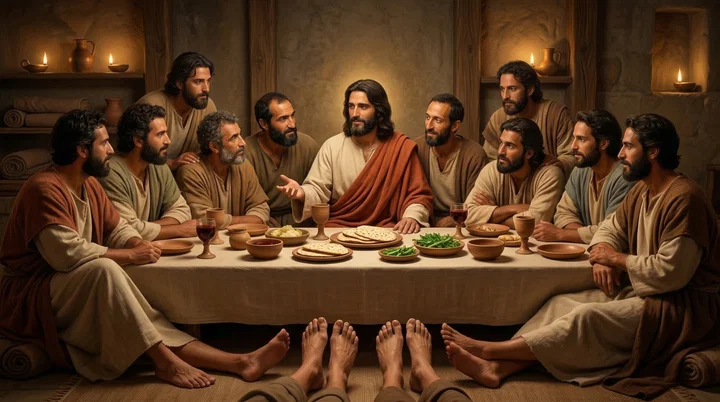
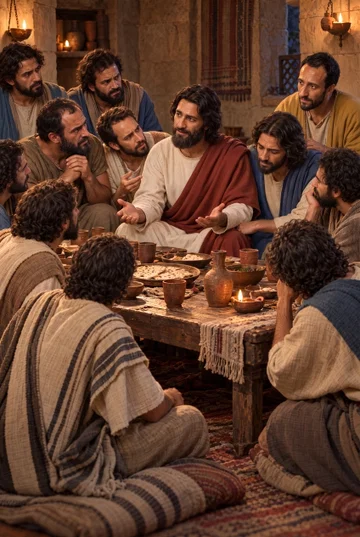
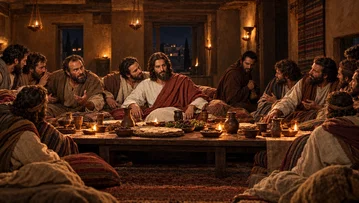
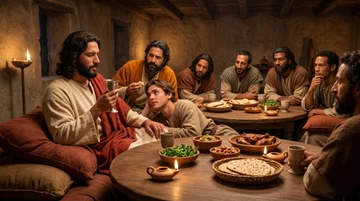
Now when the even was come, he sat down with the twelve.
Now when the evening was come, he sat down with the twelve.
Revised Version, American Standard Version
Now when even was come, he was sitting at meat with the twelve disciples;
And evening having come, he was reclining (at meat) with the twelve,
And when the evening was come he lay down at table with the twelve.
And, when, evening, came, he was reclining with the twelve [disciples];
When evening came, Jesus was reclining with the twelve disciples.
When evening came, Jesus was reclining with the Twelve.
Now when evening had come, he was reclining at the table with the twelve disciples.
Now when evening was come, he was seated at table with the twelve disciples;
So when the Euen was come, hee sate downe with the twelue.
Douay-Rheims (Challoner revision)
But when it was evening, he sat down with his twelve disciples.
Pictures
Cross-references 20 of 23
- Luke 22:14-23
And when the hour was come, he sat down, and the twelve apostles with him.
Records Jesus’ Passover meal and institution of the memorial.
- Mark 14:17-25
And in the evening he cometh with the twelve.
Describes the same evening meal and institution of the service.
- 1 Corinthians 11:23-26
For I have received of the Lord that which also I delivered unto you, That the Lord Jesus the same night in which he was betrayed took bread:
Identifies the supper as a memorial of Jesus’ death.
- John 13:1-2
Now before the feast of the passover, when Jesus knew that his hour was come that he should depart out of this world unto the Father, having loved his own which were in the world, he loved them unto the end.
Places Jesus and the disciples at supper before the betrayal is disclosed.
- Exodus 12:6
And ye shall keep it up until the fourteenth day of the same month: and the whole assembly of the congregation of Israel shall kill it in the evening.
commands lamb killed in the evening
- Exodus 12:18
In the first month, on the fourteenth day of the month at even, ye shall eat unleavened bread, until the one and twentieth day of the month at even.
Identifies the timing of the Passover festival.
- John 13:21-30
When Jesus had thus said, he was troubled in spirit, and testified, and said, Verily, verily, I say unto you, that one of you shall betray me.
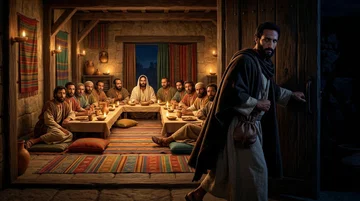
At the meal, Jesus identifies Judas as the betrayer, who receives the sop and leaves.
- Luke 22:7
Then came the day of unleavened bread, when the passover must be killed.
Identifies the day the Passover was to be killed, giving the meal’s timing.
- 1 Corinthians 11:26
For as often as ye eat this bread, and drink this cup, ye do shew the Lord’s death till he come.
The Supper proclaims the Lord’s death until he comes.
- 1 Corinthians 5:7
Purge out therefore the old leaven, that ye may be a new lump, as ye are unleavened. For even Christ our passover is sacrificed for us:
Christ is identified as the Passover sacrifice.
- Luke 22:15
And he said unto them, With desire I have desired to eat this passover with you before I suffer:
Jesus expresses his desire to eat the Passover with his disciples.
- Luke 22:19
And he took bread, and gave thanks, and brake it, and gave unto them, saying, This is my body which is given for you: this do in remembrance of me.
Institutes the Supper as remembrance of Jesus’ death.
- John 13:30
He then having received the sop went immediately out: and it was night.
Both describe events of the supper on the same night.
- John 13:3-17
Jesus knowing that the Father had given all things into his hands, and that he was come from God, and went to God;
Jesus washes the disciples’ feet and teaches them to follow his example.
- Matthew 26:14-16
Then one of the twelve, called Judas Iscariot, went unto the chief priests,
Identifies Judas among the twelve at the meal.
- Mark 14:12
And the first day of unleavened bread, when they killed the passover, his disciples said unto him, Where wilt thou that we go and prepare that thou mayest eat the passover?
Places the disciples’ preparation on the day the Passover was killed.
- Numbers 28:16
And in the fourteenth day of the first month is the passover of the LORD.
Names the fourteenth day of the first month as the Lord’s Passover.
- 1 Corinthians 11:27-29
Wherefore whosoever shall eat this bread, and drink this cup of the Lord, unworthily, shall be guilty of the body and blood of the Lord.
The passage explains each participant’s responsibility when sharing the supper.
- John 13:18
I speak not of you all: I know whom I have chosen: but that the scripture may be fulfilled, He that eateth bread with me hath lifted up his heel against me.
Jesus identifies the betrayal by one who shared His meal.
- Matthew 26:2
Ye know that after two days is the feast of the passover, and the Son of man is betrayed to be crucified.
Jesus says the Passover is two days away.
Commentary
Each commentary is drawn from primary sources: the writings of Ellen G. White and Adventist pioneers and periodicals. Each commentary is separate. Its own words are not a quotation; follow the references to read the source passages.
Ellen G. White
3 sources
The evening had come when he sat down with the twelve to eat the Passover supper.DA 652.1–2COS 113.2DA 655.4 He stood at the transition from the old system of types and ceremonies to the new, as the spotless Lamb of God about to offer himself as a sin offering.DA 652.1–2 In that same meal he established the Lord's Supper to take the place of the Passover as a memorial of his sacrifice, to be kept by his followers in every land and in every age.DA 652.1–2
After the supper he went out with them to the garden of Gethsemane, where he often went to pray.COS 113.2 As he walked with them he talked with them and taught them, but as they drew near the garden he became strangely silent.COS 113.2
Judas was present at that evening meal and was allowed to share in the sacrament even though it was known he would betray him.DA 655.4 The faults of the disciples were the reason their feet were washed at that time, and all except Judas were led to repentance.DA 655.4 Such dealing with Judas shows patient giving of opportunity to sinners to receive him, to repent, and to be cleansed from sin.DA 655.4 It teaches not to withdraw care from one thought to be in error, since careless separation can leave that person exposed to temptation.DA 655.4
Sources
Pioneers and periodicals
41 sources
When evening came Jesus sat down with the twelve to eat the Passover in the upper room on the night he was betrayed, the evening before his death.ST Apr 2, 1912ST May 12, 1898ST May 12, 1898STRH Dec 3, 1908 It was Thursday evening, the fourteenth day of Abib or Nisan, the appointed time when the lamb was killed and eaten and leaven was put away, with his crucifixion to follow the next day on the fifteenth.ST Apr 2, 1912ST Dec 14, 1915RH Feb 5, 1914RH Mar 1, 1906 On another reckoning his supper was a few hours before the regular Passover meal on the same day, while the regular timing was fulfilled by his death between the two evenings after the ninth hour.ST Jun 20, 1911 During the meal he announced that one of the twelve would betray him, with Judas present at the table outwardly faithful though already plotting betrayal, and after Judas was pointed out and left the rest sang a hymn and went with Jesus to Gethsemane.ST Dec 14, 1915ST Oct 20, 1898ST Jan 10, 1911STST Oct 13, 1898 That evening was the setting for instituting the Lord's Supper as the new memorial of his sacrifice in place of the Passover type, and for instituting feet washing as the memorial of his humble life.ST Mar 27, 1901ST Jun 9, 1898STST Jun 15, 1904ST May 18, 1904 The bread was unleavened and the wine was unfermented, as required by the command to remove all leaven and fermentation from the homes at Passover.ST Jun 9, 1914ST Jun 18, 1885
Evening Meal Setting
When evening came Jesus sat down with the twelve to eat the meal, which was the Passover eaten on the evening before his betrayal and death.ST Apr 2, 1912ST May 12, 1898ST May 12, 1898ST Sep 3, 1912ST Nov 15, 1883 This sitting at table with the twelve in the evening marks the beginning of his last supper with his disciples, one of the important events of his final days before his trial and death on the cross.ST May 12, 1898ST May 12, 1898ST Sep 3, 1912 The order of that night stands as the meal, then the identification of the betrayer, and then the Lord's Supper.ST Nov 15, 1883 The evening timing proves the meal was eaten on the right day and at the right time of day, in keeping with the command to kill the Passover lamb in the evening, between the two evenings, between three o'clock and sunset.ST Apr 2, 1912 It is claimed to settle that he ate it with the disciples in its proper season and was not crucified at the time of slaying the paschal lamb, yet whether he ate the Passover out of its proper season and whether he was crucified when the paschal lamb was slain is a disputed point, because different sects of the Jews differ in computing the time of the Passover and chronologers adopt different dates for the events of that week.
The meal took place in the upper room on the night he was betrayed, after the sun had sunk behind the hills of Judea.STRH Dec 3, 1908ST Oct 13, 1898 That gathering was the setting for lessons he wanted his trusting disciples to learn through the ordinances.RH Dec 3, 1908 At the last supper he spoke of the coming betrayal, the disciples asked whether each might be the betrayer, and Judas received the sop and left, so that Judas ate with them but the remaining disciples then sang a solemn hymn with Jesus without him staying to sing.ST After the supper, weighed down by the bitter cup of agony he must soon drink, he went with his little band of followers to the quiet retreat of the Garden of Gethsemane, where he often enjoyed communion with his Father and where floods of light from heaven had often filled his soul and strengthened him for the conflicts of his ministry, while Judas was no longer with that little band but was making his way through the streets of Jerusalem to the palace of the high priest, where the chief priests had secretly planned to seize and destroy Jesus by night.ST Oct 13, 1898
The evening meal with the twelve on Thursday evening, as they sat together for the Passover, marks the beginning of his final agony, for during the meal he announced that one of them would betray him.ST Dec 14, 1915 It belongs with the day of the Supper, betrayal, arrest, trial, and the events leading to his death, reckoned as the day of his crucifixion and presented as the most memorable day in his history.RH Feb 13, 1872 It was the last Passover feast he ate with his twelve disciples on the evening before his death.ST Dec 14, 1915RH Feb 13, 1872ST Jun 15, 1904 At that same feast Judas the traitor was pointed out and left the company forever, his covetousness leading him to perdition, and Jesus instituted the ordinance of the Lord's Supper in commemoration of his death and the ordinance of feet-washing as a memorial of his humble life, for Christ is the Passover sacrificed for us.ST Jun 15, 1904
Passover Date and Timing
When evening came he sat with the twelve to eat the Passover at its right, proper and appointed time, in obedience to the law.ST Apr 2, 1912RH Jun 24, 1873RH Feb 5, 1914 The lamb had been killed that afternoon in the evening between the two evenings, between three o'clock and sunset, and was eaten that night after evening arrived.ST Apr 2, 1912RH Feb 5, 1914 That evening meal was on Thursday evening, the fourteenth day of Abib or Nisan.ST Dec 14, 1915RH Feb 5, 1914RH Mar 1, 1906 That fourteenth day was the day the Passover lamb was killed and leaven was put out of the houses, and the next day, the fifteenth, was the day of his crucifixion and the first festival Sabbath of Passover.RH Feb 5, 1914RH Mar 1, 1906
On another reckoning his supper with the twelve was a few hours before the regular Passover meal but on the same day.ST Jun 20, 1911 On that reckoning the timing of the regular Passover was fulfilled not at the supper but by his death after the ninth hour, when the darkness had ended, between the two evenings.ST Jun 20, 1911 The verse by itself does not establish which day of the week the meal occurred, nor settle whether the Passover type was fulfilled at that meal or when he died.ST Whether he ate the Passover out of its proper season and whether he was crucified when the paschal lamb was slain is a disputed point, because different sects of the Jews differ in computing the time of the Passover and chronologers adopt different dates for the events of that week. If he and his disciples ate it at the proper time, Pentecost that year fell on the Sabbath, though the result would be Sunday if the Jews' Passover timing is used, so the timing of the annual feasts does not in itself emphasize a particular weekday.ST Apr 15, 1889ST
Betrayal and Judas Present
When evening came Jesus sat with the twelve for the Passover on Thursday evening, and this meal marked the beginning of his final agony.ST Dec 14, 1915 During the meal he announced that one of the twelve would betray him, and each asked whether it was he, including Judas who asked though he had already arranged the betrayal.ST Dec 14, 1915ST Oct 20, 1898ST Jan 10, 1911 The events stand in order as the meal, the identification of the betrayer, and the Lord's Supper.ST Nov 15, 1883 At that meal Judas the traitor was pointed out and left the company forever, his covetousness leading him to perdition as it will all who yield to it.ST Jun 15, 1904
After Judas received the sop and left, the remaining disciples sang a solemn hymn with Jesus, so Judas ate with them but did not stay to sing.ST After the supper Jesus, weighed down by the bitter cup of agony he must soon drink, went with his little band of followers to the quiet retreat of the Garden of Gethsemane, where he often enjoyed communion with his Father and where floods of light from heaven had often filled his soul and strengthened him for the conflicts of his ministry.ST Oct 13, 1898 This was in the evening when the sun had sunk behind the hills of Judea for his last supper with his disciples.ST Oct 13, 1898 While Jesus was going to Gethsemane Judas was making his way through the streets of Jerusalem to the palace of the high priest, where the chief priests had secretly planned to seize and destroy Jesus by night.ST Oct 13, 1898
Judas was present among the twelve at the evening table, outwardly faithful although he had already arranged to betray him, and Jesus shared the table with him despite knowing his deceit and unfaithfulness.ST Oct 20, 1898RH Jan 8, 1914 Jesus' foreknowledge of Judas's false character was indicated there.ST Jun 3, 1897 At that table Jesus showed Judas mercy and forbearance, knowing his thoughts and plans and giving him a final convincing proof of divinity and one more chance to repent before carrying out his betrayal.ST Aug 12, 1886 Judas was alarmed but did not repent and became more determined and went on with his plan.ST Aug 12, 1886 Judas had been called as a disciple because Jesus loved him and sought to save him, and he was given responsibility with the best instruction and example, but he refused to be taught and ultimately betrayed Jesus.ST Jun 3, 1897
At the same meal the disciples were concerned over honored places and disputed who would be greatest in the kingdom.ST Jan 10, 1911ST May 18, 1904 This rivalry for greatness was reflected in their concern over the honored places at the table and was connected with Jesus rising from the table to wash their feet and establish the foot-washing ordinance.ST May 18, 1904 A casual reading of Matthew, Mark, and Luke appears to show Judas present and sharing in the meal, but whether he was present when the memorial supper was instituted depends on the sequence of events in those accounts.RH Jul 29, 1873 The setting raises the question of his presence at the institution without deciding it.RH Jul 29, 1873 It bears on whether Christ and his apostles drove him away from the Lord's table instead of letting him examine himself and so eat, and on whether any man or set of men has power or right to call this and that one unworthy and drive them away.RH Nov 4, 1873
Judas was among them though he was false to his divinely appointed apostolic trust.ST Jun 4, 1912 Holding a sacred office does not make its holder holy or cleanse the heart, since only Christ can save and cleanse.ST Jun 4, 1912 His later betrayal did not change the others' faith or obedience.RH Sep 6, 1870 Discovering an administrator was a Judas cannot make a sincere recipient's obedient heart unacceptable to God.RH Sep 6, 1870
Supper and Ordinances Instituted
When evening came Jesus sat with the twelve for the meal at which the Lord's Supper was instituted, the next event of importance after the triumphal entry.ST Jun 9, 1898STST Jun 15, 1904 The lamb they ate was the Passover type of Christ the true Passover, and with Christ the Antitype present a new memorial was instituted to remember his sacrifice after his departure and to proclaim his death until he comes.ST Jun 9, 1898 At that same last Passover feast eaten on the evening before his death he instituted the ordinance of the Lord's Supper in commemoration of his death, for Christ is the Passover sacrificed for us.ST Jun 15, 1904
There he made a solemn prediction concerning his own death to his disciples, one of his repeated predictions of his death to his disciples and to others.ST Sep 3, 1896 The Lord's Supper is a remedial work that commemorates the Lord's death and testifies that the Saviour has come, taking the place of sacrifices that looked forward to a coming Saviour.ST Aug 13, 1896 Each person who partakes is to eat the bread and drink the wine, and that gathering on the night he was betrayed was the setting for lessons he wanted his trusting disciples to learn through the ordinances.RH May 5, 1874RH Dec 3, 1908 Its evening and night timing shows the Supper was eaten in the evening or at night, and partaking of it does not itself remove sin or earn pardon, justification, or salvation.RH Aug 19, 1858ST Aug 13, 1896
On the same evening he instituted feet washing alongside the Supper, an ordinance commemorating his humility of life while the Supper remembers his death, established as a memorial of his humble life.ST Mar 27, 1901ST Jun 15, 1904 He rose from that table to wash their feet and establish the foot-washing ordinance.ST May 18, 1904 The bread used was unleavened, since the Passover setting required it, as leaven was forbidden in Jewish homes throughout Passover week.ST Jun 9, 1914
The wine used was unfermented, not intoxicating, because God commanded all leaven in every form to be excluded and removed from the homes at Passover, which excluded fermented wine just as it excluded leavened bread.ST Jun 9, 1914 As an observant Jew keeping the Paschal Supper he would not drink fermented wine at Passover nor celebrate it in a house from which everything fermented had not been removed.ST Jun 18, 1885 That unfermented wine sets the kind to be used at the Lord's table and shows the kind he made at the wedding feast at Cana. The later Jewish custom of drinking fermented wine at Passover, begun after the return from Babylonian captivity, holds the tradition of men while laying aside God's commandment and belongs with vain worship rebuked with many other such things.ST Jun 9, 1914
Prophecy Doctrine and Application
The evening when he sat with the twelve belongs to his rejection and suffering as foretold in Isaiah 53, showing the Messiah despised and rejected.RH Nov 18, 1862 At that sitting to institute the Lord's supper he made a solemn prediction concerning his own death to his disciples.ST Sep 3, 1896 That prediction was one of his repeated predictions of his death to his disciples and to others, and reading it strengthens faith in him as the Son of God and Saviour.ST Sep 3, 1896
The evening places him with the twelve on the day of his crucifixion, the day of the Lord's Supper, betrayal, arrest, trial, and the events leading to his death.RH Feb 13, 1872 That day of his death is the most memorable day in his history.RH Feb 13, 1872 It is the clearest day to honor if a day were chosen to mark his love for humanity.RH Feb 13, 1872
The meal was the last Passover feast he ate with his twelve disciples on the evening before his death, eaten the day before the crucifixion.ST Jun 15, 1904RH Mar 12, 1901 That Passover was a great memorial service holding many striking gospel lessons proving he is the true Messiah, the only Saviour of Jew and Gentile, for Christ is the Passover sacrificed for us.ST Jun 15, 1904RH Jun 10, 1915 At that same feast he instituted the ordinance of the Lord's Supper in commemoration of his death and the ordinance of feet-washing as a memorial of his humble life.ST Jun 15, 1904 At that meal the traitor was pointed out and left the company forever, his covetousness leading him to perdition as it will all who yield to it.ST Jun 15, 1904
Sources