Matthew 26:24
The Son of man goeth as it is written of him: but woe unto that man by whom the Son of man is betrayed! it had been good for that man if he had not been born.
Translations
The Son of man goes as it is written of him: but woe to that man by whom the Son of man is betrayed! it had been good for that man if he had not been born.
The Son of man goeth as it is written of him: but woe unto that man by whom the Son of man is betrayed! it had been good for that man if he had not been born.
The Son of man goeth as it is written of him: but woe unto that man by whom the Son of man is betrayed: it had been good for that man if he had not been born.
The Son of man goeth, as it is written concerning him: but woe to that man by whom the Son of man is betrayed! it had been good for that man, if he had not been born.
Revised Version, American Standard Version
The Son of man goeth, even as it is written of him: but woe unto that man through whom the Son of man is betrayed! good were it for that man if he had not been born.
the Son of Man doth indeed go, as it hath been written concerning him, but woe to that man through whom the Son of Man is delivered up! good it were for him if that man had not been born.'
The Son of man goes indeed, according as it is written concerning him, but woe to that man by whom the Son of man is delivered up; it were good for that man if he had not been born.
The Son of Man, indeed, goeth his way, according as it is written concerning him,—But alas! for that man, through whom the Son of Man, is being delivered up: Well, had it been for him, if, that man, had not been born!
Berean Standard Bible, Majority Standard Bible
The Son of Man will go just as it is written about Him, but woe to that man by whom He is betrayed. It would be better for him if he had not been born.”
The Son of Man goes even as it is written of him, but woe to that man through whom the Son of Man is betrayed! It would be better for that man if he had not been born.”
The Son of man goes, even as the Writings say of him: but a curse is on that man through whom the Son of man is given up; it would have been well for that man if he had never come into the world.
Surely the Sonne of man goeth his way, as it is written of him: but woe be to that man, by whom the Sonne of man is betrayed: it had bene good for that man, if hee had neuer bene borne.
Douay-Rheims (Challoner revision)
The Son of man indeed goeth, as it is written of him: but woe to that man by whom the Son of man shall be betrayed: it were better for him, if that man had not been born.
Pictures

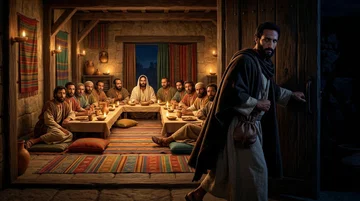
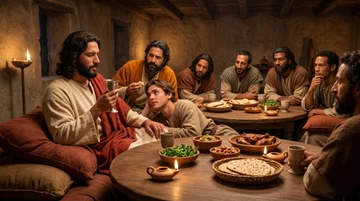
Cross-references 20 of 41
- John 13:18
I speak not of you all: I know whom I have chosen: but that the scripture may be fulfilled, He that eateth bread with me hath lifted up his heel against me.
Jesus identifies Judas’s betrayal as fulfillment of Scripture and foretells it to strengthen the disciples’ faith.
- Mark 14:21
The Son of man indeed goeth, as it is written of him: but woe to that man by whom the Son of man is betrayed! good were it for that man if he had never been born.
The Son of Man’s foretold path is joined to woe upon his betrayer.
- Luke 22:21-22
But, behold, the hand of him that betrayeth me is with me on the table.
Jesus’ appointed course and the betrayer’s accountability are joined.
- Psalms 41:9
Yea, mine own familiar friend, in whom I trusted, which did eat of my bread, hath lifted up his heel against me.
Foretells betrayal by a trusted companion, fulfilled in Judas.
- John 13:26
Jesus answered, He it is, to whom I shall give a sop, when I have dipped it. And when he had dipped the sop, he gave it to Judas Iscariot, the son of Simon.
Jesus identifies Judas as the one who will betray him by giving him the dipped sop.
- John 6:70-71
Jesus answered them, Have not I chosen you twelve, and one of you is a devil?
Jesus identifies Judas as the betrayer among the Twelve.
- John 13:2
And supper being ended, the devil having now put into the heart of Judas Iscariot, Simon’s son, to betray him;
Judas’s betrayal is announced at the supper before Jesus is betrayed.
- John 13:30
He then having received the sop went immediately out: and it was night.
Judas leaves immediately after Jesus exposes his purpose.
- 1 Corinthians 11:23
For I have received of the Lord that which also I delivered unto you, That the Lord Jesus the same night in which he was betrayed took bread:
It recalls the supper on the night Jesus was betrayed.
- John 13:19
Now I tell you before it come, that, when it is come to pass, ye may believe that I am he.
Jesus foretells events so the disciples will believe in him when they occur.
- Matthew 27:3-5
Then Judas, which had betrayed him, when he saw that he was condemned, repented himself, and brought again the thirty pieces of silver to the chief priests and elders,
Judas regrets betraying Jesus and takes his own life.
- Luke 22:21
But, behold, the hand of him that betrayeth me is with me on the table.
The betrayer’s hand is at the table during the supper.
- Matthew 26:49
And forthwith he came to Jesus, and said, Hail, master; and kissed him.
Judas identifies Jesus with a kiss as he betrays him.
- Luke 17:1-2
Then said he unto the disciples, It is impossible but that offences will come: but woe unto him, through whom they come!
Both warn of terrible consequences for causing others to sin.
- Luke 24:25-27
Then he said unto them, O fools, and slow of heart to believe all that the prophets have spoken:
The prophets foretold the Messiah’s suffering and glory.
- Luke 22:3-6
Then entered Satan into Judas surnamed Iscariot, being of the number of the twelve.
Judas had agreed to betray Jesus before the supper.
- Luke 22:48
But Jesus said unto him, Judas, betrayest thou the Son of man with a kiss?
Jesus questions Judas for betraying Him with a kiss.
- John 13:21
When Jesus had thus said, he was troubled in spirit, and testified, and said, Verily, verily, I say unto you, that one of you shall betray me.
same announcement one will betray
- Mark 14:19
And they began to be sorrowful, and to say unto him one by one, Is it I? and another said, Is it I?
The disciples ask whether each is the one who will betray Jesus.
- Matthew 26:45
Then cometh he to his disciples, and saith unto them, Sleep on now, and take your rest: behold, the hour is at hand, and the Son of man is betrayed into the hands of sinners.
Jesus is betrayed into sinners’ hands and surrenders willingly.
Commentary
Each commentary is drawn from primary sources: the writings of Ellen G. White and Adventist pioneers and periodicals. Each commentary is separate. Its own words are not a quotation; follow the references to read the source passages.
Ellen G. White
38 sources
At the Passover supper Jesus answered the disciples' fearful questioning by identifying the betrayer as one dipping with Him in the dish, and declared that the Son of man goes forward as written of Him yet terrible woe rests on the man by whom He is betrayed.Ms 106, 1903, par. 31–355RED 6.2–7.2 Going as written means He willingly faced death as the sin-offering and fulfillment of the sacrificial types, fulfilling prophecy literally.Ms 139, 1907, par. 7DA 652.1–2 The appointed course did not excuse the betrayer, for Judas remained accountable for chosen treachery rooted in selfish love of money despite clear evidence of Messiahship, and the warning was given in touching forbearance to show him his guilt was fully known and give him a last call to turn.ST Dec 23, 1908DA 652.1–2ST May 23, 18785RED 6.2–7.2SG1 44.1 Judas understood and was alarmed yet hardened himself and went on in his plan, though even then confession and yielding would have found Christ willing to forgive and save.ST Dec 23, 1908Ms 149, 1904, par. 13–153SP 86.1 The same grave judgment stands that a life ending in condemnation would have been better never lived, whether by losing the soul, betraying Christ and His cause for gain, or leading others into deception and sin.STB 79.1–34T 84.1Ms 16, 1886, par. 7Lt 18, 1901, par. 17–195T 340.1
Supper Setting and Wording
Jesus spoke these words under a heavy burden at the supper table during the Passover supper He ate with His disciples.Ms 106, 1903, par. 31–35 That supper came just before He went with them to the garden of Gethsemane, where He often went to pray.COS 113.2 As He walked toward the garden He talked with the disciples and taught them, but as they neared the garden He became strangely silent.COS 113.2
The saying was given in answer to John's distressed question about who would betray Him.5RED 6.2–7.2 Each disciple, in fear and self-distrust and in sorrowful amazement, looked at one another and asked, Lord, is it I.Ms 106, 1903, par. 31–355RED 6.2–7.2 The silence of Judas drew all eyes to him.5RED 6.2–7.2
Jesus answered that the betrayer was the one dipping his hand with Him in the dish.Ms 106, 1903, par. 31–355RED 6.2–7.2 He declared that the Son of man goes as it is written of Him.Ms 106, 1903, par. 31–355RED 6.2–7.2 But woe comes upon the man by whom He is betrayed, and it would have been good for that man if he had not been born, so terrible is the doom of that course.Ms 106, 1903, par. 31–355RED 6.2–7.2
Judas had sat silent until scrutiny fell on him, then nerved himself to escape notice by asking, Lord or Master, is it I.Ms 106, 1903, par. 31–355RED 6.2–7.2 Jesus solemnly answered, Thou hast said.Ms 106, 1903, par. 31–35DA 654.1–25RED 6.2–7.2 In the confusion the rest did not hear the words spoken to Judas nor what was said in answer to John, and they did not interpret the giving of the sop to Judas.Ms 106, 1903, par. 31–35 Confused and overcome yet unmoved to repentance, Judas rose when told, what thou doest do quickly, and went forth to carry out the work he had engaged to do.5RED 6.2–7.2
Foretold Death Yet Accountable Betrayal
The Son of man goes as it is written of Him, willingly facing death as the sin-offering and the fulfillment of the sacrificial types.DA 652.1–2 That going fulfilled prophecy literally, including the predictions about His bones, His pierced hands and feet, and the casting of lots for His clothing.Ms 139, 1907, par. 7 His death was thus foretold, and He went to it in fulfillment of what was written.ST Dec 23, 1908Ms 139, 1907, par. 7
That the course was appointed does not excuse the betrayer, who remains responsible for his chosen treachery.ST Dec 23, 1908DA 652.1–23SP 85.1–2ST May 23, 18783SP 86.1 His place among the chosen disciples and his closeness to Jesus did not excuse his betrayal.DA 654.1–2 The woe and the declaration that it would have been good for that man if he had not been born proclaim the terrible doom and consequence of that chosen course.ST Dec 23, 1908Ms 149, 1904, par. 13–153SP 85.1–2ST May 23, 18785RED 6.2–7.2
Judas came to betrayal through selfish covetousness, for although he had witnessed the works and evidence that Jesus was the Messiah, he loved money.SG1 44.1 He misused money entrusted to him for the poor, and his complaint about Mary's costly gift was an excuse rather than concern for the poor.SG1 44.1 His false appearance as a true disciple with a covetous heart explains how he came to betray Jesus.SG1 44.1
The warning was spoken with touching forbearance and infinite mercy as a final call, showing Judas his guilt and that all his thoughts and purposes were fully known, to give him one last chance to turn before repentance was too late.ST Dec 23, 1908ST May 23, 18785RED 6.2–7.23SP 86.13SP 87.1–2 It offered mercy and a final convincing proof of divinity before his treachery was consummated.5RED 6.2–7.2 Even so, Jesus' foreknowledge of the hidden plot showed His divine insight and gave the faithful disciples crowning evidence of Messiahship, that He was not taken by surprise or deceived.ST May 23, 18785RED 6.2–7.23SP 86.13SP 87.1–2
They were to remember the warning when it came to pass and when Judas met his dreadful end, so that they would believe and trust Him during His humiliation.ST May 23, 18785RED 6.2–7.23SP 86.13SP 87.1–2 Judas knew what the warning meant and was alarmed, but he hardened himself, became more settled in his plan, and went on with the betrayal.ST Dec 23, 1908Ms 149, 1904, par. 13–153SP 86.1 Yet even when he betrayed Him there was still hope if he had confessed and yielded, for Christ was willing to forgive and save him.Ms 149, 1904, par. 13–15
Jesus knew Judas was the betrayer yet continued to offer him mercy and opportunities to repent and be cleansed.DA 655.4 That treatment teaches not to abandon people believed to be in error or sin nor to drive them toward temptation.DA 655.4 The disciples' faults were why He washed their feet, and all but Judas were brought to repentance.DA 655.4
Wider Solemn Applications
A life that ends in condemnation is so terrible that it would have been better never to have been born, for a life's worth is judged by how it is lived.4T 84.1Lt 39, 1877, par. 1 Losing the soul is that grave because a soul is worth more than all the gold and silver on earth.Ms 16, 1886, par. 7 Unless a person succeeds in obtaining eternal life it would have been better never to have been born.Ms 114, 1903, par. 45–46 Therefore the truth of God must be cherished and the privileges that come through Christ's sacrifice must not be refused.Ms 114, 1903, par. 45–46 Though equal with God He came to give His life for sinners, dying a shameful death on Calvary to atone for those who receive Him, purchasing sinners with His blood because He loves them and promising power to become sons of God to all who receive and believe, while His loving heart is grieved when they work contrary to Him and thwart His plan, and God cannot bless those who oppose Him and refuse His words of comfort and peace.Ms 114, 1903, par. 45–46 The same warning falls on anyone who rejects light and follows personal designs, whose life brings no honor to God, who could have accomplished His work without them.Ms 149, 1904, par. 13–15 Whoever opposes God's purposes is in fearful danger, and unless he recognizes his peril and changes it would be better never to have been born.Lt 209, 1904, par. 4
It would be better never to have been born than to betray the cause of God acting the part of Judas, to lose the soul through betrayal of Christ, or to betray for selfish gain through all-consuming love of money that costs salvation.Lt 18, 1901, par. 17–195T 340.1Lt 110, 1897, par. 15–22 This includes bringing suit against God and one of His institutions, and stewards making unjust compromise and allowing the Lord's instrumentality to be robbed without doing all to save His property, for which they will be held accountable and will meet an account in the day of judgment they will wish they had never been born for.Lt 18, 1901, par. 17–19 Robbing God is not light, and the time is close when in the alliance of wicked powers no help will be found.Lt 18, 1901, par. 17–19 Covetous dealing with greater light and opportunities after Christ's ascension and the gift of the Holy Spirit is worse than that of Judas, as seen in Lawrence's spirit of covetous dealing compared with his.Lt 110, 1897, par. 15–22
It would be better never to have been born than to lead even one soul into deception, to use influence to lead others away from true principle, or to take control of Christ's blood-bought people and turn them away from God's Word.STB 79.1–3Lt 348, 1907, par. 4Ms 51, 1909, par. 1–4Ms 76, 1904, par. 6–7 Those who take control of others' minds, endangering souls bought by Christ's blood, bring terrible guilt and loss on themselves and, unless they repent and confess, forfeit eternal life.STB 79.1–3Ms 76, 1904, par. 6–7 It would have been better never to have been born than to teach others vile practices and lead them into sin.SA 29.2ApM 30.1 Those who learn vile habits and whisper them to inquisitive minds to awaken curiosity, corrupt good manners and lead youth astray suffer a heavy penalty and curse, and as the serpent in Eden was cursed for serving as Satan's medium, whoever yields to Satan as a medium to subvert others comes under God's heavy curse and suffers both for his own sins and for the sins he led others to commit, while those led astray will still suffer for their own sin.SA 29.2ApM 30.1 The woe falls on those who reject God's correction and help others dismiss it.Lt 326, 1905, par. 5–7 When God sends a message to any person, minister or doctor, designed to change principles and turn the heart to repentance, those who through Satan's devising pursue a course to make it of no effect, who justify and vindicate the one corrected while wickedness, deceit, falsehood and underhand dealing remain in him and he presumptuously follows his own course, who undermine a corrective message, defend the person and help him reject correction, pronounce sentence on themselves, share the transgressor's guilt and will suffer with him unless they humble themselves before God with true repentance.STB 402.2MWISDAP 59.2–60.1Lt 326, 1905, par. 5–7Ms 111, 1905, par. 7–8
It would have been better never to have been born if a man continues to exalt himself, take undeserved credit, build himself up in deceptive arts of influencing minds, hold others in delusion while refusing warning after warning and sitting as without the wedding garment.Ms 127, 1905, par. 21 When the curtain is lifted the light will reveal every phase of companionship with satanic agencies, and those who knowingly built him up in his crooked course, which was not justice and righteousness, are judged by their works for upholding him.Ms 111, 1905, par. 7–8Ms 127, 1905, par. 21 The same grave judgment faces anyone who hinders God's cause by constant criticism over specks and quibbles in board meetings, catching a little item, spreading it out, holding business until meetings grow wearisome, putting the foot on the brake so nothing moves without sanction, making a world of a mote and wearing people out, which does God no glory, does the greatest injury to himself, is as much sin as betrayal, cultivates criticism, hinders and carries back the work, and will be seen in its true harmfulness in the judgment.Ms 152, 1904, par. 17–20 It warns anyone who undermines those repairing the breach in God's law, for belittling the law and discouraging its keepers makes one a co-worker with the adversary and a harmful example.Lt 35a, 1877, par. 20 The saying applies to unchecked defects and ruined home duties: impatience and irritability not overcome can lead to losing heaven and make life a failure.4T 84.1 A mother's harsh, unfair treatment and bad example bringing lasting harm to her children, and parents' neglect in training children, which is registered in heaven's books and requires diligent study not to fail lest through neglect children be found among the disobedient, unthankful and unholy as subjects of Satan's kingdom, make it far better never to have been born; and a life given to evil brings such ruin that a husband yielding to his wife's destructive conduct and being molded by it would wreck his life and character.Lt 19, 1860, par. 10–11Ms 81, 1896, par. 18Lt 34, 1890, par. 6–8
Sources
Pioneers and periodicals
56 sources
At the last Passover he ate with his disciples he announced that one of them would betray him, and pointed him out at the table by the shared dish and the dipped sop, after which Judas left at once.ST Nov 22, 1883ST Jun 15, 1904ST Feb 4, 1903ST Aug 12, 1886ST Aug 12, 1886 His going as it is written means he goes to suffering and death and departure exactly as foretold of him in the Old Testament.ST May 18, 1904ST May 12, 1898RH Nov 18, 1862 That foretelling did not command or excuse the crime, and foreknowledge did not remove responsibility, for Judas was loved, taught, warned and given every opportunity to overcome yet held to selfishness and greed.ST May 18, 1904RH Aug 9, 1906ST May 12, 1898ST Oct 20, 1898 The woe upon him declares a doom so terrible that never having existed would have been better for him, which rules out his final salvation and any restoration that would make having been born good after suffering.ST Dec 23, 1908ST May 18, 1904RH Aug 9, 1906ST Jul 3, 1893RH Dec 10, 1872 Though spoken of Judas, the same warning rests on every life that ends without a living interest in his blood, without being born again and abiding in him.ST Dec 1, 1887RH Oct 28, 1909ST Oct 10, 1906
Passover Setting and Sequence
The saying was uttered at the last Passover meal Jesus ate with his disciples before his death, when he announced that one of them would betray him and they answered in turn with the Is it I exchange.ST Nov 22, 1883ST Jun 15, 1904ST Feb 4, 1903ST Nov 15, 1883 The full sense of that table conversation is seen only by reading this account together with the other Gospel accounts of the same exchange.ST Nov 15, 1883 The betrayer was pointed out at the table as the one sharing the dish with him, and was marked by receiving the dipped sop, fulfilling the betrayal by a table companion eating with him spoken of in Psalm 41:9.ST Nov 22, 1883ST Aug 12, 1886ST Aug 12, 1886ST Jan 10, 1911 After the disciples, and then Judas himself, asked whether they were the betrayer and Jesus answered that he had said it, Judas left the company at once and forever to carry out the betrayal.ST Nov 22, 1883ST Jun 15, 1904ST Aug 12, 1886ST Jan 10, 1911
The exchange came after the foot-washing and after the breaking of the bread, and before the blessing of the cup, the warning to Peter, and the departure of Judas.ST Nov 22, 1883ST Feb 4, 1903 Judas received his portion and went out immediately, and did not remain to sing the solemn hymn with Jesus and the disciples, so he was not present when Jesus instituted his memorial supper and did not partake at the Lord's table.ST Nov 22, 1883STRH Jul 14, 1863ST Nov 15, 1883 Since the order bears on whether Judas was present, the accounts of Matthew, Mark, and Luke must be carefully compared, because a casual reading may suggest that he was present and partook.RH Jul 29, 1873ST Nov 15, 1883 The Passover lamb eaten at that table was a type of Christ the true Passover, and once Christ had come a memorial of his death was instituted to keep his sacrifice before his followers until he comes, replacing the forward-pointing sacrifices and celebrating that the Saviour has come.ST Jun 9, 1898ST Jun 15, 1904ST Aug 13, 1896 At the same feast were instituted the ordinance of the Lord's Supper in commemoration of the death of Christ and the ordinance of feet-washing as a memorial of his humble life, for Christ our Passover is sacrificed for us.ST Jun 9, 1898ST Jun 15, 1904
The wine used at that Paschal Supper was unfermented, because fermented drink of every kind was reckoned as leaven proscribed in the Old Testament and removed from every house for Passover, and as an observant Jew he would not drink fermented wine at Passover nor keep it in the house.ST Jun 18, 1885 Those who follow him therefore cannot take intoxicating wine at the sacred service of the Lord's Supper, and the same fact shows the kind of wine made at the wedding feast at Cana was unfermented.ST Jun 18, 1885 After the supper Jesus went with his little band to Gethsemane for communion with his Father, while Judas separated himself from them and went through the streets of Jerusalem to the palace of the high priest to join the secret night plan to seize and destroy Jesus.RH Jan 6, 1910ST Oct 13, 1898 The day running from betrayal through trial and condemnation belongs to the day of the crucifixion, a day more memorable than any other in his history.RH Feb 13, 1872 Whether he and the disciples or the Jews ate the Passover at the proper time is unsettled in Scripture, so the weekday of Pentecost that year cannot be fixed from that timing.ST Apr 15, 1889
He still ate the Passover at the same table with Judas though he knew his deceit and unfaithfulness, showing that sharing a meal with someone who has done wrong is not in itself wrong.RH Jan 8, 1914 Judas had served among the disciples as treasurer for three years and was counted loyal almost to the end, yet his past service did not prove present loyalty.RH Jan 8, 1914ST Jun 1, 1904
Written Foretelling Fulfilled
The Son of man goeth means he goes to suffering and death and departure exactly as it was written of him in the Old Testament.ST May 18, 1904ST May 12, 1898RH Nov 18, 1862ST Mar 27, 1901ST Feb 15, 1883 His betrayal and suffering take place in accordance with what was written concerning him, and his coming death fulfills what was written about him.ST Dec 23, 1908RH Nov 18, 1862ST Mar 27, 1901ST Feb 15, 1883 The prophecy that he would be slain foretold what God knew ungodly people would do, and it did not decree or require their betrayal and violence as part of the plan of salvation.ST May 5, 1909
In the shadow of the cross he relied on the Old Testament prophecy concerning his path, that what was written about the Son of man would be fulfilled.ST Feb 15, 1883 The prophecies and promises of Scripture supported him and guided his teaching to the disciples.ST Feb 15, 1883
His foreknowledge showed divine insight, for he knew Judas would betray him even though Judas was among the chosen twelve.ST May 23, 1878ST May 23, 1878ST Aug 12, 1886 He was not surprised or deceived by the treachery, and the warning told the disciples beforehand that a betrayer was among them.ST May 23, 1878ST May 23, 1878ST Aug 12, 1886 His words and actions showed that he fully knew the hidden purpose and plans, revealing them in advance as evidence of his Messiahship.
Read with his other repeated predictions of his death, the prediction means he goes as the divine, innocent victim slain in man's behalf, drinking the final cup of suffering to its dregs.ST Sep 3, 1896 Such foreknowledge gives the faithful reason to trust him and strengthens faith in him as Saviour and Son of God.ST May 23, 1878ST Sep 3, 1896ST Aug 12, 1886 They would remember his warning during his humiliation and again when Judas met his dreadful end.ST May 23, 1878ST Aug 12, 1886
Betrayer's Guilt and Doom
The going of the Son of man according to what had been written did not excuse the betrayer or make his choice unavoidable, for prediction and woe stand together in the same sentence.ST May 18, 1904RH Aug 9, 1906ST May 12, 1898RH Nov 18, 1862ST Mar 27, 1901 What was foretold would take place, yet Judas remained accountable for his treachery and lay under a solemn woe with a terrible judgment before him.ST May 18, 1904RH Aug 9, 1906ST May 12, 1898RH Nov 18, 1862ST Mar 27, 1901 A predicted event is not a moral command, and suffering in keeping with Scripture did not turn betrayal into obedience.RH Nov 18, 1862ST Mar 27, 1901
Foreknowledge did not remove responsibility, for Judas was given love, instruction, example, counsel, warnings, and opportunity to overcome, yet he kept selfish motives and greed and finally acted on them, sealing his eternal destiny.ST Oct 20, 1898ST Jun 3, 1897 Jesus knew what Judas would do and still did all He could to save him, without treating him with contempt or plotting against him.ST Jun 3, 1897 Repeated counsel and warnings were set before him, and in seeking to help him Jesus nevertheless fulfilled Scripture.ST Oct 20, 1898ST Jun 3, 1897
The woe and the declaration that non-birth would have been better were a final merciful call that exposed his hidden purpose and gave him a last chance to turn back before it was too late.ST Dec 23, 1908ST May 23, 1878ST Aug 12, 1886ST Aug 12, 1886 Jesus showed that He fully knew Judas's thoughts, plans, and intent even while Judas concealed his purpose at the table.RH Nov 20, 1913ST Aug 12, 1886 Judas was surprised and alarmed at being thus known, but he did not repent; he hardened himself, became more fixed in his plan, and went on to carry it out.ST Dec 23, 1908ST Aug 12, 1886
The woe declares a doom so terrible that never to have been born would have been better, a ruin brought by a guilt contrary to God's will.ST May 18, 1904ST Oct 20, 1898ST May 5, 1909 Judas later recognized that the warning applied to him, but his remorse came too late to undo the act.RH Aug 9, 1906 He will stand with the dead, small and great, before God at the final judgment, and there learn how terrible his betrayal was.RH Jul 18, 1865ST Aug 11, 1914 His covetousness, which is idolatry, led him to perdition, as it will everyone else who yields to it.ST Jun 15, 1904 Though he held the divinely ordained and sacred office of apostle, the office did not make him holy or keep him faithful, for position in Christ's work without Christ is empty.ST Jun 15, 1904ST Jun 4, 1912
Doctrine Against Universal Salvation
Judas's end is so terrible that never to have existed would have been better for him, which proves he will not at last receive eternal life or be saved.ST Jul 3, 1893ST May 8, 1907 Even after any period of suffering, everlasting bliss would make his having been born good for him, so such bliss can never follow.ST Jul 3, 1893 If he were ever released to the happiness of heaven, even the first moment of that happiness would make up for all his suffering, and he would praise God for having been born.ST Jul 3, 1893RH Dec 10, 1872 The declaration therefore rules out the restoration of the wicked and upholds that their punishment is unending.ST Jul 3, 1893RH Dec 10, 1872
That Christ gave Himself a ransom for all and that God desires all to come to the knowledge of the truth does not mean every person will actually come to the truth and be saved, for Judas will not be saved.ST May 8, 1907
Moral and Spiritual Applications
The better-not-to-have-been-born warning reaches those who read the Bible in order to doubt it or scorn it.ST Nov 5, 1912RH Mar 23, 1916ST Feb 19, 1880RH Oct 21, 1873 It reaches those who study Scripture without making it the rule of conduct.RH Oct 21, 1873 It reaches especially those who study merely for display of knowledge, for such study is mockery and egotism.RH Oct 21, 1873
Though spoken of Judas who betrayed the Son of man, the woe applies equally to every life ending without a vital interest in the blood of Christ, bringing a whole and never-ending eternity of sorrows.ST Dec 1, 1887RH Oct 28, 1909ST Oct 10, 1906 No life is complete without receiving Christ in the heart and holding close fellowship with him, and no amount of worldly success, worldly honor, or pinnacle of fame can supply that lack.ST Dec 1, 1887 Without being born again and abiding in Jesus, a person has no true good but faces unending sorrow, while coming to Christ is the beginning of heaven and those who belong to him will appear with him in glory.RH Oct 28, 1909 Life without salvation is worse than never having been born, so that losing salvation makes life of no real value.ST Oct 10, 1906 One who lives and dies without Christ comes to a terrible end, and if seen again is among those placed on the left hand, which urges seeking and saving the perishing before mercy ends and destiny is fixed.
The same woe rests on a spiritual guide who for ease or human praise prematurely admits people to the church, encourages false hope, and thereby endangers souls.RH May 7, 1861 It rests on him who by principles or practice corrupts the manners and morals of the rising generation, who will reap a terrible harvest of woe.RH Jul 9, 1867 It rests on those whose drunken conduct caused others to die, whose responsibility for the disaster makes their coming judgment grievous even when events fulfill what is written concerning the Son of man.ST Apr 14, 1881 It rests on anyone who dares to oppose the deliverance of the oppressed from enslavement, showing the terrible consequence and misery awaiting such wrongdoing though the Son of man goes as Scripture foretold.RH Apr 2, 1914
A life which guiltily fails its purpose is worse than not having existed, for human beings are meant to witness God's glory and advance it through reasonable obedience and the happiness that follows.ST Mar 4, 1886 What helps fulfill this purpose is truly useful, especially what makes God's glory clearer, while things that merely sustain existence are of lesser value and, when sought alone, are useless or worse.ST Mar 4, 1886 Judas served among the disciples as treasurer for three years and was counted loyal almost to the end, yet his past service did not prove present loyalty.ST Jun 1, 1904 Holding the divinely ordained office of apostle did not make him holy or keep him faithful, for position in Christ's work without Christ is empty and only Christ can save and cleanse.ST Jun 4, 1912 Even when an administrator proves to be a Judas, his betrayal does not make the receiver's heart obedience unacceptable to God.RH Sep 6, 1870
Jesus knew Judas's deceit and unfaithfulness yet still ate the Passover with him at the same table.RH Jan 8, 1914 His example teaches that sharing a meal with someone who has done wrong is not in itself wrong.RH Jan 8, 1914
Sources