Mark 15:1
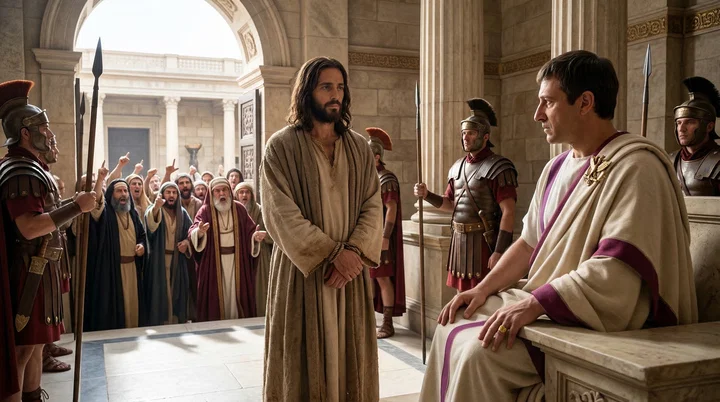
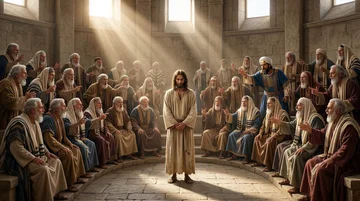
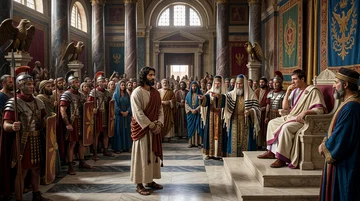
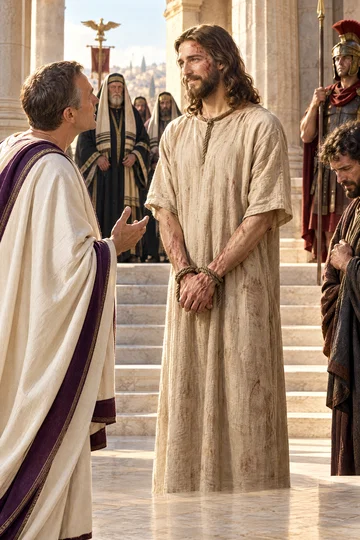
And straightway in the morning the chief priests held a consultation with the elders and scribes and the whole council, and bound Jesus, and carried him away, and delivered him to Pilate.
Translations
American King James Version, King James Version, KJV Cambridge Paragraph Bible
And straightway in the morning the chief priests held a consultation with the elders and scribes and the whole council, and bound Jesus, and carried him away, and delivered him to Pilate.
And forthwith in the morning the chief priests held a consultation with the elders and scribes, and the whole council, and bound Jesus, and carried him away, and delivered him to Pilate.
Revised Version, American Standard Version
And straightway in the morning the chief priests with the elders and scribes, and the whole council, held a consultation, and bound Jesus, and carried him away, and delivered him up to Pilate.
And immediately, in the morning, the chief priests having made a consultation, with the elders, and scribes, and the whole sanhedrim, having bound Jesus, did lead away, and delivered [him] to Pilate;
And immediately in the morning the chief priests, having taken counsel with the elders and scribes and the whole sanhedrim, bound Jesus and carried [ him] away, and delivered [ him] up to Pilate.
And, straightway, early, when they had made, a council, the High-priest, with the Elders, and Scribes, and all the High-council, binding Jesus, led him away, and delivered him up unto Pilate.
Berean Standard Bible, Majority Standard Bible
Early in the morning, the chief priests, elders, scribes, and the whole Sanhedrin devised a plan. They bound Jesus, led Him away, and handed Him over to Pilate.
Immediately in the morning the chief priests, with the elders, scribes, and the whole council, held a consultation, bound Jesus, carried him away, and delivered him up to Pilate.
And the first thing in the morning the chief priests, with those in authority and the scribes and all the Sanhedrin, had a meeting, and put cords round Jesus, and took him away, and gave him up to Pilate.
And anon in the dawning, the hie Priestes helde a Councill with the Elders, and the Scribes, and the whole Council, and bound Iesus, and led him away, and deliuered him to Pilate.
Douay-Rheims (Challoner revision)
And straightway in the morning, the chief priests holding a consultation with the ancients and the scribes and the whole council, binding Jesus, led him away, and delivered him to Pilate.
Pictures
Cross-references 20 of 21
- Matthew 27:1-2
When the morning was come, all the chief priests and elders of the people took counsel against Jesus to put him to death:
The leaders meet in the morning, bind Jesus, and deliver Him to Pilate.
- John 18:28
Then led they Jesus from Caiaphas unto the hall of judgment: and it was early; and they themselves went not into the judgment hall, lest they should be defiled; but that they might eat the passover.
The leaders bring Jesus to Pilate while avoiding the judgment hall to remain ceremonially clean.
- Luke 22:66-71
And as soon as it was day, the elders of the people and the chief priests and the scribes came together, and led him into their council, saying,
Jesus is brought before the council at daybreak for questioning.
- Matthew 27:11-19
And Jesus stood before the governor: and the governor asked him, saying, Art thou the King of the Jews? And Jesus said unto him, Thou sayest.
Jesus stands before Pilate, whose wife warns him after a troubling dream.
- Luke 23:4
Then said Pilate to the chief priests and to the people, I find no fault in this man.
Pilate declares that he finds no fault in Jesus.
- Luke 23:7-11
And as soon as he knew that he belonged unto Herod’s jurisdiction, he sent him to Herod, who himself also was at Jerusalem at that time.
Herod questions and mocks Jesus, then sends him back to Pilate.
- Matthew 26:57-75
And they that had laid hold on Jesus led him away to Caiaphas the high priest, where the scribes and the elders were assembled.
A parallel account of Jesus’ arrest and examination.
- Luke 23:14-15
Said unto them, Ye have brought this man unto me, as one that perverteth the people: and, behold, I, having examined him before you, have found no fault in this man touching those things whereof ye accuse him:
Pilate and Herod find no basis for the charges against Jesus.
- Mark 14:53-72
And they led Jesus away to the high priest: and with him were assembled all the chief priests and the elders and the scribes.
Listed as the preceding portion of Mark's trial narrative.
- John 18:13-27
And led him away to Annas first; for he was father in law to Caiaphas, which was the high priest that same year.
Describes Jesus’ preliminary examination before Annas and Caiaphas.
- Mark 15:16-20
And the soldiers led him away into the hall, called Prætorium; and they call together the whole band.
Continues with the mockery, beating, and crown of thorns before Jesus’ execution.
- Matthew 27:2
And when they had bound him, they led him away, and delivered him to Pontius Pilate the governor.
same delivery of bound Jesus to Pilate
- Luke 23:1
And the whole multitude of them arose, and led him unto Pilate.
same delivery of Jesus to Pilate
- John 18:33-38
Then Pilate entered into the judgment hall again, and called Jesus, and said unto him, Art thou the King of the Jews?
Pilate questions Jesus and declares he finds no fault in him.
- Matthew 27:24
When Pilate saw that he could prevail nothing, but that rather a tumult was made, he took water, and washed his hands before the multitude, saying, I am innocent of the blood of this just person: see ye to it.
Pilate washes his hands while delivering Jesus to the crowd.
- Luke 22:2
And the chief priests and scribes sought how they might kill him; for they feared the people.
The priests sought a way to kill Jesus while fearing the people.
- Mark 15:15
And so Pilate, willing to content the people, released Barabbas unto them, and delivered Jesus, when he had scourged him, to be crucified.
scourging before handing over to be crucified
- Mark 15:13-14
And they cried out again, Crucify him.
The crowd cries for Jesus to be crucified.
- Mark 14:43-50
And immediately, while he yet spake, cometh Judas, one of the twelve, and with him a great multitude with swords and staves, from the chief priests and the scribes and the elders.
Jesus was betrayed and arrested before being taken to trial.
- Mark 15:26
And the superscription of his accusation was written over, THE KING OF THE JEWS.
written accusation affixed to the cross
Commentary
Each commentary is drawn from primary sources: the writings of Ellen G. White and Adventist pioneers and periodicals. Each commentary is separate. Its own words are not a quotation; follow the references to read the source passages.
Ellen G. White
6 sources
Early in the morning the chief priests held a consultation with the elders and scribes and the whole council, and bound Jesus and carried Him away and delivered Him to Pilate, the Roman governor.ST Jun 3, 1889DA 698.1–700.5DA 723.1–724.1ST Jun 3, 1889 The binding showed that condemnation had already been decided before any fair trial.DA 698.1–700.5 Yet the authorities staged a formal proceeding at daybreak because trial of a prisoner by night was contrary to Jewish law, and the judges then pronounced the final sentence of condemnation.COS 130.3–131.1 The transfer was a rushed effort to get the Roman authorities to confirm and carry out the sentence after failing to establish a valid charge against Him, with such haste that it called Pilate from his bedchamber.DA 698.1–700.5DA 723.1–724.1
Jesus stood bound as a prisoner inside the Roman judgment-hall surrounded by a guard of soldiers while spectators filled the hall, and the judges of the Sanhedrin, priests, rulers, elders, and the mob remained just outside the entrance.DA 723.1–724.1 Pilate came out to examine Him with unfriendly eyes and severest expression, prepared to act with magisterial severity and to finish the work as quickly as possible because he knew the Jewish authorities were anxious for haste in trial and punishment.DA 723.1–724.1 The Jewish officials would not enter the Roman hall because ceremonial defilement would keep them from the feast of the Passover, while murderous hatred had defiled their hearts.DA 723.1–724.1 Their blindness kept them from seeing that Christ is the real Passover Lamb and that by rejecting Him the great feast had lost its significance for them.DA 723.1–724.1
The leaders' charges were unsubstantiated and driven by envy, malice, and plotting against Him, and Jesus was innocent and just.ST Jun 3, 1889ST Jun 3, 1889 His calm, dignified bearing and silence under accusation impressed Pilate, who declared that he found no fault in Him.ST Jun 3, 1889 Pilate nevertheless feared the crowd and, on learning that Jesus was a Galilean, sent Him to Herod rather than decide the case himself.ST Jun 3, 1889 His calm silence and submission under indignity moved Herod to fear and conviction, but Herod sent Him back to Pilate rather than ratify the condemnation.ST Jun 3, 1889 Pilate's wife was warned in a dream that Jesus was a just man, yet the priests stirred the crowd to demand the release of Barabbas.ST Jun 3, 1889
The same crowd that had hailed Him as king reviled Him in the condemnation and humiliation before the judgment hall.4RED 102.2–103.1 That crowd cried for His crucifixion.4RED 102.2–103.1 Jesus had prepared His disciples for this ordeal so their faith would not be overturned by the crowd's change of heart or by the defection of professed followers.4RED 102.2–103.1
Sources
Pioneers and periodicals
14 sources
At daybreak the chief priests with the elders and scribes and the whole council met together, bound Jesus, and took him away to Pilate the Roman governor.ST Jun 3, 1889ST May 25, 1904 He had already been condemned in a hasty night examination before Annas and Caiaphas, which had no legal force because a capital case could not lawfully be tried between sunset and sunrise, so the leaders met again in the morning to repeat the hearing.ST Oct 26, 1882ST Mar 28, 1906ST May 25, 1904 They handed him over because they lacked authority to carry out the death sentence for blasphemy, and only Pilate as governor of Judea held the power of life and death whose sentence was necessary before execution.RH Feb 11, 1862ST Mar 28, 1906 They acted in haste to secure Roman authority and demand crucifixion before his friends could rally and before the people on the feast day could oppose them.ST Apr 2, 1912ST May 25, 1904 The man thus delivered was innocent, for Pilate examined him before the chief priests and rulers and people and found no fault in him touching the charges and nothing worthy of death, seeing that envy drove his accusers.ST Jun 3, 1889ST Jun 3, 1889ST May 25, 1904ST Mar 13, 1901 Though Pilate desired to release him and proposed to chastise him, the priests stirred the crowd to demand Barabbas instead until their cries for crucifixion prevailed and Pilate gave sentence as they asked, so that the world's official verdict declared Christ faultless and unjustly put to death as the just for the unjust.ST Jun 3, 1889ST Jun 15, 1904ST Mar 13, 1901
Morning Transfer to Pilate
The word elders is translated from the Greek presbuteros.RH Jan 9, 1855 Straightway in the morning the chief priests with the elders and scribes and the whole council held a consultation and bound Jesus and carried Him away and delivered Him to Pilate, the Roman governor.ST Jun 3, 1889ST May 25, 1904
He had already been condemned during a hasty night examination before Annas and Caiaphas with the Sanhedrin assembled, though it was not lawful to try a capital offense between sunset and sunrise.ST Oct 26, 1882ST Mar 28, 1906ST May 25, 1904 Those nighttime proceedings had no legal force under Jewish law, so the leaders met again in the morning and repeated the hearing.ST Oct 26, 1882ST Mar 28, 1906ST May 25, 1904 The charge was blasphemy, for which the Jewish penalty was death, and since two concurring witnesses were necessary, the testimony of two false witnesses was accepted in order to condemn Him.ST May 25, 1904 Between the condemnation and the morning He was subjected to insult and mocking, and during that time Peter, fearful of like treatment and of death, forgot his protestations of loyalty made a few hours before and denied his Lord.ST May 25, 1904 Judas's confession came too late to prevent the condemnation and exposed the guilt of the chief priests and elders.ST Mar 28, 1906
The leaders bound Him and delivered Him to Pilate because they lacked authority to carry out the death sentence.RH Feb 11, 1862ST Mar 28, 1906 As governor of Judea, Pilate held the power of life and death and his sentence was necessary before they could proceed to execution.RH Feb 11, 1862 They acted in haste to condemn Jesus and turn Him over to the Roman authorities before His friends could rally for His defense, and from fear that the people would discover their plans on the feast day, which explains their effort to secure Roman authority and their demand for crucifixion.ST Apr 2, 1912ST May 25, 1904 The night's events extended from His arrest through appearances before Annas, Caiaphas, Pilate, and Herod, and back to Pilate, and the priests had returned without authority to kill Him.ST Apr 2, 1912
They sought to give the proceedings the appearance of obeying the rule that judicial cases be conducted and concluded by day, while violating the rule that a death sentence must not be pronounced on the day of trial.ST Oct 26, 1882 By Jewish reckoning the trial, sentence, and execution all fell on the same day.ST Oct 26, 1882 The council's binding Jesus and handing Him over to Pilate begins the final scene of His life on earth, leading to His suffering and crucifixion, and He is portrayed there as humble.RH Jun 10, 1862RH Dec 28, 1911 The exact fit of this political detail with the customs and institutions of that period, together with the derision shown Him, the scourging before crucifixion, the written accusation fixed to the cross in three languages, His bearing His cross, and the giving of His body for burial at the request of friends, shows the history is minutely accurate, natural and undesigned truth and not a fabricated story, since an inventor would not hazard so many circumstances each supplying a point of comparison.RH Feb 11, 1862
Innocence Declared and Rejected
The One thus bound and delivered in the morning was a Man in whom Pilate found no fault.ST Jun 3, 1889ST May 25, 1904 Pilate saw Him as an innocent man and discerned that the Jewish leaders were driven by envy and were plotting against Him.ST Jun 3, 1889 Their charges sprang from malice and envy and were unproved and unsubstantiated, yet they clamored for His death upon those unproved charges.ST Jun 3, 1889ST Oct 27, 1898
Jesus' calm, dignified bearing and His silence and submission under accusation and indignity impressed Pilate, who declared that he found no fault in Him.ST Jun 3, 1889ST Jun 3, 1889 That same demeanor moved Herod to fear and conviction.ST Jun 3, 1889 Pilate called together the chief priests and the rulers and the people, examined Jesus before them, and found no fault in Him touching the accusations and nothing worthy of death.ST Jun 3, 1889ST Mar 13, 1901 Herod also found nothing, as was shown by his sending Him back to Pilate rather than ratifying the condemnation.ST Jun 3, 1889ST Mar 13, 1901
Pilate's wife was warned in a dream that Jesus was a just man.ST Jun 3, 1889 Pilate nevertheless feared the crowd and, on learning that Jesus was a Galilean, sent Him to Herod rather than decide the case himself.ST Jun 3, 1889ST Jun 3, 1889 Herod then returned Jesus to Pilate.ST Jun 3, 1889ST Jun 3, 1889
Pilate proposed to chastise Jesus and release Him, still desiring to release Him, and appealed a third time asking what evil He had done.ST Jun 3, 1889ST Mar 13, 1901 But the priests stirred the crowd to demand that Barabbas, who had been cast into prison for insurrection and murder, be released instead.ST Jun 3, 1889ST Mar 13, 1901 The crowd cried out together for Barabbas and shouted crucify Him until their loud voices prevailed upon the governor, and Pilate gave sentence that what they asked for should be done.ST Mar 13, 1901
Christ's trial before Pilate ended in the world's official declaration that Christ was faultless and was unjustly put to death.ST Jun 15, 1904 This proves He suffered once for sins as the just for the unjust to bring sinners to God.ST Jun 15, 1904 The apostate people of God could not see His innocence though it was clear to the mind of a heathen judge, showing how great is the darkness when the light within is darkness.ST Jun 15, 1904
The binding and carrying away of Jesus and delivering Him to Pilate was God presenting His gospel in glorious perfection before great Rome.ST Oct 27, 1898 In that scene Jesus Christ stood for the gospel and Pontius Pilate stood for Rome.ST Oct 27, 1898 It was God's effort to reach a ruler and save him, setting before Pilate One more than man and appealing to his heart to do right whatever the consequences.ST Oct 27, 1898
Sources