Luke 24:4
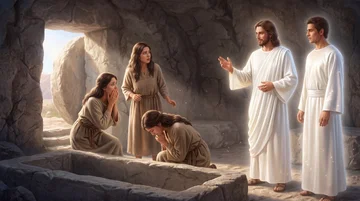
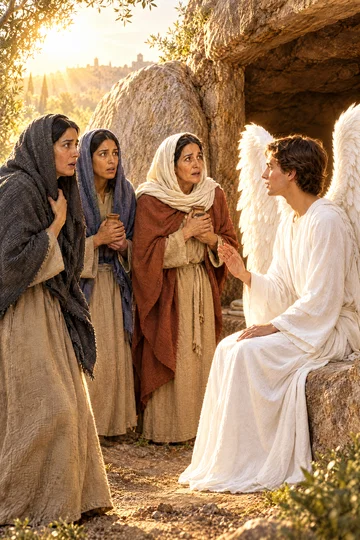
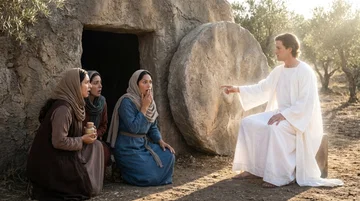
And it came to pass, as they were much perplexed thereabout, behold, two men stood by them in shining garments:
Translations
American King James Version, King James Version, KJV Cambridge Paragraph Bible
And it came to pass, as they were much perplexed thereabout, behold, two men stood by them in shining garments:
And it came to pass, as they were much perplexed at this, behold, two men stood by them in shining garments.
Revised Version, American Standard Version
And it came to pass, while they were perplexed thereabout, behold, two men stood by them in dazzling apparel:
And it came to pass, while they are perplexed about this, that lo, two men stood by them in glittering apparel,
And it came to pass as they were in perplexity about it, that behold, two men suddenly stood by them in shining raiment.
And it came to pass, while they were perplexing themselves concerning this, that lo! two men, stood near them, in dazzling raiment.
Berean Standard Bible, Majority Standard Bible
While they were puzzling over this, suddenly two men in radiant apparel stood beside them.
While they were greatly perplexed about this, behold, two men stood by them in dazzling clothing.
And while they were in doubt about it, they saw two men in shining clothing by them:
And it came to passe, that as they were amased thereat, beholde, two men suddenly stood by them in shining vestures.
Douay-Rheims (Challoner revision)
And it came to pass, as they were astonished in their mind at this, behold, two men stood by them, in shining apparel.
Pictures
Cross-references 20 of 27
- Mark 16:5-6
And entering into the sepulchre, they saw a young man sitting on the right side, clothed in a long white garment; and they were affrighted.
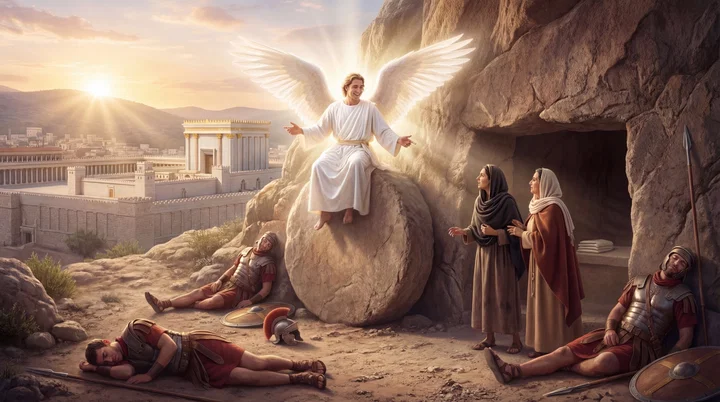
A heavenly messenger tells the women at the empty tomb that Jesus has risen.
- Matthew 28:2-3
And, behold, there was a great earthquake: for the angel of the Lord descended from heaven, and came and rolled back the stone from the door, and sat upon it.
An angel descends at the tomb, and his glorious appearance overwhelms the guards.
- John 20:11-12
But Mary stood without at the sepulchre weeping: and as she wept, she stooped down, and looked into the sepulchre,
Mary sees two angels in white at Jesus’ empty tomb.
- Luke 23:56
And they returned, and prepared spices and ointments; and rested the sabbath day according to the commandment.
The women rested on the Sabbath before going to Jesus’ tomb.
- Mark 16:9
Now when Jesus was risen early the first day of the week, he appeared first to Mary Magdalene, out of whom he had cast seven devils.
Both identify the first day of the week as the resurrection day and describe Jesus’ risen appearance.
- John 20:1
The first day of the week cometh Mary Magdalene early, when it was yet dark, unto the sepulchre, and seeth the stone taken away from the sepulchre.
Both accounts describe the discovery of Jesus’ empty tomb on the first day of the week.
- Luke 24:13-35
And, behold, two of them went that same day to a village called Emmaus, which was from Jerusalem about threescore furlongs.
The Emmaus travelers discuss the resurrection reports and meet the risen Jesus that day.
- Matthew 28:5-7
And the angel answered and said unto the women, Fear not ye: for I know that ye seek Jesus, which was crucified.
Angels at the empty tomb announce Jesus’ resurrection and send the women to the disciples.
- Mark 16:2
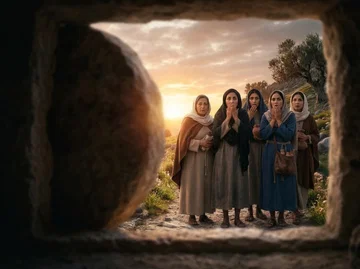
And very early in the morning the first day of the week, they came unto the sepulchre at the rising of the sun.
Both place the visit to Jesus’ tomb on the first day of the week.
- Matthew 28:1
In the end of the sabbath, as it began to dawn toward the first day of the week, came Mary Magdalene and the other Mary to see the sepulchre.
Both accounts place the women’s tomb visit at dawn on the first day of the week.
- Mark 16:14
Afterward he appeared unto the eleven as they sat at meat, and upbraided them with their unbelief and hardness of heart, because they believed not them which had seen him after he was risen.
Jesus rebukes the eleven for refusing to believe those who saw him risen.
- Matthew 28:9
And as they went to tell his disciples, behold, Jesus met them, saying, All hail. And they came and held him by the feet, and worshipped him.
Jesus meets the women as they leave the tomb after his resurrection.
- Luke 24:12
Then arose Peter, and ran unto the sepulchre; and stooping down, he beheld the linen clothes laid by themselves, and departed, wondering in himself at that which was come to pass.
Peter returns to the tomb and sees the linen clothes.
- Acts 1:10
And while they looked stedfastly toward heaven as he went up, behold, two men stood by them in white apparel;
Two men appear in shining white garments.
- Luke 24:10
It was Mary Magdalene, and Joanna, and Mary the mother of James, and other women that were with them, which told these things unto the apostles.
Names the women who came to the tomb.
- Matthew 12:40
For as Jonas was three days and three nights in the whale’s belly; so shall the Son of man be three days and three nights in the heart of the earth.
Jesus’ prediction of three days and nights is used to discuss the timing of his resurrection.
- Mark 16:8
And they went out quickly, and fled from the sepulchre; for they trembled and were amazed: neither said they any thing to any man; for they were afraid.
The women leave the tomb trembling and afraid.
- Luke 24:22-24
Yea, and certain women also of our company made us astonished, which were early at the sepulchre;
retells it as report to Emmaus disciples
- Matthew 27:63-64
Saying, Sir, we remember that that deceiver said, while he was yet alive, After three days I will rise again.
The priests recall Jesus’ prediction of rising after three days and request that the tomb be secured.
- Luke 23:52-53
This man went unto Pilate, and begged the body of Jesus.
Joseph buries Jesus before the women find the tomb empty.
Commentary
Each commentary is drawn from primary sources: the writings of Ellen G. White and Adventist pioneers and periodicals. Each commentary is separate. Its own words are not a quotation; follow the references to read the source passages.
Ellen G. White
11 sources
It was early on resurrection morning, before daylight, when the women came with sweet spices to anoint Jesus and found the heavy stone rolled away and His body gone.SG1 71.2EW 153.2–154.1DA 795.1 With sinking hearts they were much perplexed thereabout, fearing that enemies had taken Him away.SG1 71.2EW 153.2–154.1 The two men who stood by them were two mighty angels sent from heaven and from the throne of God.SG1 71.2EW 153.2–154.1COS 173.5–174.1Ms 83, 1910, par. 33–34 They stood by in shining white garments, with bright and shining faces in dazzling glory.SG1 71.2EW 153.2–154.1ST Aug 15, 1878ST Nov 8, 1883
The angels understood the women's errand and told them they were seeking Jesus.SG1 71.2 They declared that He was not there but had risen, showed them the place where He had lain, and bade the frightened and astonished women go tell His mourning disciples that He would go before them into Galilee.SG1 71.2EW 153.2–154.1 The angels had been sent to roll back the stone from the sepulchre.Ms 83, 1910, par. 33–34 One laid hold of the great stone at the mouth of the tomb and moved it as easily as a pebble, while his glory overwhelmed the guards and his voice shook the earth as he called Jesus forth by His Father's call amid reeling earth and flashing lightning and rolling thunder.ST Aug 15, 1878COS 173.5–174.1ST Nov 8, 1883
Jesus came forth by the power over death and the grave that He had earned, with life from heaven.COS 173.5–174.1Ms 83, 1910, par. 33–34 He stepped out with the tread of a mighty Conqueror and declared Himself to be the resurrection and the life, while the angelic host bowed low in adoration before Him and welcomed Him with songs of praise.COS 173.5–174.1Ms 83, 1910, par. 33–34 The empty tomb with its heavenly messengers testifies that Jesus had risen and gave the disciples evidence of it.ST Aug 15, 1878ST Nov 8, 1883Ms 203, 1898, par. 9 The women reported that angels had appeared and affirmed that Christ had risen and that they had seen Him alive in the garden.Ms 113, 1897, par. 1Ms 113a, 1897, par. 1DA 795.1
That news left the disciples perplexed and doubting, for their faith was weak and influenced by Sadducean teachings and theories that denied the resurrection, so that they scarcely understood what rising from the dead meant.Ms 113a, 1897, par. 1DA 795.1 Yet they later testified that they had seen and spoken with the risen Christ.Ms 203, 1898, par. 9 The announcement that He is risen was hardly believed by the women, yet it was fact.Ms 83, 1910, par. 33–34 He was not left in the grave but lives as a living Saviour with the same power still.Ms 83, 1910, par. 33–34
The chapter to which the verse belongs reveals that God so loved the world that He gave His only begotten Son to save the sinful race.Lt 100, 1910, par. 18 It means that everyone who repents and is converted receives the gift of salvation, made possible because the Saviour suffered the penalty of death.Lt 100, 1910, par. 18 All who come to the Father through faith in Christ, laying hold of Him by faith and following His example, receive assurance of forgiveness of sins.Lt 100, 1910, par. 18 Through His sufferings every soul may be sanctified through belief of the truth.Lt 100, 1910, par. 18
Sources
Pioneers and periodicals
76 sources
The verse pictures the women greatly perplexed at the empty tomb because the stone was rolled away and the body of the Lord Jesus was gone, when two men in shining dazzling garments suddenly stood by them, who were angels or heavenly messengers.ST Apr 3, 1901RH Jun 24, 1873RH Nov 21, 1854ST Feb 3, 1887RH Nov 3, 1904 They announced that Jesus had risen and asked why they sought the living among the dead, reminding them how He had said while yet in Galilee that the Son of man must be delivered into sinful hands and be crucified and rise the third day.RH Jun 6, 1865RH Jan 17, 1856RH Nov 3, 1904 He rose in bodily form as the same person who had died and been buried, as conqueror over sin and death and the grave never to die again, and the vacant tomb stands as the foundation of Christian faith and the assurance of the resurrection of the dead.RH Nov 21, 1854ST Jun 26, 1901RH Nov 3, 1904ST Apr 8, 1903RH Jan 1, 1914 He rose on the morning of the first day of the week, the third day reckoned from the crucifixion and burial, the day after the seventh-day Sabbath on which He rested in the grave.RH Jun 6, 1865RH Apr 1, 1873ST Jul 25, 1911ST Mar 18, 1889 The account gives no command to keep that first day holy and no sacred title for it, and the disciples themselves dismissed the report as idle tales and remained in doubt and fear, while those who held otherwise identify the resurrection day as the Lord's day and Sunday set apart in its honor.RH Oct 23, 1856RH Jan 17, 1856RH Feb 13, 1872ST Feb 8, 1883RH Sep 26, 1912
Tomb Scene and Messengers
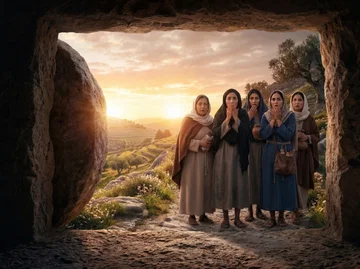
The verse describes women much perplexed at the empty tomb because the stone was rolled away and the body of the Lord Jesus was gone.ST Apr 3, 1901RH Jun 24, 1873RH Nov 21, 1854RH Jan 17, 1856RH Nov 3, 1904 While they were perplexed at finding the grave empty on the first day of the week, two men in shining garments stood beside them.ST Apr 3, 1901RH Jun 24, 1873RH Nov 21, 1854RH Jan 17, 1856ST Jun 26, 1901 Their announcement that Jesus had risen explains why his body was not there, and the vacant tomb establishes his resurrection.RH Jun 24, 1873RH Nov 21, 1854RH Nov 3, 1904
While they were perplexed, two men stood by them in shining, dazzling garments.ST Apr 3, 1901ST Feb 3, 1887RH Nov 3, 1904ST Nov 11, 1908 They were angels or heavenly messengers in radiant appearance, two beings who brought the news that Jesus had risen and directed the women to tell his disciples.ST Apr 3, 1901ST Feb 3, 1887RH Nov 3, 1904RH Jan 9, 1900 The Greek word for stood by is ephistemi, used for the two men coming suddenly upon the women and standing near them, and it can mean to stand by or near, or to come suddenly upon.ST Jan 14, 1913
The messengers appeared in dazzling glory with garments white as snow.ST Aug 15, 1878ST Nov 8, 1883 The women were terrified and bowed their faces to the ground, and the messenger's glory overwhelmed the guards.ST Aug 15, 1878ST Nov 8, 1883RH Sep 11, 1860 After the stone was rolled away, they found the tomb empty and Jesus' body gone, confirming that he had risen.ST Aug 15, 1878ST Nov 8, 1883
The scene is a triumphant dawn in which a mighty shining angel shakes the earth.RH Sep 16, 1915 The guarding soldiers fall as dead men, the stone is rolled away, and the announcement is made that Jesus is called forth.RH Sep 16, 1915 Jesus rises never to die again, victorious over death and the grave.RH Sep 16, 1915
The two figures are also described as sitting within the tomb.RH Dec 5, 1865 The visitors included Joanna and the other Galilean women and the Marys, who after finding Jesus' body missing were perplexed when two men in shining garments appeared beside them.RH Dec 5, 1865RH Sep 11, 1860 The women saw the messengers but did not see the resurrection itself arrive, while the Roman guards witnessed that event, for the women did not see the mighty messenger arrive.ST Feb 7, 1911
Entering the tomb means entering the outer cave from whose side the sepulcher was cut into the rock, not entering the inner sepulcher where the body was placed.ST Mar 12, 1894 Two angels in the form of men in shining garments were seen in the tomb after the resurrection.ST Mar 12, 1894 Mark's mention of one angel does not contradict Luke's two, because Mark does not say there were not two but simply mentions only one of them.ST Mar 12, 1894
The visit was very early in the morning on the first day of the week, next after the crucifixion.RH Jan 17, 1856RH May 20, 1909ST Feb 4, 1903 It occurred after the women had kept the Sabbath according to the commandment and postponed anointing the body.RH Jan 17, 1856RH May 20, 1909ST Feb 4, 1903 What is recorded is only that they came to the sepulchre early on the first day and he was not there.RH Jan 17, 1856
Resurrection Proclamation and Response
The shining messengers announced that Jesus had risen, asking why the living was sought among the dead and declaring He is not here but is risen, and that announcement explains why the body was not there.RH Jan 17, 1856RH Nov 3, 1904ST Apr 8, 1903RH Jan 9, 1900 They reminded the women of what Jesus had said while yet in Galilee, that the Son of man must be delivered into the hands of sinful men and be crucified and rise again the third day, and the women remembered those words.RH Jun 6, 1865RH Jan 17, 1856 The resurrection is of the same person who had died and been buried, in bodily form, with Jesus rising as conqueror over sin, death and the grave, never to die again, and death unable to hold Him.RH Nov 21, 1854ST Apr 8, 1903RH Jan 1, 1914RH Sep 16, 1915RH Jan 9, 1900 It is a statement of fact about what happened at the grave, including real appearances there, not merely the birthplace of a belief that death is vanquished and there is eternal life.ST Jan 25, 1905
The messengers directed the women to tell the disciples, entrusting them with the message to the sorrowing disciples as a personal blessing and a preparation for the disciples' later experience of the risen Jesus.ST Nov 11, 1908 The women told these things to the eleven and reported a vision of angels who said He was alive, and certain others went to the tomb and found it even as the women had said, but Him they saw not, while the women also met Jesus himself.ST Jul 29, 1908RH Jun 6, 1865ST Apr 4, 1900 That report was dismissed as idle tales and was not believed, and the disciples remained in doubt, perplexity and astonishment until Jesus manifested himself, showing they had not understood the plan of redemption through His death and resurrection.RH Jun 6, 1865RH Oct 23, 1856RH Jan 17, 1856ST Dec 3, 1874ST Jul 22, 1908 On Sunday night they were still locked in an upper room in Jerusalem, utterly disheartened, hopeless, faithless, fearful and filled with doubts, until the two disciples from Emmaus told how Christ had been manifested to them and then Jesus Himself appeared to the amazed company and dissipated their doubts and sorrows and filled them with faith and hope.ST Mar 8, 1905
The vacant tomb establishes Christ's resurrection as a foundation of Christian faith and the assurance of the Gospel hope in the resurrection of the dead, guaranteeing that the dead will be raised and that the tombs of the dead will one day be empty, comforting those grieving their dead and reviving the hopes of disciples cast down by the unexpected crucifixion.ST Jun 26, 1901RH Nov 3, 1904ST Feb 9, 1882 Differences among the Gospel resurrection accounts, which give details others omit and stand side by side without editorial weighing, explanation or anxiety to vindicate consistency, show artless truthfulness, guileless confidence and integrity and do not necessarily contradict one another.ST Mar 5, 1912ST Jun 14, 1877 The account has also been used to describe a claim that guardian spirits rolled away the tombstone and restored Jesus' spirit to His body, after which He walked bodily out of the tomb.RH Sep 8, 1853
Day and Chronology
Jesus rose from the dead on the morning of the first day of the week, the third day in the period dating from and including the day of crucifixion and burial.RH Jun 6, 1865RH Apr 1, 1873ST Jul 25, 1911ST Feb 8, 1883ST Jul 2, 1894 The women came to the sepulcher very early in the morning on the first day and found the body gone, and two men in shining garments stood by them and told them Jesus had risen.RH Jun 6, 1865ST Jul 2, 1894 Those messengers reminded them how He had said while yet in Galilee that the Son of man must be delivered into the hands of sinful men and be crucified and rise again the third day, and the women remembered and told these things to the eleven, who dismissed them as idle tales.RH Jun 6, 1865 As historian Luke deliberately and formally names the first day of the week as the resurrection day, while the persons whose words he records speak of that same day only as the third day, a difference shared by all four Gospel writers who uniformly and prominently name the first day instead of simply saying the third day as promised.RH Apr 1, 1873 That naming is held to prove the first day had become an honored and noted day among Christians when the histories were written twenty to more than sixty years after the resurrection.RH Apr 1, 1873
The appearance at the tomb happened the same day two disciples went to Emmaus, when Cleopas said that day was the third day since the crucifixion, proving the Saviour arose from His tomb on the morning of the first day of the week.RH Jun 6, 1865 The order of time runs from Christ's death late Friday afternoon to the first day of the week, with the twenty-first verse marking Sunday as three days after the crucifixion.ST Sep 23, 1913 This proves the first day came three days too late to be the Sabbath of the new covenant, because the new covenant was sealed by Christ's blood when He said It is finished on the cross, and after that no one can disannul it or add thereto.ST Sep 23, 1913
Christ lay in the tomb through the seventh day and rose on the first day of the week, so the Sabbath and the resurrection day are two different successive days.ST Mar 18, 1889RH May 3, 1864 The day before the resurrection was the Sabbath, and the resurrection was very early in the morning on the first day, the day after the Sabbath, when the disciples came to the sepulchre and found He had risen and when two disciples traveled to Emmaus still not believing He had risen.ST Mar 18, 1889RH May 3, 1864RH Mar 23, 1869 After resting on the seventh-day Sabbath in the grave, Christ rose and began work on the first day, contrasting that day of resurrection triumph with seventh-day rest.RH Aug 13, 1857ST Dec 19, 1900 The day Christ rose in Palestine was Sunday, a definite twenty-four-hour day; Saturday is the old seventh day and Sunday is the first day, so if the first day can be told the seventh can be found as the day just before it, and the lost-time objection weighs just as heavily against the first day as against the seventh.RH Apr 14, 1874
The resurrection first became known on the morning of the first day of the week, when the joyful news of a risen Saviour was proclaimed, so even if the resurrection itself had taken place the day before, the first day alone could fittingly be used if the event were to be commemorated by keeping a day.RH Oct 4, 1864 On that first day Christ arose, many saints came out of their graves, and He showed Himself to the Marys, with the first meeting as His suddenly making Himself known to them.RH Feb 13, 1872RH Sep 10, 1857 The same day He was seen by the two on the way to Emmaus and just before sunset by Peter at Jerusalem, and then by the eleven, Thomas excepted.RH Feb 13, 1872ST Apr 13, 1882 On that day He expounded the Scriptures concerning Himself, showed that He was the very one who had been slain, and gave the apostles their commission and invested them with authority.RH Nov 21, 1871
Sunday Observance Debate
The account of the perplexed women and the two shining men at the empty tomb very early on the first day after the crucifixion contains no expressed or implied obligation to observe the first day in any manner.RH Jan 17, 1856ST Feb 8, 1883RH Aug 19, 1852ST Jan 27, 1904 It gives no command to keep the resurrection day holy and no hint that the first day was henceforth to be the Sabbath, with the disciples continuing to observe the Sabbath as before from the crucifixion onward.ST Feb 8, 1883RH Aug 19, 1852ST Jan 27, 1904 There is no intimation that the day was thenceforth to be regarded as Sabbath or Lord's day or resurrection day, for what is recorded is only that they came to the sepulchre early and He was not there.RH Jan 17, 1856RH Feb 13, 1872 The Scriptures give that day after the Sabbath no sacred title and do not call it the Lord's day, and it was not set apart for sacred purposes.RH Feb 13, 1872 Denying the first-day resurrection only strengthens those keeping Sunday, since the fact of rising on the first-day morning has nothing to do with the Sabbath question.ST Feb 8, 1883
The appearances on that first day showed that Jesus was alive and risen, but they did not declare the day holy or set apart for worship.ST Aug 6, 1912RH Nov 21, 1871 What was done on the first day — Christ arising, expounding the Scriptures concerning Himself, showing He was the very one slain, and commissioning and investing the apostles with authority — were things done on the day, not things done to the day, and none was of Sabbatical character.RH Nov 21, 1871 Nothing was done to the first day itself to make it a Sabbath, and the day was not even taken up into the lips or alluded to in one word uttered.RH Nov 21, 1871 To assert the first day became sacred because of being seen by the women at the sepulchre, by the two at Emmaus, and by Peter at Jerusalem just before sunset, is presumption.ST Apr 13, 1882 That is especially so because the more important manifestation, the ascension on the Mount of Olives forty days after the resurrection, took place on Thursday and not in honor of the first day.ST Apr 13, 1882
The women reported the resurrection to the disciples, who did not believe them and regarded the words as idle tales, so they were not gathered to celebrate it.RH Oct 23, 1856RH Jan 17, 1856RH Apr 14, 1874 The true report on Sunday morning that Jesus was risen and had been seen was not believed, and on Sunday night the disciples were still locked in an upper room in Jerusalem utterly disheartened, hopeless, faithless, and filled with doubts and fears.ST Mar 8, 1905 They remained so until the two from Emmaus told how Christ had been manifested to them and then Jesus Himself manifested Himself to the amazed company and dissipated doubts and sorrows and filled them with faith and hope.ST Mar 8, 1905 Together with Matthew 28, Mark 16, and John 20 and 21, the record of that first first day shows the character of how it was actually spent, proving it was not kept as a Sabbath of rest and worship.ST Jul 2, 1894ST Sep 10, 1896 It was a day of perplexity, anxiety, unrest, and secular activity, never a holy day or day of worship.ST Sep 10, 1896 On that day Jesus traveled seven and a half miles to Emmaus and therefore was not resting, so it cannot be the Lord's day on the ground that the Lord rested on it.RH Dec 16, 1858
The meetings of the risen Jesus with His disciples on the first day do not establish a first-day Sabbath.ST Dec 15, 1881ST Oct 21, 1897 The account of Christ's resurrection on the first day after finishing His work of redemption is evidence for the resurrection, not evidence that the Sabbath was changed.ST Dec 15, 1881 The Heaven-appointed way to celebrate the resurrection is not keeping the first day but baptism, which was ordained for that very purpose.RH Feb 13, 1872RH Oct 4, 1864 Even if the resurrection itself had taken place the day before, the first day alone as the day the fact was made known could fittingly be used if the event were commemorated by a day.RH Oct 4, 1864 The resurrection was necessary to His glorification but was not that glorification itself, which came at His ascension.RH Feb 13, 1872 A day commemorates an event only when it is the day on which the event happened, so Christ's resurrection should be commemorated on its actual day, and likewise the Sabbath must be observed on the seventh day, the day God rested, because no other day is His rest day.RH Mar 26, 1872
The resurrection on the first day is given as the reason some Christians keep the first day and rejoice on it, and as offered reason for substituting the first day for the Sabbath, but not as evidence that the apostles changed the Sabbath.RH Apr 14, 1874ST Dec 15, 1881ST Aug 8, 1900ST Jul 24, 1884ST May 19, 1914 It is identified as one of the great events associated with Sunday and claimed to set apart the first day to be observed in commemoration of the resurrection, even by those who also say every day is alike and observing the Sabbath or not is indifference.ST May 19, 1914RH May 3, 1864 That resurrection account itself gives no divine authority or prophetic command to change the Sabbath, and is contrasted with the seventh day which the fourth commandment identifies as the Sabbath.ST Dec 15, 1881ST Aug 8, 1900 Luke as historian deliberately and formally points out the first day as the resurrection day, while the persons whose words he records, including the two men in shining garments, speak of that same day only as the third day dating from and including crucifixion and burial.RH Apr 1, 1873 This difference between the historian's language and the speakers', shared by all four Gospel writers who uniformly and prominently name the first day instead of simply saying the third day as promised, is said to prove the first day had become an honored and noted day among Christians when the histories were written twenty to more than sixty years after the resurrection.RH Apr 1, 1873
The teaching of those who held the opposing view identifies the resurrection day as the Lord's day and Sunday, later set apart by the church in honor of the resurrection.RH Sep 26, 1912RH May 13, 1873RH Feb 9, 1905 Christ lying in the tomb through the seventh day and rising on the first day is said to have led the first day to begin to be observed as a festal day in the early church, with that resurrection day also called the eighth day.ST Aug 16, 1883 In that teaching all the glory of the Jewish Sabbath is transferred to the Lord's day because of the resurrection together with the formation of the world's elements on the first day of the age, the creation of angels on that day, and the descent of the Holy Spirit on the apostles on that day as manna came in the wilderness, and the Lord's day is to be kept as the ancients were commanded to keep the Sabbath.ST Sep 24, 1894 The resurrection account is cited as evidence that the apostles observed the first day after the resurrection by divine warrant for changing the Sabbath from the seventh to the first.RH Jun 17, 1873 Keeping the first day as Sabbath is said to commemorate the Saviour's redemptive work, direct thought to heavenly things, and offer a foretaste of eternal rest awaiting God's people.RH Jun 17, 1873 That Sunday keeping on the excellent pretext of the Sunday resurrection is said to have originated among Gentile Christians who as pagans had worshiped the sun on that day and retained some of that reverence after becoming Christians, resting on no divine authority from Christ and the apostles.ST Jul 1, 1886
Doctrine and Christian Living
Luke 24 shows the disciples expecting Jesus to be crowned as king and sorely disappointed when he was crucified on the cross, yet Jesus himself afterward showed them that all this was only a fulfillment of prophecy.RH Dec 8, 1874 Their disappointment therefore did not prove Christianity false, and in the same way the disappointment over Christ's soon coming does not prove that doctrine false.RH Dec 8, 1874 The two men in shining garments stand as Bible proof that the dead of earth have communicated and can communicate with men on earth.RH Nov 12, 1872 They are counted as a visible appearance of the dead to the living for a beneficent purpose in support of Bible spiritualism.RH Nov 12, 1872
The devotion of the women brought them early to the tomb where two men in shining garments appeared beside them in their perplexity. That devotion made them the first to see the risen Jesus. Their hurrying visit to the tomb after Jesus had risen showed that devotion, in contrast with the disciples who remained sad and despondent at Emmaus.
Retelling the joyful tale the Marys told after Jesus rose from Joseph's tomb is the joy of women who now go forth by twos and threes for the sake of Him who rose.ST Aug 26, 1880 Leaving morning ease, they minister through tragic darkness wherever the faintest rim of promise appears.ST Aug 26, 1880 Since Christ has risen and is no longer to be found at the tomb, seeking him at places where he once was rather than following the living Christ is a mistake.ST Feb 17, 1898
The two angels in shining garments appearing to the perplexed women told them that Jesus has risen and entrusted them with the message to take to the sorrowing disciples.ST Nov 11, 1908 Their encounter was a personal blessing and a preparation for the disciples' later experience of the risen Jesus.ST Nov 11, 1908 The same closing record of Jesus' suffering, crucifixion, and resurrection belongs with the account of how two disciples journeyed with Jesus without recognizing him and were taught by him.
Sources