Mark 3:2
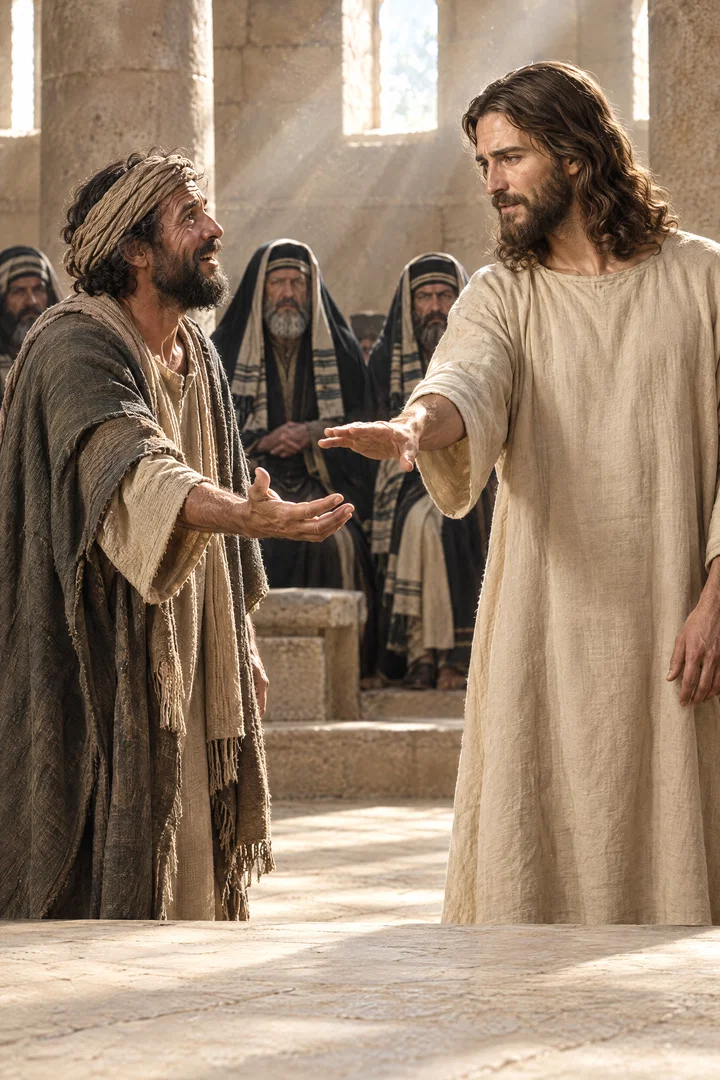
And they watched him, whether he would heal him on the sabbath day; that they might accuse him.
Translations
American King James Version, King James Version, KJV Cambridge Paragraph Bible, Revised Version, American Standard Version
And they watched him, whether he would heal him on the sabbath day; that they might accuse him.
And they watched him, to see whether he would heal him on the sabbath; that they might accuse him.
and they were watching him, whether on the sabbaths he will heal him, that they might accuse him.
And they watched him if he would heal him on the sabbath, that they might accuse him.
and they were narrowly watching him, whether, on the Sabbath, he would cure him, that they might accuse him.
Berean Standard Bible, Majority Standard Bible
In order to accuse Jesus, they were watching to see if He would heal on the Sabbath.
They watched him, whether he would heal him on the Sabbath day, that they might accuse him.
And they were watching him to see if he would make him well on the Sabbath day, so that they might have something against him.
And they watched him, whether he would heale him on the Sabbath day, that they might accuse him.
Douay-Rheims (Challoner revision)
And they watched him whether he would heal on the sabbath days; that they might accuse him.
Pictures
Cross-references 20 of 36
- Matthew 12:10-14
And, behold, there was a man which had his hand withered. And they asked him, saying, Is it lawful to heal on the sabbath days? that they might accuse him.
Jesus heals the withered hand on the Sabbath while opponents watch for grounds to accuse him.
- Luke 6:6-11
And it came to pass also on another sabbath, that he entered into the synagogue and taught: and there was a man whose right hand was withered.
Jesus heals on the Sabbath while opponents watch for grounds to accuse him.
- Exodus 20:8-11
Remember the sabbath day, to keep it holy.
Jesus’ healing illustrates how keeping the Sabbath commandment permits doing good.
- Mark 2:27-28
And he said unto them, The sabbath was made for man, and not man for the sabbath:
Both texts concern Sabbath disputes and Jesus’ authority over Sabbath observance.
- Luke 13:10-16
And he was teaching in one of the synagogues on the sabbath.
Jesus heals on the Sabbath despite objections.
- John 5:16
And therefore did the Jews persecute Jesus, and sought to slay him, because he had done these things on the sabbath day.
Jesus is persecuted because He healed on the Sabbath.
- Luke 14:1
And it came to pass, as he went into the house of one of the chief Pharisees to eat bread on the sabbath day, that they watched him.
They watch Jesus at a Sabbath meal, anticipating a chance to accuse him.
- Mark 3:6
And the Pharisees went forth, and straightway took counsel with the Herodians against him, how they might destroy him.
After the Sabbath healing, Jesus’ opponents plot to destroy him.
- Genesis 2:2-3
And on the seventh day God ended his work which he had made; and he rested on the seventh day from all his work which he had made.
God rested on the seventh day and set it apart as the Sabbath.
- Matthew 12:10
And, behold, there was a man which had his hand withered. And they asked him, saying, Is it lawful to heal on the sabbath days? that they might accuse him.
The Pharisees seek to accuse Jesus over healing on the Sabbath.
- John 9:14
And it was the sabbath day when Jesus made the clay, and opened his eyes.
Listed as another account of healing on the Sabbath.
- Matthew 12:1-8
At that time Jesus went on the sabbath day through the corn; and his disciples were an hungred, and began to pluck the ears of corn, and to eat.
Both texts concern disputes over what is lawful on the Sabbath.
- John 5:8-10
Jesus saith unto him, Rise, take up thy bed, and walk.
Jesus heals a man on the Sabbath, prompting objections from Jewish leaders.
- Luke 4:16
And he came to Nazareth, where he had been brought up: and, as his custom was, he went into the synagogue on the sabbath day, and stood up for to read.
Christ customarily attended the synagogue on the Sabbath.
- Matthew 12:11
And he said unto them, What man shall there be among you, that shall have one sheep, and if it fall into a pit on the sabbath day, will he not lay hold on it, and lift it out?
Rescuing a sheep illustrates that merciful acts are lawful on the Sabbath.
- Luke 13:14
And the ruler of the synagogue answered with indignation, because that Jesus had healed on the sabbath day, and said unto the people, There are six days in which men ought to work: in them therefore come and be healed, and not on the sabbath day.
A synagogue ruler objects to Jesus healing on the Sabbath.
- Luke 4:40
Now when the sun was setting, all they that had any sick with divers diseases brought them unto him; and he laid his hands on every one of them, and healed them.
Both describe Jesus healing the sick.
- John 7:23
If a man on the sabbath day receive circumcision, that the law of Moses should not be broken; are ye angry at me, because I have made a man every whit whole on the sabbath day?
Jesus challenges the accusation that healing a man on the Sabbath violates the law.
- Mark 1:21
And they went into Capernaum; and straightway on the sabbath day he entered into the synagogue, and taught.
Jesus taught in the synagogue on the Sabbath.
- Mark 1:34
And he healed many that were sick of divers diseases, and cast out many devils; and suffered not the devils to speak, because they knew him.
Jesus healed the sick after sunset, when the Sabbath had ended.
Commentary
Each commentary is drawn from primary sources: the writings of Ellen G. White and Adventist pioneers and periodicals. Each commentary is separate. Its own words are not a quotation; follow the references to read the source passages.
Ellen G. White
20 sources
In the synagogue healing of the man with the withered hand, the Pharisees with scribes, doctors and other opponents watched Jesus closely to see whether He would heal on the Sabbath so they might accuse Him as a Sabbath-breaker.4RED 50.1–22SP 197.3–198.14RED 53.14RED 51.2 They watched not to help the afflicted man but from prejudice against Sabbath healing, concealed hatred and rage that He would do good on the Lord's day.4RED 50.1–22SP 197.3–198.12SP 294.2 Jesus knew they would treat His merciful healing as a violation and turn the people against Him for it, yet He healed in spite of their opposition.4RED 50.1–22SP 197.3–198.1 His act shows that doing good, showing compassion, relieving suffering and saving life on the Sabbath is lawful and right, honors the day and upholds the fourth commandment as God gave it, and was no breaking or abolishing of the Sabbath.4RED 50.1–22SP 197.3–198.14RED 51.2 The charge could not stand, for the multitudes who saw His works of mercy and heard His pure and holy teaching knew these were not the deeds and words of a Sabbath-breaker or blasphemer.DA 538.1–2ST Jun 13, 1878Ms 29a, 1885, par. 6–8
Scene and Hostile Watching
The watching took place in the synagogue around the healing of the man with the withered hand on the Sabbath, where a fair examination of what was done would have laid bare the healing itself.4RED 50.1–24RED 51.2Ms 3, 1879, par. 9–10ST Jun 13, 1878 The occasion belongs to Christ's works of healing on the Sabbath, showing the Sabbath as a fitting time to seek God's help for the afflicted.Ms 3, 1879, par. 9–10ST Jun 13, 1878
The watchers were the Pharisees, together with doctors, scribes and other opponents, who kept Jesus under close observation to see whether He would heal on the Sabbath so they might accuse Him as a Sabbath-breaker.4RED 50.1–22SP 197.3–198.14RED 53.14RED 51.22SP 201.1 They were present when He healed the man's withered hand, watching intently for grounds of accusation.4RED 51.22SP 201.12SP 294.2 Their scrutiny was fixed on that single question of Sabbath healing in order to turn the people against Him.4RED 50.1–22SP 197.3–198.1
They did not watch to help the afflicted man, but from prejudice against Sabbath healing and from concealed hatred.4RED 50.1–22SP 197.3–198.12SP 367.3–368.13RED 70.1–2 They were enraged that He did a good work on the Lord's day, even while they claimed to enjoy God's special favor.2SP 294.23RED 70.1–2ST Oct 16, 1879 That hostile intent shaped their close attention, seeking condemnation rather than relief for suffering.2SP 367.3–368.13RED 70.1–2ST Oct 16, 1879
Their hatred burned because He exposed their hypocritical pretensions and tore aside the cloak of rigorous rites that hid their moral deformity.DA 538.1–2 His pure religion condemned their hollow professions of piety, and His pointed rebukes made them thirst for revenge.DA 538.1–2
This watching was one effort among many to provoke Him to say or do something that would give occasion to condemn Him.DA 538.1–2 It was followed by several attempts to stone Him from which He quietly withdrew, by trying to arouse the Herodians with the charge that He sought to set up a rival kingdom and consulting with them how to destroy Him, by trying to excite the Romans with the charge that He tried to subvert their authority, and by every pretext to cut Him off from influencing the people.DA 538.1–2
Their hostility over His acts of mercy and their influence discouraged needy people from seeking His help during the Sabbath.3RED 44.1–2ST Feb 22, 1877ST Mar 10, 1881 When the Sabbath ended at sunset the sick came to Him openly, and He healed them with mercy and divine power.3RED 44.1–2ST Feb 22, 1877ST Mar 10, 1881
Sabbath Mercy Vindicated
Jesus knew beforehand that His enemies would treat a merciful healing as a violation and use it to turn the people against Him, yet He healed the afflicted man in spite of that knowing opposition.4RED 50.1–22SP 197.3–198.1 The healing declares that to do good on the Sabbath, to show compassion, to relieve suffering and to save life is lawful and right.4RED 50.1–22SP 197.3–198.14RED 51.22SP 199.2–3 Such deeds of mercy honor the day and uphold the fourth commandment as God gave it, while useless restrictions and rites dishonor it.4RED 51.2 It was not a breaking or abolition of the Sabbath, and the attempt to condemn Him as a Sabbath-breaker for relieving suffering could not stand.4RED 51.22SP 367.3–368.12SP 199.2–3
His Sabbath miracles were not displays of power but met the needs of suffering people afflicted by Satan.3RED 109.2–321MR 139.4 They reveal that relieving human suffering is appropriate work for the Sabbath, unlike ordinary work or pleasure-seeking activities.21MR 139.4 The Sabbath is therefore a fitting time to seek God's help for the afflicted and to bring them happiness through healing.2SP 199.2–3Ms 3, 1879, par. 9–10
The multitudes who saw His works of mercy and heard His pure and holy teachings knew these were not the deeds and words of a Sabbath-breaker or blasphemer.DA 538.1–2 Even the officers sent to seize Him were so influenced by His words that they could not lay hands on Him.DA 538.1–2 Examining what He actually did would have exposed the healing and undermined the attempt to charge Him with wrongdoing, for if He had truly broken the Sabbath false witnesses would not have been needed against Him.ST Jun 13, 1878Ms 29a, 1885, par. 6–8
That Sabbath healing provoked such malice and murderous rage that Jesus withdrew with His disciples to another field of labor.4RED 53.12SP 199.2–3 He withdrew to the Sea of Galilee and to a more favorable place to work.2SP 201.1ST Apr 19, 1877 There He continued teaching and healing, until in desperation an edict was passed that any man professing faith in Jesus should be cast out of the synagogue.2SP 201.1DA 538.1–2
Sources
Pioneers and periodicals
42 sources
In the synagogue on the Sabbath day Jesus met a man with a withered hand, and those present watched whether He would heal him in order to accuse Him.ST Jul 8, 1897RH Feb 4, 1862RH Dec 23, 1851 Their watching was not honest inquiry or pity for the sufferer but a hostile trap to find grounds for a charge of Sabbath-breaking.RH Feb 4, 1862ST Apr 14, 1881ST Oct 3, 1900 The verse teaches that it is lawful to do good on the Sabbath days, to save life, show mercy, relieve suffering and bring blessing.RH Feb 4, 1862ST Jun 11, 1894ST Apr 19, 1877 Healing on the Sabbath was not ordinary work but an act of mercy that honored the Sabbath as God gave it, and it deliberately confronted oppressive man-made rules that had turned the Sabbath from a blessing into a curse.RH Feb 4, 1862ST Mar 12, 1894ST May 21, 1912ST Feb 10, 1904ST Jul 21, 1898 In this Christ honored the Sabbath by keeping God's commandments according to God's purpose rather than human tradition, making Himself known as Lord of the Sabbath.ST Jul 8, 1897RH Dec 23, 1851ST Aug 1, 1878ST Oct 3, 1900ST Dec 17, 1894
Scene and Hostile Watching
The setting is the synagogue on the Sabbath day, where Jesus met a man with a withered hand and those present watched whether He would heal him in order to accuse Him.ST Jul 8, 1897RH Feb 4, 1862RH Dec 23, 1851ST Aug 1, 1878RH Aug 18, 1868 The miracle was made a lesson in genuine Sabbath-keeping set forth with the most public attention, even though Christ knew He was being watched.ST Jul 8, 1897
The watching was a hostile trap to find grounds for a charge of Sabbath-breaking, not honest inquiry or pity for the sufferer.RH Feb 4, 1862ST Apr 14, 1881ST Jun 11, 1894ST Feb 17, 1898 From that time opponents kept watching Him closely, guarding their rules strictly and treating healing as grounds for accusation.RH Feb 4, 1862ST Apr 14, 1881ST Oct 3, 1900ST Jun 11, 1894RH Mar 25, 1873 Their scrutiny treated healing as grounds for accusation rather than recognizing that doing good was lawful on the Sabbath.ST Feb 17, 1898ST Oct 22, 1894
The watching was malicious and insidious, for the Greek means to observe intensely with ill intent, privately and secretly to catch wrongdoing.ST Mar 2, 1882 Those who held this understanding taught that it even abused professed friendship and hospitality by inviting Him to a meal where speech is less restrained, and by bringing an afflicted man expecting compassion would give grounds to accuse Him and take His life.ST Mar 2, 1882 The Jews were in the habit of such strict, vulture-like scrutiny of Sabbath keeping on the Sabbath day to accuse Him before the law.RH Mar 25, 1873
The watchers muttered at Jesus and looked sour at the man, then fell silent when asked whether it is lawful to do good and save life.ST Oct 22, 1894 Their scrutiny began before He had acted and their silence exposed commitment to human traditions over the Sabbath law.ST Oct 22, 1894 That Sabbath of the healing is a blessed Sabbath of all Sabbath days.
The healing itself was only a word from Jesus and the stretching out of the man's arm, neither of which the Sabbath law forbids.RH Feb 4, 1862 The man's condition was not urgent and he was not expecting healing, yet Jesus healed at once rather than waiting a day to avoid accusation.RH Feb 4, 1862ST Nov 11, 1897 What enraged the watchers was public transgression of their wicked tradition forbidding doing anything whatever toward healing the sick on the Sabbath.RH Feb 4, 1862
The man had for long weary years been useless, bandaged, unable to work, grasp tools, or touch his wife. At Jesus' command to stretch it forth he trusted the power in the command and obeyed, and his hand was made whole.ST Feb 11, 1897 His hand was made nimble and strong for work and earning a living, for earning bread and clothes and home, so that he rejoiced and gave it wholly to Jesus despite threats to cast him from the synagogue. Jesus quietly goes about making poor half-men whole in hand and foot and eye and ear and mind, and receives such muttering for praise.
The account in Mark 3:1-6 parallels the series of miracles in Luke 4:33 to 6:11 displaying Jesus' power at Capernaum on the Sea of Galilee, one of thirty-six distinct miracles described in the Gospels with sixty-seven reports.ST Jan 16, 1896 Examining what Jesus did would have exposed the healing and undermined the attempt to charge Him with wrongdoing.ST Jun 13, 1878
Hostility over Sabbath healing discouraged people from seeking His help during Sabbath hours, which explains why the sick were brought openly after sunset when the Sabbath had ended, where He healed them with mercy and divine power.ST Feb 22, 1877ST Mar 10, 1881RH Feb 28, 1856 Their opposition did not mean that healing on the Sabbath was wrong.RH Feb 28, 1856 After the withered-hand healing Jesus and His disciples withdrew to a more favorable place to work.ST Apr 19, 1877
The enraged opponents went out to take counsel with the Herodians how they might destroy Him.RH Feb 20, 1908RH Feb 4, 1862 Their hostility over His Sabbath healing helped form the accusation that ultimately led to His crucifixion.ST Jan 21, 1903 His healing work challenged human traditions about Sabbath observance and helped bring about the hostility that led to His death.
Doing Good on Sabbath
It is lawful to do good on the Sabbath days, to save life and preserve life, to show mercy, relieve suffering, and bring happiness and blessing.RH Feb 4, 1862ST Jun 11, 1894ST Oct 22, 1894ST Feb 10, 1904ST Jul 21, 1898 Caring for the sick is a merciful act that may be done on that day as on other days.ST Apr 19, 1877ST Oct 22, 1894ST Jul 21, 1898 When asked whether it was lawful to do good and save life, the watchers fell silent, and their silence exposed their commitment to human traditions over the Sabbath law.ST Oct 22, 1894 While they watched in order to accuse, He was saving life and bringing happiness by healing the afflicted, and their intent to kill was less righteous than His Sabbath acts of mercy.ST Feb 10, 1904
Healing on the Sabbath was an act of mercy and beneficence, not ordinary work.ST May 21, 1912ST Jul 21, 1898ST Aug 3, 1904 Doing such good was a proper way to keep the Sabbath.ST Aug 3, 1904 By healing He honored the Sabbath as God had given it and made that Sabbath a blessed Sabbath, while those who complained dishonored it.ST Feb 10, 1904ST Jul 21, 1898 The Sabbath is a day for doing good, relieving suffering, and bringing people blessing, not a burden that makes God's service oppressive.ST Jul 21, 1898
His Sabbath healings deliberately confronted oppressive, man-made Sabbath rules that forbade healing and anything whatever toward healing the sick.RH Feb 4, 1862ST Mar 12, 1894 Those traditions worked against love and good toward others.ST Jan 30, 1879 They had turned the Sabbath from a blessing into a curse.ST Jul 15, 1897 That perversion had to be swept away if the Sabbath itself was to be preserved for man.RH Feb 4, 1862
He could have healed on another day of the week or healed quietly without offense, but He performed many miracles on the Sabbath on purpose.ST Jul 15, 1897 The true meaning of the Sabbath had been almost entirely forgotten under a multitude of added requirements, under a system of about 400 added Sabbath laws that had to be known to keep it aright, where violation made a man liable to flogging or even death.ST Jul 15, 1897 He chose the Sabbath to confront those requirements in order to strip them away and leave the Sabbath standing in its own holy dignity.ST Jul 15, 1897 In setting aside that wicked tradition He acted in behalf of the Sabbath and added to its sacredness by a beneficent act.RH Feb 4, 1862ST Nov 18, 1880 His beneficial work did not violate or abolish the Sabbath law, for He corrected tradition without abolishing the law.ST Nov 18, 1880ST Jan 30, 1879 The act that enraged the watchers broke no Sabbath law, for on His part it was only a word and on the man's part only the stretching out of his arm, neither of which the law of the Sabbath forbids, so the watching and intended accusation were groundless because all He did was lawful and according to the law of the Sabbath.ST Dec 17, 1894RH Feb 4, 1862 In this act He made Himself known as Lord of the Sabbath, and He did not break or change the Sabbath day but honored it.ST Dec 17, 1894
The watching exposes the malignity of their hearts and their utter perversion of the Sabbath.RH Feb 4, 1862 It exposes the malice behind scrutiny by those who claimed to enjoy God's special favor yet were enraged at the healing and harbored murderous plans.ST Oct 16, 1879ST Feb 10, 1904 It shows the urgent need for authoritative correction of false teaching about the Sabbath, which He gave in His unanswerable defense that it is lawful to do good on the Sabbath days.RH Feb 4, 1862
Christ Honored the Sabbath
The watching took place while He was in the synagogue on the Sabbath, with opponents looking to see whether He would heal the man with the withered hand so they might accuse Him, and His presence there and His keeping of God's commandments according to God's purpose rather than human rules is evidence that He honored the Sabbath.RH Dec 23, 1851ST Aug 1, 1878RH Aug 18, 1868RH Nov 15, 1853 His refusal to follow traditional restrictions and His healing on that day expressed loyalty to the Sabbath according to the commandment, and this faithfulness brought persecution.ST Oct 3, 1900 The opposition arose because they treated His Sabbath healing as a violation, though what He did was keeping the commandments as God intended rather than as their rules required.
He knew they were watching, yet He healed, making the miracle a lesson in genuine Sabbath-keeping set forth with the most public attention.ST Jul 8, 1897 The watching and intended accusation were groundless, because all He did on that day was lawful and according to the law of the Sabbath, and in this act He made Himself known as Lord of the Sabbath.ST Jul 8, 1897ST Dec 17, 1894 He did not break or change the Sabbath day but honored it, and there is nothing in the act indicating lack of regard for it.ST Jul 8, 1897ST Dec 17, 1894 His experience in Sabbath-keeping reveals God's idea of true Sabbath-keeping and what He intended the Sabbath to be to man, declaring that the opinions of men on the Sabbath are of no value, that keeping it is more than mere conformity to traditions of men, and that only God's thought concerning it is to have weight.ST Jul 8, 1897 The Sabbath is the sign and channel of God's power in delivering from the power of Satan, holding the presence of Him who forgives all iniquities and heals all diseases, and the miracle is the object lesson of that truth, an eternal principle the Pharisees could not destroy, so they took counsel to destroy Him.ST Jul 8, 1897
The Sabbath at issue is the Sabbath of the Lord, the seventh day, and the cited Sabbath passages do not apply to Sunday.ST Apr 11, 1900ST Mar 16, 1882 It stands as one of fifty-nine New Testament mentions of the seventh day or the Sabbath, set against eight mentions of the first day of the week in which the sanctification of the first day in commemoration of the resurrection is never stated.ST Mar 16, 1882 It belongs among passages that bear on the Sabbath question, but it must be read in its own setting and given only the weight its context supports.ST Jan 29, 1902 Its presence in a reference list does not by itself prove that any day may be kept.ST Jan 29, 1902 To say the leaders censured Him for healing on Sunday misrepresents the biblical record, which concerns a Sabbath healing watched with hope of accusation.
He kept the Sabbath by doing what according to Pharisaic formula was breaking it, performing works of healing on the Sabbath day in defiance of Jewish prejudice and Pharisaic formalism.RH Apr 23, 1872 His action shows what keeping the fourth commandment is not: insisting on the mere letter to the neglect of the spirit and following man-made injunctions or interpretations as if they were the voice of God.RH Apr 23, 1872 His healing is like in spirit and ground to making the first day become in observance the seventh day to commemorate in weekly rest and worship the resurrection of Jesus.RH Apr 23, 1872
Prophecy and Final Test
Christ knew He was being watched yet healed deliberately and publicly, making the miracle a lesson in genuine Sabbath-keeping set forth with the most public attention.ST Jul 8, 1897 That deliberate Sabbath healing declares that the opinions of men on the Sabbath are of no value whatsoever, that Sabbath-keeping is something more than mere conformity to the traditions of men, and that only God's thought concerning the Sabbath is to have weight.ST Jul 8, 1897 There was nothing in the act indicating lack of regard for the Sabbath, for His experience in Sabbath-keeping reveals God's idea of true Sabbath-keeping and what He intended the Sabbath to be to man.ST Jul 8, 1897 It is an eternal principle of truth the Pharisees could not destroy, so they took counsel to destroy Him.ST Jul 8, 1897
The Sabbath is the sign and the channel of God's power in delivering from the power of Satan, holding the presence of Him who forgives all iniquities and heals all diseases.ST Jul 8, 1897 The miracle of the withered hand is the object lesson of that truth.ST Jul 8, 1897 The conduct of those who watched to see whether He would heal so they could accuse Him made the Sabbath a point of contention.ST Jun 11, 1894 Their watching illustrates how the Sabbath had become a test of obedience amid disputes over its proper observance, while His healing showed that doing good and showing mercy on that day accorded with its true purpose.ST Jun 11, 1894
The Pharisees and Herodians who watched Him because He did not observe the Sabbath according to their ideas formed the Sabbath association at Jerusalem.RH Feb 20, 1908 Their watching was for accusation, and it led to their going forth to take counsel together to destroy Him.RH Feb 20, 1908 Against that false Sabbath-keeping He stayed loyal to true principles of Sabbath-keeping even to crucifixion, and the same watching and accusing spirit is repeated by those seeking Sunday legislation.RH Feb 20, 1908 The Jews were in the habit of watching Him on the Sabbath day with strict, vulture-like scrutiny to accuse Him before the law.RH Mar 25, 1873 If the early Christians had trampled the Sabbath they would have met the same inevitable collisions and accusations from the Jews, and the absence of such accusations from the thirty-year record proves they did not break it.RH Mar 25, 1873
Gospel Power and Example
The account is one of healing the diseased and relieving suffering, showing benevolence and care for those in need.RH Oct 30, 1860 He quietly goes about making poor half-men whole in hand and foot and eye and ear and mind, and receives muttering for praise. On that Sabbath the watchers muttered at Him and looked sour at the man in order to accuse Him, yet that Sabbath of healing became a blessed Sabbath of all Sabbath days.
The man had for long weary years been useless, bandaged, and unable to work, to grasp hammer and saw, or to touch his wife. His healing made the hand whole, nimble and strong for work and for earning bread and clothes and home. Though hostile watchers threatened to cast him from the synagogue, he rejoiced in his restored hand and gave it wholly to Jesus.
Healing of disease and forgiveness of sins go together, the power to heal being given as evidence of the power to forgive, for both are entirely beyond human power.ST Jun 8, 1882 Sin is disease of the soul as sickness is disease of the body, and sickness and death are only the result of sin, from which God alone can save.ST Jun 8, 1882 Since He forgives sin on conditions and will finally do away with all sin so there will be no more death, sorrow, crying, pain, or sickness, it is reasonable that He should even now give foretastes of heavenly glory by at times relieving the pain His followers suffer.ST Jun 8, 1882
Faith heals what is withered and brings new strength where there is impotence. He knew the watchers were observing to find accusation if He healed on the Sabbath, and knew they would seek to kill Him for such Sabbath miracles.ST Nov 11, 1897 The man's condition was not urgent and waiting a day or two would not have harmed him materially, and he was not expecting to be healed, yet He did not wait or put off the good work to avoid accusation and enmity, but when He saw people in affliction He gave them health and strength at once no matter what day.ST Nov 11, 1897 While they watched in order to accuse and harbored murderous plans, He was saving life and bringing happiness by healing the afflicted, and their intent to kill was less righteous than His Sabbath acts of mercy and love, for doing good and showing love through deeds of mercy honor the Sabbath.ST Nov 11, 1897ST Feb 10, 1904
Sources