Mark 3:4
And he saith unto them, Is it lawful to do good on the sabbath days, or to do evil? to save life, or to kill? But they held their peace.
Translations
And he says to them, Is it lawful to do good on the sabbath days, or to do evil? to save life, or to kill? But they held their peace.
King James Version, KJV Cambridge Paragraph Bible
And he saith unto them, Is it lawful to do good on the sabbath days, or to do evil? to save life, or to kill? But they held their peace.
And he saith to them, Is it lawful to do good on the sabbath, or to do evil? to save life, or to kill? but they held their peace.
Revised Version, American Standard Version
And he saith unto them, Is it lawful on the sabbath day to do good, or to do harm? to save a life, or to kill? But they held their peace.
And he saith to them, 'Is it lawful on the sabbaths to do good, or to do evil? life to save, or to kill?' but they were silent.
And he says to them, Is it lawful on the sabbath to do good or to do evil, to save life or to kill? But they were silent.
and saith unto them—Is it allowed, on the Sabbath, to do good, or to do evil? To, save, life, or, to slay? but they remained silent.
Berean Standard Bible, Majority Standard Bible
And He asked them, “ Which is lawful on the Sabbath: to do good or to do evil, to save life or to destroy it?”But they were silent.
He said to them, “ Is it lawful on the Sabbath day to do good or to do harm? To save a life or to kill?” But they were silent.
And he said to them, Is it right to do good on the Sabbath or to do evil? to give life or to put to death? But they said nothing.
And he saide to them, Is it lawfull to doe a good deede on the Sabbath day, or to doe euil? to saue the life, or to kill? But they held their peace.
Douay-Rheims (Challoner revision)
And he saith to them: Is it lawful to do good on the sabbath days, or to do evil? to save life, or to destroy? But they held their peace.
Pictures
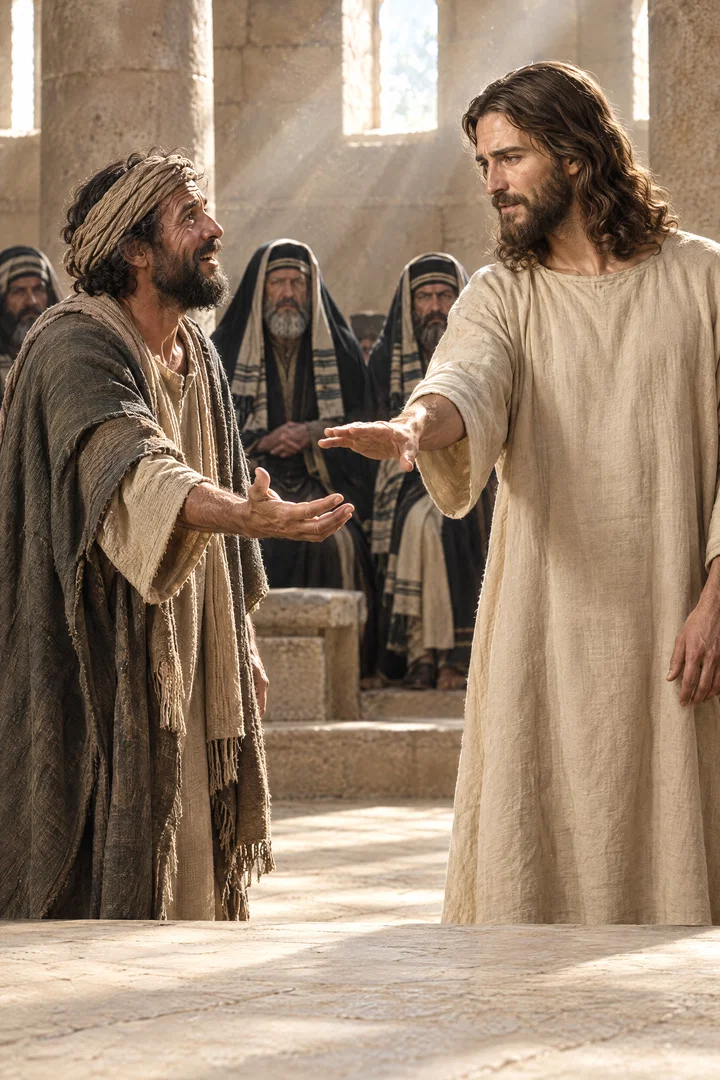
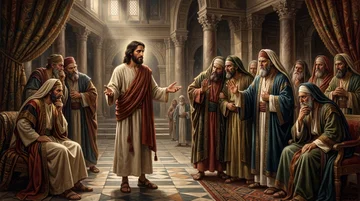
Cross-references 20 of 34
- Matthew 12:10-12
And, behold, there was a man which had his hand withered. And they asked him, saying, Is it lawful to heal on the sabbath days? that they might accuse him.
Jesus says it is lawful to do good on the Sabbath and uses the sheep rescue to defend healing.
- Luke 6:9
Then said Jesus unto them, I will ask you one thing; Is it lawful on the sabbath days to do good, or to do evil? to save life, or to destroy it?
Jesus asks whether doing good and saving life are lawful on the Sabbath.
- Mark 2:27-28
And he said unto them, The sabbath was made for man, and not man for the sabbath:
Jesus teaches that the Sabbath serves humanity and that he is its Lord.
- Exodus 20:8-11
Remember the sabbath day, to keep it holy.
Jesus upholds the Sabbath commandment while rejecting restrictions that forbid doing good.
- John 5:16
And therefore did the Jews persecute Jesus, and sought to slay him, because he had done these things on the sabbath day.
Jesus is persecuted after healing a man on the Sabbath.
- Luke 13:15-16
The Lord then answered him, and said, Thou hypocrite, doth not each one of you on the sabbath loose his ox or his ass from the stall, and lead him away to watering?
Christ defends healing on the Sabbath as an act of mercy.
- Matthew 12:8
For the Son of man is Lord even of the sabbath day.
Jesus is Lord of the Sabbath in the parallel Sabbath dispute.
- Luke 14:1-5
And it came to pass, as he went into the house of one of the chief Pharisees to eat bread on the sabbath day, that they watched him.
Both show Jesus teaching that healing and compassionate help are lawful on the Sabbath.
- Mark 2:28
Therefore the Son of man is Lord also of the sabbath.
Jesus’ lordship over the Sabbath frames his teaching that doing good on it is lawful.
- John 9:16
Therefore said some of the Pharisees, This man is not of God, because he keepeth not the sabbath day. Others said, How can a man that is a sinner do such miracles? And there was a division among them.
Jesus’ Sabbath healing prompts conflict over whether his work violates the Sabbath.
- Genesis 2:2-3
And on the seventh day God ended his work which he had made; and he rested on the seventh day from all his work which he had made.
God rested and set apart the seventh day as the Sabbath.
- John 5:9
And immediately the man was made whole, and took up his bed, and walked: and on the same day was the sabbath.
Jesus heals a man on the Sabbath, illustrating doing good on that day.
- Luke 6:5
And he said unto them, That the Son of man is Lord also of the sabbath.
Jesus is called Lord of the Sabbath.
- Matthew 12:13
Then saith he to the man, Stretch forth thine hand. And he stretched it forth; and it was restored whole, like as the other.
Jesus heals the man’s withered hand.
- Matthew 12:10
And, behold, there was a man which had his hand withered. And they asked him, saying, Is it lawful to heal on the sabbath days? that they might accuse him.
Both texts question whether healing and other acts of mercy are lawful on the Sabbath.
- Matthew 12:11
And he said unto them, What man shall there be among you, that shall have one sheep, and if it fall into a pit on the sabbath day, will he not lay hold on it, and lift it out?
Jesus’ example shows rescuing a sheep on the Sabbath.
- Luke 6:10
And looking round about upon them all, he said unto the man, Stretch forth thy hand. And he did so: and his hand was restored whole as the other.
Jesus heals the man’s withered hand after commanding him to stretch it out.
- Exodus 20:10
But the seventh day is the sabbath of the LORD thy God: in it thou shalt not do any work, thou, nor thy son, nor thy daughter, thy manservant, nor thy maidservant, nor thy cattle, nor thy stranger that is within thy gates:
work ban turned into death penalty
- Matthew 12:1-2
At that time Jesus went on the sabbath day through the corn; and his disciples were an hungred, and began to pluck the ears of corn, and to eat.
paired as another Sabbath conflict
- Deuteronomy 5:12-15
Keep the sabbath day to sanctify it, as the LORD thy God hath commanded thee.
Its Sabbath instruction is grouped with Mark’s passage.
Commentary
Each commentary is drawn from primary sources: the writings of Ellen G. White and Adventist pioneers and periodicals. Each commentary is separate. Its own words are not a quotation; follow the references to read the source passages.
Ellen G. White
23 sources
In the synagogue on the Sabbath before a man with a withered hand, Jesus openly asked whether the day permits rescuing and relieving or harming and destroying.DA 286.2–3 He met His accusers on their own ground, that to refuse good when it can be done is to do evil and to neglect saving life is to kill.DA 286.2–3Ms 140, 1903, par. 47–49 Their refusal to answer condemned them, for they knew the truth yet would leave a man to suffer rather than break their traditions.DA 286.2–3Ms 140, 1903, par. 47–492SP 197.3–198.1DA 286.4–287.2 Doing good and saving life are lawful on the Sabbath and honor it, while hatred and murderous intent violate its spirit.DA 286.2–32SP 197.3–198.14RED 50.1–22SP 199.2–34RED 51.2 That healing of suffering was true Sabbath keeping, yet it provoked fury and plots to destroy Him even as He continued His works of mercy.4RED 50.1–24RED 53.14RED 51.2COS 75.5–76.1DA 538.1–2
Sabbath Confrontation Setting
The setting is a synagogue on the Sabbath, with a man with a withered hand present and the Pharisees watching to find cause for accusation.DA 286.2–3 Healing was known beforehand to be called transgression, yet the afflicted man was made to stand forth in the open, breaking down the wall of traditional requirements.DA 286.2–3 The question of whether it is lawful to do good or evil, to save life or to kill on the Sabbath days, was put directly in that confrontation.DA 286.2–3
It meets the rabbis on their own ground, appealing to the acknowledged Jewish principle that to fail to do good when opportunity offers is to do evil.DA 286.2–3Ms 140, 1903, par. 47–49 By that same principle, to neglect to save life is to kill.DA 286.2–3Ms 140, 1903, par. 47–49 Leaving that principle unanswered, holding their peace condemns those questioned.DA 286.2–3Ms 140, 1903, par. 47–492SP 197.3–198.1 They would not answer before the multitude because they knew the truth and feared bringing trouble upon themselves.DA 286.4–287.2 That unwillingness exposed hardness of heart, and that hardness grieved Him.4RED 50.1–2
Their silence showed they would leave a man to suffer rather than break their traditions, while they would relieve an animal to avoid loss to its owner.DA 286.4–287.2 That gave greater care to a brute than to a man made in the image of God.DA 286.4–287.2 The question lays bare their wicked purpose by contrast: on one side healing the afflicted, saving life and bringing happiness to multitudes, on the other reading hearts with hatred, hunting His life and plotting to kill and destroy life.DA 286.2–32SP 199.2–34RED 51.3–52.14RED 51.2COS 75.5–76.1 He was engaged in curing sufferers while they were engaged in seeking occasion to put Him to death.2SP 199.2–34RED 51.3–52.14RED 51.2COS 75.5–76.1DA 286.4–287.2
Mercy Lawful on Sabbath
Doing good and saving life are lawful on the Sabbath, while doing evil or killing and allowing harm are contrary to its purpose.2SP 197.3–198.14RED 50.1–24RED 51.2Ms 3, 1879, par. 9–10ST Oct 16, 1879 To refuse mercy when it is needed is set against doing evil, and to neglect to preserve life is set against killing.2SP 197.3–198.14RED 50.1–2Ms 3, 1879, par. 9–10ST Oct 16, 1879 The question was asked while watchers looked for reason to accuse over healing a man with a withered hand, and the silence that followed with the healing itself exposed misuse of Sabbath restrictions and hard-hearted opposition to merciful action.2SP 197.3–198.14RED 50.1–24RED 51.2ST Oct 16, 1879
Mercy and healing honor the Sabbath, while hatred and murderous intent violate its spirit.DA 286.2–32SP 199.2–34RED 51.3–52.1COS 75.5–76.1 On one side was healing the afflicted, saving life and bringing happiness to multitudes, and on the other was reading hearts with hatred, seeking accusation and plotting to kill and destroy life.DA 286.2–32SP 199.2–34RED 51.3–52.1COS 75.5–76.1 It is better and more righteous to cure sufferers and heal the afflicted in love and mercy, and to have love toward all men shown in kindness and deeds of mercy, than to have murder in the heart on God's holy day.DA 286.2–32SP 199.2–34RED 51.3–52.1COS 75.5–76.1
Charity and benevolence are lawful on every day, and the Sabbath is not governed by restrictive superstition.4RED 50.1–24RED 51.2 The charges were for not keeping the Sabbath according to human traditions, but the healing kept it as God wanted it to be kept.4RED 50.1–2COS 75.5–76.1 That act of mercy upheld the fourth commandment while correcting restrictions that burdened the day.4RED 50.1–24RED 51.2COS 75.5–76.1
Opposition and Sabbath Observance
The healing of the man with the withered hand on the Sabbath was doing good on the Lord's day and relieving suffering, yet it provoked great malice and fury among His opponents.4RED 53.12SP 201.12SP 294.23RED 70.1–2ST Apr 19, 1877 The Pharisees were enraged that He performed this good work on that day.2SP 294.23RED 70.1–2 Jesus and His disciples then withdrew to a more favorable place to labor, and there He continued healing the sick and casting out demons.4RED 53.12SP 201.1
All the miracles done on the Sabbath were works of mercy for the relief of the afflicted, not the deeds and words of a Sabbath-breaker or blasphemer.2SP 367.3–368.1DA 538.1–23RED 109.2–3 The multitudes who saw those works of mercy and heard the pure and holy teachings knew this.DA 538.1–2 The Pharisees still tried to use those good deeds as grounds to condemn Him as a Sabbath-breaker for doing good on the Sabbath.2SP 367.3–368.1DA 538.1–23RED 109.2–3 That charge could not be sustained, so that false witnesses were needed against Him.Ms 29a, 1885, par. 6–8 His accusers even feared examination of His Sabbath work because it would reveal His healing miracles and undermine their attempt to condemn Him.ST Jun 13, 1878
To cut Him off from influencing the people they consulted with the Herodians how to destroy Him.DA 538.1–2 They tried to arouse the Herodians against Him as seeking to set up a rival kingdom, and tried to excite the Romans against Him as subverting their authority.DA 538.1–2 In desperation they decreed that any man who professed faith in Jesus should be cast out of the synagogue.DA 538.1–2
The Sabbath permits and calls for doing good, including caring for the sick, relieving pain, and meeting urgent needs.COS 79.2–80.221MR 139.4 Worship, healthful rest, and holy deeds belong to the day, and it is not a day for harmful neglect or useless inactivity.COS 79.2–80.2 Ordinary work for livelihood, pleasure, or profit is to cease, while pleasure-seeking and ordinary work that are not necessities neglect the day sanctified by God.COS 79.2–80.221MR 139.4 His Sabbath miracles met the needs of people afflicted by Satan rather than serving as displays of power.21MR 139.4
Sources
Pioneers and periodicals
48 sources
It is lawful on the Sabbath to do good and to save life, and healing the sick belongs to obedience to its law rather than breaking it.ST Jan 16, 1912RH Feb 4, 1862ST Nov 11, 1897ST Jun 11, 1894RH Jun 18, 1861 The Sabbath forbids unnecessary labor, but it does not forbid necessary care, mercy, or rescue, and refusing to do good when needed is set alongside doing evil.ST Sep 15, 1909ST Jun 11, 1894ST Oct 3, 1900ST Jan 21, 1903 Jesus restored the withered hand by commanding the man to stretch it out, violating no divine law of the Sabbath but only human traditions that had made it a burden and forbidden healing.ST Apr 14, 1881RH Feb 4, 1862ST Mar 12, 1894ST Jul 15, 1897 As Lord of the Sabbath He honored and upheld it, removing its encumbrances to leave it standing in its holy dignity as a day for doing good.ST Dec 17, 1894ST Feb 10, 1904RH Jul 22, 1902ST Jul 15, 1897ST Nov 18, 1880 Those watching Him could not answer His question and held their peace, then in anger plotted to destroy Him, while His example stands as the model of Sabbath mercy, compassion, and active service to the suffering.RH Feb 4, 1862ST Nov 11, 1897ST Oct 3, 1900RH Feb 28, 1856
Wording and Historical Setting
The word rendered life is the Greek psuche, the same word rendered soul elsewhere in the New Testament.RH Oct 24, 1854RH Apr 22, 1858 Soul here means life in the Bible sense, not an immortal soul, so putting soul for life leaves the sense just as good and just the same. In this use it refers to the present life, in contrast with the future life to which the whole person will be restored at the resurrection.RH Apr 22, 1858
The verse belongs to the cure of the withered hand at Capernaum on the Sea of Galilee.ST Jan 16, 1896ST Oct 4, 1910 It stands as one miracle among many miracles piled miracle upon miracle and told with wonderfully graphic force in rapid succession without longer discourses.ST Oct 4, 1910 The series shows the power of Jesus to heal, paralleling Luke 4:33-6:11 and Luke 5:17-26 and counted among the thirty-six miracles described in the Gospels.ST Jan 16, 1896 Jesus healed the withered hand by a word commanding the man to stretch out his arm.RH Feb 4, 1862 Neither His word nor the man's act of stretching out his arm violated the law of the Sabbath, but only a tradition of the Pharisees that forbade doing anything toward healing the sick on the Sabbath.RH Feb 4, 1862
His Sabbath acts were judged under strict rules that treated even meeting hunger as a punishable offense.ST Apr 14, 1881 His teaching and practice opposed those man-made, oppressive restrictions while upholding the Lord's Sabbath.ST Apr 14, 1881ST Mar 12, 1894 Under a multitude of human traditions the true meaning of the Sabbath as a blessing had been almost entirely forgotten, and it had become a curse and a heavy burden impossible to bear.ST Jul 15, 1897 Keeping it aright required knowing 400 extra laws beyond the Decalogue, filling more than 170 folio pages, with anyone failing in detail liable to flogging, excision, or stoning for voluntary presumptuous work.ST Jul 15, 1897 He performed many of His mighty cures on the Sabbath on purpose because of that cruel, burdensome system, His question about doing good and saving life being called forth to expose it and to rid the Sabbath of its encumbrances and leave it standing in its own holy dignity as a day for doing good and saving life.ST Jul 15, 1897
The Sabbath in view is the seventh day, not Sunday.ST Apr 11, 1900 It was known in Christ's time despite the much earlier event when Joshua commanded the sun to stand still, when He asked whether it was lawful to do good on the Sabbath as He prepared to heal the man with the withered hand. His healing the sick on the Sabbath day and declaring it lawful proves the Sabbath kept in the time of Christ is the identical seventh-day Sabbath commanded in the law, since the law permits works of mercy on the Sabbath.ST May 1, 1884 The claim that He was healing people on Sunday is an error that could suggest He kept Sunday.
Sabbath Mercy Is Lawful
Lawful means in keeping with Sabbath law, and doing good on the Sabbath days is in keeping with that law.ST Jan 16, 1912 Preserving life and healing, as in restoring the withered hand whole, is doing good, and such work belongs to a life of obedience to the law.ST Jan 16, 1912RH Feb 4, 1862ST Nov 11, 1897 Doing good and saving life are lawful on the Sabbath, and Sabbath observance does not require withholding help from someone in need.RH Feb 4, 1862ST Nov 11, 1897ST Sep 15, 1909ST Dec 17, 1894 Healing the man with the withered hand was beneficial work, not a violation of the Sabbath, but an honoring of it that upheld rather than abolished the law and added to its sanctity through beneficent work.ST Dec 17, 1894ST Nov 18, 1880
Acts of charity and mercy are lawful on the Sabbath as well as on other days.ST Jan 16, 1912ST Apr 19, 1877 Relieving the sick, helping those in trouble, and caring for the sick are lawful on the Sabbath just as on other days.ST Jan 16, 1912RH Jun 18, 1861ST Apr 19, 1877ST May 21, 1912 Sabbath observance is not a reason to withhold mercy, for the day is for people, bringing spiritual blessing and service to God. The Sabbath forbids unnecessary labor, not healing or other deeds of goodness; it is a day for rest and holy joy.ST Jun 11, 1894
Doing evil or killing stands against the Sabbath's purpose, while doing good and saving life accord with it.ST Jun 11, 1894ST Oct 3, 1900ST Oct 22, 1894 Failing to do good is set alongside doing evil, and saving life is set alongside killing, so that refusing to help when needed is aligned with evil.ST Sep 15, 1909 Harboring murderous hatred is not righteous, while doing good and showing mercy on the Sabbath are righteous.ST Feb 10, 1904 Admitting that doing good and saving life are lawful would condemn false restrictions on healing, and silence in answer exposes hard hearts, hostile thoughts, lack of pity, and concern to protect tradition.ST Nov 11, 1897ST Oct 22, 1894
The Sabbath is intended as a blessing and a time of physical rest, not a ban on necessary care or rescue.ST Jan 21, 1903ST Nov 5, 1896 It is a day for rest and holy joy, for physical rest, spiritual blessing, and service to God, not merely physical rest, and the night provides the rest needed after daily labor.ST Jun 11, 1894RH Sep 19, 1912 It is not meant to require inactivity but is a day for active, merciful service, including helping and comforting others.RH Apr 27, 1911 Restrictive customs that turned its observance into a burden are rejected, showing the day was designed to be a blessing.ST Nov 5, 1896
Healing on the Sabbath is doing good and saving life, while plotting harm is doing evil and seeking to kill.ST Apr 14, 1881ST Feb 10, 1904ST Jul 15, 1897 Christ's purpose on the Sabbath was to save life, while His opponents' purpose was to destroy it.ST Jul 15, 1897 His question exposes their malice and murderous purpose in contrast with His work of saving life and bringing happiness, leaving them speechless but neither convinced nor willing to change.ST Apr 14, 1881ST Feb 10, 1904 Doing good by healing the afflicted was right on the Sabbath and should not be delayed merely because the sufferer could wait or because healing would bring opposition and watching for grounds to accuse.ST Nov 11, 1897
The healing openly done while watched shows genuine Sabbath-keeping and no lack of regard for the Sabbath.ST Jul 8, 1897 The Sabbath is the sign and the channel of God's power to deliver from the power of Satan, and the miracle teaches this.ST Jul 8, 1897 The Sabbath contains the presence of God who forgives all iniquities and heals all diseases, presented in the object lesson of the healing.ST Jul 8, 1897 Human opinions on the Sabbath are of no value, Sabbath-keeping is more than conformity to human traditions, and only God's thought about the Sabbath carries weight.ST Jul 8, 1897 God in Christ established the Sabbath by resting on the seventh day and putting His presence in the day in Christ, so Christ's Sabbath-keeping reveals God's idea of true Sabbath-keeping and what He intended the Sabbath to be to man.ST Jul 8, 1897
The power to heal the sick is given as evidence of the power to forgive sins, showing that healing of disease and forgiveness of sins go together.ST Jun 8, 1882 Sin is disease of the soul as sickness is of the body, and sickness and death are the result of sin, from which God alone can save.ST Jun 8, 1882 Since God forgives sins when conditions are met and gives foretastes of heavenly glory, it is reasonable that He at times relieves the pain His followers suffer.ST Jun 8, 1882
Christ Honors the Sabbath
As Lord of the Sabbath He honored it by teaching that doing good and saving life on the Sabbath days is lawful and according to the law of the Sabbath, so that healing such as restoring the withered hand whole was beneficial work and no violation.ST Dec 17, 1894ST Feb 10, 1904ST Nov 18, 1880ST Aug 3, 1904 His works on that day therefore do not break or change the Sabbath but honor it, upholding rather than abolishing the law, upholding the fourth commandment as God gave it, and adding to its sanctity through beneficent work, while those who objected to His act of mercy dishonored it.ST Dec 17, 1894ST Feb 10, 1904ST Nov 18, 1880ST Aug 3, 1904 His Sabbath actions obeyed God's law and conflicted only with human traditions that burdened the people, not with the Sabbath commandment, though this brought persecution from those who accused Him of breaking it.ST Aug 3, 1904 To say that God forbids doing good on the Sabbath is to speak falsely of God and is impious, and keeping the Sabbath commandment agrees with and freely affirms that it is lawful to do what is good on the Sabbath days.RH Jun 17, 1873
His Sabbath observance followed God's commandment rather than the Pharisees' rules, violating only unwarranted human traditions, though their contrary judgment made Him appear to be a Sabbath breaker.ST Feb 27, 1893 He answered accusations of Sabbath breaking by doing what was lawful, and that contrary judgment helped fuel the religious persecution that led to His death.ST Feb 27, 1893 When He healed the man with the withered hand by a word commanding him to stretch out his arm, neither His word nor the man's act of stretching violated the law of the Sabbath, but only a tradition of the Pharisees that forbade doing anything toward healing the sick on the Sabbath.RH Feb 4, 1862 That wicked tradition perverted the Sabbath, and He publicly set it aside in order to preserve the Sabbath itself for man and to act in its behalf, while the Pharisees met His question with silence and went out to consult how they might destroy Him.RH Feb 4, 1862
His work was not to destroy or change the Sabbath but to present it more clearly by removing the rubbish of human traditions and enactments with which the Pharisees had covered it.RH Jul 22, 1902 He sought to strip off the superfluities of Jewish will-worship and Pharisaic formalism which had so encrusted the Sabbath that its original spiritual intent disappeared from view.RH Jul 22, 1902 He never intended to abrogate the Sabbath or to lessen any of its essential claims to human regard, but sought to give men more, not less, of the Sabbath, and imprinted upon its observance a holier and a happier sanction.RH Jul 22, 1902 The Sabbath is still to be observed, and how it is to be observed is shown by His own use of the seventh day always for purposes that assisted the development of the higher nature of men and contributed to their healing and physical well-being, by His scrupulous care to attend synagogue services on the Sabbath, and by His making the day one of happy because holy activity, full of heavenly inspiration and of good deeds performed in behalf of a sin-weary humanity.RH Jul 22, 1902
His healing on the Sabbath, condemned by the rabbis, shows the kind of disputes that would have arisen if early Christians had treated the Sabbath as abolished.ST Oct 19, 1882 Keeping the Sabbath is not insisting on the mere letter to the neglect of the spirit, least of all following man-made injunctions or interpretations as if they were the voice of God.RH Apr 23, 1872 Those who held the first day to have become in observance the seventh day as weekly rest and worship commemorating the resurrection teach that Jesus kept the Sabbath by doing that which according to Pharisaic formula was breaking it, performing works of healing on the Sabbath day in defiance of Jewish prejudice and Pharisaic formalism, and that this is made a precedent in spirit and ground for that change.RH Apr 23, 1872
Opposition Silence and Faith
Those who watched to accuse met the question whether it is lawful to do good on the Sabbath and to save life, or to do evil and to kill, with silence.RH Feb 4, 1862ST Nov 11, 1897RH Feb 28, 1856ST Feb 17, 1898ST Oct 22, 1894 They could not answer the challenge, and they would not answer while seeking grounds to accuse.RH Feb 4, 1862ST Nov 11, 1897RH Feb 28, 1856ST Feb 17, 1898ST Oct 22, 1894 To answer rightly would have condemned their traditions that forbade healing on the Sabbath.RH Feb 4, 1862ST Oct 22, 1894 Their silence exposed hard hearts, hostile thoughts, lack of pity, anger, and unwillingness to help the suffering man.ST Nov 11, 1897ST Oct 22, 1894
Silence was followed by anger and great malice at the healing of the withered hand.ST Oct 16, 1879RH Feb 4, 1862 The Pharisees went out and consulted how they might destroy Him, plotting with the Herodians.RH Feb 20, 1908RH Feb 4, 1862 Christ kept the Sabbath according to God's commandment rather than their ideas, and their contrary judgment made Him appear a Sabbath breaker.ST Oct 3, 1900RH Feb 20, 1908 Hostility to His Sabbath healings helped fuel the religious persecution that led to His death.ST Oct 3, 1900 Later His accusers feared that examining His Sabbath work would reveal His healing miracles and undermine their attempt to condemn Him.
Loyalty to the true principles of Sabbath keeping, doing good and saving life as belonging to right observance, provokes intolerance and persecution from organized Sabbath enforcers.RH Feb 20, 1908 That pattern seen with Pharisees and Herodians watching Him because He did not keep the day according to their ideas is repeated by modern Sunday-law associations.RH Feb 20, 1908
The man with the withered hand could not heal himself, yet when commanded to stretch out his hand he acted in faith and it was restored whole like the other.ST Feb 11, 1897RH Jun 8, 1869 His response shows that people should do what they can in faith, trusting God to sustain them.ST Feb 11, 1897RH Jun 8, 1869
That Sabbath was made blessed above all Sabbaths when the withered hand was made whole again for work. It was restored for grasping tools and handling wood and iron and stone, for earning bread and clothes and home, and for touching his wife in love. The leaders muttered against the Healer and looked sour at the healed man, and he faced being cast out of the synagogue for receiving healing on the Sabbath. Jesus goes about quietly making broken people whole in hand and foot and eye and ear and mind, and gets muttering in return. The right response is praise to God and giving the restored powers wholly to Him to work or fight for Him, for He has been the hand of God to the healed.
Faith heals the withered hand of indolence and brings new strength where there was weakness.
Present Practice and Application
The question presents Jesus as the model of benevolence and justice, one who relieves suffering and respects the rights of the least as well as the greatest, without selfish ambition.RH Oct 30, 1860 Doing good and saving life are lawful on the Sabbath, and his good works and miracles stood against restrictive rules that made the Sabbath a burden.ST Jun 4, 1894 As Lord of the Sabbath and model of its observance, he showed it to be a day for mercy, compassion, and kind deeds.ST Jun 4, 1894 The Sabbath does not require inactivity, but calls for active, merciful service, including helping and comforting others.ST Jun 4, 1894RH Apr 27, 1911
The Sabbath law calls for doing good and not evil, giving God's people an opportunity to do good.RH Sep 19, 1912 Its purpose is holy and divine, not merely physical rest.RH Sep 19, 1912 The night provides the rest needed after daily labor.RH Sep 19, 1912
Doing good on the Sabbath being lawful includes relieving the sick and helping those in trouble, so getting mail on the Sabbath is lawful when the Lord's work demands it or when life or death demands it, such as sickness in one's family.ST May 21, 1912 Getting ordinary mail in ordinary times as on ordinary days remains forbidden by the command to keep the Sabbath holy.ST May 21, 1912 The setting of saving life against taking life applies to war: Christians should not lightly undertake the deliberate destruction of other people, but should seek medical service where their work is to save life. That principle is echoed in working to benefit people, not to harm them, since doing good and preserving life are right and not evil.RH May 2, 1907
Sources