Luke 13:15
The Lord then answered him, and said, Thou hypocrite, doth not each one of you on the sabbath loose his ox or his ass from the stall, and lead him away to watering?
Translations
The Lord then answered him, and said, You hypocrite, does not each one of you on the sabbath loose his ox or his ass from the stall, and lead him away to watering?
King James Version, KJV Cambridge Paragraph Bible, Webster Bible
The Lord then answered him, and said, Thou hypocrite, doth not each one of you on the sabbath loose his ox or his ass from the stall, and lead him away to watering?
Revised Version, American Standard Version
But the Lord answered him, and said, Ye hypocrites, doth not each one of you on the sabbath loose his ox or his ass from the stall, and lead him away to watering?
Then the Lord answered him and said, 'Hypocrite, doth not each of you on the sabbath loose his ox or ass from the stall, and having led away, doth water [it]?
The Lord therefore answered him and said, Hypocrites! does not each one of you on the sabbath loose his ox or his ass from the manger and leading [ it] away, water [ it]?
The Lord answered him, and said—Hypocrites! Doth not, each one of you, on the Sabbath, loose his ox or ass from the manger, and, leading it away, give it drink?
Berean Standard Bible, Majority Standard Bible
“ You hypocrites!” the Lord replied. “ Does not each of you on the Sabbath untie his ox or donkey from the stall and lead it to water?
Therefore the Lord answered him, “ You hypocrites! Doesn’ t each one of you free his ox or his donkey from the stall on the Sabbath and lead him away to water?
But the Lord gave him an answer and said, O you false men! do you not, every one of you, on the Sabbath, let loose his ox and his ass and take it to the water?
Then answered him the Lord, and said, Hypocrite, doth not eche one of you on the Sabbath day loose his oxe or his asse from the stall, and leade him away to the water?
Douay-Rheims (Challoner revision)
And the Lord answering him, said: Ye hypocrites, doth not every one of you, on the sabbath day, loose his ox or his ass from the manger, and lead them to water?
Pictures
Cross-references 20 of 28
- Matthew 12:11-12
And he said unto them, What man shall there be among you, that shall have one sheep, and if it fall into a pit on the sabbath day, will he not lay hold on it, and lift it out?
Jesus uses care for an animal to defend doing good on the Sabbath.
- Luke 14:5
And answered them, saying, Which of you shall have an ass or an ox fallen into a pit, and will not straightway pull him out on the sabbath day?
Jesus again compares Sabbath healing with rescuing an animal.
- Mark 2:27
And he said unto them, The sabbath was made for man, and not man for the sabbath:
Both show the Sabbath was made for humanity’s good, not restrictive observances.
- Exodus 20:10
But the seventh day is the sabbath of the LORD thy God: in it thou shalt not do any work, thou, nor thy son, nor thy daughter, thy manservant, nor thy maidservant, nor thy cattle, nor thy stranger that is within thy gates:
The Sabbath commandment forbids work, which Jesus contrasts with caring for an animal on the Sabbath.
- Mark 3:1-5
And he entered again into the synagogue; and there was a man there which had a withered hand.
Jesus heals on the Sabbath and challenges objections to doing good.
- John 9:14-16
And it was the sabbath day when Jesus made the clay, and opened his eyes.
A Sabbath healing prompts accusations about Christ’s observance.
- Matthew 12:12
How much then is a man better than a sheep? Wherefore it is lawful to do well on the sabbath days.
Both affirm that doing good and showing mercy are lawful on the Sabbath.
- John 5:8-10
Jesus saith unto him, Rise, take up thy bed, and walk.
Jesus heals a man on the Sabbath, prompting a dispute over carrying his bed.
- Numbers 15:32-36
And while the children of Israel were in the wilderness, they found a man that gathered sticks upon the sabbath day.
Contrasts works of necessity with the prohibited Sabbath-breaking of gathering sticks.
- Matthew 12:8
For the Son of man is Lord even of the sabbath day.
listed together showing Christ as Lord of the Sabbath
- John 7:22-23
Moses therefore gave unto you circumcision; ( not because it is of Moses, but of the fathers;) and ye on the sabbath day circumcise a man.
Both defend doing necessary or healing work on the Sabbath.
- Luke 6:1-5
And it came to pass on the second sabbath after the first, that he went through the corn fields; and his disciples plucked the ears of corn, and did eat, rubbing them in their hands.
Both defend acts of necessity against restrictive Sabbath rules.
- Luke 13:10
And he was teaching in one of the synagogues on the sabbath.
Jesus teaches in the synagogue on the Sabbath.
- Isaiah 58:13
If thou turn away thy foot from the sabbath, from doing thy pleasure on my holy day; and call the sabbath a delight, the holy of the LORD, honourable; and shalt honour him, not doing thine own ways, nor finding thine own pleasure, nor speaking thine own words:
Both concern honoring the Sabbath and its proper observance.
- Matthew 12:10
And, behold, there was a man which had his hand withered. And they asked him, saying, Is it lawful to heal on the sabbath days? that they might accuse him.
Both texts show Christ teaching that mercy and care are lawful on the Sabbath.
- Luke 6:9
Then said Jesus unto them, I will ask you one thing; Is it lawful on the sabbath days to do good, or to do evil? to save life, or to destroy it?
Both texts ask whether doing good and showing mercy are lawful on the Sabbath.
- Luke 14:1
And it came to pass, as he went into the house of one of the chief Pharisees to eat bread on the sabbath day, that they watched him.
Both texts address meeting necessary needs on the Sabbath.
- Matthew 12:3-5
But he said unto them, Have ye not read what David did, when he was an hungred, and they that were with him;
Supports the claim that certain acts are lawful on the Sabbath.
- Matthew 12:1
At that time Jesus went on the sabbath day through the corn; and his disciples were an hungred, and began to pluck the ears of corn, and to eat.
Both texts defend meeting necessary needs on the Sabbath.
- Mark 2:28
Therefore the Son of man is Lord also of the sabbath.
Christ is Lord of the Sabbath.
Commentary
Each commentary is drawn from primary sources: the writings of Ellen G. White and Adventist pioneers and periodicals. Each commentary is separate. Its own words are not a quotation; follow the references to read the source passages.
Ellen G. White
8 sources
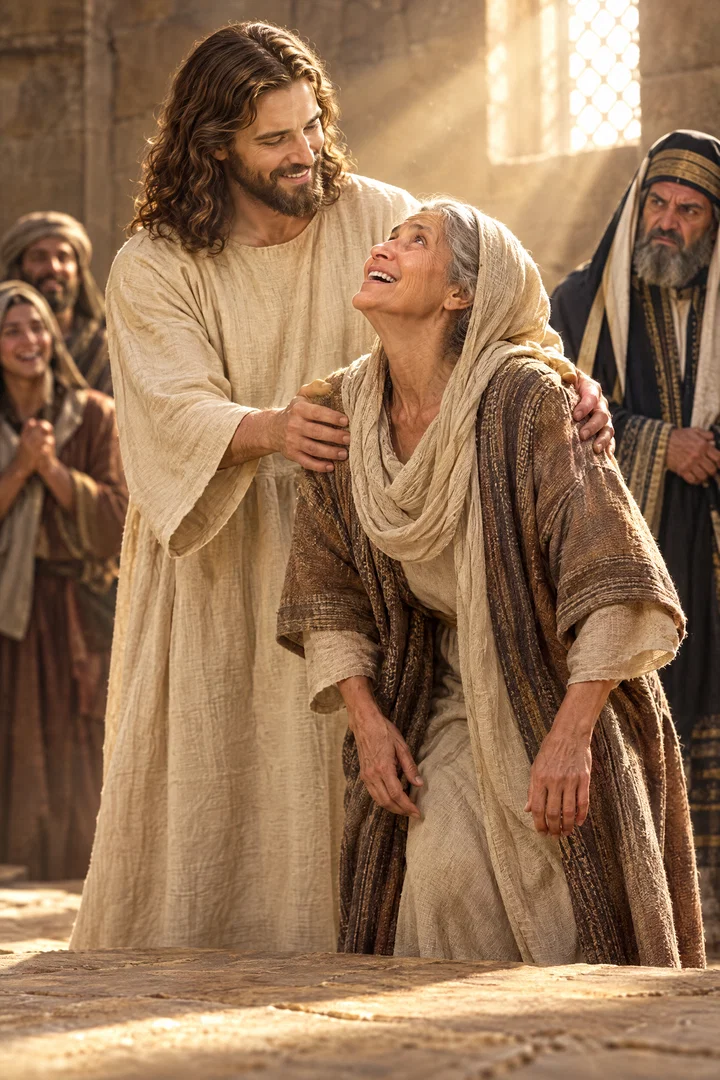
The verse is the Lord's direct answer to the synagogue ruler's indignant objection to His healing a suffering woman on the Sabbath.Ms 79, 1910Ms 79a, 1910, par. 1–4Ms 79, 1910, par. 3–5ST Apr 23, 1896SW 79.1–81.1 He meets that indignation by calling him hypocrite and exposing hypocrisy and inconsistency, pointing out that each one of them on the Sabbath would loose his own ox or his ass from the stall and lead him away to watering.Ms 79, 1910Ms 79a, 1910, par. 1–4Ms 79, 1910, par. 3–5ST Apr 23, 1896ST Apr 23, 1896 The ruler would untie and water his livestock on that day, yet condemned Jesus for relieving the woman, and that objection revealed his inconsistency.Ms 79, 1910Ms 79, 1910, par. 3–5ST Apr 23, 1896SW 79.1–81.1ST Apr 23, 1896
It is therefore right and fitting and consistent to release a suffering daughter of Abraham from bondage on the Sabbath, so that practical works of mercy are proper and permitted on that day.Ms 79a, 1910, par. 1–4Ms 79, 1910, par. 3–5ST Apr 23, 1896SW 79.1–81.1ST Apr 23, 1896 Relieving a person is consistent with the care already shown to animals, and the comparison exposes the inconsistency of allowing care for animals while condemning compassion for a person.Ms 79a, 1910, par. 1–4ST Apr 23, 1896SW 79.1–81.1ST Apr 23, 1896 Consistency in this mercy is a jewel to be desired.Ms 79a, 1910, par. 1–4
The account belongs to His fitting Sabbath work of healing and comforting the sick, done extensively and willingly and joyfully to bring comfort and love and to restore sufferers to health.5MR 84.2Ms 238, 1902, par. 7 The Sabbath gave opportunity to reach people who labored during the week.5MR 84.2 His example calls for compassionate care of the sick in the present, and such Sabbath healings are manifestations to thank God for and to repeat after His example.Ms 79a, 1910, par. 1–4Ms 238, 1902, par. 7
Sources
Pioneers and periodicals
54 sources
Jesus answered the ruler's indignant objection in the synagogue on the Sabbath after freeing a woman bound by infirmity for eighteen years by pointing to the ordinary accepted practice of loosing an ox or ass from the stall and leading it to water on that day.ST Nov 14, 1900ST Sep 16, 1880RH Jun 24, 1858RH Mar 19, 1857ST Apr 14, 1881
He called the objector hypocrite for forbidding merciful healing on the Sabbath while practicing mercy to animals on that day.ST Nov 11, 1897ST Feb 23, 1882
If relieving an animal's thirst for a day is allowed, it is even more fitting to release a woman who suffered eighteen years, for human life is worth more than an animal's and healing took less labor than watering stock.ST Feb 23, 1882ST Mar 30, 1888ST Jan 31, 1911
Her release honored the Sabbath and accorded with its design, for the Sabbath permits acts of mercy and doing good, being made for man as a blessing and not a burden of restrictive human traditions.ST Nov 11, 1897ST Feb 23, 1882ST Oct 29, 1896ST Jan 31, 1911
This shows the Sabbath's right observance when freed from human traditions, not its abrogation, vindicating its divine authority and permanent obligation in the gospel age.RH Apr 18, 1871RH Jun 24, 1858ST Feb 2, 1915RH Jul 18, 1854RH Apr 7, 1851
Setting and Wording
The answer was given in the synagogue on the Sabbath after freeing a daughter of Abraham whom Satan had bound with infirmity for eighteen years.ST Nov 14, 1900ST Apr 14, 1881 It rebukes the ruler of the synagogue who condemned with indignation the healing on the Sabbath.ST Nov 14, 1900 It means it is lawful and right to loose suffering people from bondage on the Sabbath, just as each person looses his ox or ass from the stall and leads it to watering on that day.ST Nov 14, 1900 The charge of hypocrite exposes forbidding merciful healing on the Sabbath while practicing mercy to animals on that day, for Jesus healed a woman who had suffered from a spirit of infirmity for eighteen years on the Sabbath.ST Nov 14, 1900ST Apr 14, 1881
Loosing an ox or donkey and leading it to water on the Sabbath was an ordinary, accepted custom used to answer the Sabbath-healing critics and expose their inconsistency.ST Sep 16, 1880RH Jun 24, 1858RH Mar 19, 1857ST Apr 5, 1899ST Jul 16, 1894 Caring for an animal on the Sabbath, including leading it to water, was accepted even by those who objected to acts of healing.RH Jun 24, 1858RH Mar 19, 1857ST Sep 16, 1880 The comparison corrects a mistaken view of the Sabbath, that its proper use serves human good and acts of mercy do not violate it, teaching the Sabbath's right observance and not its abrogation.RH Jun 24, 1858 By their own standards their customary care for an animal justified the Sabbath release of a woman bound for eighteen years, so their objection condemned their own practice.ST Sep 16, 1880ST Sep 16, 1880 The practice of loosening the animal was the illustration in reproving the synagogue ruler over the healing of the afflicted woman.ST Apr 5, 1899ST Jul 16, 1894
The day on which people released their animals and led them to water is recognized as the Sabbath observed by the Jews.ST Apr 19, 1883 The Pharisees held that carrying water to a thirsty animal was carrying a burden and therefore forbidden, but pouring water into a trough and leading an ox or an ass away to watering was lawful.RH Jul 18, 1854 They would readily do that, and would lift a sheep fallen into a pit, yet they condemned loosing a woman bound by infirmity eighteen years when she could be loosed by a word.RH Jul 18, 1854 By their own admissions nothing wrong had been done, and their objection strained at a gnat and swallowed a camel.RH Jul 18, 1854
Hypocrisy Exposed
The word hypocrite exposes the inconsistency of forbidding a merciful healing on the Sabbath while practicing mercy to animals on that same day.ST Nov 11, 1897ST Feb 23, 1882ST Jul 16, 1894ST Mar 30, 1888 It was accepted as lawful to untie an ox or donkey from the stall and lead it away to watering, so releasing a woman from a bond of illness that had held her eighteen years was right and fitting rather than a violation.ST Nov 11, 1897ST Feb 23, 1882ST Mar 30, 1888ST Feb 7, 1911 If care to relieve an animal's thirst for a day is allowed, relieving a woman who had suffered eighteen years is even more fitting, for compassionate care and healing are not forbidden by Sabbath observance.ST Nov 11, 1897ST Feb 23, 1882ST Jul 16, 1894ST Mar 30, 1888ST Feb 7, 1911 Healing a person was proper and required less labor than watering animals, and the Sabbath is a day of blessing on which a sufferer may rightly be released.ST Mar 30, 1888ST Feb 7, 1911 The inconsistent use of Sabbath rules showed a false view of Sabbath observance, turning the Sabbath into a burden instead of allowing acts of mercy even when they involve effort.ST Jul 16, 1894ST Mar 30, 1888ST Oct 29, 1896
The censures came from hatred far more than from zeal for the Sabbath, revealing malevolence behind claims of great conscientiousness about disregarding the day.RH Nov 4, 1858 The outward observance honored the letter with scrupulous care while having little genuine regard in spirit, straining at small things while allowing great inconsistency.RH Nov 4, 1858 Rabbinical rules and tradition had buried the Sabbath under superstition and made void the Scriptures and law of God, obscuring God's law even while its teachers claimed to bring the Scriptures.RH Nov 4, 1858ST Oct 7, 1897ST Sep 29, 1909 Care for property did not excuse withholding compassion from a person, for human need matters more than Sabbath traditions that turn the Sabbath into a burden.ST Oct 29, 1896ST Apr 13, 1904 Sabbath law and property in sheep and oxen were counted as more than the life of a fellow creature, yet a human being is better than an animal and above property and tradition, since the Sabbath was made for man and not man for the Sabbath as a blessing given in the beginning and perpetuated for mankind.ST Oct 29, 1896ST Apr 13, 1904ST Apr 13, 1904
With sifting justice the exposure showed that those who condemned the loosing of a daughter of Abraham whom Satan had bound eighteen years would themselves loose an ox or an ass from the stall and lead it to watering.ST Oct 29, 1896ST Apr 13, 1904 It is therefore lawful to do well on the Sabbath days, including healing and releasing the suffering.ST Apr 13, 1904 When this was said the adversaries were ashamed.ST Apr 13, 1904 That same pharisaic religion that will lead an ox to water on the Sabbath but will not loose a daughter of Abraham from physical infirmity, joined with robbing widows' houses and for a pretense making long prayers, marked Puritan ancestors despite their zeal.RH May 14, 1901 It marks latter-day Sunday-observance agitators whose zeal, if they succeed in uniting Church and State, will manifest the same intolerant spirit, the spirit of the dragon.RH May 14, 1901
Mercy Lawful on Sabbath
Freeing the woman from the infirmity that had bound her for eighteen years was right and fitting on the Sabbath, not a breaking of it.ST Nov 11, 1897ST Feb 23, 1882ST Feb 7, 1911RH Feb 11, 1862 The accepted practice of untying an ox or donkey and leading it to water showed that compassionate release was lawful on that day, and releasing one long bound honored the Sabbath and accorded with its design.ST Nov 11, 1897ST Feb 7, 1911RH Feb 11, 1862ST Apr 5, 1883 Freeing one whom Satan had bound was an act of blessing proper to the day, exposing the charge of violation as hypocrisy.ST Feb 7, 1911RH Feb 11, 1862ST Apr 5, 1883
If loosing an animal to relieve a day's thirst was allowed, relieving a woman who had suffered eighteen years was even more fitting.ST Feb 23, 1882ST Mar 30, 1888ST Jan 31, 1911 A human life is worth more than an animal's and stands above property and tradition, so doing well by healing and releasing the suffering is lawful on the Sabbath days.ST Feb 23, 1882ST Jan 31, 1911ST Apr 13, 1904 Healing by word required even less labor than leading beasts to watering, which made condemnation of it a false view of Sabbath observance.ST Feb 23, 1882ST Mar 30, 1888ST Apr 13, 1904
The Sabbath permits acts of mercy and is not contrary to doing good and bringing relief to the afflicted.ST Oct 29, 1896ST Jun 11, 1894RH May 5, 1874RH Jul 18, 1854ST Apr 10, 1893 It was made for man and not man for the Sabbath, given as a blessing and not as a burden loaded down with rigorous human traditions that make it a yoke of bondage.ST Jan 31, 1911ST Jun 11, 1894RH May 5, 1874ST Apr 10, 1893 Deeds of mercy to the afflicted exactly accord with the design of the sabbatic institution and with God's law, and to call such healing Sabbath-breaking condemns the guiltless.ST Jan 31, 1911RH May 5, 1874ST Apr 10, 1893 Had relief of the sick been withheld because it was the Sabbath, the day would become something for whose good man was made rather than something made for man's good.RH May 5, 1874RH Jul 18, 1854
Leading an animal to water, rescuing a sheep fallen into a pit, and caring for the sick are acts of mercy and necessity that should be performed on the Sabbath as on other days.ST Apr 5, 1883ST Apr 19, 1877ST Feb 16, 1915RH Jun 18, 1861 Supplying such an ordinary necessary want does not violate the fourth commandment, while other labor and secular business remain forbidden.ST Apr 5, 1883ST Apr 19, 1877RH Jun 18, 1861ST Nov 16, 1876RH May 12, 1863 Work truly necessary for health and comfort belongs to the same class, such as building a fire or cooking to relieve suffering from cold or hunger in sickness or a cold climate, whereas building an unnecessary fire remains as sinful now as with Israel in the wilderness.ST Apr 10, 1893
Satan binds people with disease for many months and years, and he himself is able to unbind those he has bound.ST Dec 16, 1889 Such unbinding can produce marvelous seeming cures without faith in Christ that will ensnare souls who demand signs and wonders as proof.ST Dec 16, 1889
Sabbath Still Binding
Christ took special care to show what is lawful on the Sabbath, and this answer belongs to the evidence that the Sabbath law remains binding in the gospel age.RH Apr 18, 1871RH Jun 24, 1858RH Apr 7, 1851 Leading an animal to water was accepted even by those who objected to healing, and the comparison corrects a mistaken view of the Sabbath by showing that its proper use serves human good and that acts of mercy do not violate it.RH Apr 18, 1871RH Jun 24, 1858RH Apr 7, 1851 The verse therefore teaches the right observance of the Sabbath when freed from human traditions, not its abrogation.RH Apr 18, 1871RH Jun 24, 1858RH Apr 7, 1851
Christ kept the Sabbath commandment according to God's ideas rather than the Pharisees' ideas, defending His Sabbath work against the charge of hypocrisy.ST Aug 3, 1904 He taught true Sabbath keeping both by keeping the day and by using it to heal and relieve physical suffering.ST Aug 3, 1904 That faithful Sabbath keeping brought persecution from those who accused Him of breaking the Sabbath, and is given as the cause for which bigoted Jews maligned Him and finally secured the aid of Rome to crucify Him.ST Aug 3, 1904
What Jesus said and did about the Sabbath here is part of the thread of gold showing the Sabbath running through the whole Bible.RH Sep 3, 1908 It belongs to the Bible's own teaching on the Sabbath, which is better than what men say about it.RH Sep 3, 1908 His words show His authority as teacher, interpreter, and guide to settle Sabbath questions for those who follow Him as Lord of the Sabbath and Head of the church.RH Sep 3, 1908
The verse calls the seventh day of the week the Sabbath, showing that Sabbath is the inspired name of the seventh day in the Christian dispensation.RH Jun 5, 1860 The healing purposely honored that seventh-day Sabbath with one of His greatest miracles.ST Nov 17, 1909 It is the same seventh day kept by the Jewish people, the Edenic Sabbath given to mankind as a memorial of creation, the Sabbath of the fourth commandment which Jesus Himself sacredly observed as Lord of the Sabbath.ST Nov 17, 1909
The verse concerns the Sabbath, the seventh day of the week alone, under Sabbath commandments and instruction about keeping the day.STST Apr 11, 1900 It is an injunction and promise that God has given to one day only, the seventh day, and it has no application to Sunday, the first day of the week.STST Apr 11, 1900 It cannot be applied to Sunday without wrestling the Scriptures.ST Apr 11, 1900
The answer strips the Sabbath of false human traditions, vindicates its divine authority and permanent obligation, and points out its true object and proper manner of observance, that disciples in all ages would remember it and keep it holy.ST Feb 2, 1915RH Jul 18, 1854 Carrying water to a thirsty animal was held to be carrying a burden and forbidden, but pouring water into a trough and leading an ox or ass away to watering was held lawful, as was lifting a sheep fallen into a pit, yet healing a woman bound by infirmity eighteen years by a word was condemned, which strained at a gnat and swallowed a camel.ST Feb 2, 1915RH Jul 18, 1854 By that admission He had done nothing wrong, and doing good by freeing and restoring a sufferer on the Sabbath was lawful and honored its Maker, while ordinary work for personal gain was different and profaned the day.ST Feb 2, 1915RH Jul 18, 1854
An opposing reading holds that the accusation for healing on the Sabbath proves one day is no better than another and Christ made no distinction between days.RH Oct 21, 1851 In that reading Christ had no right to break a commandment and never did, but had a right to abolish the law and did abolish it before healing, so He did not break the Sabbath, otherwise in healing He did break it and became a transgressor.RH Oct 21, 1851 The passage from verse 14 to 17 has likewise been invoked to claim the Sabbath was not then binding and Christ regarded it so. Against that, the Sabbath remains a sign forever between God and Israel, where Israel means not Jews only by flesh but all who are of faith in Christ with no difference between Jew and Gentile as heirs according to the promise, distinct from ceremonial sabbaths that were a shadow of good things to come, the Sabbath of the fourth commandment being a memorial of the Creator.
Daily Sabbath Applications
Visiting the sick on the Sabbath is lawful, as leading the ox to water and rescuing the sheep from the pit and caring for the sick are acts of mercy that should be performed on the Sabbath as on other days, yet the day must not be used to visit the sick who were left to suffer all week from press of business simply because it cannot be used for one's own work.ST Apr 19, 1877 Work that is truly necessary for health and comfort is not forbidden on the Sabbath, such as preparing proper food in sickness or building a fire for warmth in a cold climate to relieve suffering from cold or hunger.ST Apr 10, 1893RH Jul 30, 1861 Such provision for needed warmth and relief of distress that cannot be addressed on the sixth day belongs in the same class as watering stock and lifting a sheep from a pit, because the Sabbath was made for man and not man for the Sabbath, and was not given to injure health.ST Apr 10, 1893RH May 2, 1854RH Jul 30, 1861 The law does not oblige anyone to suffer cold or hunger, for the law is holy, just and good, and to call such merciful loosing Sabbath-breaking condemns the guiltless, just as loosing a suffering ox to water it and loosing suffering people, as in freeing the woman bound by Satan in infirmity eighteen years, is fully accordant with God's law.ST Apr 10, 1893RH May 2, 1854RH Apr 23, 1857
Necessary preparations that can be made on the sixth day should be made then rather than postponed to the Sabbath, and food can be prepared on the sixth day.RH May 19, 1851RH Apr 23, 1857RH Apr 23, 1857 Cooking merely to satisfy appetite is sin, and building an unnecessary fire, as with Israel in the wilderness, remains as sinful now as then.ST Apr 10, 1893RH Apr 23, 1857 Watering and feeding domestic animals may be done on the Sabbath, since loosing and watering an ox or horse and tending an animal's necessary care on the seventh-day Sabbath is lawful as an act of mercy and necessity.RH May 4, 1869RH May 2, 1854RH Apr 23, 1857 Even though such chores are lawful on the holy rest, they need not be left for the Sabbath but can be done with feeding stock and washing and preparing for the Sabbath on the preparation day before the sun is down, so that all is hushed at its arrival, for God is not well pleased with encroachments upon His reserved time.RH May 4, 1869
Leading animals to water being permitted supports the distinction between necessary care that prevents an animal's suffering and work done merely for personal financial gain, so that hiving bees is justified on the Sabbath only if it alleviates suffering or serves a religious purpose.RH Jun 11, 1872 Sabbath restrictions do not prevent necessary acts of care and relief, for the Lord helped the sick and those in trouble on the Sabbath, yet this does not make ordinary activity such as getting mail acceptable, since the command to keep the Sabbath holy still governs ordinary work.ST May 21, 1912 Sabbath rest is not lazy inactivity but turning from work for personal profit or pleasure and honoring God, and doing good and working directly for God are in harmony with the Sabbath commandment, as shown by healing the woman with a bowed back.ST Jun 20, 1911
Sources