Genesis 37:8
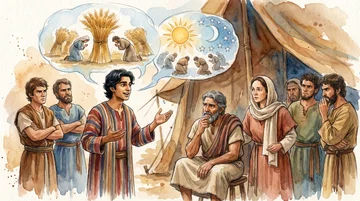
And his brethren said to him, Shalt thou indeed reign over us? or shalt thou indeed have dominion over us? And they hated him yet the more for his dreams, and for his words.
Translations
And his brothers said to him, Shall you indeed reign over us? or shall you indeed have dominion over us? And they hated him yet the more for his dreams, and for his words.
King James Version, KJV Cambridge Paragraph Bible, Revised Version, American Standard Version
And his brethren said to him, Shalt thou indeed reign over us? or shalt thou indeed have dominion over us? And they hated him yet the more for his dreams, and for his words.
And his brethren said to him, Shalt thou indeed reign over us? or shalt thou indeed have dominion over us? and they hated him yet the more for his dreams and for his words.
And his brethren say to him, 'Dost thou certainly reign over us? dost thou certainly rule over us?' and they add still more to hate him, for his dreams, and for his words.
And his brethren said to him, Wilt thou indeed be a king over us? wilt thou indeed rule over us? And they hated him yet the more for his dreams and for his words.
And his brethren said to him, Shalt thou, reign, over us, shalt thou, have dominion over us? So they went on yet more to hate him, because of his dreams and because of his words.
Berean Standard Bible, Majority Standard Bible
“ Do you intend to reign over us?” his brothers asked. “ Will you actually rule us?” So they hated him even more because of his dream and his statements.
His brothers asked him, “ Will you indeed reign over us? Will you indeed have dominion over us?” They hated him all the more for his dreams and for his words.
And his brothers said to him, Are you to be our king? will you have authority over us? And because of his dream and his words, their hate for him became greater than ever.
Then his brethren saide to him, What, shalt thou reigne ouer vs, and rule vs? or shalt thou haue altogether dominion ouer vs? And they hated him so much the more, for his dreames, and for his wordes.
Douay-Rheims (Challoner revision)
His brethren answered: Shalt thou be our king? or shall we be subject to thy dominion? Therefore this matter of his dreams and words ministered nourishment to their envy and hatred.
Pictures
Cross-references 20 of 22
- Genesis 42:6
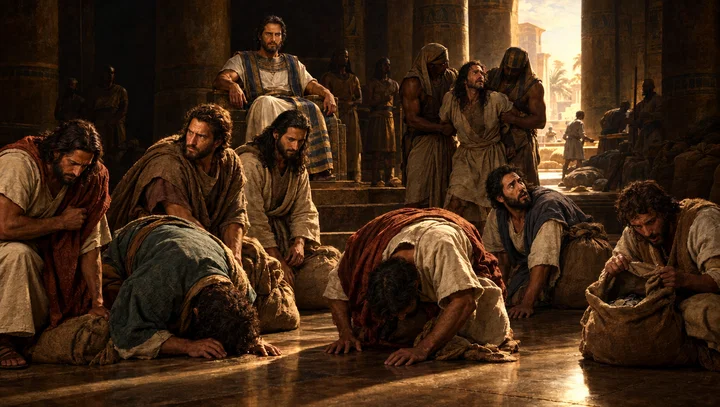
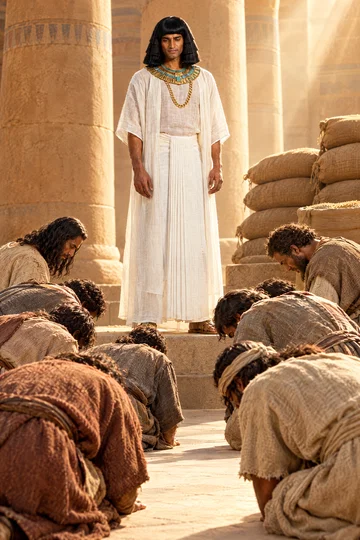
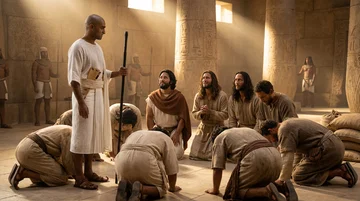
And Joseph was the governor over the land, and he it was that sold to all the people of the land: and Joseph’s brethren came, and bowed down themselves before him with their faces to the earth.
Joseph’s brothers bow before him, fulfilling the dreams they had opposed.
- Genesis 42:9
And Joseph remembered the dreams which he dreamed of them, and said unto them, Ye are spies; to see the nakedness of the land ye are come.
Joseph remembers the dreams when his brothers come before him.
- Genesis 45:3
And Joseph said unto his brethren, I am Joseph; doth my father yet live? And his brethren could not answer him; for they were troubled at his presence.
Joseph’s brothers are troubled and speechless before the ruler they once hated in his dreams.
- Genesis 50:18
And his brethren also went and fell down before his face; and they said, Behold, we be thy servants.
His brothers later bow before Joseph and offer themselves as his servants.
- Genesis 45:4
And Joseph said unto his brethren, Come near to me, I pray you. And they came near. And he said, I am Joseph your brother, whom ye sold into Egypt.
The brother hated for his dreams is revealed as ruler after being sold.
- Genesis 45:5
Now therefore be not grieved, nor angry with yourselves, that ye sold me hither: for God did send me before you to preserve life.
God sent Joseph ahead to preserve life despite his brothers’ hatred.
- Acts 7:9
And the patriarchs, moved with envy, sold Joseph into Egypt: but God was with him,
Envy drives Joseph’s brothers’ hostility and their selling him into Egypt.
- Genesis 37:18-20
And when they saw him afar off, even before he came near unto them, they conspired against him to slay him.
His brothers plot to kill Joseph and defeat the dreams that will come true.
- Genesis 43:26
And when Joseph came home, they brought him the present which was in their hand into the house, and bowed themselves to him to the earth.
His brothers bow before Joseph again, fulfilling his dream.
- 1 John 3:12
Not as Cain, who was of that wicked one, and slew his brother. And wherefore slew he him? Because his own works were evil, and his brother’s righteous.
Both describe hatred arising from the contrast between wickedness and righteousness.
- Numbers 12:6
And he said, Hear now my words: If there be a prophet among you, I the LORD will make myself known unto him in a vision, and will speak unto him in a dream.
Both describe God speaking through dreams.
- Genesis 37:4
And when his brethren saw that their father loved him more than all his brethren, they hated him, and could not speak peaceably unto him.
The brothers’ prior hatred increased after Joseph’s dreams.
- Genesis 41:40-43
Thou shalt be over my house, and according unto thy word shall all my people be ruled: only in the throne will I be greater than thou.
Joseph is later raised to rule in Egypt.
- Genesis 44:14
And Judah and his brethren came to Joseph’s house; for he was yet there: and they fell before him on the ground.
The brothers fall before Joseph, fulfilling his dreams of their obeisance.
- Genesis 43:28
And they answered, Thy servant our father is in good health, he is yet alive. And they bowed down their heads, and made obeisance.
The brothers bow before Joseph, fulfilling his dream.
- Genesis 45:8
So now it was not you that sent me hither, but God: and he hath made me a father to Pharaoh, and lord of all his house, and a ruler throughout all the land of Egypt.
Joseph credits God with raising him to authority in Egypt.
- Genesis 37:3
Now Israel loved Joseph more than all his children, because he was the son of his old age: and he made him a coat of many colours.
The reference supports the statement that Jacob loved Joseph more than his other children.
- Genesis 37:28
Then there passed by Midianites merchantmen; and they drew and lifted up Joseph out of the pit, and sold Joseph to the Ishmeelites for twenty pieces of silver: and they brought Joseph into Egypt.
Hatred for Joseph’s dreams led his brothers to sell him as a slave.
- Genesis 50:20
But as for you, ye thought evil against me; but God meant it unto good, to bring to pass, as it is this day, to save much people alive.
God turned the harm Joseph’s brothers intended toward good.
- Genesis 37:23
And it came to pass, when Joseph was come unto his brethren, that they stript Joseph out of his coat, his coat of many colours that was on him;
brothers stripped his coat
Commentary
Each commentary is drawn from primary sources: the writings of Ellen G. White and Adventist pioneers and periodicals. Each commentary is separate. Its own words are not a quotation; follow the references to read the source passages.
Ellen G. White
18 sources
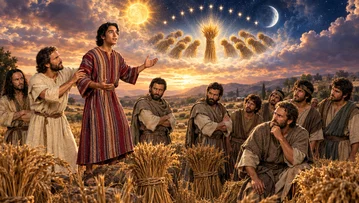
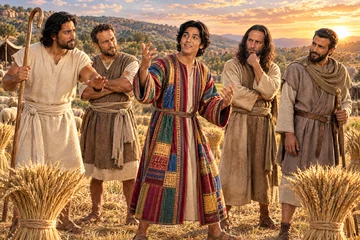
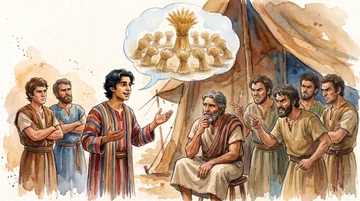
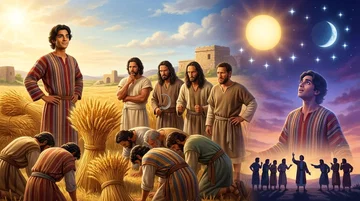
The verse is the brothers' answer to Joseph's first dream, in which his sheaf of grain arose and stood upright while their sheaves stood around and bowed to it.SG3 138.2–139.2ST Dec 18, 1879 They understood at once that the dream declared he would become greater than they and would reign over them and have dominion over them.1SP 127.1–3SG3 138.2–139.2ST Dec 18, 1879 The dreams were given by God to reveal the future, and Joseph related them innocently and openly, yet for his dreams and for his words about them his brothers hated him yet more with envy and jealousy growing toward murder.1SP 127.1–3SG3 138.2–139.2ST Dec 18, 1879SG3 143.1 To prevent the dreams from coming to pass they purposed to kill him and then sold him as a slave into Egypt, but the Lord overruled the very course they pursued to bring about what they designed should never take place, so that Joseph gained authority over them and became saviour to his father's family.1SP 130.3SG3 143.1SG3 174.2–176.1 The dream was fulfilled in Egypt when his brothers came to buy corn and bowed down before him as ruler, and their refusal to let him rule illustrates Christ, whose own rejected him as king yet God made Redeemer and ruler over the whole world.SG3 174.2–176.1PP 239.2–41SP 140.1–2SG3 165.1–3SG3 154.1
Dream and Brothers' Hatred
The reply to the brothers is the answer to Joseph's first dream, in which all were out binding sheaves of grain in the field and his own sheaf arose and stood upright while their sheaves stood round about and bowed down to it.SG3 138.2–139.2ST Dec 18, 1879 The dream was given by the Lord to instruct Joseph and to reveal the future, and he related it openly and innocently, standing before his brethren as a youthful prophet in virtuous innocence with countenance lighted with inspiration.1SP 127.1–3SG3 138.2–139.2ST Dec 18, 1879PP 209.4–210.3ST Dec 18, 1879 His brothers understood its significance at once, that it declared he would become greater than they and would indeed reign over them and have dominion over them.1SP 127.1–3SG3 138.2–139.2ST Dec 18, 1879SG3 174.2–176.1PP 209.4–210.3
For his dreams and for his words about them they hated him yet more, and envy and resentment and jealousy and hostility burned deeper in their hearts than before and grew into settled hatred on a course that led toward murder.1SP 127.1–3SG3 138.2–139.2SG3 143.1PP 209.4–210.3SG3 138.1 Their hatred deepened because he was innocent and righteous and beloved of his father while they were wicked and a grief to their father, and though they could admire his purity and goodness they would not leave their wicked course to become virtuous and noble like him, so that the spirit that moved Cain to hate his brother was fastening upon them.ST Dec 18, 1879 It was intensified by Jacob's openly favored treatment of Joseph, including the special coat, which they treated as grounds for revenge, and Jacob did not suspect what hatred and malicious feeling the telling aroused against his beloved child.ST Dec 18, 1879ST Dec 18, 1879 Soon the Lord gave Joseph another dream of the same import but more strikingly significant, for God had chosen Joseph while he was young for special work on behalf of His people.ST Dec 18, 1879Ms 38, 1895, par. 38–40
Fulfillment and Wider Meaning
The brothers despised the dreams that he would reign over them and have dominion over them, and they labored to prevent their fulfillment.SG3 174.2–176.1SG3 165.1–31SP 149.2–150.1ST Mar 31, 1887 To keep him from becoming greater than themselves they first purposed to kill him and then were content to sell him as a slave into Egypt, thinking they had put him where his dreams would no longer trouble them and could never come to pass.SG3 174.2–176.1SG3 165.1–31SP 149.2–150.1ST Mar 31, 1887 The Lord controlled events and overruled the very course they pursued to bring about what they designed should never take place.1SP 130.3SG3 143.1SG3 174.2–176.1 By being sold Joseph gained authority over them and became saviour to his father's family, yet their guilt was not lessened.SG3 174.2–176.1PP 239.2–4
The dream was true, and it was fulfilled in Egypt when Joseph became ruler and his ten brothers came to buy corn.1SP 140.1–2SG3 154.11SP 149.2–150.1 They repeatedly bowed down before him with their faces to the earth, exactly as foretold, and Joseph remembered the dreams which he had dreamed of them.1SP 140.1–2SG3 165.1–3SG3 154.11SP 149.2–150.1ST Mar 31, 1887 By selling him they had acted their part in fulfilling these very dreams they hated.SG3 165.1–31SP 149.2–150.1ST Jan 29, 1880ST Mar 31, 1887 When the ruler of Egypt proved to be Joseph and he revealed himself, all their evil treatment and contempt for his dreams painfully returned to mind.SG3 165.1–31SP 149.2–150.1ST Mar 31, 1887 They stood before the brother they had hated as their ruler astonished, troubled, condemned, amazed, and unable to answer.SG3 165.1–31SP 149.2–150.1ST Mar 31, 1887
The brothers' refusal to let Joseph rule illustrates Christ, whose own rejected him.SG3 174.2–176.1PP 239.2–4 The chief priests and elders were jealous lest He draw the people from them and become higher in authority as king of the Jews, and they refused Him as king and cried for His crucifixion to prevent it.SG3 174.2–176.1PP 239.2–4 God controlled the murder of the Son of God for His own glory and the good of man, to make Him Redeemer of mankind and ruler over the whole world.SG3 174.2–176.1PP 239.2–4
Sources
Pioneers and periodicals
42 sources
The brothers rightly understood the dream to mean that Joseph would reign over them in honor and authority and that they would bow down before him.ST Feb 3, 1914ST Mar 26, 1894ST Jan 3, 1911 Their question whether he would indeed reign and have dominion was a scornful and resentful defiance of what had been shown.ST Mar 26, 1894ST Oct 2, 1901ST Mar 26, 1894 It sprang from envy and jealousy at their father's favoritism toward him, and telling the dream made their existing hatred burn yet deeper.ST Dec 18, 1879ST Feb 3, 1914ST Mar 26, 1894ST Oct 2, 1901ST Jun 11, 1894 The dream was a prophecy from God that was fulfilled about twenty years later when famine brought them to Egypt to bow before Joseph as ruler without at first knowing him.ST Jan 3, 1911ST Jun 11, 1894RH Apr 23, 1867ST Feb 22, 1899ST Mar 26, 1894 Their attempt to defeat it by selling him into bondage failed, for God overruled their wrath and jealousy and made their cruel deed itself the means of bringing Joseph to the place prepared for him to preserve life.ST Jan 16, 1912ST Jan 16, 1912RH Mar 2, 1916RH Jan 19, 1860ST Oct 23, 1901
Dream and Brothers' Response
The brothers at once grasped the meaning of the sheaf dream, that Joseph would reign over them and have dominion over them, rising to pre-eminence with honor and authority while they would come and bow before him.ST Feb 3, 1914ST Mar 26, 1894ST Jan 3, 1911ST Oct 27, 1898ST Oct 27, 1898 Their reading of the bowing sheaves as a prediction of his future rule and authority over them was immediate and shared.ST Feb 3, 1914ST Mar 26, 1894ST Jan 3, 1911ST Oct 27, 1898ST Oct 27, 1898 The dream foretold his pre-eminence, and their envy and selfish jealousy made them resent both the dream and his words about it.ST Feb 3, 1914ST Mar 26, 1894ST Jan 3, 1911ST Oct 27, 1898ST Oct 2, 1901
Their answering question, whether he would indeed reign and have dominion, was a scornful challenge and an expression of resentment and resistance to that prospect.ST Mar 17, 1887ST Mar 26, 1894ST Oct 2, 1901ST Mar 26, 1894RH Jan 27, 1916 They treated the dreams as predictions of his exaltation and as a threat to their own authority and position of honor over him.ST Mar 17, 1887ST Mar 26, 1894ST Oct 2, 1901RH Jan 27, 1916ST Sep 28, 1904 What they heard angered them because they understood it to mean he would hold honor and authority over them.ST Mar 17, 1887ST Oct 2, 1901ST Mar 26, 1894RH Jan 27, 1916ST Sep 28, 1904
The dream and Joseph's words and his telling of it made a hatred that already existed burn deeper and grow yet more against him.ST Feb 3, 1914ST Mar 26, 1894ST Jan 3, 1911ST Oct 27, 1898ST Oct 27, 1898 They hated him more, and yet more, for his dreams and for his words, with the telling itself stirring deeper burning in their hearts than before.ST Dec 18, 1879ST Feb 3, 1914ST Mar 26, 1894ST Jan 3, 1911ST Apr 20, 1888
In that first dream, which the Lord gave him, all were binding sheaves of grain, and Joseph's sheaf arose and stood upright while their sheaves stood round about and bowed to it.ST Mar 17, 1887ST Dec 18, 1879RH Apr 21, 1851 Soon the Lord gave another dream of the same import but more strikingly significant.ST Dec 18, 1879RH Apr 21, 1851 The dreams were given by God, who taught Joseph through angels and the Holy Spirit, and Joseph related them openly and innocently, in childish innocence and unawareness of the hatred and malicious feeling the telling aroused.ST Mar 17, 1887ST Dec 18, 1879RH Apr 21, 1851ST Sep 28, 1904
Roots of Growing Hatred
Hatred was already burning before the dream was told, because Jacob loved Joseph more than the rest of his sons and showed it openly.ST Dec 18, 1879ST Apr 20, 1888ST Mar 26, 1894 That open favoritism included the special coat, which was treated as ground for revenge, and with it came the feeling that Joseph was superior to them.ST Dec 18, 1879ST Mar 26, 1894 Envy arose in part from suspicion that Jacob meant to give Joseph the birthright, along with that visible preference for him.ST Oct 2, 1901 The dreams that he would reign and have dominion and hold pre-eminence over them then made the brothers hate him yet more for his dreams and for his words.ST Apr 20, 1888ST Oct 2, 1901
Envy and selfish jealousy made them resent the foretold pre-eminence and subjection to him, so that both the dream and his telling of it increased their hatred.ST Oct 2, 1901ST Jun 11, 1894ST Mar 26, 1894 The boy was envied and hated for dreams that he would reign over them, and that envy led on to his being sold into Egypt.RH Nov 19, 1908 Jealousy among the older brothers thus led to hatred and a sad experience, moving from jealousy to hatred.ST Aug 1, 1916 The episode teaches the wickedness of envy and shows its fruit.ST Jun 11, 1894
That jealousy and envy among Jacob's sons was the sad fruit of Jacob's mistake in having more than one wife, which produced partiality, jealousy, envy, and low standards of morality and crime.ST The hatred grew deeper because Joseph stood before them in virtuous innocence as a youthful prophet, his countenance lighted with inspiration.ST Dec 18, 1879 He was innocent and righteous and beloved of his father while they were wicked and a grief to their father.ST Dec 18, 1879 Though they could admire his purity and goodness, they would not leave their wicked course to become virtuous and noble like him, and the spirit that moved Cain to hate his brother was fastening upon them.ST Dec 18, 1879
Hatred was the second downward step after envy, stirred yet more by his dreams and by his words.ST Oct 27, 1898 It led on toward their scheme of murder and deceit and toward a fearful expectation of wrath to be visited upon them.ST Oct 27, 1898 That hatred bore bitter fruit in persecution, and the long days and weeks and months and years of sorrow and mourning brought upon their father were but part of its fruits. Envy ripened into selling him into bondage as a slave in Egypt and casting him into prison, with lying to conceal guilt.ST Mar 26, 1894 They despised his dreams, were willing to murder him, and finally sold him as a slave while laboring to prevent fulfillment of the dreams.ST Mar 31, 1887
Prophecy Given and Fulfilled
The sheaf dream was prophetic and certain because God is the interpreter of dreams.ST Feb 22, 1899 The brothers themselves understood it as prophecy from God, given to reveal beforehand what would happen so that when it came to pass they would know that God lived and reigned.ST Feb 22, 1899ST Mar 26, 1894
Its fulfillment was delayed, and at first the opposite happened.ST Feb 22, 1899 Instead of being exalted in the midst of his brethren to a superior position, Joseph was greatly humbled, reduced to the condition of a culprit, degraded, sold, imprisoned, and exiled among strangers and enemies.ST Feb 22, 1899RH Jan 27, 1916ST Aug 15, 1916 He had understood the dreams as pointing to his future exaltation and had begun to imagine how he might bring it about, but his own plans for it collapsed when he was sold and later imprisoned.RH Jan 27, 1916 Reaching the promised leadership required severe trials, including being sold as a slave and unjustly imprisoned, through which by keeping integrity and faith his character was fitted for rule.ST Aug 15, 1916
The dreams were fulfilled in Egypt when famine brought the brothers before Joseph as ruler and they bowed before him in humble supplication.ST Jan 3, 1911ST Jun 11, 1894RH Mar 2, 1916ST Oct 23, 1901 About twenty years later they came without knowing who he was, and later willingly knowing he was Joseph, falling before him and acknowledging themselves his servants in repeated obeisance, four times, which Joseph remembered as the foretold scene come to pass.ST Jan 3, 1911RH Mar 2, 1916ST Oct 23, 1901 That bowing fulfilled what God had taught Joseph through angels and the Holy Spirit in Genesis 37:5-9, proving that God sometimes teaches His servants in dreams.RH Apr 23, 1867RH Apr 21, 1851
Their efforts to defeat what was foretold did not succeed.ST Mar 17, 1887ST Jan 29, 1880ST Mar 31, 1887 By considering his death and then selling him into slavery they labored to prevent the fulfillment, despising his dreams and willing even to murder him.ST Jan 29, 1880ST Mar 31, 1887ST Oct 23, 1901 God directed events so that their cruel actions became part of the very means of fulfillment, and by selling him they acted their part in fulfilling the dreams they hated.ST Mar 17, 1887ST Jan 29, 1880ST Mar 31, 1887RH Mar 2, 1916 Jacob, though he had first regarded the dreams as prophetic, later thought them fruitless because he believed Joseph was dead.ST Oct 23, 1901
Confidence in such a dream should remain by looking at the invisible and knowing it will sometime be fulfilled even when outward and present appearances seem forbidding.ST Feb 22, 1899 When fulfilled, it humiliated the brothers and exposed the wickedness of their hearts.ST Oct 23, 1901 Joseph's authority over Egypt put him in position to provide their food and preserve lives, including the lives of his brothers.ST Oct 23, 1901ST Aug 15, 1916
God's Overruling Providence
The life surrounding the brothers' scornful question shows God overruling human wrath, ambition, and jealousy to accomplish His own purpose and turn them to His praise, working out His providence for the true and faithful.ST Jan 16, 1912ST Jan 16, 1912 Whatever God has intended a person for, He can be safely trusted to bring him to it, for though He may lead him round He will guide him right.RH Jan 19, 1860 The hatred for the dreams of reigning and having dominion is part of that human wrath and jealousy which is overruled, while the contrast between early life and later character shows principles of righteousness becoming a living reality.ST Jan 16, 1912ST Jan 16, 1912
The Lord was preparing Joseph to become a preserver of the holy Seed, and the family history to which the question belongs is to be kept in mind in connection with the Promised Seed and the channels through which that Seed should come.STST Jan 21, 1913 The boy envied and hated for dreaming he would reign was sold into Egypt, where from a prisoner he became a ruler and preserved the lives of God's people, showing a child used by God.RH Nov 19, 1908 That early vision of future leadership meant he was through his position to preserve his brothers' lives.ST Aug 15, 1916
Reaching that place required severe trials, including being sold as a slave and unjustly imprisoned, and by keeping integrity and faith in God through the test he became ruler of Egypt.ST Aug 15, 1916 Beginning as a flattered and petted boy, he matured until principles of righteousness were transmuted into living character, and so stands as an example for young men.ST Jan 16, 1912ST Jan 16, 1912
His youth, guided and saved by God, proves that the God of Israel befriends children and youth, that those who seek Him early find Him, and that angels guard them in time of trouble.RH Nov 24, 1874 Therefore every child and youth should want Him for a friend and put trust in Him.RH Nov 24, 1874
Witness and Warning for Life
The brothers' scornful question whether he would indeed rule and have dominion over them shows they understood the dream of the sheaves to foretell his pre-eminence and their subjection to a position of honor and authority over them.ST Oct 2, 1901ST Jun 11, 1894ST Sep 28, 1904 Their envy and selfish jealousy made them resent both the dream and his words, so hatred already felt because their father loved him and they felt him superior grew yet more for his dreams and for his words.ST Oct 2, 1901ST Jun 11, 1894ST Mar 26, 1894 Joseph related the dream innocently and openly in childish unawareness, yet their anger illustrates hostility toward the spirit of prophecy.ST Oct 2, 1901ST Sep 28, 1904 That hatred was envy and shows the wickedness and fruit of envy, warning against petty jealousies in the home, leading onward to selling him into bondage as a slave in Egypt, casting him into prison, and lying to conceal guilt.ST Mar 26, 1894ST Sep 28, 1904 The dreams were understood as prophecies from God meant to reveal what would happen so that when it came to pass it would be known that God lives and reigns, and the episode foreshadows their later bowing before him in humble supplication.ST Jun 11, 1894ST Mar 26, 1894
The hatred is an instance of the wicked persecuting the righteous, of him born after the flesh persecuting him born after the Spirit, because his works were righteous and their own were evil.RH Jun 8, 1916 Joseph feared God while his brothers were wayward and envious, first hating him for his dreams and his words and then persecuting him.RH Jun 8, 1916 That hatred bore bitter fruit in persecution, and the long days and weeks and months and years of sorrow and mourning brought upon their father were but part of its fruits.
The accounts of Joseph to which the verse belongs stand in a historically reliable record corroborated by Egyptian inscriptions, whose whole color agrees with Egypt at the time of the oppression.ST Jul 30, 1885ST Nov 20, 1884 Kings do not report their disasters and Egyptian monuments contain no record of Bible miracles, for Egyptians left much to illustrate habits and customs and only clues to history, yet their pictures and accounts and stories and religious books are full of helps and illustrations bearing on the Bible accounts of the land and people of the Nile.ST Nov 20, 1884 Egyptian pictures show slaves with Hebrew features working at brick-making as the Hebrews worked, and recent exploration in the region where the Hebrews lived discovered Pithom, one of the two store cities the children of Israel built, bearing the name Pithom on an inscription, with great windowless doorless brick storehouses for preserving grain for use in war or famine.ST Nov 20, 1884 Joseph's later rule serves as a picture of an unpopular teaching that will eventually prevail.ST Jan 20, 1881 Although belief in dreams is prominent in the narrative, it is not to be presented as a pattern for ordinary life, lest children learn superstition.RH Oct 9, 1900
Sources