John 13:12
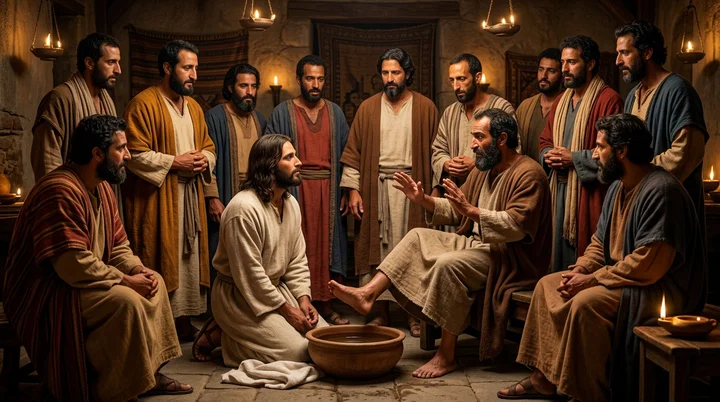
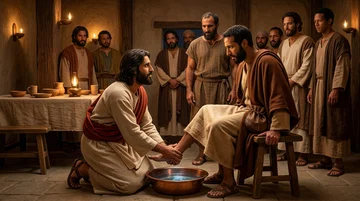
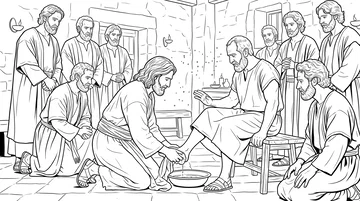
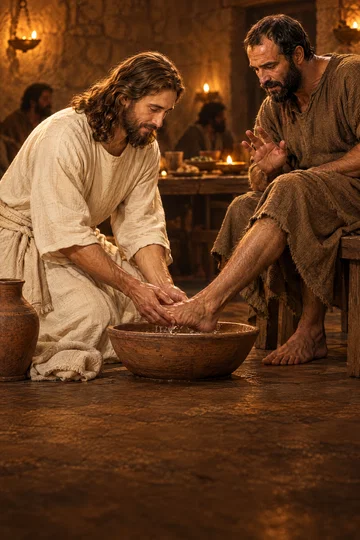
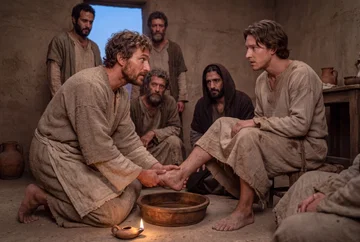
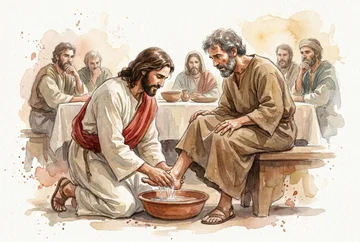
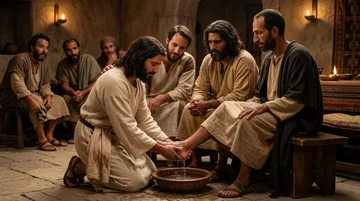
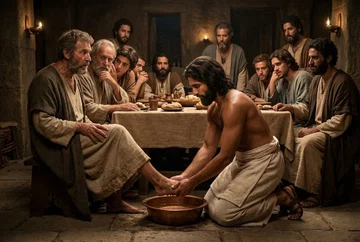
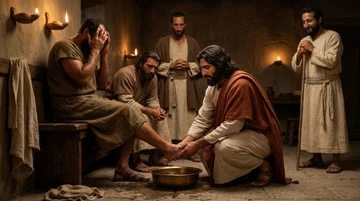
So after he had washed their feet, and had taken his garments, and was set down again, he said unto them, Know ye what I have done to you?
Translations
So after he had washed their feet, and had taken his garments, and was set down again, he said to them, Know you what I have done to you?
King James Version, KJV Cambridge Paragraph Bible
So after he had washed their feet, and had taken his garments, and was set down again, he said unto them, Know ye what I have done to you?
So after he had washed their feet, and had taken his garments, and was set down again, he said to them, Know ye what I have done to you?
Revised Version, American Standard Version
So when he had washed their feet, and taken his garments, and sat down again, he said unto them, Know ye what I have done to you?
When, therefore, he washed their feet, and took his garments, having reclined (at meat) again, he said to them, 'Do ye know what I have done to you?
When therefore he had washed their feet, and taken his garments, having sat down again, he said to them, Do ye know what I have done to you?
When, therefore, he had washed their feet, and taken his garments, and reclined, again said he unto them—Are ye taking note, what I have done unto you?
Berean Standard Bible, Majority Standard Bible
When Jesus had washed their feet and put on His outer garments, He reclined with them again and asked, “ Do you know what I have done for you?
So when he had washed their feet, put his outer garment back on, and sat down again, he said to them, “ Do you know what I have done to you?
Then, after washing their feet and putting on his robe again, he took his seat and said to them, Do you see what I have done to you?
So after he had washed their feete, and had taken his garments, and was set downe againe, he sayd vnto them, Knowe ye what I haue done to you?
Douay-Rheims (Challoner revision)
Then after he had washed their feet, and taken his garments, being set down again, he said to them: Know you what I have done to you?
Pictures
Cross-references 20 of 28
- John 13:17
If ye know these things, happy are ye if ye do them.
Doing what Jesus taught brings happiness and blessing.
- Luke 22:24-27
And there was also a strife among them, which of them should be accounted the greatest.
Jesus answers the disciples’ dispute over greatness by teaching and modeling humble service.
- 1 Timothy 5:10
Well reported of for good works; if she have brought up children, if she have lodged strangers, if she have washed the saints’ feet, if she have relieved the afflicted, if she have diligently followed every good work.
Both texts describe washing feet as an act of service.
- Philippians 2:7-8
But made himself of no reputation, and took upon him the form of a servant, and was made in the likeness of men:
Christ’s servant-like foot washing displays his self-humbling.
- Genesis 18:4
Let a little water, I pray you, be fetched, and wash your feet, and rest yourselves under the tree:
Abraham provides water for his guests to wash their feet.
- John 13:7
Jesus answered and said unto him, What I do thou knowest not now; but thou shalt know hereafter.
Jesus says the disciples will understand his act later.
- John 13:4-5
He riseth from supper, and laid aside his garments; and took a towel, and girded himself.
Jesus rises from supper and washes the disciples’ feet.
- John 13:16
Verily, verily, I say unto you, The servant is not greater than his lord; neither he that is sent greater than he that sent him.
Jesus teaches that a servant is not greater than his master.
- Philippians 2:3
Let nothing be done through strife or vainglory; but in lowliness of mind let each esteem other better than themselves.
Esteeming others above oneself expresses the lesson of the foot washing.
- John 13:8
Peter saith unto him, Thou shalt never wash my feet. Jesus answered him, If I wash thee not, thou hast no part with me.
Jesus says Peter must be washed to have a part with him.
- Matthew 20:26-28
But it shall not be so among you: but whosoever will be great among you, let him be your minister;
Jesus teaches that greatness means serving others, as his own service demonstrates.
- Luke 7:44
And he turned to the woman, and said unto Simon, Seest thou this woman? I entered into thine house, thou gavest me no water for my feet: but she hath washed my feet with tears, and wiped them with the hairs of her head.
Jesus contrasts Simon’s failure to provide water with the woman washing his feet.
- Genesis 43:24
And the man brought the men into Joseph’s house, and gave them water, and they washed their feet; and he gave their asses provender.
Joseph’s brothers are given water to wash their feet as a customary guest courtesy.
- Galatians 5:13
For, brethren, ye have been called unto liberty; only use not liberty for an occasion to the flesh, but by love serve one another.
Both teach believers to serve one another in love.
- Luke 22:27
For whether is greater, he that sitteth at meat, or he that serveth? is not he that sitteth at meat? but I am among you as he that serveth.
Jesus’ serving example is illustrated by his washing the disciples’ feet.
- Mark 10:45
For even the Son of man came not to be ministered unto, but to minister, and to give his life a ransom for many.
Jesus came not to be served, but to serve.
- John 13:2
And supper being ended, the devil having now put into the heart of Judas Iscariot, Simon’s son, to betray him;
Places the foot washing during supper.
- 1 Peter 2:21
For even hereunto were ye called: because Christ also suffered for us, leaving us an example, that ye should follow his steps:
Christ’s example is to be followed.
- Genesis 19:2
And he said, Behold now, my lords, turn in, I pray you, into your servant’s house, and tarry all night, and wash your feet, and ye shall rise up early, and go on your ways. And they said, Nay; but we will abide in the street all night.
Lot offers his guests water to wash their feet as an act of hospitality.
- 1 Samuel 25:41
And she arose, and bowed herself on her face to the earth, and said, Behold, let thine handmaid be a servant to wash the feet of the servants of my lord.
Abigail offers to serve David’s servants by washing their feet.
Commentary
Each commentary is drawn from primary sources: the writings of Ellen G. White and Adventist pioneers and periodicals. Each commentary is separate. Its own words are not a quotation; follow the references to read the source passages.
Ellen G. White
45 sources
After He had washed their feet He resumed His place at the table and asked them if they understood what He had done to them, calling them to grasp its meaning.1SP 201.2–202.1Ms 54, 1897, par. 20–21Ms 19, 1897, par. 10 Though He was truly their Lord and Master He had girded Himself and performed a servant's office, and His supreme dignity gave grace and significance to that lowliest service.3SP 84.2–45RED 5.2–3Ms 54, 1897, par. 20–21 By serving them at the very time they were contending for the highest place He rebuked their pride and selfishness and taught that true greatness is becoming a servant who counts others better than himself.Ms 102, 1904, par. 4–75RED 5.2–3Ms 115, 1902, par. 1–4 He thereby gave an example binding on all who believe in Him, that because their Lord served them they ought to serve one another with humble, loving service.1SP 201.2–202.1Ms 102, 1904, par. 4–73SP 84.2–4 He thus established foot washing as a sacred ordinance to be literally followed and kept understandingly together with the Lord's supper as preparation for it, leading to self-examination, mutual confession, forgiveness and unity before partaking of the emblems of His death.1SP 201.2–202.1Ms 19, 1897, par. 10SG3 225.2DA 650.2–3EW 95.2–96.1
Words and Historical Setting
After He had washed their feet He took His garments again and sat down again at the table and asked them whether they understood what He had done to them, calling them to grasp its meaning.1SP 201.2–202.1Ms 54, 1897, par. 20–21Ms 19, 1897, par. 10Ms 14, 1895, par. 1–2Ms 115, 1902, par. 1–4 Having put His garments back on and returned to His place, He directed them to consider the act and its lesson of humble service.Ms 54, 1897, par. 20–21Ms 19, 1897, par. 10Ms 14, 1895, par. 1–2Ms 115, 1902, par. 1–421MR 346.1–3 His question belongs to His final week with the disciples, the last evening before His death spent instructing them in the upper chamber.Lt 336, 1906, par. 5–9GW92 245.3–246.26MR 24.2–3Ms 113a, 1897, par. 15 It was the last Passover held with their Master, when He was near the end of His earthly ministry and about to return to the Father, preparing them for His coming suffering and their separation from Him, for His betrayal and rejection.Lt 336, 1906, par. 5–9GW92 245.3–246.26MR 24.2–3Ms 113a, 1897, par. 15
At that supper sorrow filled His heart as He saw them yielding to strife and disputing who should be greatest, coming with hearts filled with selfishness and tempers heated by contention, with whisperings and flushed faces, while Satan made a determined effort to arouse contention among them in the last hours they would have with their Master when very soon He was to offer Himself as a sacrifice for the world.Lt 336, 1906, par. 5–9GW92 245.3–246.26MR 24.2–3 Eating that Passover with His disciples, He put an end to the sacrifices offered for four thousand years and to the national festival observed by the Jewish people.Ms 43, 1897, par. 24Ms 19, 1897, par. 18–19 For type was meeting antitype in Himself as the authority and foundation of all Jewish ordinances and the only efficacious offering for sin, so the disciples were discharged from ancient Jewish rites and ceremonies that no longer possessed virtue, to continue which would be an insult to Jehovah.Ms 43, 1897, par. 24Ms 19, 1897, par. 18–19 In their place He instituted the memorial service of foot washing and the sacramental supper to be observed by His followers through all time and in every country.Ms 43, 1897, par. 24Ms 19, 1897, par. 18–19
He included Judas in the washing even though Judas had already pledged to betray Him.DA 720.2DA 655.4Ms 120, 1897, par. 9 By revealing the traitor's purpose He showed His divinity, and the washing was a final appeal of love that Judas did not heed.DA 720.2DA 655.4Ms 120, 1897, par. 9 The feet He had washed then went out to carry out the betrayal, after which Satan took control of his heart and mind.DA 720.2Ms 120, 1897, par. 9 Though He knew Judas would betray Him and the disciples were erring and faulty, He washed their feet, and this example brought all but one of the twelve to repentance.DA 720.2DA 655.4Ms 120, 1897, par. 9
Lesson of Humility and Service
Though He was truly their Lord and Master, infinitely superior, the pure spotless Lamb of God and sin-offering, He girded Himself and performed a servant's office.3SP 84.2–45RED 5.2–3Ms 54, 1897, par. 20–21GW92 245.3–246.2DA 649.2 His humble service did not lessen His dignity, but His supreme status gave grace and significance to it.Ms 54, 1897, par. 20–21 He stooped to the lowliest service and made Himself one with every person whatever their station so He could share His gifts with His followers.Ms 54, 1897, par. 20–21DA 649.2DA 650.4–651.1
By taking the humblest form of service at the very time they were contending for the highest place in the promised kingdom, He rebuked their pride, selfishness and contention.Ms 102, 1904, par. 4–75RED 5.2–3Ms 115, 1902, par. 1–46MR 24.2–3 His action opened their eyes to themselves in a new light, exposing their selfishness.Ms 115, 1902, par. 1–46MR 24.2–3 They were filled with astonishment, shame, bitter humiliation and sorrow that they would remember as long as life lasted.Ms 115, 1902, par. 1–4RH Nov 4, 19026MR 24.2–3
His example teaches that because their Lord served them they ought to serve one another with humility and love.Ms 102, 1904, par. 4–73SP 84.2–45RED 5.2–3Ms 35, 1897, par. 9–10Ms 115, 1902, par. 1–4 They are to count others better than themselves rather than compete for honor and place in the kingdom.3SP 84.2–45RED 5.2–3 True greatness is becoming a servant, for one who serves humbles himself and is placed where he can be safely honored because he has the Spirit of Christ.RH Nov 4, 1902 True humility consists in loving service that kindles love and enables them to understand what He wished to teach.1SP 201.2–202.1RH Nov 4, 1902
He gave an example binding on all who believe in Him to follow.1SP 201.2–202.1SG3 225.2 It is especially needful for gospel ministers.GW92 245.3–246.2 It teaches them to walk humbly before God, remember what God had done for them through His Son, and serve one another as He had served them.Ms 102, 1904, par. 4–7 It keeps them mindful not to regard themselves as superior to even the lowliest believer.1SP 201.2–202.1Ms 102, 1904, par. 4–74T 225.3–4
Footwashing as Sacred Ordinance
After He had washed their feet He sat down again and asked whether they understood what He had done, affirming that He is Master and Lord and charging them to wash one another's feet by doing as He had done.Ms 19, 1897, par. 10SG3 225.2Ms 6, 1859, par. 34 The act institutes footwashing as an ordinance, His last established ordinance in connection with the last supper, a plain duty and example binding on all who believe and to be literally followed and copied as exactly as possible.SG3 225.2EW 95.2–96.1Ms 19, 1897, par. 18–197MR 218.1 Its real object is to teach humility, and those who know these things are happy if they do them, for the servant is not greater than his Lord.Ms 19, 1897, par. 10SG3 225.2 It was given in connection with the supper as a season of self-examination in which followers learn the true feelings of their hearts toward God and one another, exposing pride, selfishness and hatred through this humble duty.SG3 225.2 It was designed to lead to mutual confession and to increase forbearance, forgiveness of one another's errors and true love, preparing them to commemorate His sufferings and death.SG3 225.2
It tests humility and faithfulness and keeps fresh in remembrance that redemption purchased by His dying love is on conditions of humility and continual obedience, flowing from His love and commanding them to love one another as He loved them.SG3 225.2 In Him type met antitype as the authority and foundation of all Jewish ordinances and the only efficacious offering for sin, so disciples were discharged from ancient Jewish rites which no longer possessed virtue and to continue them would insult Jehovah, while footwashing was made a special season in which He Himself is always present.Ms 19, 1897, par. 18–19 It keeps God's people humble and separate from the world and keeps them from backsliding like the nominal churches.EW 95.2–96.1 It is to be practiced more frequently together with the Lord's supper, with humble confession made first, and keeping it brings gladness and does a good work.EW 95.2–96.1Lt 73, 1888, par. 8
It was not merely an act of hospitality like the customary washing of guests' dusty feet but a consecrated religious service to recover man from sin, and washing one another's feet puts believers in Christ's place.Ms 19, 1897, par. 64–65DA 650.2–3Ms 8, 1897, par. 10 It is not to be kept in a mechanical way as a mere form or made a tedious ceremony, but understandingly, speaking not largely to intellectual capacity but to the heart and to the moral and spiritual nature.Ms 19, 1897, par. 10EW 95.2–96.1Ms 19, 1897, par. 18–19 He is present on the occasion as witness with watching angels and the surrounding atmosphere of heaven to impress hearts, while as a special season He leads participants to feel the pulse of conscience, awakens them to the lessons symbolized, revives memory, convicts of sin and receives penitential offerings.Ms 19, 1897, par. 64–65Ms 19, 1897, par. 18–19 His whole life as the light from above and the way below guides into all truth every soul who comes to Him, unfolding His love and revealing the character of God whose Father is their Father, and doing exactly what He charged brings them into close relationship with the Lord.Ms 19, 1897, par. 64–65 It serves as a test of loyalty and was to precede partaking of the emblems of His death, and He appointed it as preparation for the communion service because pride, disagreement and striving for supremacy keep the heart from fellowship with Him and readiness to receive the communion.DA 650.2–3Ms 8, 1897, par. 10
It is to be kept together with the sacrament of the Lord's supper, with the bread and the cup, for after washing their feet He gave broken bread to represent His broken body and juice of the vine to represent His spilled blood.Ms 14, 1850, par. 4–612MR 247.1–2Lt 79, 1874, par. 7Lt 73, 1888, par. 8 It is celebrated after baptism and just before the supper, with the largest possible number of believers taking part, including youth and new converts, as a solemn and impressive service belonging to revival and settling into the work.Lt 79, 1874, par. 7 Leaders set the example first, men for the men and women for the sisters, and then all take part heartily.7MR 218.1 The ordinance is interesting, solemn and profitable, producing humbling before God with weeping and rejoicing long remembered, and the breaking of bread connected with it calls for interesting and appropriate speaking that moves the congregation.7MR 218.1
It is to be kept among believers only, apart from unbelievers, for He took them aside from unbelievers for this sacred service, and shepherds are to move understandingly in this because doing it among unbelievers brings reproach on God's cause.Ms 14, 1850, par. 4–612MR 247.1–2 Even when kept separate a Judas may be present who eats and drinks to his own damnation, but God will quickly make him manifest and purge him out.Ms 14, 1850, par. 4–6 It is to be practiced with separation of the sexes, men washing the feet of men and women washing the feet of women, and when a woman's feet are washed it is to be by a sister, for men and women washing each other's feet together is not right and a man has no business washing a woman's feet.7MR 218.15MR 192.1–3 Gospel order gives no example for brethren to wash sisters' feet but gives example for sisters to wash the feet of brethren.EW 95.2–96.1 Where people are not informed about His example and teaching on this point or are prejudiced against it through former teachers, it is to be introduced with carefulness and wisdom, waiting for a proper time and manner.EW 95.2–96.1
Preparation for the Supper
Christ appointed footwashing as preparation for the communion service before partaking of the emblems of His death.1SP 201.2–202.1SG3 225.2DA 650.2–3Ms 8, 1897, par. 10 It was not merely the customary washing of guests' dusty feet but a religious service and consecrated ordinance.DA 650.2–3Ms 8, 1897, par. 10 Pride, disagreement and striving for supremacy keep the heart from fellowship with Him and from readiness to receive the communion, so the humble duty exposes what bars that fellowship.1SP 201.2–202.1SG3 225.2DA 650.2–3 It serves as a test of loyalty and of humility and faithfulness.SG3 225.2Ms 8, 1897, par. 10
The season is one of self-examination in which followers learn the true feelings of their hearts toward God and one another.1SP 201.2–202.1SG3 225.2 Pride, selfishness and hatred are exposed, memory is revived, the pulse of conscience is felt, sin is convicted and penitential offerings are received.1SP 201.2–202.1SG3 225.2Ms 19, 1897, par. 18–19 The appeal speaks not largely to intellectual capacity but to the heart and to the moral and spiritual nature.Ms 19, 1897, par. 18–19 Observing it softens the heart, drives out selfishness, and fosters the Holy Spirit with love, grace and peace.1SP 201.2–202.1Ms 14, 1895, par. 1–2SG3 225.2
It is designed to lead to mutual confession, with humble confession made first.1SP 201.2–202.1SG3 225.2Lt 73, 1888, par. 8 It increases patience, forbearance, forgiveness of one another's errors and true love.1SP 201.2–202.1SG3 225.2 As an ordinance before the Lord's Supper it clears away misunderstandings and brings man out of selfishness and down from self-exaltation to the humility of spirit that washes his brother's feet.SG3 225.2Ms 35, 1897, par. 11–12 It brings them together in unity and makes their hearts one with Him, and keeping it brings gladness and does a good work.Ms 75, 1898, par. 30–32Lt 73, 1888, par. 8
The service is not to be deferred because someone is considered unworthy, and is not to be withheld from those who profess to be Christians.Ms 35, 1897, par. 11–1220MR 149.2–4 Christ washed the feet of Judas and gave him place at the table knowing he would leave to betray Him.Ms 35, 1897, par. 11–1220MR 149.2–4 Human beings cannot read the secrets of the soul or reliably distinguish the sincere from the insincere, cannot tell who is worthy and who is not, and must not refuse to attend because of who else is present or decide who may present themselves.Ms 35, 1897, par. 11–1220MR 149.2–4 Even when kept separate among believers, one like Judas may eat and drink to his own damnation, but God will make him manifest and purge him out.Ms 35, 1897, par. 11–12Ms 14, 1850, par. 4–6 Unseen heavenly witnesses are present at the washing, while evil messengers attend those who refuse the Spirit's work.Ms 14, 1850, par. 4–620MR 149.2–4
Unity Witness and Daily Life
Living His teaching in practical life fosters unity with one another and with Christ, for the instruction about humility and practical service in washing feet and asking what He had done brings disciples together in unity and makes their hearts one with Him in oneness.21MR 346.1–3Lt 131, 1900, par. 1–3Ms 75, 1898, par. 30–32 The instruction of John 13 is a remedy for dissension.Lt 131, 1900, par. 1–3
The chapter plainly outlines God's will and calls for careful study, belief, and earnest practice before fellow ministers as a witness to the world.Ms 139, 1902, par. 1Lt 16j, 1892, par. 3Lt 131, 1900, par. 1–3 So observed, the ordinance keeps God's people humble and separate from the world and keeps them from backsliding like the nominal churches.EW 95.2–96.1 It is to be done understandingly and not made a tedious ceremony, and to be introduced in new places with carefulness and wisdom where people are uninformed about the Lord's example and teaching on this point or are prejudiced against it through former teachers, waiting for a proper time and manner.EW 95.2–96.1 Gospel order gives no example for brethren to wash sisters' feet but gives example for sisters to wash the feet of brethren.EW 95.2–96.1
His example bears on rejecting ambition for first place in order to become pure, humble, and consecrated in thought, spirit, and practice.Lt 117, 1897, par. 8–10 Pride that esteems self above brother, working and serving for self, seeking the highest place, with evil surmisings and bitterness of spirit over trifles, must be put away, and brother is not to exalt himself above brother.Ms 35, 1897, par. 11–12Ms 19, 1897, par. 18–19 The dangers of disunion and strife must be seen because the health and holy activity of the soul are involved.Ms 19, 1897, par. 18–19
His patient bearing with Judas though false-hearted, and His washing of erring and faulty disciples, teach patience toward fellow workers who are at fault and bearing with false brethren and perverse persons rather than hastily rejecting them.MH 493.3–4DA 655.4ST Feb 9, 1915 One believed to be in sin is not to be abandoned through careless separation, but patient opportunities to repent and be cleansed are to be offered.DA 655.4 This example brought all but one of the twelve to repentance.DA 655.4
His words rebuke defiling talk, passing judgment, and self-assured conversation that hurts souls and spoils God's work.Lt 264, 1902, par. 11 His counsel must be heeded through cleansing by the Holy Spirit, with lips touched as by a living coal, so that counsel and speech become a savor of life unto life instead of strange fire and a savor of death unto death.Lt 264, 1902, par. 11
Washing one another's feet puts believers in Christ's place for the humble service that recovers man from sin.Ms 19, 1897, par. 64–65 Doing exactly what Christ charged brings them into close relationship with the Lord, who is present on the occasion as witness with watching angels and surrounding atmosphere of heaven to impress hearts.Ms 19, 1897, par. 64–65 His whole life as the light from above and the way below guides into all truth every soul who comes to Him, unfolding His love and revealing the character of God, whose Father is their Father.Ms 19, 1897, par. 64–65 Those who know these things are happy if they do them, for the servant is not greater than his Lord, and redemption purchased by His dying love is kept fresh in remembrance on conditions of humility and continual obedience, commanding them to love one another as He loved them.SG3 225.2 Eating His body and drinking His blood means not merely at the sacramental service but by daily partaking of the bread of life to satisfy soul-hunger by receiving His Word and doing His will.SG3 225.2Ms 19, 1897, par. 18–19
Sources
Pioneers and periodicals
66 sources
After he had washed their feet he took up his garments and sat down again to ask what he had done, so that the question opens his own explanation of the act.ST Sep 9, 1886ST Jul 30, 1885ST Feb 7, 1884 As Lord and Master he washed them from love and commanded them to wash one another's feet, thereby instituting foot-washing as the ordinance of humility and a plain binding duty for all believers.RH Jan 20, 1853ST Jul 30, 1885RH Jul 24, 1856 It is enjoined as expressly as eating the bread and drinking the cup and is kept as an inseparable part of the supper, observed immediately before the Lord's Supper with water, basins and towels.CO 43.4–5RH Jul 28, 1863RH Jun 16, 1868ST Jan 3, 1884 Though Commander of heaven he took the servant's place to teach that true greatness is loving service, rebuking ambition and striving for supremacy and calling all to absolute equality as brethren with no caste or claim of place.RH Jul 24, 1856ST Sep 24, 1912RH Feb 24, 1859ST Jul 8, 1880ST Apr 19, 1905 Given before communion it cleanses from defilement after baptism, humbles pride and washes away alienation to prepare hearts in unity and love, and doing what is thus known brings promised happiness and blessing.RH Jun 23, 1910RH May 3, 1864ST May 13, 1889ST Jun 14, 1905ST Oct 24, 1900
Setting and Wording
After washing the disciples' feet Jesus took up his garments and sat down again, reclining at table, and asked whether they understood what he had done to them.ST Sep 9, 1886ST Jul 30, 1885ST Feb 7, 1884RH Apr 2, 1908ST Jul 8, 1880 His question introduces the explanation and lesson that follow, pressing its meaning upon them as a plain example and injunction to be obeyed.ST Sep 9, 1886ST Jul 30, 1885ST Jul 8, 1880ST Mar 29, 1899ST Mar 30, 1904 The force of that injunction is obedient duty, as a child obeys a parent, bringing humility, common level, union, communion, and manifest love.ST Jul 8, 1880ST Mar 29, 1899ST Mar 30, 1904 The outward washing points beyond itself to an inner lesson and not merely to humility in general, yet its meaning is measured by his example and the circumstances in which he performed it.ST Feb 7, 1884RH Apr 2, 1908ST Mar 29, 1899
The washing belongs to the night he ate the Passover and instituted the Lord's Supper, the memorial of his death.ST Nov 4, 1897ST Apr 2, 1912 It took place during the meal, near its beginning, after he had washed their feet and before he blessed and gave the bread and wine.CO 45.1–2ST Jul 30, 1885 The account of the washing and the command to wash feet comes before the account of his saying that one of them would betray him.CO 45.1–2ST Jul 12, 1905 Judas was present through the washing, the announcement of betrayal, the sop, and the later warnings coming afterward, the ordinance of humility being performed after the Passover supper and before the Lord's Supper.CO 45.1–2ST Jul 12, 1905
The immediate occasion was striving among the disciples over who should be greatest and have the place of honor nearest Jesus, with some wanting to rule and have the others serve them.RH Jun 23, 1910ST Mar 30, 1904RH Feb 10, 1916ST May 18, 1904 That ambition left them proud in heart, alienated and divided, unclean and unfit to receive the bread and wine and without true communion.RH Jun 23, 1910ST Mar 30, 1904 The washing answered that struggle by their Master taking the place of the lowliest servant, to wash away such feelings and prepare them for the communion service.RH Jun 23, 1910ST Mar 30, 1904ST May 18, 1904 It addressed their faults so that all but Judas were brought to repentance, becoming meek, teachable, loving, and united in heart and ready to share the Last Supper, while Judas, though washed first, did not turn from his purpose.RH Jun 23, 1910RH Nov 20, 1913 John alone among the Gospel writers records its institution in detail.ST
Nature of the Act
The washing was a real act actually done, told once yet fully true and fully binding, as valid as if told fifty times, and its meaning is measured by what was done and the circumstances in which it was done, neither less nor more than that example was designed to teach.RH Jun 16, 1868ST Jul 15, 1886ST Jan 3, 1884 It is minutely described as a very literal transaction followed by speech, a literal emblem of humility instituted by example to be obeyed literally by doing as was done.ST Jan 3, 1884ST Feb 7, 1884RH Apr 22, 1862 It was not understood at first, and refusal of it meant having no part with him, for it was example and instruction whose significance would be understood later, and willingness to follow it tests whether humility is genuine.ST Feb 7, 1884RH Apr 22, 1862
It was not hospitality or bodily cleansing for physical uncleanness or rest, and it was not intended to teach hospitality.ST Feb 7, 1884RH Feb 24, 1859RH Jun 16, 1868 Hosts provided water for guests to wash their own feet, and no inhospitality had been shown and no need of hospitality existed, so a lesson of hospitality there would have been a strange digression from what was transpiring.RH Feb 24, 1859RH Jan 8, 1867ST Feb 7, 1884 The disciples stood in no need of such service, and the act was more than ordinary custom, for by taking a servant's place their Lord taught humility, gave an example to repeat by washing one another's feet, and set forth a memorial of his humiliation.ST Sep 9, 1886RH Feb 24, 1859RH Jan 8, 1867 It is a reciprocal duty to wash one another's feet, not merely a general call to serve others, and hospitality, humility and equality named by opponents do not exhaust its meaning, since the washing and teaching establish an example to follow in all times rather than an act made unnecessary by later customs of foot care.ST Sep 9, 1886RH Feb 24, 1859
The question after resuming his place introduces the lesson and command that follow, pointing beyond the outward washing to an inner lesson and deeper cleansing of heart from pride.ST Sep 9, 1886RH Apr 2, 1908ST Jul 17, 1879 That spiritual meaning does not make the commanded act optional, for it is an act to be obeyed and performed with the spirit of love and humility, an explicit command and example to be obeyed.ST Sep 9, 1886ST Sep 9, 1886 It must be imitated by doing exactly as was done, not by doing something else in its place, for to neglect or refuse this literal imitation slights both example and command, and unless it is followed in the way it was done it is not followed at all.ST Aug 5, 1886ST Jul 17, 1879 Feeling humility in the heart is not by itself doing what was done, and serving others in general does not fulfill it, though the washing belongs to following Jesus and is not merely an optional detail to demand for exactness at every communion.ST Aug 5, 1886ST Jul 17, 1879
Commanded Ordinance for Church
After washing their feet from love when about to depart out of this world, and as Lord and Master sitting down again to ask if they understood, Christ commanded them to wash one another's feet as he had washed theirs, thereby instituting foot-washing as the ordinance of humility.RH Jan 20, 1853ST Jul 30, 1885STST Jul 30, 1885 It is the most explicitly and strictly enjoined ordinance in the New Testament, a plain, literal ceremony whose sense requires keeping it literally, with receiving it made necessary to have part with him.RH Jan 20, 1853ST Jan 3, 1884 It is an example of humility and self-denial commanded for imitation, teaching disciples humbly to serve others and obey his commands, not merely a lesson that his children be humble enough to do it but a binding duty for the church to obey today.ST Jul 30, 1885RH Jul 24, 1856RH Jun 23, 1910 The duty belongs to all believers in all time, men with men and women with women, and its washing is meant to wash away alienation, division and unfitness for the bread and wine arising from dispute over the highest place, cleansing the heart and preparing for communion.RH Jun 23, 1910
The ordinance is kept in connection with communion, immediately before the Lord's Supper, as a preparatory service before the sacrament and after baptism upon uniting with the church.CO 43.4–5 It is observed in regular quarterly celebration, with basins, towels and water prepared by deacons, each kneeling to wash another's feet, calling believers to follow the Saviour in what he did and taught. Its example of serving the disciples informs the ministry of church elders in ministering the word and administering the bread and wine in remembrance of his death until he comes again.RH Jun 26, 1856 Following that humble example prepares the church for close self-examination, humbles believers, helps remove alienation and restore unity, and calls them to settle differences before sharing the Lord's table and the emblems of his broken body and shed blood.RH Jul 7, 1863RH Jun 26, 1856RH Jan 14, 1858
Foot-washing was enjoined as expressly as eating the bread and drinking the cup, an inseparable part of the supper included in the breaking of bread, standing with baptism and the Lord's Supper as a plainly commanded new institution.RH Jul 28, 1863RH Jun 16, 1868 Ordinary washing of feet at home for cleanliness no more removes the necessity of congregational washing in obedience to the divine command than an ordinary meal at home removes eating the supper instituted on the same occasion, so its observance is required and is not voluntary humility from one's own will, will-worship invented by men, a nonessential, or merely an optional detail.RH Jul 28, 1863 The chapter minutely describes a very literal transaction in which Christ washed the disciples' feet and then spoke to them, a literal emblem of his humility instituted by his own example to be obeyed literally by doing as he did, and memorializing humility literally in this way is hard for the natural man so that this ordinance is rejected most of all, while refusal under pretense of spirituality is not of the Holy Spirit.ST Jan 3, 1884 It is a clear command and example to be put into practice and not merely heard, a memorial of the humility of Lord and Master, the Prince of glory, just as the bread and wine memorialize his death and baptism his resurrection.RH Jun 16, 1868RH Jul 30, 1867 It was practiced in the earlier and purer ages of this dispensation, Rome laid polluting hands on it and abolished or perverted it with superstition and outward practice, and at the close of this age it must be restored to its appropriate place with as pure a gospel as that with which the age began, celebrated together with the Lord's Supper instead of the Passover which has served its time or Easter which is a heathen institution, acceptably only in obedience to God and peace with the brethren.RH Jun 16, 1868ST Mar 3, 1909
Humility and Love Taught
Though Lord and Master, Commander of heaven and by right Lord of all, Jesus took a servant's place and performed menial service, giving an example of humility and self-denial that his followers are commanded to imitate in all time.RH Jul 24, 1856ST Sep 24, 1912ST Apr 19, 1905ST May 13, 1889RH Jan 8, 1867 His act was more than ordinary hospitality or custom, for it carried deep significance as the Lord humbly serving his disciples, teaching that no servant is greater than the master and that disciples must humbly serve others and obey his commands.RH Jul 24, 1856ST Apr 19, 1905RH May 3, 1864ST May 13, 1889RH Jan 8, 1867 In that surrounding instruction he explains that as he washed their feet they ought to wash one another's feet, putting away pride and self-exaltation, serving one another in humility, and finding promised happiness in doing what he taught.RH Jul 24, 1856ST Sep 24, 1912ST Apr 19, 1905RH May 3, 1864ST May 13, 1889 The washing also stands as a memorial of his humiliation, teaching that true greatness is loving service, that lowly duty done for Christ is honor and prepares for greater service, and that his self-emptying mind must work in followers in every age.ST Mar 30, 1904RH Jan 8, 1867ST Mar 10, 1909
The washing was given because the disciples disputed who should be greatest, with jealousy, ambition and striving for supremacy and for rule over others, some wanting to be served rather than to serve.RH Feb 24, 1859ST Mar 30, 1904RH May 3, 1864 As when a little child was set in their midst to teach humility and equality, so this act enforced a great moral lesson fitted to those circumstances, and it cannot mean hospitality, since the disciples had shown no inhospitality and stood in no need of it.RH Feb 24, 1859RH Feb 24, 1859 Its object was to teach that in the kingdom of love the greatest does the most and best service and does the lowliest service too when called for, and to teach absolute equality as brethren, as sons of a common Father and servants of a common Master.ST Jul 8, 1880ST Mar 30, 1904 The word ought carries the force of obedient duty, like a child obeying a parent without needing the word must, bringing humility and bringing believers onto a common level with more union, communion and manifest love to each other.ST Jul 8, 1880ST Mar 30, 1904 Practiced in its true spirit it leaves no place for caste, class, orders or any claim of supremacy in the church, condemning pride, contempt and criticism of others, and calling each to minister, to esteem others better, and to serve one another in humility and love rather than striving for greatness.ST Jul 8, 1880ST May 13, 1889ST Mar 30, 1904RH May 3, 1864
Christ performed the washing from love for his disciples when about to depart out of this world, made receiving it necessary to have part with him, and as Lord and Master commanded literal observance, bridging the gulf between his divine greatness and their station in self-forgetful, self-giving love and oneness with his people.RH Jan 20, 1853ST Aug 28, 1879ST Mar 10, 1909 His lowly service, done despite anguish over impending betrayal and suffering, reveals a calm and tender spirit, teaching followers to bear hardship without self-pity or resentment and to care for others even while suffering themselves.ST Aug 28, 1879ST Mar 10, 1909 The question presses home the spirit of the towel and basin and cool, refreshing water, setting his ministering, self-giving oblation as the test of every action and the trust and token of sonship in the kingdom.ST Mar 10, 1909ST May 25, 1915RH Jan 8, 1867 God credits only self-bestowment, not sending another hand to bear relief, and forgetting this forfeits the gracious Spirit's inspiration, the subtle growth it gives and the blessed exaltation of service, while those who bow with open heart learn the pregnant lesson, adore him and find the secret of divine, immortal youth, for the glory of the deed is in the doing.ST Aug 28, 1879ST Mar 10, 1909 Willing service from love reflects Christ and is extended even to the erring and to enemies, whereas service forced by fear or pride becomes humiliation.RH Jan 8, 1867ST Aug 28, 1879ST May 25, 1915
Cleansing and Preparation
After washing their feet and sitting down again to ask what had been done to them, he set the washing before the supper to cleanse from sins committed after baptism and to make ready for the bread and wine.RH Jun 23, 1910RH Jul 7, 1863RH Jan 14, 1858 The disciples had disputed over who should have the highest place in the kingdom, and that pride left them unclean in heart, alienated and divided, unfit for communion and without true fellowship.RH Jun 23, 1910RH Jul 7, 1863RH Nov 20, 1866 The washing is given to wash away such feelings and conditions, to cleanse the heart from alienation and dissension over place, to humble the proud heart and purge desire for greatness, and to expose pride, selfishness and hatred.RH Jun 23, 1910RH Jul 7, 1863RH Nov 20, 1866RH Jan 14, 1858 It gives time for close self-examination before sharing the emblems of his broken body and shed blood, calls believers to settle differences before the Lord's table, restores unity, and prepares hearts to commemorate his sufferings with forbearance, confession, forgiveness, mutual love and unity.RH Jun 23, 1910RH Jul 7, 1863RH Jan 14, 1858
The question points beyond the single act to his whole humble life of self-denial, from taking human nature and serving others to bearing the world's sins and accepting death on the cross.RH Jan 8, 1867ST Jun 14, 1905ST Oct 24, 1900 The ordinance therefore commemorates not only that night's washing but Christ's entire humble life and his humble work of salvation till he comes.ST Jun 14, 1905ST Oct 24, 1900ST Feb 7, 1884 It is a memorial of the humility of Lord and Master, the Prince of glory, just as the bread and wine is a memorial of his death and baptism is a memorial of his burial and resurrection.RH Jan 8, 1867RH Jun 16, 1868ST Feb 7, 1884RH Jan 8, 1867 It was more than ordinary custom, for by taking a servant's place their Lord taught humility, gave an example to be repeated by washing one another's feet, and set forth his own humiliation to be remembered and followed.RH Jan 8, 1867ST Jun 14, 1905ST Oct 24, 1900RH Jan 8, 1867
The washing met the disciples in their faults and errors, and all but one were brought to repentance and became meek, teachable, loving and united in heart, ready to share the supper with love for their Master and one another.RH Nov 20, 1913RH Jul 23, 1901 Judas was washed first, yet he did not turn from his purpose but left with his sins unconfessed.RH Nov 20, 1913RH Jan 4, 1906 Having followed through three and one-half years of earthly toil with no higher motive than earthly honor and temporal gain, he misread the menial act as proof that one who would so stoop could never become a king and that no honor, exaltation or personal gain would come by following further, and then and there made the final decision that sealed his doom to go out into the gloom of eternal night as a lost soul.RH Nov 20, 1913RH Jan 4, 1906 Because Jesus so washed feet that were still erring and faulty, even including Judas despite the gulf between his divine greatness and their station, the erring and imperfect are not to be excluded from the Supper merely for unworthiness, for open sin alone excludes the guilty and others are not to judge or turn them away.ST Feb 9, 1915RH Jul 23, 1901ST His patient bearing with a perverse person among the disciples calls for continuing hope for ourselves and for all who love the Lord and for bearing with false brethren rather than hastily rejecting them.ST Feb 9, 1915RH Jul 23, 1901ST
Blessing and Practice
After washing feet and sitting down again to ask if what had been done was understood, the lesson was given to be done, not only known, and happiness belongs to those who do what is known.RH May 3, 1864ST May 13, 1889RH Apr 22, 1862ST Oct 20, 1898 Repeating the act keeps that humility in view and brings lasting blessing, refreshment and satisfaction, sweeping away selfishness, melting hearts, advancing spiritual life, and visibly moving onlookers.ST May 13, 1889ST Oct 31, 1878 Willingness to obey tests genuine humility and faithfulness, for the meaning is plain and binding upon men with men and women with women.ST Jun 13, 1900 To know these things and refuse to do them is to disregard plain duty, to mock God, and to show disobedience and want of belonging to Christ.ST Jun 13, 1900
The act is to be entered upon with reflection on its significance, with understanding of its true spirit of love, humility of soul and brotherly love, and not as mere bodily cleansing.ST Oct 31, 1878ST Jul 26, 1883 It is to be kept willingly, solemnly and in proper manner with prior cleansing and obedience, as a public testimony of service that settles differences before the table and requires living in obedience and peace with brethren.ST Jul 26, 1883ST Jun 13, 1900ST Mar 3, 1909 So kept, it brings the Comforter's presence, and its spirit is carried also into daily lowly duties that pride makes unwilling.ST Jul 26, 1883ST Sep 9, 1886ST Feb 20, 1901
Few who profess discipleship actually follow the example exactly as done, and the ordinance is now generally neglected.ST Aug 5, 1886RH Feb 2, 1860 It is left by some to individual conscience as mere hospitality, and its spiritual meaning is pleaded to make the commanded act optional, though spirituality so used does not remove the command.RH Mar 1, 1860ST Sep 9, 1886 Memorializing humility literally is hard to the natural man, so this ordinance is rejected most of all.ST Jan 3, 1884 It was practiced in the earlier and purer ages, then Rome laid polluting hands upon it to abolish or pervert it by superstition and outward form, and by imperial display with food and silver purses like the price of betrayal.RH Jun 16, 1868 At the close of the age it must be restored to its place with as pure a gospel as at the beginning and kept till his return.RH Jun 16, 1868
Sources