Luke 15:12
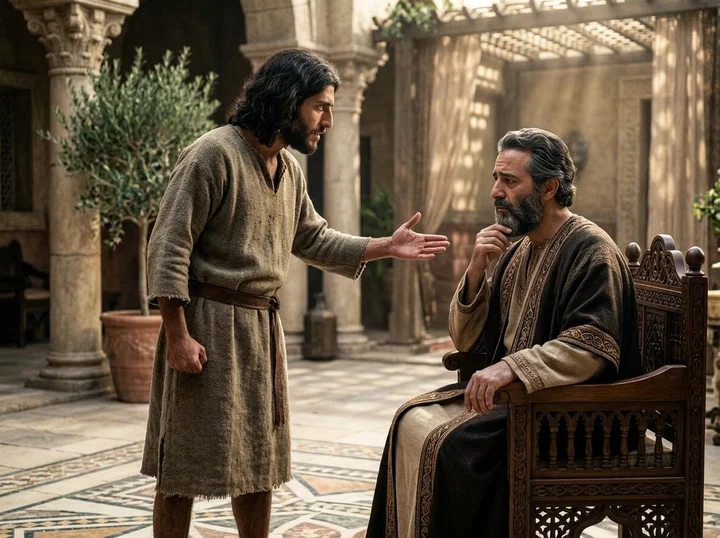
And the younger of them said to his father, Father, give me the portion of goods that falleth to me. And he divided unto them his living.
Translations
And the younger of them said to his father, Father, give me the portion of goods that falls to me. And he divided to them his living.
And the younger of them said to his father, Father, give me the portion of goods that falleth to me. And he divided unto them his living.
and the younger of them said to his father, Father, give me the portion of goods that falleth to me. And he divided unto them his living.
And the younger of them said to his father, Father, give me the portion of goods that falleth to me. And he divided to them his living.
Revised Version, American Standard Version
and the younger of them said to his father, Father, give me the portion of thy substance that falleth to me. And he divided unto them his living.
and the younger of them said to the father, Father, give me the portion of the substance falling to [me], and he divided to them the living.
and the younger of them said to his father, Father, give to me the share of the property that falls [ to me]. And he divided to them what he was possessed of.
And the younger of them said unto the father—Father! give me the share that falleth to me, of what there is. And, he, divided unto them the living.
Berean Standard Bible, Majority Standard Bible
The younger son said to him, ‘ Father, give me my share of the estate.’ So he divided his property between them.
The younger of them said to his father, ‘ Father, give me my share of your property.’ So he divided his livelihood between them.
And the younger of them said to his father, Father, give me that part of your property which will be mine. And he made division of his goods between them.
And the yonger of them sayde to his father, Father, giue mee the portion of the goods that falleth to mee. So he deuided vnto them his substance.
Douay-Rheims (Challoner revision)
And the younger of them said to his father: Father, give me the portion of substance that falleth to me. And he divided unto them his substance.
Pictures
Cross-references
- Luke 15:20
And he arose, and came to his father. But when he was yet a great way off, his father saw him, and had compassion, and ran, and fell on his neck, and kissed him.
The father meets his repentant, returning son with compassion and love.
- Luke 15:4-7
What man of you, having an hundred sheep, if he lose one of them, doth not leave the ninety and nine in the wilderness, and go after that which is lost, until he find it?
The lost sheep parallels the wandering son, illustrating God’s seeking and joy at recovery.
- Luke 15:24
For this my son was dead, and is alive again; he was lost, and is found. And they began to be merry.
The father welcomes and restores his lost son, rejoicing that he is alive again.
- Luke 15:18-19
I will arise and go to my father, and will say unto him, Father, I have sinned against heaven, and before thee,
The son resolves to return to his father, confess his sin, and acknowledge his unworthiness.
- Luke 15:28-32
And he was angry, and would not go in: therefore came his father out, and intreated him.
The elder brother resents the father’s welcome and refuses to rejoice at his brother’s return.
- Luke 15:17
And when he came to himself, he said, How many hired servants of my father’s have bread enough and to spare, and I perish with hunger!
The son comes to himself and remembers the abundance of his father’s house.
- Luke 15:19
And am no more worthy to be called thy son: make me as one of thy hired servants.
He acknowledges his unworthiness and asks to be made a hired servant.
- Luke 15:22
But the father said to his servants, Bring forth the best robe, and put it on him; and put a ring on his hand, and shoes on his feet:
The father welcomes his returning son with a robe and honors him.
- Luke 15:21
And the son said unto him, Father, I have sinned against heaven, and in thy sight, and am no more worthy to be called thy son.
The son returns and confesses his sin to his father.
- Luke 15:16
And he would fain have filled his belly with the husks that the swine did eat: and no man gave unto him.
The son’s squandered inheritance leaves him hungry among swine.
- Luke 15:32
It was meet that we should make merry, and be glad: for this thy brother was dead, and is alive again; and was lost, and is found.
The father rejoices because the lost son has been found and restored.
- Luke 15:23
And bring hither the fatted calf, and kill it; and let us eat, and be merry:
The father welcomes the returning son with a feast.
- Luke 15:1-2
Then drew near unto him all the publicans and sinners for to hear him.
The Pharisees’ complaint prompts the parable.
- Deuteronomy 21:17
But he shall acknowledge the son of the hated for the firstborn, by giving him a double portion of all that he hath: for he is the beginning of his strength; the right of the firstborn is his.
Jewish law gave the older son a double portion.
- Luke 15:31
And he said unto him, Son, thou art ever with me, and all that I have is thine.
The father assures the elder son that all he has is his.
- Romans 8:15
For ye have not received the spirit of bondage again to fear; but ye have received the Spirit of adoption, whereby we cry, Abba, Father.
The Spirit makes believers children who can cry, “Father.”
- Genesis 25:29-34
And Jacob sod pottage: and Esau came from the field, and he was faint:
Both exchange a future inheritance for immediate gratification.
- Galatians 4:7
Wherefore thou art no more a servant, but a son; and if a son, then an heir of God through Christ.
Both speak of a son receiving an inheritance.
- Matthew 18:12
How think ye? if a man have an hundred sheep, and one of them be gone astray, doth he not leave the ninety and nine, and goeth into the mountains, and seeketh that which is gone astray?
The shepherd seeks the lost sheep as the father waits for the prodigal.
Commentary
Each commentary is drawn from primary sources: the writings of Ellen G. White and Adventist pioneers and periodicals. Each commentary is separate. Its own words are not a quotation; follow the references to read the source passages.
Ellen G. White
82 sources
The younger son demands the share of the estate that would fall to him while his father is still living, and the father divides his living and property between his two sons and gives the younger his portion to leave and do as he pleases.COL 198.4–199.1ST Apr 20, 1915COL 198.2–33T 100.3–101.2ST May 26, 1909 The father stands for God the heavenly Father who is sinned against, and the younger son pictures the straying, sinful soul who has known the Father's love but chooses separation and independence.3T 103.5–104.1RH Jan 19, 1911GW 140.2 His demand is wanting his own way free from loving guidance and restraint, treating God's gifts as his by right without gratitude, and seeking happiness apart from Him in a self-centered life.ST Jan 29, 18943T 100.3–101.2TCBMP 123.1COL 199.2–200.3ST May 26, 1909 That course wastes life's powers and strength in selfish indulgence and ends in want, degradation and ruin far from home, yet the Father longs for him, waits in hope, and when he returns in humble confession runs to meet him, embraces him with pity and free forgiveness, and restores him as son without reproach.ST Jan 29, 1894ST Jan 29, 18943T 101.3–102.23T 103.5–104.1RH Jan 19, 1911 Therefore prodigals are to turn square about at once and come back to be cleansed and kept under the Father's care, and those who return are to be met not with cold resentment like the elder brother but with tender sympathy, gladness and help.3T 103.5–104.1Lt 45, 1894, par. 21–2411MR 370.2–371.12T 295.1Ms 183, 1901, par. 12
Parable Setting and Wording
Luke 15:12 opens Christ's answer to the scribes and Pharisees who murmured because He chose the companionship of publicans and sinners.ST Jan 29, 1894Ms 102, 1894, par. 12–14 Together with the lost sheep and the lost coin, it teaches mercy and forgiveness toward those who feel lost and undone and need a Saviour.ST Jan 29, 1894Ms 102, 1894, par. 12–14 It shows that His mission to the world is not to make miserable, to condemn and destroy, but to recover what was lost, which is why He does not shut Himself away from the sinful.ST Jan 29, 1894 By contrast, those who feel just in their own eyes and feel no need of repentance condemn His work of seeking to save the lost.ST Jan 29, 1894
The story is drawn from familiar facts of life and daily experience to teach immortal truth and illustrate spiritual and unseen things.3MR 333.2–3ED 102.3–4Lt 223, 1905, par. 8–10ST Nov 30, 1915 It shows openness to surroundings and delight in gathering spiritual teaching from them, directing thoughts from the seen to the spiritual.3MR 333.2–3ED 102.3–4Lt 223, 1905, par. 8–10 It has something to interest every mind and appeal to every heart, touching the heart, awakening sympathy, and commending truth to the conscience.3MR 333.2–319MR 259.1–3 It does not prove truth by long, farfetched, complicated reasoning nor force belief, but comes right to the point, reads every heart as an open book, draws things new and old from the treasure-house to enforce teaching, and leaves hearers free to accept or reject.19MR 259.1–3 So the daily task instead of being mere toil is brightened and uplifted by constant reminders of the spiritual and the unseen.3MR 333.2–3
The younger son asks to receive before his father's death the inheritance that would fall to him at death, demanding it while his father is still living.COL 198.4–199.1COL 198.2–3 He claims a child's privilege and right to his father's goods while showing no gratitude, no sense of obligation, and no acknowledgment of what he owes.COL 198.4–199.1COL 198.2–3ST May 26, 1909 He wants present enjoyment and freedom from what he wrongly sees as restraint, misreading his father's love and care as restriction on liberty.COL 198.4–199.1COL 198.2–3ST May 26, 1909 He is weary of the restraints of his father's house, desires to separate his interest and manage his share to suit his own inclination and pleasure, free from advice, reproof, counsel and mutual obligation, with no concern for the future.3T 100.3–101.2TCBMP 123.1ST May 26, 1909TCBMP 123.2 He braces his selfish, rebellious spirit with the thought that part of the property belongs to him, when rightfully he can claim nothing and should have had nothing, and the treasure he receives is wholly undeserved.3T 100.3–101.2
The father complies with the demand and divides his living and property between his two sons.ST Apr 20, 19153T 100.3–101.2TCBMP 123.1ST Apr 20, 1915 He gives the younger his share with which to leave home, follow his own desires, and do as he pleased.ST Apr 20, 1915ST May 26, 1909 This introduces the son's departure from his father's care and pursuit of independence, his selfish withdrawal so as not to be troubled with counsel, reproofs, advice or restraint, thinking he will be happy when he can use his portion according to his own pleasure.ST Apr 20, 19153T 100.3–101.2ST Apr 20, 1915 It also introduces God's pitying love toward those who turn away after knowing the Father's love but being led captive by temptation, and pictures how to treat those gone astray with loving, unselfish care that seeks to lead them to repentance rather than the elder brother's cold rejection.ST Apr 20, 1915RH Nov 25, 1902
The father is the heavenly Father, God, the one sinned against.3T 103.5–104.1 The younger son pictures the sinful who feel lost and undone and need a Saviour, a straying soul and God's erring prodigal child who has known the Father's love but is led captive by temptation and chooses his own course and separation.ST Jan 29, 1894ST Apr 20, 1915GW 140.2Ms 40, 1899, par. 10–1211MR 367.1 Though they choose their own course, He does not leave them in misery but is tender, pitiful, and compassionate toward them, loves them, entreats them to return, longs for the return of the one who left Him, and waits in hope to welcome him home.RH Jan 19, 1911GW 140.211MR 367.1 When the wanderer repents and returns, the Father is ready to receive him with great joy, placing His arm about him, covering his rags with His garments, and placing the ring upon his finger as token of royalty.3T 103.5–104.1GW 140.2Ms 40, 1899, par. 10–12
The parable also represents God's loving relationship with Israel and His patience in bearing with a wayward child.ST Feb 27, 1896Ms 56, 1902, par. 5 It shows His love even as Israel resists mercy, His willingness to bear their guilt and bear with wrongdoing, and Christ's grief over Jerusalem and its coming destruction.ST Feb 27, 1896Ms 56, 1902, par. 5
Son's Rebellion and Ruin
The younger son wanted his own way and independence, tired of his father's counsel and care, his reproofs and advice and restraint.ST Jan 29, 18943T 100.3–101.2TCBMP 123.1ST Jan 29, 1894ST Apr 20, 1915 He desired to separate his interest from his father's and to manage his share to suit his own inclination and pleasure, free from mutual obligation.3T 100.3–101.2TCBMP 123.1TCBMP 123.2 He mistook loving guidance and care for a restriction on liberty, reading love as limits on freedom and weariness with home restraint as desire for immediate enjoyment without concern for the future.ST Jan 29, 1894ST Apr 20, 1915ST May 26, 1909 He claimed a child's privilege and right to his father's goods while acknowledging no obligation or gratitude.3T 100.3–101.2ST May 26, 1909 He believed that freedom from restraint would make him happy, that he would be happy when he could use his portion according to his own pleasure.ST Jan 29, 18943T 100.3–101.2ST Jan 29, 1894
His leaving was willful disobedience and sin, rebellious and selfish and ungrateful.3T 101.3–102.23T 103.5–104.1TCBMP 124.1 It grieved his father's love and was sin against Heaven and against his father, making him unworthy to be called son and dead to filial affection until suffering taught his need.3T 101.3–102.23T 103.5–104.1 He braced his selfish, rebellious spirit with the thought that a portion of the property belonged to him by due.3T 100.3–101.2TCBMP 123.2 Rightfully he could claim nothing and should have had nothing, and the treasure he received was wholly undeserved.3T 100.3–101.2TCBMP 124.1
His demand shows sinners treating God's gifts as theirs by right, taking His blessings for granted without gratitude and seeking happiness apart from Him.COL 199.2–200.3ST May 26, 1909 It is forsaking the fountain of living waters and of true pleasure and hewing out broken cisterns that hold no water.MYP 408.1 It begins a life centered on self that wastes life's years and powers and strength and leads to spiritual and moral ruin.COL 199.2–200.3Ms 22, 1898, par. 19 It is serving sin and the flesh, selfish indulgence that gives no profit and pays poor wages and brings a man low after ambitious hopes.ST May 26, 19092T 295.1Ms 22, 1898, par. 19
He selfishly withdrew, took his share and spent it in pleasure and sinful indulgence and riotous living, squandering it in self-indulgence.MYP 408.1ST Apr 20, 1915TCBMP 124.1 Evil companions and false excitement led him deeper into sin.ST Jan 29, 1894 When his money failed and famine came he was left without life's necessities, far from home and far from his father, friendless, in want and privation and hunger, emaciation and degradation and suffering, perishing with hunger.ST Jan 29, 18943T 101.3–102.29T 50.2 In that lost and perishing condition he is an object of compassion.9T 50.2
The verse is given for the instruction of youth, because many youth do as he did in a careless, pleasure-loving, spendthrift life.MYP 408.1 It also pictures professed commandment keepers and Christians who leave God while claiming to follow Him, transgressing the law, unthankful and unholy and without light, using entrusted talents to counterwork God instead of influencing souls, conformed to the spirit and principles of worldlings and on Satan's side, retaining the form of godliness while denying its power in practice.Ms 75, 1898, par. 13–14 It describes children who become prodigal and wayward because parents indulge them at home and fail to restrain them.11MR 40.3–41.2Lt 117, 1898, par. 4–5 It describes one who has neglected the invitation of the Holy Spirit and is not fully on the Lord's side.Lt 15, 1899, par. 9–11
Father's Love and Welcome
The demand for the inheritance opens the revelation of pitying love toward those who have strayed and are exposed to temptation.COL 198.118MR 113.5Ms 132, 1902, par. 911MR 367.1Lt 80, 1898, par. 1 The Father is kind and tender toward them and does not leave them in their misery even when they choose their own course and turn away.COL 198.111MR 367.1Lt 80, 1898, par. 1 He takes the first step to seek them while they are still in rebellion, remaining full of lovingkindness toward all exposed to the temptations of the artful foe in order to save what is lost.Lt 80, 1898, par. 1 Amazing sacrifice has been made for them, and Heaven expends labor and energy to reclaim the lost and bring them back to the Father's house.ST Oct 31, 1916 One imperiled by temptation calls forth tender sympathy and earnest effort for rescue.Lt 80, 1898, par. 1
The Father longs for the return of the one who has left Him and waits in hope to welcome him home.RH Jan 19, 1911 His love remains strong toward those who have known His love but separate from Him and are led captive by the tempter, and He works through influences to bring them back.Lt 80, 1898, par. 9–1311MR 370.1 Even while the sinner is still far away the Father longs for him, and the desire to return is the Holy Spirit drawing him back to the Father's love. God still loves the one who has left his heavenly Father and calls him to return.Lt 80, 1898, par. 9–13Lt 52, 1899, par. 3 When the straying child repents and returns, He receives him with joy and covers him with the robe of righteousness.18MR 113.5Lt 80, 1898, par. 9–13Ms 132, 1902, par. 9
When the humbled son feels his need, remembers his father's kindness and love, and returns by humble confession, the Father discerns His own image in him despite rags and degradation.3T 101.3–102.2 He is stirred with tenderest pity and compassion and hastens to meet him at a distance, running to him, lifting him up, embracing and kissing him.3T 101.3–102.2 He wraps his own rich robe about him, puts his garments over rags and a ring as token of royalty, prepares a feast, and takes him to breast and heart with proofs of love and tokens of free forgiveness.3T 101.3–102.2GW 157.3 There is no reproach, no reminder of unworthiness, no arraying of past wrong, no denunciation and no accusation of wrath, for the past is forgiven and forgotten.ST Jan 29, 18943T 101.3–102.2COL 203.2–205.1GW 157.3 He is restored as son rather than servant, covered with the robe of Christ's righteousness.COL 203.2–205.1Lt 80, 1898, par. 9–13
The welcome requires penitence, not sacrifice.ST Jan 29, 1894 The son becomes sensible of his great sin, appreciates his father's love, acknowledges his claims, and comes back because only the father can supply his need.3T 103.5–104.1TCBMP 128.1 His return brings the Father great joy, joy among the heavenly host, and shows heaven's warmth, courtesy and love.3T 103.5–104.1TCBMP 128.2Ms 19, 1890, par. 21 Coming back to God is not humiliating or degrading.3T 101.3–102.2 It breaks the already subdued heart and gives a much deeper sense of the ungrateful course.3T 101.3–102.2
The story opens a revelation of what God really is, giving grand themes for thought and a solid foundation for faith.GW 157.3Lt 85, 1886, par. 17–18 It reveals infinite love in the Father giving His beloved Son as sacrifice for the fallen race, making a channel for the outflow of infinite love so that all who believe are restored again to favor.Lt 85, 1886, par. 17–18Ms 41, 1890, par. 45–51 Christ's love shown at Calvary assures the sinner of acceptance, peace and love, and He is ready to welcome the sinner and restore him to God's favor.Lt 15a, 1890, par. 9–11Ms 82, 1894, par. 22–24 Believing on Him leads to obedience to all commandments and life in Christ.Lt 85, 1886, par. 17–18 This fatherly love must not be kept in the background but made known to the sinner, for this is the way of winning souls.GW 157.3
Treating the Repentant Tenderly
The joyful welcome given to the returning younger son stands in sharp contrast to the elder brother's cold resentment and complaint against that reception.Lt 45, 1894, par. 21–2411MR 370.2–371.1Ms 40, 1899, par. 10–12 That complaining attitude is natural but not right, and it must not be copied by brother toward brother.3T 103.5–104.1Lt 45, 1894, par. 21–24 When the father rejoiced over the returned prodigal, the rejoicing exposed a spirit in the elder brother that is sorely displeasing to the Lord.Ms 49, 1898, par. 24–25 It shows indifference and careless disregard for the perishing by refusing the seeking, rejoicing spirit that practices the lessons of the lost sheep, the lost coin, and the lost son, and instead of seeking the lost it wounds and drives them away.Lt 71, 1895, par. 27
The lesson of the younger son's departure followed by repentance is that those who have gone astray and are turning back are to be met with tender sympathy, pity, gladness, love, acceptance, faith and compassion.Lt 45, 1894, par. 21–24Lt 71, 1895, par. 27Lt 16, 1887, par. 7–14 They are not to be met with reproach, suspicion, harshness, condemnation or blame, nor left exposed to temptation nor driven to despair through harsh judgment.Lt 45, 1894, par. 21–24RH Nov 25, 1902Lt 16, 1887, par. 7–14 The repenting one needs pity, love, help, sympathy and above all free forgiveness, not efforts to make him feel his error and remind him of his mistakes, for he suffers in feeling and is desponding and discouraged.3T 103.5–104.1 He needs room to recover from temptation, and a message of love and encouragement to grasp hope in Christ, with loving, unselfish care that seeks to lead him to repentance and with earnest work to cooperate with God in seeking the lost sheep and winning back the prodigal.Ms 132, 1902, par. 9RH Nov 25, 1902Lt 16, 1887, par. 7–14
That same elder-brother spirit appears when members of the churches gossip and plant doubt, questioning, evil surmising and jealousy instead of seeking to save those that are lost.Ms 49, 1898, par. 24–25 It appears when they expect to be constantly fed with sermons instead of reflecting the light of truth and carrying salvation to others by precept and example, burden for souls and sincere prayer, and when they do not do righteousness in their own homes and in the church.Ms 49, 1898, par. 24–25 Those who claim to be co-workers with Christ yet stand by while the struggling soul fights the flood of temptation, stubborn, self-willed and selfish like the elder brother, and who say like the Pharisee that they are not as other men, are condemned by God's tenderness toward the repentant son whom He loves, entreats to return, clasps with His arm, covers with His garments, and marks with a ring as token of royalty.GW 140.2 To look upon such a one with indifference or contempt is wrong.GW 140.2
The soul pictured here has known and enjoyed love and the guardianship of the compassionate Shepherd, yet has left pleasant pasture and gone from the fold through the deceiving, deluding power of Satan into darkness and confusion.Ms 81, 1893, par. 61–63 He cannot find his way back without help, bewildered, miserable, dissatisfied and frightened, rushing farther from the gates of heaven and from the Shepherd's care into a wilderness of bewilderment.Ms 81, 1893, par. 61–63 His state calls for tender and true shepherds who feel the burden, see the danger, endure storm, cold and roughness of the way, leave the ninety and nine, go into the dreary wilderness, search for him, find him, and bring him back to the fold.Ms 81, 1893, par. 61–63 Harsh dealing, evil tempers, pride, selfishness, self-righteousness and cold unsympathetic treatment imperil souls and may thrust them upon Satan's battleground without wisdom until shipwrecked and lost, and by slovenly, unconsecrated character may keep those who have left out of the kingdom of God.Lt 50, 1893, par. 8–9 Teachers and Christians must instead learn meekness and lowliness of heart, hide self in Christ, and deal with the erring with grace for their present and eternal good, while one imperiled by temptation calls forth tender sympathy and earnest effort and great rejoicing when he repents, and those thus rescued from sin can help bring other lost people back to the Father.MH 179.1–25T 604.1Lt 50, 1893, par. 8–9
Call to Return Home
The asking for the share and the dividing of the living opens the departure of one who has known the Father's love but is led captive by temptation and chooses separation and independence from his care.ST Apr 20, 1915Lt 80, 1898, par. 9–1311MR 370.1 That departure pictures a backslider returning to God's service, one who once loved and served the Lord but turned away, left the Father's house and blessing and service to enter Satan's service and sin.Lt 59, 1886, par. 1–5Ms 21, 1889, par. 96–973MR 64.5–65.3 Sometimes that thorough backsliding comes through Satan's temptations and the simple errors of youthful indiscretion, which are not to be treated with great severity.3MR 64.5–65.3 Giving up obedience for worldly business and advantage grieves the heart of Christ, who loved him and died to redeem him, and places him in peril.3MR 64.5–65.3 Even so, God's pitying love goes out toward those who turn away, His love remains strong, and He works through influences to bring them back, still loving and calling the one who left his heavenly Father to return, and receiving him with joy and covering him with the robe of righteousness when he repents.ST Apr 20, 1915Lt 80, 1898, par. 9–1311MR 370.1Lt 52, 1899, par. 3
Prodigals who have left the Father's house are to be encouraged to return.STB 620.1–2STB 147.5 Failure and sin do not disqualify anyone from prayer or from coming before the Lord.MYP 97.1 Jesus waits with outstretched arms to welcome the prodigal who returns, invites him to come that he may have life, to wear His yoke and learn His meekness, recognizes every effort to reach His ideal, will meet him, and will never disappoint trust nor abuse confidence.2T 295.1MYP 97.1Lt 27, 1890, par. 18–19 The sinner should go to Him, tell Him mistakes and failures, lay hold upon Him to be cleansed from sin, and ask strength for fresh endeavor.2T 295.1MYP 97.1 He must not flatter his soul with false hopes or neglect this work longer and perish in his sins, but turn without delay with humble heart, for all things are now ready, and God is even now ready to accept him and pardon all his transgressions if he will but come.2T 295.1Lt 18f, 1890, par. 2
Returning means turning square about at once and coming back to family and to God with humble heart and full decision of soul.Lt 18f, 1890, par. 2Lt 33, 1896, par. 123MR 64.5–65.3 It calls for confessing backslidings, ceasing to do known sin, leaving sin and leaving any position or trade that prevents obedience, and making an immediate solemn decision to be a Christian and return to the Father's service.Lt 27, 1890, par. 13MR 64.5–65.3 It means fixing the eye on Jesus, grasping Him by faith, casting oneself helpless on His mercy, giving heart and soul and the little remnant of life to Jesus, and being saved by His cleansing blood, because Jesus waits to be gracious.Lt 1a, 1890, par. 1Lt 33, 1896, par. 12 Such linking with God brings acceptance, blessing, evidence of pardon and love, purified thoughts, changed purposes, and thankful happiness.Lt 33, 1896, par. 123MR 64.5–65.3 Jesus still invites the prodigal to wear His yoke, lift His burden, and learn His meekness and lowliness of heart, with rest to the soul as reward, and He works with the returned one to help other youth give their hearts to God and be converted, while the prodigal remains accountable for all the good Jesus died to enable him to do.Lt 33, 1896, par. 12
Though welcomed back into his father's house, enjoying the privileges of sonship requires meeting its conditions and living in accordance with the father's conditions.Ms 183, 1901, par. 12Lt 164, 1900, par. 21–23ST May 8, 1901 When the prodigal returns to claim a son's privileges he must also consent to accept a son's obligations and remain under his father's care.Ms 98, 1901, par. 17–2010MR 110.3–5 Like the found sheep remaining under the shepherd's care and not renewing its wanderings, he must remain in the fold and repay love by staying.10MR 110.3–5
The return illustrates how people may come to seek a changed life and be saved.Lt 200, 1902, par. 8–10 It pictures being led step by step by the Lord in the path of submission to His will and His way into a rich experience, and such a return brings praise to the Lord and weeping joy to those who hear of it.Ms 89, 1893, par. 1–2 Though God's children err and stray from Him, if they repent and return He receives them with the joy of an earthly father receiving a long-lost son who comes back in penitence, showing His tender, loving, pitying care.Ms 132, 1902, par. 9 Those rescued from sin can then help bring other lost people back to the Father.MH 179.1–2 And it lays on men the earnest work of cooperating with God in seeking the lost sheep and winning back the prodigal.Ms 132, 1902, par. 9
Sources
Pioneers and periodicals
145 sources
The younger of two sons asked his father for his share of the estate before his father's death, and the father divided his living between both sons, the younger receiving one-third as the younger's portion under the law of the double portion for the firstborn.ST Oct 17, 1900ST Apr 2, 1896ST Oct 17, 1900 In the parable the father stands for God the heavenly Father, the younger son for publicans and sinners and all who wander and return, and the elder son for the Jews and scribes and Pharisees who complained that Jesus received sinners.ST Jan 29, 1894ST Oct 17, 1900STST Nov 22, 1899RH Jul 6, 1868 The demand was selfish and rebellious and claimed as a right what was not yet due, yet the father granted it and let the son go his own way, showing that God gives life and freedom to choose without coercion.ST Mar 25, 1880ST Mar 25, 1880ST May 4, 1904ST Apr 2, 1896 Taking his portion and leaving for a far country pictures every sinner and backslider taking God's gifts of life, time and means and wasting them in self-indulgence that ends in want and ruin.ST Jun 11, 1896RH Jan 19, 1911RH Jul 21, 1910RH Jul 21, 1910 The dividing of the living to the undeserving shows God's personal love for each individual, which never ceases while he is lost but waits and yearns and welcomes the truly penitent with pardon, restoration to sonship, and joy in heaven.RH May 9, 1871STRH Dec 13, 1906ST Jan 2, 1907RH Mar 25, 1909
Parable Setting and Symbols
Jesus told this story to answer the scribes and Pharisees who complained because publicans and sinners gathered to hear Him and He received them and ate with them.ST Jan 29, 1894ST Nov 22, 1899 Their complaint exposed a low and false view that God is altogether like themselves, having no pity for the erring and fallen but regarding them as fit subjects of wrath, entirely beyond mercy and to be shunned by all good people.ST Nov 22, 1899 The younger son asking for his portion and leaving pictures the sinful who feel lost and undone and need a Saviour, and with the lost sheep and the lost silver it shows Christ's mission is not to make miserable, condemn and destroy, but to recover what was lost, which is why He does not shut Himself away from the sinful.ST Jan 29, 1894ST Nov 22, 1899 It gives a true representation of the Father as not a cruel despot but a Father full of mercy and love, exercising tender, loving, pitying care, with an Eye to pity and a Heart to love in all human suffering, so that the despondent under heavy clouds have light ahead and a sympathetic Friend who does not willingly grieve the children of men.ST Sep 23, 1908 The same love appears toward Israel even as it resists mercy, with Jesus grieving over Jerusalem and its coming destruction.ST Feb 27, 1896
The asking and dividing opens the third illustration of the lost found, following the lost sheep and the lost coin, with the son mourned as lost and the father rejoicing when he meets him returning.ST Aug 6, 1894ST Aug 6, 1894 Together the three show the value the Son of God places on a soul, that He seeks and watches for the lost, and that there is unconcealed joy in heaven in the presence of the angels over one sinner that repents.RH Nov 12, 1914ST Aug 6, 1894 They illustrate the same truth seen in Zacchaeus, that even a rich man can be saved because the Son of man came to seek and to save what was lost.ST Nov 21, 1900 His welcome was meant to lead the lost to receive Him, become children of God, and share in the marriage supper of the Lamb.
The story belongs to one discourse of parables beginning in Luke 15 and continuing through Luke 16, including the unjust steward and the rich man and Lazarus.RH Apr 8, 1858ST Mar 20, 1879RH Mar 28, 1865 It is introduced with the words about a certain man who had two sons, showing that parables may be introduced as accounts of particular people and events.RH Sep 3, 1872RH Mar 28, 1865 It is therefore a figurative story, not a literal report intended to establish doctrine about the condition of the dead.RH Sep 3, 1872 As a parable it is contrasted with real history, unlike the account of Noah and the flood which Jesus treats as real history, and unlike the Genesis account of creation and the fall which is treated as historical rather than as a story that is not a record of actual events.RH May 28, 1861ST Jun 18, 1885
In the figure the father represents God the heavenly Father, and the younger son represents publicans and sinners and the Gentile world, including every penitent sinner and backslider who has ruined himself by departing from God and who turns back to God.ST Oct 17, 1900STRH Jul 6, 1868ST Nov 22, 1899ST Oct 17, 1900 The elder son represents the Jews and the scribes and Pharisees in their attitude toward publicans and Gentiles.ST Oct 17, 1900STST Aug 6, 1894 The publicans and sinners are their brothers and should be treated as such, for God is no respecter of persons and shows great love to the undeserving whether Jew or Gentile, backslider or sinner, and wherever mercy is needed and penitence is shown with godly sorrow and confession that mercy may be applied.ST Oct 17, 1900STRH Jul 6, 1868ST Nov 22, 1899 Taken personally, every person is either the prodigal returning to the Father's house or the carping elder brother who is in as hard a condition without knowing it, while Christ receives sinners and glories in it, is not ashamed to call them brethren, receives those who offer themselves as servants and makes them sons and friends and heirs through Himself, watches for the wanderer and rushes to meet him while yet far off.ST Aug 6, 1894
The parable is drawn from familiar events of life to teach spiritual truth and remind of the unseen.ST Nov 30, 1915 It fits all ages of time and all sorts of people, with meaning true to Scripture, clear and forcible and full of the gospel, carrying strong spiritual application to the reader's own life.RH Oct 15, 1901 Turning its beautiful picture of God's relation to humanity into slang makes its beauty ridiculous and obscures its precious meaning.RH Jan 14, 1915 It also belongs to a warning that the blessings and promises claimed by the Jewish nation would be taken from it and given to others whose faith bore righteous fruit, because the nation was in danger of rejecting God's offer of mercy.RH Jun 1, 1916
Inheritance Request and Division
The younger of two sons asks his father for the share of goods falling to him before his father's death, and the father divides his living and property and means between both sons.ST Oct 17, 1900ST Apr 2, 1896ST Aug 6, 1894ST Dec 18, 1901 The request is made while the father is still living and gives to each son the portion belonging to him, and it sets in motion the departure and wasteful life that follow.ST Oct 17, 1900ST Apr 2, 1896ST Dec 18, 1901 It begins the third illustration of the lost found.ST Aug 6, 1894 Remembering home and the father's love and care leads one who recognizes the story as like his own to decide to return.ST Jan 18, 1905
Under Jewish inheritance law the older son received a double portion, so the younger son's share was one-third of the property, given to him as its value.ST Oct 17, 1900ST Apr 2, 1896ST Oct 17, 1900 The son claims his share as a right without gratitude or acknowledgment of any obligation to his father, though he has no rightful claim to it and should have received nothing.ST Mar 25, 1880ST Mar 25, 1880ST May 4, 1904 The demand is selfish and rebellious and before its proper time, made so he can separate his interests from his father's and manage the property as he pleases, wanting freedom from his father's counsel and restraint and claims.ST Mar 25, 1880ST Mar 25, 1880ST May 4, 1904ST Jan 14, 1886 It reflects weariness with the restraints of his father's house, a misreading of his father's love as restriction, a desire for immediate enjoyment without concern for the future, and a claim of a child's privilege while acknowledging no obligation; it is paralleled by a boy who believes money is rightfully his, leaves home, later recognizes the hurt he has caused, and is forgiven by his mother when he returns.ST May 26, 1909ST Jan 14, 1886 Yet the father grants the request and divides his living between his sons and gives the inheritance to both sons.ST Mar 25, 1880ST May 26, 1909ST May 4, 1904
The demand barters all blessings and spiritual privileges held up to the eye of faith and within reach of belief for some sensuous and supposed benefit, some apparent advantage and gratification at hand and in sight, while great future good and possibilities faith could not grasp are thrown away.RH Jun 10, 1902 It is the same bargain as Esau selling his birthright for a morsel of food, showing the deceitfulness of sin and spending money and labor for that which is not bread and satisfieth not.RH Jun 10, 1902 It is an exchange ending in feeding on husks with the swine after a banquet which began with revelry.RH Jun 10, 1902
Taking the allotted share illustrates how people take what the Father has given them and use it for their own purposes.RH Jan 19, 1911RH Jul 21, 1910RH Jul 21, 1910 What is taken includes life and reason and time and means, which belong to God and not to themselves, since all are His adopted sons.ST May 26, 1909ST May 1, 1901 Asking for the portion and leaving means becoming tired of living with the heavenly Father and serving Him and wandering away from home, and instead of using time and means to glorify God spending the blessings God bestowed lavishly on the pleasures of sin which last only for a season.ST May 1, 1901 The good things received from God are taken without gratitude and wasted in self-indulgence and sinful pleasure, with the sinner wandering far from home as a prodigal, spending God's gracious gifts and feeding on husks, clothed in rags of his own righteousness.ST May 26, 1909ST Dec 24, 1902 Those who so misuse what God has entrusted to them then come to recognize their wrong and long for a better way, yet the Father does not give them up in despair but keeps His care over them and pleads by His Spirit for them to return.RH Jan 19, 1911ST May 1, 1901
Son's Rebellious Departure
The request reveals discontent with good circumstances in a home of holiness, peace, plenty and love, and a desire for independence, self-reliance, and release from parental restraint, counsel and claims.ST Apr 20, 1915RH Jul 15, 1862RH Jul 15, 1862ST Aug 11, 1914 Loving guidance and care were mistaken for restriction on liberty, and freedom from restraint was thought to bring gain and happiness.ST Apr 20, 1915ST Jan 29, 1894RH Jul 15, 1862RH Jul 15, 1862ST Aug 11, 1914 The son therefore demanded his share of the property and hastened to leave his father's jurisdiction and service to go alone.ST Apr 20, 1915ST Jan 29, 1894RH Jul 15, 1862ST Aug 11, 1914
His choice illustrates the blindness and depravity of fallen human nature and the folly of rejecting present mercies for more.RH Jul 15, 1862RH Jul 15, 1862 It is youthful folly, and the conflict of heart and head in youth changing to manhood and womanhood, where the real issue of life is whether heart or head shall control.RH Jul 15, 1862RH Jun 25, 1914 It is a breaking away from divine authority and love and from the holy law and the loving counsel learned in childhood, ending in misery, remorse and despair.RH Feb 16, 1869ST Feb 26, 1902RH Dec 9, 1862 Patient, pure, true, unselfish love may even be received and reveled in without remorse while becoming a great prodigal.ST May 10, 1905
The verse begins the course away from home into a far country, setting in motion departure and waste.ST Jan 18, 1905ST Nov 22, 1899 The substance is wasted in reckless, riotous living and ends in want, famine, hunger among swine, poverty, debauch, ruin, shame and untimely death.ST Jan 29, 1894ST Nov 22, 1899 That dissipation has many counterparts in the fast pace of the age, and adversity afterward brings the wanderer to his senses who had imagined worldly pleasures better than the Lord's way.ST Jun 11, 1896
Unlike the sheep lost through ignorance or the coin that cannot act for itself, the son wilfully goes astray.ST Oct 10, 1900 Wandering is easy when the soul desires it, but returning is difficult because the way feels unfamiliar and the soul has lost its bearings.ST Jun 4, 1912 Return requires a change of will and a choice to come back, a coming so great as a new birth into adoption.ST Oct 10, 1900ST Nov 14, 1900 Yet he remains a son and heir while still in minority and estrangement, regarded as a wandering heir son even while living as a bond-servant in absence from his father's house.ST Mar 8, 1899ST Nov 14, 1900
The departure pictures every sinner as a wanderer from the Father's house, spending his substance in the recklessness of sin and folly.ST Jun 15, 1904 Man is habitually departed far from God's way and will, no longer knowing God's will without the law, unregenerated and lost in body and soul, estranged under Satan's power and subject to death.ST Feb 13, 1912 It also pictures the Christian backslider repeating former folly and leaving his Father's house again through the world's attractions to become spiritually hungry in a strange land.ST Oct 4, 1877 It pictures an old professor traveling many years away from God, almost an apostate and almost lost while remaining self-complacent, with pride, evil thoughts, motives, passions, lusts, appetites, love of self, farm, money and goods, and a hidden place in the heart where Satan sits.ST Aug 5, 1875
Leaving changes the white robes of the Father's favor for tattered, soiled garments, leaves the pure springs of mercy for cups of rioters' wine, and turns from the fruits of the vineyard to feed on husks with swine in rags of self-righteousness.ST Mar 25, 1880ST Dec 24, 1902 It leaves the field the Father gave to labor and lets weeds and foxes spoil it, while dragging a heavier burden with sin-stained hands and a heart full of sin and pain.ST Mar 25, 1880 The inheritance as the father's treasure, earned by honest labor, is wasted in folly and selfish abuse, with life's valuable hours squandered and God's gracious gifts spent for purposes other than good.RH Feb 16, 1869ST Feb 18, 1913ST Dec 24, 1902RH Oct 7, 1873 Outside the Father's house and outside abiding in Christ is danger, where Satan and his agents hover to lead farther to the bleak moors of sin and destruction, and long years are spent deceived by delay until gain becomes bitter and the wearied wanderer comes back to the Father's feet.ST Mar 25, 1880ST Mar 17, 1898
Father's Permitting Love
The father grants the younger son's demand for his share before death and lets him have his own way, and the division sets the sinner's course away from God whether never converted or wandered back. ST Apr 2, 1896 Under the law of inheritance the elder receives a double portion, so the younger's portion is one-third of the estate, given to him as its value. ST Apr 2, 1896 God so gives life, reason, and freedom to choose how to act without coercion, while setting before all the blessings of righteousness and the end of wickedness. ST Apr 2, 1896 He does not hold back those who ask to go alone, but lets them go into far lands where they thirst and hunger and faint and feed on husks until they are homesick and distressed. ST Jan 2, 1907
The dividing of the living to both sons shows great love to the undeserving, whether Jew or Gentile, sinner or backslider, for God is no respecter of persons. ST The younger son figures the Gentiles and the elder the Jews, yet the gift reaches both alike. ST No one is forgotten or lost in the mass of mankind, for as the one lost sheep is sought while the ninety-nine are left, so the one prodigal is individually understood, specially loved, and brought to perfection as if there were no others needing such love and attention. RH Mar 25, 1909
The Father's love does not cease while the child is lost and estranged, but He waits to bless at the feeblest knock and gives robe and ring and feast with angels singing over the last and least when the empty-handed return owns His way is best. ST Jan 2, 1907 He keeps care over wanderers who grow tired of living with Him and spend time and means lavishly on pleasures of sin lasting only for a season, and He pleads by His Spirit for them to return. ST Dec 18, 1901ST May 1, 1901 The very longing to come back is the echo of that Spirit calling the backslider, and He is more willing to receive than any earthly father. ST Apr 30, 1894 The years spent away afford repeated opportunity to repent before coming to oneself, and a life centered on self is shown as squandered while God still yearns and works to bring the turned-away back. ST Dec 18, 1901ST Jun 21, 1883 His love remains unchanged toward the separated one, His goodness leads to repentance, and suffering, reverses and affliction become means of bringing the wayward to peace and life, welcoming the returned as a son. RH Jan 12, 1911
The father's kindness and forbearance do not relieve misery while impenitence remains, so the younger is miserable until he repents and the elder brother is miserable also. ST Jul 1, 1880 The joy over the returning prodigal puts no premium on sin and does not mean God loves to have His people go astray for the joy of recovering them. ST Jul 2, 1885 To obey is better than sacrifice, and to claim liberty to do evil that good may come brings just damnation. ST Jul 2, 1885 God abhors sin and rejoices because the erring returns to loyalty and obedience, a compassion without measured limit, the same love that gave the Son and moved the Son to consent to die, yet mercy must not be presumed upon, for the incorrigible will be punished according to the greatness of the grace abused. ST Jul 2, 1885
Repentance and Joyful Welcome
The story shows God's mercy, pity and love toward repentant sinners and His willingness to pardon all who truly repent and turn back to Him.RH May 9, 1871RH Dec 13, 1906ST Nov 7, 1900 When the prodigal recognizes his sin and unworthiness and returns destitute after wasting what he received, the Father welcomes him warmly while still far off, hastening to meet him, silencing shame and honoring him.RH Dec 13, 1906ST Aug 29, 1895ST Dec 10, 1894 He does more for him than he asked or expected, with open arms, pardon, reconciliation and joy, receiving the wanderer into confidence and affection as son and heir.RH May 9, 1871ST Aug 29, 1895ST Jul 7, 1909ST Dec 10, 1894 That welcome comes without reproach, without reminder of unworthiness, without coldness, rebuke, distrust, or requiring a long list of apologies, penances or prayers first.ST Jan 29, 1894ST Aug 29, 1895ST Nov 7, 1900
The welcome requires penitence rather than sacrifice, for the departure from home begins the most beautiful illustration of penitence on record, a perfect picture of fallen man turning from his wayward course to profess allegiance to God again.ST Jan 29, 1894ST Aug 26, 1875 The returning son comes as a humble penitent asking forgiveness rather than offering to do something for his father, seeking mercy after forfeiting his place in the household, and his confession gives ground to welcome him as a son with hope of reform.RH Apr 14, 1863ST Feb 24, 1887 He becomes a true penitent when he acknowledges I have sinned rather than blaming people or circumstances or pleading innocence, showing earnestness and sincerity that prepares him to receive the Father's welcome and to trust the divine Saviour's saving grace.ST Dec 15, 1887ST Oct 27, 1898 True repentance revolts against wrong because it is wrong, abandons sin, acknowledges guilt without concealment, bears penalty and repairs evil, and it must precede good works, for to approach as though he could benefit his father would leave recovery doubtful.RH Apr 14, 1863
The son who pursued unrestrained sin to degradation, beggary, rags and humiliation, clad in rags and defiled with a famished soul, is still discerned by paternal feeling and is met on return prostrate in humility with tenderest pity and compassion.ST Mar 25, 1880ST Sep 9, 1875 The Father, though the one sinned against, does not stand on dignity, exact, reproach, or set past wrong before him to make him feel how low he has sunk, but hastens to meet him while at a distance, lifts him up, kisses him, takes him to breast and heart, and covers his shame to receive him again as a son.ST Mar 25, 1880RH Jan 19, 1911ST Dec 15, 1909 He wraps his own rich robe about the nearly naked form, orders him clothed and honored as if ever obedient, gives proofs of love and tokens of forgiveness, spreads a feast of love and feeds him with the children's bread, the bread of life.ST Mar 25, 1880ST Sep 9, 1875 Clad thus in spotless righteousness instead of rags, bearing Christ's name and wearing Christ's robe, the pardoned and reconciled one in the Lamb is restored not merely to pardon but to sonship, fellowship, close communion, heirship and the children's place to gaze upon the Father's face, sharing the Father's love to shine in Christ's likeness with everlasting joy, which joins humanity to divinity and makes heaven near.ST Sep 9, 1875 This closing of the distance is the purpose of the Word and the mediation of Christ.ST Sep 9, 1875
Every sinner is a wanderer from his Father's house spending his substance in recklessness, yet the Father's love reaches out and watches for the first sign of inclination to return, and there is joy in the presence of the angels of God over one sinner that repents.ST Jun 15, 1904ST Nov 22, 1899 The request for the portion and the dividing of the living opens the vivid portrayal of wandering, sad condition, sense of need, return homeward, greeting and rejoicing, given to sweep away the false view that God has no pity for the erring and fallen but counts them beyond mercy.ST Nov 22, 1899RH Aug 3, 1869 That return is a sacred work approved by God and an occasion of special rejoicing as receiving one thought dead back from the dead, and the church and brethren must rejoice with sympathy and help and above all free forgiveness, pity and love, and must not keep reminding the erring of error.ST Mar 25, 1880ST Mar 25, 1880RH Aug 3, 1869 The elder brother's complaints against such mercy are natural but not right, his assurance that all the father has is his showing his place is not cancelled, and to grumble instead of rejoicing when a brother gives up wrongdoing and returns is even more foolish than the departure.ST Mar 25, 1880RH Jul 3, 1900ST Jun 24, 1897
The prodigal in claiming his share and setting out takes the course that carries him away from home, yet the family bond is not erased, for he remains a son under his father's care and a member of the family under the same fatherhood while choosing to live apart outside harmonious fellowship.RH Sep 15, 1910ST Feb 10, 1904ST Sep 28, 1904 He disowns his Father and brotherhood and cannot be forced back into harmonious relation while unwilling to return, and if he persists in that separation he is disinherited in the end.RH Sep 15, 1910ST Sep 28, 1904 Every sinner away from God is still His heir son even while living as a bond-servant, heir while still in minority and estrangement, with everything ready if he will accept it, and this probationary life gives opportunity to acknowledge God as Father and become sons indeed.ST Mar 8, 1899ST Nov 14, 1900 Unless like the prodigal he comes back to the Father in a change so great as a new birth, receiving in Christ the adoption of sons, he will die as a slave; if he returns he restores fellowship by acknowledging the Father and the brotherhood he had disowned and by bringing loyalty in place of disloyalty and love and interest in place of hatred and indifference.RH Sep 15, 1910ST Sep 28, 1904ST Nov 14, 1900ST Sep 28, 1904
The returning prodigal was restored to his former honor in his father's house and reinstated in fellowship with God directly by the Father, without stopping on the way to make confession to a priest or to receive priestly absolution.ST May 4, 1876RH Jun 30, 1874 That restoration pictures the penitent remitted of all sins without exception, restored to grace, replenished with peace and tranquillity, and reinstated in the friendship of God.RH Jun 30, 1874
The younger son truly receives his portion of goods from his father, yet he leaves his father and loses it by turning away again to the world.ST Aug 1, 1916 This proves that eternal life received at conversion is received in a way that can be lost, that a converted man can backslide, and that once converted does not mean always converted.ST Aug 1, 1916
The parables hold salvation from sin for every type of sinner from the Pharisee to the prodigal, with the younger son asking for his portion showing the prodigal kind included.ST Dec 18, 1901ST Feb 26, 1902ST Jan 15, 1902ST Sep 25, 1901 Being won from wandering in the far country away from the Father's house back to the Father's house is true Sabbath-keeping, not slavish submission of the body to human ordinances through fear of fines and penalties, but free submission of the sovereign will and of the repentant soul to God's precepts, the submission of the heart's love to the Infinite Love that won it back, permitting God to work His will in the life. The extraordinary celebration at his return, when the usual course gives way to the killing of the fatted calf and general joy, illustrates a special response to a momentous event and does not establish that the Sabbath was moved.ST Dec 2, 1880
Warnings and Home Application
Every person is either the returning prodigal or the carping elder brother in as hard a condition without knowing it, and the wanderer is urged to arise and go to the Father before opportunity is gone.RH Aug 12, 1915RH Mar 18, 1858 The story moves one living in the far country to recognize his need to return to God, picturing a person wandering from God and longing to return to the Father's home and love.ST Feb 15, 1883RH Mar 18, 1858 Those who have wandered far can return, for God shows great love and willingness to forgive and bless when they turn from sin with the whole heart and humbly seek His help, resolutely breaking free from sin's hold as His tender mercy stands ready to help as soon as they earnestly set out.RH Jun 14, 1870 Confidence in the Father's bountiful willingness to give and to receive the lost son must lead to firm decision and action, for the sinner can resolve to return because Christ has overcome and God strengthens by His Spirit, offering himself rather than wealth, since Christ died for him and longs to welcome him.ST Jan 25, 1899
Remembrance of home and the father's love and care draws the wanderer back, as the younger son asking for his share and receiving the divided living begins the story recognized as one's own.ST Jan 18, 1905 Returning to the Father's house satisfies the soul with the bread of life, while continuing in sin leaves the soul starved, and the return is wise because there is bread enough and to spare even for one expecting only a hired servant's place, so none need remain spiritually starved but may come daily in faith to receive what is needed.ST Nov 14, 1900ST Nov 22, 1883 The younger son despised a home of holiness and purity, peace and plenty, parental love and sympathy for worldly glamour, not sensing its blessing until beyond its bounties as a sinner and outcast, and the story was given for the appealing force of thoughts of home, family circle memories, childhood happiness and parental care in trial and sickness, to restrain sin and crime, turn lives to righteousness and turn steps homeward.RH Feb 15, 1912 A pious home makes that recovering thought possible, for the father's character made home worth returning to, whereas a harsh forbidding father or repulsive home would not have called him back, and the thought of a praying mother helps call the son home.RH Nov 17, 1868ST Oct 22, 1894
Adversity, famine, want, suffering and reverses bring the son to his senses and serve as merciful correction after imagining worldly pleasures better than the Lord's way, ending in the Father's mercy, joy, love and forgiveness.ST Jun 11, 1896RH Jan 12, 1911 Sin's depth becomes clearer by considering what life with the Father could have been if one had stayed, showing the loss involved in leaving His house. Leaving illustrates wandering from God and returning illustrates sinners returning to Christ's fold, where affliction may lead them back and their return brings the joy of the Lord's love, and those left spiritually empty can long for the Father's house, turn back, and be welcomed with rejoicing as with the fatted calf.RH May 30, 1907ST Jul 29, 1908 God's goodness leads to repentance while His love remains unchanged during estrangement, yet in the distant country there is no satisfaction, illustrating that one born of God cannot find lasting happiness in worldly things, and those who recognize need and reach out receive mercy.RH Jan 12, 1911RH Jul 18, 1912
Those brought back in contrition should cooperate with Christ and seek other lost brothers and sisters with loving concern, showing unselfish care rather than cold rejection.ST May 3, 1899ST Feb 10, 1904 The return calls for a welcome with personal seeking and caring for the lost and needy, and those who return are called to seek others with the same loving concern shown to them as members of God's family who chose to wander.ST May 3, 1899ST Feb 10, 1904 Those who have themselves been sought and brought back to the fold know how to seek the lost, and having given themselves without reserve and been accepted they understand soul saving, point sinners to the Lamb of God, and encourage everyone leaving Satan's service for Christ's service to work for others, so that many prodigals are brought to the Father.ST Sep 8, 1914 The prodigal is the poor apostate backslider made a special object of Christ's surpassing love in wonderful love and many invitations to turn, and those who know this love will not feel toward him as the elder brother felt but will share Christ's love, receiving returnees with sympathy, kindness and gladness instead of giving up on them, while the deceived sinner who forsook God and His commandments seeks pardon, restoration and reunion with God's people through earnest repentance.ST Jun 3, 1908RH Nov 26, 1901RH Jul 27, 1869
The story warns thoughtless boys and girls passing into manhood and womanhood, where heart and head conflict, against a wrong course, contrasting it with the peace and future reward of right-doing.ST Young people abandoning duty and purity in reckless gratification are prodigal sons and daughters, most of whom do not return though some are recalled by a mother's love and early education of conscience, and thoughtful parental training and a good home may keep a boy from that sinful course.RH Oct 22, 1914ST Sep 24, 1894 The fate of the younger son illustrates the desolation of wasteful living, showing that religion restrains prodigality and extravagance in economy and tact.ST Nov 27, 1879 Preventing one from becoming such a prodigal is better than reclaiming him after straying, and men drawn away by liquor, gambling and saloon life, with loved ones watching and praying and old folks waiting in the country home, should give up drink and go home to those waiting, leaving liquor for praying loved ones rather than wearing out a mother and driving a father to search through idle waste, drink, gambling, forgery and ruin.ST Mar 13, 1901
In the family the others should diligently seek a son or daughter lost to God, for the wayward child is pictured for whom a parent prays and hopes for repentance and return, and whose repentance pictures turning back to Jesus.ST Jun 6, 1878ST Jun 6, 1878 A father should continue to receive with forgiveness and care without limit, since later rebellion does not end the duty to care for and guide the son who asked for his inheritance.RH Jul 25, 1871 Minds cannot be forced but move involuntarily and slowly on moral subjects, the understanding needing conviction before conscience is reached and the will influenced, so those who remain must be patient and forbearing toward the dull slow mind of the departed, giving arguments time, keeping hope, putting no obstacles in the way, and keeping a noble forgiving heart to welcome the returner whose heart may even now cherish better sentiments and struggle against Satan's influence.RH Nov 20, 1860 Earthly parents represent the Heavenly Father, and the prodigal's father serves as the example of a true father, so harsh hasty words misrepresent Him and wound children who need love and trust, requiring fathers to guide and speak gently.RH Feb 18, 1902 Such a wanderer long away from the Father's house can return as a penitent asking prayer, confessing sins, seeking pardon and the prayers of God's people, and be restored with weeping, praise and joy as the Spirit works, while a child's early grace should be nurtured and the home kept pure from cards, wine and impure company that send sons to congenial ruin, with home and life examined for mistakes reinforcing impenitence.RH Jan 16, 1866
Feeding on husks means a poor empty spiritual condition without real experience, leaving means turning from the Sabbath, fellowship and covenant into mire, and returning means renewal, closet prayer, deeper experience, peace and full joy on the Rock.RH Sep 1, 1874 Leaving the Father's house represents wandering from God and returning represents renewal of covenant with God, illustrating backsliders coming back to faith and wanderers likened to the returning son.RH Oct 15, 1908RH Apr 20, 1905ST Feb 12, 1880 The returned prodigal goes into a lone closet, shuts the door, and in humble supplication moves the arm that moves the world, pleading alone yet not alone for mercy on self, companion, child, brother, sister or enemy, importunate like Jacob until radiant with hope through prevailing, yet after weeks or months may go mourning because the chamber is deserted, having forsaken the Beloved in pride that he can walk alone without God, and so be overcome by enemies for a time if not forever. Arising to go where there is bread enough and to spare means being led by the gentle Shepherd into the fold again, fed with heavenly manna, sustained in every want, lifted onto the Rock of Ages for full joy, with thankfulness that God puts care for wanderers into His people's hearts and awakens the mind through meeting with them, and the return illustrates sinners brought back in contrition and penitence.ST Mar 23, 1904RH Sep 1, 1874
The story has helped a man turn to God and enter the kingdom by showing that God loves the sinner and calls him home, and has been used to assure a dying man that God would forgive and welcome him back with the joy following repentance.ST Apr 10, 1907RH May 9, 1912 A child with a good home who quarrels and runs into sin and shame finds deep unhappiness and weariness, stirred by remembrance of mother and innocent home days, growing tired of sin and longing to leave it forever; return through the Saviour brings rejoicing and a changed life, with the father full of praise and the restored child desiring to work among the fallen and lead others, even father and mother, to Christ.ST Sep 10, 1894 The younger son taking his portion leads to a life ending in debauch, ruin and shame, like drink that soils, batters and breaks, leaving friendless poverty and self-contempt while shattering home and poisoning all it touches, yet he remains a child and parental love remains an untaken citadel where while life lasts the prodigal may find asylum for penitence, with a fountain of tears and full free affection no ruin can dam back.RH Oct 1, 1908 When the son after long absence returns as a tearful stranger asking forgiveness before entering, he finds he was forgiven long before, with nothing left to forgive except staying away so long, showing a mother forgiving long before return.ST Oct 4, 1899 The parable has illustrated the South subsisting on husks, as over three hundred persons without bread lived on corn husks and whatever preserved life, and has shown a student resolving to cross great barriers to serve God fully, former opium users restored to thanksgiving, and a self-recognized wanderer deciding to return.RH Apr 2, 1867
Sources