Luke 6:2
And certain of the Pharisees said unto them, Why do ye that which is not lawful to do on the sabbath days?
Translations
And certain of the Pharisees said to them, Why do you that which is not lawful to do on the sabbath days?
King James Version, KJV Cambridge Paragraph Bible
And certain of the Pharisees said unto them, Why do ye that which is not lawful to do on the sabbath days?
And certain of the Pharisees said to them, Why do ye that which it is not lawful to do on the sabbath-days?
Revised Version, American Standard Version
But certain of the Pharisees said, Why do ye that which it is not lawful to do on the sabbath day?
and certain of the Pharisees said to them, 'Why do ye that which is not lawful to do on the sabbaths?'
But some of the Pharisees said to them, Why do ye what is not lawful to do on the sabbath?
But, certain of the Pharisees, said—Why are ye doing what is not allowed on the Sabbath?
But some of the Pharisees asked, “ Why are you doing what is unlawful on the Sabbath?”
But some of the Pharisees asked, “ Why are you doing what is unlawful to do on the Sabbath?”
But some of the Pharisees said to them, “ Why do you do that which is not lawful to do on the Sabbath day?”
But some of the Pharisees said, Why do you do what it is not right to do on the Sabbath?
And certaine of the Pharises sayde vnto them, Why doe ye that which is not lawfull to doe on the Sabbath dayes?
Douay-Rheims (Challoner revision)
And some of the Pharisees said to them: Why do you that which is not lawful on the sabbath days?
Pictures
Cross-references 20 of 38
- Matthew 12:1-8
At that time Jesus went on the sabbath day through the corn; and his disciples were an hungred, and began to pluck the ears of corn, and to eat.
Jesus answers the Pharisees’ accusation over his disciples plucking grain on the Sabbath.
- Mark 2:23-28
And it came to pass, that he went through the corn fields on the sabbath day; and his disciples began, as they went, to pluck the ears of corn.
Parallel account of the disciples’ Sabbath grain dispute and Christ’s lordship over the Sabbath.
- Exodus 20:10
But the seventh day is the sabbath of the LORD thy God: in it thou shalt not do any work, thou, nor thy son, nor thy daughter, thy manservant, nor thy maidservant, nor thy cattle, nor thy stranger that is within thy gates:
The Sabbath law is the one against which the Pharisees’ accusation is considered.
- 1 Samuel 21:4-6
And the priest answered David, and said, There is no common bread under mine hand, but there is hallowed bread; if the young men have kept themselves at least from women.
David receives the showbread when hungry, a precedent Jesus invokes in answering the charge.
- Luke 6:6-11
And it came to pass also on another sabbath, that he entered into the synagogue and taught: and there was a man whose right hand was withered.
Jesus’ Sabbath healing prompts another Pharisaic controversy.
- Matthew 12:12
How much then is a man better than a sheep? Wherefore it is lawful to do well on the sabbath days.
Jesus teaches that doing good on the Sabbath is lawful.
- John 5:8-18
Jesus saith unto him, Rise, take up thy bed, and walk.
Jesus heals on the Sabbath and faces opposition for his actions.
- Mark 3:1-5
And he entered again into the synagogue; and there was a man there which had a withered hand.
Jesus heals on the Sabbath amid criticism.
- Mark 2:27-28
And he said unto them, The sabbath was made for man, and not man for the sabbath:
The Sabbath was made for humanity, and Jesus is Lord of it.
- Deuteronomy 23:25
When thou comest into the standing corn of thy neighbour, then thou mayest pluck the ears with thine hand; but thou shalt not move a sickle unto thy neighbour’s standing corn.
Permits plucking a neighbor’s grain to eat, though not harvesting it.
- Genesis 2:2-3
And on the seventh day God ended his work which he had made; and he rested on the seventh day from all his work which he had made.
God rested on the seventh day and blessed and sanctified it.
- Luke 13:15-16
The Lord then answered him, and said, Thou hypocrite, doth not each one of you on the sabbath loose his ox or his ass from the stall, and lead him away to watering?
Jesus defends healing on the Sabbath as an act of care.
- Matthew 5:17
Think not that I am come to destroy the law, or the prophets: I am not come to destroy, but to fulfil.
Christ says he came to fulfil the law, not destroy it.
- Matthew 12:8
For the Son of man is Lord even of the sabbath day.
Christ’s lordship over the Sabbath vindicates the disciples.
- Matthew 12:5
Or have ye not read in the law, how that on the sabbath days the priests in the temple profane the sabbath, and are blameless?
Priestly service provides an example of work allowed on the Sabbath.
- Colossians 2:16
Let no man therefore judge you in meat, or in drink, or in respect of an holyday, or of the new moon, or of the sabbath days:
Both concern judgment over what is lawful on the Sabbath.
- Luke 14:1-5
And it came to pass, as he went into the house of one of the chief Pharisees to eat bread on the sabbath day, that they watched him.
Jesus answers criticism of Sabbath healing.
- Matthew 12:2
But when the Pharisees saw it, they said unto him, Behold, thy disciples do that which is not lawful to do upon the sabbath day.
listed together as Sabbath of the Lord
- Mark 2:24
And the Pharisees said unto him, Behold, why do they on the sabbath day that which is not lawful?
listed together as Sabbath of the Lord
- Matthew 12:10
And, behold, there was a man which had his hand withered. And they asked him, saying, Is it lawful to heal on the sabbath days? that they might accuse him.
Jesus affirms that doing good on the Sabbath is lawful.
Commentary
Each commentary is drawn from primary sources: the writings of Ellen G. White and Adventist pioneers and periodicals. Each commentary is separate. Its own words are not a quotation; follow the references to read the source passages.
Ellen G. White
12 sources
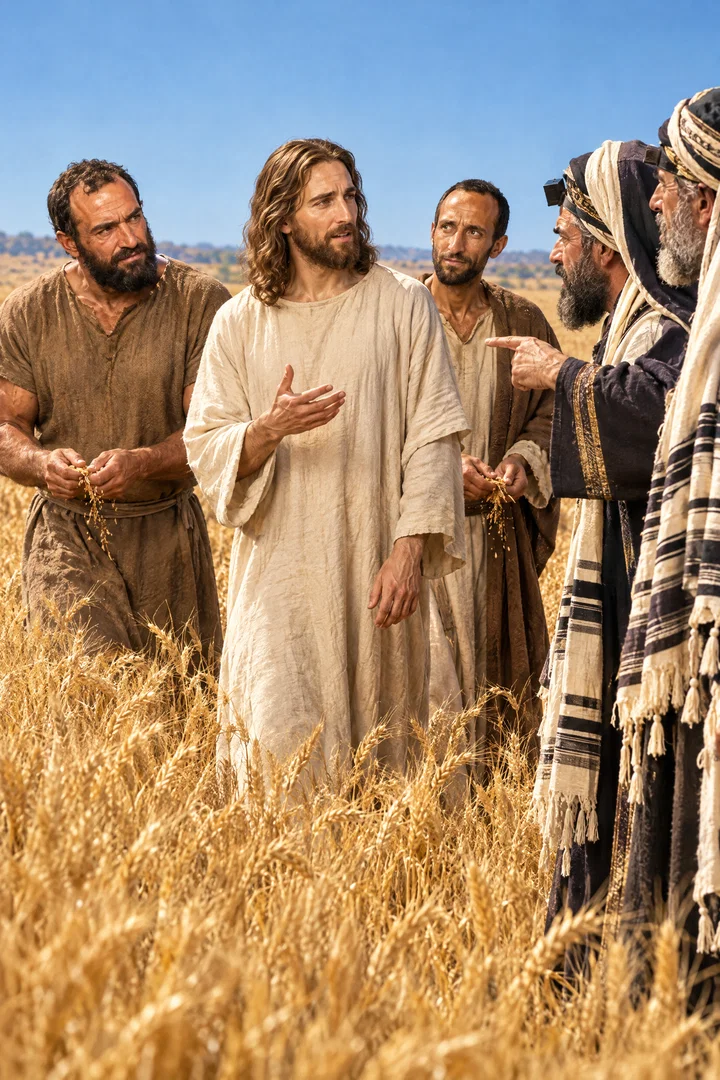
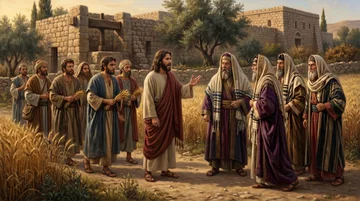
The verse belongs to the episode in which Christ passes through a grainfield and His followers pluck ears of grain, an event followed closely by His healing of the man with a withered hand.14MR 335.1–3Lt 13, 1876, par. 1–39MR 32.3–5 The charge arose when the disciples, returning from worship and passing through a field of ripening grain, plucked heads of wheat because they were hungry and rubbed out the kernels in their hands to eat.DA 283.4–284.1ST Sep 16, 1913Ms 43b, 1891, par. 9 That act of eating to satisfy hunger while passing through a neighbor's field was permitted by God's law, which allowed a passerby to gather from a field, orchard, or vineyard and provided harvest gleanings for the poor.DA 283.4–284.1PP 531.1–2HSFM 165.2
The rabbis treated the same act on the Sabbath as a double offense, counting gathering as a kind of reaping and rubbing in the hands as a kind of threshing.DA 283.4–284.1 The accusation rested not on God's law but on burdensome human requirements that had perverted the Sabbath and stripped it of significance after departure from God and failure to receive righteousness by faith.DA 283.4–284.1PK 183.1 Those distorted Sabbath rules made observance reflect selfish, arbitrary men rather than the loving Heavenly Father, representing God as a tyrant giving impossible laws and making Sabbath-keeping hard-hearted and cruel, a perversion promoted by Satan because the Sabbath is the sign of Christ's power.DA 283.4–284.1PK 183.1
Jesus denied the charge of unlawful Sabbath-breaking and declared the disciples guiltless, showing their actions were fully in harmony with the Sabbath commandment.ST Sep 16, 1913Ms 43b, 1891, par. 9 Christ did not conform to the human requirements but kept the Sabbath according to God's law in order to clear away the misconception, rejecting the false teaching despite the hostility of the rabbis.DA 283.4–284.1PK 183.1 He repelled the charge and established the innocence of His disciples by covering them with the shield of His own prerogatives, with the dignity He alone possessed as God in the flesh in whom dwells all the fullness of the Godhead bodily, the divine and human united to act out the principles that govern heaven.Ms 43b, 1891, par. 9
The verse shows scribes and Pharisees impatient to accuse Christ, wide awake to condemn Him and critically spying upon all His words and actions, and when finding nothing against Him charging His disciples.STMW6 43.2Ms 43b, 1891, par. 9 Though He gave unmistakable evidence that He was sent of God, they charged Him who made the Sabbath and is Lord of the Sabbath with being a Sabbath-breaker, in a work prompted by the enemy.STMW6 43.218MR 155.1–3Ms 43b, 1891, par. 9Ms 43b, 1891, par. 1 Their blind judgment exposes the foolishness and weakness of men who assume the place of judges over God's work, as if they had put out their own eyes, and illustrates how insisting on carrying God's work in one's own way causes loss of bearings.STMW6 43.218MR 155.1–3Ms 43b, 1891, par. 1
Sources
Pioneers and periodicals
47 sources
The verse records certain Pharisees charging the hungry disciples with breaking the Sabbath because as they walked through a ripening grainfield they plucked ears, rubbed them in their hands, and ate to relieve hunger.ST Apr 14, 1881ST Mar 12, 1894 The day meant is the seventh-day Sabbath of the Lord, the day before the Roman Sunday, not Sunday or a festival sabbath.RH Mar 19, 1857ST Apr 15, 1886ST Nov 26, 1894 The dispute was over what was lawful to do on that day, not over which day was the Sabbath, and the charge rested on Pharisaic traditions and corruptions that treated plucking as reaping and rubbing as threshing, not on any violation of the Decalogue.RH Feb 4, 1862ST May 17, 1910 Jesus defended the disciples as guiltless and in harmony with the commandment, since satisfying dire hunger and doing acts of mercy and necessity does not profane the Sabbath made as a blessing for humanity.RH Feb 4, 1862ST Feb 16, 1915RH Jan 8, 1857ST May 17, 1910RH Apr 21, 1863 His lordship over the Sabbath restored it to its purpose rather than changing its day or abolishing it, so the incident gives no authority for Sunday in place of the seventh day.RH Nov 14, 1871RH Oct 21, 1851ST Nov 26, 1894ST Jul 23, 1912
Grainfield Incident Described
The disciples were hungry as they walked through a grainfield on the Sabbath, plucking ears of barley and also of corn or wheat in its sweet milky ripening stage, rubbing the grain in their hands and shelling it, and eating it to relieve their hunger and meet their need for food while passing through.ST Apr 14, 1881ST Mar 12, 1894RH Feb 4, 1862ST Apr 15, 1886ST Sep 19, 1911 They were eating their own meal as they went, doing a work of necessity rather than committing sin.RH Feb 4, 1862ST Sep 19, 1911 The dispute was about what was lawful to do on the Sabbath, not about which day was the Sabbath.
Certain Pharisees accused them of doing what is not lawful to do on the Sabbath days, that is, of breaking the Sabbath.ST Mar 12, 1894ST Mar 12, 1894ST Mar 12, 1894 They pressed the charge to Jesus about the disciples' conduct and brought it against them for what they did as they passed through the fields.ST Mar 12, 1894RH Apr 21, 1863ST Apr 9, 1894 Christ's defense answered the charge.ST Mar 12, 1894
The Pharisees treated plucking as reaping, and rubbing or shelling the grain in the hands as threshing.ST Apr 14, 1881ST Mar 4, 1889ST Jan 30, 1896ST Sep 8, 1881 They also regarded the rubbing as preparing food, which their rules held to be unlawful Sabbath work and Sabbath-breaking.ST Apr 14, 1881ST Mar 4, 1889 In this way their accusation reflected human restrictions that made the Sabbath burdensome, while Jesus justified the disciples and taught that the Sabbath was made for people as a blessing and not as a burden or curse.ST Mar 4, 1889ST Jan 30, 1896
The complaint came after reports had reached Jerusalem of popular readiness to accept Jesus as king and of his resolute refusal to head such a political movement, coupled with rumors of his innovations and independence as a religious reformer, which thoroughly alarmed the authorities at Jerusalem.ST Sep 8, 1881 Their deputies then came directly to Jesus himself and not to the disciples, with specific complaints which the freedom of eastern manners permitting free access to private life had enabled them to establish.ST Sep 8, 1881 This Sabbath act had already given offense before the still graver scandal in Pharisaic eyes of sitting down to eat without ceremonially washing the hands.ST Sep 8, 1881 The issue was not merely walking through the field or taking someone else's property, but what they did there, namely plucking ears of grain.RH Apr 21, 1863RH Aug 15, 1854
Sabbath Day Identified
The plural phrase sabbath days uses the Greek dative plural with a singular meaning and refers to the seventh-day Sabbath, so the plural form does not prove that a different day is meant and does not mean multiple Sabbaths.RH Nov 8, 1853RH Jan 5, 1864 It is the weekly Sabbath of the Lord, not a festival day or a sabbath of the land, as one of fifty-nine New Testament mentions of the Sabbath of the Lord distinct from the local sabbaths that expired by limitation and ceased at the cross.RH Mar 19, 1857 It is one of the New Testament texts that names the seventh day as the Sabbath, which is the inspired name of that day in the Christian dispensation, and one of eighteen places in five chapters of Luke that mention the Sabbath, connected with the argument that the Sabbath remained binding after the crucifixion when the women rested on it according to the commandment.RH Jun 5, 1860RH Jan 19, 1860
The day was the seventh-day Sabbath, the day before the Roman Sunday, not Sunday morning, and the Pharisees would not have accused the disciples of Sabbath-breaking if the incident had occurred on Sunday.ST Apr 15, 1886ST Nov 26, 1894ST Jul 23, 1912 The accusation arose after the hungry disciples plucked ears of corn or wheat and ate them while going through the cornfield on the Sabbath day, with complaint made to Jesus against them.ST Apr 15, 1886ST Nov 26, 1894 The episode does not describe a Sunday meal and does not make Sunday sacred, and agreement among churches cannot transfer to the first day the blessing and sanctification belonging to the seventh day.ST Nov 26, 1894ST Jul 23, 1912 The Jews kept the correct day, the seventh day, and Jesus did not tell the accusers that their reckoning of the Sabbath was wrong.RH Oct 21, 1858ST Apr 26, 1905 The complaint does not establish that the disciples broke the Sabbath law, while formal rules and unscriptural ideas had obscured the Sabbath's true meaning, including wrongly restricting attention to the sick on that day.RH Oct 21, 1858ST Apr 26, 1905
Grouping Luke 6:1-10 with other Sabbath texts in marginal references and subject indexes is wholly the work of man for convenience and suggestion, never authoritative for interpretation.ST Jan 29, 1902 No conclusion about keeping any day can be drawn from a heading alone, and its place in such a human grouping does not mean it teaches that it makes no difference what day is kept so long as one day is kept.ST Jan 29, 1902 Each text must be examined by the aid of the Spirit and given its due weight and proper setting, and no conclusion about the Sabbath can be drawn unless the Scriptures themselves warrant it.ST Jan 29, 1902
Tradition Versus God's Law
The question at issue was what was lawful to do on the Sabbath, not which day was the Sabbath.RH Feb 4, 1862 The charge was that the hungry disciples broke the Sabbath by plucking grain and eating as they passed through the field, and the dispute turned on whether relieving hunger in that way violated the Sabbath law.RH Feb 4, 1862 Their act did not violate any precept of the ceremonial law, and the accusation against them was unjust.RH Feb 4, 1862 The answer is given in David and his men eating the sanctuary showbread when hungry, an act ordinarily unlawful yet not condemned.
The unlawfulness alleged rested on Pharisaic tradition about Sabbath observance, on the Mishna and corruptions of Scripture, and not on violation of the Decalogue or of God's Sabbath law.ST May 17, 1910ST Aug 25, 1909RH Feb 11, 1858 The grainfield act and Sabbath healing were treated as borderline unlawful acts under those human rules. The disciples did not break God's Sabbath law, for that law rightly interpreted permits what is lawful and in harmony with it.ST May 17, 1910 The objection reflected superstitious and man-made restrictions added to the Sabbath rather than the moral law or the divine purpose of the Sabbath.RH Jul 18, 1854ST Mar 12, 1894 Christ and his followers were guided by the Bible as quite another rule from human tradition, and the exchange therefore gives no argument against observance of the Sabbath of the law of God but exposes the wide difference between the Bible and human tradition, as between the Bible and creeds, confessions and disciplines.RH Feb 11, 1858 Jesus corrected those traditions from Scripture while upholding the Sabbath as a weekly day of rest and holy observance for all humanity, and his practice and teaching opposed those burdensome rules while upholding the true Sabbath.RH Jul 18, 1854ST Mar 12, 1894
Those added rules had turned the Sabbath given as a blessing into a burdensome hardship, contrary to God's purpose and law.ST Jun 11, 1894ST Mar 4, 1889ST Aug 25, 1909 Plucking was treated as reaping and rubbing grain in the hands as threshing and Sabbath-breaking, reflecting human restrictions rather than the law of God.ST Mar 4, 1889 Hunger was not to go unappeased, and the action was allowed and defended from Scripture.RH Jul 18, 1854 Jesus taught by word and deed that acts of mercy and goodness were lawful and consistent with the letter and spirit of the law.ST Jun 11, 1894 Sabbath observance was a central dispute between Jesus and the Pharisees and was treated as a test of obedience to God's commandments.ST Jun 11, 1894
The charge had a shadow of foundation in the strict letter of the Sabbath law, which under ordinary circumstances forbade even work to supply bodily wants for which provision was to be made beforehand.RH Jan 8, 1857 Pharisaic tradition overlaid that letter, straining the letter while violating the spirit.RH Jan 8, 1857 An enlightened scriptural interpretation warrants the disciples' deed, for mercy rather than mere sacrifice is the genius of every dispensation, works of necessity and mercy are lawful on the Sabbath, and the Sabbath was made for man to lessen human misery and not to condemn craving need.RH Jan 8, 1857 Their deed was wholly different from willful, presumptuous Sabbath-breaking deserving death.RH Jan 8, 1857
The challenge reflects the scrutiny directed at Jesus and his disciples when they acted on the Sabbath, including when Jesus healed the sick.ST Apr 9, 1894 Rubbing grain in the hands to eat was treated as unlawful and made a ground of complaint.ST Feb 2, 1915ST Apr 9, 1894 That complaint illustrates the danger of imposing religious rules on other people's Sabbath observance.ST Feb 2, 1915 Restrictive ideas about the Sabbath led to accusing others of wrongdoing, a pattern compared with prosecuting Sabbath keepers for not conforming to human rules.ST Nov 21, 1895
Disciples Declared Guiltless
Jesus was competent to answer the challenge and defended and justified the disciples, denying the charge and declaring them guiltless and in harmony with the Sabbath commandment.RH Feb 4, 1862ST May 17, 1910RH Apr 21, 1863ST Mar 12, 1894ST Jun 6, 1878 The issue was not merely walking through the field but what they did there, namely plucking grain, which the Pharisees treated as unlawful Sabbath work because they did not follow Jewish tradition, yet their complaint does not establish that the Sabbath law was broken and the charge was unjust.RH Feb 4, 1862ST May 17, 1910RH Apr 21, 1863RH Oct 21, 1858ST Jun 6, 1878 Jesus appealed to Scripture to answer, vindicated them by showing that what they did was lawful under the Sabbath law, and did not tell the accusers that their reckoning of the Sabbath was wrong, for the accusers had condemned the guiltless and their action did not violate a precept of the ceremonial law.RH Feb 4, 1862RH Apr 21, 1863ST Mar 12, 1894RH Oct 21, 1858ST Jun 6, 1878
He answered by recalling David and his men eating the sanctuary showbread when they were hungry, though the act was ordinarily unlawful, they were not condemned.RH Jan 8, 1857RH Apr 21, 1863RH Sep 1, 1859 The disciples met the Sabbath with an ordinary need for food, and Jesus defended their action by appealing to David's eating the holy bread when hungry, first citing David's case.RH Apr 21, 1863RH Sep 1, 1859 The disciples' act was dictated by dire necessity while hungering, with attendance on One greater than the temple precluding previous provision, as meeting need for food and eating their own meal while passing through.RH Jan 8, 1857ST Sep 19, 1911RH Jul 18, 1854 Their deed was wholly different from willful presumptuous Sabbath-breaking deserving death, and satisfying hunger did not profane the Sabbath, for hunger was not to go unappeased and Jesus allowed their action and defended it from Scripture.RH Jan 8, 1857ST Sep 19, 1911RH Jul 18, 1854RH Aug 15, 1854
As the priests are blameless in kindling fires and preparing sacrifices in the temple service on the Sabbath, mercy rather than mere sacrifice is the genius of every dispensation.RH Jan 8, 1857 The Sabbath was made for humanity as a blessing to lessen misery and not to condemn craving need, not as a burden or curse, so resting does not forbid every activity and may include necessary work.ST Feb 16, 1915RH Jan 8, 1857ST Mar 3, 1914 It is right and lawful to satisfy hunger on the Sabbath without violating it, though it must be kept holy rather than treated as common, for the Sabbath was made for people and identifies it as the Creator's Sabbath made for humanity's benefit.ST Feb 16, 1915RH Jan 8, 1857ST Mar 3, 1914RH Aug 15, 1854
Acts of mercy and goodness, doing good and saving life, ministering to the sick and healing, are lawful and consistent with the letter and spirit of the law.ST Jun 11, 1894ST Nov 14, 1900ST Jan 30, 1896 The Sabbath is a merciful institution for humanity, mercy, and good deeds, not faultfinding or burdensome human traditions, and Christ's beneficent works upheld its sacredness and added to its sanctity as his own institution.ST Jun 11, 1894RH Jul 18, 1854ST Mar 12, 1894ST Nov 18, 1880ST Jan 30, 1896 Jesus taught by word and deed against burdensome human rules while upholding the true Sabbath, showing that works beneficial to life were proper on the Sabbath and correcting superstitious restrictions added to it rather than the moral law.ST Jun 11, 1894ST Nov 14, 1900RH Jul 18, 1854ST Mar 12, 1894ST Nov 18, 1880 The Sabbath does not forbid what is necessary to life and comfort, so kindling fire for warmth when needed for life and comfort is lawful, while the command to kindle no fire throughout their habitations belonged to Israel's wilderness wanderings in a warm country where fire was needed only for cooking food, which was not to be done on the Sabbath.ST Christ did not violate, break, or abolish the Sabbath when his public ministry began but upheld it, and if he had transgressed God's law he would have been a sinner and could not be the sinless sacrifice for humanity.RH Oct 21, 1851ST Nov 18, 1880RH Nov 1, 1853
Sabbath Binding Not Changed
The challenge over what was deemed unlawful on the Sabbath turned on human traditions rather than on any change of the day, and the assertion of lordship over the Sabbath restored it to its intended purpose instead of authorizing a different day.RH Nov 14, 1871 Sabbath observance stood as a central dispute and a test of obedience to God's commandments, and the confrontations over eating grain and over healing demonstrate that the Sabbath was being observed and that its observance brought conflict with religious authorities.ST Jun 11, 1894ST Oct 19, 1882 The burden imposed in those confrontations came from human rules rather than from the true purpose of the day, while acts of mercy and goodness were shown to be lawful and consistent with both the letter and the spirit of the law.ST Jun 11, 1894
The Sabbath is God's command and memorial of completed creation, and keeping it expresses loyalty to the Creator on the particular day He appointed, the seventh day.ST Feb 17, 1898 The objection to plucking grain reflected added superstitious restrictions rather than the moral law, and those traditions were corrected while the Sabbath was upheld as a weekly day of rest and holy observance for all humanity.RH Jul 18, 1854 That Sabbath is the Creator's Sabbath, made for humanity's benefit, yet it must be kept holy rather than treated as common, so the charge concerned Sabbath observance rather than taking another's property, and satisfying hunger in passing did not profane it.RH Jul 18, 1854RH Aug 15, 1854 Hunger was not to go unappeased, and the act was allowed and defended from Scripture.RH Jul 18, 1854
The day in the cornfield incident was the Sabbath rather than Sunday morning, with hungry disciples plucking ears and eating while complaint was made against them.ST Nov 26, 1894 It was the seventh day, the day before the Roman Sunday, not a description of a Sunday meal and not an act making Sunday sacred.ST Jul 23, 1912 The episode therefore supplies no authority for Sunday in place of the Sabbath, and agreement among churches cannot transfer to the first day the blessing and sanctification belonging to the seventh day.ST Nov 26, 1894ST Jul 23, 1912
The Sabbath remains binding, as seen where Luke's eighteen Sabbath mentions in five chapters connect with the argument that after the crucifixion the women rested according to the commandment.RH Jan 19, 1860 The chapter yields simple yet profound lessons on keeping the Sabbath and following God's law, lessons that helped children take the truth to heart.RH Aug 20, 1908
Those who hold a different position teach that the charge exposes a strict Sabbatarian view which Christ revolutionarily opposed, that modern Sabbatarians seek to rehabilitate that same strict view and fasten it upon the Christian Sunday, and that the Sabbath in dispute was the Jewish Sabbath historically distinct from the Christian Sunday.RH Jul 24, 1913 Those who hold still another position teach that the verse records one of the crimes charged against Jesus, namely neglect of Sabbath observance, proving Him no particular observer of the Sabbath.ST
Sources