Luke 6:7
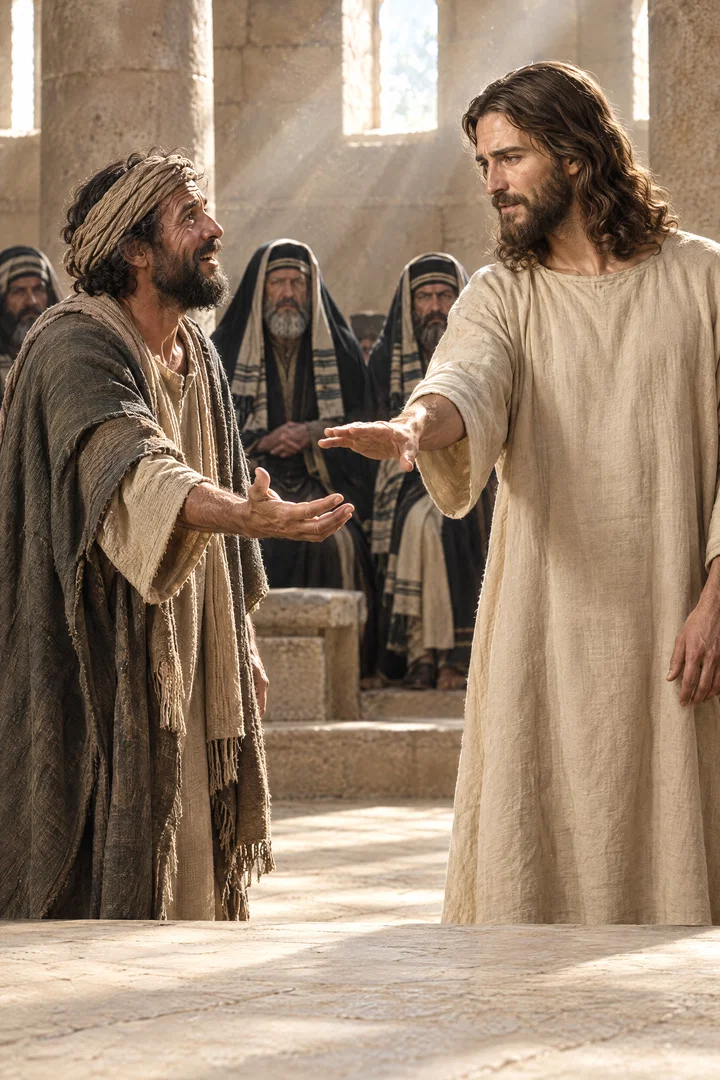
And the scribes and Pharisees watched him, whether he would heal on the sabbath day; that they might find an accusation against him.
Translations
American King James Version, King James Version, KJV Cambridge Paragraph Bible
And the scribes and Pharisees watched him, whether he would heal on the sabbath day; that they might find an accusation against him.
And the scribes and Pharisees watched him, to see whether he would heal on the sabbath; that they might find an accusation against him.
Revised Version, American Standard Version
And the scribes and the Pharisees watched him, whether he would heal on the sabbath; that they might find how to accuse him.
and the scribes and the Pharisees were watching him, if on the sabbath he will heal, that they might find an accusation against him.
And the scribes and the Pharisees were watching if he would heal on the sabbath, that they might find something of which to accuse him.
Now the Scribes and the Pharisees were narrowly watching him, whether, on the Sabbath, he healeth,—that they might find whereof to accuse him.
Looking for a reason to accuse Jesus, the scribes and Pharisees were watching Him closely to see if He would heal on the Sabbath.
Looking for an accusation against Jesus, the scribes and Pharisees were watching Him closely to see if He would heal on the Sabbath.
The scribes and the Pharisees watched him, to see whether he would heal on the Sabbath, that they might find an accusation against him.
And the scribes and Pharisees were watching him to see if he would make him well on the Sabbath, so that they might be able to say something against him.
And the Scribes and Pharises watched him, whether he would heale on the Sabbath day, that they might finde an accusation against him.
Douay-Rheims (Challoner revision)
And the scribes and Pharisees watched if he would heal on the sabbath; that they might find an accusation against him.
Pictures
Cross-references 20 of 31
- Matthew 12:9-14
And when he was departed thence, he went into their synagogue:
Parallel account of Jesus healing a withered hand on the Sabbath while his opponents seek grounds to accuse him.
- Mark 3:1-6
And he entered again into the synagogue; and there was a man there which had a withered hand.
Observers sought grounds to accuse Jesus over a Sabbath healing.
- John 5:8-18
Jesus saith unto him, Rise, take up thy bed, and walk.
Jesus heals on the Sabbath, provoking accusations and hostility from Jewish leaders.
- Mark 2:23-28
And it came to pass, that he went through the corn fields on the sabbath day; and his disciples began, as they went, to pluck the ears of corn.
A parallel account of disputes over Jesus’ Sabbath observance.
- Exodus 20:8-11
Remember the sabbath day, to keep it holy.
The Sabbath commandment frames the dispute over Jesus’ Sabbath healing.
- Luke 13:14
And the ruler of the synagogue answered with indignation, because that Jesus had healed on the sabbath day, and said unto the people, There are six days in which men ought to work: in them therefore come and be healed, and not on the sabbath day.
A synagogue ruler objects to Jesus healing on the Sabbath.
- John 9:16
Therefore said some of the Pharisees, This man is not of God, because he keepeth not the sabbath day. Others said, How can a man that is a sinner do such miracles? And there was a division among them.
Pharisees dispute Jesus’ healing on the Sabbath.
- Luke 14:1-5
And it came to pass, as he went into the house of one of the chief Pharisees to eat bread on the sabbath day, that they watched him.
Jesus heals on the Sabbath amid Pharisees’ scrutiny and dispute.
- Matthew 12:10
And, behold, there was a man which had his hand withered. And they asked him, saying, Is it lawful to heal on the sabbath days? that they might accuse him.
Opponents watched Jesus to accuse him over a Sabbath healing.
- Mark 3:4
And he saith unto them, Is it lawful to do good on the sabbath days, or to do evil? to save life, or to kill? But they held their peace.
Jesus asks whether it is lawful to do good or harm on the Sabbath.
- Luke 6:1-2
And it came to pass on the second sabbath after the first, that he went through the corn fields; and his disciples plucked the ears of corn, and did eat, rubbing them in their hands.
Both accounts concern activity on the weekly Sabbath.
- John 5:18
Therefore the Jews sought the more to kill him, because he not only had broken the sabbath, but said also that God was his Father, making himself equal with God.
Jesus faces opposition for healing on the Sabbath, with his Father claim added to the charge.
- Luke 6:11
And they were filled with madness; and communed one with another what they might do to Jesus.
Their anger over the healing leads them to discuss what to do to Jesus.
- Colossians 2:16
Let no man therefore judge you in meat, or in drink, or in respect of an holyday, or of the new moon, or of the sabbath days:
Both concern judgment over Sabbath observance.
- Isaiah 58:13
If thou turn away thy foot from the sabbath, from doing thy pleasure on my holy day; and call the sabbath a delight, the holy of the LORD, honourable; and shalt honour him, not doing thine own ways, nor finding thine own pleasure, nor speaking thine own words:
Contrasts Sabbath delight with burdensome observance.
- Genesis 2:2-3
And on the seventh day God ended his work which he had made; and he rested on the seventh day from all his work which he had made.
The Sabbath originated at creation, and Christ restores its original purpose.
- 1 Samuel 21:1-6
Then came David to Nob to Ahimelech the priest: and Ahimelech was afraid at the meeting of David, and said unto him, Why art thou alone, and no man with thee?
Jesus cites David’s eating the holy bread in the Sabbath dispute.
- Mark 3:6
And the Pharisees went forth, and straightway took counsel with the Herodians against him, how they might destroy him.
They plot to destroy Jesus after his Sabbath healing.
- Matthew 12:8
For the Son of man is Lord even of the sabbath day.
Jesus is Lord of the Sabbath.
- Mark 2:28
Therefore the Son of man is Lord also of the sabbath.
Jesus is Lord of the Sabbath.
Commentary
Each commentary is drawn from primary sources: the writings of Ellen G. White and Adventist pioneers and periodicals. Each commentary is separate. Its own words are not a quotation; follow the references to read the source passages.
Ellen G. White
18 sources
On another Sabbath in the synagogue a man with a withered right hand was present while the scribes and Pharisees watched Jesus as hostile spies, not to learn but hoping He would heal so they could find grounds to accuse Him.COS 73.5–74.72SP 294.24RED 53.1 Knowing their thoughts, He made the man stand forth and exposed them by asking whether it is lawful on the Sabbath to do good or evil, to save life or destroy it, since a man is better than a sheep lifted from a pit.COS 73.5–74.72SP 199.2–3 He then healed the man and restored his hand whole as the other.COS 73.5–74.7Ms 3, 1879, par. 9–10Ms 238, 1902, par. 7 The healing was done to correct false teaching and to show that deeds of mercy are lawful on the Sabbath, for He kept the Sabbath according to God's law rather than false human requirements, thus honoring it while sweeping away senseless restrictions without breaking the fourth commandment.4RED 51.2PK 183.1 Their charge made the Sabbath's Maker out to be a Sabbathbreaker, yet it could not be sustained, and the miracle so intensified their enraged plotting that He withdrew with His disciples to the seaside of Galilee where great multitudes followed Him for teaching and healing.4RED 53.12SP 201.118MR 155.1–3ST Mar 10, 1881ST Jun 13, 1878
Watchers, Question, and Miracle
It was on another Sabbath in the synagogue, and there was present a man whose right hand was withered.COS 73.5–74.7 The scribes and Pharisees were there as hostile spies, watching Him closely not to learn but in hope that He would heal so they might find grounds for accusation against Him.COS 73.5–74.72SP 294.24RED 53.12SP 201.1PK 183.1 Their scrutiny concealed jealousy and hatred while they sought to trap Him in His words.3RED 70.1–2ST Oct 16, 1879
Knowing their thoughts, He called the man to stand forth in the midst and laid bare their unreason by asking whether it is lawful on the Sabbath to do good or to do evil, to save life or to destroy it.COS 73.5–74.72SP 199.2–3 A man is much better than a sheep, which any of them would lay hold of and lift out if it fell into a pit on the Sabbath, so it is lawful to do well on the Sabbath days.COS 73.5–74.7 He looked upon them with anger, being grieved for the hardness of their hearts.COS 73.5–74.7
Then He healed the man freely and restored his hand whole as the other, speaking words to comfort the sick and heal disease.COS 73.5–74.7Ms 3, 1879, par. 9–10Ms 238, 1902, par. 7 At His doing good on the Lord's day they were enraged and filled with madness, though they claimed to enjoy God's special favor.COS 73.5–74.72SP 294.23RED 70.1–2ST Oct 16, 1879 And they communed together about what they might do to Jesus.COS 73.5–74.7
Sabbath Law Vindicated
The healing of the withered hand under hostile watch was done to correct false Jewish teaching about the Sabbath and to impress upon the disciples that deeds of mercy are lawful on that day.4RED 51.2 He kept the Sabbath according to God's law rather than the false requirements imposed by religious leaders, so His conduct upheld and honored the Sabbath instead of dishonoring it.4RED 51.2PK 183.1 The act broke down custom without breaking the fourth commandment, leaving it standing as God gave it to the world, and it exalted the Sabbath by sweeping away the senseless restrictions that encumbered it, while those who complained themselves dishonored the Sabbath by their many useless rites and ceremonies.4RED 51.2
The hostility of the watchers exposed a contradiction between condemning His Sabbath healing and harboring plans to kill on the Sabbath, with doing good through mercy more righteous than murder in the heart.2SP 199.2–3 Their charge treated the Sabbath's Maker as a Sabbathbreaker.18MR 155.1–3 That charge that He broke the Sabbath could not be sustained, so His accusers later avoided charging Him with Sabbath-breaking because examination would show His work was healing the afflicted, and they needed false witnesses to testify against Him.ST Jun 13, 1878Ms 29a, 1885, par. 6–8
Consequences and Sabbath Pattern
The Sabbath healing deepened the bitterness and malice of the Jews against Him, for His acts of mercy made the Pharisees more intense in their hatred while they closely watched all His movements to find cause to accuse Him.4RED 53.12SP 201.1ST Mar 10, 1881 That hostility grew so great that He withdrew with His disciples to the seaside of Galilee in search of a more favorable field of labor.4RED 53.12SP 201.1 This watching was a continuation of the hostility already provoked in Jerusalem, where His Sabbath healing at the Pool of Bethesda had stirred a plot against His life, and spies followed Him to watch Him still as He taught in Galilee.ST Feb 22, 1877 The account of healing the withered hand belongs alongside the account of His disciples plucking ears of corn in the field.9MR 32.3–5
The new miracle done on the Sabbath day was noised abroad through all that region and drew great multitudes to follow Him to the seaside.4RED 53.1 There He continued teaching and healing the sick and those possessed by demons.4RED 53.12SP 201.1 Yet the influence of the watchers kept many sick people from coming to Him for relief on the Sabbath day, for they feared being stigmatized and branded as transgressors of the law.3RED 44.1–2ST Mar 10, 1881 So the diseased waited until the sun had set in the west, and then flocked to Him from every quarter in great numbers to be healed.3RED 44.1–2ST Mar 10, 1881
Healing on the Sabbath in this way is right and proper, and gives Sabbathkeepers an example to remember the afflicted on the Sabbath with fasting and prayer.Ms 3, 1879, par. 9–10 They are to humble their hearts before God with the expectation that He will come in and work abundantly to uphold and raise the sick, as He worked healing freely on the right hand and on the left even while watched for accusation.Ms 3, 1879, par. 9–10 He spoke words to comfort the sick and healed their disease every Sabbath and never grew weary in the work.Ms 238, 1902, par. 7 That Sabbath healing was so extensive and widespread it was beyond computation, with the world as His practice, and His life is the pattern life and example to follow.Ms 238, 1902, par. 7
Sources
Pioneers and periodicals
40 sources
The scribes and Pharisees watched Jesus closely as He was about to heal a man with a withered hand on the Sabbath, hoping to find grounds to accuse Him.ST Apr 12, 1899ST Nov 14, 1900 Their watching was hostile and deceitful, not sincere inquiry to learn, and was already joined to thoughts of His death.ST Apr 12, 1899ST Nov 14, 1900ST Apr 14, 1881 The day they watched was the weekly Sabbath of the Lord, the known Sabbath observed in Christ's time, not another day.RH Mar 19, 1857ST Nov 26, 1894 Their opposition came from oppressive, man-made traditions that forbade healing, not from God's Sabbath law, which Jesus kept and honored by doing what was lawful in relieving suffering.RH Feb 4, 1862ST Jun 11, 1894ST Apr 5, 1899ST May 17, 1910 His healing did not make Him a Sabbath breaker or sinner, but vindicated Him as the sinless Messiah, showing that doing good and giving new life belong to the sacredness of the Sabbath.STST Nov 18, 1880ST Jun 6, 1878ST Jul 21, 1898
Watchers and Setting
The scribes and Pharisees watched Jesus closely on the Sabbath as He was about to heal a man with a withered hand, hoping to find grounds to accuse Him if He healed.ST Apr 12, 1899ST Nov 14, 1900ST Apr 14, 1881ST Mar 12, 1894 Their watching belonged to that Sabbath healing of the man with the withered hand.ST Nov 14, 1900ST Apr 14, 1881ST Mar 12, 1894 They watched to find an accusation, not to seek healing or show compassion for the suffering man, in contrast with Jesus' concern for him whom He healed.ST Apr 12, 1899ST Nov 14, 1900ST Apr 14, 1881
Their scrutiny was hostile and deceitful, not sincere inquiry to learn about the Sabbath or His work.ST Apr 12, 1899ST Nov 14, 1900ST Apr 14, 1881 It was not a sincere question about the Sabbath but part of deceitful opposition to Him, already joined to thoughts of His death.ST Apr 14, 1881 It arose because Jesus would not follow their ideas of Sabbath-keeping, exposing their hardness of heart and opposition to doing good on the Sabbath.ST Nov 14, 1900 It arose from jealousy and hatred, which they concealed while seeking to trap Him in His words, and when He healed they were enraged that He had done a good work on the Lord's day despite their claim to enjoy God's favor.ST Oct 16, 1879
Spies had watched Jesus after His Sabbath healing at the Pool of Bethesda provoked hostility and a plot against His life in Jerusalem, and continued watching Him when He taught in Galilee.ST Feb 22, 1877 Spies were among the people nearby when a fresh charge arose because the hungry disciples plucked and rubbed grain while walking through a field.ST Apr 14, 1881 The leaders treated these actions as reaping, threshing, and preparing food on the Sabbath, though taking enough grain to relieve hunger was permitted by law and custom.ST Apr 14, 1881
His acts of mercy in healing on the Sabbath made the bitterness of the Pharisees more intense as they closely watched all His movements to find cause to accuse Him.ST Mar 10, 1881 Their influence kept many sick people from coming to Him for relief on the Sabbath day for fear of being stigmatized as transgressors of the law.ST Mar 10, 1881 So the diseased waited until the sun had set in the west before flocking to Him from every quarter to be healed.ST Mar 10, 1881
Sabbath Day Identified
The Sabbath watched here is the weekly Sabbath of the Lord, not a festival day or a land sabbath.RH Mar 19, 1857 It stands as one of fifty-nine New Testament mentions of that Sabbath, distinct from the single mention of the local sabbaths that expired by limitation and ceased at the cross.RH Mar 19, 1857 That Sabbath exists in the present dispensation just as really as in the former dispensation.RH Mar 19, 1857
It was the known Sabbath observed in Christ's time, the day the scribes and Pharisees themselves were keeping when they watched whether He would heal. His teaching and healing on that day affirmed it as the true Sabbath, despite the long-ago event when Joshua commanded the sun to stand still. It was the Sabbath after He and His disciples went through the cornfield where the hungry disciples plucked ears of corn, when He was in the synagogue healing a poor man with a withered hand.ST Nov 26, 1894
The day was the Sabbath, not Sunday, and the healing gives no ground for keeping another day in its place or for calling Sunday the Lord's day.ST Nov 26, 1894 The leaders watched and censured Him for healing on the Sabbath, not on Sunday, and to make them censure Him for healing people on Sunday misplaces the day and is an inexcusable error.ST Nov 26, 1894 The account provides no ground for teaching that Christ kept Sunday. Luke 6:1-10 has a bearing on the Sabbath day but does not teach that it makes no difference what day is kept so long as one day is kept.ST Jan 29, 1902 Its placement with other texts under a heading of Sabbath observance in a Bible index is wholly the work of man for convenience and suggestion and is no part of God's Word and never authority for interpretation.ST Jan 29, 1902 Each text must be examined by the aid of the Spirit and given its due weight in its proper setting, and no text can be assumed to teach the idea of the heading unless the Scriptures themselves warrant that conclusion.ST Jan 29, 1902
Tradition Opposes Mercy
The watching in Luke 6:7 grew out of oppressive human traditions that burdened the Sabbath and treated healing as forbidden, not out of any prohibition in God's Sabbath law itself.RH Feb 4, 1862ST Jun 11, 1894ST Apr 5, 1899RH Feb 4, 1862ST Mar 12, 1894 Those traditions forbade taking any action toward healing the sick on that day, so the leaders regarded a work of mercy as unlawful and watched for a chance to accuse.RH Feb 4, 1862ST Mar 4, 1889ST Jun 11, 1894ST Apr 5, 1899RH Feb 4, 1862 Their scrutiny exposed hostility and false teaching about Sabbath observance, making proper observance itself a point of contention.RH Feb 4, 1862ST Jun 11, 1894ST Apr 5, 1899 The conflict was between God's law and Jewish tradition, not between the spirit and the letter of the law.ST May 17, 1910 Jesus did not break God's Sabbath law but interpreted it and did what was lawful.ST May 17, 1910
He deliberately set aside the perverting tradition in order to preserve the Sabbath that the tradition had perverted.RH Feb 4, 1862 He stripped the commandment of the burden of tradition, pointed out the true character of genuine observance, and exposed the self-sufficient and self-exalting interpretation as illegitimate and burdensome.RH Feb 10, 1910 He taught that lesson without hesitation even though He knew His enemies would use what He said and did as ground for accusation.RH Feb 10, 1910 By precept and example and by acts of charity and mercy He reformed Sabbath observance and joined Sabbath keeping with helpful ministry.ST Jul 21, 1898 By declaring it lawful to do good on the Sabbath He upheld the fourth commandment as God gave it, so His healing condemned restrictive human customs rather than the commandment.ST Feb 10, 1904 He honored the Sabbath through mercy while His accusers dishonored it.ST Feb 10, 1904
Sabbath rest therefore permits works of necessity and mercy, including healing the sick.ST Mar 4, 1889RH Feb 7, 1916RH Jun 18, 1861ST Mar 3, 1914 Doing good and relieving suffering are lawful on the Sabbath, and kindness to people in need is no less fitting than helping suffering animals. Fire and other things necessary to life and comfort are lawful on that day and are not forbidden by the wilderness command to kindle no fire throughout their habitations on the Sabbath, for the Sabbath was not given to bring suffering upon God's children.ST The Sabbath was made and set apart at creation to lighten men's burdens and bring joy and blessing, not to be burdensome and exacting and oppressive.ST Jul 21, 1898 It was designed as a boon to the human family, a day to seek good and do good, to unloose the bands of sin, undo heavy burdens, let the oppressed go free, and give new life and vigor to the disabled member.ST Jul 21, 1898 By doing such good on the Sabbath Christ added to the day's sacredness and upheld rather than abolished the Sabbath law.ST Nov 18, 1880ST Jul 21, 1898
He knew the watchers were present and that His Sabbath miracles would increase their hostility.ST Nov 11, 1897 Yet He did not delay helping afflicted people until another day but healed them at once, even when their conditions were not urgent.ST Nov 11, 1897
Christ Vindicated as Messiah
Though He was Lord and Maker of the Sabbath and observed it, the leaders treated His healing as a possible offense under their false restrictions, watching Him closely in hope of finding grounds to accuse Him if He healed, while His challenge to them taught that doing good and showing mercy on the Sabbath are lawful.RH Feb 7, 1916 His ministering to the sick and healing them on the Sabbath, and His justifying His disciples in rubbing out wheat to eat on that day, did not make Him a Sabbath breaker or sinner, for He vindicated Himself and His actions were lawful according to the Sabbath law.STST Jun 6, 1878RH Nov 1, 1853 If He had transgressed God's law He would have been a sinner and could not have been the sinless sacrifice through whom people receive pardon, salvation, and redemption.RH Nov 1, 1853 The Sabbath was not given to bring suffering upon God's children, so fire and other things necessary to life and comfort are lawful on that day and are not forbidden by the wilderness command to kindle no fire throughout their habitations on the Sabbath.ST
His enemies watched His Sabbath healing in order to find grounds to accuse Him, yet His accusers later avoided charging Him with Sabbath-breaking because an examination would reveal that His work on the Sabbath was healing the afflicted, undermining their case.ST Jun 13, 1878 The healing connected with the watching was of a man whose right hand was withered, and it was a blessed Sabbath making a half-man whole. He did the work quietly as the hand of God, restoring the hand to grasp tools, work, earn bread and clothes and home, and touch his wife, making the crippled in hand and foot, the blind, the deaf, and the insane whole. Though facing being cast out of the synagogue, the healed man gives his strong, restored hand wholly to Christ to work or fight for Him, while the watchers muttered and looked sour at him.
This healing of the withered hand shows He is the Messiah, the Shiloh of Jacob and of Israel. If the Jews had truly kept the Sabbath they would have recognized Jesus as the promised Messiah and received His teaching on how to observe it rather than falsely accusing Him of breaking the Sabbath when He healed on that day.ST Jul 19, 1905 Then the blame for His crucifixion would not have rested on them.ST Jul 19, 1905 The man with the withered hand could not restore his own ability, but when he trusted the power in Jesus' command to stretch forth his hand and obeyed, his hand was restored, showing that God's command can supply the strength needed to obey.ST Feb 11, 1897RH Jun 8, 1869 Obeying is an act of faith that trusts God to sustain while doing all that can be done on the human part, without presumption, so that God is honored and His cause advanced.RH Jun 8, 1869
Accusing Spirit Then and Now
Their sacredness about the Sabbath was a wicked spirit animating prominent, bigoted, hypocritical sticklers for a Sabbath loaded with human traditions.ST Mar 19, 1894 Their Sabbath was man-made and Satan-inspired, identical with the divinely made and Christ-inspired Sabbath only in time.ST Mar 19, 1894 Their watching to accuse reveals a spirit of accusation, condemning the guiltless, indignation, being filled with madness, persecution, seeking to slay and destroy Jesus, and counseling with the Herodians, the government favorites, how they might destroy Him.ST Mar 19, 1894 That spirit did not rest till it crucified Him, and by that wicked act brought about the everlasting overthrow of their place and nation.ST Mar 19, 1894
The question of the Sabbath day, how to keep it, enraged the Pharisees against Christ and formed the basis of their accusation against Him, which finally ended in His crucifixion.ST Jan 21, 1903 They followed Him and watched His teaching closely not to be helped by His ministry but to seize some statement to accuse Him and bring about His downfall.RH Feb 10, 1910 Their minds were closed to light that would expose their own wrong course, yet quick to mark any word or action that seemed out of harmony with their own interpretation of the Scriptures and their traditions.RH Feb 10, 1910 Having publicly committed themselves against His mission and work, they judged Him from that standpoint, and being out of harmony with His spirit they readily found in His words and works what looked to them like outright contradiction of Moses and the prophets as they interpreted them.RH Feb 10, 1910 In this case the issue was Sabbath observance and the charge was breaking the Sabbath commandment, violating the fourth commandment, when He was actually stripping the Sabbath commandment of the burden of tradition they had laid on it, pointing out the true character of genuine Sabbath observance and exposing their self-sufficient and self-exalting interpretation as illegitimate and burdensome.RH Feb 10, 1910
A watching over Sabbath observance motivated not by desire for truth but by settled opposition after public commitment against the one watched watches to find an accusation, and finds what it seeks because prior opposition determines judgment.RH Feb 10, 1910 That same watching to find accusation marks the spirit and purpose of efforts to spread confusion by charging that recent utterances on religious liberty contradict earlier utterances.RH Feb 10, 1910 Their offense at His Sabbath healing illustrates how religious authorities can use Sabbath observance as a pretext for accusation and persecution.ST Apr 9, 1894 Their scrutiny was driven by wicked purposes, by jealousy and hatred which they concealed while seeking to trap Him in His words.ST Oct 16, 1879ST Feb 10, 1904ST Jul 15, 1897 They hated and plotted against the One who was saving lives and bringing happiness, and were enraged that He had done a good work on the Lord's day despite claiming to enjoy God's favor, while His purpose was to save life.ST Oct 16, 1879ST Feb 10, 1904ST Jul 15, 1897
The setting contrasts their murderous intent with His healing mercy, showing that love expressed in deeds of mercy is more righteous than harboring thoughts of murder on the Sabbath.ST Feb 10, 1904 The healing of the withered hand condemned their restrictive customs, not the Sabbath commandment, for by declaring it lawful to do good on the Sabbath He upheld the fourth commandment as God had given it.ST Feb 10, 1904 He honored the Sabbath through an act of mercy, while His accusers dishonored it.ST Feb 10, 1904
Sources