Isaiah 50:6
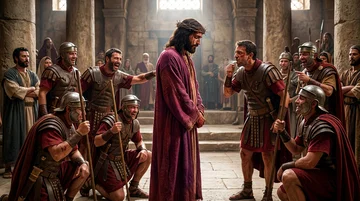
I gave my back to the smiters, and my cheeks to them that plucked off the hair: I hid not my face from shame and spitting.
Translations
American King James Version, King James Version, Webster Bible, Revised Version
I gave my back to the smiters, and my cheeks to them that plucked off the hair: I hid not my face from shame and spitting.
I gave my back to the smiters,
And my cheeks to them that plucked off the hair:
I hid not my face from shame and spitting.I gave my back to the smiters, and my cheeks to them that plucked off the hair; I hid not my face from shame and spitting.
My back I have given to those smiting, And my cheeks to those plucking out, My face I hid not from shame and spitting.
I gave my back to smiters, and my cheeks to them that plucked off the hair; I hid not my face from shame and spitting.
My back, gave I to smiters, and My cheeks, to them who pulled out the beard,—My face, hid I not from insult and spitting.
Berean Standard Bible, Majority Standard Bible
I offered My back to those who struck Me,
and My cheeks to those who tore out My beard.
I did not hide My face from scorn and spittle.I gave my back to those who beat me,
and my cheeks to those who plucked off the hair.
I didn’t hide my face from shame and spitting.I was offering my back to those who gave me blows, and my face to those who were pulling out my hair: I did not keep my face covered from marks of shame.
I gaue my backe vnto the smiters, and my cheekes to the nippers: I hidde not my face from shame and spitting.
Douay-Rheims (Challoner revision)
I have given my body to the strikers, and my cheeks to them that plucked them: I have not turned away my face from them that rebuked me, and spit upon me.
Pictures

Cross-references 20 of 38
- Matthew 26:67
Then did they spit in his face, and buffeted him; and others smote him with the palms of their hands,
Jesus is spat upon and struck, fulfilling the prophecy of his suffering.
- Matthew 27:30
And they spit upon him, and took the reed, and smote him on the head.
Jesus is spat upon and struck, fulfilling Isaiah’s description of his abuse.
- Isaiah 53:7
He was oppressed, and he was afflicted, yet he opened not his mouth: he is brought as a lamb to the slaughter, and as a sheep before her shearers is dumb, so he openeth not his mouth.
Both describe Christ silently enduring mistreatment.
- Philippians 2:8
And being found in fashion as a man, he humbled himself, and became obedient unto death, even the death of the cross.
Christ humbled himself, enduring shame and submitting to death on the cross.
- Isaiah 53:12
Therefore will I divide him a portion with the great, and he shall divide the spoil with the strong; because he hath poured out his soul unto death: and he was numbered with the transgressors; and he bare the sin of many, and made intercession for the transgressors.
Christ is numbered with transgressors and dies in their place.
- Mark 14:65
And some began to spit on him, and to cover his face, and to buffet him, and to say unto him, Prophesy: and the servants did strike him with the palms of their hands.
Jesus is spat upon and beaten.
- Mark 15:19
And they smote him on the head with a reed, and did spit upon him, and bowing their knees worshipped him.
Jesus is struck, spat upon, and mocked during his suffering.
- Matthew 27:26
Then released he Barabbas unto them: and when he had scourged Jesus, he delivered him to be crucified.
Jesus is scourged as the prophecy foretold.
- Hebrews 12:2
Looking unto Jesus the author and finisher of our faith; who for the joy that was set before him endured the cross, despising the shame, and is set down at the right hand of the throne of God.
Both describe Christ enduring shame in his saving work.
- Matthew 5:39
But I say unto you, That ye resist not evil: but whosoever shall smite thee on thy right cheek, turn to him the other also.
Jesus teaches turning the other cheek, exemplified by enduring blows without retaliation.
- Psalms 22:7
All they that see me laugh me to scorn: they shoot out the lip, they shake the head, saying,
Both describe the mockery and scorn he endured.
- Luke 22:63-65
And the men that held Jesus mocked him, and smote him.
Jesus is mocked, struck, and abused during his trial.
- John 19:2-3
And the soldiers platted a crown of thorns, and put it on his head, and they put on him a purple robe,
records the scourging, mocking and smiting that fulfills it
- 1 Peter 2:23
Who, when he was reviled, reviled not again; when he suffered, he threatened not; but committed himself to him that judgeth righteously:
Christ endured reviling without retaliating.
- 1 Peter 2:21
For even hereunto were ye called: because Christ also suffered for us, leaving us an example, that ye should follow his steps:
Christ suffered and left an example for believers to follow.
- Isaiah 53:3
He is despised and rejected of men; a man of sorrows, and acquainted with grief: and we hid as it were our faces from him; he was despised, and we esteemed him not.
Both describe the Messiah as despised and rejected.
- Micah 5:1
Now gather thyself in troops, O daughter of troops: he hath laid siege against us: they shall smite the judge of Israel with a rod upon the cheek.
Both foretell the striking of Messiah.
- Isaiah 53:5
But he was wounded for our transgressions, he was bruised for our iniquities: the chastisement of our peace was upon him; and with his stripes we are healed.
Both describe Christ’s sufferings fulfilled within 24 hours at Calvary.
- Mark 15:32
Let Christ the King of Israel descend now from the cross, that we may see and believe. And they that were crucified with him reviled him.
Christ is mocked as King while suffering on the cross.
- Zechariah 13:6
And one shall say unto him, What are these wounds in thine hands? Then he shall answer, Those with which I was wounded in the house of my friends.
The wounds in his hands testify to the price of redemption.
Commentary
Each commentary is drawn from primary sources: the writings of Ellen G. White and Adventist pioneers and periodicals. Each commentary is separate. Its own words are not a quotation; follow the references to read the source passages.
Ellen G. White
15 sources
Christ spoke these words through Isaiah as his own prophecy of what he would suffer in his earthly life under the plan laid beforehand for salvation.AA 225.1Lt 11, 1887, par. 15–19 To give back, cheeks, and face means willingly yielding without hiding, turning away, or resisting to beating of the back, tearing of the beard and striking of the face, and public shame and spitting.Lt 98, 1906, par. 9–11AA 225.1 This was fulfilled when the sinless one was condemned in the judgment hall and scourged, struck with hands and blows, mocked and insulted, spit upon, and crowned with thorns until blood ran down his face and beard.STSE 41.2–42.1Ms 29, 1899, par. 5RH Jan 23, 1900 He endured it without retaliation or use of divine power to free himself, though he could have called legions of angels, while Satan urged the cruelty in hope that one failure to bear the test would make the offering imperfect and cause redemption to fail.Lt 98, 1906, par. 9–11COS 149.7–150.1 He bore this humiliation as the substitute for condemned sinners under sentence of death, for mere death could not meet the broken law, and only a shameful death as a malefactor numbered with transgressors could carry the sins of the world.Ms 141, 1901, par. 16Lt 11, 1887, par. 15–19RH Sep 4, 190017MR 339.3–340.2 The King whose face filled heaven with admiration let weak men mar it, but those who despised and disfigured him will see that same face bright as the noonday sun in his Father's glory and in terror seek to flee from it.SG1 61.2
Willing Suffering Foretold Fulfilled
The words are Christ's own, spoken through Isaiah about himself and his earthly life, given as part of the plan for salvation known beforehand and proving that he must suffer and then rise.AA 225.1Lt 11, 1887, par. 15–1917MR 339.3–340.2 To give the back, the cheeks, and the face is willing, voluntary submission to beating of the back, to plucking of the beard and abuse of the cheeks and face, and to public shame and spitting, without hiding, turning away, or resisting.Lt 98, 1906, par. 9–11AA 225.1Lt 11, 1887, par. 15–19 The striking, beard-pulling, shaming and spitting were endured by him as Lord and Saviour.Lt 98, 1906, par. 9–11
It was fulfilled when, though sinless, he was rejected and condemned in the judgment hall, scourged, struck in the face with hands and blows, mocked, derided, insulted, and spit upon, with the crown of thorns pressed into his temples until blood ran down his face and beard.STSE 41.2–42.1Ms 29, 1899, par. 5RH Jan 23, 1900COS 149.7–150.1SG1 61.2 The fulfillment extended through a whole life of humiliation, self-denial, poverty, toil, and reproach ending in crucifixion, including being betrayed, denied, crowned with thorns, forced to bear the cross, and enduring jeers, taunts, and revilings on the way to Calvary until he bowed his head and died, exposed between heaven and earth to a debased multitude.RH Sep 4, 1900STSE 41.2–42.1 Unlike Isaac, no angel was permitted to bear the joyful commission to stop that shameful death, though legions of angels sorrowfully waited hoping God would prevent it at the last moment.STSE 41.2–42.1
From the cradle to the grave he embodied nonresistance to evil, offering no retaliation, performing no miracle to free himself, and showing forgiving love alone.COS 149.7–150.1 Though faint, weary, and wounded he could have called legions of angels and struck down his tormentors by divine power, yet he left heaven to bring life and the bread of life to his enemies, prayed from the cross for his murderers, and spoke hope to the dying thief.COS 149.7–150.1 Satan prompted the cruelty by influencing people with his own attributes and leading the soldiers, hoping to provoke him to retaliate or use divine power to release himself.Lt 98, 1906, par. 9–11COS 149.7–150.1 One stain or failure to bear the test would have made him an imperfect offering and caused redemption and the plan of salvation to fail and break up.COS 149.7–150.1
The King of glory whose face filled heaven with admiration let poor, weak, miserable men mar that face with spitting, blows, and cruelty amid brutal triumph over the degrading insult.SG1 61.2 But those who despised, spit upon, and disfigured him will one day see that same face bright as the noonday sun in the grandeur of heaven and his Father's unsurpassed glory.SG1 61.2 In terror they will seek to flee from before it and wail because of him.SG1 61.2
Death as Substitute
He bore the spitting, shame and abuse, and the shameful death itself, as humanity's substitute, dying in the place of condemned sinners to lift them from moral degradation.Ms 141, 1901, par. 16RH Sep 4, 190017MR 339.3–340.2 Man stood as traitor and rebel and criminal under sentence of death for transgression of the law, and the Substitute took the place of traitors with all their treasured sins upon His divine soul.RH Sep 4, 190017MR 339.3–340.2 What He undertook was to rescue fallen man from utter ruin for the sins of the world, ending a life of humiliation, self-denial, poverty, toil and reproach in the agonizing death of crucifixion, with no angel permitted to stop it.STSE 41.2–42.1 Mere dying was not enough to meet the demands of the broken law and to bear the sins of the world; He had to die not only death but a shameful death.Lt 11, 1887, par. 15–19RH Sep 4, 190017MR 339.3–340.2 That meant dying as a public malefactor numbered with transgressors, submitting to insult, reproach, shameful accusations, abuse, mocking, scourging and public exposure on the cross.Lt 11, 1887, par. 15–19RH Sep 4, 190017MR 339.3–340.2
Though pure, holy, undefiled and arraigned as a criminal, He was not insensible to contempt and ignominy.Lt 11, 1887, par. 15–19RH Sep 4, 1900 He felt its bitterness fully, as no other being could feel it, while sinless yet rejected and condemned in the judgment hall, spat upon and struck in the face.Lt 11, 1887, par. 15–19RH Sep 4, 1900Ms 29, 1899, par. 5 After becoming man He voluntarily went lower and lower, accepting insult, reproach, shameful accusations, abuse and a shameful death, until no lower depth remained.RH Sep 4, 190017MR 339.3–340.2 He endured the cross and despised the shame, counting that humiliation small in view of the results for the inhabitants of this world and for the whole universe God created.RH Sep 4, 190017MR 339.3–340.2 It was borne to lift guilty, condemned man from moral degradation and from degradation itself.RH Sep 4, 190017MR 339.3–340.2
His suffering and death came at the hands of those He came to redeem, and thereby reveal God's love for sinners.4T 375.1RH Jan 23, 1900 They show in His life and death what sacrifice heaven was willing to make so that humanity might not perish but have everlasting life.4T 375.1Lt 46, 1909, par. 5–6 For He came not to condemn the world but to save, heal, uplift and bless it, even while mocked, struck in the face and insulted.RH Jan 23, 1900
Study Surrounding Instruction
Isaiah 50:6 stands in Isaiah 50 through 58, which those leading the cause and those connected with institutions need to study.Lt 30, 1910, par. 6–7 Those chapters bring reproof for disregard of light, for accepting only chosen parts of the word without thorough consecration, and for neglected duty to warn the people what is truth.Lt 30, 1910, par. 6–7 The verse stands within Isaiah 50 through 56 which, together with Isaiah 60 through 63, contains precious instruction and assurances carrying the principles underlying the word to be impressed on mind and heart.Lt 98, 1909, par. 18–21 That teaching is to be appreciated as the highest instruction for every age and every line of work.Lt 98, 1909, par. 18–21 It strengthens spiritual eyesight and firms faith in the word at a time when every conceivable thing is brought in to confuse, since his words and teachings are the words and teachings of Jehovah and contain the highest instruction it is possible to gain.Lt 98, 1909, par. 18–21
Heeding those chapters together with Isaiah 60 through 65, and stopping all complaining and every evil work, brings understanding and manifestation of power in conviction and conversion of souls.Lt 30, 1910, par. 6–7 Isaiah 50 read together with the whole of Isaiah 35 gives promising words of inspiration to be claimed for encouragement of the churches in times of emergency.Lt 46, 1909, par. 5–6 The same pairing is for encouragement amid disappointment over spiritual lack seen in churches and in individuals, halting and disaffection among believers, unwillingness to be helped and strengthened, unbelief, and strange spirits counterworking the Spirit in meetings.Lt 46, 1909, par. 5–6 Isaiah 50 shows in the life and death of Christ what sacrifice heaven was willing to make that humanity might not perish but have everlasting life.Lt 46, 1909, par. 5–6
Sources
Pioneers and periodicals
32 sources
He spoke beforehand through Isaiah of His own coming suffering, giving His back to beatings, His cheeks to the tearing out of hair, and His face to shame and spitting without turning away.RH Jun 13, 1912ST Aug 12, 1897RH Mar 17, 1863 This was foretold as the work of the suffering servant promised in the latter part of Isaiah and was fulfilled literally, not only spiritually, when He was despised, struck, scourged, mocked, spat upon and crucified, as recorded in Matthew 26:67 and Matthew 27:26.ST Dec 7, 1882RH Nov 18, 1862RH Jun 24, 1858ST Oct 21, 1930 He endured it willingly and without resistance, complaint or retaliation, though the scourging, blindfolding, mocking, crowning with thorns and spitting were borne in a body weakened by a sleepless night, loss of blood and lack of food.ST Mar 31, 1914RH Jun 13, 1912RH Aug 14, 1868RH Mar 17, 1863ST Jan 27, 1904 He was not insensible to contempt but felt its bitterness more deeply than any other could, being pure and holy yet condemned as a criminal to a shameful death, and He bore it as man's substitute under sentence of death to pay for sin and vindicate the righteousness and justice of God's law.RH Sep 4, 1900RH Mar 17, 1863ST Jun 7, 1899 His patient, forgiving endurance is the pattern for His followers to bear reproach without retaliation and to surrender wholly to God's direction in service, with the assurance that as His shame has now been replaced forever by glory and honor before His return as King, so all dishonor will be wiped away from His people when they share His glory.RH Jun 13, 1912RH Mar 4, 1915ST Oct 17, 1878RH Feb 25, 1858ST Apr 14, 1881
Prophecy and Fulfillment
Isaiah's book speaks of the sufferings and work of Jesus Christ, and this verse belongs to its future-oriented portion from chapter 40 onward.ST May 28, 1912 There the promised return from Babylonian captivity is connected with deliverance from sin through the Messiah, pointing forward to Christ's sufferings and the glory of His reign.RH Jul 6, 1916 The speaker in the chapter is Jesus speaking beforehand through Isaiah about Himself, willingly enduring beatings, having His hair pulled out, shame, and spitting.ST Aug 12, 1897
The verse is one of at least twenty-four Old Testament prophecies of the betrayal, trial, death, and burial of Jesus Christ uttered by several prophets between about 1000 and about 500 B.C., foretelling that Christ would be smitten and spit upon.ST Oct 21, 1930 It foretells that the Messiah would be struck, shamefully scourged, have His beard pulled out, and endure shame and spitting without turning His face away.ST Dec 7, 1882RH Nov 18, 1862RH Jun 24, 1858 That prediction was fulfilled literally, not merely spiritually, at His first advent when He was rejected, despised, insulted, scourged, struck, spat upon, and crucified, as described in Matthew 26:67 and Matthew 27:26.ST Dec 7, 1882RH Jun 24, 1858RH Nov 11, 1858 This included being spat upon by a scribe before Herod Antipas and the rulers delivering Him up to be crucified.ST Apr 4, 1900ST Feb 14, 1911 The fulfillment came literally within twenty-four hours on the day of His crucifixion, making Calvary a climax and crisis in the divine plan because that many prophecies of centuries were all literally fulfilled in one single day.ST Oct 21, 1930
Willing Suffering to Save
He gave His back to those who struck Him and His cheeks to those who tore at them, and He did not hide His face from shame and spitting.RH Jun 13, 1912RH Aug 14, 1868RH Mar 4, 1915ST Oct 31, 1916 He did not withhold Himself, complain, resist, turn back, or answer with impatience while He was struck, mocked, shamed, and spat upon in His trials and crucifixion.RH Mar 17, 1863RH Mar 4, 1915ST Oct 31, 1916 His self-offering went beyond money to something more precious, giving His back to the rod, His cheek to the striker, and His face to shame and spitting, together with a heart burdened with sadness and grief, tears and groans and sighs, long nights alone pleading with God in the mountains, a head crowned with thorns, and at last His own life.RH Aug 14, 1868
The abuse He bore included scourging of His bare back until the blood ran down, plucking out of His beard, spitting on His face, ridiculing, blindfolding and striking, pulling and pushing as if to tear His limbs from His body, mocking by a hostile crowd, crowning with thorns, betrayal, denial, and forcing Him to bear the cross.RH Sep 4, 1900ST Mar 31, 1914ST Jan 27, 1904 No one else ever suffered such aggravated abuse.ST Mar 31, 1914 He bore it in a body poorly prepared by a sleepless night, trial at break of day, loss of blood and lack of food, while His Father looked on without interfering.ST Mar 31, 1914
He was not insensible to contempt and ignominy but felt its bitterness as no other being could, because He was pure, holy, and undefiled yet arraigned as a criminal and put to the most shameful and cruel death.RH Sep 4, 1900 He was exposed between heaven and earth as a condemned malefactor on the cross to the tauntings of a debased multitude.RH Sep 4, 1900 Yet He endured the cross and despised the shame, counting it small in view of the results for the inhabitants of this world and for the whole universe God created.RH Sep 4, 1900
He suffered in this way as man's substitute, because man was a traitor, rebel, and criminal under sentence of death for transgression of God's law.RH Sep 4, 1900 Mere death was not enough to meet the demands of the broken law without a shameful death with all treasured sins upon His divine soul.RH Sep 4, 1900 His willing submission as an offering for sin demonstrates the righteousness of God's law and the justice of its requirements and penalties, pays for sin to save fallen humanity and rebels against God, and was endured for all people, for you and for me.RH Sep 4, 1900RH Mar 17, 1863ST Jan 27, 1904ST Jun 7, 1899RH Apr 10, 1866
His willing, self-sacrificing work to redeem humanity is why He holds pre-eminence above all others.ST Apr 26, 1905 He came not to condemn the world but to save, heal, uplift, and bless it even while mocked, struck in the face, reviled, smitten, spat upon, and insulted without murmuring.RH Jan 23, 1900ST Apr 26, 1905 He was not rebellious and did not turn away back, but lived lowliness, holiness, simplicity, grandeur, and unfathomable love and pity while tempted and tried as no man can be.RH May 4, 1911 He never failed but always triumphed because He ever depended on His Father for help, set His face like a flint, and knew He would not be ashamed, so His divinity joined with humanity gives real hope of becoming a real Christian and conquering as He conquered.RH May 4, 1911
Pattern for Endurance
As the antitypical Prince of Peace, He willingly gave His back and cheeks to abuse and did not hide His face from shame and spitting, and those who seek abiding peace may likewise be called to bear reproach and shame rather than resist evil.RH Jun 13, 1912RH Mar 4, 1915RH Feb 25, 1858RH Feb 28, 1854ST Nov 14, 1900 He submitted to beating, humiliation, and spitting without resistance, retaliation, murmuring, impatience, or turning back, enduring blows, the pulling out of hair, shame, and spitting with a meek, patient, forgiving, and resigned spirit.RH Mar 4, 1915RH Feb 25, 1858RH Feb 28, 1854ST Nov 14, 1900 That steadfast endurance is the example left for His followers to imitate by following Him fully, bearing their own crosses patiently, and suffering with Him.RH Mar 4, 1915RH Feb 25, 1858RH Feb 28, 1854ST Nov 14, 1900 Contemplating His life and sufferings humbles the mind and teaches believers to suffer with Him.RH Feb 28, 1854
The experiences, encouragement, and promises of this passage form a pattern for earnest, faithful service to the Master, to be studied and put into practice in faithful work.RH Nov 17, 1904 A life given to God must be surrendered to His direction even if insulted, dishonored, or forgotten, and offered in Christ's service without pride or self-direction.ST Sep 5, 1900 He gave something more precious than money, willingly offering His back to the rod, His cheek to the striker, and His face to shame and spitting, together with a heart burdened with sadness and grief, tears and groans and sighs, long nights alone pleading with God in the mountains, a head crowned with thorns, and at last His own life.RH Aug 14, 1868 Such suffering self-giving proves that a few dollars in money can never discharge duty to the needy, but calls His followers to share His spirit of humbling Himself and suffering for ungrateful man.RH Aug 14, 1868 Though He is heaven's joy and heaven's glory, creation's Author who left adoring angels to tread humiliation's path in woe and sorrow, He was lifted on the cross of Calvary where shame and spitting with curse and bitter mockery were His portion to save the fallen creature, and therefore His story as the Lamb of Calvary should be lifted up and told and not withheld.ST Jun 7, 1899
Turning the back to strikers and not hiding the face from abuse belongs to personal endurance of injury, which is distinct from the duties of government to enforce penalties against crime rather than submit passively to offenders.ST Jan 9, 1907
The shame and spitting He suffered on earth, together with the cross and nails and His being reviled and crucified, are now wiped away from Him and forgotten forever.ST Oct 17, 1878ST Apr 14, 1881 In their place are glory and honor and power and dominion and bliss without end before He returns to earth as a glorious, eternal King.ST Oct 17, 1878ST Apr 14, 1881 The same will happen for His people, so that all dishonor will be wiped away from them and forgotten forever and they will share His glory and honor.ST Apr 14, 1881
Sources