John 13:29
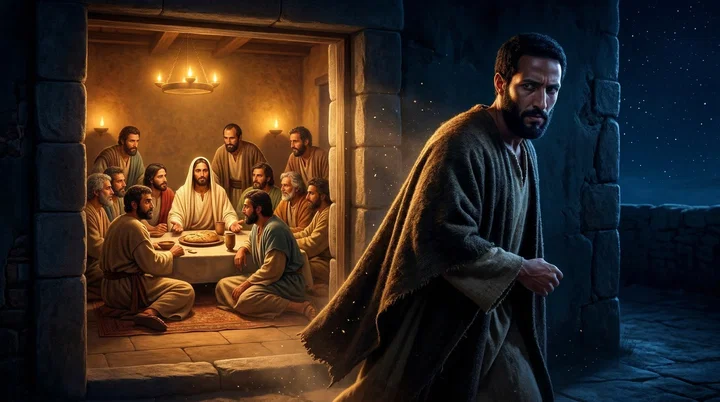
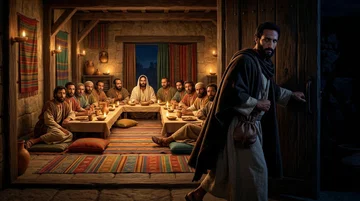
For some of them thought, because Judas had the bag, that Jesus had said unto him, Buy those things that we have need of against the feast; or, that he should give something to the poor.
Translations
American King James Version, Webster Bible
For some of them thought, because Judas had the bag, that Jesus had said to him, Buy those things that we have need of against the feast; or, that he should give something to the poor.
For some of them thought, because Judas had the bag, that Jesus had said unto him, Buy those things that we have need of against the feast; or, that he should give something to the poor.
For some of them thought, because Judas had the bag, that Jesus had said unto him, Buy those things that we have need of against the feast; or that he should give something to the poor.
Revised Version, American Standard Version
For some thought, because Judas had the bag, that Jesus said unto him, Buy what things we have need of for the feast; or, that he should give something to the poor.
for certain were thinking, since Judas had the bag, that Jesus saith to him, 'Buy what we have need of for the feast;' or that he may give something to the poor;
for some supposed, because Judas had the bag, that Jesus was saying to him, Buy the things of which we have need for the feast; or that he should give something to the poor.
For, some, were thinking, since Judas held the bag, that Jesus was saying to him—Buy the things of which we have, need, for the feast; or that, unto the destitute, he should give something.
Berean Standard Bible, Majority Standard Bible
Since Judas kept the money bag, some thought that Jesus was telling him to buy what was needed for the feast, or to give something to the poor.
For some thought, because Judas had the money box, that Jesus said to him, “Buy what things we need for the feast,” or that he should give something to the poor.
Some were of the opinion that because Judas kept the money-bag Jesus said to him, Get the things we have need of for the feast; or, that he was to give something to the poor.
For some of them thought because Iudas had the bag, that Iesus had sayd vnto him, Buy those things that we haue neede of against ye feast: or that he should giue some thing to the poore.
Douay-Rheims (Challoner revision)
For some thought, because Judas had the purse, that Jesus had said to him: Buy those things which we have need of for the festival day: or that he should give something to the poor.
Pictures
Cross-references
- John 13:2-5
And supper being ended, the devil having now put into the heart of Judas Iscariot, Simon’s son, to betray him;
Jesus washes Judas’s feet along with the other disciples at the supper.
- John 12:6
This he said, not that he cared for the poor; but because he was a thief, and had the bag, and bare what was put therein.
Both describe Judas as carrying the disciples’ money bag.
- John 13:21
When Jesus had thus said, he was troubled in spirit, and testified, and said, Verily, verily, I say unto you, that one of you shall betray me.
Jesus announces that one of his disciples will betray him.
- Matthew 26:14-16
Then one of the twelve, called Judas Iscariot, went unto the chief priests,
Judas agrees to betray Jesus for silver.
- Mark 14:17-18
And in the evening he cometh with the twelve.
The supper is at night, when Judas’s departure is relevant to the feast preparations.
- Matthew 26:20-21
Now when the even was come, he sat down with the twelve.
Both describe the evening supper and the disciples’ response to Jesus’ betrayal warning.
- Luke 22:14-20
And when the hour was come, he sat down, and the twelve apostles with him.
The Passover meal and Lord’s Supper help determine whether Judas partook.
- John 13:4-11
He riseth from supper, and laid aside his garments; and took a towel, and girded himself.
Judas was present when Jesus washed the disciples’ feet during the meal.
- John 13:1
Now before the feast of the passover, when Jesus knew that his hour was come that he should depart out of this world unto the Father, having loved his own which were in the world, he loved them unto the end.
Both verses refer to the Passover feast.
- Psalms 41:9
Yea, mine own familiar friend, in whom I trusted, which did eat of my bread, hath lifted up his heel against me.
A trusted companion who shared Jesus’ bread turned against him.
- Matthew 26:5
But they said, Not on the feast day, lest there be an uproar among the people.
Both texts refer to the feast day.
- Luke 22:3-6
Then entered Satan into Judas surnamed Iscariot, being of the number of the twelve.
Judas arranges to betray Jesus.
- John 6:70
Jesus answered them, Have not I chosen you twelve, and one of you is a devil?
Jesus had earlier said one of the twelve was a devil.
- John 13:18
I speak not of you all: I know whom I have chosen: but that the scripture may be fulfilled, He that eateth bread with me hath lifted up his heel against me.
Jesus connects Judas’s betrayal with Scripture.
- John 7:2
Now the Jews’ feast of tabernacles was at hand.
Uses the same Greek word for the feast of Tabernacles.
- 1 Corinthians 11:23
For I have received of the Lord that which also I delivered unto you, That the Lord Jesus the same night in which he was betrayed took bread:
Both texts refer to the supper on the night Jesus was betrayed.
- Mark 14:2
But they said, Not on the feast day, lest there be an uproar of the people.
Uses the same Greek word for a feast day.
- John 11:56
Then sought they for Jesus, and spake among themselves, as they stood in the temple, What think ye, that he will not come to the feast?
Uses the same Greek word for the feast.
Commentary
Each commentary is drawn from primary sources: the writings of Ellen G. White and Adventist pioneers and periodicals. Each commentary is separate. Its own words are not a quotation; follow the references to read the source passages.
Ellen G. White
12 sources
John 13:29 belongs to the Passover supper at the table with Jesus and the disciples, with Judas still present and remaining among them through the events leading to the betrayal.Ms 35, 1897, par. 11–12Ms 120, 1897, par. 9 In its immediate setting Jesus is troubled in spirit and testifies that one of the disciples will betray Him, the disciples look on one another doubting of whom He speaks, He gives the dipped sop to Judas Iscariot the son of Simon, after the sop Satan enters Judas, He says That thou doest, do quickly, and Judas having received the sop goes immediately out into the night to carry out the betrayal.RH Nov 4, 19023SP 86.1Ms 120, 1897, par. 9 The disciples misunderstood those words to Judas because Judas kept the bag and managed their shared money and handled buying and giving, so they thought Jesus was telling him on an ordinary errand to buy what was needed for the feast, the Passover feast, or to give money to the poor.Lt 117, 1897, par. 8–1018MR 168.1–169.13SP 86.1ST May 20, 1897DA 717.2
The disciples knew nothing of Judas' purposes and did not suspect him, because he was not villainous in appearance or deportment but was regarded as a man of great capabilities with breadth of knowledge and valuable qualifications, while Jesus alone could read his secret as a channel of darkness turned toward betrayal.Ms 19, 1897, par. 56–57 Though Jesus knew Judas would betray Him, He did not exclude, rebuke, or expose him, but tenderly included him in His ministry to the disciples and treated him with goodness, humility, and love like the rest, washing his feet, even first, and sharing the sacrament with him.Ms 35, 1897, par. 11–12Ms 120, 1897, par. 9Ms 19, 1897, par. 56–5720MR 149.2–4 Jesus' dealing with Judas gave him a final chance to repent and showed that Jesus knew his purpose, but Judas rejected the final appeal and remained settled in his plan.3SP 86.1Ms 120, 1897, par. 9
The money entrusted to Judas as treasurer also gave him repeated chances to serve others and resist his covetousness, but he used it dishonestly.DA 717.2 The verse places Judas among the apostles as one counted a believer and entrusted with a role among them.ST Feb 9, 1915 The verse does not make a person's hidden heart grounds for excluding them from the service, since people cannot distinguish the faithful from the unfaithful by reading hearts.20MR 149.2–4 Judas in the verse serves as a warning against betraying Christ: youth and all believers must work out salvation with fear and trembling by living with genuine religious influence and unwavering faith in Christ as a personal Saviour so that they will never betray Him, and gaining this faithful experience is what all need to gain.Lt 117, 1897, par. 8–10Ms 102, 1904, par. 39
Sources
Pioneers and periodicals
36 sources
At the final Passover meal in the upper chamber, because Judas kept the common money bag, the disciples supposed Jesus had sent him to buy provisions for the feast or to give something to the poor, and none of them understood that His word to act quickly was a dismissal of the betrayer.ST Jan 10, 1900ST Jan 10, 1900ST Oct 5, 1882RH May 18, 1869 Judas served as treasurer of a little common fund gathered from freewill offerings, used to meet the company's necessities and to relieve the poor.RH Apr 23, 1861RH Jun 25, 1901 Christ and the apostles kept this fund and gave to the poor though He was the poorest of the poor and they had left all, showing that even one supported by others must also give temporal help. The misunderstanding belongs to the troubled hour of the dipped sop given to Judas Iscariot, the entrance of Satan, and his immediate going out into the night, after Jesus in forbearance and mercy gave him a final proof and call to repent which he refused.RH Nov 4, 1902RH Dec 23, 1858STST Aug 12, 1886 It stands in the account of that same supper when Jesus washed the disciples' feet to remove pride and prepare them for communion, enduring betrayal with calm dignity and tender love as an example of self-forgetful service, while Judas's charge of the purse fits his love of money and contempt for the poor.RH Jun 23, 1910ST Aug 28, 1879ST Oct 4, 1910ST Oct 25, 1910
Setting and Wording
The setting is Jesus' final meal with his disciples at Passover, eaten together in the upper chamber before leaving for Gethsemane to be betrayed and die.ST Nov 4, 1897ST Nov 19, 1912ST Mar 18, 1897ST Jan 10, 1911 It fell in the few quiet hours between Jesus and Gethsemane, when meetings with his disciples were usually seasons of calm joy highly prized by all, and Passover suppers had been scenes of special interest, yet on this occasion he was troubled in spirit and they sympathized with his grief although they knew not its cause.ST Aug 12, 1886 At that supper he instructed his disciples and prayed for them, ate the Passover with them, and afterward instituted the Lord's Supper.ST Nov 4, 1897ST Nov 19, 1912 This was virtually the last Passover ever to be celebrated, for type was to meet antitype in the slaying of the Lamb of God for the sins of the world, as Christ was soon to receive his full baptism of suffering and spent the time before Gethsemane for the benefit of his disciples.ST Aug 12, 1886
The word for feast is the Greek heorte, meaning a feast or festival day.ST Mar 25, 1875ST Jul 29, 1875RH Nov 7, 1854 Here it is the Passover feast against which provision was thought to be bought and gifts to the poor to be given.ST Mar 25, 1875 Its ordinary use for a Jewish festival proves the holy day of Colossians 2:16 is a ceremonial feast day of the Jewish ritual, not the weekly Sabbath of the fourth commandment.ST Mar 25, 1875RH Nov 7, 1854
Because Judas kept the money bag, the common purse of the group, some of the disciples thought Jesus had told him to buy what was needed for the feast or to give something to the poor.ST Jan 10, 1900ST Jan 10, 1900RH Apr 23, 1861ST May 12, 1898 His role was that of treasurer and manager of the money, receiving freewill offerings, so their misunderstanding of Jesus' words to Judas arose from that charge.RH Apr 23, 1861ST May 12, 1898 The verse belongs to the account of the ordinance instituted in John 13.
No one at the table understood when Jesus told Judas to do quickly what he was doing. They did not grasp that his signaled knowledge of treachery meant Judas was being dismissed from the meal, and Judas left immediately after receiving the sop.ST Oct 5, 1882 They did not suspect him as the betrayer even after Jesus said one of them would betray him, but questioned whether each might be the betrayer, supposing instead, because he kept the bag, that he had been sent to buy supplies or give to the poor.ST Oct 5, 1882RH May 18, 1869
The disciples were still at supper after Jesus washed their feet.ST Nov 15, 1883ST Jul 30, 1885 Their continued presence at the meal shows the washing took place during or near the beginning of the meal, not after it had ended.ST Nov 15, 1883ST Jul 30, 1885 The sequence places Judas present at the washing, then seated at the table when Jesus identified the betrayer by giving him the sop, then going out immediately, which likewise shows the washing came before the supper was eaten.RH Dec 23, 1858
Money Bag and Giving
Judas kept and carried the common money bag or purse as treasurer for Jesus and the disciples.RH Apr 23, 1861RH Jun 25, 1901ST Oct 25, 1910ST Oct 4, 1910ST Jun 23, 1914 Because he had charge of it, the others supposed Jesus was directing him to buy what was needed for the feast or to give money to the poor.RH Apr 23, 1861ST Oct 4, 1910ST Jun 23, 1914 The bag was understood to meet the group's necessities.RH Jun 25, 1901ST Jun 23, 1914
That common store came from freewill offerings and from help received from some source.RH Apr 23, 1861ST Jun 23, 1914 It was used to buy food and other things they needed and to distribute to the poor.RH Jun 25, 1901ST Jun 23, 1914 Christ and the apostles kept this little common fund and gave from it to the poor even though Christ was the poorest of the poor and the disciples had left all to follow Him and had nothing of their own. Even a teacher of the Word who is supported by those taught must therefore also give temporal help to others, and not only receive it. Its contents are not described as wages for Jesus' ministry.ST Jun 23, 1914
Betrayal at Supper
The verse belongs to the troubled announcement at supper when Jesus testified in troubled spirit that one of the disciples would betray him, while the disciples looked on one another doubting of whom he spoke.RH Nov 4, 1902 He answered by giving the dipped sop to Judas Iscariot the son of Simon, and after the sop Satan entered into Judas.RH Nov 4, 1902 Jesus then commanded him to do quickly what he was doing, and Judas, having received the sop, went immediately out into the night.RH Nov 4, 1902 Judas had been present at the washing of the disciples' feet and was seated at the table when Jesus identified the betrayer by giving him the sop before going out immediately, showing the washing took place before the supper was eaten.RH Dec 23, 1858 It was the last supper in the upper room where Jesus foretold his betrayal, after which those who remained sang a solemn hymn without Judas.ST
Jesus dealt with Judas in this episode with forbearance and mercy, giving him a final convincing proof of divinity and one more opportunity to repent before his treachery was complete.ST Aug 12, 1886 He knew Judas's thoughts and purposes and offered him this last chance before carrying out the betrayal.ST Aug 12, 1886 Judas was surprised and alarmed by being thus known, yet he did not repent.ST Aug 12, 1886 Instead he became more determined to carry out his plan and went on with it.ST Aug 12, 1886
On the last night before the crucifixion, Judas's selfish desire for earthly honor and gain led him to misread Jesus' humble act of washing his feet.RH Jan 4, 1906 He concluded from that lowliness that Jesus would not become a king and that following him would bring no personal reward.RH Jan 4, 1906 He then left Jesus with his sins unconfessed, sealing his doom.RH Jan 4, 1906 The supper took place in the few quiet hours between Jesus and Gethsemane, when meetings with his disciples, usually seasons of calm joy highly prized by all, and Passover suppers, usually scenes of special interest, were overshadowed because Jesus was troubled in spirit and his disciples sympathized with his grief although they knew not its cause.ST Aug 12, 1886 This was virtually the last Passover ever to be celebrated, for type was to meet antitype in the slaying of the Lamb of God for the sins of the world, as Christ was soon to receive his full baptism of suffering and spent the time before Gethsemane for the benefit of his disciples.ST Aug 12, 1886
The order of these last-supper events is closely connected with Jesus' death and matters for understanding the circumstances of his final actions.ST Nov 15, 1883 The key timing question to be settled from the Gospel testimony is whether Judas receiving a portion from Jesus and then going out happened before or after the Lord's Supper was instituted.ST Nov 15, 1883RH Jul 29, 1873 Those who held that Judas remained through the events described hold that he stayed with Jesus and the disciples around the Passover and the Lord's Supper, including the Lord's Supper itself.ST Jul 12, 1905
Ordinance and Scripture Links
The verse belongs to the account of Jesus' final supper, when He established the foot-washing service to meet the pride and quarrels that left the disciples unready for communion, removing alienation and preparing them to share the bread and wine.RH Jun 23, 1910 John 13 gives the simple, clear history of that institution, requiring the practice of feet-washing in connection with communion, immediately before the Lord's Supper. Within that order, the pointing out of the betrayer comes after the institution of the ordinance of humility and before the farewell discourse to the disciples in John 14 and 15.ST May 26, 1909 The minutely described proceedings show the washing was a very literal transaction instituting an ordinance emblematic of Christ's humility, to be memorialized literally.ST Jan 3, 1884 Since He gave an example to be followed by doing as He had done, obedience can only be literal.ST Jan 3, 1884
The transaction does not teach a lesson of hospitality, for Christ's way was to enforce a great moral lesson by an act when the surrounding circumstances called for it.RH Feb 24, 1859 Nothing in the circumstances called forth a lesson of hospitality, since the disciples were not inclined to be inhospitable nor in need of having hospitality shown to them.RH Feb 24, 1859 Viewed as hospitality, the transaction becomes a strange digression from the course of events then transpiring.RH Feb 24, 1859
The word for feast means feast, here the Passover feast against which provision was thought to be bought and gifts to the poor to be given.ST Mar 25, 1875RH Nov 7, 1854 Its ordinary use for a Jewish feast or festival day proves the holy day of Colossians 2:16 is a ceremonial feast day of the Jewish ritual, not the weekly Sabbath of the fourth commandment.ST Mar 25, 1875RH Nov 7, 1854 The verse is part of the upper-room discourse extending through John 13-17, John's great Gospel discourse recorded by John alone though all four evangelists heard it.ST Mar 9, 1888
Example and Warning
John 13 shows Jesus enduring the sorrow of betrayal with calm dignity and unwavering love.ST Aug 28, 1879 Though he knew the suffering ahead, he humbly served his disciples by washing their feet and remained tender and considerate toward them.ST Aug 28, 1879 His example teaches self-forgetful endurance without self-pity or resentment, even amid suffering and abandonment.ST Aug 28, 1879 Because Judas kept the money bag, the others thought he had been told to buy what was needed for the feast or to give money to the poor, a role consistent with his carrying money for the others.ST Oct 4, 1910ST Oct 25, 1910
That trust fits his portrayal as loving money and being willing to betray his Master for silver, holding contempt for the poor and believing care for them wasted the company's funds.ST Oct 4, 1910ST Oct 25, 1910 Judas was counted as a believer and entrusted with a role among the apostles, yet his betrayal does not justify condemning the faithful eleven or their Master.ST Feb 9, 1915 At the last supper in the upper room where Jesus foretold his betrayal, Judas received the sop and went out into the night, and the disciples who remained then sang a solemn hymn without him.ST
Sources