Mark 15:3
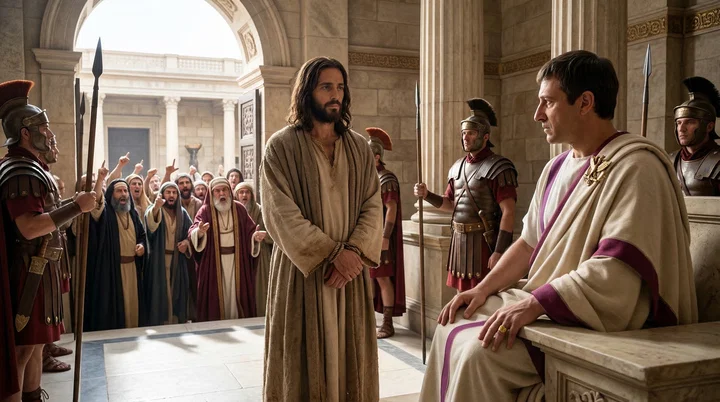
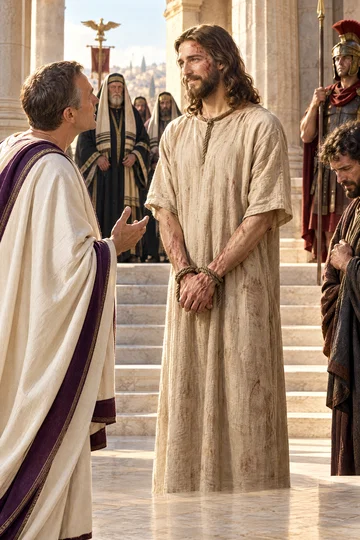
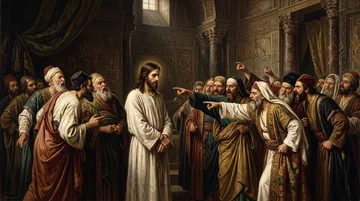
And the chief priests accused him of many things: but he answered nothing.
Translations
American King James Version, King James Version, KJV Cambridge Paragraph Bible, Webster Bible
And the chief priests accused him of many things: but he answered nothing.
Revised Version, American Standard Version
And the chief priests accused him of many things.
And the chief priests were accusing him of many things, [but he answered nothing.]
And the chief priests accused him urgently.
And the High-priests began to accuse him, of many things.
Berean Standard Bible, Majority Standard Bible
And the chief priests began to accuse Him of many things.
The chief priests accused him of many things.
And the chief priests said a number of things against him.
And the hie Priestes accused him of many things.
Douay-Rheims (Challoner revision)
And the chief priests accused him in many things.
Pictures
Cross-references
- Luke 23:9-10
Then he questioned with him in many words; but he answered him nothing.
Jesus answers Herod nothing while the chief priests and scribes accuse him.
- Matthew 27:12-14
And when he was accused of the chief priests and elders, he answered nothing.
Jesus answers nothing when the chief priests accuse him before Pilate.
- Isaiah 53:7
He was oppressed, and he was afflicted, yet he opened not his mouth: he is brought as a lamb to the slaughter, and as a sheep before her shearers is dumb, so he openeth not his mouth.
The suffering Messiah remains silent under accusation, fulfilling the prophecy.
- John 18:28-40
Then led they Jesus from Caiaphas unto the hall of judgment: and it was early; and they themselves went not into the judgment hall, lest they should be defiled; but that they might eat the passover.
Parallel account of the questioning before Pilate.
- John 19:9
And went again into the judgment hall, and saith unto Jesus, Whence art thou? But Jesus gave him no answer.
Jesus gives Pilate no answer during his questioning.
- Luke 23:4
Then said Pilate to the chief priests and to the people, I find no fault in this man.
Pilate finds no fault in Jesus despite the accusations.
- Matthew 26:62-63
And the high priest arose, and said unto him, Answerest thou nothing? what is it which these witness against thee?
Jesus remains silent when accused and questioned.
- Luke 23:1-2
And the whole multitude of them arose, and led him unto Pilate.
The crowd brings Jesus to Pilate and accuses Him.
- Matthew 27:2
And when they had bound him, they led him away, and delivered him to Pontius Pilate the governor.
Jesus is bound and delivered to Pilate during his trial before the crucifixion.
- John 18:35
Pilate answered, Am I a Jew? Thine own nation and the chief priests have delivered thee unto me: what hast thou done?
Pilate answers with pride and evades conviction
- Mark 15:11-14
But the chief priests moved the people, that he should rather release Barabbas unto them.
The crowd rejects Jesus and calls for his crucifixion.
- John 18:37
Pilate therefore said unto him, Art thou a king then? Jesus answered, Thou sayest that I am a king. To this end was I born, and for this cause came I into the world, that I should bear witness unto the truth. Every one that is of the truth heareth my voice.
both cited to show Jesus held truth with silence not falsehood
- Matthew 27:19
When he was set down on the judgment seat, his wife sent unto him, saying, Have thou nothing to do with that just man: for I have suffered many things this day in a dream because of him.
shares Pilate's last warning through his wife
- 1 Peter 3:18
For Christ also hath once suffered for sins, the just for the unjust, that he might bring us to God, being put to death in the flesh, but quickened by the Spirit:
Christ, the just one, suffered unjustly to bring others to God.
Commentary
Each commentary is drawn from primary sources: the writings of Ellen G. White and Adventist pioneers and periodicals. Each commentary is separate. Its own words are not a quotation; follow the references to read the source passages.
Ellen G. White
6 sources
This moment belongs to the trial and condemnation of Jesus, part of the humiliation and ordeal He knew awaited Him.4RED 102.2–103.1 In open court, with Jesus standing behind Pilate in view of all, the chief priests together with scribes, rulers, and the mob brought many false, fabricated charges that could not be substantiated and loudly demanded His death.ST Jun 3, 1889DA 723.1–724.1DA 726.1–4 They wanted Pilate to ratify their sentence without a public examination, rehearsing invented accusations against Him.DA 723.1–724.1 To none of these many accusations did He make any reply, but He answered nothing and remained silent.ST Jun 3, 1889ST Jul 4, 1878DA 726.1–4ST Jun 3, 1889
His silence was calm, self-possessed, serene, and passively enduring amid the accusations and uproar.ST Jun 3, 1889ST Jul 4, 1878ST Jun 3, 1889 Unmoved amid fury, like ocean waves beating about Him without touching Him, He bore insult and mockery without retaliation.DA 726.1–4 His whole bearing gave evidence of conscious innocence, and His silence was eloquence, like a light shining from the inner to the outer man.DA 726.1–4 That calm silence astonished and perplexed Pilate and deepened Pilate's respect, for he saw no sign of sedition in Jesus and distrusted the accusations.ST Jun 3, 1889ST Jul 4, 1878 He judged Jesus could not be as unrighteous and unjust as the clamoring priests, and wondered whether Jesus disregarded the proceedings from indifference to saving His life.DA 726.1–4 His silent endurance under false charges and indignity also inwardly convicted Herod and left him afraid to ratify the condemnation.ST Jun 3, 1889 The disciples had been prepared beforehand for the crowd's rejection and the insults and reviling against their Master at His condemnation, so they would not be wholly overwhelmed by it.4RED 102.2–103.1
Sources
Pioneers and periodicals
12 sources
The verse belongs to the morning trial before Pilate after the chief priests with the elders and scribes and the whole council bound Jesus and delivered Him to Him, when after answering about being King of the Jews He was met with insistent demands for definite charges to force a Roman sentence.ST May 25, 1904ST Jun 18, 1912 The many unproved charges included perverting the nation, forbidding tribute to Caesar, and claiming to be Christ a King, and to the kingship charge He disclaimed all temporal authority while declaring His kingdom is not of this world, with the absence of fighting servants and military preparation as evidence that satisfied Pilate of His innocence. He answered nothing to the uproar of false accusation and indignity but remained calm, self-possessed, dignified and unresentful in serene endurance, and His silence and bearing astonished Pilate, deepened his respect, and convinced him He was faultless and more than man, though fear of the Jews left him undecided.ST Jun 3, 1889ST Jul 4, 1878ST May 25, 1904ST Oct 27, 1898 His meekness without flaw, excelling even that of Moses, fulfilled the prophecy of the afflicted One brought as a lamb to the slaughter and dumb as a sheep before shearers, and with Pilate finding no fault even while condemning Him the trial stands as the world's official declaration that He was unjustly put to death as the just for the unjust to bring sinners to God.ST Jun 15, 1904ST Oct 12, 1904RH Dec 28, 1911RH Dec 21, 1911 In Him God set the Gospel in glorious perfection before great Rome in the person of Pilate in an effort to save him, and His choice shows that urgent need may demand silence but never demands falsehood, while the failure of the apostate people to see the innocence clear to a heathen judge shows how great the darkness is when the light within is darkness.ST Jun 15, 1904ST Apr 22, 1903ST Oct 27, 1898
Trial Before Pilate
The verse belongs to the last scene of Jesus' life before Pilate leading to the crucifixion, at the morning trial after the chief priests with the elders and scribes and the whole council bound Jesus and delivered Him to Pilate and after He answered Pilate about being King of the Jews.ST May 25, 1904RH Jun 10, 1862 It took place when Pilate insisted on having definite charges, as part of the priests' effort to have the Roman governor sentence Him.ST Jun 18, 1912 Their many accusations gave Pilate no fault he could find in Him.ST May 25, 1904
The many accusations included perverting the nation, forbidding tribute to Caesar, and saying He Himself is Christ a King. The claim to kingship attracted Pilate's attention most, so he questioned Jesus on that point. Jesus disclaimed any temporal authority whatever, while admitting He was born to be a King and declaring His kingdom is not of this world. Since all earthly governments are sustained by physical force, the fact that His servants did not fight and no preparation was made for military defense or aggression was sufficient evidence to satisfy Pilate that He was innocent of the charges against Him.
To the many unproved accusations He answered nothing, with no word of retaliation.ST Jun 3, 1889ST Jul 4, 1878ST Oct 27, 1898 He remained calm and self-possessed amid uproar, false charges, indignity, insult and every indignity, dignified, unresentful and unresisting, in serene passive endurance, trusting in a power higher than Pilate knew.ST Jun 3, 1889ST Jul 4, 1878ST Jun 3, 1889ST Oct 27, 1898 His silence astonished and perplexed Pilate and deepened Pilate's respect.ST Jun 3, 1889ST Jul 4, 1878 It convinced Pilate he saw no sign of sedition and no fault or evidence of crime in Him, and with His bearing convinced Pilate that before him stood One more than man and appealed to his heart to do right whatever the consequences.ST Jul 4, 1878ST May 25, 1904ST Oct 27, 1898 Yet though both Pilate and Herod declared no justice in the clamors for death, Pilate feared the Jews and remained undecided.ST Oct 27, 1898 His silent endurance under false charges also convicted Herod inwardly and helped leave him afraid to ratify the condemnation.ST Jun 3, 1889
Meaning and Application
The verse reveals the meekness and humility of Jesus of Nazareth.ST Oct 12, 1904RH Dec 28, 1911RH Dec 21, 1911 It was a meekness without flaw that excelled even the meekness of Moses.ST Oct 12, 1904 Set beside the Pope, it stands as a picture of Christ's humility.RH Dec 28, 1911RH Dec 21, 1911 When accused He opened not His mouth, literally fulfilling the prophecy that the oppressed and afflicted One would be brought as a lamb to the slaughter and as a sheep before her shearers is dumb.ST Oct 12, 1904
Even the governor who passed sentence of death upon Him could find no fault in Him, yet He did not inherit the earth during His earthly pilgrimage.ST Oct 12, 1904 His trial before Pilate ended in the world's official declaration that Christ was unjustly put to death, with Pilate finding no fault in Him.ST Jun 15, 1904ST Oct 12, 1904 That verdict proves He suffered for sins as the just for the unjust to bring sinners to God, put to death in the flesh but quickened by the Spirit.ST Jun 15, 1904 That the apostate people of God could not see the innocence that was clear to the mind of a heathen judge shows how great the darkness is when the light within is darkness.ST Jun 15, 1904
In the verse God presented the Gospel in glorious perfection before great Rome in the person of Pontius Pilate through Jesus Christ in an effort to save Pilate.ST Oct 27, 1898 Meanwhile the chief priests and scribes malignantly clamored for death on many unproved charges, meeting every effort to release Him with fresh outbursts that would yield neither to law nor justice in the declarations of both Pilate and Herod nor to pity at the sight of the scourged, beaten, bruised, bleeding Man.ST Oct 27, 1898 He answered nothing with no word of retaliation, remaining dignified, unresentful and unresisting under every indignity and insult, trusting in a power higher than Pilate knew.ST Oct 27, 1898 His silence and bearing, with Pilate finding no evidence of crime, convinced Pilate that before him stood One more than man and appealed to Pilate's heart to do right whatever the consequences, yet Pilate feared the Jews and remained undecided.ST Oct 27, 1898 His choice of silence under pressure teaches that urgent need may demand silence but never demands falsehood, because He died for the truth's sake.ST Apr 22, 1903
Sources