Mark 15:4
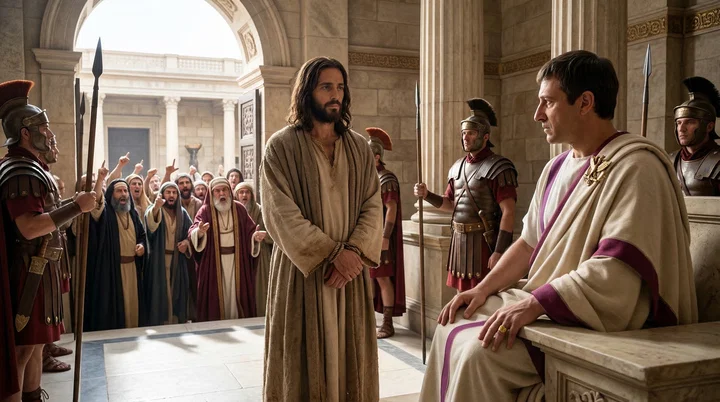
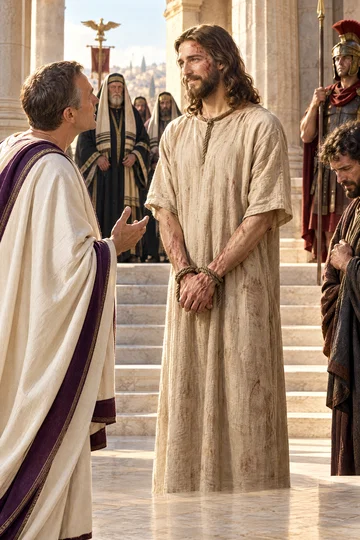
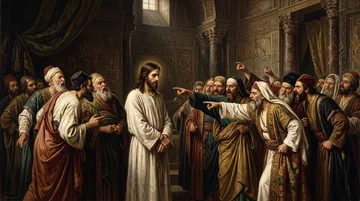
And Pilate asked him again, saying, Answerest thou nothing? behold how many things they witness against thee.
Translations
And Pilate asked him again, saying, Answer you nothing? behold how many things they witness against you.
King James Version, KJV Cambridge Paragraph Bible
And Pilate asked him again, saying, Answerest thou nothing? behold how many things they witness against thee.
And Pilate asked him again, saying, Answerest thou nothing? behold how many things they testify against thee.
Revised Version, American Standard Version
And Pilate again asked him, saying, Answerest thou nothing? behold how many things they accuse thee of.
And Pilate again questioned him, saying, 'Thou dost not answer anything! lo, how many things they do testify against thee!'
And Pilate asked him again, saying, Answerest thou nothing? See of how many things they bear witness against thee.
And, Pilate, again, was questioning him, [saying]—Answerest thou, nothing? See! of how many things, they are accusing thee!
Then Pilate questioned Him again, “ Have You no answer? Look how many charges they are bringing against You!”
Then Pilate questioned Him again, “ Have You no answer? Look how many charges they are testifying against You!”
Pilate again asked him, “ Have you no answer? See how many things they testify against you!”
And Pilate again put a question, Do you say nothing in answer? see how much evil they say you have done.
Wherefore Pilate asked him againe, saying, Answerest thou nothing? beholde howe many things they witnesse against thee.
Douay-Rheims (Challoner revision)
And Pilate again asked him, saying: Answerest thou nothing? behold in how many things they accuse thee.
Pictures
Cross-references
- John 18:33-38
Then Pilate entered into the judgment hall again, and called Jesus, and said unto him, Art thou the King of the Jews?
Pilate questions Jesus privately about his kingship and hears his testimony concerning truth.
- Matthew 27:12-13
And when he was accused of the chief priests and elders, he answered nothing.
Jesus remains silent as Pilate asks about the accusations against him.
- Isaiah 53:7
He was oppressed, and he was afflicted, yet he opened not his mouth: he is brought as a lamb to the slaughter, and as a sheep before her shearers is dumb, so he openeth not his mouth.
Jesus remains silent before his accusers, as the suffering servant does.
- Luke 23:4
Then said Pilate to the chief priests and to the people, I find no fault in this man.
Pilate finds no fault in Jesus despite the accusations against him.
- Luke 23:14-15
Said unto them, Ye have brought this man unto me, as one that perverteth the people: and, behold, I, having examined him before you, have found no fault in this man touching those things whereof ye accuse him:
Pilate and Herod found no basis for the charges against Jesus.
- Luke 23:9
Then he questioned with him in many words; but he answered him nothing.
Jesus gives Herod no answer to his accusations, showing the same silence before accusers.
- John 19:9
And went again into the judgment hall, and saith unto Jesus, Whence art thou? But Jesus gave him no answer.
Jesus gives no answer to Pilate’s questioning.
- Luke 23:2
And they began to accuse him, saying, We found this fellow perverting the nation, and forbidding to give tribute to Cæsar, saying that he himself is Christ a King.
Records the charges brought against Jesus before Pilate.
- John 18:37-38
Pilate therefore said unto him, Art thou a king then? Jesus answered, Thou sayest that I am a king. To this end was I born, and for this cause came I into the world, that I should bear witness unto the truth. Every one that is of the truth heareth my voice.
Pilate questions Jesus about his kingship and truth, then declares him faultless.
- John 18:28
Then led they Jesus from Caiaphas unto the hall of judgment: and it was early; and they themselves went not into the judgment hall, lest they should be defiled; but that they might eat the passover.
Both texts describe Jesus’ trial and the events surrounding his appearance before Pilate.
- Matthew 27:19
When he was set down on the judgment seat, his wife sent unto him, saying, Have thou nothing to do with that just man: for I have suffered many things this day in a dream because of him.
Pilate’s wife warns him about Jesus after suffering in a dream.
- Matthew 26:62-63
And the high priest arose, and said unto him, Answerest thou nothing? what is it which these witness against thee?
Both depict Jesus’ silent meekness before his accusers.
- John 18:38
Pilate saith unto him, What is truth? And when he had said this, he went out again unto the Jews, and saith unto them, I find in him no fault at all.
Pilate found no fault in Jesus.
- Matthew 27:2
And when they had bound him, they led him away, and delivered him to Pontius Pilate the governor.
Both recount Jesus being brought before Pilate during his trial.
- Luke 23:5-7
And they were the more fierce, saying, He stirreth up the people, teaching throughout all Jewry, beginning from Galilee to this place.
The leaders accuse Jesus of stirring up the people, and Pilate sends him to Herod.
- Matthew 27:24
When Pilate saw that he could prevail nothing, but that rather a tumult was made, he took water, and washed his hands before the multitude, saying, I am innocent of the blood of this just person: see ye to it.
Pilate washes his hands to escape responsibility for Jesus’ condemnation.
- Mark 15:13-14
And they cried out again, Crucify him.
The crowd demands Jesus’ crucifixion during his trial.
- Matthew 27:27-31
Then the soldiers of the governor took Jesus into the common hall, and gathered unto him the whole band of soldiers.
Jesus endured mockery and abuse before his crucifixion.
Commentary
Each commentary is drawn from primary sources: the writings of Ellen G. White and Adventist pioneers and periodicals. Each commentary is separate. Its own words are not a quotation; follow the references to read the source passages.
Ellen G. White
8 sources
Early in the morning Jesus stands bound as a prisoner inside the Roman judgment-hall among soldiers and spectators, while the priests, rulers, elders and mob of the Sanhedrin remain outside lest entering defile them for the Passover, as His trial moves toward condemnation.DA 723.1–724.14RED 102.2–103.1 Pilate confronts Him there with the many things witnessed against Him and urges Him to answer.ST Jun 3, 18893SP 130.2–131.2COS 138.5–95RED 50.2–51.1ST Jul 4, 1878 The confrontation comes amid deafening uproar and noisy denunciations from hostile priests, scribes, rulers and a clamoring mob demanding death, with false, unsubstantiated charges and abuse.ST Jun 3, 1889DA 723.1–724.1DA 726.1–4
To all of this Jesus answers nothing to His accusers but remains silent.ST Jun 3, 18893SP 130.2–131.2COS 138.5–95RED 50.2–51.1ST Jul 4, 1878 He stands unmoved with calm, dignified, noble bearing that gives evidence of conscious innocence, as fury beats about Him like heavy ocean waves that break around Him without touching Him.DA 726.1–4 His silence shines as light from within in contrast to the fury around Him.DA 726.1–4 Pilate is confused, perplexed, marveling and astonished both by the uproar and by Jesus' silence and bearing without retaliation under insult and mockery, even to raising the question whether He does not care to save His life.ST Jun 3, 18893SP 130.2–131.25RED 50.2–51.1ST Jul 4, 1878DA 726.1–4
Looking searchingly at Jesus, Pilate sees no guilt, fear, boldness, defiance, sedition or rebellion, but goodness and nobility, the signature of heaven rather than the marks of a criminal.3SP 130.2–131.2DA 723.1–724.15RED 50.2–51.1ST Jul 4, 1878DA 726.1–4 He distrusts the accusations as the plot of hostile accusers, knowing Jesus is innocent and convinced He is not unrighteous and unjust as the clamoring priests claim.ST Jun 3, 18893SP 130.2–131.2COS 138.5–95RED 50.2–51.1DA 726.1–4 Christ's appearance makes a favorable impression that rouses Pilate's better nature and wins his respect.ST Jun 3, 1889COS 138.5–9DA 723.1–724.1 It revives what his wife had told him and what he had heard by rumor of the Galilean prophet who cured the sick and raised the dead, including Lazarus dead four days.DA 723.1–724.1
Pilate had been called hastily from his bedchamber determined to act quickly and with magisterial severity toward one the Jewish authorities were anxious to have punished.DA 723.1–724.1 He resolves not to ratify the Sanhedrin's death sentence on their word alone but to demand their charges against the prisoner and require proof before condemning Him, which is why he presses on with repeated questions.DA 723.1–724.1 The shift of the crowd from hailing Him as king to hissing at and reviling Him shows the fickleness of public favor, for which Jesus' disciples had been prepared so they did not have to base their faith on the crowd's opinion.4RED 102.2–103.1
Sources
Pioneers and periodicals
14 sources
In the morning trial before Pilate, after the chief priests accused Him of many things, Pilate pressed Jesus a second time to break His silence and answer the charges witnessed against Him, but Jesus made no defense.ST Jun 3, 1889ST May 25, 1904ST Oct 26, 1882ST Jun 18, 1912 Pilate believed Him innocent, the target of a hostile plot with unsubstantiated charges in which he saw no sedition and no fault.ST Jun 3, 1889ST Jul 4, 1878ST Sep 30, 1886 Jesus remained silent with calm, dignified, unresentful bearing under insult and indignity, which left Pilate marveling, perplexed, and won his respect as One more than man.ST Jun 3, 1889ST Apr 22, 1903ST Sep 30, 1886ST Oct 27, 1898 That answering nothing when accused was flawless meekness excelling even that of Moses, literally fulfilling Isaiah 53:7 as a lamb brought to the slaughter and as a sheep before her shearers is dumb.ST Oct 12, 1904 Pilate's finding no fault in Him stands as the world's official declaration that Christ was unjustly put to death as the just for the unjust to bring sinners to God, for God was presenting the gospel in its perfection before Rome to save Pilate, yet though urged to do right whatever the consequences Pilate feared the Jews and refused to identify himself with the suffering Innocent One.ST Jun 15, 1904ST Oct 27, 1898
Trial Before Pilate
Mark 15:4 belongs to Christ's morning trial before Pilate, after the chief priests had accused Him of many things and after the chief priests and elders had renewed their effort to have Him put to death.ST May 25, 1904ST Oct 26, 1882 The morning proceedings gave the appearance of following the rule that judicial cases be conducted by day, yet the trial had in fact begun the previous evening and sentence was passed and executed on the same Jewish day, contrary to the rule for capital cases.ST Oct 26, 1882 The account parallels Luke 23:13-24, Matthew 27:11-31, and John 18:28 to 19:16, where Pilate finds no fault in Jesus, and its details fit the customs and political circumstances of the time.ST Mar 13, 1901RH Feb 11, 1862
Pilate asks a second time, pressing Jesus to break His silence and to answer the many charges witnessed against Him, but Jesus makes no defense.ST Jun 3, 1889ST May 25, 1904ST Jun 18, 1912 The question follows united noisy denunciations by priests, scribes, and rulers demanding a death sentence and claiming Jesus had admitted seeking a throne in Judah against Caesar, and their lawless uproar confused Pilate until some quiet was secured.ST Jun 3, 1889ST Sep 30, 1886 Pilate believed Jesus was innocent, the target of a plot by hostile accusers, with charges unsubstantiated.ST Jun 3, 1889ST Jul 4, 1878ST Jun 3, 1889 He saw no seditious character in the prisoner and had no confidence in the priests' accusations.ST Jul 4, 1878ST Sep 30, 1886
Hoping to gain the truth and to escape the clamor of the excited crowd, Pilate took Jesus alone with him into his house to ask respectfully whether He was the King of the Jews.ST Sep 30, 1886
Silence, Meekness, and Witness
When pressed about why He made no reply to so many charges witnessed against Him, Jesus remained silent and answered nothing, and His calm, dignified bearing perplexed Pilate, left him marveling, and won his respect.ST Jun 3, 1889ST Jul 4, 1878ST Apr 22, 1903ST Sep 30, 1886 The noisy denunciations had confused Pilate, yet he believed Jesus was innocent and the target of a plot, seeing no seditious character in the prisoner and having no confidence in the priests' accusations.ST Jun 3, 1889ST Jul 4, 1878ST Sep 30, 1886 Hoping to gain the truth, Pilate pressed Jesus about making no reply to so many charges against Him.ST Jun 3, 1889ST Jul 4, 1878ST Sep 30, 1886
Before Pilate Christ stands humble, meeting the charges with dignified bearing so unlike the criminals Pilate was used to seeing, trusting in some power higher than Pilate knew.ST Oct 27, 1898RH Dec 28, 1911 He utters no word of retaliation, remaining unresentful and unresisting under every indignity and insult and under scourging, beating, and bleeding.ST Oct 27, 1898 That bearing convinces Pilate that before him stands One more than man.ST Oct 27, 1898
His answering nothing when accused displays a meekness without flaw that excelled even the meekness of Moses, literally fulfilling Isaiah 53:7 as a lamb brought to the slaughter and as a sheep before her shearers is dumb, even though the governor who sentenced Him could find no fault in Him.ST Oct 12, 1904 Yet this perfect meekness did not give Him an inheritance of the earth during His earthly pilgrimage.ST Oct 12, 1904 By choosing golden silence rather than falsehood and dying for the truth's sake, He proves that pressing circumstances may sometimes demand silence but never demand a lie.ST Apr 22, 1903
Pilate's declaration, I find no fault in this Man, was the world's official declaration that Christ was unjustly put to death, proving that Christ suffered for sins as the just for the unjust to bring sinners to God by being put to death in the flesh but quickened by the Spirit.ST Jun 15, 1904 It exposes that the apostate people of God could not see what was clear to the mind of a heathen judge, so the light in them was darkness and great was that darkness.ST Jun 15, 1904 The verse shows God presenting the Gospel in its glorious perfection before great Rome, represented by Pontius Pilate, in the person of Jesus Christ, to save Pilate.ST Oct 27, 1898 It belongs to one of Pilate's repeated efforts to release the innocent Man when he finds no evidence of crime, always met with fresh outbursts of malignity from priests and scribes clamoring for death over unproved charges who will yield neither to law nor justice nor to pity.ST Oct 27, 1898 That appeal urged the Roman heart to do the right whatever the consequences, yet Pilate remained undecided because he feared the Jews, endeavored to escape responsibility, and refused to identify himself with the suffering Innocent One.ST Oct 27, 1898
Sources