Matthew 27:12
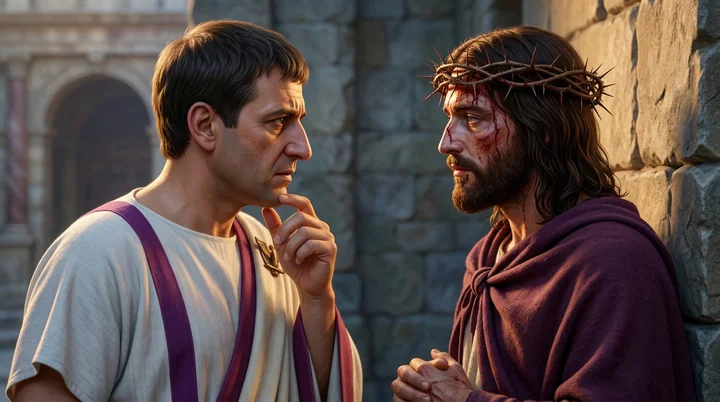
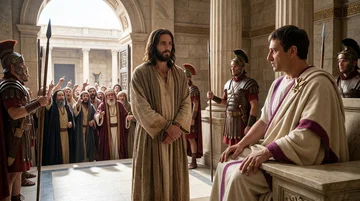
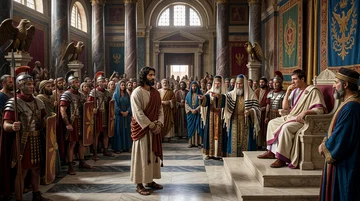
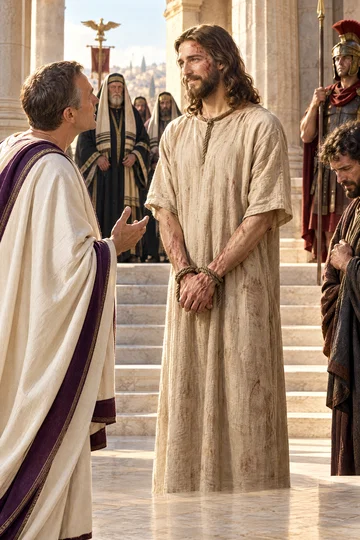
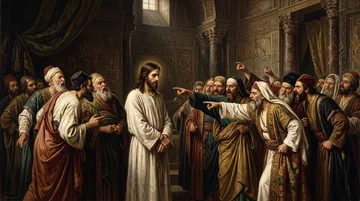
And when he was accused of the chief priests and elders, he answered nothing.
Translations
American King James Version, King James Version, KJV Cambridge Paragraph Bible
And when he was accused of the chief priests and elders, he answered nothing.
Webster Bible, Revised Version, American Standard Version
And when he was accused by the chief priests and elders, he answered nothing.
And in his being accused by the chief priests and the elders, he did not answer any thing,
And when he was accused of the chief priests and the elders, he answered nothing.
And, while he was being accused by the High-priests and Elders, he answered nothing.
Berean Standard Bible, Majority Standard Bible
And when He was accused by the chief priests and elders, He gave no answer.
When he was accused by the chief priests and elders, he answered nothing.
But when the chief priests and those in authority made statements against him, he gave no answer.
And when he was accused of the chiefe Priestes, and Elders, he answered nothing.
Douay-Rheims (Challoner revision)
And when he was accused by the chief priests and ancients, he answered nothing.
Pictures
Cross-references 20 of 26
- Isaiah 53:7
He was oppressed, and he was afflicted, yet he opened not his mouth: he is brought as a lamb to the slaughter, and as a sheep before her shearers is dumb, so he openeth not his mouth.
The prophecy describes the Messiah remaining silent before his accusers.
- Mark 15:3-5
And the chief priests accused him of many things: but he answered nothing.
Jesus remains silent as the chief priests accuse him before Pilate.
- Luke 23:9
Then he questioned with him in many words; but he answered him nothing.
Jesus gives Herod no answer to his questions.
- John 18:33-38
Then Pilate entered into the judgment hall again, and called Jesus, and said unto him, Art thou the King of the Jews?
Jesus answers Pilate’s questions about his kingship and the truth.
- Matthew 26:63
But Jesus held his peace. And the high priest answered and said unto him, I adjure thee by the living God, that thou tell us whether thou be the Christ, the Son of God.
Jesus holds his peace when questioned at his trial.
- Luke 23:4
Then said Pilate to the chief priests and to the people, I find no fault in this man.
Pilate declares that he finds no fault in Jesus.
- John 19:9
And went again into the judgment hall, and saith unto Jesus, Whence art thou? But Jesus gave him no answer.
Jesus remains silent before Pilate’s questioning.
- Matthew 27:1-2
When the morning was come, all the chief priests and elders of the people took counsel against Jesus to put him to death:
The chief priests and elders deliver Jesus to Pilate in the same trial account.
- Matthew 27:22-23
Pilate saith unto them, What shall I do then with Jesus which is called Christ? They all say unto him, Let him be crucified.
The crowd demands Jesus’ crucifixion during his trial.
- Luke 23:14-15
Said unto them, Ye have brought this man unto me, as one that perverteth the people: and, behold, I, having examined him before you, have found no fault in this man touching those things whereof ye accuse him:
Pilate and Herod find no fault in Jesus despite the accusations.
- John 18:19
The high priest then asked Jesus of his disciples, and of his doctrine.
Jesus is questioned during his examination and answers about his teaching.
- Matthew 27:24
When Pilate saw that he could prevail nothing, but that rather a tumult was made, he took water, and washed his hands before the multitude, saying, I am innocent of the blood of this just person: see ye to it.
Pilate washes his hands while yielding innocent Jesus to the crowd.
- Matthew 27:41
Likewise also the chief priests mocking him, with the scribes and elders, said,
The elders who accused Jesus later mock him at the cross.
- Mark 14:60-62
And the high priest stood up in the midst, and asked Jesus, saying, Answerest thou nothing? what is it which these witness against thee?
Contrasts Jesus' silence with his answer to the high priest.
- 1 Peter 2:23
Who, when he was reviled, reviled not again; when he suffered, he threatened not; but committed himself to him that judgeth righteously:
Christ did not answer reviling with reviling.
- Mark 14:56
For many bare false witness against him, but their witness agreed not together.
Contradictory false witnesses explain his silence under accusation.
- Isaiah 53:12
Therefore will I divide him a portion with the great, and he shall divide the spoil with the strong; because he hath poured out his soul unto death: and he was numbered with the transgressors; and he bare the sin of many, and made intercession for the transgressors.
The servant pours out his life in death and bears the sin of many.
- Matthew 27:20
But the chief priests and elders persuaded the multitude that they should ask Barabbas, and destroy Jesus.
The chief priests and elders persuade the crowd against Jesus.
- John 18:23
Jesus answered him, If I have spoken evil, bear witness of the evil: but if well, why smitest thou me?
Records Jesus' response to an accusation.
- John 18:6-8
As soon then as he had said unto them, I am he, they went backward, and fell to the ground.
Jesus displays power, then submits to arrest.
Commentary
Each commentary is drawn from primary sources: the writings of Ellen G. White and Adventist pioneers and periodicals. Each commentary is separate. Its own words are not a quotation; follow the references to read the source passages.
Ellen G. White
14 sources
When accused by the chief priests and elders and other Jewish leaders before Pilate with false charges, clamor and abuse, He answered nothing, making no reply to accusations, questions, insults and mockery and offering no self-defense.3SP 130.2–131.25RED 53.2DA 723.1–724.1ST Jul 4, 1878ST Jan 24, 1900 Amid the uproar He remained calm, dignified, composed and unmoved, showing no fear, defiance or troubled expression.3SP 130.2–131.2DA 723.1–724.1DA 726.1–4 His silence and bearing perplexed and amazed Pilate, who distrusted the charges and respected Him, and astonished the throng, gaining Him sympathizers and testifying to His innocence.3SP 130.2–131.25RED 53.2ST Jul 4, 1878DA 722.3SG1 53.1 His silence was not indifference but eloquent testimony to His conscious innocence and wisdom, revealing His character more powerfully than words without retaliation.DA 726.1–4ST Jan 24, 1900Lt 102b, 1899, par. 17 Standing before Pilate as humanity's representative, though He could have delivered Himself, He accepted humiliation, suffering and death because He had given His life for the world, an example of trust in God against human power used to support evil.RH Nov 11, 19154MR 162.2–163.1
Trial Before Pilate
The chief priests and elders, joined by other Jewish leaders and rulers, stood before Pilate loudly bringing false charges against Him, abusing Him as they urged and pressured the Roman governor to do their will and condemn Him.3SP 130.2–131.25RED 53.2ST Jul 4, 1878DA 726.1–4ST Jan 24, 1900 They pressed the governor to carry out their purpose against Him, seeking to bend human power to their intent.3SP 130.2–131.2RH Nov 11, 1915 To all that clamor of accusation He answered nothing, making no reply and offering no self-defense.DA 723.1–724.1ST Jul 4, 1878ST Jan 24, 1900SG1 53.1 He gave no answer to the many questions, insults and mockery heaped upon Him.DA 723.1–724.1SG1 53.1
He had already spoken privately with Pilate so the governor could understand the truth, but then He said nothing more that could keep Pilate from condemning Him to death.5RED 53.2 Amid the uproar and abuse He remained calm, dignified, composed and unmoved.3SP 130.2–131.2DA 723.1–724.1DA 726.1–4ST Jan 24, 1900 No fear, no defiance, no frown and no troubled expression appeared on His features.DA 723.1–724.1SG1 53.1 His calm endurance under abuse showed conscious innocence and wisdom.DA 726.1–4ST Jan 24, 1900
His silence perplexed and amazed Pilate.3SP 130.2–131.25RED 53.2ST Jul 4, 1878DA 726.1–4 The governor saw in Him no sign that He was seditious and distrusted the accusations brought against Him.3SP 130.2–131.2ST Jul 4, 1878 His calm, dignified bearing amid the uproar won Pilate's respect.3SP 130.2–131.2
His silence, patience and forbearance amazed the throng and astonished the assembly, gaining Him many sympathizers.DA 722.3SG1 53.1 He was looked upon with wonder for His perfect and noble form, firm dignified bearing, mild clear undaunted eye, broad high forehead, and every feature strongly marked with benevolence and noble principle.SG1 53.1 Compared with those sitting in judgment against Him, He appeared more like a king to be entrusted with a kingdom than any of the rulers, bearing no marks of a criminal and showing His innocence.SG1 53.1 His noble, God-like bearing, so unlike man, made many tremble and greatly troubled even Herod and Pilate, strengthening conviction in the assembly that He was more than mortal, yet they wondered why He did not free Himself from His bonds and triumph over them.DA 722.3SG1 53.1
Meaning of His Silence
His silence was not indifference but conscious purpose under false accusation.DA 726.1–4ST Jan 24, 1900 His calm, unmoved bearing while enduring abuse testified to His conscious innocence and wisdom, and stood in direct contrast to the fury of His accusers.DA 726.1–4ST Jan 24, 1900 That silence was eloquent, for without retaliation it revealed His character and bore witness to it more powerfully than any reply could have done.DA 726.1–4ST Jan 24, 1900Lt 102b, 1899, par. 17
Facing the Jewish priests and rulers as they pressed the Roman governor to do their will, He stands as an example of trust in God set against human power employed to support evil.RH Nov 11, 1915 Standing before Pilate as humanity's representative, though He could have delivered Himself, He accepted humiliation, suffering, and death because He had given His life for the world.4MR 162.2–163.1
This occurred in the foretold time of His betrayal, His agony in Gethsemane, His condemnation in the judgment hall, His humiliation, and His crucifixion.4RED 102.2–103.1
Test and Example for Believers
His condemnation in the judgment hall became a severe test for His disciples.DA 394.2–34RED 102.2–103.1 The crowd and multitude that had hailed Him as king turned against Him, hissed at Him and reviled Him.4RED 102.2–103.1 With cruel jeering and as a hooting rabble they cried for His crucifixion, while professed friends turned from Him in His trouble.4RED 102.2–103.1 He knew beforehand who were unbelieving and weak in faith, and He deliberately brought this testing crisis while He was still present to comfort and strengthen His chosen.4RED 102.2–103.1 By it He purged weak and undecided followers, so that when His faithful few saw Him betrayed, condemned, humiliated and scorned they would not be overwhelmed with surprise, nor sink beneath fear and disappointment and the ruin of their hopes, nor be carried away by the example of apostasy.4RED 102.2–103.1 They would instead remember that they had seen the fickleness of the world before, and would not hang their faith on the opinions of others.4RED 102.2–103.1
His example in answering nothing when accused calls workers to restrain their words even when deeply indignant at injustice.Lt 102b, 1899, par. 17 From Him they are to learn how to serve with wisdom and simplicity.Lt 102b, 1899, par. 17 As part of the history of professedly pious Jews, the account warns that God's law judges all by the same rule, including lawyers and members of the church.Ms 150, 1906, par. 1–3
Sources
Pioneers and periodicals
38 sources
Accused by the chief priests and elders before Pontius Pilate, whose sentence was required because the power of life and death rested with the Roman governor, Jesus answered nothing on the way to his crucifixion.RH Jan 9, 1855RH Feb 11, 1862RH Jun 10, 1862 The trial was unjust and illegal, for though Pilate found no fault in him and desired to release him, the multitude chose Barabbas and with loud voices prevailed until Pilate yielded and gave sentence.ST Jun 9, 1898ST Mar 13, 1901RH Sep 28, 1911 His answering nothing fulfilled Isaiah's picture of the afflicted servant oppressed like a lamb led to slaughter who does not open his mouth.RH Nov 18, 1862RH Apr 17, 1855RH Jun 24, 1858 His silence was not weakness but conscious innocence, dignity, self-command and courage, for he kept still because his death was already determined and further words would do no good, and his calm under abuse astonished Pilate and testified to his character more powerfully than reply.ST Jan 24, 1900ST May 19, 1898ST Oct 26, 1882ST Nov 14, 1900ST Apr 7, 1881 His meek endurance under insult and suffering gives the example for believers in resolutely taking up the cross, knowing when to speak and when to keep silent, and meeting calumny without retaliation or self-defense.ST Apr 17, 1879ST Oct 26, 1882RH Mar 26, 1861RH Jan 12, 1869RH Jul 30, 1867
Trial Setting and Wording
Jesus stands before Pontius Pilate, governor of Judea, accused by the chief priests and elders, with elders rendering the Greek presbuteros.RH Jan 9, 1855RH Feb 11, 1862RH Jun 10, 1862 His sentence was necessary before execution could proceed, because power of life and death rested with the Roman governor.RH Feb 11, 1862 This belongs to the final scene of his life, on the way to crucifixion.RH Jun 10, 1862
The trial was unjust and illegal, secured by people professing to look for the Messiah getting the Roman governor's approval of the condemnation of an innocent man.ST Jun 9, 1898 Pilate, having called together the chief priests and rulers and people and examined Jesus before them, found no fault touching the accusations, nor had Herod, who sent him back with nothing worthy of death done, so he proposed to chastise and release him.ST Mar 13, 1901 The crowd cried out together for Barabbas, imprisoned for insurrection and murder, and when Pilate spoke again desiring to release Jesus they shouted crucify him.ST Mar 13, 1901 When he asked a third time what evil he had done and repeated that he found no cause of death in him, they were instant with loud voices asking for crucifixion, their voices prevailed, and Pilate gave sentence that what they asked should be done.ST Mar 13, 1901 Pilate found no fault in him but, fearing the multitude, yielded him to death, and every step of the trial, condemnation and execution was illegal.RH Sep 28, 1911ST Aug 29, 1895
The setting is the judgment hall and the Roman hall at Pilate's judgment-seat, a hall of injustice, where Jesus is arraigned and endures grief, shame, mockery, cruelty, suffering, scourging, beating, indignity and insult.RH Mar 26, 1861RH Nov 12, 1872RH Jun 10, 1862 There he stands mocked and beaten, crowned and wounded, with Jew and Gentile joining together in hate against him as he hastens on to Golgotha and his cross of woe and to Calvary.RH Nov 12, 1872RH Jun 10, 1862
The chapter records the day of Christ's crucifixion and death, when he gave his life for sinful humanity and was made a curse.RH Feb 13, 1872 His death was the great sacrifice for human sin and the event that brought the sacrificial system to an end. It was more momentous than any other day in his history, yet it was not set apart as a sacred day or given the title Lord's day.RH Feb 13, 1872
The trial and execution and burial account exactly matches the customs, opinions, political events and institutions of that time, including derision of criminals before and during execution, scourging before crucifixion, fixing the crime on the instrument of punishment, writing public notices in the different languages used at Jerusalem, criminals bearing their cross, and giving the body to friends for burial unless the criminal was infamous.RH Feb 11, 1862 This minute consistency comes only by slight and distant allusion in the flow of the story, with nothing forced or out of place, and it proves the account true, since a maker of a false story would not risk so many points of comparison and could not blend truth with falsehood so naturally.RH Feb 11, 1862
In this scene Jesus appears weak and is treated as a prisoner, yet he is the Truth.RH Sep 28, 1911 His humble bearing stands in contrast to later exalted religious display.RH Dec 21, 1911
Meaning of His Silence
His answering nothing fulfilled Isaiah's picture of the afflicted suffering servant who does not open his mouth, like a lamb led to slaughter and a sheep silent before its shearers, oppressed and afflicted without complaint, and this showed his humility.RH Nov 18, 1862RH Apr 17, 1855RH Jun 24, 1858ST Oct 21, 1930 His silence showed conscious innocence, calm under abuse, wisdom, reserve power, conscious strength, dignity, self-command, and faith-filled repose.ST Jan 24, 1900ST Nov 14, 1900ST Apr 7, 1881ST Jul 29, 1886 It was strength not weakness, and courage free of anger and pride, for he did not flinch, yield to the mob, or abandon truth for ease.ST Dec 20, 1910RH May 5, 1863 He was free from fear of death, human authority, torture, and the need to conciliate Herod by answering.ST Nov 14, 1900
His silence was dignified, unresentful, unresisting, gentle and nonviolent, offering no word of retaliation or self-defense in an irritated spirit even when loudly accused.ST Dec 20, 1910ST Oct 27, 1898RH Jan 12, 1869ST May 2, 1916 He remained so when the Jews chose Barabbas instead of him, and when mocked, spat upon, struck, scourged and beaten in the Roman hall of injustice.ST Oct 27, 1898RH Jan 12, 1869ST May 2, 1916 He kept silent because a reply would have done no good since his death was already determined and the witnesses contradicted one another so no answer was required.ST Oct 26, 1882 He had exhausted reasonable efforts to save his accusers and knew his work for Israel was done, they were unwilling to hear, and further words would be wasted and increase their guilt, so though silence could leave a wrong impression he gave them no words to use against him, drawing strength through communion with his Father.ST May 19, 1898ST Oct 26, 1882ST Feb 6, 1907RH Apr 17, 1900RH Mar 21, 1912
His meek endurance showed trust in a power higher than Pilate knew and complete consecration to go all the way to Calvary rather than merely endure mistreatment and be released, thereby exposing the emptiness of human power and justice.ST Oct 27, 1898ST Nov 14, 1900ST Sep 12, 1900 His silence astonished, marveled and perplexed Pilate, who was used to prisoners defending themselves and saw no sign of sedition and distrusted the accusations.ST Jul 4, 1878ST May 19, 1898RH Feb 27, 1872 It testified to his character more powerfully than reply, influenced many in his favor as sowing seed that would yield fruit, and presented the gospel in perfection to Rome to appeal to Pilate's heart to do right as God's effort to save him, convincing him Jesus was more than man.ST Jan 24, 1900ST Oct 26, 1882ST Oct 27, 1898 His refusal to answer some questions stands alongside his answering others, inviting study of why he did each.ST May 6, 1897 His silence does not forbid speaking for truth, for when directly asked whether he was the Christ he replied at once, teaching readiness to bear witness even when testimony brings wrath.ST Oct 26, 1882
Example for Believers Today
His endurance of grief, shame and suffering gives the example of bearing the cross, and that account can subdue pride and discontent in those who follow him.ST Apr 17, 1879RH Mar 26, 1861 Christian perfection is shown not chiefly in constant joy, extraordinary visions, revelations or spiritual ecstasy, but in resolutely taking up the cross and following him through unjust judgment and suffering from Caiaphas's palace and Pilate's judgment hall toward Calvary.RH Jul 30, 1867RH Aug 14, 1860 There is a time to be silent as well as to talk, and knowing just when to speak and when to keep silent is great, requiring heavenly wisdom alone to guide in it.ST Oct 26, 1882ST Apr 7, 1881 The habit of silence should be cultivated now and not deferred until death stills the tongue, with closed lips before the babbling of the empty soul, including even silence springing from contempt, his own silence being broken only on the cross to bestow benediction and blessing.ST Oct 26, 1882ST Apr 7, 1881
Silence is the best reply to calumny, and his meekness under persecution exemplifies not resisting evil.ST Oct 26, 1882RH Jan 12, 1869 Even when mocked, spat upon, struck, scourged and beaten he did not answer or resist in an irritated or self-defending spirit.ST Dec 20, 1910RH Jan 12, 1869 Christians should therefore meet insults and taunts without provoking a quarrel or answering in self-defense, allowing time for reflection, prayer, and God to speak to the soul.ST Dec 20, 1910ST Oct 26, 1882ST Apr 7, 1881 Though he knew the foul conspiracy to put him to death and could have exposed its illegality and proved the guilt of its instigators in a trial, condemnation and execution where every step was illegal, he brought no countercharge to have them arrested or punished.ST Aug 29, 1895 His work has nothing to do with national or municipal reform by civic law, with formal complaint against individuals, or with bringing offenders before civic tribunals, for his exposure of sin in individuals aims only to lead them to repentance and save them.ST Aug 29, 1895
Facing Jewish priests and rulers who pressured the Roman governor to do their will after opposing his refusal to submit to their traditions made civil law, he exemplifies trust in God standing against human power used to support evil.RH Nov 11, 1915 His silence before his judges was judicial because they were unwilling to hear, and merciful because further words would have been wasted and increased their guilt.ST Feb 6, 1907 That judicial and merciful silence warns that levity or neglect can make people deaf to him.ST Feb 6, 1907 The chief priests and elders rejected true light at his trial, yet less than the greater light now shining about God's holy law and fulfilled prophecy for the last perilous days.RH Jun 13, 1865 Their crime of misleading the people by covering truth with error and confusion is the same crime of those who now oppose religious reform and warn against present truth as heresy and fanaticism.RH Jun 13, 1865
Sources