Matthew 27:19
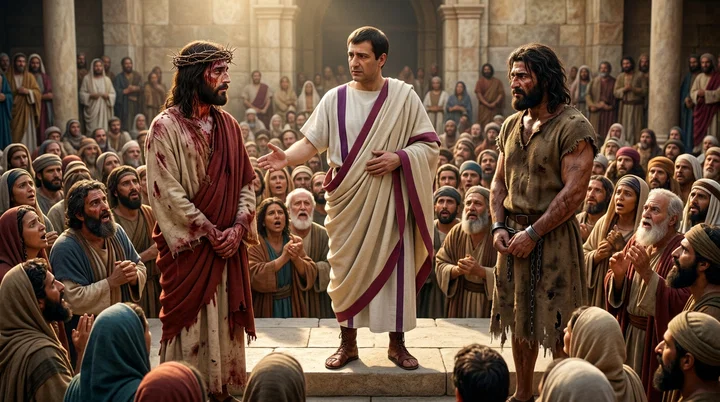
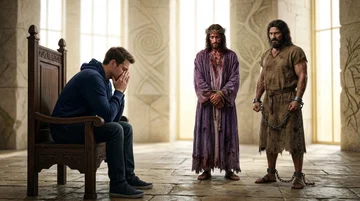
When he was set down on the judgment seat, his wife sent unto him, saying, Have thou nothing to do with that just man: for I have suffered many things this day in a dream because of him.
Translations
When he was set down on the judgment seat, his wife sent to him, saying, Have you nothing to do with that just man: for I have suffered many things this day in a dream because of him.
King James Version, KJV Cambridge Paragraph Bible
When he was set down on the judgment seat, his wife sent unto him, saying, Have thou nothing to do with that just man: for I have suffered many things this day in a dream because of him.
When he was sitting on the judgment-seat, his wife sent to him, saying, Have thou nothing to do with that just man: for I have suffered many things this day in a dream, because of him.
And while he was sitting on the judgment-seat, his wife sent unto him, saying, Have thou nothing to do with that righteous man: for I have suffered many things this day in a dream because of him.
And while he was sitting on the judgment-seat, his wife sent unto him, saying, Have thou nothing to do with that righteous man; for I have suffered many things this day in a dream because of him.
And as he is sitting on the tribunal, his wife sent unto him, saying, 'Nothing — to thee and to that righteous one, for many things did I suffer to-day in a dream because of him.'
But, as he was sitting on the judgment-seat, his wife sent to him, saying, Have thou nothing to do with that righteous [ man]; for I have suffered to-day many things in a dream because of him.
And, as he was sitting upon the judgment seat, his wife sent unto him, saying: Have thou nothing to do with that righteous man, for, many things, have I suffered this day, by dream, because of him.
Berean Standard Bible, Majority Standard Bible
While Pilate was sitting on the judgment seat, his wife sent him this message: “ Have nothing to do with that innocent man, for I have suffered terribly in a dream today because of Him.”
While he was sitting on the judgment seat, his wife sent to him, saying, “ Have nothing to do with that righteous man, for I have suffered many things today in a dream because of him.”
And while he was on the judge's seat, his wife sent to him, saying, Have nothing to do with that upright man, for I have had much trouble this day in a dream because of him.
Also when he was set downe vpon the iudgement seate, his wife sent to him, saying, Haue thou nothing to do with that iust man: for I haue suffered many things this day in a dreame by reason of him.)
Douay-Rheims (Challoner revision)
And as he was sitting in the place of judgment, his wife sent to him, saying: Have thou nothing to do with that just man; for I have suffered many things this day in a dream because of him.
Pictures
Cross-references 20 of 22
- Luke 23:18-25
And they cried out all at once, saying, Away with this man, and release unto us Barabbas:
The crowd chooses Barabbas and demands Jesus’ crucifixion, and Pilate delivers Jesus to their will.
- John 18:39-40
But ye have a custom, that I should release unto you one at the passover: will ye therefore that I release unto you the King of the Jews?
The crowd chooses Barabbas instead of Jesus when Pilate offers to release one prisoner.
- Mark 15:6-15
Now at that feast he released unto them one prisoner, whomsoever they desired.
Parallel account of Pilate offering Barabbas and yielding to the crowd.
- Matthew 27:24
When Pilate saw that he could prevail nothing, but that rather a tumult was made, he took water, and washed his hands before the multitude, saying, I am innocent of the blood of this just person: see ye to it.
Pilate washes his hands and claims innocence after rejecting the warning.
- John 18:38
Pilate saith unto him, What is truth? And when he had said this, he went out again unto the Jews, and saith unto them, I find in him no fault at all.
Pilate declares that he finds no fault in Jesus.
- John 19:1-16
Then Pilate therefore took Jesus, and scourged him.
Continues Jesus’ trial before Pilate, including Pilate’s declaration that he found no fault in him.
- Acts 3:14-15
But ye denied the Holy One and the Just, and desired a murderer to be granted unto you;
Both contrast the rejected Jesus with the murderer chosen for release.
- John 18:36-37
Jesus answered, My kingdom is not of this world: if my kingdom were of this world, then would my servants fight, that I should not be delivered to the Jews: but now is my kingdom not from hence.
Jesus explains his kingdom and mission to Pilate during the trial.
- John 19:17-30
And he bearing his cross went forth into a place called the place of a skull, which is called in the Hebrew Golgotha:
Pilate’s protest over Jesus’ condemnation leads to his crucifixion and death.
- Luke 23:6-12
When Pilate heard of Galilee, he asked whether the man were a Galilæan.
Herod questions Jesus and sends him back to Pilate.
- Luke 23:47
Now when the centurion saw what was done, he glorified God, saying, Certainly this was a righteous man.
Both texts identify Jesus as a righteous man.
- Matthew 27:4
Saying, I have sinned in that I have betrayed the innocent blood. And they said, What is that to us? see thou to that.
both call Jesus innocent and just
- Luke 23:22
And he said unto them the third time, Why, what evil hath he done? I have found no cause of death in him: I will therefore chastise him, and let him go.
Pilate declares Jesus innocent of any crime deserving death.
- Luke 23:4
Then said Pilate to the chief priests and to the people, I find no fault in this man.
Pilate declares that he finds no fault in Jesus.
- John 19:13-16
When Pilate therefore heard that saying, he brought Jesus forth, and sat down in the judgment seat in a place that is called the Pavement, but in the Hebrew, Gabbatha.
Pilate sits in judgment and delivers Jesus to be crucified.
- Isaiah 53:8-9
He was taken from prison and from judgment: and who shall declare his generation? for he was cut off out of the land of the living: for the transgression of my people was he stricken.
Isaiah’s prophecy of the Messiah’s suffering connects with Jesus’ trial and death.
- Matthew 27:15
Now at that feast the governor was wont to release unto the people a prisoner, whom they would.
Pilate’s release custom offered a way to save Jesus.
- Matthew 27:25
Then answered all the people, and said, His blood be on us, and on our children.
The crowd accepts responsibility for Jesus’ blood.
- John 19:6
When the chief priests therefore and officers saw him, they cried out, saying, Crucify him, crucify him. Pilate saith unto them, Take ye him, and crucify him: for I find no fault in him.
The leaders demand Jesus’ death despite Pilate declaring him innocent.
- Matthew 26:59
Now the chief priests, and elders, and all the council, sought false witness against Jesus, to put him to death;
hired false witnesses to condemn him
Commentary
Each commentary is drawn from primary sources: the writings of Ellen G. White and Adventist pioneers and periodicals. Each commentary is separate. Its own words are not a quotation; follow the references to read the source passages.
Ellen G. White
29 sources
While Pilate sat on the judgment seat in conflict and hesitation over Jesus, his wife, who was not Jewish, sent word through the crowd telling him to have nothing to do with that just and righteous man, because she had suffered many distressing things that day in a dream because of him.3SP 141.1–142.13SP 140.1–2RH Jan 23, 1900 He was already convinced by evidence and testimony that the charges were false and that Jesus was innocent and no common man, knowing He was delivered for envy and recognizing His power as the power of God even while He stood bound and accused.RH Jan 23, 1900COS 148.1–4DA 723.1–724.1 The dream was light from heaven sent by God through an angel, so that Pilate would not condemn Christ in darkness but would be given further light and another opportunity to recognize His innocence.3SP 140.1–2RH Jan 23, 1900Ms 40, 1897, par. 3–6 In it she was shown His pure life and holy character and His identity and mission as the divine Son of God, and she witnessed His mistreatment and trial and scourging and condemnation and crucifixion, and His future glory with a vast multitude believing in Him and His return to judge the living and the dead.Ms 29, 1909, par. 12–17Ms 112, 1897, par. 31–32EW 141.2 The warning was meant to keep Pilate from the terrible crime of delivering the Son of God to death by taking no part in His blood, and he at first resolved to labor to deliver Him, but he was too weak to obey the light and failed to do justice.3SP 141.1–142.13SP 140.1–2RH Jan 23, 1900
The Dream Warning
Pilate had taken his place on the judgment seat in terrible conflict and hesitation, already convinced by evidence and testimony that the charges against Jesus were false and that He was innocent and true and no common man but of excellent character, knowing He had been delivered for envy, feeling sympathy and compassion for Him, with his wife's earlier account of His wonderful deeds returning to his mind, and recognizing that even while bound and accused His power was the power of God.RH Jan 23, 1900DA 723.1–724.1SG1 54.1Ms 112, 1897, par. 33–34 While he sat judging, his wife, who was not a Jew, sent a message to him through the crowd, telling him to have nothing to do with that just and righteous and holy man, because she had suffered many distressing things that day in a dream because of Him.3SP 141.1–142.13SP 140.1–2COS 148.1–4SG1 54.15RED 60.1–2 He was alarmed and trembled and turned pale at the message, yet the crowd pressed more urgently as it saw his indecision.COS 148.1–4SG1 54.1
The dream was light from heaven sent by God through an angel to Pilate's wife, so that Pilate was not left in darkness before condemning Christ but was given further light and another opportunity to recognize His innocence.3SP 140.1–2RH Jan 23, 1900Ms 40, 1897, par. 3–6Ms 136, 1899, par. 30–33 It was sent in answer to Christ's prayer while Pilate hesitated, to save Pilate from the awful act of delivering Jesus to be crucified.SG1 54.1DA 731.6–732.3 In the dream she was shown His pure life and holy character and His identity and mission as the divine Son of God and innocent sufferer.Ms 112, 1897, par. 31–32EW 141.2SG1 54.15RED 52.1–2 She witnessed His mistreatment and trial and suffering and His being handed over to be scourged and condemned and crucified, and she saw His future glory with a vast multitude believing in Him and His return to judge the living and the dead.Ms 29, 1909, par. 12–17Ms 112, 1897, par. 31–32DA 731.6–732.3
The warning was meant to keep Pilate from the terrible crime of delivering the divine Son of God to death and to let him avoid guilt by refusing to hand Jesus to the religious leaders and taking no part in His blood.3SP 141.1–142.13SP 140.1–2Ms 112, 1897, par. 31–32 He at first resolved to have no influence toward it and to take no part in the matter and to labor to deliver Him.SG1 54.1 But he was too weak to obey the light and did not heed the heaven-sent message and failed to do justice.Ms 29, 1909, par. 12–17RH Jan 23, 1900Ms 136, 1899, par. 30–33 He received it at the moment when Jesus had collapsed from exhaustion in the court.5RED 60.1–2
Her declaration that Jesus is just joins the Father's declaration of approval, Judas's confession of betraying innocent blood, and Pilate's own declaration of finding no fault, proving that no offense and none of the false charges were ever proved.Ms 139, 1907, par. 8–9 It testifies to His innocence and to the spotless character that stood in contrast to the pious pretensions of the Pharisees.Ms 139, 1907, par. 8–9Ms 87, 1894, par. 23–24 Though He was condemned for declaring Himself the Son of God, He suffered one of the cruelest deaths.Ms 139, 1907, par. 8–9
Christ Or Barabbas
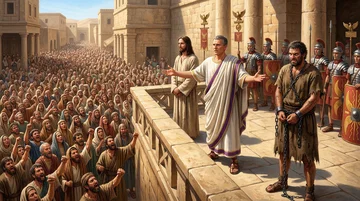
In the judgment hall the innocent, pure and holy Prince of Heaven, who made the world and all things therein, was pronounced innocent yet condemned and scourged and placed side by side with Barabbas, a notable prisoner, a base thief and robber and murderer.Lt 59a, 1895, par. 27–2819MR 263.2–264.116MR 259.3–260.1Ms 112, 1897, par. 33–34 Pilate asked whom to release, declared he found no fault in Jesus, and asked shall I crucify your king, to which the priests and rulers answered we have no king but Caesar, and he washed his hands as innocent of His blood before delivering Christ to be scourged and crucified, while Jesus stood against powerful opposition.Lt 59a, 1895, par. 27–2819MR 263.2–264.1ST May 17, 1899Ms 112, 1897, par. 33–34RH Nov 11, 1915 Pilate in terrible conflict dared not give Him up to the maddened power yet sought to save Him, turning to the pagan invention without justice of setting at liberty one condemned prisoner at the great national festival, hoping to present Jesus of Nazareth side by side with the notable Barabbas so that the contrast between innocence and guilt would convince the people to choose Jesus.Ms 112, 1897, par. 33–34
Led by Satan and inspired and directed by the priests and rulers and the powers of darkness, the mingled voices of those present with the rabble rejected Christ and chose Barabbas and cried for his release rather than the Son of God.Lt 59a, 1895, par. 27–2819MR 263.2–264.1Ms 10, 1894, par. 24–25ST May 17, 1899 When Pilate asked what to do with Jesus called Christ they cried crucify Him, crucify Him, and answered His blood be on us and on our children, though Pilate declared he found no fault in Him.Lt 59a, 1895, par. 27–2819MR 263.2–264.1ST May 17, 1899 The crowd's choice was led by Satan, while Jesus though innocent was delivered up to be scourged and crucified and the people chose Barabbas, a robber and murderer, instead of Him.Ms 10, 1894, par. 24–25Ms 56, 1894, par. 3–4 The chief priests and elders acted from envy and jealousy lest He draw the people away from themselves and become King of the Jews, knowing He did greater works than they could do and fearing He would gain higher authority, and they agreed together to prevent this by seizing Him privately and hiring false witnesses to testify falsely that they might condemn Him and put Him to death, refusing Him as King.SG3 174.2–176.1
Barabbas represents Satan personified, so the roaring demand to release Barabbas is choosing Satan before Christ the Son of God and gives exaltation to Satan.16MR 259.3–260.1 As Joseph's brethren purposed to kill him and then sold him to prevent his dominion and his dreams, yet God overruled their course to bring about his dominion over them and his becoming saviour to his father's family, so the Jews thought by taking Christ's life to prevent His becoming King, but by murdering the Son of God they brought about the very thing they sought to prevent.SG3 174.2–176.1 By that murder they made Him Redeemer of mankind, Saviour of the fallen race, and Ruler over the whole world, while the guilt of His enemies remains just as heinous though God's providential hand controlled events for His own glory and the good of man.SG3 174.2–176.1
Satan was at the head of those who reviled and crucified Him and led the cruel mob in its abuse of the Saviour, aiming to provoke Him to retaliation or to drive Him to perform a miracle to release Himself and break up the plan of salvation.Lt 132, 1910, par. 4–9 One stain upon His human life and one failure to endure the test would have made the Lamb of God an imperfect offering and the redemption of man a failure.Lt 132, 1910, par. 4–9 Christ, who by a command could have brought the heavenly hosts to His aid or driven the mob in terror by the flashing forth of His divine majesty, submitted with perfect calmness to the coarsest insults and outrage.Lt 132, 1910, par. 4–9 By His cruel death of shame on the cross of Calvary He proved false Satan's charges against God and vindicated God in the sight of the angels as One willing to make the greatest sacrifice for man.Lt 132, 1910, par. 4–9
His condemnation and humiliation as one doomed to the cross, while the multitude who had hailed Him as king hissed at Him and reviled Him and the cruel jeering crowd cried crucify Him, and while professed followers turned in His trouble, was a most trying ordeal and great trial bringing fear, disappointment, grief, and ruin of fondest hopes.4RED 102.2–103.1 Jesus foresaw this hour of horror and deliberately brought about an earlier sifting crisis while He was still present to comfort and strengthen His chosen, so the unbelieving, weak, undecided, and faint-hearted would leave beforehand and their apostasy then would not overwhelm the twelve or carry the rest away.4RED 102.2–103.1
The priests and rulers present kept abiding hatred with hands not cleansed from the blood shed in crucifying the world's Redeemer.ST May 17, 1899 Yet those same people who took active part in His death later heard the disciples proclaim by the Holy Spirit that the humiliated, spit-upon, thorn-crowned, crucified Man is the Prince of Life at the right hand of God, and trembled with conviction and anguish.ST May 17, 1899
Choice Confronting Today
The judgment-hall scene to which this verse belongs stands as a symbol of the closing scenes of earth's history, when every person will choose between Christ the Truth and Satan and his falsehoods.Ms 39, 1894, par. 11–12 That final choice includes accepting or rejecting the message of mercy concerning God's commandments and the faith of Jesus, and it will repeat the ancient choice when people deceived by Satan again reject Christ and cry for His crucifixion.Ms 39, 1894, par. 11–12 To reject the light of heaven in that history of Christ's rejection is to reject Christ Himself, the only provision for cleansing from sin. Those who reject Him turn from the Son of God and join those disloyal to Him, and they will answer for casting Him out.
In the trial Christ was placed side by side with Barabbas, a thief and robber, so that two parties stood distinctly outlined as Pilate asked whom to release.19MR 263.2–264.116MR 259.3–260.1 Though Pilate declared he found no fault in Him and asked if he should crucify their king, the mob inspired by the priests and rulers cried for Barabbas and answered what should be done with Jesus called Christ with crucify Him, while the priests and rulers answered they had no king but Caesar.Lt 59a, 1895, par. 27–2819MR 263.2–264.1 Barabbas represents Satan personified, so the roaring demand to release Barabbas was choosing Satan before Christ the Son of God and gave exaltation to Satan.16MR 259.3–260.1 That same division confronts people today and forces the question whose side each is on, whether the side of the rabble or of those gathered for the sacred ordinance of baptism, whether the side of Christ or the side of the apostate.19MR 263.2–264.116MR 259.3–260.1Ms 13, 1897, par. 5
The cry is still in effect in the world today for Barabbas to be released and for Christ to be crucified, and every person individually demonstrates by his own choice whom he is choosing.16MR 259.3–260.1 The choice made in that scene is shown by a person's course of action, for choosing Christ means living according to Him.Ms 13, 1897, par. 5 This brings responsibility to give account to God if by example transgression is encouraged, with the call to employ time and talents not to uplift self but to advance His cause and promote His glory.19MR 263.2–264.1 What happened there shows what is the spirit of man and what humanity will do when not under the control of the Spirit of God but standing under the black banner of the powers of darkness, with men inspired of Satan crying crucify Him.Lt 59a, 1895, par. 27–28 It reveals what such ones will do in the great crisis before us, which will require greater faith to stand the test and trial to come.Lt 59a, 1895, par. 27–28
Sources
Pioneers and periodicals
50 sources
While he stood in the judgment hall before Pilate seated on the judgment seat, Pilate's loved wife Claudia Procula sent her warning to take no part in condemning him and to do that righteous, holy, innocent Son of God no harm.ST Jan 17, 1911RH Feb 8, 1915RH Mar 26, 1861ST Mar 28, 1906 Her charge rested on a heaven-sent dream in which an angel showed her his pure life and holy character as the guiltless man about to be cruelly condemned.RH Jan 23, 1900ST Nov 2, 1882 God sent it to give Pilate further light and a final opportunity to recognize his innocence and secure his release, after testimony, evidence and Jesus' dignified bearing had already convinced him the charges were false.RH Jan 23, 1900ST Jul 4, 1878ST Oct 27, 1898 Too weak to obey, he ignored the warning and, though repeatedly declaring him innocent and without fault, yielded to threats and the union of priestly leaders with Roman power and handed him over to be crucified while the incited crowd chose Barabbas instead.RH Jan 23, 1900ST Jun 9, 1898ST Oct 27, 1898 That judgment-hall choice, rejecting the only provision for cleansing from sin and choosing Barabbas over Christ, stands for the closing scenes of earth's history when all must accept or reject the message of mercy concerning God's commandments and the faith of Jesus.RH Feb 14, 1854
Words and Setting
The warning belongs to the trial before the crucifixion, when Jesus stood and suffered in the judgment hall before the judgment seat in the final scene of his earthly life, and while Pilate sat there his wife sent to him about the just man after suffering in a troubling dream because of him, a message that stirred his sense of justice as he sought release and that stands in contrast to the leaders' plot to have him condemned.RH Mar 26, 1861ST Mar 28, 1906RH Jun 10, 1862ST Oct 25, 1910
The expression covering that suffering includes the previous night, for the distress in a dream came in the night yet is spoken of as suffered that same day of judgment, so that day here means the full twenty-four-hour period and not daylight hours alone.RH Dec 12, 1871
She was Claudia Procula, his loved wife, remembered as considerate toward him, and her agonizing prayers and tearful remonstrances reached him as he sat in judgment, with her dream kept as part of the events surrounding the trial.ST Oct 27, 1898ST Oct 12, 1876ST Feb 7, 1911
God reached Pilate's will and choice through her as a final effort, giving her while he sat on the seat a vision of Christ in which she suffered many things that day, and the solemn word she sent joined the faint whisperings of his own conscience when he was already convinced by Jesus' dignified bearing and unresentful suffering that he was more than man yet remained undecided from fear.ST Oct 27, 1898ST Oct 12, 1876
The man she named is righteous, holy, and innocent, a man of eminent piety, the divine Son of God and more than an ordinary man.ST Nov 2, 1882ST Jun 3, 1889ST Jul 11, 1878RH Feb 8, 1915ST Oct 12, 1876
His conduct moved both her to plead for him and Pilate toward conviction of his innocence, and Pilate himself repeatedly declared him innocent and just and found no fault in him.RH Feb 8, 1915ST Dec 20, 1905
Her charge to have nothing to do with him was a plea to take no part in condemning him, to do him no harm, but to shield and spare that guiltless blood.ST Jan 17, 1911RH Jul 16, 1861RH Mar 10, 1910ST May 5, 1909
Her recognition of his holiness came with great distress from a vision of his power over waters, winds, and other parts of nature, which foretold danger for Pilate if he handed Christ over to his enemies, a consequence Pilate failed to grasp.RH Jul 16, 1861RH Mar 10, 1910
The surrounding history of trial, execution, and burial is minutely accurate in customs, opinions, political events, and circumstances.RH Feb 11, 1862
Jesus was brought to Pontius Pilate, then governor of Judea, whose sentence was necessary because the power of life and death was vested in the Roman governor.RH Feb 11, 1862
The derision, the scourging before crucifixion, the written accusation affixed to the cross in three languages, the bearing of the cross, and the granting of the body for burial at the request of friends were all customary laws and practices of that period, and the circumstantial detail with consistency to outside testimony about manners and institutions, in natural undesigned allusions with nothing forced or out of place, shows the account true and not fabricated.RH Feb 11, 1862
Dream and Heavenly Warning
The dream was a message sent from heaven to Pilate's wife, and through her to Pilate himself while he sat on the judgment seat.ST Nov 2, 1882ST Jun 3, 1889ST Jul 11, 1878RH Dec 14, 1911 An angel of God gave her light in the dream and showed her Jesus in His pure life and holy character as the innocent, just, righteous Man, the divine Son of God, about to be condemned to a cruel death.RH Jan 23, 1900ST Nov 2, 1882ST Jun 3, 1889ST Jul 11, 1878ST Oct 26, 1882 She suffered greatly that day because of Him, with distress and troubling of soul, and sent the urgent warning to have nothing to do with that just man, which was the only voice raised in His defense that night.ST Nov 2, 1882ST Jun 3, 1889ST Jul 11, 1878RH Dec 14, 1911
It was not ordinary sleep or fancy but a mystic prophetic trance in which the future rolled before her soul.ST Oct 27, 1898 In it she was shown His power over the waters, the winds, and other parts of nature, a vision that caused her great distress and foretold danger for Pilate if he harmed Him.ST Apr 17, 1879RH Jul 16, 1861 She suffered many things in that troubling dream, greatly and with anguish of spirit.ST Apr 17, 1879RH Jul 16, 1861
The dream foresaw His crucifixion, burial, and resurrection, the spread of His story among the people, and the destruction of Jerusalem by war and fire. She saw a vast countless multitude of all tribes and ages, hoary sire, child, mother, maiden, youth and man of care, all in humble silence bending the knee.ST Oct 27, 1898 Against the lurid eastern sky the shameful cross was upraised, with Jesus whom she had often seen with sorrowing mien in Zion's streets now in blood and agony turning a dying look upon her, and she heard the throng sing their belief in Him that died, by Pontius Pilate crucified, who shall come when time is fled to judge the living and the dead.ST Oct 27, 1898
God sent the dream to give Pilate further light and a further opportunity to recognize Jesus' innocence, stirring his sense of justice to secure Jesus' release.RH Jan 23, 1900ST Jul 4, 1878ST Mar 28, 1906ST Oct 26, 1882 It was a final effort to reach his will and choice through his loved and considerate wife Claudia Procula and to prevent the terrible crime of delivering the Son of God to death.ST Nov 2, 1882ST Jun 3, 1889ST Jul 11, 1878ST Oct 27, 1898 It came after Pilate was already convinced by testimony and evidence and by Christ's dignified, innocent, unresentful bearing and conduct that the charges were false and that He was more than man, yet he remained undecided from fear of the Jews.RH Jan 23, 1900ST Oct 27, 1898ST Dec 20, 1905
Pilate was too weak to obey the light, failed to grasp the consequences of handing Christ over to His enemies, and ignored and refused the last-chance warning, so it did him no good and did not prevent his act.RH Jan 23, 1900ST Oct 27, 1898RH Mar 10, 1910ST Oct 28, 1897
Trial and Condemnation
The verse stands in the trial account where the judge himself declared the prisoner innocent yet handed him over to be crucified.RH Nov 18, 1862 It shows him standing in the Roman hall at the judgment seat, mocked and beaten, crowned and wounded, with Jew and Gentile joined together in hatred against him.RH Nov 12, 1872 It is part of his facing the Roman governor while Jewish priests and rulers pressed the governor to carry out their will, standing against powerful opposition.RH Nov 11, 1915
The condemnation came because the people who claimed to look for the Messiah rejected him, and the Jewish council used threats and intimidation to secure the Roman governor's approval of an unjust and illegal trial of an innocent man.ST Jun 9, 1898 It came through the cooperation of religious leaders with Roman civil authority, a union of church and state that enabled the leaders to condemn him to death because he would not submit to their religious traditions made into civil law.
Pilate knew his eminent piety and knew the rulers accused him from envy of his increasing popularity and widely spread influence, and he had both the power and the intention to defend him from the injustice of the mob and the craftiness of the envious Jewish senate and priesthood.ST Oct 12, 1876 His conduct before Pilate moved the governor, and moved the governor's wife to plead for him, helping convince Pilate that he was innocent.ST Dec 20, 1905 His wife's agonizing prayers and tearful remonstrances warning to have nothing to do with him as a just man joined the faint whisperings of Pilate's own conscience.ST Oct 12, 1876
Pilate acted with insincerity and inconsistency, declaring him innocent yet offering the crowd a choice between him and Barabbas, placing a man he had declared innocent on a par with a convicted man and leaving the fate of the innocent to the choice of his avowed enemies. The inconsistency belonged to the Jews as well, because the chief priests incited the people to ask for Barabbas, who had been convicted of the same crime they charged against Jesus and for which they demanded his death. To move the crowd to pity Pilate had Jesus scourged and displayed beside Barabbas, his bloodied and exhausted appearance contrasted with Barabbas's hardened, criminal appearance, while his noble character remained evident.ST Oct 7, 1886
The crowd, incited by the chief priests, chose Barabbas to be released instead of the Son of God, showing how the world can reject and destroy its best friend while favoring its foe.RH Jul 2, 1861 Barabbas was a robber preferred in his place though Jesus was innocent, a ring-leader arrested during the unrest in Jerusalem, a robber and murderer.ST May 17, 1899RH Jun 24, 1915ST Feb 16, 1882 The voices present mingled with the rabble in rejection, shouting for Barabbas to be released rather than the Son of God, and when Pilate asked what to do with Jesus they cried for crucifixion.ST May 17, 1899 The crowd demanded his death and chose a murderer to be released instead, yet as the Prince of Life he went willingly to suffering and death to free his enemies.ST Oct 11, 1899 Pilate declared he found no fault in him and washed his hands as innocent of his blood before delivering him to be crucified, and the people answered that his blood should be on them and on their children.ST May 17, 1899
Pilate repeatedly tried to shift responsibility for his fate, but each evasion only made matters worse and did not relieve him of responsibility for handing him over to be crucified.ST Mar 13, 1901 He repeatedly declared him innocent and just, yet amid the mob's abuse and demands without complaint on his part, the mob's cries prevailed and Pilate allowed him to be crucified.RH Jun 15, 1911 The fury and wilfulness of the Jews, the strong determinations of their rulers, and the overbearing cruel temper of Herod and his men of war proved too much for his weaker resolutions, so he yielded his noble and manly nature to the ruling spirit of the age, lent his authority to the demands of the mob, and allowed him to be crucified.ST Oct 12, 1876 His decision was a cowardly surrender to the crowd, and the washing of hands was evasion of responsibility, for washing in water cannot ease conscience or erase guilt.ST Oct 27, 1898RH Sep 28, 1911 His name remains linked through the ages to suffering under his authority.
Prophecy and Doctrine
The judgment-hall scene stands as a symbol of the closing scenes of earth's history, when every person will choose between Christ the Truth and Satan and his falsehoods. That choice turns on accepting or rejecting the message of mercy concerning God's commandments and the faith of Jesus, and to reject it is to turn from the Son of God and join those disloyal to Him. Rejecting the light of heaven is rejecting Christ, the only provision for cleansing from sin, and those who reject Him and cast Him out, choosing Barabbas instead, will answer for it.
The chief priests and elders rejected the light given in Christ and misled the people against the truth, which was a great crime.RH Jun 13, 1865 Yet the light now shining from God's holy law, from the testimony of the Old and New Testaments concerning fulfilled prophecy, and from sublime truths expressly made known in the word of God for the last perilous days, is greater than the light then rejected.RH Jun 13, 1865 The rejection of this greater light by the Protestant churches, who ignore it and cover it with error and confusion and warn against those who spread it as heresy and fanaticism, is the same kind of crime and a greater one, leaving all who are willing to be deceived open to deceivableness.RH Jun 13, 1865 Christ's rejection, in which the people chose Barabbas and Caesar over Christ and God, represents Jerusalem's failure and stands for the hopelessness of salvation by human works and of hopes for an earthly kingdom established through the Jews' return to Palestine.ST Apr 11, 1900 Choosing Barabbas over Christ images choosing Sunday in place of the Lord's seventh-day Sabbath.RH Feb 14, 1854
The wife's real dream and warning are not proof that God required wicked men to kill Jesus to accomplish salvation, for even if the dream were a device of Satan, Providence could overrule it for wisdom.ST May 5, 1909 Those same priests, rulers, and people who took active part in His death kept abiding hatred with hands not cleansed from crucifying the world's Redeemer, yet later heard the disciples proclaim by the Holy Spirit that the humiliated, spit-upon, thorn-crowned, crucified Man is the Prince of Life at the right hand of God, and trembled with conviction and anguish.ST May 17, 1899 Pilate set himself against the Rock of God's word and lifted his puny hand against its mighty plans and precepts.ST Jul 15, 1908 He is dead but the Rock stands, and his name would have been lost in oblivion except for opposition to truth, now living only in infamy.ST Jul 15, 1908
Example and Application
Jesus stood before Pilate and the hostility of the religious mob without fear or wavering from the truth, enduring insult and abuse without angry resentment or haughtiness and refusing to yield to the mob's demands.RH Mar 26, 1861ST Oct 11, 1899RH May 5, 1863 His courage was joined with gentleness and innocence, with composed calm and self-possession and repose in God amid turmoil, without complaint.RH Mar 26, 1861RH May 5, 1863ST Jul 29, 1886 The judgment hall was an unjust place, yet his suffering there is the example of how to face shame and loss, bear the cross, and follow him through suffering and humiliation.RH Mar 26, 1861RH Jul 30, 1867RH Aug 14, 1860 As the Prince of Life he went willingly to suffering and death so that he might free his enemies.ST Oct 11, 1899
The account of his sufferings in this chapter subdues pride and discontent.ST Apr 17, 1879 A merely bruised and released offering would represent only the path to the judgment hall, in contrast with the complete consecration shown by his death at Calvary.ST Sep 12, 1900
When he was forsaken before his enemies, the urgent warning that called him a just man was a heaven-sent message and the only voice raised in his defense that night, a fearless protest on his behalf.RH Dec 14, 1911 While he was on the cross and darkness covered the land, his defender sent a messenger to ask what had become of him.ST Jan 24, 1911 To condemn him would have been a stain and a curse to his judge, leaving early joy past and youth withered in exile from Rome beneath the skies of Gaul, while she never forgot the Crucified of Galilee.ST Oct 27, 1898 His appearance before Pilate is a picture of humility in contrast with the pope.RH Dec 21, 1911
The crowd's choice of Barabbas over Christ shows how the world can reject and destroy its best friend while favoring its foe.RH Jul 2, 1861 The present religious world repeats that choice in spirit, opposing and slandering his people while favoring the guilty.RH Jul 2, 1861RH Mar 15, 1860
Sources