Matthew 12:2
But when the Pharisees saw it, they said unto him, Behold, thy disciples do that which is not lawful to do upon the sabbath day.
Translations
But when the Pharisees saw it, they said to him, Behold, your disciples do that which is not lawful to do on the sabbath day.
King James Version, KJV Cambridge Paragraph Bible
But when the Pharisees saw it, they said unto him, Behold, thy disciples do that which is not lawful to do upon the sabbath day.
But when the Pharisees saw it, they said to him, Behold, thy disciples do that which it is not lawful to do on the sabbath.
Revised Version, American Standard Version
But the Pharisees, when they saw it, said unto him, Behold, thy disciples do that which it is not lawful to do upon the sabbath.
and the Pharisees having seen, said to him, 'Lo, thy disciples do that which it is not lawful to do on a sabbath.'
But the Pharisees, seeing [ it], said to him, Behold, thy disciples are doing what is not lawful to do on sabbath.
But, the Pharisees, observing it, said unto him, Lo! thy disciples, are doing what is not allowed to do, on sabbath.
Berean Standard Bible, Majority Standard Bible
When the Pharisees saw this, they said to Him, “ Look, Your disciples are doing what is unlawful on the Sabbath.”
But the Pharisees, when they saw it, said to him, “ Behold, your disciples do what is not lawful to do on the Sabbath.”
But the Pharisees, when they saw it, said to him, See, your disciples do that which it is not right to do on the Sabbath.
And when the Pharises sawe it, they saide vnto him, Beholde, thy disciples doe that which is not lawfull to doe vpon the Sabbath.
Douay-Rheims (Challoner revision)
And the Pharisees seeing them, said to him: Behold thy disciples do that which is not lawful to do on the sabbath days.
Pictures
Cross-references 20 of 66
- Mark 2:27-28
And he said unto them, The sabbath was made for man, and not man for the sabbath:
Jesus explains the Sabbath’s purpose and declares himself its Lord.
- Matthew 12:12
How much then is a man better than a sheep? Wherefore it is lawful to do well on the sabbath days.
Jesus says it is lawful to do good on the Sabbath.
- Exodus 20:10
But the seventh day is the sabbath of the LORD thy God: in it thou shalt not do any work, thou, nor thy son, nor thy daughter, thy manservant, nor thy maidservant, nor thy cattle, nor thy stranger that is within thy gates:
Identifies the seventh day as the Sabbath and forbids work on it.
- Luke 6:1-5
And it came to pass on the second sabbath after the first, that he went through the corn fields; and his disciples plucked the ears of corn, and did eat, rubbing them in their hands.
Parallel account of the disciples plucking grain and Jesus’ defense of their actions.
- 1 Samuel 21:1-6
Then came David to Nob to Ahimelech the priest: and Ahimelech was afraid at the meeting of David, and said unto him, Why art thou alone, and no man with thee?
David received and ate the consecrated bread, an example Jesus used to defend his hungry disciples.
- Matthew 5:17-19
Think not that I am come to destroy the law, or the prophets: I am not come to destroy, but to fulfil.
Jesus affirmed the enduring law, including the Sabbath commandment.
- Matthew 12:8
For the Son of man is Lord even of the sabbath day.
Jesus is Lord of the Sabbath.
- Genesis 2:2-3
And on the seventh day God ended his work which he had made; and he rested on the seventh day from all his work which he had made.
God rested and sanctified the seventh day, establishing the Sabbath at creation.
- Isaiah 58:13
If thou turn away thy foot from the sabbath, from doing thy pleasure on my holy day; and call the sabbath a delight, the holy of the LORD, honourable; and shalt honour him, not doing thine own ways, nor finding thine own pleasure, nor speaking thine own words:
Describes honoring the Sabbath by turning from self-serving pursuits.
- Matthew 12:7
But if ye had known what this meaneth, I will have mercy, and not sacrifice, ye would not have condemned the guiltless.
Jesus answers Sabbath accusations by affirming mercy over sacrifice.
- Luke 13:14-16
And the ruler of the synagogue answered with indignation, because that Jesus had healed on the sabbath day, and said unto the people, There are six days in which men ought to work: in them therefore come and be healed, and not on the sabbath day.
Jesus defends Sabbath healing as freeing a woman from bondage.
- Matthew 24:20
But pray ye that your flight be not in the winter, neither on the sabbath day:
Jesus instructs his disciples to account for the Sabbath when fleeing.
- Mark 3:1-6
And he entered again into the synagogue; and there was a man there which had a withered hand.
A Sabbath healing provokes the Pharisees’ opposition.
- John 5:16
And therefore did the Jews persecute Jesus, and sought to slay him, because he had done these things on the sabbath day.
Jesus is opposed for healing on the Sabbath.
- Hosea 6:6
For I desired mercy, and not sacrifice; and the knowledge of God more than burnt offerings.
Jesus invokes mercy over ritual to show the hungry disciples were guiltless.
- Numbers 28:10
This is the burnt offering of every sabbath, beside the continual burnt offering, and his drink offering.
Sabbath offerings required priests to work, a precedent for blameless Sabbath service.
- Mark 2:23-24
And it came to pass, that he went through the corn fields on the sabbath day; and his disciples began, as they went, to pluck the ears of corn.
The Pharisees object to the disciples plucking grain on the Sabbath.
- Luke 4:16
And he came to Nazareth, where he had been brought up: and, as his custom was, he went into the synagogue on the sabbath day, and stood up for to read.
Jesus regularly attended worship on the Sabbath.
- Mark 2:28
Therefore the Son of man is Lord also of the sabbath.
Jesus is Lord of the Sabbath and has authority over it.
- Deuteronomy 23:25
When thou comest into the standing corn of thy neighbour, then thou mayest pluck the ears with thine hand; but thou shalt not move a sickle unto thy neighbour’s standing corn.
Permits a passerby to pluck grain by hand from a neighbor’s field.
Commentary
Each commentary is drawn from primary sources: the writings of Ellen G. White and Adventist pioneers and periodicals. Each commentary is separate. Its own words are not a quotation; follow the references to read the source passages.
Ellen G. White
20 sources
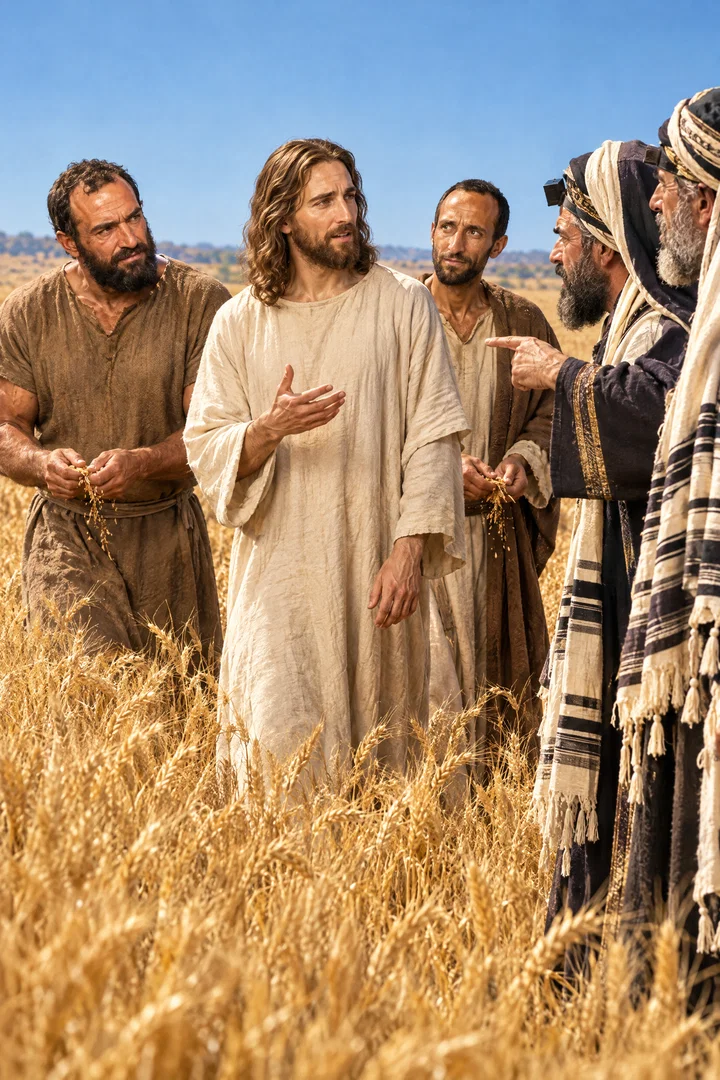
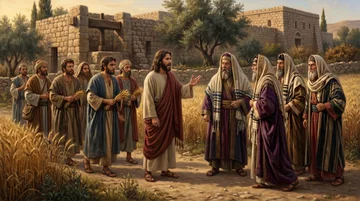
On the Sabbath the hungry disciples walking through the grainfield plucked heads of grain, rubbed out the kernels and ate to satisfy hunger, and the Pharisees who were closely watching Jesus seized on this to accuse them of doing what was unlawful on the Sabbath.COS 71.4–73.4Ms 31a, 1898, par. 1–32SP 195.2–197.1 Their charge rested not on God's law but on added human restrictions that treated gathering as reaping and rubbing as threshing, obscuring mercy and the purpose of the Sabbath.COS 71.4–73.42SP 195.2–197.1Ms 12, 1894, par. 8–10 The law of Moses permitted a hungry traveler to take grain by hand from a neighbor's field to satisfy hunger, so their act accorded with that provision.2SP 195.2–197.1HSFM 165.2PP 531.1–2 The accusation was false and blind, for their necessary act did not break God's Sabbath law but was in harmony with it, and they were guiltless.COS 71.4–73.42SP 195.2–197.1Ms 12, 1894, par. 8–10DA 283.4–284.1ST Jul 29, 1897 As Maker and Lord of the Sabbath Christ defended them, showing the Sabbath was made to give rest and good and not burden, so meeting human need is lawful on the Sabbath.COS 71.4–73.42SP 195.2–197.1Ms 12, 1894, par. 8–104RED 48.2–49.1
Accusation and Setting
On the Sabbath the disciples were hungry after a long day spent in teaching and healing work, and as they walked through a grainfield they plucked heads of grain, rubbed the kernels in their hands, and ate them to satisfy hunger.COS 71.4–73.4Ms 31a, 1898, par. 1–32SP 195.2–197.1DA 283.4–284.1ST Jul 29, 1897 The grain they handled in this way was wheat, called corn, eaten simply by rubbing it out and taking the kernels.Ms 31a, 1898, par. 1–3DA 283.4–284.1ST Jul 29, 1897
The Pharisees were continually following Christ and closely scrutinizing Him to oppose His healing of the sick and His preaching of the gospel to the poor.Ms 31a, 1898, par. 1–3Ms 12, 1894, par. 8–10 On seeing what the disciples did they charged that the disciples did what was not lawful to do upon the Sabbath day, a charge that could be used to condemn Jesus Himself as a Sabbath-breaker.COS 71.4–73.4Ms 31a, 1898, par. 1–32SP 195.2–197.1Ms 12, 1894, par. 8–10ST Jul 29, 1897
Their charge did not rest on God's law but on added human restrictions and a narrow, tradition-bound reading of the law.COS 71.4–73.42SP 195.2–197.1Ms 12, 1894, par. 8–10PK 183.1Ms 43b, 1891, par. 1 The rabbis treated gathering as reaping and rubbing as threshing, and so made the act a double offense in their interpretation.DA 283.4–284.1 Those traditions obscured God's mercy and the purpose of the Sabbath and led to a blind misreading of its requirements.COS 71.4–73.4Ms 12, 1894, par. 8–10Ms 43b, 1891, par. 1
The law of Moses permitted a hungry traveler to take grain by hand from a neighbor's field to satisfy hunger, and gave the same permission regarding fruit from an orchard or vineyard, so the disciples' act in plucking and eating the standing grain accorded with that provision.2SP 195.2–197.1HSFM 165.2PP 531.1–2 The verse belongs to the account of going through the grainfield that continues with the healing of the withered hand.Lt 13, 1876, par. 1–39MR 32.3–5 In connection with it, Christ's leading His disciples out by the lakeside on the Sabbath to teach them shows that Sabbath teaching need not be confined within walls and that walking outdoors on the Sabbath is not wrong.Ms 3, 1879, par. 4–5
Sabbath Vindicated by Christ
The charge was false and blind, for the disciples' necessary act of rubbing grain and eating to satisfy hunger did not break God's Sabbath law but was in harmony with the Sabbath commandment, and they were guiltless.Ms 12, 1894, par. 8–10DA 283.4–284.1ST Jul 29, 1897ST Sep 16, 1913Ms 43b, 1891, par. 9 Jesus denied the accusation and declared that in condemning them the Pharisees had condemned the guiltless.Ms 12, 1894, par. 8–10ST Jul 29, 1897 The accusation therefore did not establish any transgression of the Sabbath.ST Sep 16, 1913
The Sabbath was made for people to bring rest and peace and good, not pain or burden, and not as a yoke of bondage.COS 71.4–73.42SP 195.2–197.14RED 48.2–49.1Ms 43b, 1891, par. 9 Meeting human need on that day, including hunger and fatigue after long labor in teaching and healing, and sustaining strength for God's service, is lawful.COS 71.4–73.42SP 195.2–197.14RED 48.2–49.1 The disciples' eating met a need for food and sustained them for service, and was guiltless.COS 71.4–73.44RED 48.2–49.1
Christ defended them by appealing to David's hunger and the eating of the sacred bread, teaching that sustaining need and service to God are lawful on the Sabbath.2SP 195.2–197.14RED 48.2–49.1 He told His accusers that they did not understand God's mercy.Ms 12, 1894, par. 8–10 His declaration that He is Lord of the Sabbath established His authority over it and His right to acquit them.2SP 195.2–197.14RED 48.2–49.1
As the Maker of the Sabbath who spoke the law at Sinai and as its Lord, Christ kept the Sabbath according to God's law and did not break it.2SP 195.2–197.1Ms 12, 1894, par. 8–10PK 183.1 He rejected human rules that distorted its observance, despite the hostility of the rabbis.Ms 12, 1894, par. 8–10PK 183.1 The charge was aimed also at Him as an accusation of transgression against the Lord who made the Sabbath, made blindly.STMW6 43.218MR 155.1–3Ms 43b, 1891, par. 1
That accusation against the greatest Teacher exposes the folly and weakness of human judgment.STMW6 43.2 His works were in perfect harmony with God's law, and His human life of perfect obedience showed that the law can be kept.RH May 28, 1901 The charge that He Himself broke the Sabbath could not be sustained, so that if it could have been proved His accusers would not have needed to hire false witnesses against Him.Ms 29a, 1885, par. 6–8
Sources
Pioneers and periodicals
94 sources
On the Sabbath as Jesus went through the grainfield his hungry disciples began to pluck ears of grain and eat, and when the Pharisees saw it they said they did what is not lawful on the Sabbath day.ST Jul 8, 1897ST Jan 31, 1911ST Feb 10, 1904 The charge was false, for the disciples had not broken God's Sabbath law, but rested on oppressive human traditions and rabbinical rules that burdened the Sabbath.ST Mar 10, 1898RH Jul 18, 1912ST Apr 10, 1893ST Feb 26, 1885ST Dec 8, 1887 Jesus vindicated the disciples as guiltless and lawful, answering by David eating the showbread when hungry, the priests who labor in the temple and are blameless, mercy and not sacrifice, and that the Son of man is Lord even of the Sabbath.RH Feb 4, 1862ST Feb 17, 1898RH Jun 10, 1852RH Jul 25, 1912RH Jan 28, 1873 His decision teaches that the Sabbath was made for man and not man for the Sabbath, that it is lawful to do well and to do works of necessity and mercy on the Sabbath, and that the law forbade reaping and thy work, not hungry people eating food at hand or work maintaining God's worship.RH Apr 5, 1860ST Jul 1, 1908ST Jan 6, 1881RH Nov 12, 1872 The Sabbath so defended is still binding in the gospel age and is the seventh day of the fourth commandment, not Sunday, kept by Jesus himself without setting it aside or changing it to another day, to be kept joyfully as blessing and delight with only ordinary labor and secular business forbidden.ST Jun 4, 1874RH May 20, 1909
Setting and Wording
On the Sabbath Jesus went through the grainfield with his disciples, and being hungry they began to pluck ears of grain and eat, whereupon the Pharisees who saw it said they were doing what is not lawful to do upon the Sabbath day.ST Jul 8, 1897ST Jan 31, 1911ST Feb 10, 1904ST Mar 19, 1894RH Feb 4, 1862 The charge was not theft, for the law permitted a traveler to pluck grain by hand, but Sabbath-breaking in the eating itself.ST Feb 10, 1904ST Apr 14, 1881RH Aug 15, 1854 The accusation concerned Sabbath observance and the relief of hunger by that brief work, not merely passing through the field.RH Aug 15, 1854RH Aug 27, 1857
What they did was pluck heads of wheat or barley and rub out the kernels in their hands to eat as they walked.ST Apr 14, 1881ST Feb 7, 1911RH Jul 18, 1854ST Mar 21, 1878 Corn here means grain such as wheat, rye, oats and barley, not maize which was unknown until America.ST Apr 14, 1881ST Feb 10, 1904 The ripening grain was in the milky stage, sweet, juicy and easily digested, and plucking enough to eat was permitted by law and custom on other days.ST Apr 14, 1881ST Feb 10, 1904
The word in the verse is sabbaton for the seventh-day weekly Sabbath, in singular and plural forms, and the verse belongs among the New Testament references to the Lord's continuing weekly Sabbath rather than a ceremonial festival sabbath.RH Nov 8, 1853RH Dec 15, 1863RH Apr 24, 1879RH Mar 19, 1857 The travel itself was going to or returning from the synagogue in obedience to the requirement of holy convocation on that day, with the Pharisees themselves in the company.RH Aug 27, 1857RH Aug 27, 1857 The dispute was therefore over plucking and eating on that holy day, not over traveling to worship, which was lawful.RH Aug 27, 1857RH Aug 27, 1857
The grainfield event stands in immediate connection with the healing of the man with the withered hand, the two following each other directly on the same Sabbath in going straight from the cornfield to the synagogue.ST Mar 16, 1904ST Nov 11, 1897 That Sabbath was the seventh day before Sunday, the genuine seventh day carrying God's blessing and sanctification.ST Mar 16, 1904ST Jul 23, 1912 Jesus still recognized the Sabbath and required its observance by his disciples, afterward warning them concerning the flight from Jerusalem about thirty-six years later to pray that it would not be on the Sabbath day.ST Mar 16, 1904ST Jul 23, 1912
The Pharisees closely watched and scrutinized Jesus and the disciples on that day to find grounds to accuse, objecting even to an act of necessity and to rubbing grain in the hands.ST Oct 19, 1882RH Mar 10, 1859ST Apr 9, 1894 Their complaints arose more from hostility to Jesus than from genuine regard for the Sabbath, reflecting scrupulous concern with outward rules while exposing malice and inconsistency.RH Nov 4, 1858RH Mar 10, 1859 Those who held the minority reading place the plucking on Sunday while using it to condemn inconsistency in condemning an act associated with Jesus.RH Sep 9, 1909
False Charge From Tradition
The accusation was false, and in making it the accusers condemned those who were guiltless.ST Apr 10, 1893ST Feb 26, 1885ST Dec 8, 1887ST Feb 17, 1898ST Sep 19, 1911 The disciples had not broken God's Sabbath law by plucking ears of grain and eating when hungry as they went through the fields, for eating to meet a basic need is a work of necessity rather than sin and is not forbidden.ST Apr 10, 1893ST Dec 8, 1887ST Feb 17, 1898ST Sep 19, 1911RH Jul 18, 1854 Their conception of Sabbath keeping was false, while Christ's work on that day was lawful, and whatever is lawful is fully accordant with law.ST Apr 10, 1893ST Feb 26, 1885 Christ denied the charge and declared the disciples guiltless, showing by the cases of pulling a suffering sheep from a pit, loosing and watering a suffering ox, and loosing a woman whom Satan had bound in suffering eighteen years that mercy exposes such hypocrisy.ST Apr 10, 1893ST Feb 26, 1885RH Sep 19, 1854 To build a fire or to cook to relieve suffering, freezing, starvation and hunger on the Sabbath is lawful under the strictest terms of God's law, for the Sabbath was made for man and not man for the Sabbath, while when fire is unnecessary, as with Israel in the wilderness, to build it is just as sinful now as then.ST Apr 10, 1893 The encounter proves a day of rest and a law regulating the Sabbath are still recognized, and knowing what I will have mercy and not sacrifice means would have kept the accusers from that condemnation.ST Feb 26, 1885ST Feb 17, 1898
The charge rested not on God's requirement but on oppressive human traditions, rabbinical rules, the Mishna and corruptions that burdened the Sabbath and obscured its true character.ST Mar 10, 1898RH Jul 18, 1912ST Aug 6, 1912STST Jun 11, 1894 The issue is truth against tradition, not spirit against letter, for Jesus lifted the Sabbath from restrictive traditions and restored its original simplicity, teaching observance according to God's commandment while the Sabbath remained part of God's law and was not changed to another day or merged into another.ST Mar 10, 1898ST Aug 6, 1912ST Those traditions made the Sabbath burdensome rather than a day of rest and joy, reflecting a mistaken and tradition-bound view of the law.RH Jul 18, 1912STST Jun 11, 1894RH Oct 29, 1914 Helping people made in God's image and doing acts of love, mercy, necessary care and relief fulfills the law's highest requirements rather than violating it, and doing good is in harmony with God's law.RH Jul 18, 1912ST Jun 11, 1894RH Oct 29, 1914 So the incident gave opportunity to remove errors and traditions, to uphold proper observance, and to make the Sabbath dispute a test of obedience to God's commandments.ST Mar 10, 1898ST Jun 11, 1894
Those human rules counted plucking as reaping, rubbing grain in the hands as threshing, with grinding and preparing food likewise forbidden, going beyond the Sabbath commandment and displacing the law of God.ST Feb 10, 1904RH Jul 18, 1854ST Mar 21, 1878ST Feb 10, 1904ST Oct 29, 1896 While traveling hungry through the country the disciples plucked ears of corn and rubbed the grain in their hands and ate it, which Jewish tradition counted as a kind of threshing and therefore wrong.ST Feb 10, 1904RH Jul 18, 1854ST Mar 21, 1878 The same rules barred eating before the synagogue service except in sickness, treating the shelled grain eaten to relieve hunger as a secular task and using trivial traditions as grounds to accuse Jesus.ST Feb 10, 1904ST Feb 10, 1904ST Oct 29, 1896 The offense was not breaking the Sabbath itself but breaking rabbinical traditions that loaded the Sabbath with extra prohibitions, such as treating rubbing grain as threshing and even killing a flea as a kind of hunting.ST Mar 21, 1878 Christ acknowledged the Sabbath law and defended the act as in perfect harmony with it, since the Sabbath was meant to be a blessing and was made for man and not against him, and rules about it must not be valued above human need.RH Jul 18, 1854ST Mar 21, 1878ST Oct 29, 1896
The charge reveals a spirit of fault-finding, criticism, accusation and tyranny behind such Sabbath keeping, persecuting Jesus and valuing rules above human need and above judgment, mercy and faith.ST Mar 19, 1894RH Sep 19, 1854ST Feb 2, 1915 Faithful Sabbath keeping according to God's word can in this way be denounced as Sabbath breaking, as when religious people treat their own rules about observance as grounds for condemning others.ST Mar 19, 1894ST Mar 12, 1894ST Feb 2, 1915 The Sabbath day at issue was the same day kept by Jesus and his disciples according to the divine command, the two observances being identical in time only and differing in spirit and manner.ST Mar 19, 1894 Jesus as Lord even of the Sabbath requires mercy and not sacrifice and will not condemn the guiltless, for the Sabbath was made for man and not man for the Sabbath.ST Mar 19, 1894 Worship and love for the day must be voluntary and cannot be produced by human coercion, and this Pharisaic approach that questioned whether healing was lawful in order to accuse stands condemned as a false estimate of the Sabbath.RH Sep 19, 1854ST May 28, 1912
Christ's Defense and Authority
Jesus vindicated the disciples as guiltless and lawful, that is, according to law, denying the charge against them and rebuking slavish keeping of the day.RH Jul 25, 1912ST Apr 19, 1883ST Jan 25, 1910 The dispute was used to remove errors about observance and to determine what is lawful on the Sabbath, teaching its true spirit without lessening its honor or sacredness.RH Jul 25, 1912RH Jan 28, 1873RH Jan 21, 1915 Their eating when hungry was defended as not a violation, showing the Sabbath sacred and made for human good rather than a yoke of bondage or a bar to compassionate acts for the sick and suffering.ST Apr 19, 1883RH Jan 21, 1915 The episode establishes that doing good is lawful on the Sabbath, while the Sabbath remains part of God's enduring law which Jesus kept and did not destroy.RH Jan 28, 1873ST Jan 25, 1910
He answered by Scripture from what David did when hungry and fleeing, entering the house of God and eating the showbread lawful only for priests.RH Feb 4, 1862ST Feb 17, 1898RH Apr 21, 1868 He answered from what is read in the law, that priests in the temple profane the Sabbath and are blameless, and from the declaration that in this place is one greater than the temple.RH Feb 4, 1862RH Jun 10, 1852RH Apr 21, 1868 He answered with the word I will have mercy and not sacrifice, to show the disciples are guiltless and should not have been condemned, and with the declaration that the Son of man is Lord even of the Sabbath day.RH Feb 4, 1862ST Feb 17, 1898RH Apr 21, 1868 Condemning such meeting of human hunger comes from not knowing that God desires mercy and not sacrifice, for mercy belongs among the weightier matters of the law.ST Feb 17, 1898RH Jun 10, 1852 As Lord of the Sabbath he defines what is lawful on it, as ruler with authority and jurisdiction over it whose broad and positive decision is final with no appeal, correcting both Pharisaic restrictions and claims that the commandment could be disregarded.ST Feb 17, 1898RH Jun 10, 1852RH Apr 21, 1868 The examples of David and the priests show that meeting urgent need accords with the purpose of the law even when it appears to violate its letter, and this did not relax or abolish the Sabbath commandment, since Christ's authority did not mean discarding God's law to whose penalty he submitted in dying for the unjust.RH Jun 10, 1852RH Feb 3, 1852
His decision teaches that the Sabbath was made for man and not man for the Sabbath, that it is lawful to do well and do good and save life on the Sabbath days.RH Apr 5, 1860ST Jan 6, 1881ST Nov 18, 1889 Works of necessity and mercy for hunger, suffering and God's service accord with its purpose and do not lessen its holiness, for the disciples were not treating the day as ordinary and were not making an unjustified journey, since the accusers themselves were traveling with them.RH Apr 5, 1860STST Nov 18, 1889 The Sabbath law forbids work for personal profit or pleasure, not taking necessary food or doing work to meet human needs and commanded service, as a merciful institution for humanity's good and a blessing and delight rather than a burden.ST Jul 1, 1908ST Jan 6, 1881ST The incident therefore teaches how the Sabbath should be observed, not that it had been abolished, with Sabbath activity to be lawful and in harmony with the fourth commandment.ST Jan 6, 1881ST Nov 18, 1889
The Sabbath rule is a positive requirement that can yield to mercy and need, as the comparison with David eating the showbread shows the disciples' need for food taking precedence while Jesus declares them guiltless.RH Nov 12, 1872 The law forbade reaping and gathering into store, not hungry people eating food already at hand from standing grain, forbidding thy servile work and worldly business while calling to spiritual reflection and helpful words and deeds. It forbade thy work, not work maintaining God's appointed worship, so that Sabbath healings and acts of mercy and service to God did not break the law and the accusation was unjust.RH Nov 12, 1872
Those who held a divergent reading taught that the act was meant to show the Jewish priesthood had ended and its role had passed to the disciples, and that with that change of priesthood the Jewish Sabbath law also changed.RH Sep 30, 1858 Those who held the other divergent reading used the setting to show that Christ commanded his disciples to work on the Sabbath in the grainfield.RH Apr 19, 1870
Sabbath Still Binding Law
The charge itself assumes the Sabbath law was in force, and the whole dispute turns on how it should be kept rather than whether it should be kept.ST Jun 4, 1874RH Nov 16, 1914RH Apr 18, 1871 Christ kept the seventh-day Sabbath himself and taught its proper observance, showing great regard for the Sabbath of the Lord.RH May 20, 1909RH Apr 18, 1871 He freed it from abuses without abolishing it, without relaxing it, and without setting it aside.RH Nov 16, 1914 He did not bring it in as new but appealed to the authority of the original law, so that the command remained part of the binding law of God in the gospel age.RH Nov 16, 1914RH Apr 18, 1871 His teaching did not and could not overthrow what his death did not abolish, for his mission fulfilled only the promise of a Saviour and that promise never affected the Sabbath. He made no suggestion that its observance would change to another day after his death, and his instruction gave no change to the commandment.RH May 20, 1909RH Nov 16, 1914
An act consistent with mercy does not violate God's law, and such an act therefore cannot justify deliberate violation of the fourth commandment.RH Feb 3, 1852RH Feb 3, 1852 Hunger made the eating an act of mercy, so the disciples were guiltless in those circumstances, and the account does not establish that Jesus or his disciples violated the Sabbath.RH Feb 3, 1852RH Feb 3, 1852 It does not imply that any amount of labor was permitted on the Sabbath, and traveling to the synagogue for holy convocation was obedience rather than breach of the law.RH Feb 3, 1852RH Aug 27, 1857 Christ always vindicated himself and his followers on the ground that they had done only what was lawful, not a needless breach of the command to do no work.RH Aug 27, 1857RH Aug 27, 1857 He kept his Father's commandments while the Sabbath was still in full force, and he remains the pattern to follow.RH Aug 27, 1857RH Aug 27, 1857 To say he broke the still-binding Sabbath law would make him a transgressor and sinner, deserving with the disciples the fate of the man stoned in the wilderness for Sabbath-breaking, and would make God's ways unequal.RH Aug 27, 1857RH Aug 27, 1857 His lawful observance proves he committed no sin, since sin is transgression of the law, and he kept the seventh day as one of God's commandments, spiritual, just and good, not in mere outward form.RH Aug 27, 1857 Breaking the fourth commandment is sin, for the Sabbath commandment remains part of God's law and is not a type or shadow abolished by Christ.RH Oct 3, 1865
Classification of the seventh-day Sabbath with other ceremonies does not prove it ceremonial, Jewish, and positive, nor a mere prominent part of the law of Moses of the same ceremonial nature.RH Aug 13, 1857 The attempt to use Matthew 12:1-9 for that claim fails and proves the opposite.RH Aug 13, 1857 The verse concerns the continuing weekly Sabbath of the Lord rather than a ceremonial festival sabbath.RH Mar 19, 1857
Seventh Day Not Sunday
The day the Pharisees charged as broken was the seventh day of the fourth commandment, not Sunday, and the disciples' plucking and eating of grain was not a Sunday dinner.ST Apr 15, 1886ST Nov 26, 1894RH May 17, 1906 The verse lists the seventh day as the Sabbath, and if Christian Sabbath is an admissible phrase, the seventh day is the Christian Sabbath.RH Jun 5, 1860 The declaration that the Son of man is Lord of the Sabbath therefore refers to the seventh day and not to the first day of the week, distinguishing the seventh-day Sabbath specified by the commandment from the first day.ST Apr 15, 1886 The setting is the day before Sunday, and the response gave no teaching that Sunday was a Sabbath and no instructions for observing another day.ST Nov 26, 1894RH May 17, 1906ST Jul 23, 1912
The reply itself proves the Jews then kept the true seventh day, for He did not tell them it was not the Sabbath but defended the act as lawful to do well and do good on the Sabbath days, as also shown in healing the withered hand.ST Mar 25, 1889 The weekly reckoning in uninterrupted succession had not been lost, even though Joshua had commanded the sun to stand still long before, and if it had been lost during the Levitical dispensation the Lord of the Sabbath set it right.ST Mar 25, 1889 The Jews kept the right day but not in the right way, having lost sight of its true significance after rejecting God as King, forgetting the true God, going after false gods, and burying the Sabbath beneath formalism, unscriptural ideas and false strictness about shelling grain and caring for the sick.ST Apr 26, 1905
There was no dispute about which day to keep but only about manner and traditions of observance, the charge being about breaking the Sabbath, not about keeping a different day.ST Jun 6, 1878ST Oct 17, 1900ST Jul 21, 1898 The criticism concerned Pharisaic traditions and severe restrictions, while Jesus recognized the Sabbath, exercised authority over it, vindicated Himself and the disciples as acting according to the Sabbath law, and affirmed necessary and merciful acts.ST Jun 6, 1878ST Oct 17, 1900ST Jul 21, 1898 The absence of any dispute over two different days as the Sabbath proves no new day was being introduced, and the incident did not announce a change of Sabbath day.ST Jun 6, 1878ST Oct 17, 1900ST Jul 21, 1898
The Sabbath in the verse is the genuine seventh day that carries God's blessing and sanctification, which remain on that day and are not removed or transferred to the first day by agreement of churches.ST Jul 23, 1912 To call the disciples' meal a Sunday dinner perverts the verse to hold souls to the counterfeit man-made first-day sabbath and makes them miss the blessings of the genuine.ST Jul 23, 1912 Human agreement cannot make the first day sacred, and duty remains to keep God's commandments.ST Jul 23, 1912
Right Keeping and Application
Jesus lifted the Sabbath out from under restrictive human traditions and restored it to its original simplicity as a blessing and delight, a day of joy and worship and refreshment and communion with God, a memorial of creation and redemption to be kept joyfully by God's word and voluntary love rather than by coercion.RH Nov 15, 1906ST Jan 31, 1911ST Dec 5, 1892 The Pharisees' accusation against the disciples for plucking grain showed Sabbath rules made oppressive by added ceremonies and restrictions, while Christ's answer and example showed that meeting human need and doing good are lawful on the Sabbath and in keeping with its sacred character.ST Jan 31, 1911ST Dec 5, 1892 To turn the day into a burden through exacting rules mistakes its purpose, for it was made for humanity as a blessing and not as a hardship, and observance without mercy and love thwarts that purpose and becomes empty outward ceremony.RH Nov 15, 1906
The Sabbath forbids ordinary labor and secular business and work for personal profit or pleasure, allowing only necessity and mercy and God's work, and the doctrine of necessity and mercy must not be abused to defend violations.RH Jan 8, 1857RH Feb 25, 1873RH Jun 18, 1861 What is lawful is in perfect harmony with law, and it is lawful to do well on the Sabbath day, with the issue being truth against tradition rather than spirit against letter, keeping judgment and mercy and faith first with lesser duties following in harmony with them.RH Feb 25, 1873ST May 17, 1910 Provision should be made beforehand when possible, since work even to obtain food that could have been prepared beforehand is ordinarily prohibited, yet hunger arising from attendance upon Christ's service that left no opportunity to provide can make eating a response to urgent need rather than presumptuous breach.RH Jan 8, 1857RH Jul 29, 1862 The question of what work is necessary is left to individual conscience before God, with household tasks kept as light as possible and cooking and ordinary chores that are not necessary set aside.RH Jul 29, 1862
So to build a fire or cook to relieve suffering, freezing, starvation and hunger is lawful under the strictest terms of God's law, for the Sabbath was made for man and not man for the Sabbath, and whatever is lawful is fully accordant with law.ST Apr 10, 1893 When fire is unnecessary, as with Israel in the wilderness, to build it is just as sinful now as then, and lending a tool for ordinary Sabbath work shares guilt.ST Apr 10, 1893 Using animals to travel to worship is not transgression when they are properly cared for and the journey serves God's glory rather than personal profit, and relieving the distressed, ministering to physical wants and burial rites, and healing the afflicted are lawful service to God rather than violation.ST Oct 8, 1894RH Jan 21, 1915ST Sep 7, 1904ST Christ exposed the hypocrisy of condemning the guiltless by the cases of pulling a suffering sheep from a pit, loosing and watering a suffering ox, and loosing the woman Satan had bound in suffering eighteen years.ST Apr 10, 1893ST Oct 8, 1894
The dispute marks the last apostasy of the Jewish church, when it degenerated into dry dead forms, divided into sects, exalted the tradition of the elders above the word of God, rejected and crucified Christ, and called out a remnant by a message of reform.ST Jan 30, 1896 That history parallels the last apostasy in the Christian era, with persecution of Christ again in His followers and the calling out of a remnant who by faith keep all the commandments of God and bear the Creator's authority in His Sabbath, so that the Sabbath dispute became a test of obedience upheld by Christ's teaching and example that deeds of mercy and goodness are lawful.ST Jun 11, 1894ST Jan 30, 1896 The same fault-finding strictness now prosecutes quiet Sunday work and criminalizes ordinary necessary work like mowing, milking, streetcars, light, trains, printing and phones unless proved necessity, charity or mercy, just as supplying bread on Sunday is treated as crime like plucking grain to satisfy hunger was treated as unlawful.RH Dec 29, 1904ST Sep 22, 1909RH Apr 23, 1908 Those who work on Sunday but keep Saturday fulfill the law of God and should be left unfettered in conscience without meddling or prosecution for Sabbath-breaking, for civil laws compelling observance of a sacred day infringe religious liberty.ST Sep 22, 1909RH Apr 23, 1908
Christ as Sabbath reformer and Lord honored the day while freeing it from austerities and rituals without relaxing the commandment or detracting from its holiness, defending the institution and showing what was lawful, including eating grain and healing.RH Apr 7, 1851RH Jan 13, 1852ST Nov 9, 1882 Continued observance of the commanded Sabbath was even condemned as Judaizing, while Sunday rest was established through Constantine's civil decree rather than initially by church authority.RH Jul 27, 1905 Treating the day as ordinary time for regular work or visiting desecrates it, since it is sacred and made for human good, not a yoke of bondage nor a day for personal profit.ST Nov 9, 1882
Sources