Matthew 12:4
How he entered into the house of God, and did eat the shew bread, which was not lawful for him to eat, neither for them which were with him, but only for the priests?
Translations
How he entered into the house of God, and did eat the show bread, which was not lawful for him to eat, neither for them which were with him, but only for the priests?
How he entered into the house of God, and did eat the shew bread, which was not lawful for him to eat, neither for them which were with him, but only for the priests?
how he entered into the house of God, and did eat the shewbread, which was not lawful for him to eat, neither for them which were with him, but only for the priests?
How he entered into the house of God, and ate the show-bread, which it was not lawful for him to eat, neither for them who were with him, but only for the priests?
how be entered into the house of God, and did eat the shewbread, which it was not lawful for him to eat, neither for them that were with him, but only for the priests?
how he entered into the house of God, and ate the showbread, which it was not lawful for him to eat, neither for them that were with him, but only for the priests?
how he went into the house of God, and the loaves of the presentation did eat, which it is not lawful to him to eat, nor to those with him, except to the priests alone?
How he entered into the house of God, and ate the shewbread, which it was not lawful for him to eat, nor for those with him, but for the priests only?
he entered into the house of God and, the presence-bread, did eat, which it was not, allowable, for him to eat, nor for them who were with him,—save for the priests, alone?
Berean Standard Bible, Majority Standard Bible
He entered the house of God, and he and his companions ate the consecrated bread, which was not lawful for them to eat, but only for the priests.
how he entered into God’s house and ate the show bread, which was not lawful for him to eat, nor for those who were with him, but only for the priests?
How he went into the house of God and took for food the holy bread which it was not right for him or for those who were with him to take, but only for the priests?
Howe he entred into ye house of God, and did eate the shewe bread, which was not lawfull for him to eate, neither for them which were with him, but onely for the Priestes?
Douay-Rheims (Challoner revision)
How he entered into the house of God, and did eat the loaves of proposition, which it was not lawful for him to eat, nor for them that were with him, but for the priests only?
Pictures
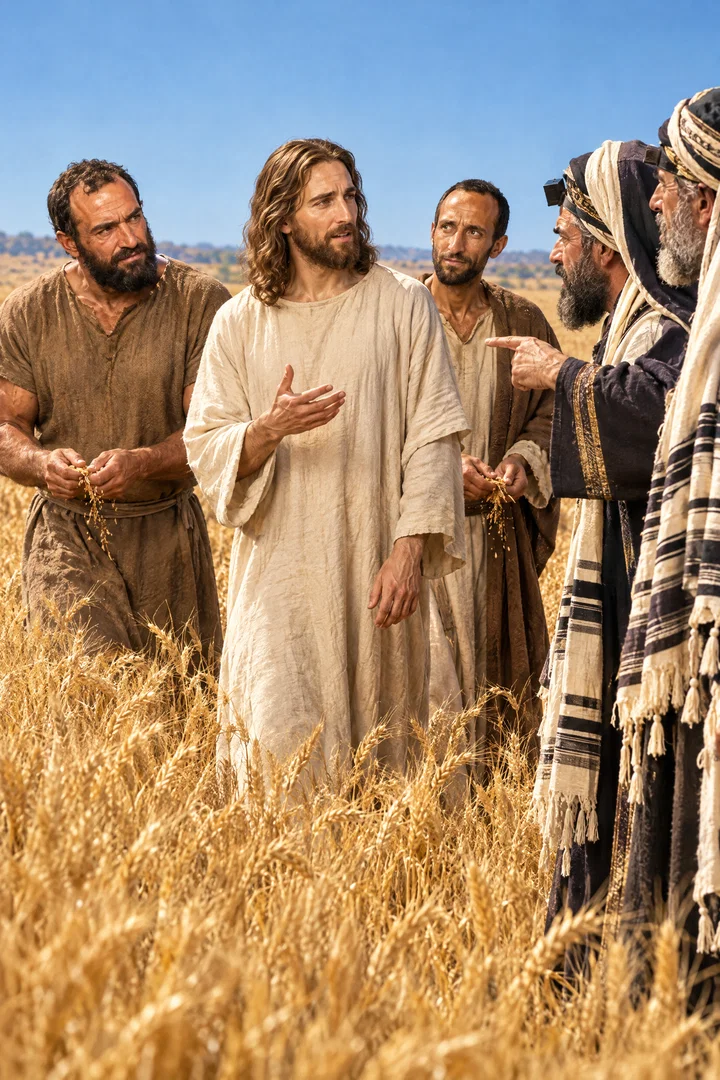
Cross-references
- 1 Samuel 21:4-6
And the priest answered David, and said, There is no common bread under mine hand, but there is hallowed bread; if the young men have kept themselves at least from women.
David and his companions receive and eat the consecrated bread reserved for priests.
- Mark 2:25-26
And he said unto them, Have ye never read what David did, when he had need, and was an hungred, he, and they that were with him?
Jesus recalls David eating the shewbread when hungry, with his companions.
- Luke 6:3-4
And Jesus answering them said, Have ye not read so much as this, what David did, when himself was an hungred, and they which were with him;
Jesus answers the Sabbath accusation by recalling David eating the consecrated bread.
- Matthew 12:8
For the Son of man is Lord even of the sabbath day.
Christ declares himself Lord of the Sabbath in defending his disciples.
- Leviticus 24:9
And it shall be Aaron’s and his sons’; and they shall eat it in the holy place: for it is most holy unto him of the offerings of the LORD made by fire by a perpetual statute.
The bread is reserved for the priests to eat in the holy place.
- Hosea 6:6
For I desired mercy, and not sacrifice; and the knowledge of God more than burnt offerings.
Mercy over sacrifice shows the hungry disciples were guiltless.
- Mark 2:26
How he went into the house of God in the days of Abiathar the high priest, and did eat the shewbread, which is not lawful to eat but for the priests, and gave also to them which were with him?
Jesus cites David eating the consecrated bread in his Sabbath dispute.
- Matthew 12:12
How much then is a man better than a sheep? Wherefore it is lawful to do well on the sabbath days.
Jesus declares that doing good on the Sabbath is lawful.
- Mark 2:28
Therefore the Son of man is Lord also of the sabbath.
Jesus is Lord of the Sabbath.
- 1 Chronicles 9:32
And other of their brethren, of the sons of the Kohathites, were over the shewbread, to prepare it every sabbath.
The Levites prepared and replaced the showbread every Sabbath.
- Matthew 5:17-18
Think not that I am come to destroy the law, or the prophets: I am not come to destroy, but to fulfil.
Christ’s words affirm that He did not come to destroy the law.
- Matthew 12:10
And, behold, there was a man which had his hand withered. And they asked him, saying, Is it lawful to heal on the sabbath days? that they might accuse him.
Jesus affirms that doing good on the Sabbath is lawful.
- Matthew 9:13
But go ye and learn what that meaneth, I will have mercy, and not sacrifice: for I am not come to call the righteous, but sinners to repentance.
Mercy takes precedence over sacrifice.
- Exodus 20:8-11
Remember the sabbath day, to keep it holy.
Gives the Sabbath command that Jesus interprets.
- Luke 14:3-5
And Jesus answering spake unto the lawyers and Pharisees, saying, Is it lawful to heal on the sabbath day?
Jesus teaches that acts of necessity and mercy are lawful on the Sabbath.
- Mark 2:23
And it came to pass, that he went through the corn fields on the sabbath day; and his disciples began, as they went, to pluck the ears of corn.
Jesus’ disciples pluck grain on the Sabbath, paralleling the dispute over lawful action.
- Luke 6:9
Then said Jesus unto them, I will ask you one thing; Is it lawful on the sabbath days to do good, or to do evil? to save life, or to destroy it?
Jesus teaches that doing good and saving life are lawful on the Sabbath.
Commentary
Each commentary is drawn from primary sources: the writings of Ellen G. White and Adventist pioneers and periodicals. Each commentary is separate. Its own words are not a quotation; follow the references to read the source passages.
Ellen G. White
12 sources
David, when he was hungry, entered the house of God with his companions and ate the consecrated showbread, although it was lawful only for the priests to eat it.Ms 31a, 1898, par. 1–3ST Jan 16, 1896 Jesus used this example in answering the charge brought against His own hungry disciples.Ms 31a, 1898, par. 1–3 He also set this example before the Pharisees when they accused Him of breaking the Sabbath for healing on the Sabbath.ST Jan 16, 1896
The disciples, passing through fields on the Sabbath, plucked grain and ate to satisfy their hunger.ST Jul 29, 1897ST Sep 16, 1913HSFM 165.2PP 531.1–2Ms 43b, 1891, par. 9 The law permitted a hungry person to enter another's field and take grain or fruit from a neighbor's field, orchard, or vineyard to satisfy hunger.HSFM 165.2PP 531.1–2 Their action therefore accorded with God's provision for the poor.PP 531.1–2
Jesus used David's example to answer the charge against His hungry disciples and to defend them.Ms 31a, 1898, par. 1–3ST Sep 16, 1913Ms 43b, 1891, par. 9 He established their innocence by His own authority and prerogatives.Ms 43b, 1891, par. 9 The charge that He and His disciples violated the Sabbath was false and could not be proved.ST Sep 16, 1913RH May 28, 1901
Christ denied that charge and declared the hungry disciples guiltless, for their act to satisfy hunger was in harmony with the Sabbath commandment.ST Jul 29, 1897ST Sep 16, 1913 His works were in perfect harmony with God's law.RH May 28, 1901 He also set David's example before the Pharisees when they accused Him of breaking the Sabbath for healing, to show their ignorance of the Scriptures and the power of God and of the true meaning of the law and how blindly they applied the law.ST Jan 16, 189618MR 155.1–3
God requires mercy and not sacrifice: to relieve the suffering of man or beast and to do well on the Sabbath is in harmony with God's commandment, and those who do so are guiltless.ST Jan 16, 1896 In so doing Christ broke no commandment of the Decalogue, and no fault could be found in Him.ST Jan 16, 1896 He rejected human rules that distorted the Sabbath and did not conform to the rabbis' requirements, but kept the Sabbath according to God's law.PK 183.1
The scribes, Pharisees, and Jewish rulers condemned Christ as a Sabbath-breaker even though He was the Maker and Lord of the Sabbath.STMW6 43.218MR 155.1–3Ms 43b, 1891, par. 1 Their accusation showed how blindly they applied the law.18MR 155.1–3 It shows the folly and weakness of human judgment when it condemns Christ.STMW6 43.2
Sources
Pioneers and periodicals
76 sources
He entered the house of God hungry while fleeing with his companions and with no other bread, and ate the consecrated bread that by law was reserved for the priests alone.RH Aug 15, 1854ST Jan 31, 1911RH Feb 4, 1862 Jesus recalled that eating to answer the charge that His hungry disciples broke the Sabbath by plucking grain, declaring them guiltless because what they did was lawful.RH Feb 4, 1862ST Jul 8, 1897ST Feb 17, 1898 Urgent human need and mercy made both eatings guiltless and consistent with the true purpose of the law, yet without such need the eating would have been wrong, so the allowance is exceptional and does not relax or abolish the Sabbath.RH Aug 15, 1854ST Jan 31, 1911RH Feb 4, 1862ST Jul 8, 1897RH Jun 10, 1852 The Sabbath permits works of necessity, mercy, worship and doing good to relieve suffering and sustain life, for it was made for humanity as blessing and delight rather than a yoke of bondage.ST Jan 31, 1911ST Mar 16, 1904RH Jan 28, 1873 Christ thus lifted the Sabbath from restrictive traditions and restored its original simplicity while leaving it unchanged as the seventh day, as its Lord and Creator with final authority over how it is kept.ST Mar 10, 1898RH Jul 18, 1912ST Mar 16, 1904
David and Gospel Setting
The verse recalls David when hungry while fleeing Saul with his companions and having no other bread, entering the house of God and eating the consecrated shewbread that was ordinarily reserved by law for the priests alone.RH Aug 15, 1854ST Jan 31, 1911RH Feb 4, 1862ST Jul 8, 1897ST Feb 17, 1898 The priest's act of giving it was an act of mercy consistent with the law, and without David's need eating would have been wrong.RH Jun 10, 1852 The bread was given by the priest Ahimelech, having been displayed for the week and then to be eaten by the priests.RH Jun 10, 1852RH Jan 21, 1862ST Nov 19, 1912
The law required twelve loaves to be set on the pure table before the Lord every Sabbath, with new hot bread put in place and the old taken away for the priests to eat.RH Jan 21, 1862 In the Gospel the setting is a barley field in the Nisan harvest on a Sabbath after the return to Galilee, likely near Capernaum on a short Sabbath walk.ST Apr 14, 1881 There the hungry disciples plucked ears and rubbed them in their hands, which was accused as Sabbath-breaking because plucking counted as reaping and rubbing as grinding or threshing and preparing food that should have been prepared Friday before sunset, an offense held worthy of stoning.ST Apr 14, 1881ST Mar 21, 1878ST Sep 8, 1881ST Oct 29, 1896
David's eating of the old shewbread occurred on the Sabbath itself, shown because there was no common bread with the priest, the priest did not offer to prepare other bread, the priest was surprised at meeting David, and Doeg was detained that day before the Lord.RH Jan 21, 1862 That Sabbath timing gives the citation wonderful propriety and fitness against those who use it against the Sabbath, joining it with the priests' Sabbath temple service to justify the disciples who plucked and ate ears of corn to satisfy hunger.RH Jan 21, 1862 The hungry disciples who only ate corn as they passed were even less blameworthy, for they had not even broken a ceremonial precept as David had done.RH Feb 4, 1862
It is also taught that Christ's argument does not depend on David's act having occurred on the Sabbath, since urgent hunger can justify temporarily setting aside even strict temple regulations.ST Apr 14, 1881 The question of what day David's transaction probably took place and how that timing explains the reference is raised without answer here.RH Apr 7, 1863 The house of God where David ate was the tabernacle at Nob in Saul's time, about seventy-nine years after the ark was captured.RH Aug 28, 1856RH Jan 6, 1853 After God forsook Shiloh the ark never returned to that building, but the other sacred vessels remained with the tabernacle at Nob, which afterward was at Gibeon in David's days.RH Jan 6, 1853
Christ's Defense of Disciples
Jesus cited David's eating to answer the charge that his hungry disciples broke the Sabbath by plucking ears of grain and rubbing them in their hands to eat on the way to the synagogue, denying they had done wrong and declaring them guiltless because what they did was lawful and in harmony with the Sabbath law.RH Feb 4, 1862ST Jul 8, 1897ST Feb 17, 1898RH Mar 1, 1864ST Mar 30, 1888 The example recalled David when hungry with his men entering the house of God and eating the shewbread which the law allowed only the priests to eat, proving that satisfying hunger in need does not bring guilt even under a ceremonial restriction.ST Jul 8, 1897ST Feb 17, 1898RH Mar 1, 1864ST Mar 30, 1888RH Jan 8, 1857 His need justified the eating, and the disciples who ate only to relieve hunger were likewise innocent rather than Sabbath-breakers.RH Mar 1, 1864ST Mar 30, 1888RH Jan 8, 1857 The answer explained their guiltlessness through Hosea 6:6, that God requires mercy and not sacrifice, so that mercy toward the hungry made their act lawful.RH Feb 4, 1862RH Mar 1, 1864
The answer rested on Scripture so that accusers professing to believe the Bible could say nothing against it.ST Jul 8, 1897 It exposed their inconsistency and hostility and taught the true nature of the Sabbath.ST Jul 8, 1897RH Nov 4, 1858 It was guided by the Bible rather than the Mishna or corruption, correcting errors and traditions that obscured the Sabbath so its meaning could be seen more clearly.ST Mar 10, 1898ST May 17, 1910 It set truth against tradition, showing the disciples broke only Jewish tradition and not God's Sabbath law, while Jesus Himself never broke the Sabbath law but interpreted it truly and did only what was lawful.ST May 17, 1910ST Feb 7, 1911 In this way faithful keeping according to God's word was denounced as breaking, while opponents watched for grounds to accuse and their hostility to such lawful acts helped drive their persecution of Jesus.ST Feb 7, 1911ST Mar 12, 1894
The defense joined David's eating with the priests offering sacrifices and serving in the temple on the Sabbath and remaining blameless.RH Feb 4, 1862RH Jan 21, 1862ST Apr 19, 1883 It was immediately connected also with healing the man with a withered hand on the Sabbath, showing that doing good, relieving suffering, and saving life are lawful on that day.ST Nov 11, 1897 Together these examples support Jesus as greater than the temple and as Lord of the Sabbath, with final right and authority to decide how it should be kept.RH Feb 4, 1862ST Nov 14, 1900RH Apr 21, 1868 Nothing God requires is contrary to mercy, and disregarding human traditions leaves one guiltless and gives no ground for saying Jesus made any change in the Sabbath.ST Jul 8, 1897ST Mar 10, 1898
The first New Testament dispute over Sabbath keeping illustrated here was not about the sacredness or perpetuity of the Sabbath but about the manner of observing it.RH Apr 21, 1868ST Oct 17, 1900 The challenge concerned their manner of observing the Sabbath, not which day was the Sabbath.ST Oct 17, 1900
Necessity and Mercy Teaching
Urgent hunger made David with his companions guiltless when entering the house of God and eating the sacred bread reserved by law for priests alone, and the same need made the disciples guiltless when satisfying hunger on the Sabbath, for human need must not be condemned under a distorted, overly restrictive view of the law.ST Jan 31, 1911RH Feb 4, 1862ST Jul 8, 1897ST Feb 17, 1898RH Mar 1, 1864 The priest's giving of the bread when David was fleeing for his life and had no other bread was an act of mercy consistent with the law's true purpose, and Christ used those circumstances to show that need and mercy take precedence over a technical restriction.RH Feb 4, 1862ST Jul 8, 1897ST Feb 17, 1898RH Jun 10, 1852RH Mar 1, 1864 Mercy toward the hungry, as taught in Hosea 6:6, meant the act was lawful and no wrongdoing, supporting the Sabbath as a blessing and not a burden.ST Jan 31, 1911RH Feb 4, 1862ST Jul 8, 1897ST Feb 17, 1898RH Mar 1, 1864
Meeting such urgent need did not make the law reserving the bread to priests wrong or repealed, and it did not relax or abolish the Sabbath law, which remains in fullest unrelaxed force.RH Aug 15, 1854RH Jun 10, 1852RH Feb 3, 1852RH Apr 5, 1860RH Feb 3, 1852 Without David's need the eating would have been wrong, so the allowance is exceptional for those circumstances and does not permit any amount of work, departures for personal convenience, or deliberate violation of the fourth commandment.RH Jun 10, 1852RH Feb 3, 1852RH Apr 5, 1860RH Feb 3, 1852RH May 19, 1851 Eating to satisfy hunger on the Sabbath was lawful and not an exception that relaxed the commandment, leaving the ordinary rule in force.RH Aug 15, 1854RH Feb 3, 1852RH Apr 5, 1860RH Feb 3, 1852RH May 19, 1851
The Sabbath permits works of necessity, mercy, piety, worship and direct service to God, doing good, relieving suffering, saving life and meeting immediate need.ST Mar 16, 1904RH Jan 28, 1873RH Aug 27, 1914ST Nov 11, 1897ST Jan 25, 1910 It was made for humanity as a blessing, delight, rest and enjoyment in God's works, not a yoke of bondage, burden or curse imposed by senseless human traditions, and doing good on it upholds rather than violates God's law.ST Jan 31, 1911RH Jan 28, 1873RH Aug 27, 1914ST Nov 11, 1897ST Jan 25, 1910 That permission does not lessen the sanctity of the day or remove its special observance, which Jesus still recognized and enjoined, expecting it to be kept about thirty-six years later at the destruction of Jerusalem.ST Mar 16, 1904RH Jan 28, 1873RH Aug 27, 1914ST Nov 11, 1897ST Jan 25, 1910
Acts truly necessary to sustain life are in harmony with the purpose of law even when they appear to violate its letter, so necessary acts including physical labor to obtain food are lawful on the Sabbath.ST Jul 1, 1908RH Jul 29, 1862ST Feb 2, 1915 The Sabbath prohibits work done for personal profit, pleasure or personal gain, not work needed for human existence, comfort, or care for the sick and suffering, while ordinary work for personal gain profanes it.ST Jul 1, 1908RH Jul 29, 1862ST Feb 2, 1915 Neglecting to prepare beforehand may itself be sinful, and food that could have been boiled and baked on the preparation day, with dish-washing, sweeping and farm chores that might have been done before with proper pains and are not really necessary, is not allowable, for the manner of observing the Sabbath has not changed.ST Jul 1, 1908RH Jul 29, 1862ST Feb 2, 1915
The meaning is not that the letter of the law may be set aside for its spirit, but that truth is set against tradition.RH Nov 14, 1871ST May 17, 1910ST Mar 21, 1878ST Mar 3, 1890 The disciples were not breaking God's Sabbath law but only Jewish tradition, such as rules that rubbing grain was a kind of threshing and therefore forbidden, and Jesus never broke the Sabbath law Himself but only did what was lawful, in perfect harmony with the fourth commandment, interpreting the law truly and restoring it to the purpose God gave it for people.RH Nov 14, 1871ST May 17, 1910ST Mar 21, 1878ST Mar 3, 1890 Hunger did not make unlawful the taking of food already available, as distinct from harvesting and storing, which the law forbade.ST May 17, 1910ST Mar 21, 1878ST Mar 3, 1890
Sabbath Upheld Unchanged
Christ acted as a Sabbath reformer, lifting the day from restrictive human traditions and stripping away rabbinical rules to restore it to its original simplicity, blessing, joy and intended use by both precept and example.RH Jul 18, 1912ST Aug 6, 1912ST By His own example in the grain field He rebuked slavish Sabbath keeping and showed how the Sabbath should be observed, correcting errors and traditions that had obscured it so its meaning could be seen more clearly.ST Mar 10, 1898ST His appeal showed that the law's demands do not forbid acts that meet human need, that doing good on the Sabbath is lawful and in harmony with its true spirit, and He rejected a severe interpretation that would prevent necessity and mercy.RH Jul 18, 1912RH Jul 25, 1912 He recognized a law regulating Sabbath observance and taught His disciples to observe it according to God's commandment.ST Aug 6, 1912RH Jul 25, 1912
He and His disciples did only what was lawful on the Sabbath and did not break the law, for He kept His Father's commandments while the Sabbath was still in full force until the crucifixion.RH Aug 27, 1857RH Aug 27, 1857RH Apr 7, 1851 Christ always vindicated Himself because He had done only what was lawful under the just, good and spiritual law, and He left the law in its fullest, unrelaxed force.RH Jul 18, 1912RH Aug 27, 1857 To say their work was not of necessity and was Sabbath breaking would make Christ and the disciples deserve the fate of the man stoned in the wilderness for Sabbath breaking, which is blasphemy against the Saviour, for if He had broken it without necessity He would have been a sinner and could not be the sacrifice for sin or the pattern for followers to follow.RH Aug 27, 1857RH Aug 27, 1857 Their traveling was not a breach of the law, for they went to the synagogue in obedience to God's requirement to have a holy convocation and hear the reading of the law, and He denied they had done wrong and called them guiltless.RH Aug 27, 1857ST Feb 26, 1885
He made no change in the Sabbath, did not abolish it, transfer it from the seventh day to the first day, or give warrant for Sunday, and His apostles taught no such change.ST Mar 10, 1898RH May 20, 1909 The controversy contains no mention of two different days, and the Sabbath in question was the seventh day recognized by the Jews, to which alone His claim to be Lord of the Sabbath refers.ST Mar 10, 1898 As Lord of the Sabbath and its Creator He upheld it as His memorial of creation and of redemption, kept it Himself by example and enjoined its proper observance on others by precept with no suggestion of a change after His death.ST Mar 16, 1904RH May 20, 1909 He still recognized the Sabbath and enjoined its observance upon His disciples, expecting them to be keeping it about thirty-six years later at the destruction of Jerusalem when they would pray that their flight be not on the Sabbath day, and He could establish the correct day if time had been lost during the Levitical dispensation so that the Sabbath He recognized remained the original seventh day.ST Mar 16, 1904ST Mar 25, 1889 The promise of a Saviour did not affect the Sabbath, and the fulfillment embraced no more than the promise, so He would not overthrow it.
The Sabbath is moral and distinct from ceremonies, not ceremonial, Jewish or merely positive, and classing it with ceremonies in this discussion proves the opposite.RH Aug 27, 1857RH Aug 13, 1857 The priestly work on the Sabbath and the conduct defended here did not relax the Sabbath law or prove it non-moral, but left the law in force and foreshadowed the necessary consequence of its transgression.RH Aug 27, 1857 Transgressing the fourth commandment is sin belonging to God's law rather than to a temporary system of types and shadows.RH Aug 27, 1857RH Oct 3, 1865 Those who held a different position taught that the Sabbath is a positive institution rather than a moral law, since otherwise treating David's breaking of the positive showbread law as parallel to the disciples' act would not be a valid argument.RH Nov 12, 1872 Those who held other positions taught that Jesus was not driven by necessity since He could have provided food for Himself and the disciples, and that His act signified abolishing the Jewish priesthood and transferring its role to His disciples as future priests, so that the end of the Jewish priesthood meant the end of the Jewish Sabbath, and that He commanded His disciples to labor on the Sabbath.RH Sep 30, 1858RH Apr 19, 1870 Against this it is held that Christ was not a priest while on earth, and any priesthood given to the disciples would have been Jewish and would have ended at the cross, not transferred Sabbath observance.RH Oct 21, 1858
Connections and Present Application
The eating of grain on the Sabbath stands immediately connected with the healing of the man with a withered hand, with rescuing an ox or sheep fallen into a pit, and with the required ministry of the priests in holy things on that day.ST Nov 11, 1897RH May 2, 1854ST Dec 30, 1913 Together they show that the Sabbath permits necessary acts of mercy and meeting immediate need, and that doing good, relieving suffering, and saving life are lawful on it.ST Nov 11, 1897ST Dec 30, 1913ST Need can make lawful what is ordinarily reserved, as hunger made lawful David's eating of the consecrated bread, and the disciples are therefore called guiltless.RH May 2, 1854ST Dec 30, 1913
Eating to satisfy hunger on the Sabbath is lawful, meaning agreeable and conformable to the law, which nowhere forbids it.RH Oct 21, 1851RH Nov 25, 1852 Plucking and eating grain to meet natural need is like picking and eating fruit, and picking, shelling, and eating grain as one's own meal is necessary work and not sin.RH Feb 25, 1873ST Sep 19, 1911RH Oct 21, 1851 Traveling on that day to the synagogue for holy convocation and hearing the law is not a breach but obedience to God's requirement.RH Aug 27, 1857RH Nov 25, 1852 Meeting for worship even when travel requires the use of animals does not break the commandment when the animals are properly cared for and the travel is for God's glory.ST Sep 7, 1904
The example warns against condemning without knowing the circumstances, since God understood David's situation and did not condemn him.RH Sep 30, 1915 It exposes imposing rigid human ideas and religious rules on others, showing how faithful keeping according to God's word was denounced as breaking.ST Jun 26, 1901ST Feb 2, 1915ST Mar 12, 1894 Hunger and human need come before ritual restriction, so condemning an act of satisfying hunger on a rest day is pharisaism.RH Dec 29, 1904 The same pharisaism appears when law makes it a crime to supply a loaf to satisfy hunger on Sunday while permitting the sale of tobacco on that day, and when Adventists are prosecuted for quiet Sunday work that is no nuisance.RH Dec 29, 1904 That mercy which does not condemn sincere worship over rigid rules about holy days rebukes arresting those who keep Saturday holy yet work on Sunday, since keeping one day holy fulfills the law.ST Sep 22, 1909
The rule of necessity and of charity or mercy is pleaded to allow milking the cow, running street-cars, operating the light-plant, running freight and passenger trains, publishing newspapers, maintaining transportation and telephone and telegraph communication, furnishing electric lights, and selling groceries to a hungry man on the rest day, while ordinary work like mowing the lawn is forbidden under strict enforcement to the letter. Necessity may likewise justify work such as gathering cotton to keep it from wasting.ST Nov 21, 1911 The Sabbath does not forbid necessary work or works of mercy, and judgments about necessary Sabbath activity are left to individual conscience before God.
As Lord of the Sabbath, Christ could establish the correct day if time had been lost during the Levitical dispensation, and the Sabbath He recognized remained the original seventh day.ST Mar 25, 1889 The Jews of His time strictly observed the Sabbath and had not lost track of the correct day. In His Sabbath controversies He embodied its true meaning while persecuted amid oppressive human-made restrictions.ST The condemnation of the hungry disciples for eating, and the watching and hostility Christ and His disciples faced over Sabbath observance, illustrate the danger of such opposition.STST Oct 19, 1882
Sources