John 18:4
Jesus therefore, knowing all things that should come upon him, went forth, and said unto them, Whom seek ye?
Translations
Jesus therefore, knowing all things that should come on him, went forth, and said to them, Whom seek you?
King James Version, KJV Cambridge Paragraph Bible
Jesus therefore, knowing all things that should come upon him, went forth, and said unto them, Whom seek ye?
Jesus therefore, knowing all things that were coming upon him, went forth, and said to them, Whom seek ye?
Revised Version, American Standard Version
Jesus therefore, knowing all the things that were coming upon him, went forth, and saith unto them, Whom seek ye?
Jesus, therefore, knowing all things that are coming upon him, having gone forth, said to them, 'Whom do ye seek?'
Jesus therefore, knowing all things that were coming upon him, went forth and said to them, Whom seek ye?
Jesus, therefore, knowing all the things coming upon him, went forth, and saith unto them—Whom, seek ye?
Berean Standard Bible, Majority Standard Bible
Jesus, knowing all that was coming upon Him, stepped forward and asked them, “ Whom are you seeking?”
Jesus therefore, knowing all the things that were happening to him, went out and said to them, “ Who are you looking for?”
Then Jesus, having knowledge of everything which was coming on him, went forward and said to them, Who are you looking for?
Then Iesus, knowing all things that shoulde come vnto him, went foorth and said vnto them, Whom seeke yee?
Douay-Rheims (Challoner revision)
Jesus therefore, knowing all things that should come upon him, went forth, and said to them: Whom seek ye?
Pictures
Cross-references
- Matthew 26:53-54
Thinkest thou that I can not now pray to my Father, and he shall presently give me more than twelve legions of angels?
Jesus could summon angelic help but accepted arrest so Scripture would be fulfilled.
- Mark 14:43-50
And immediately, while he yet spake, cometh Judas, one of the twelve, and with him a great multitude with swords and staves, from the chief priests and the scribes and the elders.
Jesus knowingly goes forth to meet Judas and the crowd in Gethsemane.
- Luke 22:47-53
And while he yet spake, behold a multitude, and he that was called Judas, one of the twelve, went before them, and drew near unto Jesus to kiss him.
Jesus knowingly meets Judas and the arresting party, then rebukes their use of force.
- Matthew 26:45-46
Then cometh he to his disciples, and saith unto them, Sleep on now, and take your rest: behold, the hour is at hand, and the Son of man is betrayed into the hands of sinners.
Jesus announces that the hour has come and goes to meet His betrayer.
- Matthew 26:48
Now he that betrayed him gave them a sign, saying, Whomsoever I shall kiss, that same is he: hold him fast.
Judas arranged a kiss to identify Jesus to the arresting party.
- John 10:17-18
Therefore doth my Father love me, because I lay down my life, that I might take it again.
Jesus knowingly and freely chose to lay down his life.
- John 18:8
Jesus answered, I have told you that I am he: if therefore ye seek me, let these go their way:
Jesus gives himself up while telling the crowd to let his disciples go.
- Isaiah 53:7
He was oppressed, and he was afflicted, yet he opened not his mouth: he is brought as a lamb to the slaughter, and as a sheep before her shearers is dumb, so he openeth not his mouth.
He accepts arrest without resisting his captors.
- Luke 22:54-62
Then took they him, and led him, and brought him into the high priest’s house. And Peter followed afar off.
A parallel account of the arrest and Peter’s denial.
- Matthew 26:57-75
And they that had laid hold on Jesus led him away to Caiaphas the high priest, where the scribes and the elders were assembled.
A parallel account of Jesus’ arrest and Peter’s denial.
- Mark 14:49
I was daily with you in the temple teaching, and ye took me not: but the scriptures must be fulfilled.
Jesus says Scripture must be fulfilled as He is arrested.
- Matthew 26:47
And while he yet spake, lo, Judas, one of the twelve, came, and with him a great multitude with swords and staves, from the chief priests and elders of the people.
Describes the armed crowd arriving to take Jesus.
- John 18:11
Then said Jesus unto Peter, Put up thy sword into the sheath: the cup which my Father hath given me, shall I not drink it?
Jesus accepts the suffering appointed by his Father and stops Peter’s resistance.
- Matthew 26:50
And Jesus said unto him, Friend, wherefore art thou come? Then came they, and laid hands on Jesus, and took him.
Continues the arrest scene with Judas’s kiss.
- Acts 1:16
Men and brethren, this scripture must needs have been fulfilled, which the Holy Ghost by the mouth of David spake before concerning Judas, which was guide to them that took Jesus.
Identifies Judas as the guide to those who arrested Jesus.
- Luke 22:39-46
And he came out, and went, as he was wont, to the mount of Olives; and his disciples also followed him.
Jesus prays for strength before his arrest.
- Isaiah 53:12
Therefore will I divide him a portion with the great, and he shall divide the spoil with the strong; because he hath poured out his soul unto death: and he was numbered with the transgressors; and he bare the sin of many, and made intercession for the transgressors.
The servant is numbered with transgressors.
- Matthew 26:14-16
Then one of the twelve, called Judas Iscariot, went unto the chief priests,
Judas’s betrayal followed his yielding to covetousness.
- John 19:1-7
Then Pilate therefore took Jesus, and scourged him.
Jesus’ suffering and trial continue the preceding chapter’s account.
Commentary
Each commentary is drawn from primary sources: the writings of Ellen G. White and Adventist pioneers and periodicals. Each commentary is separate. Its own words are not a quotation; follow the references to read the source passages.
Ellen G. White
25 sources
In the garden of Gethsemane on the night of His betrayal, Jesus knew beforehand all the suffering and death that would come upon Him and went forth ahead of His disciples to meet the band led by Judas, asking them whom they sought.COS 120.1–6Ms 45, 1892, par. 22–27Ms 52, 1904, par. 25–26 He faced His betrayer and the armed mob calmly and willingly, with dignified, self-possessed bearing showing no trace of His recent agony.COS 120.1–6Ms 45, 1892, par. 22–27ST Sep 23, 1886 When He declared Himself to be the one they sought, divinity flashed through His humanity in glory and majesty, so that priests, soldiers, and Judas were struck with terror and fell backward powerless to the ground.Ms 42, 1897, par. 23–27Ms 185, 1901, par. 2–4Ms 52, 1904, par. 25–26 Though His word laid them helpless and He had power and ample opportunity to escape, He did not flee or free Himself but stood calmly and allowed them to take and bind Him.Ms 41, 1887, par. 6–10Ms 96, 1897, par. 16–17ST Aug 21, 1879 He chose to be taken so He could bear the sins of the world and pay the penalty for transgression, while even in His humiliation He sought to spare His disciples by requiring that they be let go.Ms 42, 1897, par. 23–27Ms 91, 1909, par. 11–15ST Sep 23, 1886ST Aug 21, 18794MR 162.2–163.1
Gethsemane Setting and Arrest
John 18:4 belongs to the arrest in Gethsemane, the garden across the brook Cedron where Jesus often resorted with His disciples and where He went with them to pray before His betrayal.ST Sep 23, 1886Ms 52, 1904, par. 25–26
It occurs on the night of the arrest under a bright Passover moon while the nearby city was quiet.DA 685.1
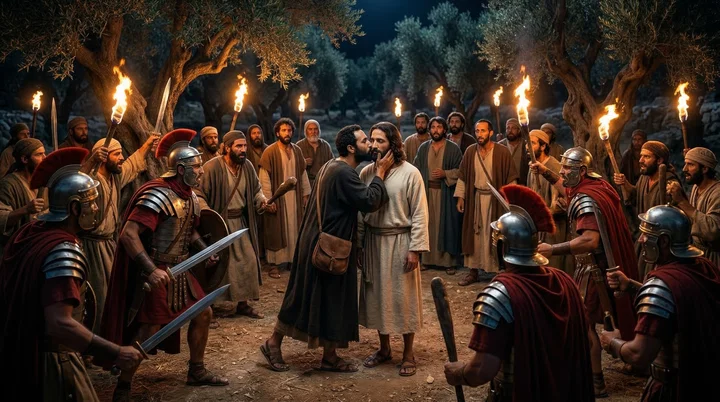
The arresting party came carrying lanterns and torches and weapons.Ms 52, 1904, par. 25–26Ms 149, 1904, par. 11–12
It follows His deep sorrow and physical distress in the garden, bearing a terrible burden with tears and sweat as great drops of blood.Ms 149, 1904, par. 11–12DA 685.3
His disciples saw His weakness and supported Him as He struggled onward.DA 685.3
Afterward He was strengthened by an angel from heaven.Ms 149, 1904, par. 11–12
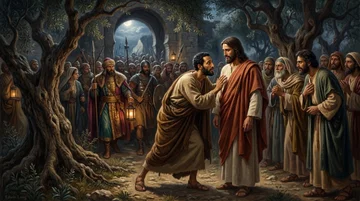
The arrest is led by Judas, one of His professed disciples, bringing a band of men and officers from the chief priests and Pharisees with soldiers carrying staves and spears.Ms 52, 1904, par. 25–26Ms 149, 1904, par. 11–12Ms 107, 1893, par. 2
Judas had told the priests and rulers to seize and hold fast whomever he kissed.Ms 149, 1904, par. 11–12
Afterward Jesus was condemned to death by the Sanhedrin but had to be brought before Pilate for legal condemnation.Ms 107, 1893, par. 2
Foreknown Willing Self-Surrender
Jesus knew beforehand everything that was to come upon Him, including the suffering and death awaiting Him.COS 120.1–6Ms 91, 1909, par. 11–15DA 685 He also knew that His betrayal, condemnation, humiliation, and crucifixion would bring a severe test upon His disciples.4RED 102.2–103.1 Having accepted the cup of suffering and gained the victory, He went forth to meet those sent to take Him.Ms 45, 1892, par. 22–27 He stepped suddenly from darkness into the light and ahead of His disciples, asking whom they sought, which led them to answer Jesus of Nazareth.COS 120.1–6Ms 42, 1897, par. 23–27Ms 149, 1904, par. 11–12
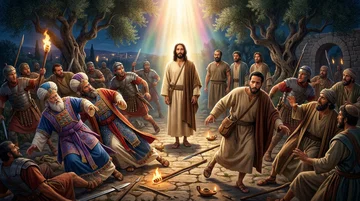
He faced His betrayer and the mob calmly, willingly, and self-possessed, with calm dignity and dignified bearing showing no trace of His recent agony.COS 120.1–6ST Sep 23, 1886ST Jun 6, 1878ST May 20, 1889 His peaceful manner showed He knew He was the Son of God and was not afraid of what they would do to Him.Ms 45, 1892, par. 22–27 When He declared Himself to be the one they sought, divinity flashed through His humanity and His divine glory and majesty were revealed.Ms 42, 1897, par. 23–27Ms 185, 1901, par. 2–4ST Jun 6, 1878ST Aug 21, 1879 Angels of God were revealed in companionship with Him, with an angel moving between Him and the mob and a dove-like form overshadowing Him, and bright light from them illuminating His face, so that priests, elders, soldiers, and Judas were struck with terror and fell backward powerless to the ground as dead men.Ms 52, 1904, par. 25–26Ms 149, 1904, par. 11–12ST Jun 6, 1878
That prostration gave proof sufficient to decide every person that He is all He claimed to be.Ms 149, 1904, par. 11–12 He stood before them transfigured as they will see Him upon the throne to judge and condemn them.Ms 149, 1904, par. 11–12 It gave them evidence that He could free Himself from their grasp and easily have escaped if He had chosen, with ample opportunity to do so.Ms 149, 1904, par. 11–12ST Jun 6, 1878EW 136.2SG1 47.1 Though His word could cause them to fall helpless and He had power and opportunity to escape, He did not try to flee or use His power to free Himself.Ms 41, 1887, par. 6–10Ms 96, 1897, par. 16–17ST Aug 21, 1879DA 694.5–73SP 102.3–103.1 He remained standing among them calmly and allowed them to take and bind Him.Ms 41, 1887, par. 6–10Ms 96, 1897, par. 16–175RED 22.4–23.1
He could have freed Himself, but He chose to be taken so He could bear the sins of the world and pay the penalty for human transgression, having given His life for the world.Ms 91, 1909, par. 11–15 Therefore He suffered humiliation, agony, and death in silence.4MR 162.2–163.1 Even in humiliation His concern was to protect His disciples rather than Himself, asking again whom they sought and making clear that they should let His disciples go, to spare them danger and trial.Ms 42, 1897, par. 23–27ST Sep 23, 1886ST Aug 21, 1879DA 694.5–73SP 102.3–103.1 He knew His humiliation would trouble His disciples and lead them to question why He did not deliver Himself and to forsake Him.Ms 96, 1897, par. 16–17 Yet by allowing the crisis to come while He was still with them He prepared His faithful disciples and strengthened them against fear, disappointment, and the fickle reactions of the crowd.4RED 102.2–103.1 The prostration of the mob before Him ought to have restrained them, but it did not.Ms 52, 1904, par. 25–26
Sources
Pioneers and periodicals
28 sources
Jesus knew everything that was about to come upon Him and went out Himself to meet the armed company that had come to arrest Him in Gethsemane.ST Feb 7, 1900ST Apr 29, 1897ST Feb 27, 1901 His surrender was wholly voluntary, offered because His hour of sacrifice had come, with no resistance or struggle though He had power to resist and could not have been taken had He not freely given Himself up.ST Sep 23, 1886ST Jun 6, 1878ST Mar 27, 1901RH Aug 2, 1906ST Jun 11, 1896 When He identified Himself to them His divine glory shone forth, so that the priests, soldiers and mob with swords and torches were struck with terror and fell to the ground powerless before Him.ST Sep 23, 1886ST Jun 6, 1878ST Apr 29, 1897 Having thus shown He could have escaped, He stood glorified among them and used that moment not for Himself but to shield His disciples, asking that they be let go their way.ST Sep 23, 1886ST Jun 6, 1878ST Apr 29, 1897ST Aug 21, 1879 Together with John 19 this shows Christ as the Passover sacrifice slain on the fourteenth day of the first month, fulfilling the spring types at the time they specified.RH Oct 30, 1855RH Dec 15, 1868
Arrest in Gethsemane
John 18:4 belongs to the Gethsemane account, where Jesus went with his disciples and withdrew to pray before the betrayal.ST Sep 23, 1886 It places him there after his agony, facing the suffering ahead and praying for strength to bear sin's avenging stroke before being handed over by Judas to die.RH Mar 14, 1865
The verse stands at the beginning of his arrest and of his trials and persecution before the high priest and Pilate.ST Sep 24, 1912ST Oct 18, 1905 It belongs to the arrest in the garden, after which the disciples fled and Jesus was left alone with his enemies, bound and taken to Annas.ST Mar 14, 1906
It is set at the familiar resort he had visited, where Judas brought the mob to take him.ST Apr 29, 1897 There he went forth to meet Judas and the company that had come for him and asked them whom they sought.ST Apr 29, 1897
It takes place right after the passover supper, when he went directly to Gethsemane and was taken there by the mob brought by Judas.ST Mar 11, 1886 That arrest led through shameful treatment by priests and Pharisees and soldiers to his crucifixion in the afternoon of the same day.ST Mar 11, 1886 That day was the fifteenth day of the month, the first day of the feast of unleavened bread, a Friday, with the morrow after that day beginning the fifty-day count to Pentecost.ST Mar 11, 1886
Knowing and Willing Surrender
Jesus knew all things that were about to come upon him, was ready for the ordeal, and went forth to meet the armed company that had come to arrest him with the question whom they sought.ST Feb 7, 1900ST Apr 29, 1897ST Feb 27, 1901ST Feb 27, 1901ST Mar 27, 1901 That going forward instead of withdrawing was true courage and manliness, and the soldiers who came to take him were afraid of him.ST Feb 27, 1901ST Feb 27, 1901ST Jul 28, 1909 He stepped ahead of his disciples with calm dignity and self-possession, showing no trace of his recent agony.ST Sep 23, 1886ST Jun 6, 1878ST May 20, 1889RH Aug 2, 1906
His surrender was wholly voluntary, faced willingly and not by surprise, for his life was offered willingly because the time for his sacrifice had come.ST Mar 27, 1901ST Jun 11, 1896ST Jan 10, 1911 He made no defense or resistance and engaged in no fight or struggle, and his arrest could not have occurred had he not freely surrendered.ST Mar 27, 1901RH Aug 2, 1906ST Jan 10, 1911 He had power to resist those who came for him and knew the arrest was part of a conspiracy to kill him, yet he allowed them to take him and made no accusation to expose the plotters or to secure their arrest or punishment before a civil tribunal.ST Aug 29, 1895
When they answered Jesus of Nazareth and he identified himself with the words I am he, divine glory was revealed, with divine light illuminating his face, a dove-like form overshadowing him, and the angel who had ministered to him moving between him and the mob.ST Jun 6, 1878ST Apr 29, 1897ST Aug 21, 1879ST May 20, 1889 Priests, elders, soldiers, Judas, and the armed mob with swords and clubs and torches were struck with terror and fell powerless to the ground as dead men and could not stand in his presence.ST Sep 23, 1886ST Jun 6, 1878ST Apr 29, 1897ST May 20, 1889 Their fall proved he had ample opportunity to escape if he had chosen, yet he remained standing glorified among them and asked a second time whom they sought.ST Sep 23, 1886ST Jun 6, 1878ST Apr 29, 1897ST Aug 21, 1879ST May 20, 1889
In that moment his thoughts were not for himself but to protect his disciples, and pointing to the eleven standing with him he said if ye seek me let these go their way, asking that they be allowed to leave and be saved from further trial of their strength.ST Sep 23, 1886ST Apr 29, 1897ST Aug 21, 1879RH Aug 2, 1906ST Jun 11, 1896 By thus stepping forward and voluntarily giving himself up, he made the work Judas was hired to do in identifying him wholly unnecessary, leaving Judas standing with the mob with nothing to do.RH Aug 2, 1906 His arrest appeared to give evil a temporary victory, but he allowed it so his enemies could see Scripture fulfilled and be convinced that he was the Son of God.ST Jun 7, 1899
Passover Fulfillment and Warning
Together with John 19, the verse belongs to the evidence that Christ the Passover sacrifice was sacrificed on the fourteenth day of the first month in fulfillment of the Passover type.RH Oct 30, 1855RH Dec 15, 1868 It is part of the account of his death as that sacrifice, showing that the great events represented by the spring types met their antitypes at the time specified by the types.RH Oct 30, 1855RH Dec 15, 1868 His knowing all things that should come upon him meant knowing the Scriptures and understanding the prophecies for his time, even being able to show from Moses and all the prophets that he was the Messiah.RH Aug 21, 1913 That complete knowledge of all that should come upon him qualified him from the standpoint of knowledge to be the greatest missionary of this world.RH Aug 21, 1913
He knew what was about to happen and went out to meet those seeking him, while Judas, though chosen and loved, had given evil a place in his heart and stood with the hostile mob rather than with the disciples.ST May 7, 1902 Deliberately choosing the company of God's enemies is different from approaching them to help lead them to salvation.ST May 7, 1902 The verse places the world again in the hour of Gethsemane, when a multitude comes armed, many sleep or betray him and a few watch with their Lord.ST Jan 8, 1902 The way to heaven leads through Gethsemane's shadow and the cross.ST Jan 8, 1902
Sources