Matthew 27:14
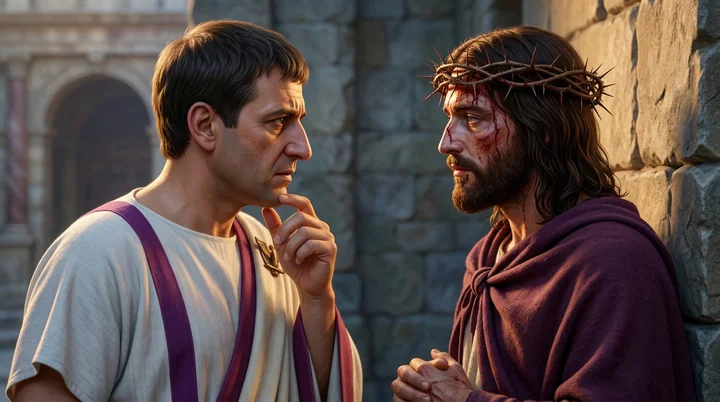
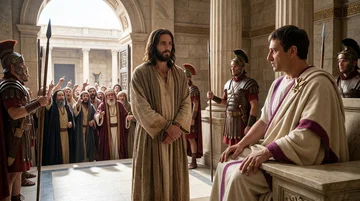
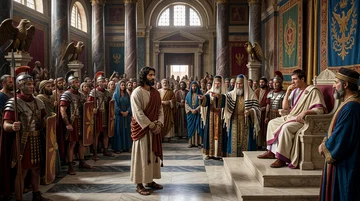
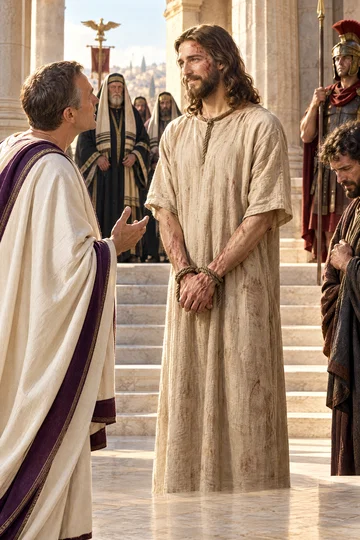
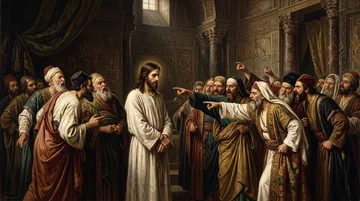
And he answered him to never a word; insomuch that the governor marvelled greatly.
Translations
And he answered him to never a word; so that the governor marveled greatly.
King James Version, KJV Cambridge Paragraph Bible
And he answered him to never a word; insomuch that the governor marvelled greatly.
And he answered him to not a word; so that the governor marveled greatly.
And he gave him no answer, not even to one word: insomuch that the governor marveled greatly.
And he gave him no answer, not even to one word: insomuch that the governor marvelled greatly.
And he did not answer him, not even to one word, so that the governor did wonder greatly.
And he answered him not so much as one word, so that the governor wondered exceedingly.
And he answered him, no not so much as a single word, so that the governor was marvelling exceedingly.
Berean Standard Bible, Majority Standard Bible
But Jesus gave no answer, not even to a single charge, much to the governor’s amazement.
He gave him no answer, not even one word, so that the governor marveled greatly.
And he gave him no answer, not even a word: so that the ruler was greatly surprised.
But he answered him not to one worde, in so much that the gouernour marueiled greatly.
Douay-Rheims (Challoner revision)
And he answered him to never a word; so that the governor wondered exceedingly.
Pictures
Cross-references 20 of 24
- Isaiah 53:7
He was oppressed, and he was afflicted, yet he opened not his mouth: he is brought as a lamb to the slaughter, and as a sheep before her shearers is dumb, so he openeth not his mouth.
prophecy fulfilled by silence before Pilate
- Mark 15:4-5
And Pilate asked him again, saying, Answerest thou nothing? behold how many things they witness against thee.
Records Jesus’ silence before Pilate and Pilate’s amazement.
- Luke 23:1-5
And the whole multitude of them arose, and led him unto Pilate.
Parallel account of Jesus’ proceedings before Pilate, who declares him innocent.
- John 18:28-38
Then led they Jesus from Caiaphas unto the hall of judgment: and it was early; and they themselves went not into the judgment hall, lest they should be defiled; but that they might eat the passover.
Records Jesus’ hearing before Pilate.
- John 19:9
And went again into the judgment hall, and saith unto Jesus, Whence art thou? But Jesus gave him no answer.
Jesus gives Pilate no answer when questioned.
- Luke 23:9
Then he questioned with him in many words; but he answered him nothing.
Jesus gives Herod no answer to his questioning.
- Luke 23:15
No, nor yet Herod: for I sent you to him; and, lo, nothing worthy of death is done unto him.
Herod finds nothing worthy of death in Jesus.
- John 18:33
Then Pilate entered into the judgment hall again, and called Jesus, and said unto him, Art thou the King of the Jews?
Pilate questions Jesus privately after marveling at his silence.
- Matthew 26:57-68
And they that had laid hold on Jesus led him away to Caiaphas the high priest, where the scribes and the elders were assembled.
Christ’s hearing before Caiaphas precedes his judgment before Pilate.
- Matthew 27:24
When Pilate saw that he could prevail nothing, but that rather a tumult was made, he took water, and washed his hands before the multitude, saying, I am innocent of the blood of this just person: see ye to it.
Pilate yields to the crowd and washes his hands to escape responsibility.
- Isaiah 53:12
Therefore will I divide him a portion with the great, and he shall divide the spoil with the strong; because he hath poured out his soul unto death: and he was numbered with the transgressors; and he bare the sin of many, and made intercession for the transgressors.
The servant bears sin and is counted among transgressors.
- Matthew 26:63
But Jesus held his peace. And the high priest answered and said unto him, I adjure thee by the living God, that thou tell us whether thou be the Christ, the Son of God.
Both texts describe Jesus remaining silent before his accusers.
- Mark 14:60-62
And the high priest stood up in the midst, and asked Jesus, saying, Answerest thou nothing? what is it which these witness against thee?
grouped as answering versus silence
- John 18:37-38
Pilate therefore said unto him, Art thou a king then? Jesus answered, Thou sayest that I am a king. To this end was I born, and for this cause came I into the world, that I should bear witness unto the truth. Every one that is of the truth heareth my voice.
Pilate asks what truth is while Jesus, who bears witness to the truth, stands before him.
- John 19:4
Pilate therefore went forth again, and saith unto them, Behold, I bring him forth to you, that ye may know that I find no fault in him.
Pilate declares that he finds no fault in Jesus.
- 1 Peter 2:23
Who, when he was reviled, reviled not again; when he suffered, he threatened not; but committed himself to him that judgeth righteously:
Jesus endured abuse without retaliating.
- Matthew 27:22-23
Pilate saith unto them, What shall I do then with Jesus which is called Christ? They all say unto him, Let him be crucified.
The crowd demands Jesus’ crucifixion during His trial.
- Luke 23:11
And Herod with his men of war set him at nought, and mocked him, and arrayed him in a gorgeous robe, and sent him again to Pilate.
Herod’s treatment of Jesus connects with his trial before Pilate.
- Matthew 27:19
When he was set down on the judgment seat, his wife sent unto him, saying, Have thou nothing to do with that just man: for I have suffered many things this day in a dream because of him.
wife's dream as Pilate's last chance
- John 19:1-3
Then Pilate therefore took Jesus, and scourged him.
Recommended alongside Matthew 27 for reflection on Christ’s suffering.
Commentary
Each commentary is drawn from primary sources: the writings of Ellen G. White and Adventist pioneers and periodicals. Each commentary is separate. Its own words are not a quotation; follow the references to read the source passages.
Ellen G. White
17 sources
Jesus stood bound as a prisoner before Pilate in the Roman judgment hall while the priests and rulers loudly demanded His death, and when Pilate asked why He answered nothing to the many charges against Him, He gave Him no reply.DA 723.1–724.1DA 722.55RED 50.2–51.14RED 102.2–103.1 He appeared pale, bruised and faint from loss of sleep and food, yet noble and dignified in bearing with no sign of guilt, fear or defiance.5RED 50.2–51.1SG1 53.1 His calm self-possession and forbearance under hate and abuse greatly astonished Pilate and the throng, won the governor's deep respect, and strengthened his conviction that Jesus was innocent.5RED 53.23SP 130.2–131.23SP 133.2ST Jul 4, 1878ST Jul 4, 1878 He had already spoken privately to bring the light of truth to Pilate's understanding, and His continued silence showed conscious innocence, calm strength and superior wisdom that would not retaliate.5RED 53.23SP 133.2ST Jul 4, 1878DA 726.1–4ST Jan 24, 1900 Standing as humanity's representative He accepted humiliation and condemnation without answering because He had given His life for the world, and His restraint teaches those who face injustice that silence can express wisdom and serve the work better than speaking.RH Nov 11, 19154MR 162.2–163.1Lt 102b, 1899, par. 17
Trial Before Pilate
Matthew 27:14 places Jesus bound as a prisoner in the Roman judgment hall before Pilate as the Jewish leaders seek His condemnation, in the trial before He was led away to be crucified, amid the multitude reviling Him and crying for His crucifixion.DA 723.1–724.1DA 722.54RED 102.2–103.1DA 394.2–3 At that moment He appeared pale, bruised and faint from loss of sleep and food, yet noble in bearing with lighted countenance, while priests, scribes and rulers joined in noisy denunciation and demanded death on the claim that His admission to being King of the Jews proved sedition against Caesar.5RED 50.2–51.1 After the lawless uproar confused Pilate and some quiet was secured, Pilate asked why He answered nothing to the many charges against Him.5RED 50.2–51.1
His calm, dignified appearance, with no sign of guilt, fear or defiance and no marks of a seditious character, made a favorable impression.3SP 130.2–131.2DA 723.1–724.1ST Jul 4, 18785RED 50.2–51.1 Pilate distrusted and had no confidence in the priests' charges, and decided to examine the charges rather than condemn Him at once.3SP 130.2–131.2DA 723.1–724.1ST Jul 4, 18785RED 50.2–51.1 Hoping to gain the truth and to escape the clamor of the excited crowd, he took Jesus alone into his house to question Him further about being King of the Jews.5RED 50.2–51.1
His silence, dignified bearing, calm self-possession where hate and revenge would be natural, and forbearance so unlike man greatly astonished, perplexed and amazed Pilate and the throng.5RED 53.23SP 133.2ST Jul 4, 1878ST Jul 4, 18785RED 50.2–51.1 That bearing won Pilate's deep respect and strengthened the governor's conviction that Jesus was innocent and could not be as unjust as His accusers.5RED 50.2–51.1DA 726.1–4 Spectators looked on Him with wonder, compared His perfect and noble form and firm, dignified bearing with those sitting in judgment against Him, and said to one another He looked more like a king to be entrusted with a kingdom than any of the rulers.SG1 53.1 He bore no marks of being a criminal, with mild, clear and undaunted eye, broad and high forehead, and every feature strongly marked with benevolence and noble principle, and He had many sympathizers in that company, so that many trembled and even Herod and Pilate were greatly troubled at His noble, God-like bearing.SG1 53.1
Meaning of His Silence
He had already spoken with Pilate alone to bring the light of truth to the governor's understanding, and now there was nothing more to say that could keep Pilate from condemning Him to death.5RED 53.23SP 133.2ST Jul 4, 1878 He therefore remained unmoved and silent while the accusations and abuse continued, saying nothing more amid the uproar.5RED 53.23SP 133.2ST Jul 4, 1878 When Pilate asked about the many charges, questions, insults and mockery set against Him, He answered nothing, dignified and composed, with no frown and no troubled expression.5RED 53.23SP 133.2ST Jul 4, 1878SG1 53.1 His silence showed conscious innocence and calm strength, and superior wisdom, as eloquent evidence that He was unmoved by the hostile crowd.DA 726.1–4ST Jan 24, 1900 The anger and abuse around Him did not move Him to retaliate.DA 726.1–4ST Jan 24, 1900
Those who witnessed His forbearance toward His betrayer were amazed and felt that He was more than mortal.DA 722.3 Yet they wondered why He did not free Himself and overcome His accusers.DA 722.3 Standing as humanity's representative, though He could have delivered Himself, He accepted humiliation, condemnation and death without answering because He had given His life for the world.4MR 162.2–163.1 In this He stands as an example of faith standing against human power and injustice when the priests and rulers forced the Roman governor to do their will.RH Nov 11, 19154MR 162.2–163.1
He foresaw this most trying ordeal of betrayal, condemnation, humiliation, rejection, insult, fear and disappointment, and knew who among His followers were unbelieving and of weak faith.4RED 102.2–103.1 He deliberately allowed the earlier crisis of defection while He was still present to comfort and strengthen His chosen disciples, sifting out the faint-hearted.4RED 102.2–103.1 Thus when the betrayal, condemnation, insult, fear and disappointment came, the faithful would not be overwhelmed with surprise, sink beneath it, or be carried away by the example of professed followers turning from Him in His trouble, having already tested the inconstant favor of the world.4RED 102.2–103.1 His eloquent silence teaches those who feel indignation at injustice to restrain their words, since in such circumstances silence can express wisdom and serve the work better than speaking.4MR 162.2–163.1Lt 102b, 1899, par. 17 This restraint at trial contrasts with His willingness to guide the sinner who asks for the way of life.4MR 162.2–163.1
Sources
Pioneers and periodicals
42 sources
Jesus stood before Pilate the Roman governor after the morning counsel to put Him to death, and when accused by the chief priests and elders and asked if He heard the many charges, He answered not even a single word, so that the governor was perplexed and astonished.ST May 19, 1898ST Oct 26, 1882ST Jul 16, 1912 His silence fulfilled that the oppressed and afflicted Messiah would not open His mouth in complaint, but remain as a lamb brought to the slaughter and as a sheep dumb before its shearers.RH Nov 18, 1862RH Apr 17, 1855ST Oct 21, 1930 It was conscious innocence and calm under abuse, dignity and self-command while fully in the governor's power, trusting in a power higher than Pilate knew and refusing to wrangle, retaliate or seek to conciliate men.ST Jan 24, 1900ST Oct 27, 1898ST Mar 29, 1883ST Nov 14, 1900ST May 2, 1916 That refusal to resist while mocked and abused sets the pattern for believers to endure insult without retaliation, to know when closed lips are the strongest reply, and not to turn from recognized truth under pressure of the crowd as Pilate did.ST Dec 20, 1910ST Mar 29, 1883RH Jan 12, 1869RH Sep 28, 1911ST Apr 7, 1881
Trial Setting and Wording
The verse belongs to Jesus brought before Pilate the Roman governor after the morning counsel of the chief priests and elders against Him to put Him to death.ST Oct 26, 1882 When accused by the chief priests and elders and questioned by Pilate whether He heard how many things were witnessed against Him, He answered him to never a word, not even a single word.ST Jul 4, 1878ST Jul 4, 1878ST May 19, 1898ST Sep 30, 1886 His silence greatly astonished the governor, who was perplexed and marvelled at it.ST Jul 4, 1878ST Jul 4, 1878ST May 19, 1898ST Jul 16, 1912ST Sep 30, 1886
In that setting Pilate stood for Rome and Jesus stood for the Gospel in its perfection presented to Rome.ST Oct 27, 1898 Falsely accused by priests and scribes, with the crowd choosing Barabbas over Him, He answered not a word.ST Oct 27, 1898 Pilate saw no sign of sedition in Him and distrusted the priests' charges, finding no fault or crime in Him, and Herod also found Him worthy of no punishment.ST Jul 4, 1878ST Oct 27, 1898ST Sep 30, 1886RH Sep 28, 1911 Repeated efforts to release Him were met with fresh malignity, and His bearing strengthened Pilate's conviction of His innocence.ST Jan 24, 1900ST Oct 27, 1898
God pressed Pilate's heart to do right whatever the cost through Jesus' dignity, unlike the criminals Pilate knew.ST Oct 27, 1898 One last effort came through the dream and warning of Pilate's wife Claudia Procula to have nothing to do with that righteous Man.ST Oct 27, 1898 Pilate rejected it when he feared the Jews, refused to stand with the innocent Sufferer, and tried to escape responsibility by delivering Him to the mob and washing his hands.ST Oct 27, 1898
The trial was unjust and illegal throughout, the condemnation of an innocent man.ST Jun 9, 1898 The Jewish council used threats and intimidation to obtain the Roman governor's approval, and the priests and rulers forced the governor to do their will.RH Nov 11, 1915ST Jun 9, 1898 By alliance of church with state they turned their traditions into civil law and used that power against Him because He did not submit to them, with Jew and Gentile joining together in hatred against Him, and every step of trial, condemnation and execution was illegal.RH Nov 12, 1872ST Aug 29, 1895 He knew the foul conspiracy to put Him to death and could have pointed out and convicted its instigators, yet He brought no charge against His accusers to secure their punishment.ST Aug 29, 1895
From Pilate's bar and Herod's judgment-seat to Golgotha and Calvary He bore bitter sarcasm, cruel jest, buffet, spitting, scourging, beating, bruising, bleeding, the crown of thorns, the old purple robe, mocking and indignity and insult, hastening on to crucifixion.ST Oct 27, 1898RH Nov 12, 1872RH Jun 10, 1862 It shows cruelty and madness, the madness and folly of sin and the cruelty of the master whom the world acknowledges.RH Jun 10, 1862
He had already spoken privately to Pilate so the truth might enlighten him, and He had already exhausted reasonable efforts to save His accusers, so He did not wrangle with them.ST Jul 4, 1878ST May 19, 1898 He had knowledge of the languages used in Palestine to speak with the governor.ST Mar 10, 1881 Now He said nothing more that could prevent condemnation, stopping His speech when His work for chosen Israel was done, and He could not be induced to say another word.ST Jul 4, 1878RH Apr 17, 1900
Meaning of Silence
Before Pilate He answered none of the false accusations, not even a single word, and that silence expressed conscious innocence, calm under abuse, and superior wisdom.ST Jan 24, 1900ST May 19, 1898 It was serene patience and calm endurance in holiness, eloquent evidence that He was unmoved by the hostile crowd.ST Jan 24, 1900ST Mar 29, 1883 His repose under pressure exemplified a mind sustained by trust in God, not inaction.ST Jul 29, 1886 His bearing astonished the governor and strengthened the conviction that He was innocent.ST Jan 24, 1900ST May 19, 1898
His silence displayed reserve power, conscious strength, dignity, self-command, and the greatness of one who can endure reproach silently.ST Apr 7, 1881RH Feb 27, 1872 Steady while fully in the governor's power, He bore Himself with dignity unlike the criminals the governor knew, trusting in a power higher than the governor knew, unresentful and unresisting under scourging, beating, bruising, bleeding, indignity and insult.ST Oct 27, 1898RH Feb 27, 1872 He was free from fear of death, of people, and of torture, and He did not try to conciliate Herod or gain support from human authorities.ST Nov 14, 1900RH May 5, 1863 That bearing exposed the mockery of human justice and the emptiness of human dominion.ST Nov 14, 1900
He did not wrangle with His accusers or retaliate, and He brought no charge against them to secure their punishment.ST May 19, 1898ST May 2, 1916ST Aug 29, 1895 Though He knew the foul conspiracy to put Him to death and could have pointed out and convicted its instigators, He made no effort to bring any offender before a civic tribunal.ST Aug 29, 1895 He gave them no words to use against Him, even when silence could leave a wrong impression about the reason for His trials, and He privately sought strength from His Father to remain silent.RH Mar 21, 1912 Without flinching or drawing back, He did not seek ease by yielding the truth or submitting to the mob.RH May 5, 1863 He had already exhausted reasonable efforts to save His accusers, and His restraint was consistent with a whole work of proclaiming against sin in the abstract and pointing out sin in individuals to lead men to repentance and forsake evil ways that He might save them, not to hunt down, arrest, or punish offenders under civil law.ST May 19, 1898ST Aug 29, 1895
His silence was judicial as well as merciful, because He had no ears to hear.ST May 6, 1897ST Feb 6, 1907 He withheld words that would have been wasted and would have increased guilt.ST Feb 6, 1907 This raises why He answered some questions at His trial and refused others.ST May 6, 1897 Part of that silence sprang from contempt for scoffing, jeers, and taunts, and He kept that silence except on the cross, where He spoke to bestow benediction and blessing.ST Apr 7, 1881
His silence showed humility and lowliness, like a lamb before its shearers as foretold in Isaiah.RH Apr 17, 1855 Truth stood before Pilate in a battered, lowly form that did not look royal.RH Sep 28, 1911RH Dec 28, 1911 Though found to be without fault, He was yielded to death through fear of the crowd, showing that people may recognize the truth yet turn away from it under pressure.RH Sep 28, 1911
Prophecy Sacrifice and Proof
His silence before the governor fulfills prophecy that the Messiah, though oppressed and afflicted, would not open His mouth in complaint.RH Nov 18, 1862RH Apr 17, 1855ST Oct 21, 1930 Like a lamb brought to the slaughter and like a sheep dumb before its shearers, He held His peace when accused by the chief priests and elders and answered nothing.RH Nov 18, 1862RH Apr 17, 1855 In that humility He remained silent before His accusers and before Pilate, speaking nothing in His own defense.RH Nov 18, 1862RH Apr 17, 1855ST Oct 21, 1930
As the Lamb of God that takes away the sins of the world, He went in that silence to be nailed to the cross as the great sacrifice for humanity's sins.RH Nov 18, 1862 He is the Lord of the Sabbath so lifted up, even while the people professing to seek the Messiah rejected Him though they had been entrusted with the prophecies fulfilled in Him.ST Jun 9, 1898 Their council obtained the Roman governor's approval for the illegal trial of an innocent man by threats and intimidation.ST Jun 9, 1898
The history of His trial before Pontius Pilate, execution and burial is told with minute accuracy in small details of customs, opinions, political events and circumstances of that time.RH Feb 11, 1862 It rightly shows Pilate as governor of Judea, with a sentence from him necessary because power of life and death was vested in the Roman governor.RH Feb 11, 1862 It rightly shows derision and scourging before crucifixion, the written accusation on the cross in three languages, the bearing of the cross, and the giving of the body for burial at the request of friends as according to law or custom.RH Feb 11, 1862 Its circumstantial, natural and undesigned manner, with nothing out of place or forced in to give probability, and its consistency in all subordinate parts with what is known of the manners and institutions of that period, evidences its truth against the charge of fabrication.RH Feb 11, 1862
The same account places the sealing of the tomb and the setting of the guard at the very close of the Sabbath, after He made no answer to the governor's questions to Pilate's great astonishment.ST Jul 16, 1912 It exposes the story that the disciples stole away His body as manufactured.ST Nov 2, 1882 Breaking the Roman seal meant death to any man, so the disciples if they had broken the seal would certainly have been put to death.ST Nov 2, 1882 They had no object or motive to go up and down the land lying about His resurrection, since it forced them to live in dens and caves as the offscouring of the earth, while the Jews and the soldiers had a motive to say the body was stolen because they were bribed.ST Nov 2, 1882 Pilate's judgment hall where He stood before the governor lies on the way to Calvary as a stage of suffering and consecration, but stopping there would not represent the complete self-giving shown by His death.ST Sep 12, 1900
Links to Other Scriptures
Matthew 27:14 belongs to the bringing of Jesus before Pilate after the morning counsel of the chief priests and elders against Him to put Him to death, and is the same history told in Mark 15:1-5, Luke 23:1-5, and John 18:28-38.ST Oct 26, 1882 It belongs to the account of Jesus and Pilate that is the same history told in Luke 23:13-24, Mark 15:1-20, and John 18:28 to 19:16, where Pilate finds no fault in Jesus.ST Mar 13, 1901
The wider passage Matthew 27:11-31 describes the last scene of His life on earth, when He sat at Pilate's bar and Herod's judgment-seat and bore bitter sarcasm, cruel jest, buffet, spitting, the crown of thorns, the old purple robe, and the final tragedy of crucifixion, showing cruelty and madness and the folly of sin.RH Jun 10, 1862 Matthew 27:14 belongs to His path to the judgment hall of the unjust Pilate and to His passage through an unjust judgment before Pilate on the way to Calvary, in which Christian perfection is shown not by continual joy or only extraordinary experiences but by resolutely following Christ and taking up the cross through suffering.RH Aug 14, 1860RH Jul 30, 1867 Matthew 27:1-26 describes His trial in which the chief priests and elders rejected the light set before them and misled the people, and that same crime is now committed when Protestant churches ignore the grand truths for the last perilous days, cover them with error and confusion, oppose God's holy law and the testimony of prophecy, and warn against those spreading present truth, only the light now rejected is even greater.RH Jun 13, 1865 Matthew 27:12-14 shows that He answered nothing to the accusations at His trial and brought no charge against His accusers to secure their punishment, though every step of His trial, condemnation and execution was illegal and He knew the foul conspiracy to put Him to death and could have pointed out and convicted its instigators, yet He made no effort to bring any offender before a civic tribunal, consistent with His whole work to proclaim against sin in the abstract and point out sin in individuals to lead men to repentance and forsake evil ways that He might save them, not to hunt down, arrest or punish offenders under civil law.ST Aug 29, 1895
Matthew 27:1-26 shows Pilate as one who lifted his hand against the mighty plans and precepts of God's word and set himself against the Rock of truth, belonging with Nimrod, the Pharaohs, Sennacherib, Agag, Belshazzar, Herod, Judas Iscariot and others whose names live only in infamy for opposition to truth, while the men are dead and the Rock stands.ST Jul 15, 1908 Matthew 27:14 is part of the example of Jesus on the cross, standing against the Jewish priests and rulers who forced the Roman governor to do their will, showing faith standing against human power and injustice.RH Nov 11, 1915
Example for Christian Living
Before the governor in the judgment hall He endures suffering as an example that believers are not to shun suffering, shame or loss but to bear the cross.RH Mar 26, 1861 His passage through unjust judgment before Pilate on the way to Calvary defines Christian perfection as resolutely following Christ and taking up the cross through suffering.RH Aug 14, 1860RH Jul 30, 1867 That perfection is shown not by continual joy or by extraordinary experiences alone.RH Aug 14, 1860RH Jul 30, 1867
Meeting questioning with serene patience and answering not a word, His calm endurance and holiness make His suffering a pattern to follow.ST Mar 29, 1883 Remaining silent under accusation belongs to His refusal to resist while mocked and abused, and sets patient endurance before His followers.RH Jan 12, 1869 Before the Roman governor amid abuse and injustice He did not retaliate, exemplifying restraint and nonviolence.ST May 2, 1916 Without flinching or drawing back under pressure when questioned by the governor, His silence belongs to courageous and gentle endurance of insults and abuse, refusing to seek ease by yielding the truth or submitting to the mob.RH May 5, 1863
His sufferings amid silence reveal the power of the gospel to subdue pride and cast out discontent.ST Apr 17, 1879 Before inquisitive Pilate amid scoffing, jeers and taunts He remained silent in reserve power, conscious strength, dignity, self-command, and the greatness of one who can endure reproach silently, including silence springing from contempt, keeping that silence except on the cross where He spoke to bestow benediction and blessing.ST Apr 7, 1881 His example proves there is a time to be silent as well as to talk, and that closed lips before the babbling of the empty soul is at times the best and most effective reply.ST Apr 7, 1881 The habit of silence is therefore to be cultivated now and not deferred.ST Apr 7, 1881
Remaining silent before the governor's accusations teaches Christians facing taunts and opposition not to answer in irritation or seek self-vindication.ST Dec 20, 1910 Silence can show strength, allowing time for reflection, prayer, and God to speak to the soul, and can win greater victories than forceful arguments.ST Dec 20, 1910 He gave His accusers no words to use against Him and privately sought strength from His Father to remain silent, even when silence could leave a wrong impression about the reason for His trials.RH Mar 21, 1912 His silence before the governor was judicial as well as merciful, withholding words that would have been wasted and would have increased guilt, because He had no ears to hear.ST Feb 6, 1907 It warns that levity or neglect can make people deaf to His words.ST Feb 6, 1907
Truth stood before Pilate in a battered, lowly form that did not look royal, and though Pilate found no fault in Him, fear of the crowd led him to yield Him to death.RH Sep 28, 1911 In this people are warned that they may recognize the truth yet turn away from it under pressure.RH Sep 28, 1911 At His trial the chief priests and elders rejected the light set before them and misled the people, and that same crime is now committed when Protestant churches ignore the grand truths for the last perilous days.RH Jun 13, 1865 They cover them with error and confusion, oppose God's holy law and the testimony of prophecy, and warn against those spreading present truth, only the light now rejected is even greater than the light rejected at His trial.RH Jun 13, 1865
Sources