Translations
American King James Version, King James Version, KJV Cambridge Paragraph Bible, Webster Bible
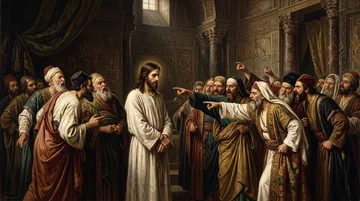
And the chief priests and scribes stood and vehemently accused him.
Revised Version, American Standard Version
And the chief priests and the scribes stood, vehemently accusing him.
And the chief priests and the scribes stood vehemently accusing him,
And the chief priests and the scribes stood and accused him violently.
And the High-priests and the Scribes stood vehemently accusing him.
Berean Standard Bible, Majority Standard Bible
Meanwhile, the chief priests and scribes stood there, vehemently accusing Him.
The chief priests and the scribes stood, vehemently accusing him.
And the chief priests and the scribes were there, making statements against him violently.
The hie Priests also and Scribes stood forth, and accused him vehemently.
Douay-Rheims (Challoner revision)
And the chief priests and the scribes stood by, earnestly accusing him.
Pictures

Cross-references 20 of 25
- Mark 15:3
And the chief priests accused him of many things: but he answered nothing.
The chief priests accuse Jesus of many things, but he makes no reply.
- Matthew 27:12
And when he was accused of the chief priests and elders, he answered nothing.
The chief priests accuse Jesus, who answers nothing.
- John 18:28-38
Then led they Jesus from Caiaphas unto the hall of judgment: and it was early; and they themselves went not into the judgment hall, lest they should be defiled; but that they might eat the passover.
The Jewish leaders bring Jesus to Pilate, who questions him about his kingship and finds no fault.
- Isaiah 53:7
He was oppressed, and he was afflicted, yet he opened not his mouth: he is brought as a lamb to the slaughter, and as a sheep before her shearers is dumb, so he openeth not his mouth.
Jesus remained silent while his accusers condemned him.
- John 19:6-16
When the chief priests therefore and officers saw him, they cried out, saying, Crucify him, crucify him. Pilate saith unto them, Take ye him, and crucify him: for I find no fault in him.
The Jewish leaders press Pilate to condemn Jesus during his judgment.
- Matthew 27:2
And when they had bound him, they led him away, and delivered him to Pontius Pilate the governor.
Both describe Jesus being accused and brought before Pilate.
- Luke 23:18
And they cried out all at once, saying, Away with this man, and release unto us Barabbas:
The crowd rejects Jesus and demands Barabbas.
- Psalms 2:1-2
Why do the heathen rage, and the people imagine a vain thing?
Rulers’ opposition to the Lord and his Anointed is reflected in Jesus’ trial.
- Matthew 27:24
When Pilate saw that he could prevail nothing, but that rather a tumult was made, he took water, and washed his hands before the multitude, saying, I am innocent of the blood of this just person: see ye to it.
Pilate declares Jesus innocent despite the accusations.
- Mark 15:1
And straightway in the morning the chief priests held a consultation with the elders and scribes and the whole council, and bound Jesus, and carried him away, and delivered him to Pilate.
A parallel account of Jesus’ trial, without Luke’s Herod episode.
- Matthew 26:59-63
Now the chief priests, and elders, and all the council, sought false witness against Jesus, to put him to death;
Both describe accusations against Jesus and his silence.
- Mark 15:10
For he knew that the chief priests had delivered him for envy.
The chief priests delivered Jesus up out of envy.
- Luke 23:4
Then said Pilate to the chief priests and to the people, I find no fault in this man.
Pilate finds no crime despite the accusations.
- Matthew 27:20-23
But the chief priests and elders persuaded the multitude that they should ask Barabbas, and destroy Jesus.
The leaders and crowd press for Jesus to be crucified.
- Mark 15:11-14
But the chief priests moved the people, that he should rather release Barabbas unto them.
The crowd demands Jesus’ death before Pilate.
- Luke 23:2
And they began to accuse him, saying, We found this fellow perverting the nation, and forbidding to give tribute to Cæsar, saying that he himself is Christ a King.
The leaders accuse Jesus of political sedition and claiming kingship.
- Luke 23:15
No, nor yet Herod: for I sent you to him; and, lo, nothing worthy of death is done unto him.
Herod also finds that Jesus has done nothing worthy of death.
- Matthew 27:18
For he knew that for envy they had delivered him.
Pilate recognized that Jesus was handed over out of envy.
- Luke 23:5
And they were the more fierce, saying, He stirreth up the people, teaching throughout all Jewry, beginning from Galilee to this place.
The priests accuse Jesus of stirring up the people.
- Luke 23:1
And the whole multitude of them arose, and led him unto Pilate.
The leaders bring Jesus before Pilate to pursue His execution.
Commentary
Each commentary is drawn from primary sources: the writings of Ellen G. White and Adventist pioneers and periodicals. Each commentary is separate. Its own words are not a quotation; follow the references to read the source passages.
Ellen G. White
20 sources
The verse belongs to the hearing before Herod after Pilate sent Jesus to him because He was from Galilee, hoping Herod would take responsibility for the trial on the way to the crucifixion.DA 722.5COS 141.2–3 The chief priests and scribes stood with a surging rabble about Jesus, vehemently crying out conflicting charges against Him.ST Jan 24, 19005RED 59.2ST Jun 3, 1889 Those accusations were false, driven by malice and envy against an innocent man, which both Herod and Pilate knew.3SP 135.2ST Nov 2, 1882ST Jun 3, 1889 Jesus answered the hostile proceedings not with a display of power or words but with calm, dignified silence, speaking only what was essential to glorify God, and His very silence spoke conviction to Herod's heart.SG1 55.1–2ST Nov 2, 1882EW 142.1–2 Herod found nothing in Him to condemn and, unwilling to ratify the condemnation, sent Him back to Pilate, yet the humiliated prisoner is the same Jesus who came forth glorified from the tomb and now intercedes in the heavenly courts until God calls the world to judgment to avenge His death.5RED 59.2ST Jun 3, 1889RH Nov 11, 19154SP 481.2–482.2Ms 95, 1897, par. 10–12
Trial Before Herod
Pilate sent Jesus to Herod because He was from Galilee, hoping Herod would take responsibility for the trial, and the standing of the chief priests and scribes to accuse Him vehemently belongs to that hearing before Herod in the course of events leading to His crucifixion.DA 722.5COS 141.2–3 They stood with a surging, pressing rabble about Jesus, vehemently and forcefully crying out against Him with conflicting charges, some accusing one crime and some another.ST Jan 24, 19005RED 59.2ST Jun 3, 18895RED 55.2 Their accusations were false charges driven by malice and envy against an innocent man.3SP 135.2ST Nov 2, 18825RED 55.2ST Nov 2, 1882 Herod knew this from his acquaintance with Jewish character, just as Pilate knew.ST Jun 3, 18895RED 55.2
Herod commanded silence and had Jesus unbound because he wished to interrogate Him.ST Jun 3, 18895RED 55.2 He looked with curiosity mingled with pity on His pale, suffering face, marked with deep wisdom and purity yet showing extreme weariness and suffering.ST Jun 3, 18895RED 55.2 Herod was unsettled by Jesus' calm dignity and feared He might be more than an ordinary man, and was left ill at ease.5RED 59.2ST Jun 3, 1889 He found nothing in Him to condemn, and being unwilling to ratify the condemnation sent Him back to Pilate.5RED 59.2ST Jun 3, 1889Ms 95, 1897, par. 10–12
Before Herod Jesus was already weak from hunger and loss of sleep, with body torn by cruel scourging.COS 141.2–3DA 780.3 He was dragged amid jeers and insults and treated violently during repeated appearances before the authorities, yet He stood without resistance.COS 141.2–3ST Nov 30, 1882DA 780.3 He was mocked and insulted, and His kingship was derided with a thorn crown, a purple robe and a reed scepter.3SP 138.1–2Ms 95, 1897, par. 10–12
Christ's Silence and Vindication
The vehement accusers standing about Jesus were wicked rulers in opposition to Christ, acting under Satan's influence, and their course gave opportunity for Satan's character to be displayed, while those responsible for the events leading to His crucifixion are guilty of His blood.DA 722.5ST Jan 24, 1900 Their hostility sprang from fear of His divine power, charging that His miracles came from Beelzebub.COS 144.2–3 That hostility became part of the pressure by which the priests and rulers forced the Roman governor to do their will, with humiliation, rejection and demand for crucifixion that Jesus knew awaited Him.4RED 102.2–103.1RH Nov 11, 1915 His disciples had already seen how quickly people who once followed Him could turn against Him, so they were not taken by surprise.4RED 102.2–103.1
Jesus answered the hostile proceedings not with a display of power or words but with calm silence, giving no reply and not regarding His enemies.SG1 55.1–2ST Nov 2, 1882EW 142.1–2 He submitted passively with unparalleled serenity, remaining dignified, silent and unmoved, speaking only what was essential to glorify God, without retaliating or performing a miracle to escape.3SP 138.1–2ST Jun 3, 1889COS 144.2–3 His very silence spoke conviction to Herod's heart.ST Jun 3, 1889
On the cross He stood in faith against their power and opposition.RH Nov 11, 1915 The humiliated prisoner who stood without resistance with body torn by cruel scourging is the same Jesus who came forth glorified from the tomb and was beheld by the Roman guard.DA 780.3 The One rejected and put to death is now in the heavenly courts interceding for those who refused Him, and God will call the world to judgment to avenge His death.Lt 31, 1898, par. 36 Those in the plot of envy and malice will then see their actions and guilt vividly recalled.4SP 481.2–482.2
Sources
Pioneers and periodicals
32 sources
The verse belongs to Luke's account of Jesus being sent from Pilate to Herod and back again before the crucifixion, when the chief priests and scribes went with Him and stood persistently and fiercely accusing Him amid a hostile, clamoring crowd.ST Jun 3, 1889ST Nov 12, 1894ST Nov 12, 1894ST Aug 21, 1907ST Apr 28, 1909 Their charges sprang from malice, envy, hatred and vengeance against an innocent man, pressed to have Herod and Pilate put Him to death, though Pilate had declared he found no fault in Him and Herod also knew He was innocent and would not ratify the condemnation.ST Nov 2, 1882ST Jun 3, 1889ST Nov 2, 1882RH Jul 16, 1861ST Jan 17, 1911 While they vehemently accused Him, Jesus answered Herod nothing but endured with unparalleled serenity and calm silence, fulfilling Isaiah's prophecy of the suffering servant led as a lamb to the slaughter who opened not His mouth.ST Nov 2, 1882ST Jun 3, 1889ST Nov 12, 1894ST Oct 12, 1904RH Jul 15, 1875 That clamoring on unproved charges yielded neither to law nor justice nor to pity, yet drew no retaliation from Him, and so presented the gospel in perfection before Rome in the person of Pilate.ST Nov 30, 1882RH Nov 11, 1915ST Oct 27, 1898ST Aug 20, 1896ST Jan 13, 1898 His silence is the pattern for His followers not to stand up for their own rights when misused, while the prevailing of the accusations shows how prejudice and pressure drove Pilate to condemn as criminal One he had just declared innocent and just.RH Nov 11, 1915ST Aug 20, 1896RH Jun 15, 1911RH Jul 15, 1875ST Jul 9, 1894
Trial Before Herod
Luke alone records the sending of Jesus from Pilate to Herod and then back to Pilate, a detail not given by Matthew or Mark, belonging to the final scenes before the crucifixion when He stood before the authorities and endured hostile treatment including accusations, mockery and cruelty.ST Aug 21, 1907ST Apr 28, 1909RH Jun 10, 1862ST Sep 20, 1905 It was His trial before Herod, one of three authorities before whom He was tried, with the high priest and Jewish leaders also accusing Him while the Romans carried out the execution.ST Mar 15, 1877ST Sep 20, 1905 Pilate sent Jesus to Herod, placing the chief priests and scribes before Herod vehemently accusing Him.ST Sep 20, 1905 He endured this onward path that led to carrying His cross toward Calvary and fainting, for helpless people including many who would not believe in Him as Saviour.ST Aug 21, 1907
The chief priests and scribes accompanied Jesus to Herod and stood continuing vehemently to accuse Him even while He gave Herod no answer.ST Nov 12, 1894ST Jan 17, 1911 They accused persistently, fiercely and forcefully, continuing the hostile charges of His trial as He was passed among rulers and surrounded by a hostile crowd.ST Nov 12, 1894ST Jan 17, 1911ST Oct 31, 1916 A surging rabble pressed about Him crying out against Him with conflicting charges, some accusing one crime and some another.ST Jun 3, 1889 Their vehement accusations continued even though Pilate had declared that he found no fault in Him.ST Jan 17, 1911
The same fierce and vehement accusation is also placed before Pilate and during repeated appearances before the religious authorities, where He was mocked and treated violently before being condemned to crucifixion.ST Nov 30, 1882RH Aug 25, 1859 Before Pilate He bore abuse with composed dignity.RH Aug 25, 1859 There He stood humble before His judge.RH Dec 21, 1911
The accusations sprang from malice and envy against an innocent man, driven also by hatred and vengeance and in part by His repeated reprimands of the Pharisees, amid opposition from groups who hated Him and a crowd demanding His death.ST Nov 2, 1882ST Nov 2, 1882RH Jul 16, 1861 They were part of the religious leaders' effort to use Herod to carry out their vengeance against Him and to have Him put to death.RH Jul 16, 1861ST Jun 18, 1912 They lacked authority to execute Him and needed the Roman governor to sentence Him.ST Jun 18, 1912 Herod hesitated to act because he feared losing influence with Caesar.RH Jul 16, 1861
Pilate over and over pronounced Him innocent and just, declaring he found no fault in Him, yet the accusations continued.ST Jan 17, 1911RH Jun 15, 1911 Herod also knew from acquaintance with Jewish character, just as Pilate did, that He was innocent.ST Jun 3, 1889 He commanded silence and had Jesus unbound because he wished to interrogate Him, looking with curiosity mingled with pity on His pale, suffering face.ST Jun 3, 1889 His very silence was a wonder to all beholders, with Pilate marveling and Herod unable to understand how He could endure such treatment without a word of complaint, and when Pilate heard that Jesus had claimed to be the Son of God he was all the more troubled, knowing this Man was different from any he had ever met.ST Jun 3, 1889RH Jun 15, 1911 Herod was left ill at ease and unwilling to ratify the condemnation, so he sent Jesus back to Pilate.ST Jun 3, 1889
The history of the trial and execution and burial shows the truth of the New Testament by minute accuracy in customs, opinions, political events and circumstances.RH Feb 11, 1862 The bringing of Jesus to Pontius Pilate fits that Pilate was then governor of Judea, that a sentence from him was necessary before execution could proceed, and that the power of life and death was vested in the Roman governor.RH Feb 11, 1862 The derision shown Jesus, the scourging before crucifixion, the accusation affixed to the cross in three different languages as with public notices at Jerusalem, the bearing of the cross, and the giving of the body to be buried at the request of friends all fit customary practice and law for criminals at that time.RH Feb 11, 1862 The circumstances enter accidentally and flow naturally out of the narrative without forced introduction, and in all subordinate parts agree with what is known of the manners and institutions of that period, which a fabricated story would not hazard and falsehood blended with truth could not maintain.RH Feb 11, 1862
The vehement accusing before Herod was part of the wicked rulers' opposition to Him, acting under Satan's influence, giving opportunity for Satan's character to be displayed.ST Jan 24, 1900 It shows pagan Rome, the fourth head of Satan's beast-system of government which succeeded Grecia in charge of God's people in B.C. 161, acting under Herod and Pilate to destroy Christ the Hope of the race.ST Jun 27, 1911 Pagan Rome itself did not know that the Man Child was to be born, but Satan knew and watched and waited for Him and stirred up Herod and Pilate to do his will against Him.ST Jun 27, 1911 The attempt failed.ST Jun 27, 1911
Christ's Silent Endurance
Before Herod the chief priests and scribes kept vehemently accusing Jesus while He gave Herod no answer at all.ST Nov 12, 1894 He met the hostile proceedings not with words or any display of power but with calm silence, submitting passively with unparalleled serenity to all the indignity heaped upon Him.ST Nov 2, 1882ST Jun 3, 1889 His very silence spoke conviction to Herod's heart and made the king fear He might not be a common man, leaving Herod ill at ease and unwilling to ratify the condemnation so that He was sent back to Pilate.ST Jun 3, 1889 That silence was a wonder to all beholders, with Pilate marveling and Herod unable to understand how such treatment could be endured without a word of complaint.RH Jun 15, 1911 Though His rights extended over the whole universe and it was in His power to maintain them, He did not stand up for them but let Himself be misused.RH Jul 15, 1875
The accusations sprang from malice and envy against an innocent Man, pressed amid a surging rabble and hostile crowd crying conflicting charges, some accusing one crime and some another.ST Nov 2, 1882ST Jun 3, 1889 Herod commanded silence and had Him unbound to interrogate Him, looking with curiosity mingled with pity on His pale, suffering face, for Herod knew from acquaintance with Jewish character, as Pilate did, that He was innocent.ST Jun 3, 1889 Over and over Pilate pronounced Him innocent and just, and when he heard that Jesus had claimed to be the Son of God he was all the more troubled, knowing this Man was different from any he had ever met.RH Jun 15, 1911 The surrounding account is an example of Jesus refusing to perform miracles merely to answer a challenge or display His power, even when the king wanted to see one. His remaining silent under vehement accusation fulfilled Isaiah's prophecy of the suffering servant, letting Himself be misused and led as a lamb to the slaughter though He opened not His mouth.ST Oct 12, 1904RH Jul 15, 1875
The accusation was one painful step in His complete sacrifice and humiliation for fallen humanity. Unjustly condemned and hurried from tribunal to tribunal by night under vehement accusation, He stood before the authorities and endured hostile treatment including accusations, mockery and cruelty during repeated appearances before the religious authorities.ST Nov 30, 1882ST Jan 13, 1898RH Jun 10, 1862 Before Herod He was mocked for calling Himself a King and challenged to save Himself, mocked and treated violently, clothed in an old purple robe of scorn and crowned with thorns, while men spat in the face of the Lord of glory whom angels delight to honor.ST Nov 30, 1882ST Jan 13, 1898 He then carried His cross toward Calvary and fainted, which He endured for helpless people including many who would not believe in Him as their Saviour.ST Aug 21, 1907
The malignant clamoring was pressed on unproved charges, with refusal to withdraw and fresh outbursts of malignity against every repeated effort of Pilate to release the innocent Man.ST Oct 27, 1898 It yielded neither to law nor justice in the declarations of innocence by both Pilate and Herod nor to pity at the sight of the scourged, beaten, bruised, bleeding Man, and it drew no word of retaliation from Jesus.ST Oct 27, 1898 This was God's means of presenting the Gospel in its glorious perfection to great Rome, represented by Pilate, with Jesus representing the Gospel.ST Oct 27, 1898 It helped convince Pilate that before him stood One more than man and appealed to him to do right whatever the consequences.ST Oct 27, 1898
Doctrinal and Practical Lessons
His silence under vehement accusation is the pattern for those whose affections are on things above, showing humiliation and submission when the priests accused Him and He opened not His mouth.RH Jul 15, 1875 Though His rights extended over the whole universe and it was in His power to maintain them, He did not stand up for them but let Himself be misused and led as a lamb to the slaughter.RH Jul 15, 1875 Followers need not mind being misused or run over but must follow His example, bear the cross and come after Him.RH Jul 15, 1875 His going among people of every station, including rulers in Herod's judgment hall where the chief priests and scribes accused Him, serves as that example to His followers.ST Jul 9, 1894
The vehement accusations prevailed through prejudice and pressure, for Pilate declared Jesus innocent and only moments later sent Him to the cross as a criminal because prejudice turned his ear away from the truth and made him listen to the clamors of the Jewish mob.ST Aug 20, 1896 Prejudice shuts men's ears to the truth and makes them narrow-minded bigots.ST Aug 20, 1896 Persistent hostility and clamor by the Jewish religious leaders pressing their accusations helped drive Pilate to condemn an innocent man even though he knew the decision was unjust.ST Oct 12, 1876 Over and over Pilate pronounced Him innocent and said He was a just person, and when he heard that Jesus had claimed to be the Son of God he was all the more troubled, knowing this man was different from any he had ever met, yet because the terrible, demon-like howling of the mob prevailed in the crisis, Pilate permitted Jesus to be led away and crucified.RH Jun 15, 1911 Their hostility was part of the pressure by which the Jewish priests and rulers forced the Roman governor to do their will, while Jesus on the cross stood in faith against their power and opposition.RH Nov 11, 1915 His silence when abused by the mob was a wonder to all who beheld it, with Pilate marveling and Herod unable to understand how Jesus could endure such treatment without a word of complaint.RH Jun 15, 1911
The dealings of Pilate and Herod with Jesus illustrate that a person may feel sorry yet remain unchanged and continue in wrongdoing.RH Sep 22, 1863 Such sorrow is not the God-given sorrow for sin that leads to a heart God can mend.RH Sep 22, 1863 The unjust trial with the chief priests and scribes standing before Herod and vehemently accusing Jesus is a fair specimen of Caiaphas's dishonesty, intrigue and political expediency in seeking to save a sinking cause at the price of innocent blood, alongside Herod's part and Pilate signing the death warrant of the Son of God from fear of losing office.RH Dec 3, 1857 Their opposition was driven by hatred as an effort to use Herod to carry out vengeance against Him, while Herod hesitated because he feared losing influence with Caesar.RH Jul 16, 1861 It gives no example or authority for holding indignation meetings, commending zeal and resolutions against the powers that be, denouncing rulers as unworthy of respect, sending clerical protests to legislative halls against wicked enactments and ungodly rulers, making correct political views essential to Christian fellowship, or undertaking to reform Rome, for Jesus and the apostles did not so use it.RH Dec 3, 1857
The very men who accused Him and led the cry, Crucify him, were afterward offered blessing in being turned away from their iniquities.RH Jun 15, 1911
Sources